
Virginia DMV Test Questions and Answers: Free Practice Guide 2026
Pass your Virginia DMV exam on the first attempt. Practice questions with detailed answer explanations, hints, and instant scoring.
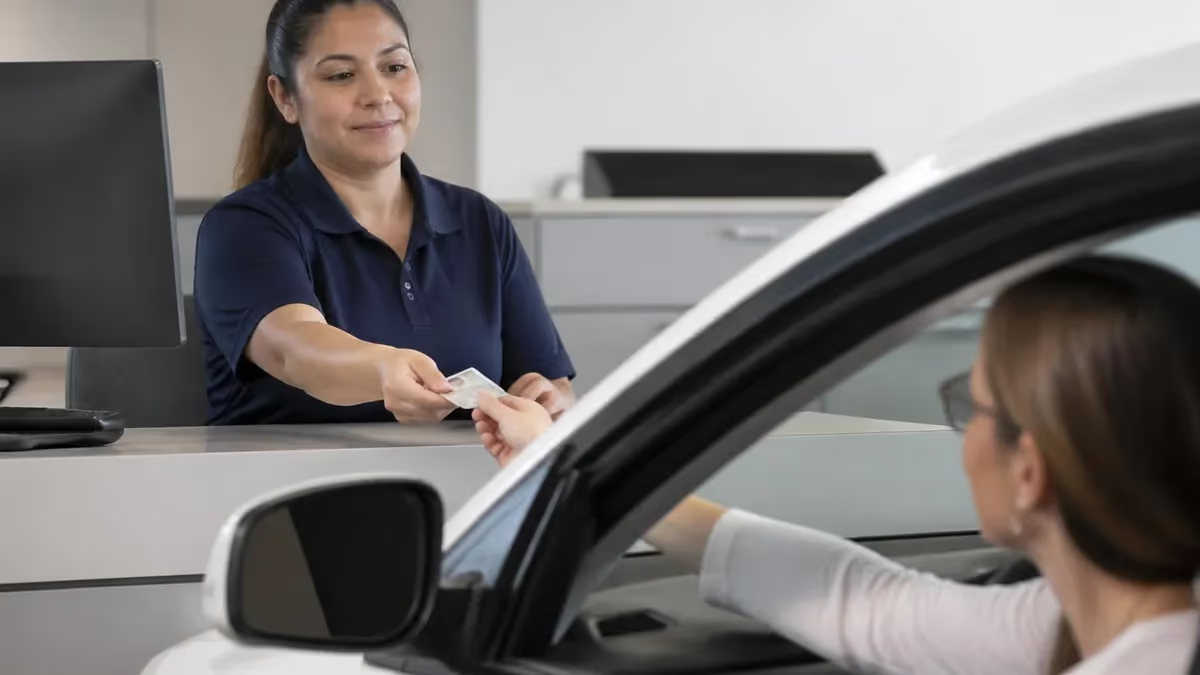
Virginia DMV test questions and answers
The Virginia DMV knowledge test trips up more first-time applicants than most people expect. That's not because the test is unfair. It's because most people sit down with only the driver's handbook and hope for the best. If you want the va DMV knowledge test questions and answers pdf experience — a structured, question-by-question walkthrough of exactly what appears on the exam — you're in the right place. Practice with the free DMV practice test on PracticeTestGeeks (20 questions with answer explanations).
Virginia's knowledge test has 40 questions: 10 road signs + 30 general knowledge. You need to answer all 10 road sign questions correctly and at least 24 of the 30 general knowledge questions to pass. The test covers road signs, traffic laws, right-of-way rules, speed limits, DUI regulations, and safe driving practices. There's no trick to it. The DMV pulls questions directly from the Virginia Driver's Manual — but they don't tell you which chapters to focus on, how questions are worded, or what common misconceptions to watch out for.
That's what this guide does. Below you'll find Virginia-specific practice questions, a breakdown of every major test topic, study strategies that actually work, and links to free DMV practice test resources. Whether you're 16 or 60, the approach is the same: practice with real questions, understand the logic behind each answer, and walk into the DMV ready.
One thing worth knowing upfront: the Virginia DMV doesn't publish an official PDF of test questions. What you can get — and what this page gives you — is a comprehensive set of practice questions drawn from the same source material the DMV uses. Study these, and the real exam won't surprise you.
Virginia's knowledge test is administered at any of the state's 75+ Customer Service Centers and DMV Select offices. You don't need to be a resident to take it — but you do need Virginia-issued ID to get a Virginia license. The test is available in English and over a dozen other languages, which is worth knowing if English isn't your first language. Just let the DMV staff know when you check in.
One more thing before you sit down to study: the Virginia Driver's Manual gets updated periodically. Make sure you're reading the most recent edition — the cover shows the current year. Laws change, speed limits get revised, and the DMV sometimes adds questions about newer regulations. Using a 2023 manual to study for a 2025 test is a bad idea. Download the current version from dmv.virginia.gov before you start your prep.
Free DMV Study Tools
Interactive DMV resources on PracticeTestGeeks, free to start:
- DMV Practice Test: Video 1 Answers (20 Questions) — 20 questions with instant scoring and answer explanations
- DMV flashcards — review key terms and concepts card by card
- DMV study guide — topic-by-topic overview of what the exam covers
- DMV cheat sheet — one-page printable summary for last-minute review
DMV: upcoming dates and official changes
- Nov 6, 2026: California DMV is moving to a new eLearning platform; renewal applicants must finish the current eLearning course (used instead of the renewal knowledge test) by November 6, 2026, or lose their progress and restart on the new platform. (dmv.ca.gov)
Facts verified Oct 18, 2026 against State motor vehicle agencies. Dates that have passed are removed automatically.
- The Virginia DMV knowledge exam has two parts: 10 road sign questions and 30 general knowledge questions. (dmv.virginia.gov)
- To pass the Virginia knowledge exam you must answer all 10 road sign questions correctly and at least 24 of the 30 general knowledge questions. (dmv.virginia.gov)
- In Virginia, applicants under 18 must wait a full 15 days to retake the knowledge exam, adults may test once per day, and anyone who fails three times must complete the classroom portion of an approved driver training course. (dmv.virginia.gov)
Facts verified Oct 18, 2026 against State motor vehicle agencies. Dates that have passed are removed automatically.
DMV Exam at a Glance
| Item | Detail | Official source |
|---|---|---|
| Number of questions (Knowledge test) — VA | 40 questions: 10 road signs + 30 general knowledge | dmv.virginia.gov |
| Passing score (Knowledge test) — VA | All 10 sign questions + 24 of 30 general knowledge | dmv.virginia.gov |
| Retake policy (Knowledge test) — VA | Under 18: wait 15 full days; 18+: once per day; 3 fails → driver-training classroom course | dmv.virginia.gov |
Facts verified Oct 18, 2026 against State motor vehicle agencies. Dates that have passed are removed automatically.
What the Virginia Knowledge Test Actually Covers
The test isn't random. Virginia's DMV structures every question around four core areas: road signs, traffic laws and signals, safe driving practices, and Virginia-specific regulations. Understanding that structure is your first advantage — because once you know how the test is organized, you can study smarter instead of just reading the entire handbook cover to cover.
Road signs make up a quarter of the exam. That's 10 questions asking you to identify signs by shape, color, and symbol. You won't just be asked what a stop sign looks like — the DMV expects you to know the difference between a regulatory sign (white rectangle), a warning sign (yellow diamond), a guide sign (green rectangle), and a construction zone sign (orange diamond). Shape and color matter as much as the words on the sign.
Traffic laws cover everything from speed limits on different road types to right-of-way at unmarked intersections. Virginia law sets a default speed limit of 25 mph in school zones and residential areas — not 30, not 20. The DMV permit test will test these specific numbers. Right-of-way rules are another heavy hitter: who goes first at a four-way stop, how to handle yield signs, what to do when emergency vehicles approach.
Safe driving practices cover following distance (the 3-second rule under normal conditions, more in bad weather), headlight requirements (turn them on 30 minutes after sunset or when visibility drops below 500 feet in Virginia), and cell phone restrictions. Virginia bans all handheld device use while driving — a full ban, not just texting. That distinction shows up on the test.
Virginia-specific rules round out the exam. The state has unique regulations around school buses (you must stop for a stopped school bus with flashing lights on any undivided road, in both directions), Move Over laws, and DUI penalties. These aren't generic driving rules — they're Virginia law, and the DMV tests them specifically.
Emergency vehicle rules are also tested. When you hear a siren or see flashing lights from an emergency vehicle approaching from any direction, you must pull over to the right edge of the road and stop — unless you're at an intersection, in which case you clear the intersection first, then pull over. You can't follow within 500 feet of a fire truck responding to a call. Virginia's Move Over law extends these protections to stopped law enforcement, utility, and towing vehicles on the shoulder as well.
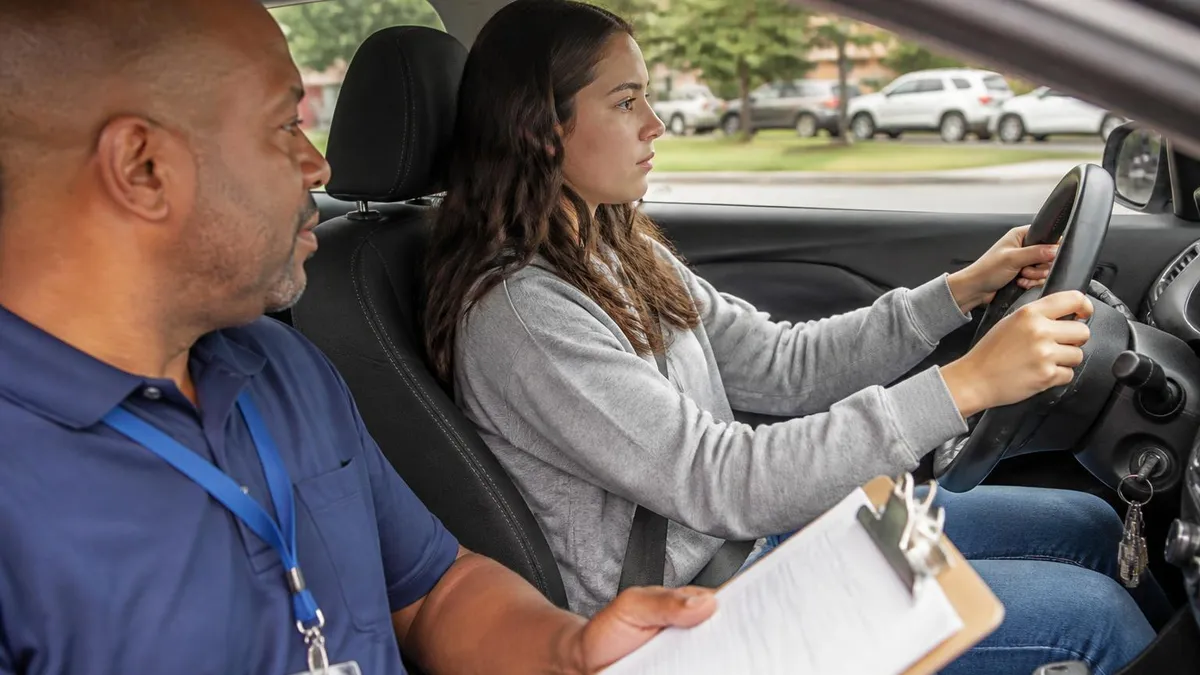
Traffic Laws and Right-of-Way Rules
Right-of-way is the topic that fails the most applicants — not because it's complicated, but because people guess instead of learning the rules. The Virginia DMV knowledge test typically includes 5-7 right-of-way questions, and they're not forgiving of guesses.
At a four-way stop, the first car to arrive goes first. Tie? The driver on the right goes first. Simple in theory, but the test often adds wrinkles: what if two cars arrive simultaneously on opposite sides of the intersection? The car going straight has the right-of-way over the car turning left. What if you're at an intersection without any signs? Treat it as a four-way stop and yield to the right. These specific scenarios appear regularly on the DMV test.
Speed limits in Virginia follow a tiered system. Interstate highways: 70 mph (55 mph in urban areas unless posted otherwise). Primary roads: 55 mph default. Residential areas and school zones: 25 mph. Business districts: 25 mph. The actual posted sign always overrides the default — but when there's no posted sign, you need to know these defaults cold.
Following distance rules are tested every exam cycle. Virginia recommends the 3-second rule: pick a fixed object ahead, watch the car in front pass it, then count three seconds before you reach the same spot. Double it in rain or heavy traffic. Triple it in fog or ice. The exam won't ask you to count seconds — but it will ask what the recommended following distance is and how to adjust in adverse conditions.
Passing rules catch people off-guard. You cannot pass on a hill crest, within 100 feet of an intersection, within 100 feet of a railroad crossing, or where you see a solid yellow line on your side of the road. Virginia also prohibits passing a school bus when its red lights are flashing on any undivided road — both directions must stop, not just traffic behind the bus. That's a Virginia-specific rule that shows up on the test.
Headlight rules are another area where Virginia has specific requirements. You must use headlights from sunset to sunrise — but also any time visibility is less than 500 feet, even during daylight hours. If you're using windshield wipers, Virginia law also requires headlights. Fog lights don't count; they must be used in addition to headlights, not instead of them. These specifics appear on the knowledge test, so don't just assume "headlights at night" covers all the scenarios.
Railroad crossing rules round out the right-of-way section. You must stop within 50 feet — but no closer than 15 feet — of a railroad crossing when lights are flashing or a gate is lowering. Never try to beat a train. Never drive around a lowered gate. And after the train passes, wait for the gate to fully raise before crossing — a second train can follow immediately on a parallel track. These scenarios appear verbatim on the Virginia knowledge test.
DUI and Impaired Driving: Virginia Law
Virginia's legal blood alcohol content (BAC) limit is 0.08% for drivers 21 and over. For commercial drivers, the limit drops to 0.04%. For drivers under 21, Virginia has a zero-tolerance policy — any measurable BAC (0.02% or above) results in a DUI charge. These numbers appear directly on the knowledge test.
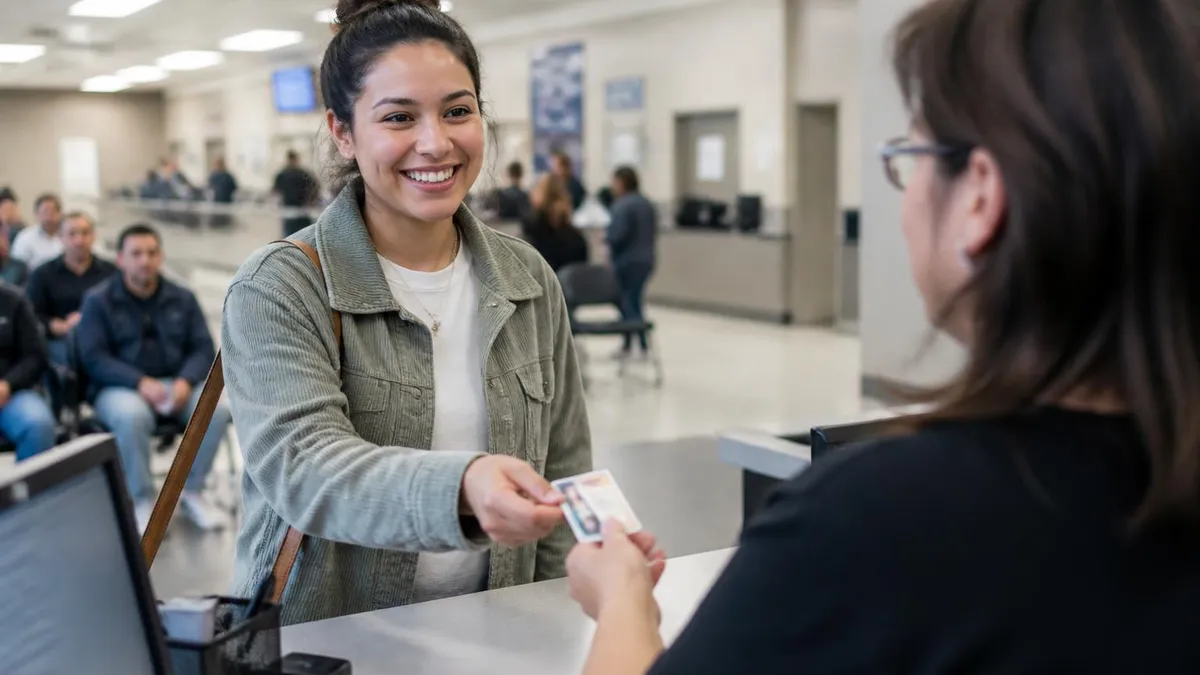
What to Bring to the Virginia DMV Knowledge Test
- ✓Proof of Virginia residency (utility bill, bank statement, or lease agreement dated within 90 days)
- ✓Proof of legal presence in the US (passport, birth certificate, or permanent resident card)
- ✓Social Security number or proof of SSN ineligibility
- ✓Payment for the applicable DMV fees (check the current fee chart at dmv.virginia.gov)
- ✓If under 18: signed parental consent form (DL 109)
- ✓If applying for REAL ID: additional documentation including two proofs of Virginia residency
Virginia DMV Practice Questions with answers
These questions are built from the same Virginia Driver's Manual content the DMV uses. Work through them before your exam — and for each wrong answer, go back to the manual section that covers it.
Q1: What is Virginia's default speed limit in a residential area?
A) 35 mph B) 30 mph C) 25 mph D) 20 mph
Answer: C — 25 mph. Virginia Code sets 25 mph as the default speed limit in any residential district or school zone unless a higher limit is posted.
Q2: You approach a stopped school bus with red flashing lights on a two-lane undivided road. What must you do?
A) Stop only if you're behind the bus B) Slow to 10 mph and proceed with caution C) Stop regardless of which direction you're traveling D) Stop only if children are visible
Answer: C. On any undivided road, all traffic in both directions must stop for a stopped school bus with activated red lights. This is one of the most commonly tested Virginia-specific rules.
Q3: A driver under 21 in Virginia has a BAC of 0.03%. Which statement is true?
A) They are below the legal limit and may continue driving B) They can be charged with DUI under Virginia's zero-tolerance law C) They will only receive a warning from law enforcement D) The implied consent law does not apply to them
Answer: B. Virginia's zero-tolerance law for drivers under 21 sets the limit at 0.02% — any measurable BAC above that threshold constitutes a violation.
Q4: You're at an unmarked intersection. Another car approaches from your right at the same time. Who has the right-of-way?
A) You do, because you arrived simultaneously B) The car on your right C) Whoever is going straight D) Neither — both must stop
Answer: B. When two vehicles arrive at an uncontrolled intersection simultaneously, the driver on the left must yield to the driver on the right.
Q5: What does a yellow diamond-shaped sign indicate?
A) A legal restriction that must be obeyed B) A warning of a potential hazard ahead C) Directional information for drivers D) A temporary construction zone
Answer: B. Yellow diamond signs are warning signs — they alert you to road conditions or hazards ahead, but they don't carry a legal mandate the way regulatory signs do.
These five questions cover the core topics Virginia tests most often. If you got all five right — without looking at the answers first — you're already ahead of most first-time applicants. If you missed any, that's the topic to revisit before your exam day. Virginia's knowledge test won't give you a breakdown of which questions you got wrong; you'll just see your final score. Practicing beforehand is the only way to identify your gaps before they count against you. Check out our dmv written test for additional resources once you've gone through these core questions.

VA DMV Knowledge Test: Online Practice vs. Just Reading the Handbook
- +Practice tests use the same question format as the real exam
- +Instant feedback tells you exactly which topics you're weak on
- +Repeated testing builds memory through active recall (not passive reading)
- +You can simulate test conditions — timed, no notes, one attempt per question
- +Most people who practice with 5+ tests pass on their first attempt
- −Online practice tests can't fully replicate Virginia's exact current question bank
- −Some third-party sites include outdated or incorrect questions — stick to trusted sources
- −Practicing without understanding the 'why' behind answers limits real-world application
- −The handbook must still be read — practice tests supplement, they don't replace it
Pros and Cons at a Glance
| Pros | Cons |
|---|---|
| Practice tests use the same question format as the real exam | Online practice tests can't fully replicate Virginia's exact current question bank |
| Instant feedback tells you exactly which topics you're weak on | Some third-party sites include outdated or incorrect questions — stick to trusted sources |
| Repeated testing builds memory through active recall (not passive reading) | Practicing without understanding the 'why' behind answers limits real-world application |
| You can simulate test conditions — timed, no notes, one attempt per question | The handbook must still be read — practice tests supplement, they don't replace it |
How to Study for the Virginia DMV Test Effectively
Here's the honest approach: read the Virginia Driver's Manual once, then do practice tests until you consistently score 90%+. The handbook is dense — around 100 pages — and most people read it passively and retain maybe 40% of the content. That's not enough to meet the real test's pass standard.
Active recall is the key. Instead of re-reading chapters, test yourself on the material. Every time you answer a question wrong, go back and read the relevant section of the handbook — then answer three more questions on that topic before moving on. This forces your brain to process the information differently than passive reading does.
Focus your extra time on these high-frequency topics: road sign shapes and colors, right-of-way rules at intersections (especially four-way stops and uncontrolled intersections), Virginia-specific speed limits, school bus stop laws, and DUI BAC limits. These show up in some form on virtually every exam version. If you're comfortable with all of them, you've covered the majority of what the virginia dmv practice test will throw at you.
Take the free practice tests on this site — they're structured to match Virginia's actual format, with 40 questions (10 road signs + 30 general knowledge) and the official pass standard: all 10 signs plus 24 of 30 general knowledge. After each session, review every wrong answer. Don't just check whether you got it right. Understand why the correct answer is correct and why the wrong answers are wrong. That distinction matters more than you'd think when the DMV rephrases a question you've seen before.
Two or three days before your exam, do a full 35-question test under realistic conditions: no notes, no looking things up, one attempt per question. If you score 32+ (91%), you're ready. If you're scoring 30-31 (86-88%), you're borderline — spend one more session on your weakest topic before booking your appointment. Don't schedule your exam until you're consistently passing practice tests by a margin.
Day-of logistics matter too. The DMV opens at 8:00 AM at most locations, and wait times tend to be shortest in the first hour. Bring everything you need — missing a document means you have to reschedule. The knowledge test is computer-based; you'll sit at a kiosk and answer questions on screen. The test doesn't time out on individual questions, but don't dawdle — if you're genuinely unsure, mark your best guess and move on. Second-guessing answers you initially got right is a well-documented way to lower your score.
Once you pass the knowledge test, the DMV issues your learner's permit on the spot. It's printed on paper initially — your permanent plastic card arrives in 10-15 business days by mail. Don't lose the paper permit; it's your legal authorization to drive with a licensed adult until the card arrives.
Virginia DMV Knowledge Test Requirements at a Glance
| State | Requirement | Details |
|---|---|---|
| 📝Knowledge Test Questions | 40 questions (10 road signs + 30 general knowledge), multiple choice | |
| 🎯Passing Score | All 10 road sign questions + at least 24 of 30 general knowledge | |
| 💰Test Fee | See the current DMV fee chart at dmv.virginia.gov | |
| 🎂Minimum Age (Learner's Permit) | 15 years, 6 months | |
| ⏱️Permit Holding Period (under 18) | 9 months minimum | |
| 🚗Required Supervised Driving Hours | 45 hours (15 at night) | |
| 👁️Vision Requirement | 20/40 in both eyes combined | |
| 🍺DUI BAC Limit (21+) | 0.08% | |
| ⚠️Under-21 BAC Limit | 0.02% (zero tolerance) |
Sample DMV Practice Questions
Try these questions from our free DMV practice tests. The correct answer and an explanation follow each question.
What happens if you decline a chemical test for operating under the influence if you are above 21 and have never been arrested for OUI?
- A. You will be fined $1000
- B. Your license will be suspended for 1 year
- C. Your license will be suspended for 180 days
Answer: B. Your license will be suspended for 1 year
Under 'Implied Consent' laws, by obtaining a driver's license, you automatically agree to chemical testing if suspected of driving under the influence. Refusing a chemical test, even if you are above 21 and have no prior OUI arrests, typically results in an automatic and immediate license suspension for a significant period, often one year, regardless of whether you were actually impaired.
What is assessed by a chemical test:
- A. Vision
- B. Blood alcohol content
- C. Fatigue level
Answer: B. Blood alcohol content
Chemical tests, such as breathalyzer tests, blood tests, or urine tests, are specifically designed to measure the concentration of alcohol or drugs in a person's system. These tests provide an objective measure of a driver's Blood Alcohol Content (BAC) or the presence of other impairing substances. This data is crucial for determining if a driver is operating a vehicle under the influence.
GUIDE SIGNS FOR HIGHWAYS AND EXPRESSWAYS ARE :
- A. Green background with white letters
- B. Black characters on an orange background
- C. White letters on a red background
- D. Black characters on a yellow background
Answer: A. Green background with white letters
Guide signs on highways and expressways are designed with a green background and white lettering for high visibility and consistency. This color scheme helps drivers quickly identify directional information, exits, and distances to destinations, ensuring smooth navigation. Other sign colors serve different purposes, such as warning or regulatory information.
You see a pedestrian using a white cane or guide dog waiting to cross at a crosswalk. What must you do?
- A. Honk lightly to let them know traffic is present
- B. Stop completely and wait until they have safely crossed
- C. Proceed slowly and carefully past the crosswalk
- D. Wave them across to signal that it is safe
Answer: B. Stop completely and wait until they have safely crossed
You must always stop and yield to blind or visually impaired pedestrians using a white cane or guide dog at crosswalks.
Take the full DMV practice test
Virginia DMV Questions and Answers



How this page was made: written with AI tools and published by Nathan Beja, founder of Practice Test Geeks, who is responsible for its content. Exam facts are checked against the official sources listed below. Not reviewed by a subject-matter expert. Editorial policy
Sources & references
Exam facts on this page (fees, format, dates, passing scores) are checked against these official sources; the date is our last check. Editorial policy
- dmv.ny.gov — Test delivery · verified Nov 2026
- pa.gov — Exam format, passing score, retake policy · verified Oct 2026
- flhsmv.gov — Fees, retake fee, test delivery, exam format, passing score · verified Oct 2026
- michigan.gov — Fees, retake policy, test delivery, eligibility · verified Oct 2026
- dps.texas.gov — Eligibility, fees, score validity · verified Oct 2026
- dmv.ca.gov — Retake policy, fees, eligibility, score validity, exam information · verified Oct 2026