
DKT Exam Prep: Your Driver Knowledge Test Study Guide for 2026 September
🗨️ Boost your road signs exam score with practice questions and detailed answer explanations. Track your progress with instant feedback.

DKT Exam Prep — What You Need to Know Before Test Day
Passing the Driver Knowledge Test is the first real step toward getting your licence in Australia. It's not optional. It's the gate. And if you're reading this DKT exam prep guide, you're already ahead of candidates who show up hoping road sense will carry them through 45 questions they've never practised.
It won't. The DKT rewards preparation — not guesswork, not driving experience, not common sense alone. You'll need to know specific distances, exact speed limits in unusual zones, and the precise meaning of signs that look almost identical to each other. That kind of detail doesn't come from casual familiarity with roads.
For many test-takers, the DKT is similar in spirit to an examen de manejo — a formal knowledge check that ensures every driver understands the rules before hitting the road unsupervised. Think of it as an examen para licencia de conducir that covers Australian-specific road rules, traffic signs, and safe driving practices. Whether you're sitting the NSW version with its 43/45 pass requirement or the VIC Learner Permit Knowledge Test, the principle is identical: prove you know the rules, then earn the right to learn behind the wheel.
This guide breaks down the test structure, content areas, and study strategies that actually produce first-attempt passes. You'll find practice test links, a breakdown of what the DKT covers, and the kind of focused advice that turns nervous first-timers into confident test-takers. No fluff. Just the information and preparation approach you need.

What the DKT Actually Tests
The DKT isn't a general driving quiz. It's a specific, structured test drawn from the official road rules handbook. Three content areas dominate: road rules, traffic signs, and safe driving practices. Each one presents different challenges, and most failures come from underestimating how specific the questions get. This isn't like a casual examen para licencia de conducir where broad knowledge carries you — the DKT wants exact answers about exact rules. CDL prep materials from other countries won't help here. You need Australian-specific content.
Road rules make up the largest portion. Expect questions on intersections, merging, overtaking, right of way at roundabouts, following distances, blood alcohol limits, and parking restrictions. Many of these require memorised numbers — not estimates. The distance you must maintain from a fire hydrant, the BAC limit for L-platers, the speed in school zones during operating hours. These aren't things you can reason through. You either know them or you don't.
Traffic signs catch more people than you'd expect. The DKT shows you images of signs — regulatory, warning, information — and asks what action they require. Warning signs that look nearly identical trip up unprepared candidates constantly. Road markings and traffic light sequences also appear. Safe driving practices round out the test: phone rules, fatigue management, emergency vehicle responses, and weather-related speed adjustments.
How to Study for the DKT — Strategies That Actually Work
You don't need months. You do need a plan. Candidates who treat DKT preparation like studying for an examen de licencia de conducir — structured, deliberate, spread over at least a week — pass at dramatically higher rates than those who skim the handbook the night before. The approach below works for first-timers and for candidates who've failed and need to regroup. It also applies to anyone preparing for a bike license exam version of the DKT, since the study method is the same even though the content varies for motorcycle learners.
Start with the official guide. The NSW Driver Knowledge Test Guide is free from service.nsw.gov.au. Read it cover to cover — yes, all of it. Even the sections that seem obvious. DKT questions exploit assumptions. A rule you think you know might have a NSW-specific nuance that differs from what you've seen in other states or countries. After your first read, take a full diagnostic practice test. Score yourself honestly.
Now target your weak spots. If you missed sign questions, spend a focused session reviewing every sign in the handbook — not just the common ones. If speed limits tripped you up, make flashcards for special zones. Spaced repetition over several days beats a single marathon session every time. Your brain consolidates information during sleep, so studying across a week produces better test-day recall than cramming does.
DKT by State: NSW, VIC & US Comparison
Administered by: Service NSW (Transport for NSW). Format: 45 questions, multiple choice. Pass mark: 43/45 correct. Cost: ~$24 AUD (included in learner licence fee). Age minimum: 16 years. Online option: Yes — through Service NSW portal with identity verification. Study guide: NSW Driver Knowledge Test Guide (free at service.nsw.gov.au). The strict 43/45 threshold means you can only miss two questions.
Practice Testing — Your Most Powerful Preparation Tool
Reading the handbook teaches you the rules. Practice tests teach you how the DKT asks about them. That difference matters more than most candidates realise. A well woman exam analogy works here — just as regular check-ups catch problems before they escalate, regular practice tests catch knowledge gaps before test day arrives. The DKT question bank draws from a defined pool, and candidates who've worked through extensive practice encounter familiar question patterns on the real test. An examen teorico de manejo in any jurisdiction works the same way: theory knowledge tested through structured questions.
Take full-length tests under timed conditions. Forty-five questions in forty-five minutes. No pausing, no looking up answers mid-test. After each practice test, review every wrong answer in detail. Understanding why the correct option is right — not just noting you got it wrong — closes the knowledge gap. A score of 40/45 on a practice test feels decent, but those five wrong answers could fail you on the real thing. Push for consistent 43+ before you book.
Mix your practice sources. Different practice test platforms phrase questions differently, which builds your ability to parse DKT-style wording under pressure. Some candidates practise only with one source and struggle when the real test uses unfamiliar phrasing for concepts they actually know. Variety in practice builds flexibility in comprehension. You want the content knowledge to be automatic so you can focus on reading questions carefully rather than recalling rules from scratch.
Mastering Road Signs and Speed Limits
Road sign questions are where most DKT failures happen. It's not because candidates don't know what a stop sign means — it's because the test includes signs they've never encountered or signs that look almost identical but mean different things. A CDL exam test in the US might cover similar ground for commercial vehicles, but the DKT sign pool is specific to Australian roads. If you're preparing with materials from another country, like an examen de manejo en California guide, you'll find the question format familiar but the actual signs completely different.
The fix is methodical. Go through every sign in the NSW handbook. Not just the ones you recognise — every single one. Pay attention to colour and shape combinations. Regulatory signs (white background, red border) tell you what you must or must not do. Warning signs (yellow diamond) alert you to hazards ahead. Information signs (blue or green) provide guidance. Within each category, there are signs that trip people up because they look similar. Speed derestriction signs vs speed limit signs. No right turn vs no U-turn. Lane-use arrows vs direction arrows.
Speed limits deserve their own study session. The default urban speed limit in NSW is 50 km/h where no sign is posted. School zones drop to 40 km/h during operating hours. Shared zones can be 10 km/h. These defaults catch candidates who assume a speed limit sign is always present. The DKT tests whether you know what the limit is when there's no sign — and many candidates don't.
Online DKT vs. In-Centre Testing
- +No travel time or centre queues — test from your own home
- +Flexible scheduling with online slots available sooner than centre bookings
- +Comfortable, low-anxiety environment reduces test nerves
- +Same official question pool and pass mark as in-centre
- +Immediate results displayed on screen after submission
- +Available outside normal business hours in some states
- −Requires a stable internet connection and compatible device
- −Identity verification process can be more involved online
- −Not available in all states — VIC requires in-centre testing
- −Home distractions may reduce focus compared to a test centre
- −Technical issues mid-test can disrupt your attempt
- −Can't immediately proceed to learner licence application in same visit
What to Expect on Test Day
If you've been using a sample cdl exam approach — studying the material, taking practice tests, tracking your scores — test day shouldn't surprise you. But logistics still matter. For in-centre testing, bring valid ID: primary document (passport or birth certificate) plus secondary identification. Check the exact requirements on the Service NSW booking confirmation. Arriving without correct documents means you'll be turned away. A cdl prep app won't help you remember your passport.
The test itself runs on a computer with touchscreen or mouse input. Questions appear in mixed order — you won't get all road rule questions first, then signs, then safe driving. They're shuffled. Read each question completely before looking at answer options. DKT questions often contain subtle phrasing differences — "is required to" versus "is permitted to" changes the correct answer entirely. Don't speed-read.
Use the mark-and-review function. If a question stumps you, flag it and move on. Answer everything you're confident about first, then return to flagged questions. Don't spend three minutes agonising over one question while easy ones sit unanswered. And never leave a question blank — there's no penalty for wrong answers beyond the missed point, so an educated guess beats an empty response every time.
DKT Preparation Checklist
- ✓Download and read the full NSW Driver Knowledge Test Guide from service.nsw.gov.au
- ✓Complete at least one full diagnostic practice test to identify weak areas
- ✓Review all traffic signs in the handbook — not just common ones
- ✓Memorise speed limits for school zones, shared zones, and default urban areas
- ✓Study BAC limits for learners, P-platers, and full licence holders
- ✓Learn parking distance rules for intersections, fire hydrants, and bus stops
- ✓Take 3–5 timed practice tests (45 questions in 45 minutes) and score 43+ consistently
- ✓Review every incorrect practice test answer in detail before your next session
- ✓Prepare identity documents required for test day (primary + secondary ID)
- ✓Book your DKT only after consistently scoring 43/45 or above on practice tests
Studying for Different Licence Classes
Most DKT guidance focuses on the car licence version, but the test exists for other vehicle classes too. Motorcycle learners sit a DKT variant that covers bike-specific rules. The class e knowledge exam in US terminology tests a specific vehicle category — similarly, the DKT adapts its question pool based on what you're applying for. If you're going for a rider licence, you'll face questions about protective gear, lane filtering rules, and motorcycle-specific hazard responses that car DKT candidates don't see.
For candidates who've moved to Australia from other states or countries, it's worth noting that illinois driving exam practice or other US-based preparation won't transfer directly. The road rules are different. Speed is in km/h, not mph. Roundabout right-of-way conventions are different. Even the side of the road you drive on is different. International licence holders especially need to treat the DKT as genuinely new material rather than a formality — familiarity with driving doesn't equal familiarity with Australian rules.
Regardless of which licence class you're targeting, the preparation method is identical. Read the relevant handbook. Take practice tests. Target weak areas. The motorcycle DKT handbook supplements the car DKT guide rather than replacing it — you need both. Schedule your preparation over at least a week and aim for consistent high scores before booking.
State-Specific DKT Variations
Australian states and territories all require some form of driver knowledge test, but the specifics vary. NSW's 45-question, 43-to-pass format is the most discussed, but Queensland, South Australia, Western Australia, and Tasmania each run their own versions. Some states test different question counts, allow different numbers of errors, and charge different fees. If you're sitting the DKT outside NSW, check your state's transport authority website for the exact format. The examen de manejo nj in US terms is New Jersey's version — and just as US states differ, Australian states do too.
Victoria's LPKT deserves separate mention because it's structured differently. Thirty-two questions split into two parts — road rules and hazard perception preparation. You need 30/32 to pass. It's a tighter margin proportionally than NSW, and there's no online option. VIC candidates must attend a VicRoads centre in person. The study material is the Road to Solo Driving handbook rather than the NSW guide. Same principle, different details. Like an examen de manejo en Georgia compared to a Texas test — same country, different rules.
For candidates moving between states, your existing licence class determines what additional testing you'll need. A learner who's passed the DKT in NSW and moves to VIC before obtaining a full licence may need to sit the VIC version. Always check with the destination state's transport authority before assuming your DKT result transfers. Don't rely on assumptions — verify.
The DKT isn't testing whether you can drive. It's testing whether you know the specific rules. Experienced drivers fail the DKT regularly because they've never studied the precise distances, BAC limits, and sign meanings that the test requires. If you've been driving for years on an overseas licence, treat the DKT as new material. Read the handbook. Take practice tests. The questions are designed to catch people who rely on instinct instead of knowledge.
Beyond the DKT — What Comes Next
Passing the DKT is step one, not the finish line. For medical professionals, the testing never really stops — an hpv exam for men is part of routine health screening, and the tennessee license exam tests a completely different kind of knowledge. But the principle of structured preparation applies everywhere. After your DKT pass, you'll apply for your learner licence, which in NSW means submitting your application, paying the licence fee, and having your photo taken at Service NSW. If you sat the DKT at a centre, you can often complete the learner application in the same visit.
With your L plates, the real learning begins. You'll need to accumulate supervised driving hours — 120 hours in NSW, including 20 hours of night driving. Your log book tracks every session. After holding your learner licence for the minimum period (12 months in NSW for under-25s), you'll face the driving test for your provisional P1 licence. That's a practical, on-road assessment — completely different from the DKT's theory format.
Between the DKT and the driving test sits the Hazard Perception Test (HPT) in some states. The HPT uses video clips to assess your ability to spot developing hazards. It's a separate test with its own preparation requirements. Don't confuse it with the DKT — they test different skills at different licence stages. Plan your preparation for each test individually rather than treating the entire licensing process as one continuous study block.
DKT Practice Test Questions
Prepare for the DKT - Driver Knowledge Test exam with our free practice test modules. Each quiz covers key topics to help you pass on your first try.
DKT Car Driver Knowledge Test - Lanes
DKT Exam Questions covering Car Driver Knowledge Test - Lanes. Master DKT Test concepts for certification prep.
DKT Car Driver Knowledge Test – Alcohol an...
Free DKT Practice Test featuring Car Driver Knowledge Test – Alcohol and Drugs. Improve your DKT Exam score with mock test prep.
DKT Car Driver Knowledge Test – Core
DKT Mock Exam on Car Driver Knowledge Test – Core. DKT Study Guide questions to pass on your first try.
DKT Car Driver Knowledge Test – Defensive ...
DKT Test Prep for Car Driver Knowledge Test – Defensive Driving. Practice DKT Quiz questions and boost your score.
DKT Car Driver Knowledge Test – General Kn...
DKT Questions and Answers on Car Driver Knowledge Test – General Knowledge. Free DKT practice for exam readiness.
DKT Car Driver Knowledge Test – Intersections
DKT Mock Test covering Car Driver Knowledge Test – Intersections. Online DKT Test practice with instant feedback.
DKT Car Driver Knowledge Test – Lanes
Free DKT Quiz on Car Driver Knowledge Test – Lanes. DKT Exam prep questions with detailed explanations.
DKT Car Driver Knowledge Test – Negligent ...
DKT Practice Questions for Car Driver Knowledge Test – Negligent Driving. Build confidence for your DKT certification exam.
DKT Car Driver Knowledge Test – Pedestrians
DKT Test Online for Car Driver Knowledge Test – Pedestrians. Free practice with instant results and feedback.
DKT Car Driver Knowledge Test – Seat Belt ...
DKT Study Material on Car Driver Knowledge Test – Seat Belt and Restraint Rules. Prepare effectively with real exam-style questions.
DKT Car Driver Knowledge Test – Speed Limits
Free DKT Test covering Car Driver Knowledge Test – Speed Limits. Practice and track your DKT exam readiness.
DKT Car Driver Knowledge Test – Traffic Signs
DKT Exam Questions covering Car Driver Knowledge Test – Traffic Signs. Master DKT Test concepts for certification prep.
DKT Test (Core)
Free DKT Practice Test featuring Test (Core). Improve your DKT Exam score with mock test prep.
DKT Test (Defensive Driving)
DKT Mock Exam on Test (Defensive Driving). DKT Study Guide questions to pass on your first try.
DKT Test (Drug and Alcohol)
DKT Test Prep for Test (Drug and Alcohol). Practice DKT Quiz questions and boost your score.
DKT Test (General Knowledge)
DKT Questions and Answers on Test (General Knowledge). Free DKT practice for exam readiness.
DKT Test ( Intersection)
DKT Mock Test covering Test ( Intersection). Online DKT Test practice with instant feedback.
DKT Test ( Negligent Driving)
Free DKT Quiz on Test ( Negligent Driving). DKT Exam prep questions with detailed explanations.
DKT Test (Pedestrians)
DKT Practice Questions for Test (Pedestrians). Build confidence for your DKT certification exam.
DKT Test (Seat Belts/Restraints)
DKT Test Online for Test (Seat Belts/Restraints). Free practice with instant results and feedback.
DKT Test (Speed Limits)
DKT Study Material on Test (Speed Limits). Prepare effectively with real exam-style questions.
Health Exams and Knowledge Tests — The Preparation Principle
Here's something that connects DKT preparation to other structured tests: the method works the same way regardless of the subject. A gyno exam — or more specifically, a gynecology exam — tests a medical professional's clinical knowledge through structured questions, just as the DKT tests your road knowledge. The common thread is that both reward systematic preparation over intuition. You can't wing a licensing test any more than a clinician can wing a board exam.
That's why this guide emphasises process over tricks. There are no DKT shortcuts that substitute for reading the handbook and taking practice tests. The candidates who pass on their first attempt almost always followed the same path: read, practise, review, repeat. The ones who fail typically skipped one of those steps — usually the review step, where you actually learn from your mistakes instead of just noting your score.
Whether you're preparing for the DKT, a professional certification, or any other structured knowledge test, the formula stays constant. Identify the source material. Study it systematically. Test yourself repeatedly. Target your weaknesses. That's it. The DKT question bank is finite and drawn from published material. Thorough preparation makes the test predictable — and predictable tests are passable tests.
DKT Questions and Answers

Commercial Driver Knowledge Test: DKT for Truck and Commercial Vehicle Licenses

Dmv appointment nyc: State-specific driver & More (2026)

DKT - Driver Knowledge Test: Career Paths, Salary, and Requirements 2026
DKT - Driver Knowledge Test: Complete Study Guide 2026
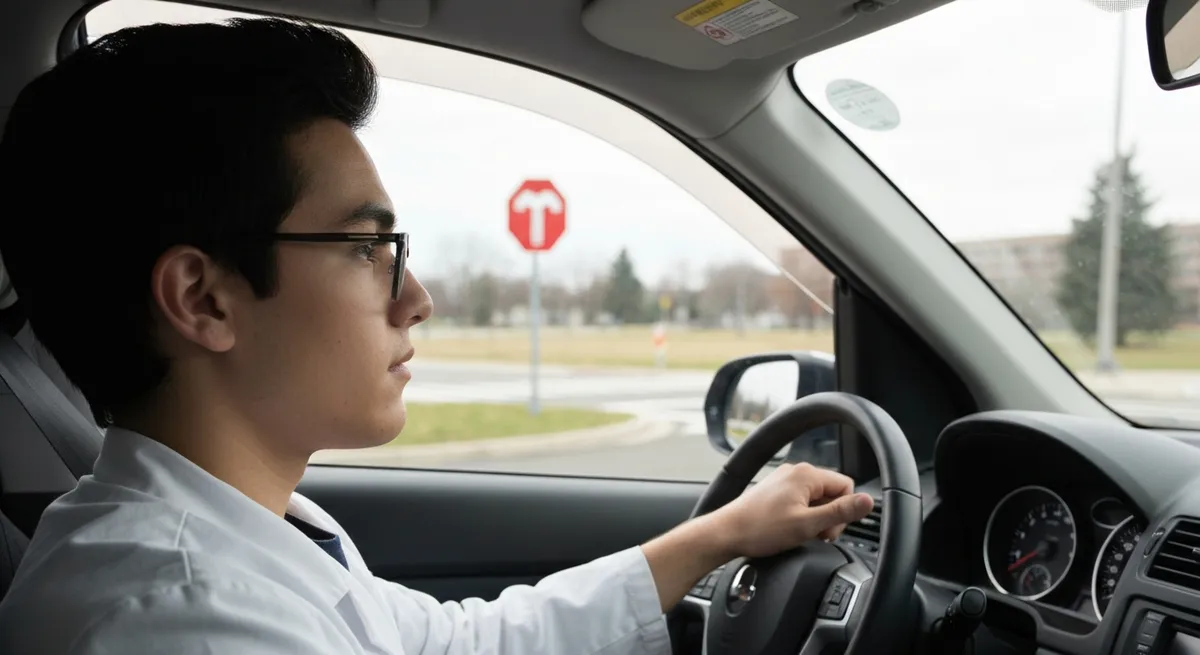
Road Signs Interpretation: Everything You Need to Know in 2026
About the Author

Educational Psychologist & Academic Test Preparation Expert
Columbia University Teachers CollegeDr. Lisa Patel holds a Doctorate in Education from Columbia University Teachers College and has spent 17 years researching standardized test design and academic assessment. She has developed preparation programs for SAT, ACT, GRE, LSAT, UCAT, and numerous professional licensing exams, helping students of all backgrounds achieve their target scores.
Join the Discussion
Connect with other students preparing for this exam. Share tips, ask questions, and get advice from people who have been there.
View discussion (8 replies)