
State DMV Locations: Find Your Nearest Office and Services 2026 September
Pass the State DMV Locations: Find Your Nearest exam with confidence. Practice questions with detailed explanations and instant feedback on every answer. 🔎
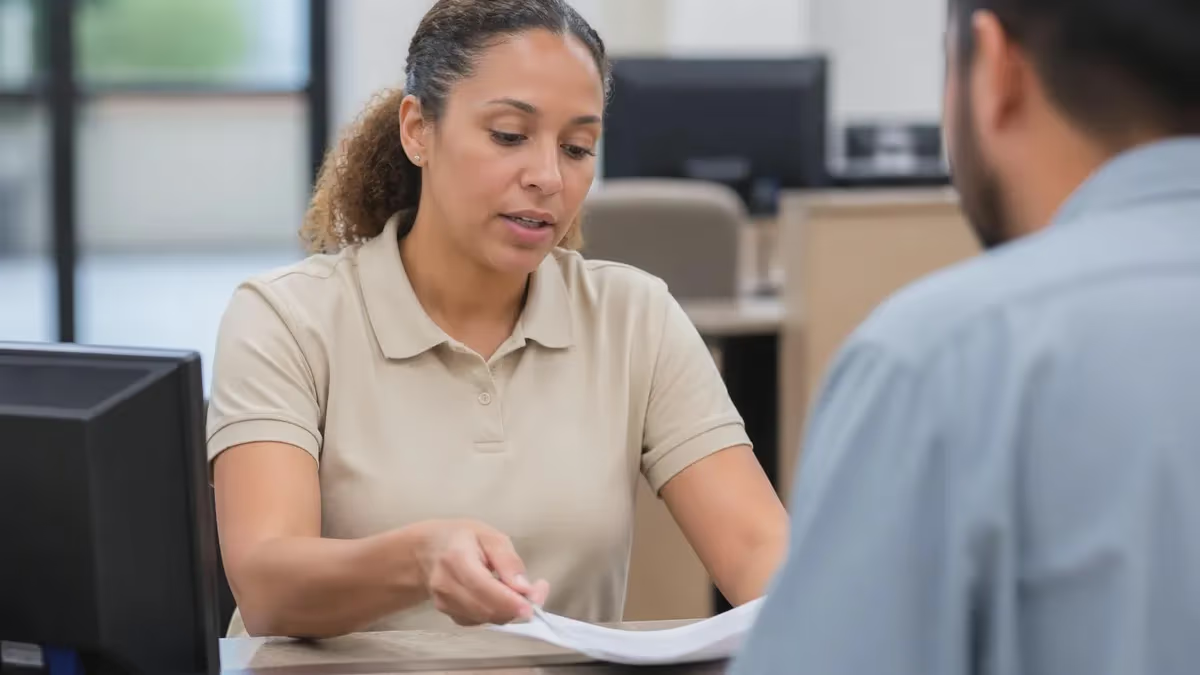
Finding your nearest state DMV locations shouldn't feel like a scavenger hunt -- but for millions of Americans, it does. Each state runs its own motor vehicle agency with different names, hours, and services. Whether you need a license renewal, vehicle registration, or a REAL ID, knowing exactly where to go (and what to bring) saves you hours of wasted time sitting in the wrong office.
If you're searching for dmv new york state offices, you're dealing with one of the busiest systems in the country. New York operates over 100 DMV offices across its 62 counties, each with different service availability. But New York isn't unique in its complexity -- every state has quirks. Texas calls theirs the DPS. Illinois uses the Secretary of State's office. Washington state runs through the DOL. These naming differences confuse people who've recently moved and are trying to find dmv locations near me for the first time.
This guide breaks down how to locate DMV offices in every state, what services each type of location offers, and how to avoid the notorious wait times that make DMV visits dreaded. You'll find tips for scheduling appointments, understanding which documents you need, and figuring out whether your task even requires an in-person visit at all -- because many services have moved online since 2020. If your state offers online renewals or mail-in options, we'll point you in that direction too.

When you search for dmv locations near me, the results can be overwhelming. Google Maps pulls up everything from full-service DMV offices to third-party tag agencies and AAA locations that handle limited DMV services. Not all dmv locations offer the same services. A small satellite office might handle renewals but can't process a first-time license application or administer a driving test.
Full-service DMV offices typically handle everything: written tests, road tests, license renewals, vehicle registrations, title transfers, and REAL ID applications. Satellite offices or kiosks usually cover renewals and simple transactions only. Third-party agents -- common in states like Florida and Arizona -- can process registrations and plate renewals but don't offer testing services.
Before you drive across town, check your state's DMV website to verify which services your nearest location provides. Most state DMV sites now have interactive office finders that show hours, services offered, and current wait times. A five-minute check online can prevent a wasted trip to an office that doesn't handle what you need. Some states even show real-time wait estimates, so you can pick the least busy location near you.
Getting a state inspection near me is another common reason people visit DMV-affiliated locations, though inspections are often handled by private garages rather than DMV offices directly. States like Texas, New York, and Pennsylvania require periodic vehicle inspections. You'll need to find a state-licensed inspection station, which is separate from the DMV in most cases. Your state's DMV website usually has a search tool for authorized inspection locations.
Scheduling a dmv locations visit often requires a secretary of state appointment in states like Michigan and Illinois. These states route all motor vehicle services through the Secretary of State's office rather than a standalone DMV. The appointment system varies -- Michigan uses an online booking tool, while some Illinois offices still accept walk-ins during certain hours. If your state uses the Secretary of State model, search for that office name rather than "DMV" to find accurate results.
Don't assume your closest office is your best option either. Sometimes driving 15 extra minutes to a suburban location means the difference between a 20-minute visit and a 2-hour wait. Rural offices tend to have shorter lines but more limited hours -- some only open three days a week. Balance convenience with efficiency based on your schedule. Many state DMV websites now show real-time or estimated wait times by office, so check before you leave the house.
DMV Services by Major State
New York operates 100+ DMV offices handling licenses, registrations, and REAL ID. NYC residents use locations in all five boroughs, while upstate offices tend to be county-run. You can handle many transactions online through the NY DMV website, including license renewals, registration renewals, and address changes. For road tests, you'll need to schedule separately through the DMV's road test scheduling system. Offices typically open Monday through Friday, with some Saturday hours at busier locations.
Two of the most searched documents right now are the texas state id and washington state real id -- and each requires a different process at different offices. Texas issues state IDs through DPS offices (not county tax offices), and you'll need to bring proof of citizenship, Social Security number, and two documents showing your Texas address. The process takes about 30-45 minutes once you're called, plus whatever wait time the office has that day.
For a washington state real id, you'll visit a Department of Licensing office with your passport or birth certificate, Social Security card, and two proofs of Washington residency. Washington began issuing REAL IDs in 2020, and demand spiked as the federal enforcement deadline approached. Many DOL offices now require appointments specifically for REAL ID applications because of the additional document verification involved.
Both processes highlight a common theme: bring more documents than you think you need. Getting turned away because you're missing one piece of paper is the single most frustrating DMV experience -- and it happens to thousands of people every day. Check your state's document checklist twice before leaving home. Print the checklist if you have to. It's worth the extra two minutes of preparation to avoid a complete wasted trip.
If you're looking for nj real id appointment locations, you'll want to search specifically for NJ Motor Vehicle Commission (MVC) agencies -- not "DMV," which technically doesn't exist in New Jersey. The MVC operates about 39 agencies across the state, and REAL ID appointments fill up fast. Book online through the NJMVC website at least two weeks in advance, especially for popular locations in North Jersey. Walk-in REAL ID service is extremely limited and usually involves multi-hour waits.
Meanwhile, texas state inspection requirements send drivers to private inspection stations rather than DPS offices. Texas requires annual safety inspections for most vehicles, and emissions testing in certain counties. You can find authorized inspection stations through the Texas DMV website's station locator tool. Scheduling a secretary of state appointment in states like Illinois or Michigan follows a similar online booking process -- but the services available differ significantly from traditional DMV offices.
Pro tip for any state: check whether your transaction can be done by mail. License renewals, registration renewals, and address changes can often be handled through your state's mail-in program. It's slower than online but faster than visiting an office -- and you don't need internet access or a printer to complete the process. Many states send renewal notices with pre-filled mail-in forms included.
Online vs In-Person DMV Services
- +No wait times -- complete transactions from your couch in minutes
- +Available 24/7, not limited to office hours
- +Instant confirmation and digital receipts for most transactions
- +Skip the document gauntlet -- many online services need fewer papers
- +Process multiple vehicles or transactions in one sitting
- +Payment options typically include credit cards, which many offices don't accept
- −Can't do first-time applications, road tests, or photo updates online
- −REAL ID requires in-person document verification -- no online option
- −Some states charge convenience fees for online transactions
- −Technical issues can cause payment processing errors
- −Not all states offer the same online services -- availability varies widely
- −Identity theft risk if you're using an unsecured connection
Searching for new york dmv locations or dmv ny locations leads you to the same system -- New York's Department of Motor Vehicles. The state website lets you search offices by county, zip code, or city name. NYC offices in Manhattan and Brooklyn tend to have the longest waits, while suburban offices on Long Island and in Westchester often process visitors faster. Some upstate offices in smaller counties are only open 3-4 days per week, so check hours before making the drive.
New York also offers a unique feature: new york dmv locations include pop-up offices at community events and mobile DMV units that visit underserved areas. These mobile units handle basic services like license renewals and non-driver ID applications. They're announced on the NY DMV's social media accounts and website, usually a week or two in advance. If a mobile unit is coming to your area, it's often the fastest way to get basic DMV services done.
For complex transactions -- title transfers, salvage titles, or out-of-state transfers -- stick with full-service offices. Mobile units and satellite locations typically can't process these transactions because they require access to systems and equipment only available at main offices. Call ahead if you're unsure whether your specific need can be handled at a smaller location.
What to Bring to the DMV
- ✓Government-issued photo ID (current license, passport, or military ID)
- ✓Proof of Social Security number (SSN card, W-2, or pay stub with full SSN)
- ✓Two proofs of residency (utility bills, bank statements, or lease agreements)
- ✓Vehicle title or registration if handling a vehicle transaction
- ✓Proof of insurance showing current coverage dates
- ✓Payment in accepted format -- check if your office takes cards or cash only
- ✓Completed application forms (download from your state's website beforehand)
- ✓Corrective lenses if required for your vision test
- ✓Any court documents if resolving suspensions or violations
- ✓A book or phone charger -- because even with appointments, waits happen
California residents looking for dmv ca locations have 180+ field offices to choose from -- but location choice matters more than you'd think. LA-area offices like the Hollywood and Glendale DMV are notoriously packed, with average wait times exceeding 90 minutes for walk-ins. Offices in the Central Valley or along the coast tend to run 30-40 minutes faster. If you're flexible on location, a short drive can save you an entire afternoon.
The topic of buying a car out of state adds another layer of DMV complexity. If you purchase a vehicle in another state, you'll need to register it in your home state within a set timeframe -- usually 30 days. This means visiting your local DMV with the out-of-state title, a bill of sale, proof of insurance, and an emissions test (if required). Some states also require a VIN inspection for out-of-state vehicles. new york dmv locations handle out-of-state transfers at all full-service offices.
Each state handles the tax situation differently too. Some give you credit for sales tax paid in the purchase state. Others make you pay the full tax rate regardless. A few states have no sales tax at all, which complicates things if you're bringing the car into a state that does charge tax. Research your state's specific rules before you buy to avoid a nasty surprise at the registration counter. A quick call to your local DMV can clarify exactly what you'll owe and which documents to bring for the transfer process.
For residents of Washington state, getting a washington state drivers license involves visiting a Department of Licensing (DOL) office -- not a DMV. Washington operates about 60 licensing offices plus a handful of contracted agents. The DOL website has a comprehensive office finder showing services, hours, and appointment availability for each location. First-time applicants need to pass both a knowledge test and a driving skills test, each of which may need to be scheduled at different locations.
If you're pursuing a wa state real id, plan for a longer appointment than a standard license visit. The REAL ID process requires additional document verification that takes extra time at the counter. Washington's DOL recommends bringing your current license, a certified birth certificate or valid passport, your Social Security card, and two proofs of Washington address. Missing any one of these means starting over on another day.
Washington also offers enhanced driver licenses (EDLs) as an alternative to REAL ID. EDLs work for domestic flights and land/sea border crossings to Canada and Mexico. They cost more than a standard REAL ID but provide additional functionality. Only a handful of states offer enhanced licenses, making it a unique option for Washington residents who live near the Canadian border or travel there frequently.
Starting May 7, 2025, you'll need a REAL ID-compliant license (or another accepted form of ID like a passport) to board domestic flights and enter federal buildings. If your current license doesn't have a star marking in the upper corner, it's not REAL ID compliant. Visit your nearest DMV or licensing office to upgrade before the deadline. Processing times vary by state -- some issue REAL IDs same-day, while others mail them within 2-4 weeks. Don't wait until the last minute.
Renewing a drivers license in wa state follows a straightforward process if you meet the eligibility requirements. Washington allows online renewal for licenses that aren't expired more than 60 days, and you can only renew online every other cycle -- meaning you'll need an in-person visit at least once every 10 years for a new photo. The state of florida renew tag online process works similarly, with the Florida DHSMV offering online registration renewals that take about five minutes. Both states have invested heavily in digital services to reduce office traffic.
Florida's online renewal system is particularly well-designed. You can renew vehicle registrations, replace lost tags, and update your address entirely online through the GoRenew portal. The system accepts credit cards, debit cards, and electronic checks. You'll receive a digital receipt immediately and your physical documents by mail within 7-10 business days. This kind of convenience is exactly what every state DMV should offer -- and many are slowly catching up.
The gap between states that embrace online services and those that don't creates real headaches for people who move frequently. Going from a state where everything's online to one where you need an in-person visit for a simple address change feels like stepping back in time. If you're planning a move, research your new state's DMV capabilities before you relocate so you know what to expect. Transfer deadlines for your license and registration vary by state, usually ranging from 30 to 90 days after establishing residency.
DMV Practice Test Questions
Prepare for the DMV - Department of Motor Vehicles exam with our free practice test modules. Each quiz covers key topics to help you pass on your first try.
DMV Alabama Permit Test
DMV Exam Questions covering Alabama Permit Test. Master DMV Test concepts for certification prep.
DMV Alaska Permit Test
Free DMV Practice Test featuring Alaska Permit Test. Improve your DMV Exam score with mock test prep.
DMV Alaska Roads & Signs Test
DMV Mock Exam on Alaska Roads & Signs Test. DMV Study Guide questions to pass on your first try.
DMV Alaska Written Test
DMV Test Prep for Alaska Written Test. Practice DMV Quiz questions and boost your score.
DMV Arizona Roads & Signs Test
DMV Questions and Answers on Arizona Roads & Signs Test. Free DMV practice for exam readiness.
DMV California Drug and Alcohol Test
DMV Mock Test covering California Drug and Alcohol Test. Online DMV Test practice with instant feedback.
DMV General Drug and Alcohol Test
Free DMV Quiz on General Drug and Alcohol Test. DMV Exam prep questions with detailed explanations.
DMV Permit Test
DMV Practice Questions for Permit Test. Build confidence for your DMV certification exam.
DMV Practice Test
DMV Test Online for Practice Test. Free practice with instant results and feedback.
Illinois residents dealing with the secretary of state west chicago facility -- or any of the state's 140+ Secretary of State offices -- should know that services are split between driver services facilities and vehicle services locations. The West Chicago facility handles both, but smaller offices may only do one or the other. Check the Illinois SOS website to confirm your nearest office handles your specific transaction before making the trip.
Getting a state id illinois requires visiting a Secretary of State Driver Services facility with your birth certificate, Social Security card, and two proofs of Illinois residency. The state ID is available to residents of any age who don't have or don't want a driver's license. Processing is usually same-day at most facilities, though some busy Chicago-area locations may have waits exceeding an hour during peak periods.
Illinois also recently launched an online appointment system for its busiest facilities, including locations in Chicago, Springfield, and the suburbs. The system isn't perfect -- available slots fill up quickly at popular locations -- but it beats the old walk-in-only model. If you can't snag an appointment, try visiting during off-peak hours: mid-morning on a Tuesday or Wednesday typically sees the shortest lines at most Illinois facilities. Avoid the first and last days of the month, which consistently draw the heaviest crowds statewide.
DMV Questions and Answers
DMV Test Guide: Pass Your Written, Vision, and Driving Exams
DMV Permit Test: Study Tips, Practice Questions, and State Requirements
Guide Signs, CDL Study Guide & DMV Complete Guide for 2026
Driver Training Programs: Find Schools Near You and Free CDL Options
DMV Appointment Guide: How to Schedule Your Visit in Every State
About the Author
Licensed Driving Instructor & DMV Test Specialist
Penn State UniversityRobert J. Williams graduated from Penn State University with a degree in Transportation Management and has spent 20 years as a certified driving instructor and DMV examiner consultant. He has personally coached thousands of applicants through written knowledge tests, skills assessments, and commercial driver licensing programs across more than 30 states.
Join the Discussion
Connect with other students preparing for this exam. Share tips, ask questions, and get advice from people who have been there.
View discussion (9 replies)