
Infant CPR Ratio: Compression to Breath Rates for Babies 2026 October
Master infant CPR ratios covering single-rescuer 30:2, two-rescuer 15:2, compression rate 100-120, depth 1.5 inches, and step-by-step infant CPR technique. 🎯
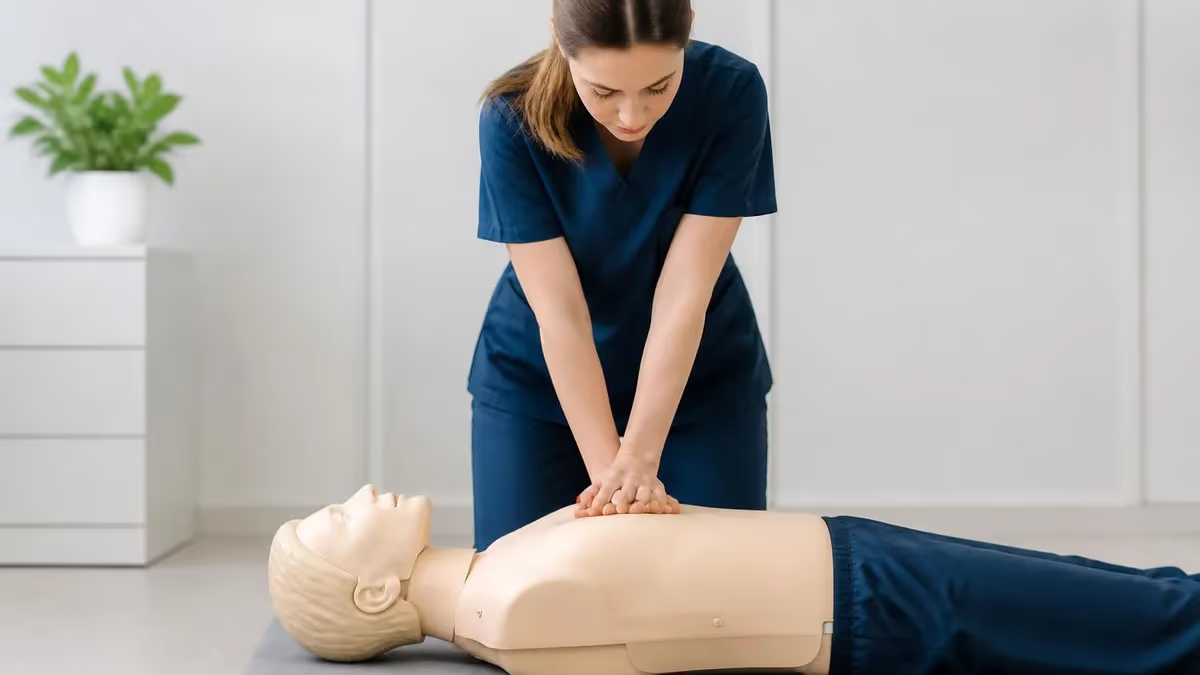
Infant CPR Compression to Ventilation Ratios
Infant CPR uses different ratios than adult CPR reflecting the unique anatomy and physiology of victims under one year of age. Single-rescuer infant CPR uses a 30 to 2 ratio matching adult CPR with thirty compressions followed by two rescue breaths. Two-rescuer infant CPR by healthcare providers uses a 15 to 2 ratio with fifteen compressions followed by two breaths. The different ratios optimize blood flow and ventilation for the specific needs of infant cardiac arrest victims.
The compression rate target of one hundred to one hundred twenty compressions per minute applies to infants matching adult and child CPR. The consistent rate across all age groups reflects underlying cardiovascular physiology requiring similar pumping cadence regardless of victim size. Maintaining proper compression rate during infant CPR requires careful pacing because the smaller compressions can feel different from adult CPR depth and resistance.
Compression depth for infants targets approximately one and a half inches or one third of chest depth. The shallower depth compared to adult CPR reflects infant chest dimensions. Compressing too deeply on infants risks injury to ribs and internal organs. The two-finger or two-thumb technique naturally produces appropriate depth when proper placement is maintained throughout the compression sequence supporting effective blood flow without injury.
Survival rates for infant cardiac arrest vary substantially based on whether bystander CPR begins before professional emergency responders arrive. Studies consistently show double or triple survival rates when bystanders perform CPR compared to waiting for emergency responders. The simple reality is that brain damage begins within four to six minutes of cardiac arrest while emergency response times often exceed this window in many communities. Bystander CPR fills the critical early intervention gap.
Childcare provider training in infant CPR has become standard requirement in most licensed childcare settings. Daycare centers, preschools, and similar facilities require staff CPR certification including infant CPR techniques. Many require periodic refresher training to maintain currency. The professional requirements support consistent skill availability across the childcare workforce caring for substantial numbers of infants across communities every day.
Childcare provider training in infant CPR has become standard requirement in most licensed childcare settings. Daycare centers, preschools, and similar facilities require staff CPR certification including infant CPR techniques. Many require periodic refresher training to maintain currency. The professional requirements support consistent skill availability across the childcare workforce caring for substantial numbers of infants across communities every day.
Childcare provider training in infant CPR has become standard requirement in most licensed childcare settings. Daycare centers, preschools, and similar facilities require staff CPR certification including infant CPR techniques. Many require periodic refresher training to maintain currency. The professional requirements support consistent skill availability across the childcare workforce caring for substantial numbers of infants across communities every day.
Infant CPR Ratio Quick Facts
Single-rescuer infant CPR uses 30 compressions to 2 breaths ratio. Two-rescuer healthcare provider CPR uses 15 to 2 ratio. Compression rate 100 to 120 per minute. Compression depth 1.5 inches or one-third chest depth. Two-finger or two-thumb-encircling-hands technique for infant CPR. Different from adult and child CPR techniques.
Survival rates double or triple when bystander CPR begins before emergency responders arrive. The simple action of beginning CPR fills the critical 4 to 6 minute window before brain damage begins from cardiac arrest.
Single Rescuer Infant CPR
Single-rescuer infant CPR uses thirty compressions followed by two rescue breaths repeating in cycles. The ratio matches adult CPR despite the different compression technique infants require. After thirty compressions, the rescuer delivers two effective rescue breaths covering the infant nose and mouth with their own mouth. Each breath lasts approximately one second and should produce visible chest rise indicating effective ventilation reaching the infant lungs.
Compression technique for single rescuer uses two fingers placed in the middle of the chest just below an imaginary line connecting the nipples. The index and middle fingers typically work though some rescuers prefer middle and ring fingers based on hand size. Compress straight down approximately one and a half inches at rate of one hundred to one hundred twenty per minute. Allow complete chest recoil between compressions supporting cardiac refilling.
Ventilation technique for infant CPR involves opening the airway through head-tilt chin-lift in neutral position. Avoid over-extending the neck because excessive extension can collapse the infant airway rather than opening it. Cover the infant nose and mouth with your own mouth creating a seal. Deliver gentle breaths just enough to make the chest rise. Larger breaths can over-inflate the small lungs and cause gastric distention or barotrauma.
Parental anxiety about performing CPR on their own children sometimes prevents action during emergencies. The fear of causing additional harm produces hesitation that costs valuable seconds. Understanding that imperfect CPR substantially outperforms no CPR helps overcome this anxiety. Even compressions delivered with poor technique provide some blood flow that pure inaction cannot match. Training that emphasizes action over perfection produces better real-world response.
Grandparent CPR training has emerged as growing area of interest as grandparents increasingly take primary caregiving roles. Generational shifts in family structures combined with childcare costs produce arrangements where grandparents provide substantial childcare. Their preparedness through infant CPR training matches the caregiving responsibilities they have taken on supporting safe environments for infant grandchildren in their care.
Grandparent CPR training has emerged as growing area of interest as grandparents increasingly take primary caregiving roles. Generational shifts in family structures combined with childcare costs produce arrangements where grandparents provide substantial childcare. Their preparedness through infant CPR training matches the caregiving responsibilities they have taken on supporting safe environments for infant grandchildren in their care.
Grandparent CPR training has emerged as growing area of interest as grandparents increasingly take primary caregiving roles. Generational shifts in family structures combined with childcare costs produce arrangements where grandparents provide substantial childcare. Their preparedness through infant CPR training matches the caregiving responsibilities they have taken on supporting safe environments for infant grandchildren in their care.

Infant CPR Key Numbers
Thirty compressions followed by two breaths for single-rescuer infant CPR. Matches adult ratio though technique differs substantially. Most common ratio used by community responders. Specific values reflect current American Heart Association guidelines that update periodically based on new resuscitation research.
Fifteen compressions to two breaths when two healthcare provider rescuers work together. The lower ratio allows more frequent ventilation supporting infant oxygenation needs. Specific values reflect current American Heart Association guidelines that update periodically based on new resuscitation research.
Compression rate target measured in compressions per minute. Consistent across all age groups reflecting underlying cardiovascular physiology requiring similar pumping cadence. Specific values reflect current American Heart Association guidelines that update periodically based on new resuscitation research.
Compression depth target for infants. Approximately one-third of chest depth. Shallower than adult depth reflecting infant chest dimensions and risk of injury from excessive depth. Specific values reflect current American Heart Association guidelines that update periodically based on new resuscitation research.
Two Rescuer Infant CPR
Two-rescuer infant CPR by healthcare providers uses the 15 to 2 ratio that supports more frequent ventilation than single-rescuer 30 to 2 ratio. The lower compression count between ventilations means infants receive ventilation roughly twice as often during the same time period. The increased ventilation frequency matches infant physiology where adequate oxygenation matters substantially for cardiac arrest survival outcomes.
Two-thumb-encircling-hands technique typically works better than two-finger technique for two-rescuer CPR. The compressing rescuer places both thumbs over the lower third of the sternum with fingers wrapping around the infant chest. The fingers provide back support while thumbs deliver compressions. The technique produces slightly better hemodynamics than two-finger technique in clinical research supporting its preference for healthcare provider use when feasible.
Rescuer coordination during two-rescuer CPR follows clear role assignments. The compressing rescuer focuses on consistent rate and depth of compressions. The ventilating rescuer positions at the head managing airway and delivering breaths during the appropriate pause between compression sequences. Communication including counting compressions out loud supports coordination and timing across the two rescuers during the demanding resuscitation effort.
Sudden infant death syndrome remains a leading cause of infant death producing scenarios where CPR may be attempted. Recent research suggests SIDS rates have declined substantially as safe sleep practices have spread including back sleeping, separate sleep surfaces, and avoidance of soft bedding. CPR training for parents remains valuable even as SIDS prevention has improved because various other emergency scenarios can still affect infants requiring CPR response.
Infant CPR Steps
Check responsiveness through tapping infant feet and shouting. Activate emergency response system. Send second rescuer if available to get AED and call for help. The assessment and activation must complete quickly to support timely start of CPR if needed.
Each step must be performed with appropriate technique to support effective CPR. Practice through certified training programs builds the technique sense needed for actual emergency response.
When to Use Infant CPR Versus Child CPR
Age determines whether infant or child CPR technique applies. Infant CPR applies to victims under one year of age. Child CPR applies to victims one year through puberty onset typically around age eight. Adult CPR applies after puberty onset. The age boundaries reflect underlying physiological differences that affect optimal CPR technique. Using inappropriate technique for the actual age category produces suboptimal blood flow that compromises survival outcomes.
Size considerations apply when victims do not fit clearly into standard age categories. A small one-year-old might benefit from continued infant technique while a large eleven-month-old might be ready for child technique. Rescuer judgment based on victim size and apparent development supports technique selection in edge cases. The goal is delivering effective CPR rather than rigid adherence to age boundaries that may not match physiological reality.
Healthcare provider settings often follow stricter age boundaries because of formal protocols and consistent training. Pediatric advanced life support PALS training establishes specific age-based protocols. Community responder training typically allows more rescuer judgment given the practical reality that age may not always be known during emergencies. Both approaches produce effective response when applied thoughtfully to specific victim characteristics.
Cultural and family considerations affect infant CPR training participation. Some cultures emphasize family responsibility for elder care that translates to interest in caregiver training. Other family structures concentrate CPR knowledge in specific family members. Multi-generational training where grandparents, parents, and older siblings all complete CPR training produces households with multiple potential responders to emergencies affecting infant family members.
Using adult CPR technique on infants can cause serious injury. The full-hand compressions, deeper depth, and larger breaths appropriate for adults are too forceful for infants. Conversely, infant technique may not produce adequate blood flow for adult victims. Knowing age-appropriate technique before emergencies arise supports effective response when seconds matter for survival outcomes.
Parental anxiety can prevent action during emergencies. Understanding that imperfect CPR vastly outperforms no CPR helps overcome hesitation. Training emphasizes action over perfection supporting better real-world emergency response.
Common Infant CPR Scenarios
Sudden infant death syndrome remains a leading cause of infant death producing scenarios requiring CPR. Parents and caregivers should learn infant CPR through certified training before children are born. Hospital prenatal classes typically include infant CPR basics. American Heart Association and American Red Cross offer Heartsaver and similar courses covering infant CPR through community training centers. The training investment produces preparation that can save lives in unexpected emergencies.
Choking incidents in infants sometimes progress to cardiac arrest if obstruction cannot be cleared. Infant choking response begins with back blows and chest thrusts rather than abdominal thrusts used for older victims. If consciousness is lost despite anti-choking efforts, CPR begins with the standard ratio and technique. Looking in the mouth before each ventilation can identify dislodged objects supporting continued response that combines anti-choking with CPR.
Drowning incidents produce infant cardiac arrest requiring immediate CPR after removal from water. The combination of asphyxia and possible aspiration of water complicates response but standard infant CPR remains the foundation. Beginning CPR immediately while another person calls for help maximizes survival chances. Continued CPR until emergency responders arrive supports the best possible outcomes for these challenging emergency situations involving young victims.
Technology integration with infant CPR continues evolving through feedback devices that monitor compression depth and rate during actual emergencies. Smartphone apps providing real-time pacing audio during CPR support adequate rate maintenance. Wearable devices monitoring rescuer technique are emerging as next-generation aids. The technology developments may improve real-world CPR effectiveness substantially over the coming years as adoption spreads.
Infant CPR Quick Reference Checklist
- ✓Verify infant unresponsive and not breathing normally before beginning CPR
- ✓Use 30 compressions to 2 breaths ratio for single rescuer
- ✓Use 15 to 2 ratio for two healthcare provider rescuers
- ✓Compress at 100 to 120 per minute rate measured by counting silently
- ✓Compress approximately 1.5 inches deep or one-third of chest depth
- ✓Allow complete chest recoil between compressions for cardiac refilling
- ✓Continue CPR until professional emergency responders arrive and take over response
- ✓Refresh CPR training every two years to maintain technique skills that degrade over time
- ✓Practice on quality infant manikins with feedback to develop accurate compression depth and rate
Defibrillation in Infant CPR
Automated external defibrillator AED use in infant CPR follows specific guidelines reflecting infant anatomy. Pediatric pads with infant settings should be used when available. Adult pads can be used if pediatric pads are not available though they may need repositioning to avoid pad overlap on the small infant chest. Some AED protocols recommend front-back pad placement for infants rather than the standard upper-chest plus lower-side placement used for older victims.
Energy levels for infant defibrillation follow pediatric protocols typically delivering two joules per kilogram for the first shock and four joules per kilogram for subsequent shocks. Most AEDs handle the energy calculation automatically through pediatric mode settings. The reduced energy compared to adult defibrillation matches the smaller infant body size while still delivering effective rhythm conversion when shockable rhythms are present.
Continued CPR between AED analyses and shocks maintains blood flow during the brief AED operation periods. The minimal interruption in compressions supports better outcomes than longer pauses. AED guidance about when to resume CPR after shocks should be followed immediately. The integrated AED and CPR response produces the strongest survival chances for infant cardiac arrest scenarios involving shockable rhythms appropriate for defibrillation intervention.
Training for Infant CPR
Certified infant CPR training through American Heart Association, American Red Cross, or other recognized providers builds the skills needed for emergency response. Heartsaver courses target community audiences including parents and childcare workers. BLS Healthcare Provider courses serve clinical staff. Pediatric Advanced Life Support PALS courses prepare healthcare providers for complex infant emergencies. Each training level serves specific audiences with appropriate depth.
Practice with infant manikins builds the muscle memory needed for emergency response. The compression depth, ventilation volume, and technique placement all require hands-on practice rather than just classroom instruction. Quality training programs include substantial manikin practice across all participants. Feedback manikins providing objective measurement of compression depth and rate produce stronger skill development than manikins without electronic feedback.
Refresher training every two years maintains skill currency. Even practiced rescuers experience skill degradation over time without practice. The biennial refresher cadence aligns with standard CPR certification renewal cycles. Parents of multiple children often refresh through subsequent prenatal classes with each pregnancy supporting current preparation throughout the demanding parenting years of young children. The consistent practice supports readiness for emergencies that may never occur but require preparation in case they do.

Infant CPR Quick Numbers
Infant CPR vs Other Ages
Two-finger or two-thumb-encircling-hands compressions. 1.5 inch depth. 30:2 single rescuer or 15:2 two rescuer ratios. Specific values reflect current American Heart Association guidelines that update periodically based on new resuscitation research.
One or two-hand compressions based on child size. 2 inch depth. 30:2 ratios for both single and two rescuer scenarios in basic life support. Specific values reflect current American Heart Association guidelines that update periodically based on new resuscitation research.
Two-hand compressions. At least 2 inch depth. 30:2 ratio for single rescuer or two-rescuer adult CPR using the standard ratio. Specific values reflect current American Heart Association guidelines that update periodically based on new resuscitation research.
Two-thumb-encircling for two rescuers. 3:1 compression to ventilation ratio for newborns with primary respiratory cause of arrest. Specialized newborn resuscitation differs from infant CPR for older babies. Specific values reflect current American Heart Association guidelines that update periodically based on new resuscitation research.
Common Mistakes to Avoid
Incorrect compression depth either too shallow or too deep produces suboptimal outcomes. Too shallow compressions fail to circulate adequate blood. Too deep compressions risk rib fractures and internal organ injuries. Practicing on quality infant manikins with feedback builds the technique sense needed for appropriate depth. The shallow compression error appears more often than too deep error because rescuers may unconsciously hold back to avoid injury when actual technique requires firmer compressions.
Inadequate chest recoil produces compromised cardiac refilling between compressions. Leaning on the chest between compressions prevents the heart from refilling supporting subsequent compressions. Full release between compressions takes deliberate practice because the natural rhythm of pressing down and releasing fully may not initially occur without conscious attention. Manikins with recoil feedback help develop this critical technique element during training.
Over-ventilation through too-large breaths or too-frequent breaths produces complications including gastric distention and reduced cardiac output. Gentle breaths just enough to make the chest rise represent appropriate ventilation volume. The infant lungs are small and over-inflation can produce barotrauma. The two-second breath delivery time provides natural pacing supporting appropriate ventilation pressure without rushing that could otherwise produce excessive force.
Infant CPR Training Pros and Cons
- + —
- + —
- + —
- + —
- + —
- − —
- − —
- − —
- − —
- − —
CPR Questions and Answers
About the Author

Registered Nurse & Healthcare Educator
Johns Hopkins University School of NursingDr. Sarah Mitchell is a board-certified registered nurse with over 15 years of clinical and academic experience. She completed her PhD in Nursing Science at Johns Hopkins University and has taught NCLEX preparation and clinical skills courses for nursing students across the United States. Her research focuses on evidence-based exam preparation strategies for healthcare certification candidates.
Join the Discussion
Connect with other students preparing for this exam. Share tips, ask questions, and get advice from people who have been there.
View discussion (5 replies)