
Get CPR Certified Online: Complete Guide to Certification, Courses, and Exam Prep
Learn how to get CPR certified online in 2026 October. ✏️ Compare courses, costs, providers, and prep tips to pass your certification exam with confidence.
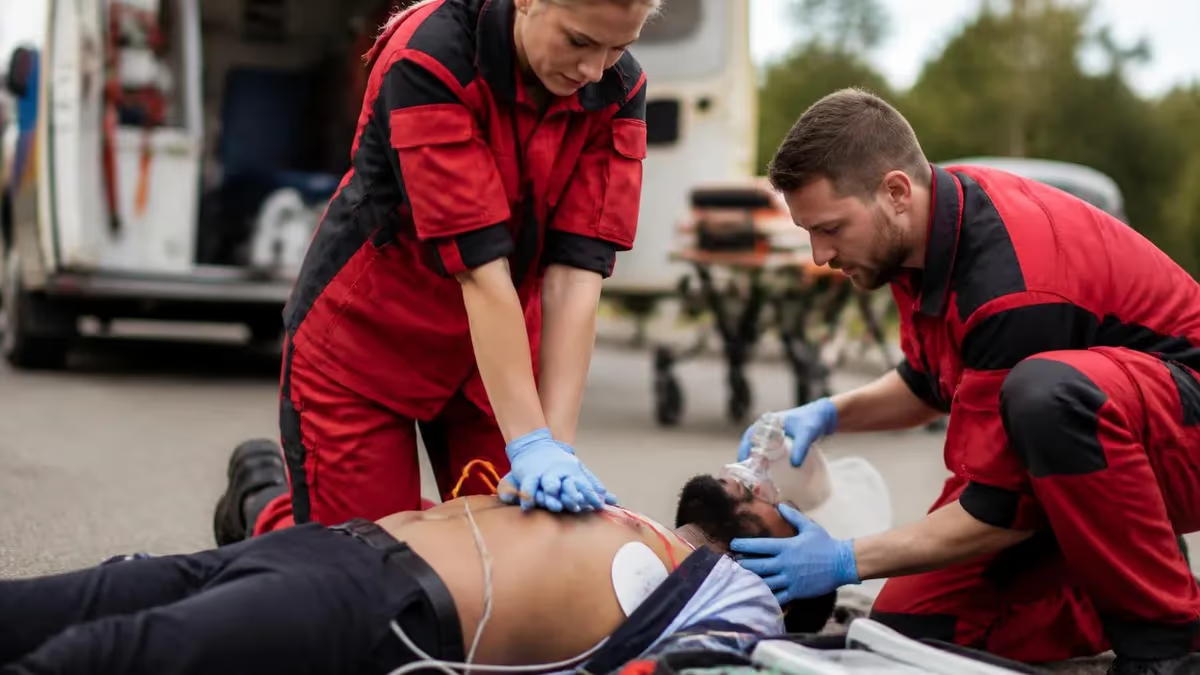
If you want to get CPR certified online, you are joining millions of Americans who complete cardiopulmonary resuscitation training every year to protect coworkers, family members, and strangers during life-threatening emergencies. Online CPR certification has become the most accessible and cost-effective path to earning a credential that employers, schools, and volunteer organizations widely recognize. Whether you are a first-time student or renewing an expired card, understanding how the process works will save you time and money.
The demand for CPR certification spans nearly every industry. Healthcare workers, teachers, coaches, fitness instructors, childcare providers, lifeguards, and construction supervisors often list CPR certification as a job requirement. Beyond professional necessity, millions of ordinary adults pursue certification because the American Heart Association estimates that nearly 350,000 out-of-hospital cardiac arrests occur in the United States each year, and bystander CPR can double or triple survival rates when delivered promptly and correctly.
Online CPR courses have exploded in popularity since blended and fully digital formats became widely accepted. You can now complete the knowledge portion of your training at home in as little as two to four hours, then optionally schedule a brief in-person skills session to obtain a certification card accepted by employers. Fully online certifications are also available and carry broad recognition for non-clinical positions. Understanding the difference between these formats before you enroll is essential so you choose the path that actually meets your employer or school's requirements.
Cost is another major factor that drives people toward online certification. Traditional classroom-only CPR courses at community colleges or hospital training centers can cost $60 to $150 per student. By contrast, many reputable online providers offer full certification packages for $15 to $50. Renewal courses are typically even less expensive since students are reviewing familiar material rather than learning from scratch. Knowing what to expect financially lets you budget wisely and avoid overpaying for a credential that a less expensive provider can deliver with equal validity.
Preparing for your CPR certification exam is just as important as choosing the right course. The written knowledge assessments included in most online programs test your understanding of chest compression rates, rescue breathing ratios, AED operation, choking response, and recognition of cardiac arrest versus other medical emergencies. Many students underestimate these assessments and are surprised to encounter nuanced scenario-based questions. Targeted practice using cert-seeker resources dramatically improves exam performance on the first attempt.
This guide covers everything you need to know to get CPR certified online successfully: how to choose a course, what the exam covers, how much certification costs, which providers are most widely accepted, and how to study effectively so you pass on the first try. Whether you are pursuing Basic Life Support for a healthcare role, a standard adult CPR card for workplace requirements, or a pediatric add-on for childcare work, the roadmap ahead will help you earn your credential with confidence and minimal stress.
By the end of this article you will have a clear picture of the certification landscape, a realistic timeline for completing your training, actionable study strategies, and direct access to free practice tests that mirror the questions you will face during your actual exam. The goal is not just to get certified — it is to genuinely understand the skills well enough to save a life when it matters most.
CPR Certification by the Numbers
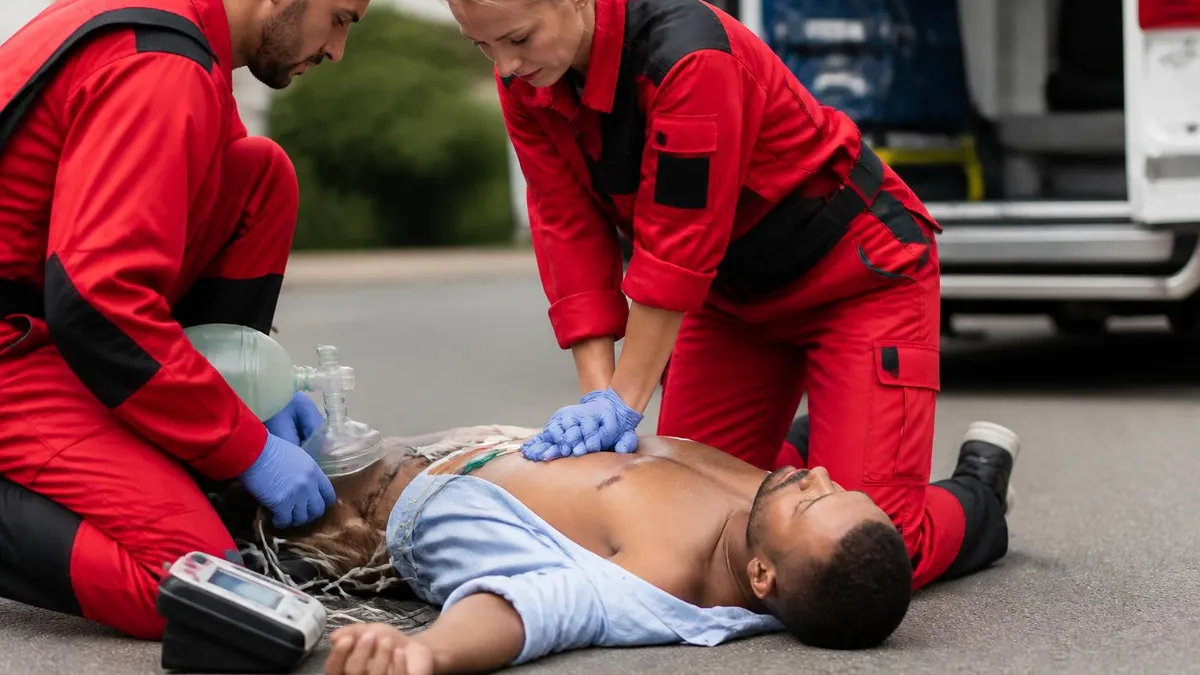
CPR Certification Course Formats Explained
Complete all coursework and the knowledge exam digitally. No in-person session required. Accepted broadly for non-clinical positions such as teachers, coaches, fitness professionals, and workplace first responders. Usually the fastest and least expensive option.
Complete the knowledge training online, then attend a brief hands-on skills session at a local training center. Required for healthcare providers seeking AHA BLS or Red Cross BLS certification. Combines convenience with practical skill verification.
Traditional in-person format taught by a certified instructor. Covers both knowledge and hands-on skills in a single session lasting two to four hours. Often required by hospitals and clinical employers. Higher cost but immediate card issuance.
Extends standard CPR certification to include Automated External Defibrillator operation. Many employers and schools require this combined credential. Available in all three delivery formats and typically adds only 30 to 60 minutes to total course time.
Understanding what the CPR certification exam actually covers is critical for anyone serious about passing on the first attempt. Most online and blended CPR programs include a written knowledge assessment at the end of the digital coursework. These assessments are not simply true-or-false trivia — they include scenario-based questions that require you to apply correct techniques to realistic emergency situations. Knowing the material at a conceptual level is not enough; you must understand the precise numbers and sequences that guide effective CPR delivery.
Chest compression depth and rate are among the most commonly tested topics. For adults, the American Heart Association recommends compressions to a depth of at least two inches but no more than two and a half inches, delivered at a rate of 100 to 120 compressions per minute. Many test-takers confuse these values or reverse the depth and rate figures under exam pressure. Repeated practice with flashcards and timed drills helps lock these numbers into memory so they become automatic responses rather than conscious recollections.
The compression-to-ventilation ratio is another heavily tested concept. For a single rescuer performing CPR on an adult, the standard ratio is 30 compressions followed by 2 rescue breaths. For infant CPR performed by two healthcare providers, the ratio changes to 15 compressions and 2 breaths. Exams frequently present questions that vary the patient age, number of rescuers, and presence or absence of an advanced airway to test whether candidates understand the contextual rules rather than just memorizing a single default ratio.
AED operation is tested thoroughly in almost all CPR certification exams, especially courses that include an AED component. Questions cover when to apply AED pads, where to place them on the chest, what to do if the patient has a pacemaker or implanted device visible beneath the skin, how to handle a patient who is wet or lying on a metal surface, and what voice prompts to follow during analysis and shock delivery.
The key principle — always follow the AED's voice instructions and ensure no one is touching the patient during shock — appears in exam questions in multiple different phrasings.
Recognition of cardiac arrest is another area where exam questions test nuanced judgment. Students must distinguish between an unresponsive patient who is not breathing normally (requiring immediate CPR) and one who is breathing adequately (requiring monitoring and emergency services contact without CPR). Agonal breathing — the gasping, irregular breaths that sometimes occur immediately after cardiac arrest — is a commonly tested edge case. Recognizing agonal breathing as a sign of cardiac arrest rather than normal breathing is a critical distinction that appears on virtually every CPR exam.
Infant and child CPR techniques differ from adult techniques in several key ways that exams exploit to separate informed candidates from those who only learned adult protocols. For infants, rescuers use two fingers rather than the heel of the hand for compressions. Compression depth for infants is approximately one and a half inches. The head-tilt-chin-lift maneuver must be gentler for infants to avoid closing the airway by overextending the neck. Child CPR generally uses the same 30:2 ratio as adult CPR for single rescuers but may use one or two hands depending on the child's size.
Choking response protocols are included in most comprehensive CPR certification exams. The Heimlich maneuver for conscious adults and children, back blows and chest thrusts for infants, and the modified approach for pregnant or obese patients all appear as exam topics. Exams test your ability to recognize the difference between a mild airway obstruction — where the patient can still cough forcefully and speak — and a severe obstruction requiring immediate intervention. Acting too early or too late in either scenario represents a mistake the exam is designed to catch.
Top CPR Certification Providers Compared
The American Heart Association (AHA) is the most widely recognized CPR certification body in the United States, particularly for healthcare professionals. Their Heartsaver CPR AED course targets laypeople and workplace responders, while the Basic Life Support (BLS) course is the gold standard for nurses, doctors, paramedics, and allied health workers. AHA certifications are accepted by virtually every hospital, clinic, and healthcare employer nationwide, making them the safest choice when your employer has not specified an approved provider.
AHA blended learning courses allow students to complete the knowledge modules online at their own pace before attending a brief skills check with an authorized instructor. The online portion typically takes two to three hours and covers adult, child, and infant CPR plus AED use. The in-person skills session usually lasts 30 to 90 minutes depending on the specific course. AHA certification cards are valid for two years and must be renewed through an authorized training site. Costs range from approximately $30 for the online portion to $80 or more when combined with an in-person skills session at a training center.
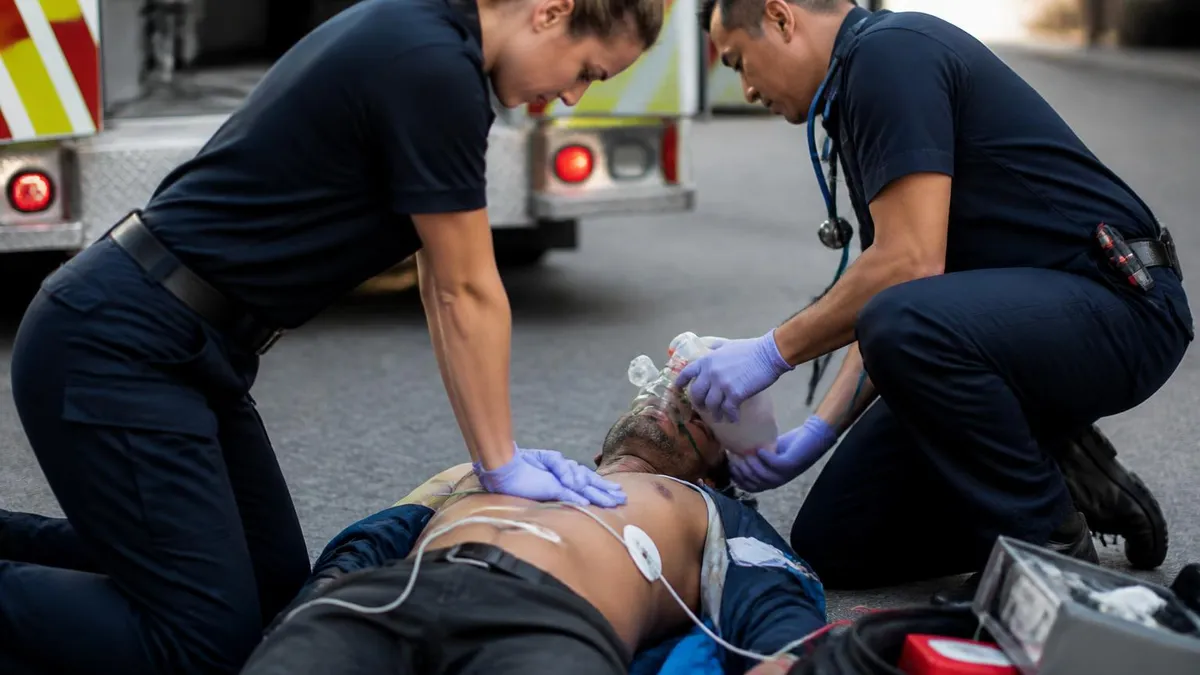
Online CPR Certification: Pros and Cons
- +Complete the knowledge portion from home on your own schedule, eliminating travel time and rigid class times
- +Significantly lower cost compared to traditional classroom-only courses — often $15 to $50 total
- +Instant digital certificate delivery upon passing the online assessment, useful for immediate employment verification
- +Ability to pause, rewind, and review training videos as many times as needed before taking the exam
- +Wide provider selection allows you to compare course content, costs, and provider reputation before committing
- +Renewal courses are especially convenient online since experienced holders can move through familiar material quickly
- −Fully online certifications are not accepted by most hospitals, clinical employers, or healthcare licensing boards
- −No live instructor means hands-on feedback on compression depth and hand placement is unavailable during online-only training
- −Quality and rigor vary significantly across providers, making it difficult for non-experts to evaluate course credibility
- −In-person skills sessions for blended courses still require scheduling and travel to a local training center
- −Online test-taking environments can have technical issues that delay certificate delivery or require retakes
- −Some learners retain physical skills better through direct classroom instruction with immediate instructor correction
Pros and Cons at a Glance
| Pros | Cons |
|---|---|
| Complete the knowledge portion from home on your own schedule, eliminating travel time and rigid class times | Fully online certifications are not accepted by most hospitals, clinical employers, or healthcare licensing boards |
| Instant digital certificate delivery upon passing the online assessment, useful for immediate employment verification | No live instructor means hands-on feedback on compression depth and hand placement is unavailable during online-only training |
| Ability to pause, rewind, and review training videos as many times as needed before taking the exam | Quality and rigor vary significantly across providers, making it difficult for non-experts to evaluate course credibility |
| Wide provider selection allows you to compare course content, costs, and provider reputation before committing | In-person skills sessions for blended courses still require scheduling and travel to a local training center |
| Renewal courses are especially convenient online since experienced holders can move through familiar material quickly | Online test-taking environments can have technical issues that delay certificate delivery or require retakes |
CPR Certification Study Checklist
- ✓Confirm your employer's or school's accepted CPR certification provider before enrolling in any course
- ✓Review adult compression depth (at least 2 inches) and rate (100–120 per minute) until both are memorized
- ✓Memorize the 30:2 compression-to-ventilation ratio for single-rescuer adult and child CPR
- ✓Study the two-rescuer pediatric ratio of 15 compressions to 2 breaths used by healthcare providers
- ✓Learn the specific infant CPR technique: two-finger compressions to approximately 1.5 inches depth
- ✓Practice recognizing agonal breathing as a sign of cardiac arrest requiring immediate CPR, not normal breathing
- ✓Review AED pad placement for standard adults, patients with pacemakers, and wet or special-surface scenarios
- ✓Study the Heimlich maneuver steps for adults, children, infants, and pregnant or obese patients
- ✓Take at least three full-length practice tests before your certification exam to identify weak knowledge areas
- ✓Schedule your in-person skills check session at least one week before your certification deadline to allow rescheduling if needed
Bystander CPR Survival Fact
Studies published in the journal Circulation show that immediate bystander CPR improves survival from out-of-hospital cardiac arrest by 40 to 60 percent compared to waiting for emergency services. Yet fewer than 40 percent of cardiac arrest victims receive bystander CPR before paramedics arrive. Getting certified — and actually retaining what you learn — directly translates into lives saved.
Understanding CPR certification costs helps you make a financially smart decision without sacrificing credential quality. The price you pay depends primarily on three factors: the certification format you choose, the provider you select, and whether you need an initial certification or a renewal. Being clear about these variables before you start shopping will prevent you from overpaying or purchasing a credential that does not meet your requirements.
Fully online CPR certifications from reputable providers typically cost between $15 and $40 for a standard adult CPR course. Adding AED training or pediatric modules usually increases the price by $5 to $15 per add-on. Some providers bundle adult CPR, pediatric CPR, and AED training into a single package for $35 to $60, which is an excellent value for individuals who need comprehensive coverage for childcare, teaching, or multi-hazard workplace environments. Renewal rates for fully online certifications are frequently 20 to 30 percent lower than initial certification rates since course content is condensed for experienced holders.
Blended AHA and Red Cross courses carry higher total costs because they include both the digital component and an in-person skills session with a certified instructor. The online portion of an AHA Heartsaver CPR AED course often costs $30 to $40 through authorized training centers. The in-person skills check adds another $25 to $60 depending on location and provider. Total blended course costs therefore range from approximately $50 to $100 for most students. AHA BLS certification for healthcare providers costs more — typically $60 to $150 total — because the course is longer and more technically demanding.
Group training rates offer significant savings for organizations. Employers, schools, churches, and community organizations that train five or more people simultaneously can often negotiate per-student rates that are 30 to 50 percent lower than individual enrollment prices. Many training centers offer on-site group instruction for an additional facility fee, which eliminates employee travel time and allows training to occur during work hours. For businesses with mandatory CPR requirements, group training is almost always the most cost-effective approach when five or more employees need simultaneous certification or renewal.
Hidden costs are worth considering before finalizing your enrollment decision. Some providers charge separately for digital certificates and physical wallet cards, with physical cards costing $5 to $15 in addition to the course fee. Rescheduling fees for missed in-person skills sessions can range from $15 to $30 at some training centers. Exam retake fees, while rare for CPR certifications since most providers allow unlimited online retakes, may apply at certain institutions. Reading the full pricing breakdown before paying prevents unwelcome surprises after you have already committed to a provider.
Insurance reimbursement is available for CPR certification in some circumstances. Healthcare workers whose employers require BLS certification as a condition of employment can sometimes claim certification costs as unreimbursed employee expenses or request employer reimbursement directly. Some health insurance plans and flexible spending accounts also allow CPR certification costs to be submitted for reimbursement as a preventive health expense, though this varies by plan. Teachers in some states may qualify for professional development reimbursement funds that cover CPR training costs. It is worth a few minutes to investigate these options before paying out of pocket.
Free CPR training resources supplement paid certification in meaningful ways. Many communities offer free Hands-Only CPR training events sponsored by hospitals, the American Heart Association, and local fire departments. These events teach the core compression technique without full certification but dramatically increase community bystander readiness. Public libraries, community centers, and employer wellness programs sometimes offer free or heavily subsidized certification courses as well. While these free resources may not substitute for formal certification where an employer requires a card, they provide valuable skills practice that makes paid training more productive when you do enroll.
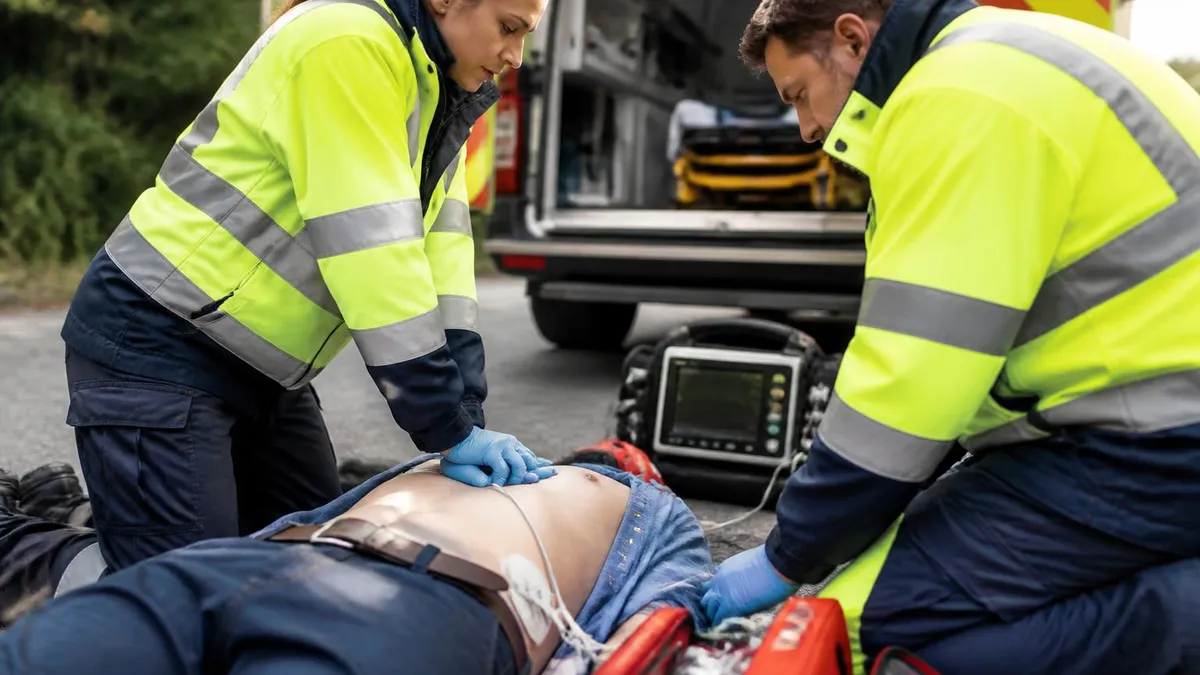
Most CPR certifications expire after exactly two years from the issue date. Allowing your certification to lapse — even by a single day — may disqualify you from legally fulfilling job duties that require a current credential, trigger compliance violations for your employer, or cause delays in professional license renewals that list active CPR certification as a prerequisite. Set a calendar reminder six weeks before your expiration date to allow ample time to schedule and complete renewal without rushing.
Passing your CPR certification exam on the first attempt requires deliberate preparation rather than passive review of training videos. Most online CPR assessments allow unlimited retakes, but passing immediately signals to employers that you have truly internalized the material rather than simply clicking through slides until the software advances you. A targeted study strategy built around practice testing, spaced repetition, and scenario analysis will give you both the exam score and the genuine competence you need in a real emergency.
Practice tests are the single most effective study tool available to CPR certification candidates. Taking realistic multiple-choice questions under simulated exam conditions forces active recall — you must retrieve information from memory rather than simply recognizing it when prompted by training videos. Research consistently shows that active recall practice produces significantly better long-term retention than passive re-reading or re-watching. For CPR specifically, active recall of compression rates, depth measurements, and rescue breath volumes helps hardwire these critical numbers so they remain accessible under the stress of an actual emergency.
Spaced repetition enhances the benefits of practice testing by distributing study sessions over several days rather than cramming everything into a single marathon session. If you have a week before your certification exam, spend 20 to 30 minutes each day reviewing a focused topic area rather than trying to cover everything in one sitting the night before.
Day one might focus on adult CPR fundamentals; day two on infant and child differences; day three on AED operation; day four on choking response; day five on two-rescuer techniques; day six on a full-length mixed practice test. This distributed approach produces measurably better retention than equivalent hours crammed into one session.
Scenario-based thinking is a study technique that many CPR candidates overlook until they encounter scenario questions on their actual exam. Rather than memorizing isolated facts, practice applying protocols to described situations: a 58-year-old man collapses in a grocery store and is unresponsive and not breathing normally — what do you do first?
A two-month-old infant chokes on a small toy and cannot cry — describe your response. An AED is applied to a patient who is lying in a puddle of water — what do you do before delivering a shock? Rehearsing these scenarios in your mind builds the decision-making pathways that transform abstract knowledge into reliable emergency response capability.
Video review of CPR technique complements written practice test preparation. Watching demonstrations of correct compression hand placement, compression depth, and rescue breath delivery helps you visualize technique correctly, which improves both exam performance on technique-related questions and actual physical skill execution during the hands-on skills check. The AHA and Red Cross both offer free video resources on their websites. YouTube also hosts instructional content from verified medical organizations that is appropriate for study purposes, though you should prioritize official AHA and Red Cross content to ensure you are learning current guidelines rather than outdated techniques.
Group study sessions offer a social accountability benefit that solo studying cannot replicate. Practicing CPR sequences verbally with a study partner — announcing each step aloud as you go — reinforces procedural memory and often reveals gaps in your knowledge that quiet solo review misses. If you are preparing for a blended course skills check, practicing compressions on a household pillow or sofa cushion with appropriate depth pressure engages muscle memory even without a formal manikin, helping you calibrate the physical sensation of adequate compression depth before your in-person session.
Finally, reviewing your practice test mistakes analytically rather than just noting the correct answer significantly improves your exam readiness. For every question you answer incorrectly, ask yourself why the correct answer is right and why each wrong answer is wrong. This analysis forces deeper engagement with the material and helps you understand the underlying principle rather than simply memorizing the answer to that specific question. Over multiple practice sessions, the number of questions you miss on repeated topics should steadily decline — a reliable indicator that genuine learning is occurring rather than temporary familiarity that will fade by exam day.
The days immediately before your CPR certification exam are best spent reinforcing knowledge rather than introducing new material. If you have followed a structured study schedule, your final review sessions should feel like confident confirmation rather than anxious cramming. Focus on the topics where your practice test performance was weakest: if AED pad placement consistently tripped you up, spend extra time on that specific protocol. If two-rescuer pediatric ratios feel uncertain, drill that ratio — 15 compressions to 2 breaths — until it feels as natural as your own name.
Sleep is a genuinely important factor in exam performance and is frequently undervalued by test-takers who spend the night before an exam reviewing material instead of resting. Research on memory consolidation shows that the brain processes and solidifies information learned during waking hours primarily during deep sleep cycles. Going into your exam rested and alert gives your recall systems optimal conditions to access the knowledge you have built over your study period. Eight hours of sleep the night before your exam will almost certainly serve you better than two additional hours of late-night review followed by six hours of sleep.
Morning-of exam preparation should include a brief, low-pressure review of the most critical numerical values: compression rate 100–120 per minute, adult compression depth at least 2 inches, infant compression depth 1.5 inches, 30:2 adult and child single-rescuer ratio, 15:2 two-rescuer pediatric ratio. These numbers are the foundation of CPR knowledge and appear on nearly every exam in some form. Having them sharp in your mind as you begin the assessment creates a confident starting foundation that carries through the rest of the exam.
During the online exam itself, read each question carefully before reviewing the answer choices. Scenario-based questions often contain important contextual details — patient age, number of rescuers, whether an AED is available — that determine the correct protocol. Rushing through the question stem and scanning only the answers is a common mistake that leads to selecting the right protocol for the wrong patient type. Take three to five seconds per question to fully process the scenario before evaluating answer options, even if the exam does not impose a time limit.
Process of elimination is an effective strategy for questions where you are uncertain. CPR exam answer choices are often designed with one clearly wrong option, one partially correct option, and two plausible options. Eliminating the clearly wrong option first, then analyzing the remaining choices based on protocol logic, improves your odds significantly even when you are not completely confident. Ask yourself: which answer choice most closely aligns with the sequential steps of the correct protocol? Which option introduces a step at the wrong point in the sequence or uses an incorrect value?
After passing your online knowledge assessment, prepare for the in-person skills check if your course requires one. Practice arriving at least ten minutes early so you have time to review the room, meet your instructor, and calm any pre-session nerves. During the skills demonstration, announce each step clearly as you perform it — rescuers are expected to call out assessments, compressions, and ventilations audibly.
If you make an error, do not freeze; correct yourself calmly and continue. Instructors are evaluating whether you can perform the sequence safely, not whether you perform it perfectly under pressure. A composed self-correction demonstrates competence, not weakness.
After earning your certification, store a digital copy in a secure cloud location such as Google Drive or iCloud in addition to keeping the physical wallet card. Employers frequently request digital verification on short notice, and having an immediately accessible copy prevents delays in employment paperwork.
Record your certification issue date and expiration date in your personal calendar with a reminder set for six weeks before expiration. This proactive approach ensures you renew well ahead of the deadline rather than scrambling at the last moment — a practice that reflects the same preparedness mindset that CPR training itself is designed to cultivate.
CPR Questions and Answers
How to Get CPR Certified: Steps, Cost, and Best Providers
CPR Cheat Sheet: The Complete Quick-Reference Guide for Adult, Child, and Infant Resuscitation
BLS CPR Certification: Course, Cost, and Healthcare Provider Guide
CPR Practice Test 2026 — Free Questions
Heart Attack vs Cardiac Arrest: Key Differences and What to Do
About the Author

Registered Nurse & Healthcare Educator
Johns Hopkins University School of NursingDr. Sarah Mitchell is a board-certified registered nurse with over 15 years of clinical and academic experience. She completed her PhD in Nursing Science at Johns Hopkins University and has taught NCLEX preparation and clinical skills courses for nursing students across the United States. Her research focuses on evidence-based exam preparation strategies for healthcare certification candidates.