
AHA CPR Classes Near Me: Complete Guide to Finding Approved Training, Certification, and Career-Ready Courses in 2026 October
Find AHA approved CPR classes near me with this 2026 October guide covering BLS, 📗 ACLS algorithm, PALS certification, costs, and career outcomes.
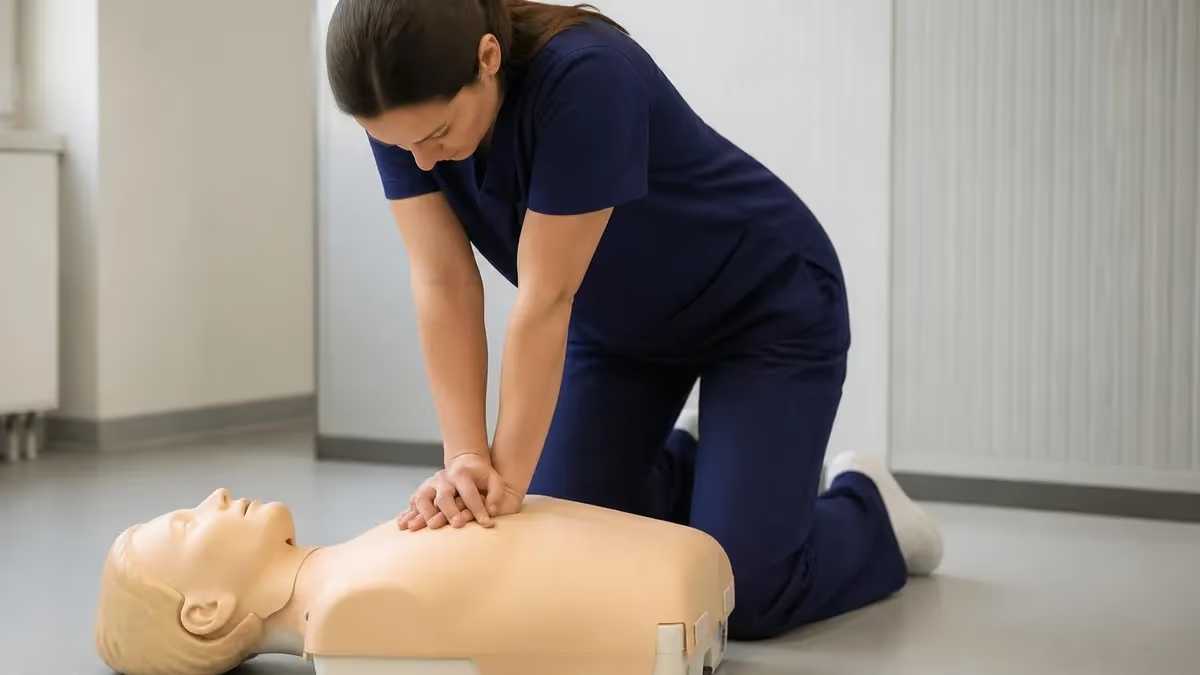
Searching for aha approved cpr classes near me is the first step toward a credential that hospitals, fire departments, daycares, and dental offices recognize without hesitation. The American Heart Association sets the gold standard for resuscitation training in the United States, and its courses are built around evidence the same scientific committees use to update the acls algorithm every five years. Whether you need a card for a new job, a clinical rotation, or a teaching license, an AHA class delivers the credential employers ask for by name.
The AHA portfolio includes Heartsaver CPR/AED for the general public, Basic Life Support (BLS) for healthcare providers, Advanced Cardiovascular Life Support (ACLS) for hospital teams, and Pediatric Advanced Life Support (PALS) for those treating children. Each course blends hands-on skills practice with cognitive testing, and every passing student walks away with a two-year eCard. Knowing what is aed usage, compression depth, and ventilation timing is core to all of them.
Finding a class nearby is easier than ever. The AHA Class Connector lets you filter by ZIP code, course type, and provider. Local training centers, community colleges, hospital education departments, and independent instructors with Training Center affiliation can all issue legitimate cards. Beware of programs that promise an AHA card from an online-only course with no skills check — those do not exist for BLS, ACLS, or PALS, which all require in-person psychomotor evaluation.
Cost varies more than most people expect. A Heartsaver class might run $55 in a community center but $110 at a private studio. BLS typically ranges from $65 to $95, ACLS from $200 to $300, and PALS from $200 to $290. Renewal classes and blended-learning options usually shave 20% to 35% off the initial price. Group rates for employers or nursing cohorts often bring the per-student cost below $50, which is why many workplaces sponsor on-site sessions.
Beyond price, the right class matches your career trajectory. A medical assistant student needs BLS. An ICU nurse needs BLS plus ACLS. A pediatric NP needs BLS plus PALS. A daycare worker only needs Heartsaver CPR/AED with the pediatric module. Matching the credential to the job description prevents wasted tuition and the awkward situation of showing up to orientation with the wrong card. Always confirm with HR before you register.
This guide walks through every step: how to verify a class is truly AHA-aligned, what each course covers, how to prepare, what to bring, and how to renew before your card expires. We will also compare AHA training with alternatives like the national cpr foundation and Red Cross programs, and cover what to do when the closest in-person class is hours away. By the end you will know exactly which course to book and what to expect when you walk through the door.
One last note before we dive in. The 2025 Guidelines update reinforced compression quality, early defibrillation, and team-based resuscitation as the highest-use skills. AHA classes spend more time than ever on feedback devices, real-time CPR coaching, and recognizing reversible causes of arrest. If your last class felt like a video marathon, the modern AHA experience is far more interactive — and that is exactly why employers continue to trust the brand.
AHA CPR Training by the Numbers
AHA Course Types and Who Needs Them
For the general public, teachers, coaches, lifeguards, and corporate first responders. Covers adult, child, and infant cpr plus AED use. No medical background required. Typically 3-4 hours with a written test and skills demonstration on a manikin.
Required for nurses, EMTs, dental staff, medical assistants, and most clinical students. Teaches high-quality compressions, bag-mask ventilation, two-rescuer CPR, and team dynamics. Approximately 4.5 hours initial, 3 hours renewal. The most common AHA credential employers request.
Built around the acls algorithm for cardiac arrest, bradycardia, tachycardia, and stroke. Required for ICU nurses, ER staff, anesthesia teams, and rapid response teams. Two-day initial course covering rhythm recognition, drug therapy, and post-arrest care.
Required for pediatric nurses, neonatal staff, and emergency providers. Includes pediatric assessment, respiratory emergencies, shock recognition, and pediatric arrest algorithms. PALS certification builds directly on BLS and is renewed every two years like other AHA cards.
Designed for daycare workers, school staff, build parents, and youth coaches. Combines child and infant CPR with first aid for choking, bleeding, burns, and seizures. Meets most state childcare licensing requirements when delivered by a credentialed AHA instructor.
Locating legitimate aha approved cpr classes near me starts with the official AHA Class Connector at heart.org. Enter your ZIP code, choose your course (Heartsaver, BLS, ACLS, PALS, or instructor courses), and the tool returns Training Centers within a defined radius. Every class listed flows through an authorized Training Center, which is the layer that audits instructors and issues eCards. This is the cleanest way to filter out diploma-mill operators who use AHA branding without authorization.
Hospitals are an underrated source of public-facing classes. Most major health systems run their own AHA Training Centers and open seats to community members, college students, and contracted workers. Prices at hospital-run programs are often lower than private studios because the goal is workforce readiness, not profit. Community colleges, EMS academies, and Red Cross chapters that hold AHA Training Center affiliation also appear in the Connector and tend to schedule frequent weekend sessions.
When you call to register, ask three questions: which Training Center will issue the card, how long the card is valid, and whether the class includes the AHA-required hands-on skills check. A legitimate provider will answer all three without hesitation. If the answer to the third question is anything other than "yes, in person," the card will not be a true AHA credential. The cpr compression rate drilled in class is 100 to 120 per minute, and that pace can only be measured live.
Geography matters more than many learners realize. Rural areas may only host monthly BLS sessions, while urban centers offer daily classes. If you cannot find a class within reasonable driving distance, consider the AHA HeartCode blended-learning option. You complete cognitive work online at home, then schedule a short skills session at a local Training Center, voucher-redeemable site, or Resuscitation Quality Improvement (RQI) kiosk located in many hospitals, pharmacies, and universities.
Workplace-sponsored classes deserve a close look before you pay out of pocket. Many employers contract an AHA instructor to come on-site twice a year. If your start date is flexible, waiting for the next on-site session can save $75 to $200. Ask HR or your clinical educator whether group classes are scheduled. For nursing students, schools frequently bundle BLS into the first-semester tuition, so confirm before booking an outside class you do not need.
Independent AHA instructors with active Training Center affiliation often run small classes in their own studios or rented community spaces. These can be excellent — small ratios mean more hands-on time per student and faster skill consolidation. Verify the instructor's status by asking for their AHA Instructor ID and the name of their Training Center. You can call the Training Center to confirm both. Reputable instructors welcome the question because it weeds out fraudulent competitors.
Finally, watch for scheduling traps. "Same-day card" promises sometimes mean the instructor rushes the skills check, which can fail you later if your employer audits the card. Choose a class with realistic seat time: 3 hours for Heartsaver, 4-5 hours for BLS, two days for ACLS or PALS initial. A class that fits BLS into 90 minutes is cutting corners that the AHA Quality Assurance team will eventually catch.

CPR Practice Test Questions
Prepare for the CPR Cardiopulmonary Resuscitation Practice exam with our free practice test modules. Each quiz covers key topics to help you pass on your first try.
CPR Basic CPR
CPR Exam Questions covering Basic CPR. Master CPR Test concepts for certification prep.
CPR and First Aid
Free CPR Practice Test featuring and First Aid. Improve your CPR Exam score with mock test prep.
CPR (Cardiopulmonary Resuscitation) Adult ...
CPR Mock Exam on (Cardiopulmonary Resuscitation) Adult CPR and AED Usage. CPR Study Guide questions to pass on your first try.
CPR (Cardiopulmonary Resuscitation) Airway...
CPR Test Prep for (Cardiopulmonary Resuscitation) Airway Obstruction and Choking. Practice CPR Quiz questions and boost your score.
CPR (Cardiopulmonary Resuscitation) Cardio...
CPR Questions and Answers on (Cardiopulmonary Resuscitation) Cardiopulmonary Emergency Recognition. Free CPR practice for exam readiness.
CPR (Cardiopulmonary Resuscitation) Child ...
CPR Mock Test covering (Cardiopulmonary Resuscitation) Child and Infant CPR. Online CPR Test practice with instant feedback.
CPR (Cardiopulmonary Resuscitation) High-P...
Free CPR Quiz on (Cardiopulmonary Resuscitation) High-Performance Team Dynamics. CPR Exam prep questions with detailed explanations.
CPR (Cardiopulmonary Resuscitation) Legal ...
CPR Practice Questions for (Cardiopulmonary Resuscitation) Legal and Ethical Considerations. Build confidence for your CPR certification exam.
CPR for Specific Populations
CPR Test Online for for Specific Populations. Free practice with instant results and feedback.
CPR Airway & Breathing Management
CPR Exam Questions covering Airway & Breathing Management. Master CPR Test concepts for certification prep.
CPR Assessment & Recognition of Cardiac Ar...
Free CPR Practice Test featuring Assessment & Recognition of Cardiac Arrest. Improve your CPR Exam score with mock test prep.
CPR Chest Compressions & Defibrillation
CPR Mock Exam on Chest Compressions & Defibrillation. CPR Study Guide questions to pass on your first try.
CPR Post-Resuscitation Care & Recovery
CPR Test Prep for Post-Resuscitation Care & Recovery. Practice CPR Quiz questions and boost your score.
BLS, ACLS, and PALS Certification Compared
Answering what is a bls certification matters because it is the entry credential for nearly every healthcare role. BLS focuses on high-quality adult, child, and infant cpr, bag-mask ventilation, AED operation, and choking relief. Class length is 4 to 5 hours initial, 3 hours renewal. The cognitive exam is 25 multiple-choice questions with a 84% passing score, followed by a hands-on skills demonstration evaluated against AHA criteria.
BLS is required for RNs, LPNs, EMTs, paramedics, dental hygienists, respiratory therapists, and most allied health students. Employers expect the card before your first clinical day. Renewal must occur every two years; let it lapse and you cannot work on the floor. Cost typically falls between $65 and $95 in person, or $80 to $110 for HeartCode blended learning with a skills check appointment.
AHA Classes vs Other CPR Providers: What to Consider
- +Universal employer recognition across hospitals, EMS, schools, and dental offices
- +Curriculum updated every five years based on ILCOR scientific consensus
- +eCards are digitally verifiable through the AHA Atlas portal
- +Skills checks confirm real-world competency, not just video viewing
- +Wide instructor network means classes are available in most US ZIP codes
- +Blended-learning options reduce in-seat time without sacrificing the credential
- +Direct alignment with national resuscitation registries used in research
- −Higher cost than some online-only providers like national cpr foundation
- −In-person skills check required for BLS, ACLS, and PALS — no fully online option
- −Class scheduling can be limited in rural areas without nearby Training Centers
- −Two-year renewal cycle requires ongoing time and tuition investment
- −Pre-work and post-tests add several hours beyond classroom time
- −Lost cards must be reprinted through your Training Center, not directly from AHA
- −Some employers also require Red Cross or facility-specific add-on training
Pros and Cons at a Glance
| Pros | Cons |
|---|---|
| Universal employer recognition across hospitals, EMS, schools, and dental offices | Higher cost than some online-only providers like national cpr foundation |
| Curriculum updated every five years based on ILCOR scientific consensus | In-person skills check required for BLS, ACLS, and PALS — no fully online option |
| eCards are digitally verifiable through the AHA Atlas portal | Class scheduling can be limited in rural areas without nearby Training Centers |
| Skills checks confirm real-world competency, not just video viewing | Two-year renewal cycle requires ongoing time and tuition investment |
| Wide instructor network means classes are available in most US ZIP codes | Pre-work and post-tests add several hours beyond classroom time |
| Blended-learning options reduce in-seat time without sacrificing the credential | Lost cards must be reprinted through your Training Center, not directly from AHA |

Pre-Class Checklist for AHA CPR Training
- ✓Confirm the Training Center name and AHA affiliation before paying
- ✓Download and review the AHA Provider Manual or eBook for your course
- ✓Complete any required precourse self-assessment with a passing score
- ✓Wear comfortable clothing — you will kneel on the floor for compressions
- ✓Bring photo ID and a printed or digital registration confirmation
- ✓Eat a meal before class so you can focus through skills practice
- ✓Review what does aed stand for and how to operate one before arrival
- ✓Practice the cpr compression rate of 100 to 120 per minute using a metronome
- ✓Memorize the BLS algorithm flow: check, call, compress, ventilate, defibrillate
- ✓For ACLS or PALS, review rhythm strips and pharmacology in advance
- ✓Plan to stay the full scheduled time — do not book back-to-back appointments
- ✓Verify whether your employer reimburses tuition before paying out of pocket
No in-person skills check means no real AHA card
If a provider advertises a fully online BLS, ACLS, or PALS course with an immediately printable AHA card, the credential is not valid. AHA standards require psychomotor skills evaluation in front of an instructor or on an approved feedback device. Employers verify cards in the AHA Atlas, and falsified cards will not appear there — putting your job at risk.
Choosing between online, in-person, and blended formats comes down to your schedule, learning style, and the specific credential you need. Heartsaver CPR/AED can be completed fully online for personal knowledge, but the AHA card that meets workplace and licensing requirements still demands a hands-on skills check. BLS, ACLS, and PALS all mandate in-person skills evaluation regardless of how the cognitive portion is delivered. Knowing this prevents the common frustration of finishing an online course only to discover you still need to drive to a Training Center.
The HeartCode blended pathway is the AHA's official online plus in-person option. You complete interactive cognitive modules at home — typically 1 to 4 hours depending on the course — then book a 30 to 90 minute skills session. The skills session can occur with a live instructor or at a Resuscitation Quality Improvement kiosk, which is a self-paced simulator with built-in feedback sensors. RQI kiosks are common in hospitals, large pharmacies, and some universities, making them ideal for shift workers.
Traditional in-person classes remain the most common format. You sit in a room with 6 to 12 students, watch video segments, practice on manikins, and complete the written and skills tests in a single block. The advantage is total immersion: instructors answer questions in real time, you see peers demonstrate techniques, and the social pressure of the skills check sharpens performance. Most learners pass on the first attempt, especially when they complete the pre-course self-assessment.
Pure online classes are appropriate for awareness-level training — corporate wellness programs, homeschool first-aid education, or refreshing knowledge between formal renewals. They are not appropriate for healthcare credentialing. Some non-AHA providers like the national cpr foundation issue cards from fully online programs, and certain employers may accept them, but verify with HR before relying on one for a clinical job. Hospital systems almost universally require AHA or Red Cross cards.
Cost differences across formats are smaller than most learners expect. HeartCode blended sometimes costs more than traditional in-person because you pay for the online license plus the skills session. Group rates and employer sponsorship usually flip that math, making blended the cheapest path for large cohorts. For individuals, calling two or three local Training Centers and asking for total out-the-door pricing — including any voucher or skills fee — is the only reliable way to compare.
Time investment also varies. Traditional BLS runs about 4.5 hours in one sitting. Blended BLS splits into roughly 1.5 hours of online work plus a 90-minute skills session. ACLS and PALS initial classes are still close to two full days regardless of format because the megacode scenarios cannot be compressed without losing fidelity. Renewal classes are roughly half the length of initial classes across the board, which is one reason to keep your card current rather than letting it lapse.
One more consideration: feedback devices. The 2025 Guidelines emphasize objective measurement of compression depth, rate, recoil, and ventilation volume. AHA classes increasingly use sensored manikins that score your performance in real time. Choosing a class that uses feedback technology — many do not advertise it, so ask — meaningfully improves your skill transfer to real arrests. Studies show feedback-trained rescuers maintain quality compressions far longer than those trained without it.
An expired AHA card means an expired credential. Most employers will pull you from clinical duty the day your card expires until you complete a renewal class. Renewal is shorter and cheaper than initial certification, so schedule it 30 to 60 days before the expiration date printed on your eCard. If your card has already expired by more than the renewal window, many Training Centers require you to take the full initial class again.
Renewal logistics matter as much as initial enrollment. Every AHA card carries a clearly printed expiration date exactly two years from the end of the month in which the class was completed. Set a calendar reminder at the 22-month mark to start shopping for a renewal class. Renewals run shorter — 3 hours for BLS, one day for ACLS or PALS — and typically cost 20% to 35% less than initial certification. Some employers cover renewals entirely as a workforce retention benefit.
If you let a card lapse, the consequences depend on how long it has been expired and your Training Center's policy. Some centers permit a renewal class within 30 days of expiration. Beyond that grace window, you usually must take the full initial course again — more time, more money, and potentially a gap in your work eligibility. The two-year cycle is non-negotiable because resuscitation science evolves and skills decay measurably within 6 to 12 months without practice.
Career value is where AHA training compounds. A BLS card opens medical assistant, dental assistant, CNA, EMT, and clinical student roles. Adding ACLS opens ICU, ER, cath lab, and rapid response opportunities, often with pay differentials of $2 to $5 per hour. PALS opens pediatric specialty roles. Instructor certification — earned through an additional AHA Instructor Course — lets you teach classes for income on the side, with established instructors charging $40 to $80 per student. Cards also signal commitment during job interviews.
Some learners ask about cpr cell phone repair shops or other unrelated services that share the CPR acronym. To be clear: AHA cards have nothing to do with phone repair. The acronym CPR in healthcare means cardiopulmonary resuscitation, and the AHA exclusively certifies humans to perform it on humans. If you searched for repair services and landed on a resuscitation page, the two industries simply share three letters — a common naming overlap that occasionally confuses ZIP-code searches for nearby services.
Verifying your card is straightforward. After class, your instructor uploads your record to the AHA Atlas system, and you receive an email within 24 hours with a link to download your eCard. The eCard contains a QR code that any employer can scan to confirm authenticity. If the email never arrives, contact the Training Center directly — only they can reissue or correct records. The malibu cpr guide and similar resources can supplement, but the Atlas is the single source of truth.
For multi-credential providers, stack your renewal dates. Schedule BLS, ACLS, and PALS to expire within the same 60-day window so you can knock them all out in a single week every two years. Some Training Centers offer three-course bundles at a discount, and many hospital education departments run "renewal weeks" twice a year where employees cycle through all three in two days. This approach prevents the trap of constantly tracking three separate expiration dates.
Finally, consider the financial return on investment. Total spend on an initial BLS plus ACLS plus PALS package might be $450 to $700. The credentials unlock roles paying $30,000 to $80,000 more annually than entry-level positions without them. Even for non-clinical roles like daycare teachers, certified lifeguards, and corporate safety officers, an AHA card frequently triggers a hiring preference or small stipend. Few professional credentials offer a clearer payback period than AHA resuscitation training.
On class day, arrive 15 minutes early. Registration desks fill quickly, especially for crowded weekend sessions, and arriving late can disqualify you from the skills check entirely. Bring a printed registration confirmation, photo ID, the provider manual or eBook access on a tablet, a water bottle, and a small snack. Wear pants or scrubs that allow kneeling, and remove dangling jewelry that interferes with compressions. Tie back long hair so you can lean over a manikin without obstruction or distraction.
During the cognitive portion, read each question carefully. AHA exam writers frequently test on the highest-priority action — not just any correct action. For example, in an unwitnessed arrest, the first step is verifying scene safety, not starting compressions. Slow down on "first," "next," and "most appropriate" wording. The passing threshold is 84% for BLS, 84% for ACLS, and 84% for PALS, which means you can miss four of 25 questions on BLS but should aim for a perfect score during practice.
For the skills check, focus on the four core competencies: compression rate, compression depth, full chest recoil, and minimal interruptions. Maintain a cadence of 100 to 120 per minute — practice with a metronome app or to a 110 BPM song. Push at least 2 inches deep on adults, 2 inches on children, and 1.5 inches on infants. Let the chest recoil fully between compressions and switch compressors every two minutes to prevent fatigue-induced quality loss. The chest compression fraction target is 80% or higher.
Ventilation technique matters as much as compressions. Squeeze the bag-mask slowly over one second per breath, watching for visible chest rise. Over-ventilation is the most common error and reduces cardiac output by raising intrathoracic pressure. Two rescuers should coordinate so the compressor pauses only briefly while the ventilator delivers two breaths in a 30:2 ratio for adults without an advanced airway. Once an airway is in place, switch to asynchronous compressions with one breath every 6 seconds.
For ACLS megacode, rehearse the team leader role aloud before class. Verbalize every order — "Compressions continue, deliver epinephrine 1 milligram IV, charge defibrillator to 200 joules biphasic, clear, shock delivered, resume compressions" — so the rhythm becomes automatic. Instructors evaluate clarity of communication as much as clinical accuracy. The same applies to PALS: verbalize pediatric weight-based doses and confirm each medication with the recorder before delivery. Closed-loop communication earns points and prevents real-world errors.
After class, you will receive your eCard within 24 hours by email. Save the PDF in two locations, print a backup copy for your wallet, and screenshot the QR code for your phone. Add the expiration date to your calendar with a 22-month reminder for renewal. If you are stacking credentials, plan your next class — BLS first, then ACLS within six months, then PALS if your role requires it. Each subsequent class becomes easier because the foundational vocabulary carries over.
Plan for skill maintenance between classes. Resuscitation skills decay measurably within months without practice. Refresh quarterly with a 10-minute manikin session if your workplace has one, or use a feedback app on a couch cushion to practice rate and depth. Review the AHA Provider Manual annually. Mental rehearsal — visualizing yourself running through the BLS algorithm — also preserves performance. The students who perform best at renewal are those who never stop thinking about the skills between formal classes.
CPR Questions and Answers
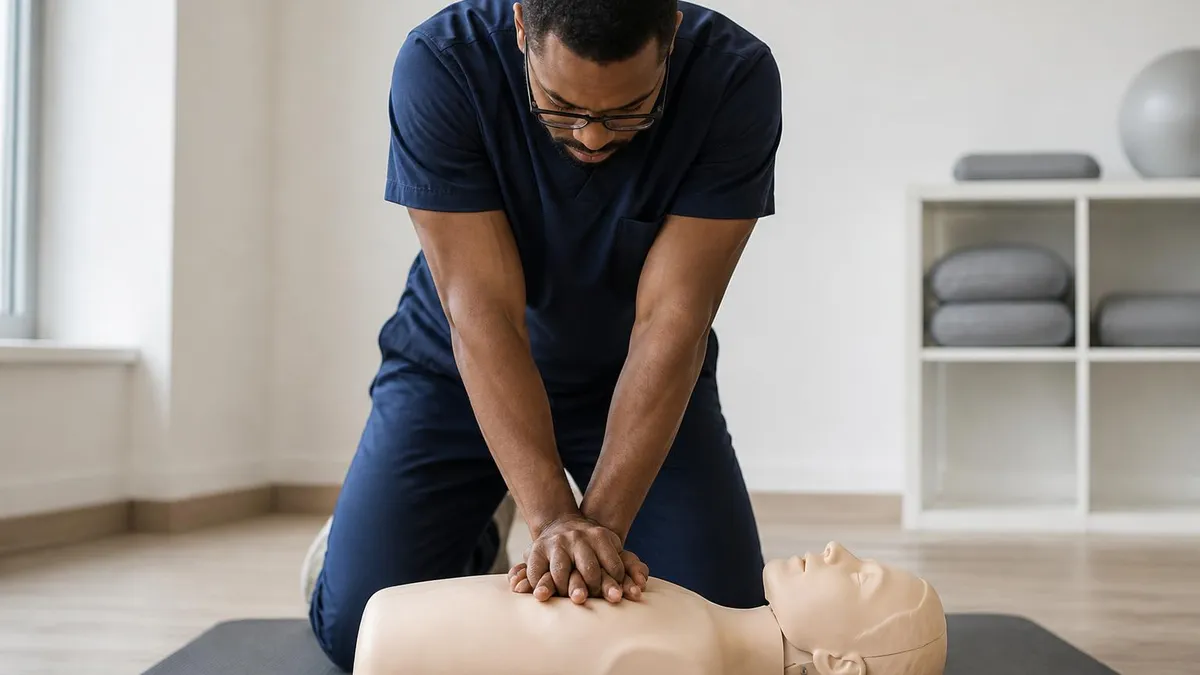
CPR Card Lookup: How to Verify, Replace, and Access Your CPR Certification in 2026
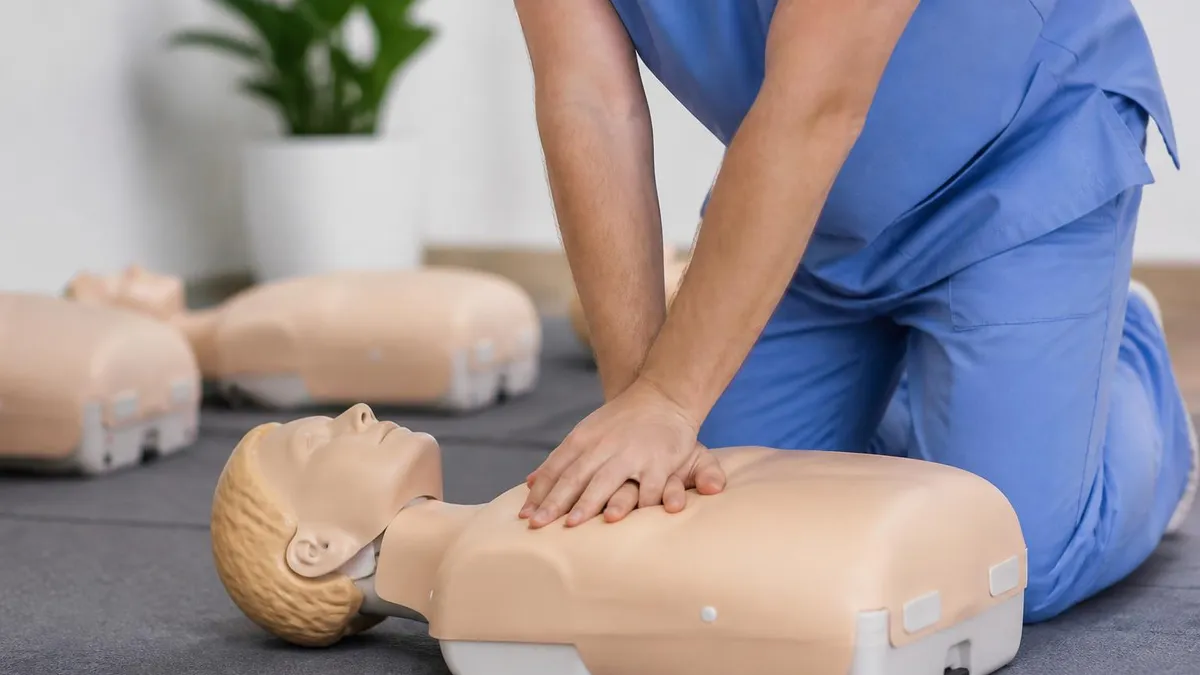
AHA CPR: What It Is, Which Course You Need, and How to Get Certified
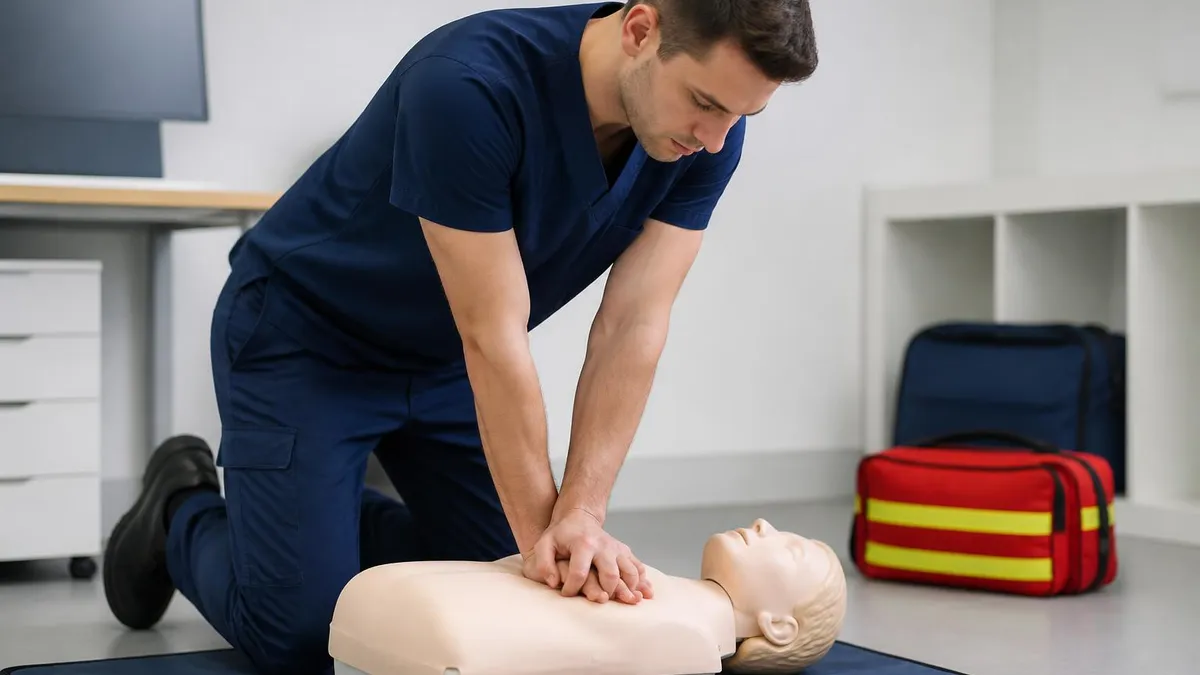
Adult CPR: Complete Step-by-Step Guide to Hands-Only and Standard CPR in 2026
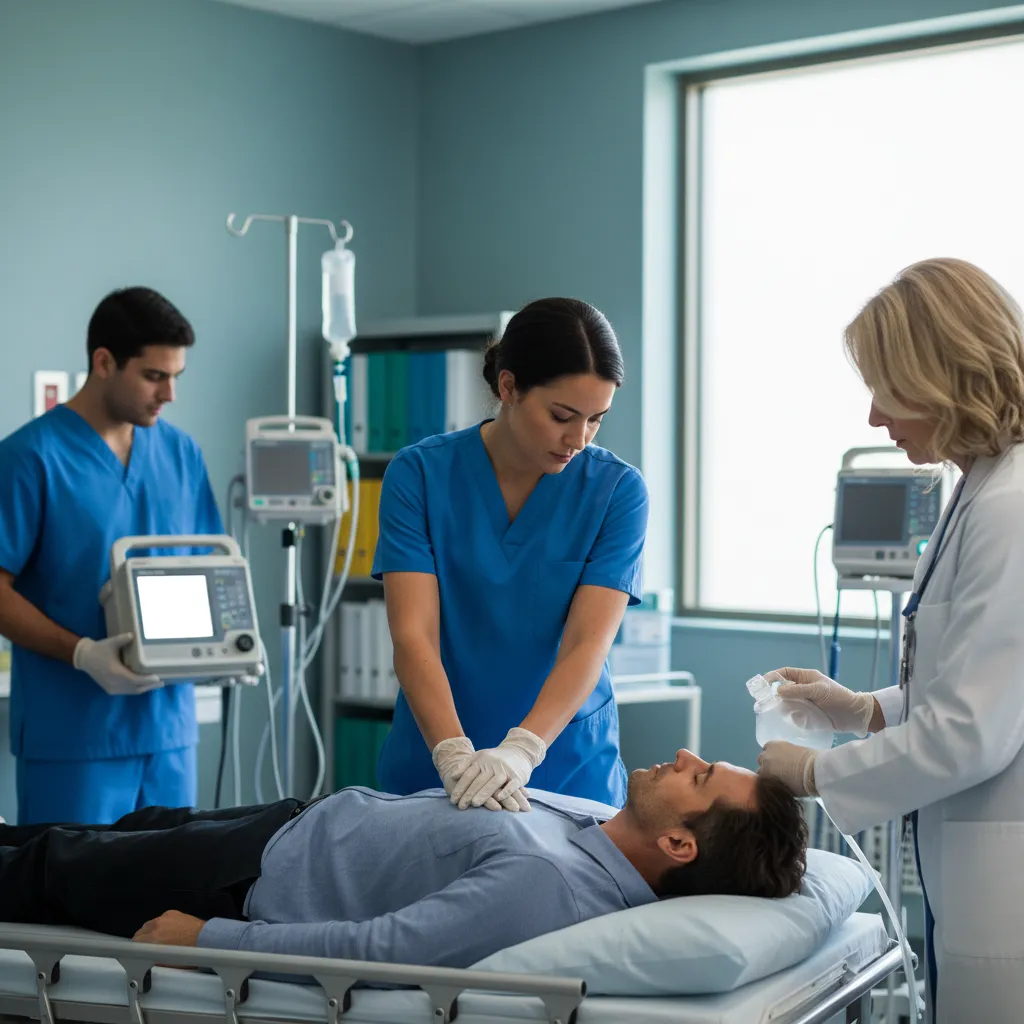
CPR - Cardiopulmonary Resuscitation: Complete Study Guide 2026
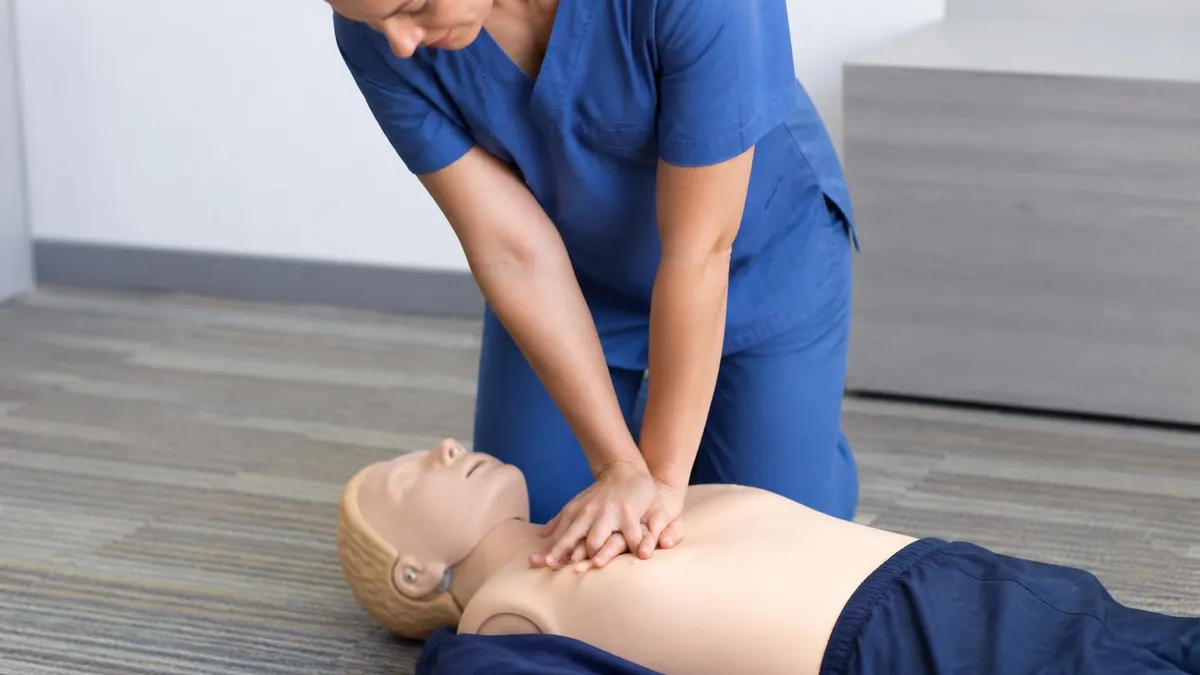
Inappropriate CPR Songs: What Not to Play, Why It Matters, and Better Beat-Per-Minute Alternatives
About the Author

Registered Nurse & Healthcare Educator
Johns Hopkins University School of NursingDr. Sarah Mitchell is a board-certified registered nurse with over 15 years of clinical and academic experience. She completed her PhD in Nursing Science at Johns Hopkins University and has taught NCLEX preparation and clinical skills courses for nursing students across the United States. Her research focuses on evidence-based exam preparation strategies for healthcare certification candidates.
Join the Discussion
Connect with other students preparing for this exam. Share tips, ask questions, and get advice from people who have been there.
View discussion (5 replies)