
Cosmetology Colleges: How to Pick the Right Program in 2026 September
Cosmetology colleges guide — 🎓 tuition, hours, accreditation, financial aid, online options, and how to choose the right program for your career.

Cosmetology Colleges: How to Pick the Right Program in 2026
Picking a cosmetology college is one of those decisions that quietly shapes the next ten years of your career. The wrong program drains your savings, leaves gaps in your skills, and sends you into the state board exam unprepared. The right one builds the foundation for a license, a salon job, and — if you push it — your own business. Most students don't know what to look for until they're already enrolled.
That's the gap this guide closes. We'll walk through what cosmetology colleges actually teach, how long they take, what they cost, how accreditation works, and which programs consistently produce licensed graduates. You'll see real tuition ranges, financial aid options, and the differences between full-time, part-time, evening, and hybrid online schedules.
Here's the honest truth: most states require 1,000 to 1,600 hours of training before you can sit for the licensing exam. Tuition runs from about $5,000 at community colleges to $25,000 or more at brand-name beauty academies. So your choice is less about prestige and more about hours, location, schedule, and whether the school's pass rate justifies the price tag.
Before we go further, take a quick warm-up. The free cosmetology practice test shows you the kind of content tested on state boards. If you can already answer some of it, you're ahead. If not, that's exactly what college is for.
Why the Right Cosmetology College Matters
State boards don't grade your college transcript. They grade your exam. But the school you pick decides whether you walk into that exam confident or guessing. A solid program drills sanitation, chemistry, hair structure, cutting, coloring, skin, nails, and salon business until each topic feels routine. Schools also differ on placement — some have job-placement coordinators with salon partnerships, others hand you a diploma and wish you luck.
If you want a sense of how the licensing path connects to school choice, the cosmetology license guide breaks down state-by-state hour requirements that directly shape program length.
Cosmetology College Snapshot
What Cosmetology Colleges Actually Teach
Every accredited cosmetology college follows roughly the same curriculum because every state board exam pulls from the same buckets. You'll spend the first chunk of your hours on theory — anatomy of the hair and skin, scalp disorders, infection control, chemistry of products, and the math behind dilution. It's dry, but it's also half the written exam, so the schools that move fast through theory are usually the ones with weaker pass rates.
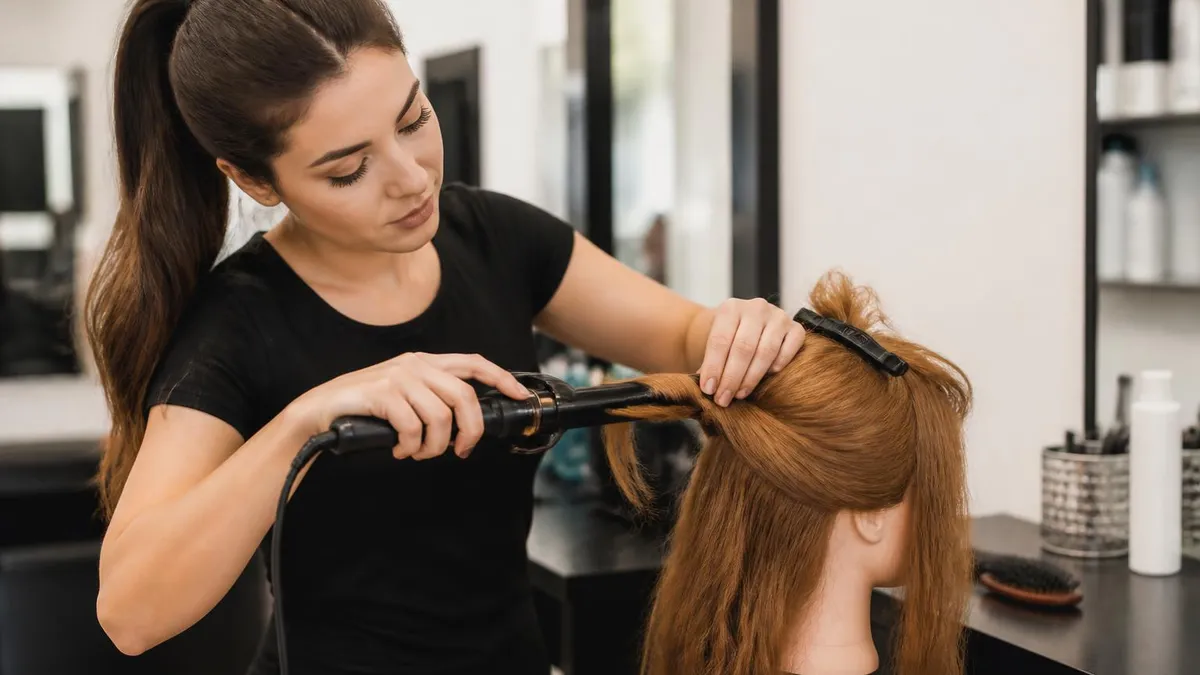
After theory you move into the practical floor. That's where you actually cut, color, perm, and style on mannequins first, then on real clients in the school's student salon. Schools with active student clinics give you hundreds of hours of real-world reps before graduation, and that's the single biggest difference between a confident new stylist and one who freezes on day one.
The breakdown usually looks like this: 50% hair (cutting, coloring, chemical services, styling), 20% skin (facials, hair removal, basic esthetics), 15% nails (manicures, pedicures, gel and acrylic), and 15% business and state law (booth rental, ethics, sanitation regulations, marketing). Some colleges weight more toward one area — Paul Mitchell, for example, leans heavy on hair, while community colleges sometimes give nails and skin equal billing.
For a deep look at exactly what's in the curriculum and how it maps to licensing, the cosmetology programs guide goes through every required clock hour. And if you're weighing a full cosmetology license vs an esthetician or nail tech credential, the what is cosmetology article spells out the differences before you commit.
Tuition: What You'll Actually Pay
Tuition at cosmetology colleges varies wildly, and the price tag doesn't always match program quality. A community college program in a midwestern state can cost $5,000 to $8,000 all-in. A brand-name beauty academy in New York, Los Angeles, or Miami can run $20,000 to $25,000 — sometimes more once you add kits, books, and licensing fees. Both routes can produce equally qualified graduates.
The kit alone is usually $1,000 to $2,000. That covers shears, brushes, a mannequin head, capes, combs, and a starter chemical pack. Some schools roll the kit into tuition; others bill it separately at orientation, which surprises a lot of students. Always ask for the all-in cost in writing before you sign anything.
State residency matters too. Public community colleges charge in-state students roughly half what they bill out-of-state students. If you're willing to establish residency for a year before enrolling, you can cut your tuition substantially. Private academies don't differentiate by residency, but they often run merit and need-based scholarships that knock 10–30% off the sticker.
One more cost most students forget: the state licensing exam itself. Once you graduate, you'll pay $50 to $200 to register and take the written and practical exams. Background checks, fingerprinting, and the initial license fee usually add another $100 to $300. Budget for it from day one.
Where the Money Actually Goes
Programs justify their pricing through instructor ratios, facility quality, brand partnerships, and placement networks. A $20K academy usually has a 12:1 student-to-instructor ratio, a busy student salon, and connections to chain salons that hire straight from graduation. A $6K community college might have 25:1 ratios and a quieter clinic, but the credit transfers if you ever want to stack on a business degree. Both can work — it depends on your learning style and your finances.
Cosmetology Practice Test Questions
Prepare for the Cosmetology exam with our free practice test modules. Each quiz covers key topics to help you pass on your first try.
Cosmetology Chemical Services
Cosmetology Exam Questions covering Chemical Services. Master Cosmetology Test concepts for certification prep.
Cosmetology Laws and Regulations
Free Cosmetology Practice Test featuring Cosmetology Laws and Regulations. Improve your Cosmetology Exam score with mock test prep.
Cosmetology Hair Care and Cutting
Cosmetology Mock Exam on Hair Care and Cutting. Cosmetology Study Guide questions to pass on your first try.
Cosmetology Nail Care and Manicuring
Cosmetology Test Prep for Nail Care and Manicuring. Practice Cosmetology Quiz questions and boost your score.
Program Schedule Options
Full-time programs typically run 9 to 12 months with classes Monday through Friday, 6 to 8 hours a day. You'll hit the 1,500-hour mark fastest and can sit for the state board exam in under a year. Best for students who don't work, have childcare lined up, or want to launch their career fast. Expect heavy hands-on time after the first 200 theory hours.
Accreditation and the Schools That Earn It
If you skim only one section of this article, make it this one. Accreditation is the difference between a license and a wasted year. State boards will only let you sit for the exam if your school is approved by your state's regulatory board. On top of that, federal financial aid (Pell Grants, Stafford Loans) only flows to programs accredited by a recognized body — most commonly NACCAS, the National Accrediting Commission of Career Arts and Sciences.
NACCAS accredits roughly 1,200 cosmetology and beauty schools across the US. The agency reviews graduation rates, licensing pass rates, and job placement rates every few years. Any program that loses accreditation also usually loses its student loan eligibility, which forces it to close within a year or two. Always verify accreditation before you put down a deposit — it takes thirty seconds on the NACCAS website.
Community colleges typically hold regional accreditation through bodies like the Higher Learning Commission or SACSCOC. That's actually broader than NACCAS and lets credits transfer toward a future degree. Some private academies hold both NACCAS and regional accreditation, which is the gold standard. Ask the admissions office point-blank: who accredits this school, when was it last reviewed, and what was the most recent licensing pass rate?
The state board's own approval is separate from accreditation. A school can be state-approved but not NACCAS-accredited — that still lets you sit for the exam in that state, but it usually disqualifies you from federal aid. Check both. The state board of cosmetology page lists approval lookup tools for every state.
Brand-Name Beauty Academies vs Community Colleges
The two routes pull from different student types. Brand-name beauty academies attract students who want a polished portfolio, modern facilities, and a feeder pipeline into chain salons. Community colleges attract students who care about cost and transferable credit.
Neither is wrong — it depends on where you want to land. Paul Mitchell cosmetology school students, for example, learn on Paul Mitchell color lines that transfer directly into Paul Mitchell-partner salons. The broader cosmetology school guide compares 12 specific programs side by side.
Top Cosmetology College Categories
- Examples: Paul Mitchell, Aveda, Empire
- Tuition: $18,000–$25,000
- Length: 10–14 months full-time
- Best For: Chain-salon placement and brand training
- Examples: State and county two-year colleges
- Tuition: $5,000–$10,000 in-state
- Length: 12–18 months
- Best For: Budget-conscious students, transferable credits
- Examples: Local family-run academies
- Tuition: $10,000–$18,000
- Length: 9–15 months
- Best For: Smaller class sizes, personalized instruction
- Examples: BOCES, regional vocational HS
- Tuition: Free for HS students
- Length: 2 years (junior + senior)
- Best For: High schoolers wanting a license at graduation
Honest Trade-offs Between Program Types
Class size is one of the cleanest splits between school types. A typical community college cosmetology class is 30 to 40 students per instructor. A brand academy usually caps at 15 to 20 per instructor. More one-on-one time means faster skill development, but the trade-off is the price tag and sometimes a less diverse student body. Visit both before you decide.
Product training is the other real-world difference. Brand academy students learn on specific premium product lines that often transfer directly into partner salons. Community college students learn on generic professional brands and have to relearn whatever the salon they're hired into uses. Some salon owners prefer that — they'd rather train you on their products from scratch. Others heavily prefer brand-trained grads.
Then there's the credit transfer question. Community college credits can stack into associate or bachelor's degrees in business, healthcare, or education down the road. Brand academy credits almost never transfer. If you think you might want to add a business degree, run a salon, or eventually teach cosmetology, community college keeps that door wide open.
Placement networks differ too. A Paul Mitchell or Aveda grad usually gets job leads from the school's career services team within weeks of graduating. Community college grads often have to network harder — local salon owners may not actively recruit from the program. That said, the best community colleges run job fairs and externships that close the gap.
How to Pick the Right Cosmetology College
Once you've narrowed the type of program, the actual school choice comes down to seven concrete checks. Start with the state board pass rate — every accredited program has to publish its first-time pass rate. Anything above 80% is solid; anything below 65% is a red flag. Next, check the graduation rate. Schools under 60% usually have weak student support, financial aid issues, or scheduling problems that push students out.
Brand Academy vs Community College: Trade-offs
- +Brand academies: smaller class sizes (15–20 students per instructor)
- +Brand academies: direct chain-salon hiring pipeline post-graduation
- +Brand academies: training on premium product lines you'll use in industry
- +Community colleges: tuition 60–75% lower than private academies
- +Community colleges: credits transfer toward a future business or healthcare degree
- +Community colleges: more generous financial aid through state grants
- −Brand academies: $20K+ tuition before kit, books, and licensing fees
- −Brand academies: limited credit transfer if you switch career paths
- −Community colleges: 30–40 students per instructor — less hands-on feedback
- −Community colleges: weaker salon placement networks and brand partnerships
- −Both: tuition rarely covers state licensing exam fees ($100–$300 extra)
- −Both: 1,000–1,600 hours required before you can even sit for the exam
What to Look For on Campus Tours and in Admissions
Visit in person if you can. A campus tour tells you more than a glossy brochure. Watch the student clinic in action. Is it busy? Are clients real or just other students? Are instructors actively coaching, or sitting at the front desk on their phone? Talk to two or three current students without the admissions rep nearby. Ask what they'd change about the program.
Check the kit policy. Some schools force you to buy a $2,000 kit from one specific vendor. Others let you bring your own. Some include the kit in tuition. This matters because the markup on bundled kits can be 30–50%. Run the math before you sign.
Ask about externships and salon partnerships. The best cosmetology colleges place students in working salons for the final 100–200 hours of training. That's where you learn what real client work feels like — pace, pressure, walk-ins, retail sales. Without an externship, your first three months on a real salon floor will be brutal.
Admissions: What's Actually Required
Cosmetology college admissions are far less competitive than four-year university admissions. Most schools require a high school diploma or GED, an in-person or phone interview, a tour, and a deposit to hold your seat. No SAT, no essay, no letters of recommendation. The whole process usually takes one to three weeks from first inquiry to enrollment.
Some private academies request a brief portfolio or essay describing why you want to enter the beauty industry — it's used more for fit and motivation than as a gate. Community colleges may require a basic placement test in reading and math, since the program counts as a college-credit certificate. The placement test is rarely a barrier; it's used to decide whether you need a brush-up course alongside cosmetology.
Age requirements vary by state, not by school. Most states let you start cosmetology training at 16 or 17 if you're still in high school (through a vocational program) or at 18 for adult students. Florida, Texas, and California all allow under-18 enrollment with parental consent and a current high school transcript. A handful of states require you to be 18 before you can hold the license, even if you complete training earlier.
10-Point Checklist Before Enrolling
- ✓Verify NACCAS or regional accreditation status on the agency website
- ✓Confirm the school is approved by your state board of cosmetology
- ✓Check the most recent first-time licensing pass rate (target: 80%+)
- ✓Review the graduation rate (target: 70%+)
- ✓Ask for the all-in cost: tuition, kit, books, exam fees, license fees
- ✓Tour the campus and watch the student clinic during business hours
- ✓Talk to 2-3 current students away from admissions staff
- ✓Confirm financial aid eligibility — Pell Grant, Stafford Loan, scholarships
- ✓Ask about externships and salon placement partnerships
- ✓Get the schedule options in writing (full-time, part-time, evening, hybrid)
Financial Aid, Scholarships, and Online Options
You don't have to pay cosmetology college tuition out of pocket. Most accredited programs accept the same federal financial aid that four-year universities accept — Pell Grants for low-income students, Direct Subsidized and Unsubsidized Stafford Loans for everyone else, and Parent PLUS Loans if you're a dependent student. The application is the FAFSA. It takes 30 minutes online and uses last year's tax return.
Pell Grants can cover up to roughly $7,400 per academic year and never have to be paid back. For a community college program at $6,000 a year, that often covers the full tuition. For a $22,000 academy, you'd cover the rest with subsidized loans or state grants. Subsidized loans don't accrue interest while you're in school, which is the right kind of debt if you have to borrow.
Beyond federal aid, scholarships are everywhere — and most students don't apply. NACCAS publishes a scholarship database. Beauty Changes Lives, the Imagine Scholarship, the Mitchell Family Scholarship, and dozens of state-level beauty industry funds award $500 to $5,000 grants every year. Some schools also run internal scholarships based on a portfolio submission or an essay.
Working While You Study
Many students work part-time during cosmetology college. The reception desk at the school's own student salon is a popular gig — flexible hours, gives you exposure to client interactions, and sometimes counts toward your business management hours. Salons near campus also love hiring cosmetology students for shampoo tech or front-desk roles. Hourly pay is modest ($12–$15 typical), but the salon-floor exposure is real career capital.
Online and Hybrid Cosmetology Options
Online cosmetology programs have grown fast since 2020, but the rules around them are stricter than students expect. State boards still require every practical hour to be supervised in person by a licensed instructor. That means even the most online-heavy program will have you on campus for hundreds of hours of cutting, coloring, and chemical work.
The portion that does go online is real, though — theory modules (anatomy, chemistry, sanitation, business, state law) can typically be completed asynchronously from your laptop. The online cosmetology school guide goes deep on hybrid program structure.
One more option: bridge programs for already-licensed estheticians or nail technicians who want to add the full cosmetology license. These are shorter (often 600–800 hours instead of 1,500) and many community colleges run them at a steep discount. If you're already in the industry, ask every school you visit whether they offer a bridge.
No US state allows a 100% online cosmetology license. Practical clock hours must be completed in person under a licensed instructor — that's a state law, not a school policy. Hybrid programs handle theory online and require you to come in for the 800–1,200 practical hours. If a school is advertising a fully online cosmetology license, it's either misleading marketing or a license that won't be honored by any state board.
Some cosmetology colleges use high-pressure sales tactics — same-day enrollment incentives, mandatory deposits before you've seen the student handbook, or refusal to share their licensing pass rate. Any of those is a sign to walk away. A reputable program lets you tour, take home the paperwork, and decide on your own timeline. If they're rushing you, there's usually a reason — and it's not in your interest.
After Graduation: From License to Salary
Graduating cosmetology college doesn't make you a cosmetologist. Passing the state board exam does. Every state requires a written exam covering theory, sanitation, and chemistry, plus a practical exam where you perform real procedures on a mannequin or model under proctored conditions. Pass both, pay the licensing fee, and your name goes on the state's licensed cosmetologist registry.
Starting salaries vary by region and salon type. Chain salons (Great Clips, Supercuts, Sport Clips) typically start new licensed grads at $13–$16 per hour plus tips. Mid-tier salons pay base plus commission, with first-year totals around $30K–$40K in most metros. Booth-rental and high-end salons can push first-year earnings past $50K, but you'll need to bring or build your own clientele.
Long-term, the cosmetology career path branches widely. Some grads stay behind the chair and build a six-figure book of business over five to ten years. Others move into salon ownership, education (becoming a cosmetology instructor — a separate license in most states), product reps for major brands, or specialty work in editorial, film, and TV. The license is portable too — you can usually transfer it across states with a small reciprocity fee.
Continuing education keeps the license active. Most states require 8–16 CE hours every renewal cycle (usually every two years). Topics include new chemical service techniques, updated sanitation rules, and business marketing for stylists. The cosmetology test career salary guide walks through realistic post-graduation earnings so you can model the ROI before you enroll.
Final Word: Make a Decision, Don't Stall
The single biggest mistake prospective students make is researching cosmetology colleges for a year without enrolling. The industry rewards people who show up, get licensed, and start cutting hair. A B+ school you actually finish beats an A+ school you keep putting off. Pick the two or three programs that match your budget, schedule, and learning style. Tour all of them. Make a decision within 60 days. Then go all in on the program you picked.
Cosmetology Questions and Answers
Related Cosmetology Articles
Cosmetology School: Programs, Costs, and What You'll Actually Learn

Online Cosmetology School: The Honest Truth About Hybrid Programs in 2026
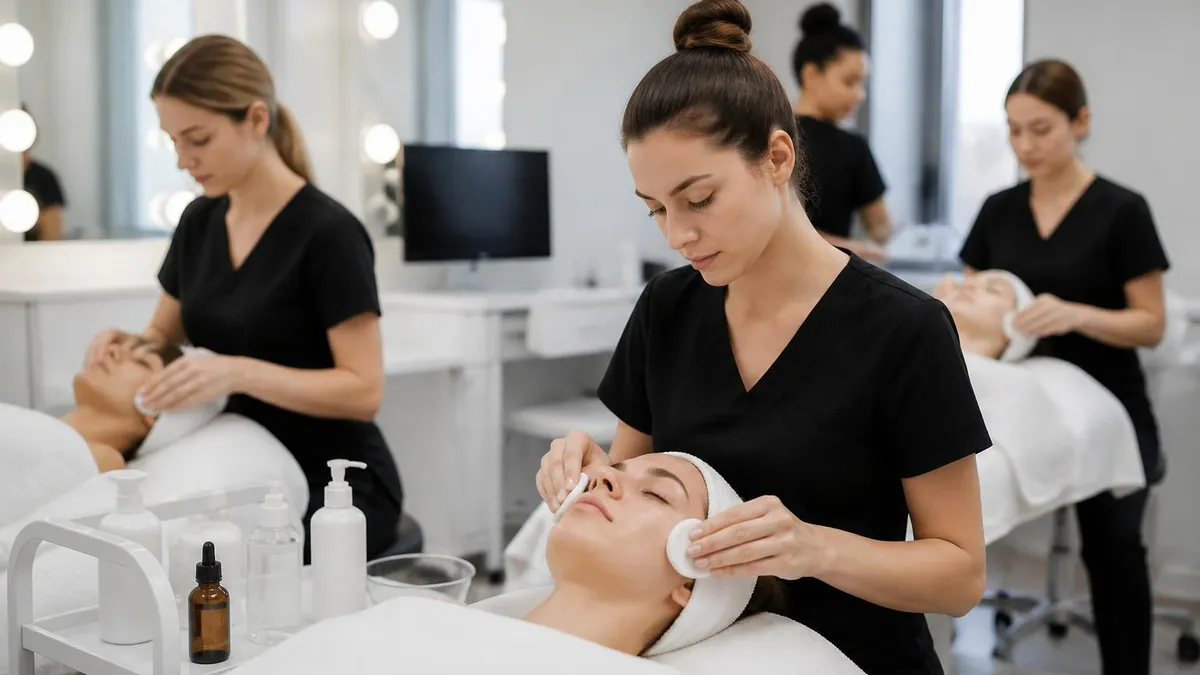
Cosmetology License: How to Get One, State Requirements, and Costs
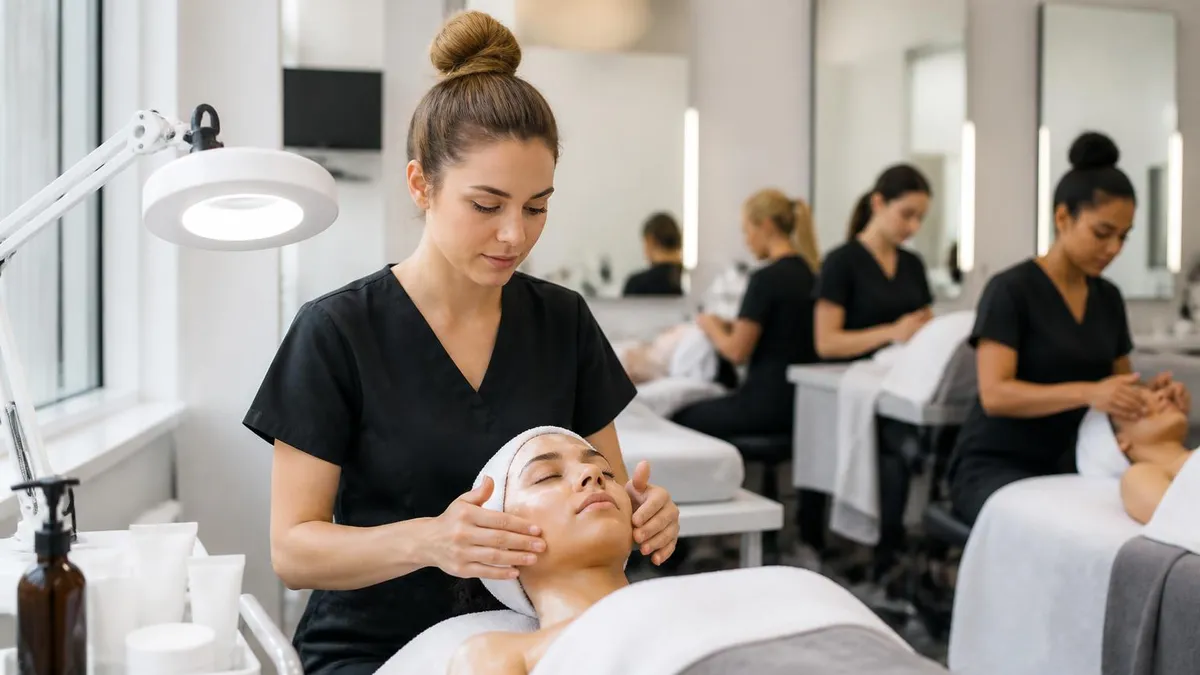
Paul Mitchell Cosmetology School: Complete Guide to Beauty Education
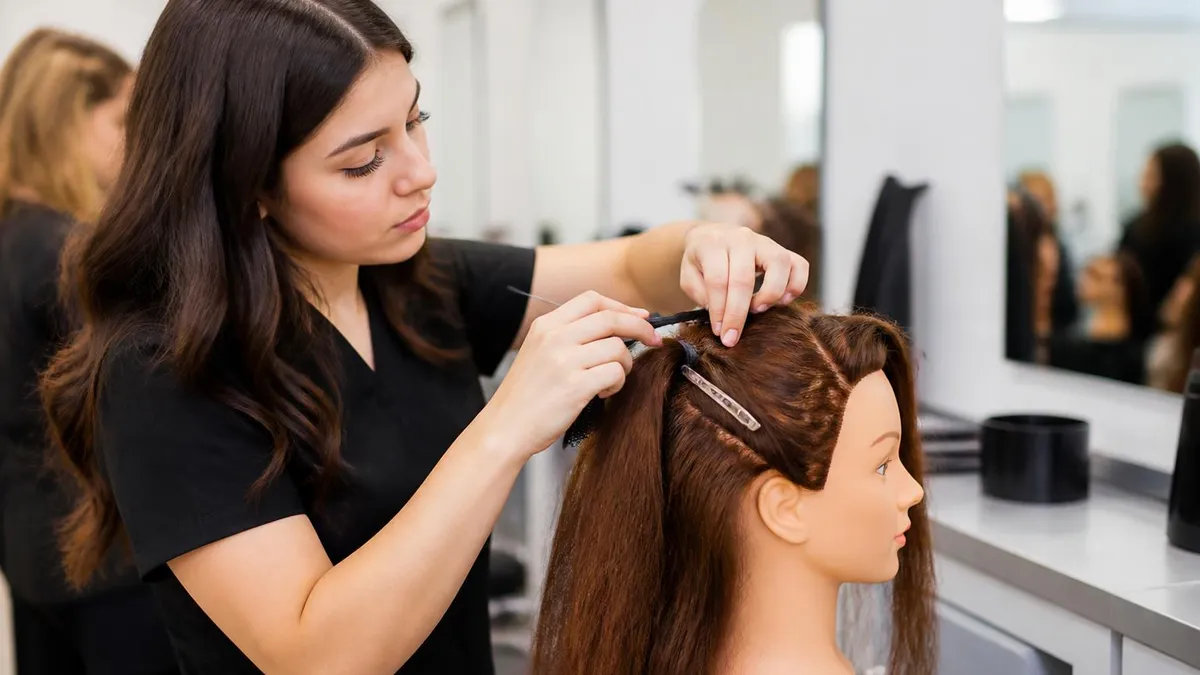
State Board of Cosmetology: Role, Functions, and How It Affects You

Cosmetology Programs: Hours, Curriculum, Cost and Accreditation
About the Author
Licensed Cosmetologist & Beauty Licensing Exam Specialist
Paul Mitchell SchoolsMichelle Santos is a licensed cosmetologist with a Bachelor of Science in Esthetics and Salon Management from Paul Mitchell School. She has 16 years of salon industry experience and 8 years preparing students for state cosmetology board exams in theory, practical skills, and sanitation. She specializes in licensure preparation for cosmetologists, estheticians, and nail technicians.