
How to Get a Boating License in Alabama: Complete 2026 September Guide
✏️ Learn how to get a boating license in Alabama step by step. Compare requirements for Florida, California, Tennessee & more. Free practice tests included.
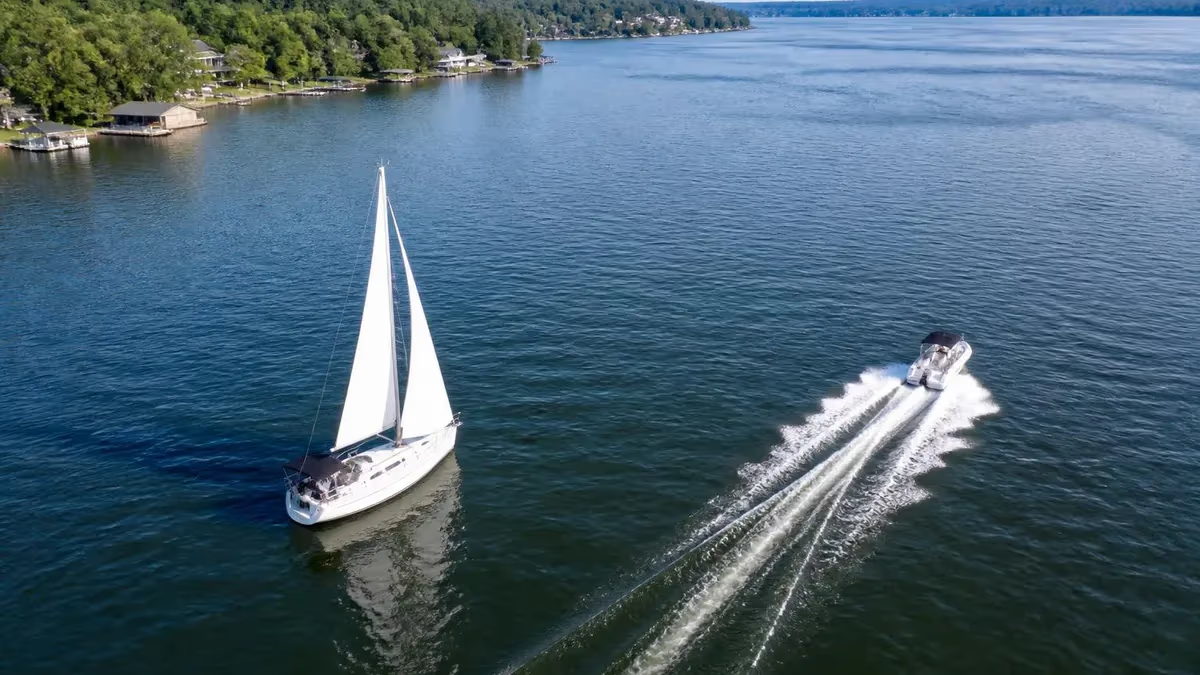
If you want to know how to get a boating license in Alabama, the process is more straightforward than most people expect — but the rules are specific, and skipping any step can result in fines or denied access to Alabama's waterways. Alabama requires anyone born on or after January 1, 1986 to carry a Boater Safety Certificate when operating a motorized vessel of 12 horsepower or more. This certificate is earned by completing a state-approved boater education course and passing a final exam, and it is valid for life with no renewal required.
Alabama's waterways stretch across hundreds of lakes, rivers, and reservoirs, from Wheeler Lake in the north to Mobile Bay in the south. Whether you're planning to fish on Lake Martin, water ski on Guntersville, or cruise the Tennessee River, operating a boat legally means you need to understand the state's licensing requirements. Many newcomers to boating assume that a driver's license or a fishing license covers boat operation — it does not. Watercraft are governed by a completely separate set of regulations under the Alabama Marine Police Division.
One of the most common questions we hear is: do you need a license to drive a boat in Alabama? The short answer is yes, if you were born after January 1, 1986. However, the term "boating license" is a bit of a misnomer — Alabama issues a Boater Safety Certificate, not a traditional license tied to a motor vehicle database. This certificate proves you've completed a safety education course approved by the National Association of State Boating Law Administrators (NASBLA), and it is recognized in all 50 states and most Canadian provinces.
Alabama's boater education requirements are in line with the national trend toward mandatory safety training. States like Florida have some of the strictest requirements in the country — anyone operating a vessel with 10 horsepower or more must have the florida boating license equivalent certificate. Understanding how Alabama's rules compare to neighboring and popular boating states helps you appreciate both the similarities and the unique aspects of getting certified in the Heart of Dixie. Whether you're a lifelong Alabama resident or a snowbird who also keeps a boat in another state, this guide covers everything you need to know.
The Alabama boater education course is available online, in person, or as a home-study program. Online courses are offered through NASBLA-approved providers such as BoatUS Foundation, Boat Ed, and the official Alabama Law Enforcement Agency (ALEA) Marine Patrol Division partners. The typical online course takes 8 to 10 hours to complete and costs between $29 and $45. At the end of the course, you must pass a proctored final exam with a score of at least 80 percent to receive your certificate.
It's important to note that temporary certificates are issued immediately upon passing your exam, which means you can legally operate a boat the same day you complete the course. Your permanent wallet-sized card arrives by mail within a few weeks. Since the certificate never expires, you only need to earn it once — making it one of the best one-time investments for any Alabama boater. Store a copy digitally and keep the physical card on the vessel whenever you're underway.
Throughout this guide, we'll walk you through every step of the certification process, compare costs across popular boating states, highlight what's on the Alabama boating exam, and share proven study strategies to help you pass on your first attempt. Whether you're 16 or 60, a first-time boater or someone who grew up on the water and never got around to formalizing your education, this article gives you a complete roadmap to legal, confident boating in Alabama.
Alabama Boating License by the Numbers
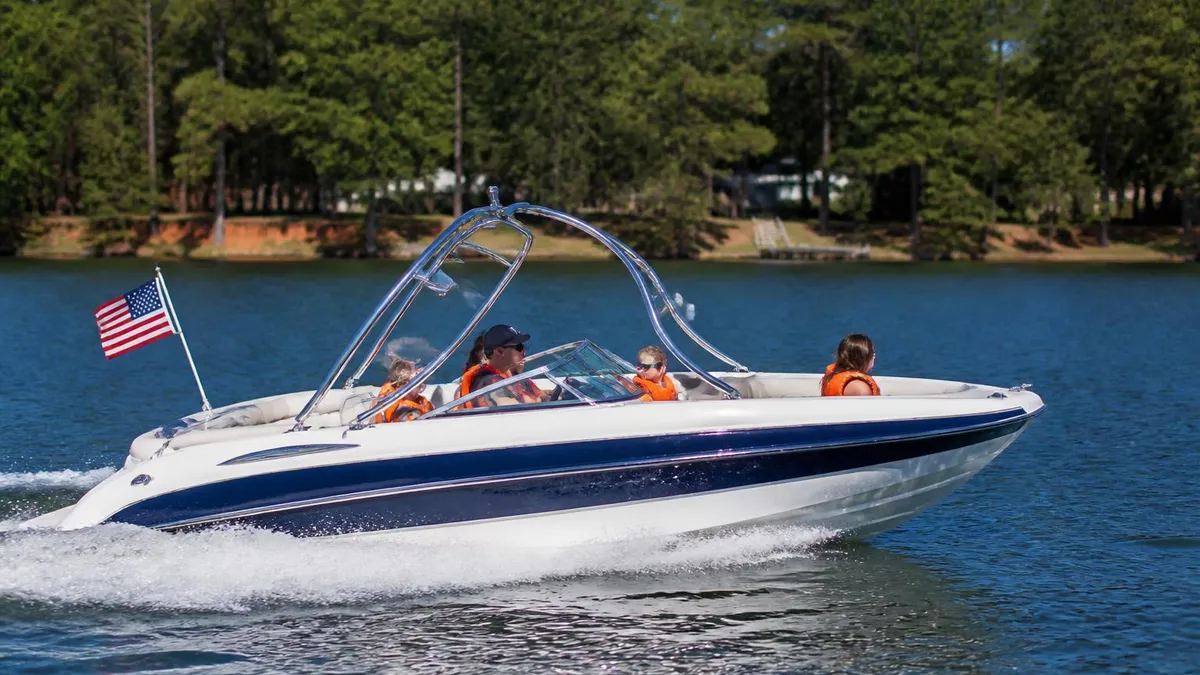
How to Get Your Alabama Boating License: Step by Step
Check If You Are Required to Get Certified
Choose an Approved Boater Education Course
Complete All Course Modules
Pass the Proctored Final Exam
Receive Your Temporary and Permanent Certificate
Alabama's boater education requirements are part of a nationwide movement to standardize waterway safety across all 50 states. While the fundamental framework — NASBLA-approved courses, a minimum passing score, and a permanent certificate — is consistent nationwide, each state has its own age thresholds, horsepower minimums, and enforcement structures. Understanding how Alabama compares to other popular boating states helps you navigate multi-state boating trips and understand why certain requirements exist in the first place.
In Florida, boating regulations are among the strictest in the nation because of the sheer volume of recreational boating activity. The Sunshine State recorded over 800 registered vessels per 1,000 residents in recent years, and boating accidents are a persistent public safety concern.
Anyone born after January 1, 1988 who operates a motorized vessel with 10 horsepower or more must carry proof of having completed an approved boater safety course. Florida also requires a photo ID to accompany the certificate, and law enforcement officers perform regular on-water safety checks. Compared to Alabama, Florida's age cutoff is two years later, but its horsepower threshold is lower at 10 HP versus Alabama's 12 HP.
California presents a different model altogether. The california boating license requirement was phased in gradually between 2018 and 2025, with the final phase taking effect January 1, 2025 — now requiring all operators of motorized vessels to carry a California Boater Card regardless of birth year. This makes California one of the most comprehensive boater education states in the country. The California course must be completed through a California State Parks–approved provider, and the California Boater Card is separate from the safety certificates issued in other states, though the underlying education content is similar.
Tennessee sits just north of Alabama and shares much of the same waterway culture, especially along the Tennessee River. The tennessee boating license requirement applies to anyone born after January 1, 1989 who operates a motorized vessel of 10 horsepower or more. Tennessee's course and exam requirements are virtually identical to Alabama's, and certificates earned in either state are mutually recognized when operating in the other. This reciprocity is a feature of the NASBLA framework — if you earn your certificate in Alabama, you can legally operate in Tennessee and vice versa without any additional coursework.
Missouri is another popular boating state with waters like the Lake of the Ozarks drawing hundreds of thousands of visitors each summer. Missouri requires boater education certification for anyone born after January 1, 1984 who operates a motorized vessel. This birth-year cutoff is earlier than Alabama's, meaning a broader segment of Missouri's population falls under the mandatory education requirement. Missouri also requires a separate Missouri Boating Safety Identification Card, which must be in the operator's possession while on the water — a separate physical document from a generic NASBLA certificate.
One important cross-state consideration: if you hold a valid, NASBLA-approved boater safety certificate from Alabama, it is generally accepted in other states as meeting their education requirement when you're operating a vessel there temporarily. However, some states — including California — require their own state-specific card for residents, and using an out-of-state certificate is only acceptable for non-residents visiting temporarily. Always check the specific state's regulations before assuming full reciprocity, particularly when boating in California or states that have implemented their own dedicated card systems.
The broader national picture makes one thing clear: do you need a license to operate a boat? In most states, the answer is increasingly yes, at least in the form of a boater education certificate. The trend is moving toward universal requirements regardless of age or birth year, following California's lead. Alabama's current threshold of birth year 1986 will likely face future legislative pressure to expand coverage, so getting your certificate now — whether required or not — is a smart investment in your boating future and demonstrates your commitment to water safety.
Do You Need a License to Drive a Boat in Alabama?
Alabama law requires anyone born on or after January 1, 1986 to carry a valid Boater Safety Certificate when operating a motorized vessel with 12 horsepower or more on public waters. This applies to both residents and non-residents who operate vessels on Alabama waterways. The law covers powerboats, personal watercraft (PWC) like jet skis, and other motorized craft meeting the horsepower threshold — sailboats and human-powered vessels are generally exempt from the education requirement.
Children under 14 may not legally operate a personal watercraft in Alabama under any circumstances, even with a certificate. Operators aged 14 to 15 may drive a PWC only if they hold a valid Boater Safety Certificate. Operators of any age born before January 1, 1986 are technically exempt from the certificate requirement but are strongly encouraged to complete the course — especially since all boaters remain subject to Alabama's navigation rules, alcohol laws, and equipment requirements regardless of whether a certificate is mandated.
Online vs. In-Person Boater Education: Which Is Right for You?
- +Complete the course on your own schedule — no commuting or fixed class times
- +Online courses cost $29–$45, often less than in-person classroom sessions
- +Instant access to all course materials, videos, and interactive quizzes
- +Progress is saved automatically, so you can pause and resume anytime
- +Immediate certificate printout upon passing the online proctored final exam
- +Available through multiple NASBLA-approved providers with strong reputations
- −Online courses require self-discipline — no instructor to keep you on track
- −Hands-on skills like docking, anchoring, and emergency response are harder to absorb without in-person practice
- −Proctoring requirements for the final exam can be cumbersome without a designated supervisor
- −Some older boaters find online interfaces less intuitive than a classroom setting
- −Technical issues (slow internet, device problems) can interrupt your session
- −No peer interaction or networking with other local boaters in your area
Alabama Boating License Checklist: Everything You Need
- ✓Confirm you were born on or after January 1, 1986 and plan to operate a 12+ HP vessel
- ✓Select a NASBLA-approved course from Boat Ed, BoatUS Foundation, or SafeBoater.com
- ✓Create an account on your chosen course platform and pay the course fee ($29–$45)
- ✓Complete all online modules covering navigation rules, equipment, and emergency procedures
- ✓Take the chapter quizzes after each module to reinforce key concepts before the final exam
- ✓Arrange a proctor (trusted adult or online proctoring service) for the final exam session
- ✓Score 80% or higher on the 50-question proctored final exam to pass
- ✓Print your temporary Boater Safety Certificate immediately after passing
- ✓Carry your printed temporary certificate on board every time you operate a vessel
- ✓Watch for your permanent wallet card in the mail within 3–6 weeks of passing
Your Certificate Is Valid for Life — and Recognized Nationwide
Unlike a driver's license, Alabama's Boater Safety Certificate never expires and never needs to be renewed. Once you pass your exam and receive your certificate, you are certified for life. The certificate is also recognized in all 50 U.S. states and most Canadian provinces, so you can legally operate vessels across state lines without additional coursework or paperwork.
Understanding what's actually on the Alabama boating exam is the best way to ensure you walk in confident and walk out with a passing score. The final exam consists of 50 questions drawn from all modules of your approved course, and you must answer at least 40 correctly — an 80% passing threshold — to earn your certificate. The questions are multiple-choice, and the exam is designed to test not just memorization but practical application of boating safety knowledge in real-world scenarios you're likely to encounter on Alabama's waterways.
Navigation rules are among the heaviest-tested topics on the Alabama boating exam. You'll need to understand right-of-way rules — specifically, which vessel is the "give-way" vessel and which is the "stand-on" vessel in crossing, head-on, and overtaking situations. These rules are derived from the U.S. Coast Guard's Navigation Rules (the "Rules of the Road"), and they apply uniformly on all navigable U.S. waters. A common exam question involves two powerboats approaching each other head-on: in this scenario, both vessels must turn to the right (starboard) to pass port-to-port, just as cars would drive on the right side of the road.
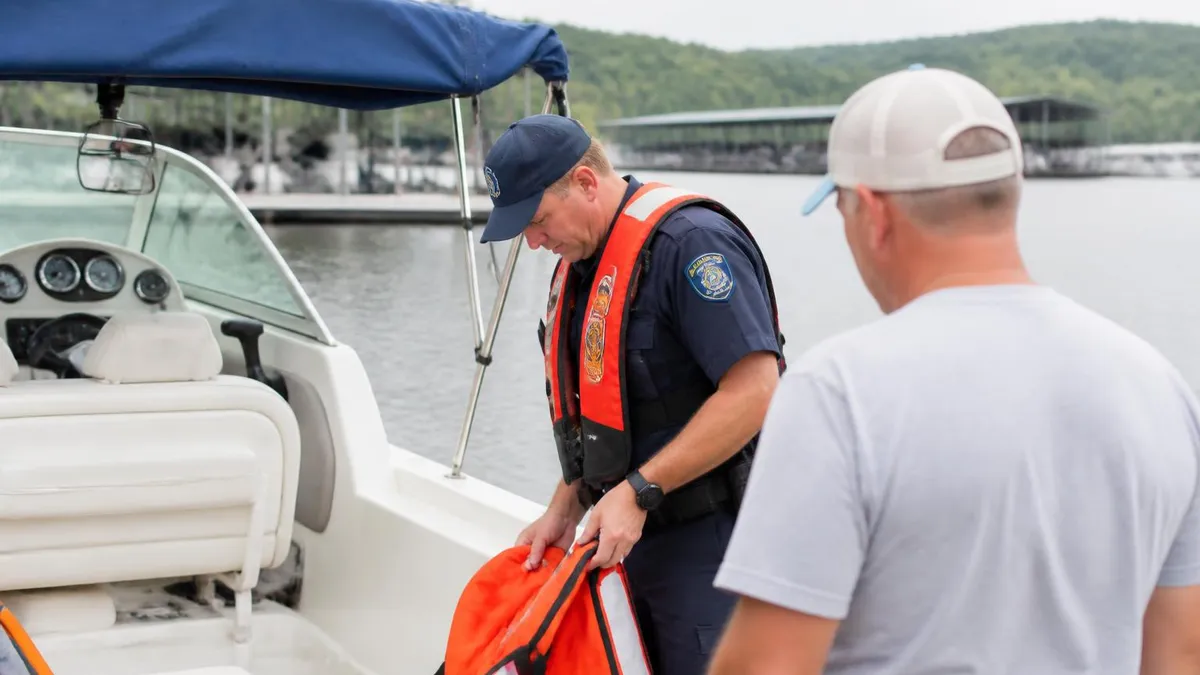
Personal Flotation Devices (PFDs) are a major exam category and a critical aspect of Alabama boating law. Every vessel must carry at least one U.S. Coast Guard–approved life jacket for each person on board, and children under 8 must wear a properly fitted PFD at all times while on the open deck of a moving vessel.
The exam tests your ability to identify the five types of PFDs, understand their intended use cases, and know the federal and state laws governing their carriage. A Type I offshore life jacket, for example, is designed for open ocean use and provides the most buoyancy, while a Type III flotation aid is suited for supervised activities close to shore.
Alcohol and boating laws are tested prominently because alcohol is involved in a disproportionately high percentage of boating fatalities. Alabama law mirrors federal law: operating a vessel with a blood alcohol concentration (BAC) of 0.08% or higher is illegal and constitutes Boating Under the Influence (BUI). The penalties for BUI in Alabama include fines up to $2,100 for a first offense, up to one year in jail, and suspension of boating privileges.
The exam will present scenarios testing your knowledge of how alcohol impairs judgment, balance, and reaction time — and why the effects of alcohol are compounded on the water by sun, wind, noise, and vibration.
Vessel equipment requirements are another significant exam topic. Alabama law requires specific safety equipment based on vessel class (length). Class A vessels under 16 feet must carry fire extinguishers, visual distress signals, a sound-producing device, and navigation lights for nighttime operation. Larger vessels have additional requirements, including more fire extinguishers and different categories of distress signals. The exam may show you a diagram of a vessel and ask you to identify whether it meets the legal equipment requirements — or what specific item is missing based on the vessel's size and intended use area.
Weather and environmental awareness questions test your understanding of how to identify developing storm conditions, read weather forecasts before departing, and respond appropriately if conditions deteriorate on the water. The exam may ask about common cloud formations that signal approaching storms, the meaning of weather warning signals at marinas, and the safest course of action if you're caught in open water during a lightning storm (get low, stay near the center of the boat, avoid contact with metal). These questions reflect Alabama's real-world weather hazards, including afternoon thunderstorms that form rapidly over inland lakes during summer months.
Emergency procedures round out the major exam categories. You'll need to know the correct actions to take in cases of capsizing, man-overboard situations, fire on board, and running aground. The exam tests the specific sequence of steps — for example, in a man-overboard situation, the immediate priorities are to throw a flotation device, keep eyes on the person in the water, circle back carefully, and call for assistance.
Understanding CPR basics and when to activate your emergency position indicating radio beacon (EPIRB) may also appear. The more you practice these scenarios through the course quizzes and our free practice tests, the more naturally the correct answers will come to you under exam conditions.
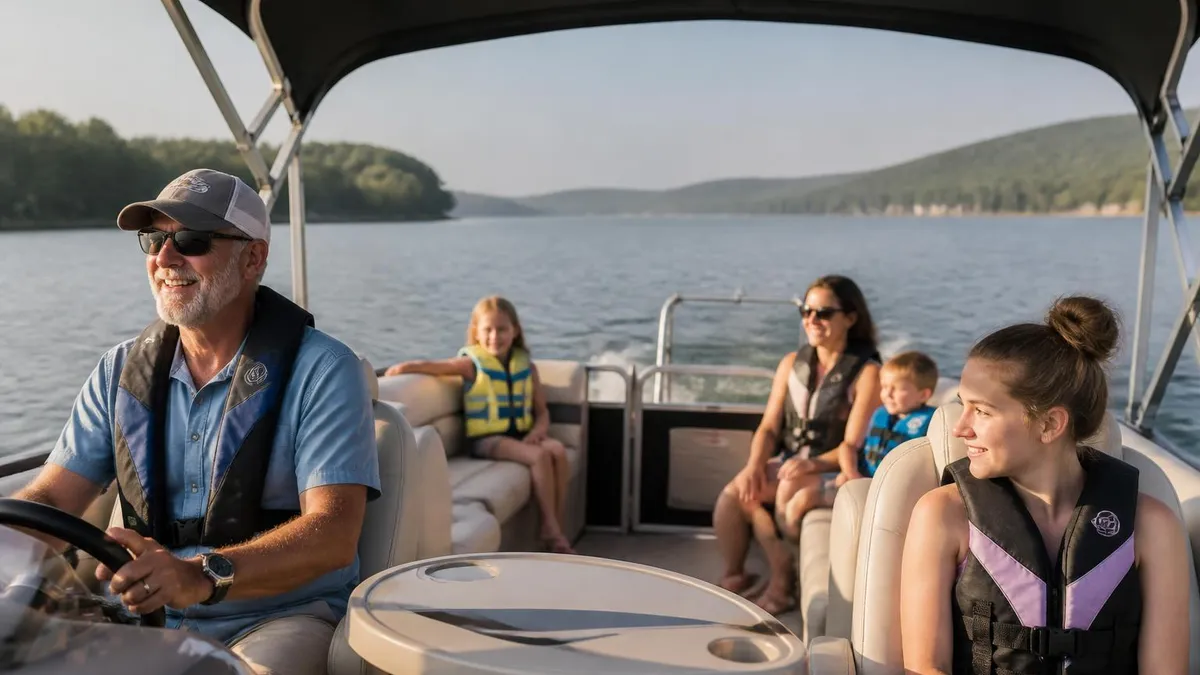
Operating a vessel in Alabama with a BAC of 0.08% or higher is a criminal offense that carries fines up to $2,100, potential jail time, and suspension of your boating privileges. Law enforcement officers can conduct sobriety checks on the water without a warrant, and refusing a breathalyzer can result in automatic license suspension. Never operate a boat after consuming alcohol — the consequences extend far beyond a fine.
The cost of getting your boating certificate in Alabama is modest compared to other state licensing fees, and there are no ongoing renewal costs since the certificate is valid for life. The main expense is the NASBLA-approved course itself, which typically runs $29 to $45 for an online program. Some in-person courses offered by local boating clubs or the Alabama Marine Police are available at lower cost or even free for Alabama residents as part of public safety outreach programs — check the ALEA Marine Patrol website for current offerings in your county.
Beyond the course fee, there are no additional state application fees or registration fees associated with the Boater Safety Certificate itself. This is one area where Alabama is more streamlined than some other states. By contrast, the alabama boating license equivalent in some northern states involves separate state agency processing fees of $10 to $25 on top of the course cost. Alabama's all-in-one course-and-certificate model keeps the total financial barrier low, making compliance accessible to all boaters regardless of economic circumstances.
Vessel registration, which is separate from the boater education certificate, does involve fees. All motorized vessels and sailboats over 12 feet used on Alabama public waters must be registered with the Alabama Department of Conservation and Natural Resources (ADCNR). Registration fees vary by vessel length and type: a boat under 16 feet costs approximately $23 for a three-year registration, while larger vessels in the 40+ foot range can cost several hundred dollars. The registration decal must be displayed on the hull, and your registration certificate must be carried on board — a separate requirement from the Boater Safety Certificate.
If you operate a personal watercraft (jet ski, WaveRunner) in Alabama, be aware that PWC carry some of the strictest usage rules in the state. In addition to requiring the Boater Safety Certificate for operators born after 1986, PWC operators must observe no-wake zones, stay at least 100 feet from other vessels and swimmers, and avoid operating within 300 feet of a shoreline at speeds exceeding flat wake.
Many Alabama lakes and marinas have posted additional local regulations for PWC that exceed state minimums — always check for posted signs and local ordinances before launching a PWC on an unfamiliar body of water.
Insurance considerations deserve attention when budgeting for Alabama boating. While boat insurance is not legally required in Alabama, most lenders require it if you financed your vessel, and marina operators often require proof of liability coverage to rent a slip. A standard boat insurance policy covering a 20-foot runabout typically costs $300 to $700 per year depending on the vessel's value, usage area, and your boating history. Having your Boater Safety Certificate may qualify you for a discount of 5 to 10 percent with many insurers, providing a direct financial incentive beyond legal compliance.
For families with children, Alabama's boating education requirements extend into youth-specific rules that parents should understand before bringing kids on board. Children under 8 must wear a Coast Guard–approved life jacket at all times on the open deck of a moving vessel — no exceptions. This rule applies regardless of the child's swimming ability.
Children aged 12 to 13 may operate a motorized vessel only when directly supervised by a responsible adult aged 21 or older. At 14, young operators may operate independently if they hold a valid Boater Safety Certificate. These age-graduated rules align with national best practices and are enforced by Alabama Marine Police on all state waterways.
Finally, it's worth noting that the Alabama Boater Safety Certificate is not the same as a commercial captain's license. If you plan to carry passengers for hire — running a charter fishing service, a sightseeing tour, or a water taxi — you need a U.S. Coast Guard Merchant Mariner Credential (specifically a Captain's License or OUPV/Six-Pack license). This requires a separate application process, medical examination, background check, and multi-part written exam. The recreational Boater Safety Certificate is designed for personal, non-commercial use only, but it is a solid foundation for anyone considering eventual pursuit of a professional credential.
Effective exam preparation separates first-time passers from those who have to retake the final exam. The most common mistake new boaters make is rushing through the online course modules without engaging with the material. Each module is designed to build on the previous one, and the exam draws from all of them equally.
Treat the chapter quizzes as genuine practice, not just formalities to click through — if you miss a question, go back and re-read the relevant section before moving on. Students who review incorrect chapter quiz answers retain the correct information far better than those who simply click past and continue.
Practice tests are one of the most effective study tools available for the Alabama boating exam. The free practice quizzes at PracticeTestGeeks.com mirror the format and difficulty level of the actual NASBLA-style exam questions you'll face on test day. Taking full-length timed practice exams helps you build exam stamina, identify your weak topic areas, and get comfortable with the multiple-choice question format before the stakes are real. Aim to score consistently above 85% on practice tests before scheduling your proctored final — that buffer gives you confidence even if a few tricky questions appear on the actual exam.
Focus your study time on the topics most heavily tested: navigation rules, PFDs, alcohol laws, vessel equipment requirements, and emergency procedures. These five categories collectively account for roughly 70% of the questions on most NASBLA-approved exams. Within navigation rules, the crossing situation — where two powerboats approach at right angles — is the single most commonly tested scenario. The give-way vessel (the one with the other on its starboard/right side) must yield, while the stand-on vessel maintains course and speed. Knowing this rule cold, along with the head-on passing rule, will earn you multiple correct answers on the exam.
Visual learning aids can significantly improve retention of complex topics like navigation lights and buoy systems. Navigation lights — the red port light, green starboard light, and white stern/masthead lights — are easier to memorize with visual diagrams than text descriptions alone. Most NASBLA-approved courses include animated or illustrated guides to light configurations for different vessel types.
Take screenshots or download these diagrams for offline review. Similarly, the U.S. Aids to Navigation system (red buoys on the right returning from sea, green on the left — "red right returning") is a classic memory device that experienced boaters rely on for decades after their initial certification.
Time management during the proctored exam is worth a moment's thought, even though most test-takers finish well within the allotted time. Read each question carefully before looking at the answer choices — the question stem often contains key information that eliminates two options immediately.
If you're unsure of an answer, use the process of elimination: cross out clearly wrong answers first, then reason through the remaining options. Don't spend more than 60 seconds on any single question — flag it and return after completing the rest of the exam. The average test-taker finishes 50 questions in 35 to 45 minutes, leaving ample time for review.
Once you've passed and received your certificate, the learning doesn't stop. Many experienced boaters recommend taking an advanced seamanship course, a weather interpretation seminar, or a VHF radio operator course to deepen your on-water competence. Organizations like the U.S. Power Squadrons and the U.S. Coast Guard Auxiliary offer free or low-cost continuing education programs throughout Alabama. These courses don't earn you additional mandatory certifications, but they dramatically improve your boat-handling confidence and situational awareness — skills that protect you, your passengers, and other boaters every time you're on the water.
Finally, keep digital and physical copies of your certificate in multiple locations: one in your wallet, one in your boat's documentation file, and one saved as a PDF or photo on your phone. Because the certificate never expires and never needs renewal, losing it means requesting a replacement from your course provider, which can take several weeks.
Most providers maintain lifetime records and can reissue a replacement certificate for a small administrative fee ($10–$25), but having multiple backups eliminates the inconvenience entirely. A laminated card stored in your vessel's glove box ensures you're always ready for an on-water compliance check from Alabama Marine Police officers.
Boating License Questions and Answers
Tennessee Boating License 2026 — Requirements, Age & How to Get One
PA Boating License: Requirements, Cost & How to Get Certified 2026
MN Boat License: Who Needs One & How to Get Certified
Do You Need a License to Drive a Boat? State-by-State Guide 2026
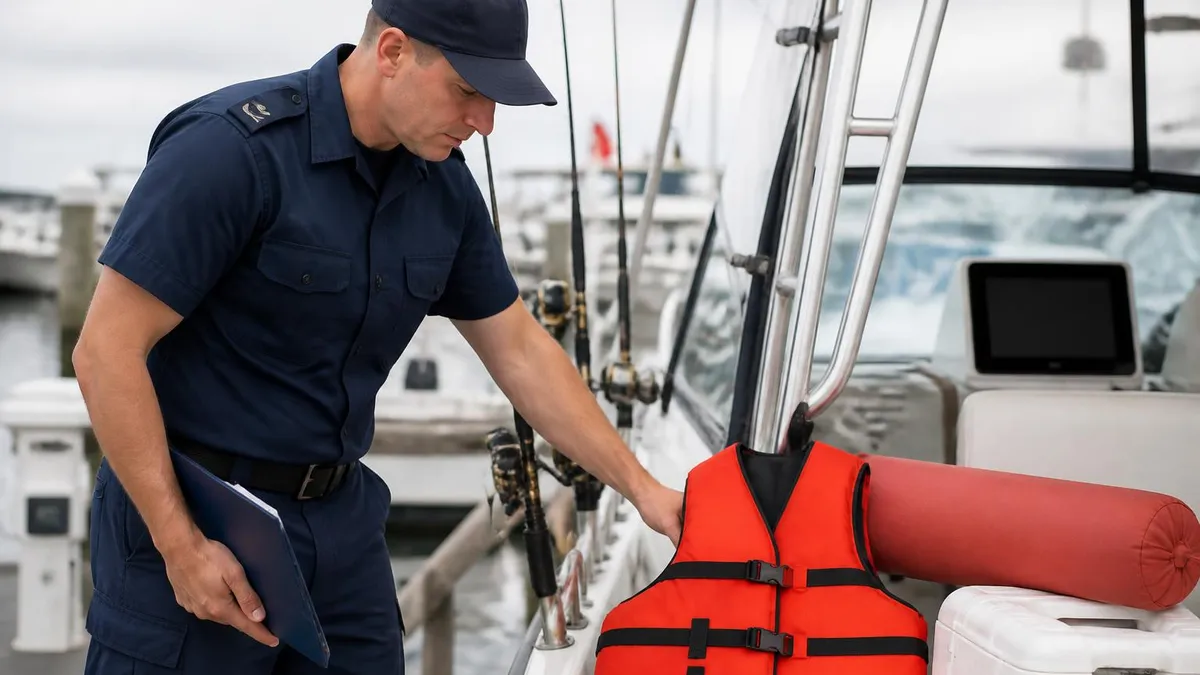
Boater Education Certificate: How to Get Your Boating Safety Card
About the Author

Master Mariner & Maritime Certification Specialist
Massachusetts Maritime AcademyCaptain David Harrington is a US Coast Guard licensed Master Mariner with a Bachelor of Science in Marine Transportation from Massachusetts Maritime Academy. He has 22 years of deep-sea and coastal navigation experience aboard commercial vessels and specializes in preparing maritime candidates for USCG licensing exams, STCW certification, dynamic positioning (DPO), and officer-of-the-watch qualifications.
Join the Discussion
Connect with other students preparing for this exam. Share tips, ask questions, and get advice from people who have been there.
View discussion (6 replies)