
Boating License Requirements by State: CA, FL, NY and More 2026 October
Boating license requirements by state: California, Florida, NY, Illinois, Kansas, Colorado, Georgia, Oklahoma. NASBLA approval, age cutoffs, kayak 🧠
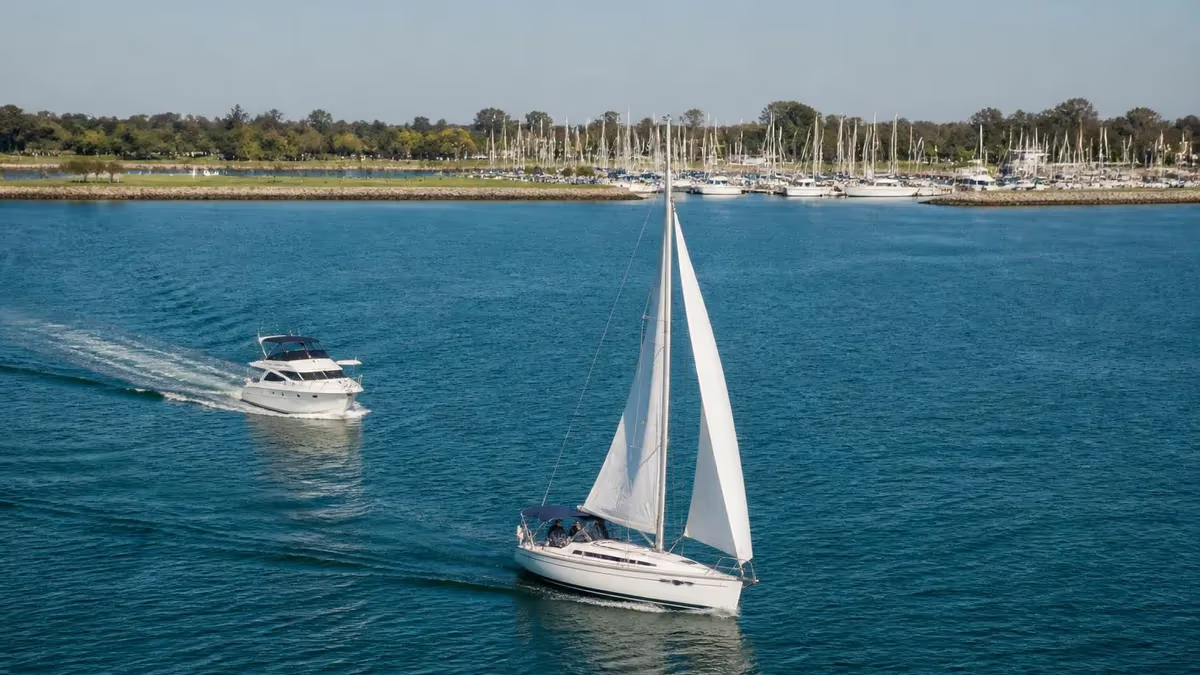
Buying your first boat is the fun part. Then comes the question every new owner Googles within an hour: do you actually need a license to drive it? The honest answer is — it depends. The United States doesn't have a single federal boating license. Instead, each state writes its own rules, and they vary wildly. California might require a card. Florida might not, depending on your age. Kansas has one approach; Colorado has another entirely.
This guide walks through what "boating license requirements" really means in practice. We'll cover the state-by-state rules for the ones people ask about most — California, Florida, New York, Illinois, Kansas, Colorado, Georgia, Oklahoma — plus the murky stuff around kayaks, jet skis, and rentals. You'll see what NASBLA is, why it matters, and how to pick an online course that actually counts.
One thing to flag up front. Most states don't issue a "boating license" the way the DMV issues a driver's license. What they issue is a boater education card — sometimes called a safety certificate — that proves you completed an approved course. It's a one-time thing. No renewal. No expiration in most states. Pass the course, keep the card on your boat, and you're legal. The course usually runs three to six hours, costs $30 to $50, and can be done entirely online.
Do I Need a Boat License in California?
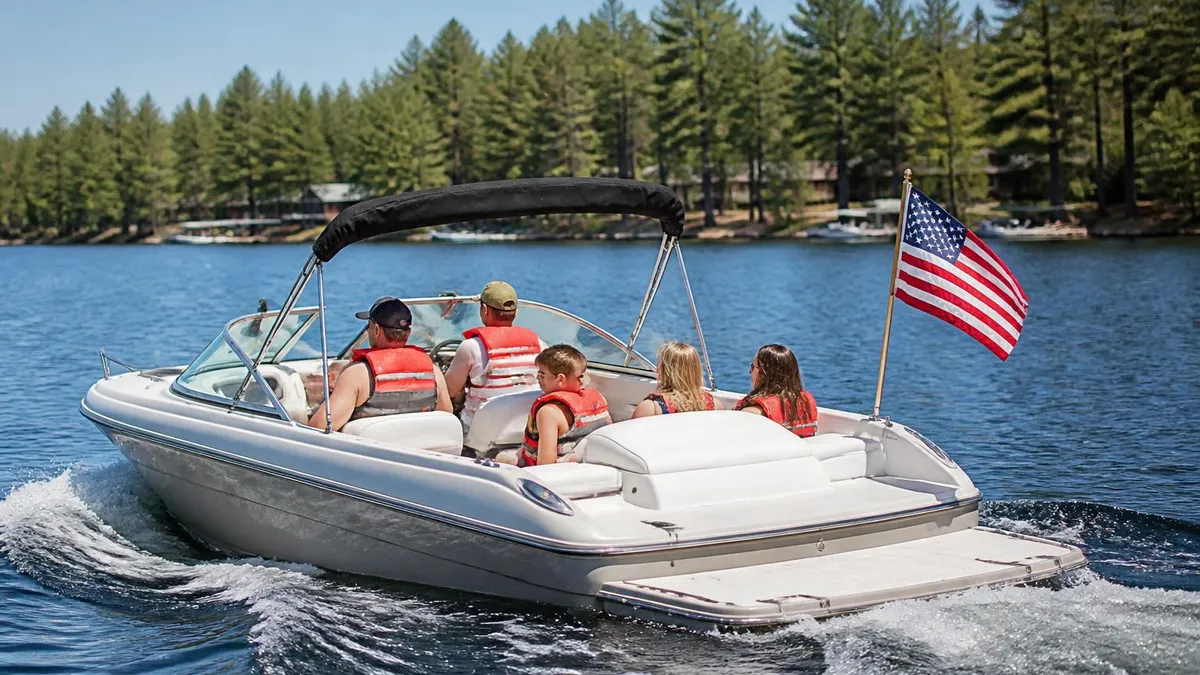
Yes — and the rules tightened up over the past few years. California uses a phased-in age requirement that's now in full effect. Anyone operating a motorized vessel on California waters, regardless of age, needs a California Boater Card issued by the Division of Boating and Waterways (DBW). The card is mandatory for residents and non-residents alike if you're operating in state waters.
Getting the card means passing a NASBLA-approved boater safety course and submitting an application with a $10 fee. The course itself is offered by several approved providers — BOATsmart, Boat-Ed, and BoaterExam are the three most common — and runs around three hours. The exam at the end is open-book on most platforms, and you can retake it as often as you need.
What about exemptions? A few apply. Renters are covered if the rental operator gives a safety briefing and an on-water demonstration. Out-of-state visitors with a boater education card from their home state are recognized in California, provided that state participates in NASBLA reciprocity (most do). And the card isn't required for non-motorized vessels — kayaks, canoes, paddleboards, sailboats without auxiliary motors — though boating safely is still very much your responsibility.
One detail people miss: the California Boater Card is lifetime. Pay once, keep the card, and you're done. Lost cards can be replaced for a small fee through the DBW website. Adults who learned to boat decades ago still need the card today — California doesn't grandfather older boaters out of the requirement.
What Counts as a NASBLA-Approved Course
NASBLA stands for the National Association of State Boating Law Administrators. They don't sell courses themselves — they approve them. A NASBLA-approved course is recognized by every state that requires boater education, which means one card often works across state lines. When you shop for an online course, look for the NASBLA-approved seal on the course landing page. Without it, the card you earn may not satisfy your state's requirement. Reputable providers like BOATsmart, Boat-Ed, BoaterExam, and Drive a Boat USA all carry NASBLA approval for the states they cover.
Do I Need a Boat License in Florida?
Florida runs an age-based rule. Anyone born on or after January 1, 1988 needs a Florida Boating Safety Education Identification Card to operate a vessel of 10 horsepower or more in Florida waters. If you were born before that date, you're grandfathered in and don't need a card — but you can still take a course voluntarily, and it'll lower your insurance premium with most providers.
The card is issued by the Florida Fish and Wildlife Conservation Commission (FWC). You earn it by completing an FWC-approved course, which has to be NASBLA-approved. Florida accepts the same online providers as California: BOATsmart, Boat-Ed, and BoaterExam. Total cost lands around $35 including the FWC card fee. The card is lifetime; no renewal needed.
What about jet skis? A personal watercraft (PWC) counts as a vessel under Florida law. Anyone born on or after January 1, 1988 needs the card to operate a jet ski, plus you must be at least 14 years old — and 14- and 15-year-olds need a qualifying adult on board. Renting? Florida law requires PWC rental operators to give safety instruction, but if you're the renter you'll still need your own boater card if you fall under the age rule.
Out-of-state visitors are recognized in Florida as long as their home state's card is NASBLA-approved. If you're visiting from a state without a boater education requirement (Alaska, for example), you'll need to complete a course before operating in Florida waters.
Boating License Requirements: State Quick Reference
California Boater Card required for all motorized vessel operators regardless of age. Lifetime card, $10 application fee on top of course cost. NASBLA-approved courses accepted. Rentals exempt with briefing.
Required if born on or after January 1, 1988. Operates vessels 10 HP and up. PWC riders need card plus age 14+. FWC issues the card; NASBLA-approved courses count. Lifetime, no renewal.
Brianna's Law phases in by birth year. As of January 1, 2025, all motorboat operators in New York need a Boating Safety Certificate regardless of age. NASBLA-approved course required.
Required for operators ages 12 to 17. Adults 18+ are not required by Illinois law, but voluntary courses available. PWC operators must be 12+ with supervision rules. IDNR issues the card.
Kansas requires the card for operators born on or after January 1, 1989. Colorado requires it for ages 14 and 15 operating with supervision. Georgia requires it for anyone born on or after January 1, 1998.
Oklahoma requires a card only for ages 12 to 15 operating a motorboat or PWC over 10 HP. Adult Oklahomans don't need a boater education card to operate a motorboat, though the Oklahoma Highway Patrol recommends one.
New York, Illinois, and the Phased-In Rules
New York runs the most aggressive recent rollout of any state. The law — Brianna's Law, named after a young teen killed in a 2005 boating accident — phases in over five years. By January 1, 2025, every person operating a mechanically propelled vessel on New York waters must have a Boating Safety Certificate. There's no age exemption and no grandfather clause. If you operate, you need the card. Period.
The certificate is issued by the New York State Office of Parks, Recreation and Historic Preservation. Approved courses run online through Boat-Ed, BOATsmart, and a handful of in-person classroom options. Total cost is similar to other states — around $35 plus a small certificate fee. Out-of-state cards are recognized through NASBLA reciprocity. If your home-state card is NASBLA-approved, you're covered when visiting.
Illinois takes a narrower approach. State law requires a boater education card only for operators ages 12 through 17. Adults 18 and over are not required by Illinois law to carry a card to operate a motorboat, though the Illinois Department of Natural Resources (IDNR) strongly recommends completing a course. For PWC operators specifically, ages 12 and 13 must be accompanied by a parent or guardian who is 18 or older — the kid can hold the card, but they can't operate alone. Ages 14 and up with a card can operate independently.
If you've ever asked "do I need a boating license in NY?" or "do I need a boating license in Illinois?" — the answer changes by year and by age. New York is the strictest. Illinois only requires it for minors. Adults boating recreationally in Illinois with a personal motorboat under their own ownership don't need a card, but anyone teaching their teen to drive the boat absolutely does need that teen carded.
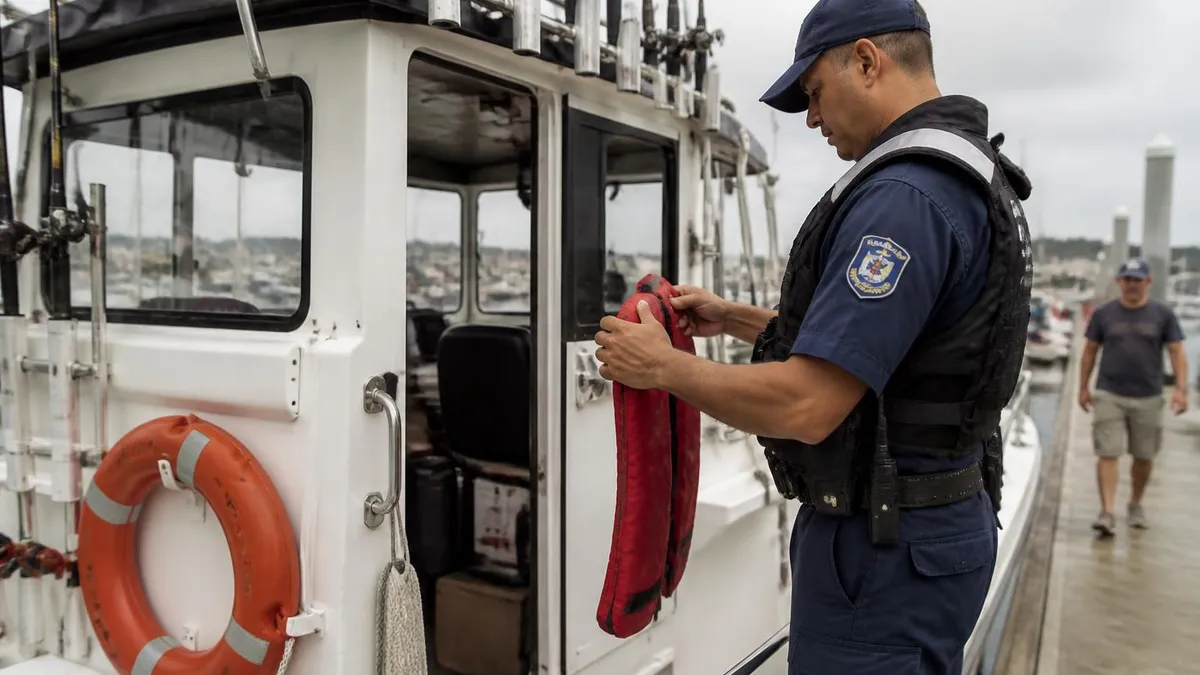
Kansas requires a boater education card for anyone born on or after January 1, 1989 who operates a motorboat or personal watercraft on state waters. The card is issued by the Kansas Department of Wildlife and Parks (KDWP) and a NASBLA-approved course counts. There's no age floor for younger operators — ages 12 to 15 can operate a motorboat with the card, but ages 16 and up need the card if they fall under the birth-year rule. Out-of-state visitors are recognized if their home-state card is NASBLA-approved.
What About Kayaks, Jet Skis, and Paddleboards?
Here's where the rules get interesting. Most state boater education laws apply to motorized vessels. A kayak, canoe, paddleboard, or other human-powered craft generally falls outside the licensing requirement. Do you need a boat license for a kayak? In nearly every state — including California, Florida, New York, Texas, and most others — the answer is no. You don't need a card to paddle.
There are exceptions. A few states require kayak registration (a tag for the boat, not a license for you) if the kayak exceeds a certain length or is used on certain waterways. Ohio, Pennsylvania, and Iowa fall into this category. The registration is administered by the state's wildlife or natural resources agency and runs roughly $10 to $20 a year. It's not a license, it's a tag — like a license plate for the kayak.
Jet skis are a different story. A personal watercraft (PWC) is a motorized vessel, and every state that has a boater education requirement applies it to PWCs. So can you drive a jet ski without a boating license? Only if you're operating in a state that has no boater education requirement for your age, or if you have a NASBLA-approved card already.
Florida, California, New York, Texas — all require the card for PWC operators in the age cohorts the state law covers. PWC rentals usually include a brief safety check, which can substitute for the card in some states, but only for the duration of the rental.
Stand-up paddleboards (SUPs) are in a strange spot. The U.S. Coast Guard classifies SUPs as "vessels" when used outside swimming and surfing areas — which means federal life jacket and registration rules can apply, even though state boater education laws usually don't. Carry a PFD, a whistle, and stay aware of any state-specific quirks. New York, for example, requires a PFD on board any vessel including SUPs.
Online boating courses come in all shapes — and not all of them issue valid cards. Some cheap or unofficial-looking websites sell "boating certificates" that aren't recognized by any state. Before paying, verify the course is NASBLA-approved for your specific state. The provider should list approval for your state explicitly on the landing page. If it's vague or only says "approved nationwide," that's a red flag. Stick to BOATsmart, Boat-Ed, BoaterExam, or Drive a Boat USA — the major providers that have explicit state-by-state NASBLA approval.
How Online Boating License Courses Actually Work
If your state requires the card, here's what the process looks like start to finish. You'll spend a Saturday morning on a computer and walk away with a card valid for life.
Pick a provider. The three biggest are BOATsmart, Boat-Ed, and BoaterExam. They're all NASBLA-approved and offered in nearly every state with a boater education requirement. Cost is roughly equal — expect $30 to $50 for the course, sometimes plus a small state card fee on top.
Complete the course. Most online courses break the material into six to twelve chapters covering navigation rules, safety equipment, weather, towing rules, alcohol laws, and emergencies. You can pause and resume. Each chapter usually ends with a short quiz; if you fail a chapter quiz, you re-take it before continuing. Total time on screen is three to six hours for most people.
Take the final exam. The final is typically 50 to 75 multiple-choice questions. Open-book on most platforms. A score of 75 to 80 percent is the standard pass. If you fail, you re-take it — there's almost never a limit. Some states require the exam to be proctored remotely; the provider walks you through that.
Get your card. Most providers issue a temporary digital card right after you pass, and a permanent plastic card arrives in the mail in two to four weeks. Some states (California, Florida) require you to submit a separate application to the state agency to get the official state card. Don't skip that step — the provider's certificate alone may not be the document you carry on the boat.
Keep the card on the boat. States require you to carry the card with you when operating. A digital copy on your phone counts in most states. Photocopy it and stash a copy in the boat's safety kit, too.
- ✓Confirm your state's specific rule (some are age-based, some require everyone)
- ✓Choose a NASBLA-approved provider explicitly listed for your state
- ✓Complete the online course (3-6 hours, can be paused and resumed)
- ✓Pass the final exam with the state's required score (typically 75-80 percent)
- ✓Submit the state agency application and pay the card fee if required
- ✓Wait for the permanent card to arrive in the mail (2-4 weeks)
- ✓Keep the card on your boat or in your wallet when operating
- ✓Confirm reciprocity if you'll boat in neighboring states
Costs, Renewals, and Why It's Worth It Anyway
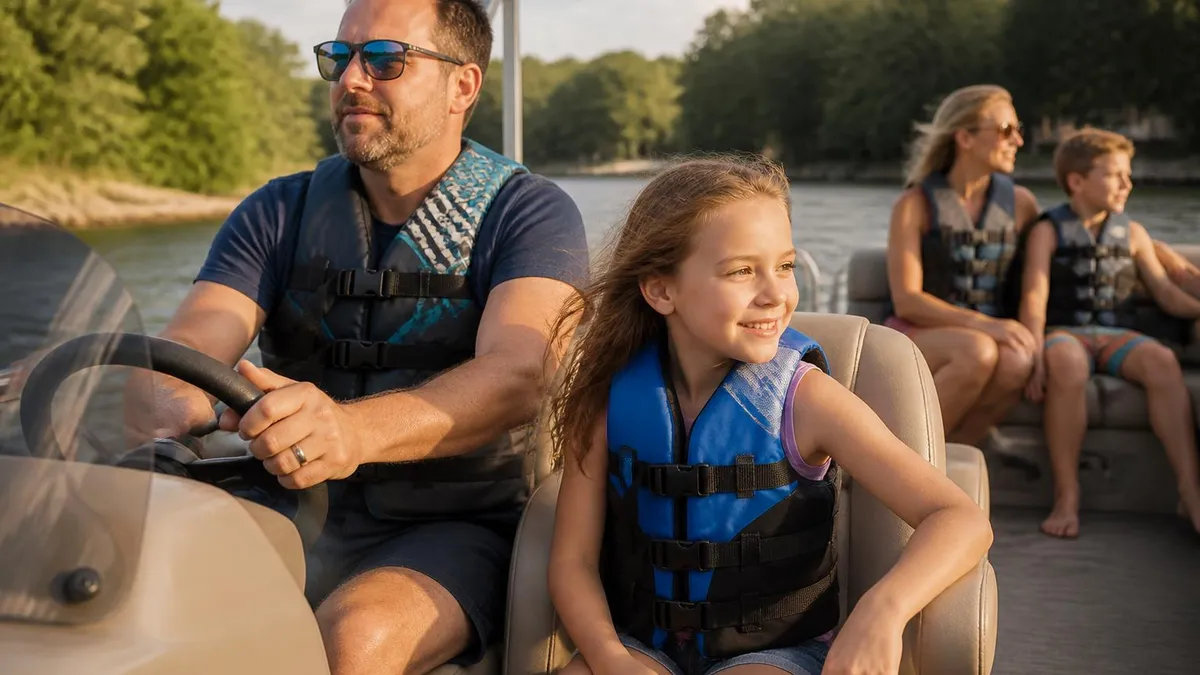
The total cost of getting a boater card runs $30 to $60 in most states, all-in. That covers the course, the exam, and the state card fee where one exists. Compare that to a car driver's license — the boater card is cheaper, takes less time, and never expires in nearly every state that issues one.
A few states charge slightly more. New York's card costs $35 for the course plus a $15 state certificate fee. California's is $10 for the state card on top of the course. Texas charges a flat $10 to the state. None of these are renewal fees — they're one-time costs for a lifetime card.
Renewals are rare in U.S. states. Most boater cards are good for life. Lose your card? Replace it through your state agency's website for $5 to $10. Change your name? Same agency, same form, same fee. The only states that come close to a renewal are those that recognize temporary rental cards — those expire when the rental ends.
Why bother taking the course if your state doesn't require it (Oklahoma adults, for example)? Three reasons. First, insurance discounts — most marine insurance providers cut your premium 5 to 10 percent if you can show a NASBLA-approved card. Second, fines — a citation for operating without a required card runs $50 to $500 depending on state, plus potential boat impoundment.
Third, actual safety — the U.S. Coast Guard reports that 75 percent of boating deaths in recent years happened on vessels where the operator had no formal training. The course content isn't fluff; it covers the things that actually kill boaters.
- +Lifetime card — pay once, no renewals in most states
- +Online, self-paced, completed on your schedule
- +Lower cost than a single fishing license — usually under $50
- +NASBLA reciprocity means one card often works in many states
- +Insurance discounts often more than pay back the course cost
- −Rules differ by state — you have to check yours, not assume
- −Card issued by the provider isn't always the same as the state card
- −Out-of-state visitors with no card sometimes face fines on first visit
- −Some states require renewal of rental-specific temporary cards
- −PWC and youth operators face stricter rules on top of the basic card
Pros and Cons at a Glance
| Pros | Cons |
|---|---|
| Lifetime card — pay once, no renewals in most states | Rules differ by state — you have to check yours, not assume |
| Online, self-paced, completed on your schedule | Card issued by the provider isn't always the same as the state card |
| NASBLA reciprocity means one card often works in many states | Out-of-state visitors with no card sometimes face fines on first visit |
| Insurance discounts often more than pay back the course cost | Some states require renewal of rental-specific temporary cards |
Enforcement, Fines, and Rental Realities
State agencies and local marine patrols do check for boater cards. Inspections are routine at popular launch ramps and on busy weekend afternoons. If you're operating in a state that requires the card and you can't produce one, expect a citation. Fines range from $50 in lenient states up to $500 or more in stricter ones. Florida starts at $50; California's first-offense fine is $100. Repeat offenses go higher, and the boat can be ordered off the water.
What about renting? Rental rules add another wrinkle. In most states that require boater education, you can rent without a card if the rental company gives you a basic safety briefing and an on-water demonstration. The catch is that this exemption only covers the duration of the rental — you can't claim it the next weekend on a buddy's boat. Some states (like California) require the rental operator to issue a temporary rental card, which is valid only for that specific rental period.
If you charter a boat with a captain, you don't need the card — the captain holds the licensing. Same with guided fishing trips and commercial tour boats. The licensing rule applies to the person at the helm, not the passengers.
One trap people fall into: assuming a boater card from one state automatically works everywhere. Most states do honor NASBLA-approved cards from other states through reciprocity. But a few quirks exist. Alaska doesn't require boater education at all, so an Alaskan visitor will face a problem in Florida or California. Some Great Lakes states have unique requirements for shared waters. Always check the destination state's rules before launching.
Bottom Line: What You Need to Do Today
If you've reached this point and you're still not sure whether you need a card, here's the short version. Check three things, in order.
One. Your home state. Pull up your state's boating regulations — usually under the Department of Natural Resources, Fish and Wildlife, or Parks & Recreation site. Look for the age cutoff (most are birth-year based) or the universal requirement (California, New York). That tells you whether the card is mandatory for you.
Two. The vessel. Motorized? Card likely required if you're in the age cohort. Non-motorized (kayak, canoe, paddleboard, sailboat without an aux motor)? Card almost never required, but registration might be. PWC? Card always required where the state has any boater education law.
Three. Where you'll boat. Reciprocity covers most state-to-state travel, but verify the destination state recognizes your home-state card. If you'll boat regularly in two states that don't share reciprocity, you might need both cards.
Then go take the course. Three to six hours of online learning, $30 to $50, lifetime card. The course teaches real safety content — the kind that keeps you and your passengers alive when something goes wrong on the water. Whether your state legally requires it or not, the case for taking the course is strong. Try the practice tests linked above to see what kind of questions appear on the final exam — they cover navigation rules, life-saving equipment, weather, and the legal stuff that's the most common reason new boaters fail on the first attempt.
Boating Questions and Answers
About the Author

Master Mariner & Maritime Certification Specialist
Massachusetts Maritime AcademyCaptain David Harrington is a US Coast Guard licensed Master Mariner with a Bachelor of Science in Marine Transportation from Massachusetts Maritime Academy. He has 22 years of deep-sea and coastal navigation experience aboard commercial vessels and specializes in preparing maritime candidates for USCG licensing exams, STCW certification, dynamic positioning (DPO), and officer-of-the-watch qualifications.
Join the Discussion
Connect with other students preparing for this exam. Share tips, ask questions, and get advice from people who have been there.
View discussion (6 replies)