
Boater License Tennessee: Complete Guide to Getting Your Tennessee Boating Certificate in 2026 October
Get your boater license Tennessee & florida boating license fast. Requirements, costs, age rules & free practice tests. ✅ Complete 2026 October guide.
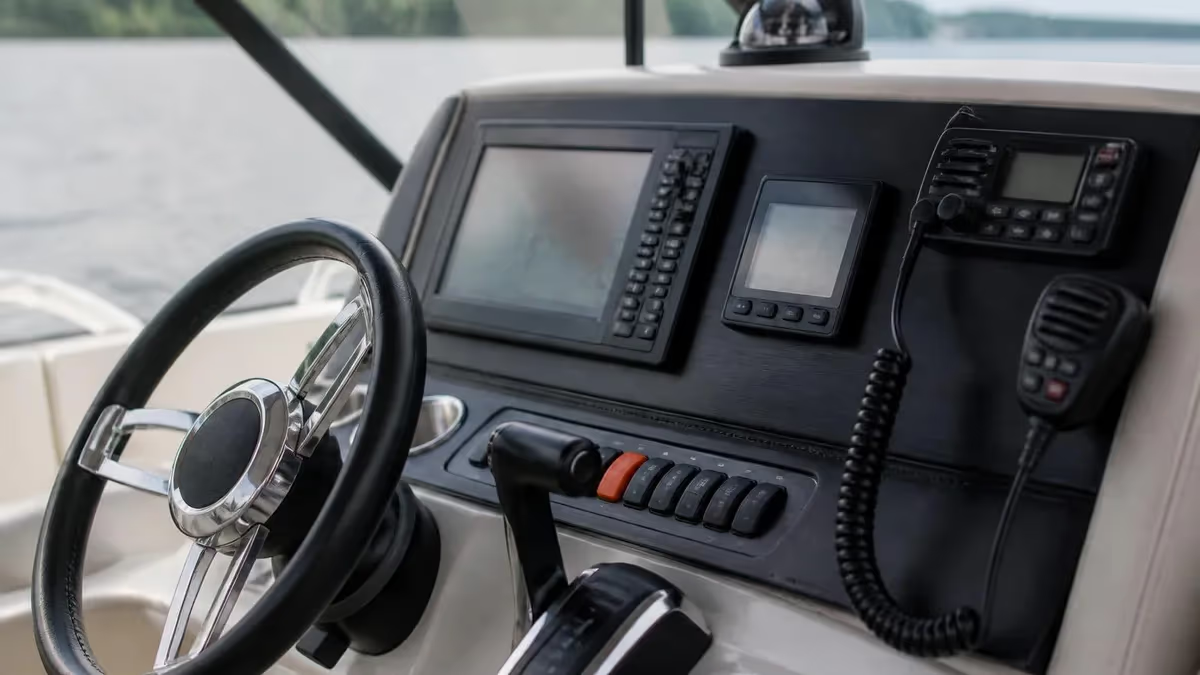
Getting your boater license Tennessee is one of the most important steps you can take before heading out on the state's beautiful rivers, lakes, and reservoirs. Tennessee is home to more than 800,000 acres of navigable water, and the Tennessee Wildlife Resources Agency (TWRA) requires anyone born on or after January 1, 1989 to carry a valid Boating Safety Certificate before operating a motorized vessel. Whether you're planning to cruise Percy Priest Lake or fish the Tennessee River, understanding the licensing requirements is your first step toward a safe and legal boating season.
If you've recently moved from another state and held a florida boating license, you may already meet Tennessee's reciprocity requirements — but the rules vary depending on when and how you earned that certificate. Tennessee recognizes out-of-state boating education cards issued by National Association of State Boating Law Administrators (NASBLA)-approved providers. That means a credential earned in Florida, Georgia, or any other NASBLA-compliant state is generally valid in Tennessee, though you should carry your original card and be prepared to show it to law enforcement on the water.
The question do you need license to operate a boat is one that confuses many newcomers. In Tennessee, the short answer is yes — if you were born after the cutoff date and you're operating any motorized watercraft, you need proof of boating safety education. This requirement applies to everything from a small fishing Jon boat with a trolling motor to a high-powered ski boat. Personal watercraft (PWC) such as Jet Skis fall under the same rules, and operators under 16 must be supervised by an adult who is at least 18 years old.
Tennessee's boating education requirement is not merely a bureaucratic hurdle. According to the U.S. Coast Guard's annual recreational boating statistics, operator inexperience and inattention are the leading contributing factors in boating accidents nationwide. States with mandatory education programs have seen measurable reductions in fatality rates over the past two decades. By completing an approved course, you're not just complying with the law — you're learning how to read navigation buoys, handle emergency situations, understand right-of-way rules, and operate your vessel responsibly in challenging weather conditions.
Compared with the california boating license process or the requirements for an alabama boating license, Tennessee's system is relatively streamlined. Most boaters complete the state-approved online course in one to two evenings, pass the required proctored exam with a score of 80 percent or higher, and receive their permanent wallet card within two to three weeks. The course covers federal and state regulations, safe boating practices, and emergency preparedness — all topics directly tested on the final exam. Temporary certificates are issued immediately upon passing, so you won't miss a weekend on the water.
Beyond the basics, Tennessee boaters should be aware of registration requirements for their vessels. Any motorized watercraft — and any sailboat over 26 feet — must be registered with the TWRA and display a current decal. Registration fees vary by vessel length and type, ranging from roughly $15 for small boats to $50 or more for larger craft. Titles are required for motorized vessels under 16 feet and all motorized vessels 16 feet and longer. Keeping your registration and boating certificate together in a waterproof pouch is a best practice recommended by the TWRA.
This guide walks you through every aspect of obtaining your Tennessee boating certificate: who needs one, how to choose the right course, what to expect on the exam, how costs compare across states, and how to use free practice tests to maximize your score on the first attempt. Whether you're a first-time boater, a parent helping a teenager get certified, or an experienced mariner relocating from another state, the following sections give you everything you need to hit the water legally and confidently in 2026.
Tennessee Boating License by the Numbers
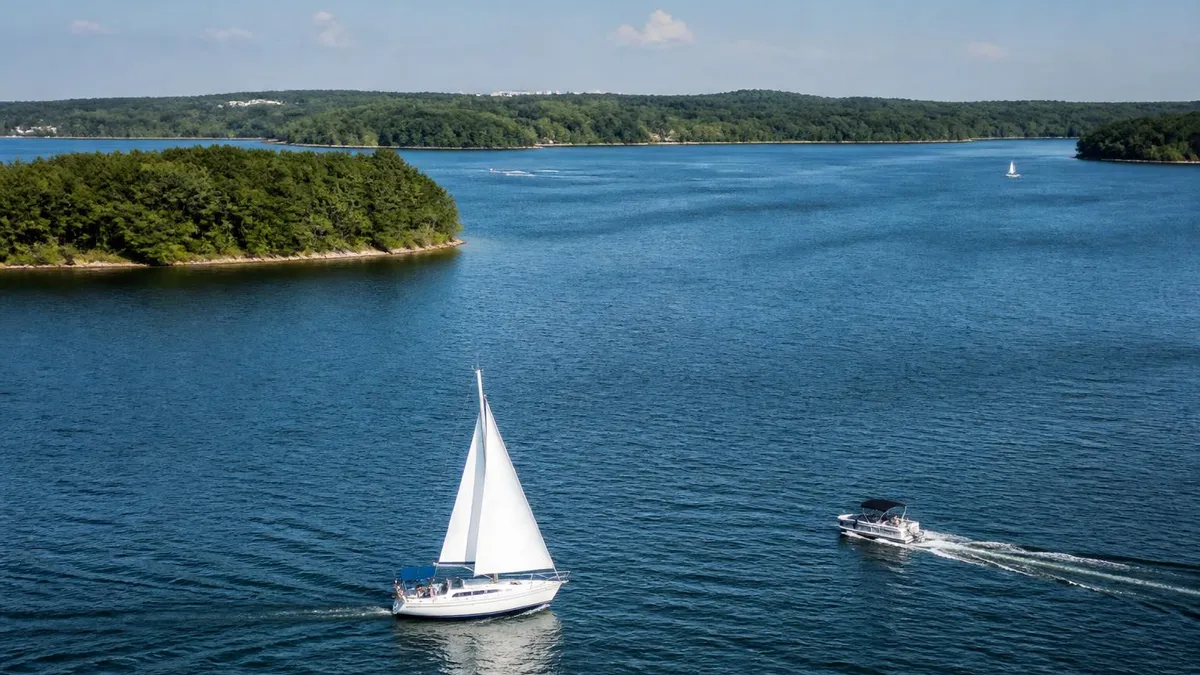
Who Needs a Boating License in Tennessee
Any person born on or after January 1, 1989 who operates a motorized vessel on Tennessee waters must carry a valid Boating Safety Certificate. This applies regardless of vessel size, horsepower, or type — including personal watercraft like Jet Skis.
Boaters aged 12 to 15 may operate a motorized vessel if they hold a valid certificate AND are supervised by a person who is at least 18 years old. Children under 12 may not legally operate a motorized vessel on Tennessee public waters.
Non-residents with a NASBLA-approved boating education card from their home state — such as a florida boating license or alabama boating license — are recognized in Tennessee. Visitors without any credential who meet the age cutoff must obtain Tennessee certification before operating.
Anyone operating a vessel for hire or as a commercial guide must meet all standard boating education requirements plus any additional U.S. Coast Guard licensing mandated by federal law. State certification is the baseline; federal credentials may also be required.
Once you've confirmed that you need a tennessee boating license, the next step is choosing an approved education course. Tennessee offers two primary pathways: an in-person classroom course administered by TWRA-certified instructors, or a state-approved online course through providers like Boat-Ed.com or BoaterExam.com. The online option is by far the most popular because it allows you to study at your own pace, revisit difficult material, and complete the coursework from any device. Both pathways culminate in a proctored final exam that must be passed with a score of at least 80 percent.
The TWRA-approved online course typically takes between three and five hours to complete, though the actual time varies depending on your prior boating experience and how carefully you review the material. The course covers seven major topic areas: boating laws and regulations, navigation rules and aids, safe boat operation, weather and water conditions, emergency procedures, environmental stewardship, and personal watercraft operation. Each section includes interactive exercises, knowledge checks, and video demonstrations designed to reinforce the content before you attempt the final exam. Unlike a simple open-book quiz, the final exam is timed and monitored.
The proctored exam consists of approximately 50 questions drawn from the course curriculum. You'll need to score 80 percent (40 correct answers) to pass. If you fail on the first attempt, most providers allow you to retake the exam after a short waiting period, but additional attempts may carry a fee.
This is exactly why using missouri boating license style prep resources and free practice tests before you sit for the official exam is such a smart investment of your time. Practice tests familiarize you with question phrasing, help you identify weak areas, and build the confidence you need to pass on your first try.
After passing the exam, you'll receive a temporary boating safety certificate that is valid for 90 days. Your permanent laminated wallet card arrives by mail within two to three weeks. Keep the temporary certificate on your person while boating until the permanent card arrives — TWRA officers may request to see it during any routine vessel inspection on Tennessee waters. If you lose your card at any point, replacement cards can be ordered through the course provider or directly from the TWRA for a small administrative fee.
In-person classroom courses are another excellent option, especially for boaters who prefer a structured learning environment with direct access to an instructor. These sessions are offered throughout the spring and summer boating season at TWRA regional offices, marinas, and community centers across the state. Class sizes are typically small, which allows participants to ask questions about specific Tennessee regulations, local waterway hazards, and boating etiquette on popular lakes like Chickamauga, Norris, and Dale Hollow. Some in-person classes include an on-water component, though this varies by location.
Parents enrolling a child aged 12 to 15 should note that minors must complete the same NASBLA-approved course as adults and pass the same proctored exam. There is no junior or abbreviated version of the certification. Many families complete the online course together, turning the experience into a shared learning opportunity that reinforces safe habits before the young boater ever touches a throttle. The TWRA encourages this approach and notes that family-based boating education significantly reduces the likelihood of accidents involving young operators.
Once certified, your Tennessee Boating Safety Certificate never expires — it is a lifetime credential. However, if boating regulations change substantially, staying current with updated rules is your responsibility as the operator. The TWRA publishes annual updates to the Tennessee Boating Guide, which is available as a free download from the agency's website. Reading this guide each spring before your first outing of the season takes less than an hour and ensures you're aware of any new no-wake zones, speed limits, or equipment requirements that may have been enacted during the off-season.
Do You Need a License to Drive a Boat? Key State Comparisons
In Tennessee, anyone born on or after January 1, 1989 must complete a NASBLA-approved boating safety course to legally operate a motorized vessel. The alabama boating license follows a similar birth-year cutoff model — Alabama requires certification for operators born on or after August 1, 1978, making it one of the broader mandates in the region. Georgia requires all operators born on or after January 1, 1998, to be certified, and Florida mandates education for anyone born on or after January 1, 1988.
The florida boating license — officially called the Boating Safety Education ID card — is issued by the Florida Fish and Wildlife Conservation Commission and is valid for life. Florida's online course costs approximately $29.95 through approved providers, making it one of the more affordable options in the Southeast. Tennessee's course fees are comparable, generally running between $29.95 and $39.95 depending on the provider. All four states recognize NASBLA-approved credentials from other states, so reciprocity is rarely an issue for traveling boaters.
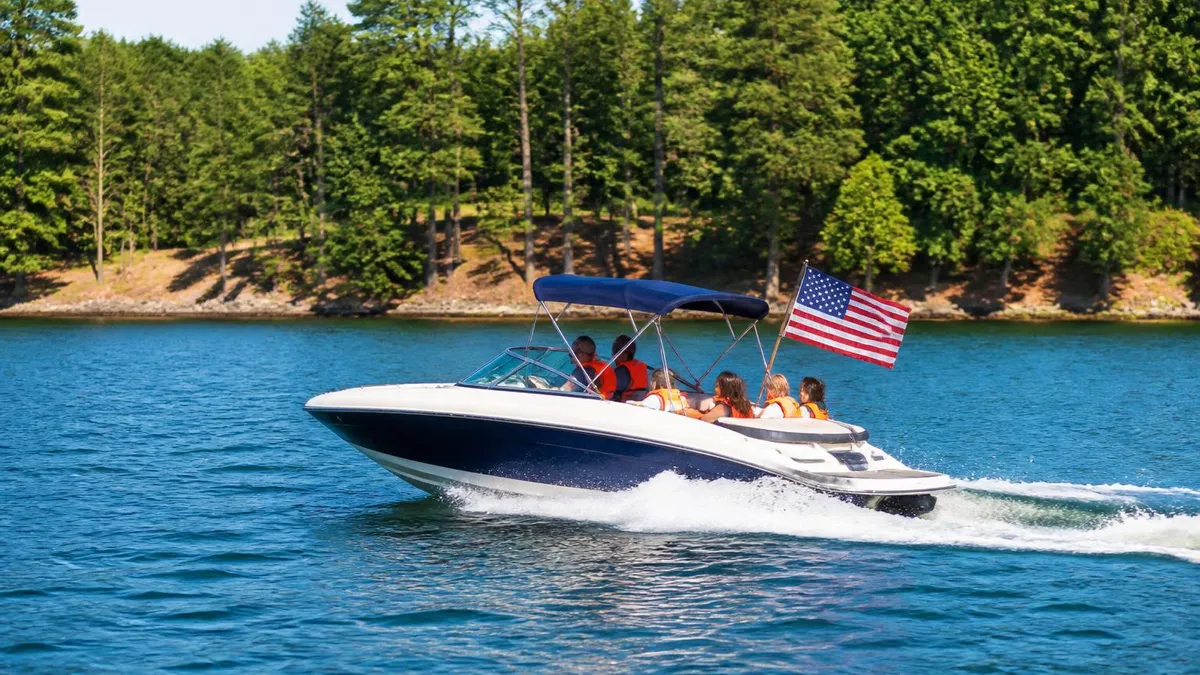
Online vs. In-Person Boating Safety Course: Which Is Right for You?
- +Complete the online course at your own pace — study evenings, weekends, or during lunch breaks
- +Instant access to course materials 24/7 with no travel required to a classroom location
- +Replay video lessons and review sections as many times as needed before taking the final exam
- +Typically $5–$10 cheaper than in-person options when accounting for travel and time costs
- +Receive your temporary certificate immediately upon passing — no waiting for a class session
- +Wide provider selection (Boat-Ed, BoaterExam, etc.) lets you compare course quality and features
- −No direct access to an instructor for real-time questions about Tennessee-specific waterway rules
- −Proctored exam still requires an in-person proctor, which can add scheduling complexity
- −Self-paced format requires personal discipline — easy to procrastinate without a set class date
- −Some learners retain information better through hands-on, classroom-style instruction
- −No on-water practical component — all learning is theoretical and screen-based
- −Technical issues (browser compatibility, internet outages) can interrupt the learning experience
Pros and Cons at a Glance
| Pros | Cons |
|---|---|
| Complete the online course at your own pace — study evenings, weekends, or during lunch breaks | No direct access to an instructor for real-time questions about Tennessee-specific waterway rules |
| Replay video lessons and review sections as many times as needed before taking the final exam | Proctored exam still requires an in-person proctor, which can add scheduling complexity |
| Receive your temporary certificate immediately upon passing — no waiting for a class session | Self-paced format requires personal discipline — easy to procrastinate without a set class date |
| Wide provider selection (Boat-Ed, BoaterExam, etc.) lets you compare course quality and features | Some learners retain information better through hands-on, classroom-style instruction |
Tennessee Boating License Preparation Checklist
- ✓Confirm you meet the birth-year requirement (born on or after January 1, 1989) for mandatory certification
- ✓Choose a NASBLA-approved online or in-person course from the TWRA's official approved provider list
- ✓Complete all course modules and pass the chapter quizzes before attempting the final proctored exam
- ✓Score at least 80 percent (40 out of 50 questions) on the proctored final exam to earn your certificate
- ✓Save your temporary boating safety certificate immediately after passing and keep it on your person while boating
- ✓Register your vessel with the TWRA and display your current registration decal in the required location
- ✓Ensure all required safety equipment is aboard: life jackets, fire extinguisher, horn, and navigation lights
- ✓Download and read the current Tennessee Boating Guide from the TWRA website before your first outing
- ✓Practice with free online boating license tests to identify knowledge gaps before the official exam
- ✓Store your permanent wallet card and vessel registration together in a waterproof pouch on board
Your Tennessee Boating Safety Certificate Never Expires
Unlike a driver's license, your Tennessee Boating Safety Certificate is a lifetime credential — once earned, it never needs to be renewed. However, boating regulations do change, so revisiting the TWRA's annual Boating Guide each spring is strongly recommended. Staying current with rule changes protects both you and your passengers on the water.
Understanding the costs associated with getting your tennessee boating license helps you budget appropriately and avoid surprises. The primary expense is the boating safety education course itself, which typically costs between $29.95 and $39.95 for an online program through a TWRA-approved provider. In-person classroom courses administered by TWRA-certified instructors are sometimes offered at a lower cost or even free of charge, particularly for youth programs or community events, though availability varies by region and season. Always verify current pricing directly with the provider before enrolling.
In addition to the course fee, Tennessee does not charge a separate state fee to issue your Boating Safety Certificate — your payment to the approved course provider covers the full cost of obtaining the credential. This is a notable advantage compared to some other states; for example, California charges a $16.50 state card issuance fee on top of the course fee, and New York requires separate fees for course completion and card issuance. Tennessee's all-in-one pricing through course providers keeps the process simple and cost-transparent.
Vessel registration is a separate cost that every Tennessee boater must account for. Registration fees are determined by the length of the vessel and are paid to the TWRA or through a licensed county clerk's office. A boat under 16 feet in length typically costs around $15 to register annually, while vessels between 16 and 26 feet run approximately $26 per year. Larger vessels (over 26 feet) face higher fees, and all registrations must be renewed annually. Tennessee registration decals must be affixed to the vessel within 30 days of purchase or transfer of ownership.
Life jacket requirements in Tennessee mandate that every vessel carry one U.S. Coast Guard-approved Type I, II, III, or V personal flotation device (PFD) for each person on board. Children under 13 must wear a Coast Guard-approved life jacket at all times while on an open deck of a moving vessel.
Boats 16 feet or longer must also carry at least one Type IV throwable flotation device. Failure to carry required safety equipment can result in fines starting at $50 and escalating with the severity of the violation, so investing in quality gear upfront is far more economical than paying avoidable penalties.
Fire extinguisher requirements apply to any motorized vessel with an enclosed engine compartment, a closed living space, or a fuel tank located inside the hull. At minimum, vessels meeting this description must carry one B-1 rated marine fire extinguisher. Larger boats may need multiple extinguishers depending on vessel length. The TWRA recommends inspecting fire extinguishers at the start of each season to confirm they are fully charged and in serviceable condition. Out-of-date or discharged extinguishers are among the most common violations found during routine safety checks on Tennessee waterways.
Sound-producing devices — specifically a horn or whistle capable of being heard for at least one-half mile — are required on all vessels 16 feet or longer. Vessels under 16 feet are encouraged to carry such a device even though it is not strictly mandated by state law, because the U.S. Coast Guard Inland Navigation Rules require sound signals in certain situations regardless of vessel size.
Navigation lights are required for all vessels operated between sunset and sunrise or in reduced visibility conditions. Keeping a copy of the required equipment checklist on board ensures you won't overlook a critical item before a night cruise or early-morning fishing trip.
For boaters who frequently travel between states, understanding cost comparisons is valuable. The boating license florida process costs approximately $29.95 for the online course with no separate state fee, similar to Tennessee. An alabama boating license course runs approximately $34.95, while the california boating license program adds a $16.50 state card fee on top of course costs.
The texas boating license — officially called the Texas Boater Education Certificate — can be obtained for as little as $35 through an approved online provider, and like Tennessee's credential, it is a lifetime certification recognized across NASBLA-member states. See our guide on texas boating license requirements for a detailed state-by-state breakdown.
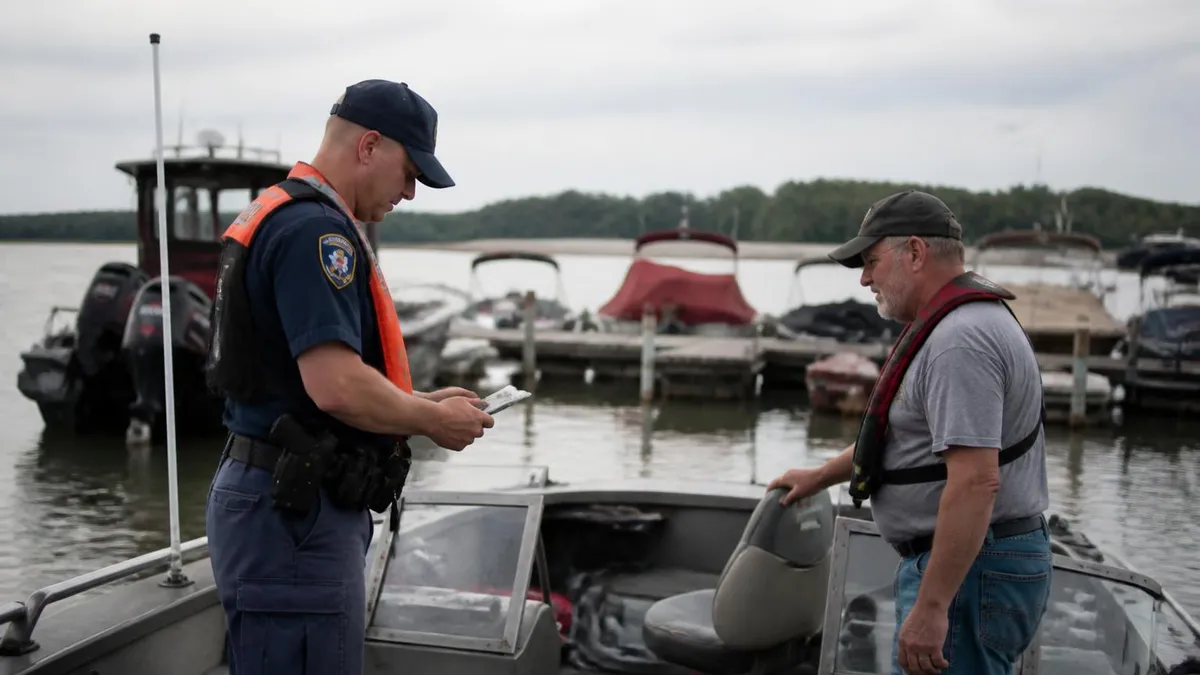
If you are required to hold a Tennessee Boating Safety Certificate and are caught operating a vessel without one, TWRA officers can issue a citation carrying fines of up to $50 for a first offense, with higher penalties for repeat violations. In addition, the officer may require you to immediately stop operating the vessel and return to shore. Don't risk your boating trip — complete your certification before launch day.
Passing the Tennessee boating safety exam on your first attempt is a realistic goal for most people — but only if you approach preparation strategically. The exam draws questions from across all seven topic areas covered in the approved course, and the questions are designed to test practical comprehension, not just memorization of isolated facts.
Understanding why a rule exists (for example, why vessels traveling upstream have right-of-way over those traveling downstream on a river) is far more useful than simply trying to memorize the answer to a specific question phrasing. This conceptual understanding helps you answer novel question variations you haven't seen before.
Free practice tests are your single most effective preparation tool. Sites like PracticeTestGeeks.com offer timed, exam-style practice questions that mirror the format and difficulty of the official NASBLA-approved exam. Research on test preparation consistently shows that spaced retrieval practice — answering questions, checking your results, and reviewing incorrect answers — outperforms passive re-reading of course materials by a wide margin. Aim to complete at least three full practice exams before your official test, and pay special attention to the topic areas where you score below 85 percent.
Navigation aids and buoys are among the most commonly missed question categories on boating license exams nationwide. The U.S. Aids to Navigation system uses a color-coded, numbered buoy system to mark safe channels, hazards, and speed zones on navigable waterways. The mnemonic "Red Right Returning" — meaning keep red buoys on your right (starboard) side when returning to port from open water — is one of the most important concepts to internalize. Tennessee's waterways use both the U.S. Inland system and lake-specific markers administered by the Army Corps of Engineers, so familiarity with both sets of markers is valuable.
Weather awareness is another high-priority exam topic that also has direct real-world safety implications. Tennessee is susceptible to fast-moving thunderstorms, particularly during summer afternoons, and conditions on larger lakes like Watts Bar and Chickamauga can change rapidly. The exam tests your knowledge of cloud formation warning signs, lightning safety protocols, and procedures for operating in reduced visibility. In practice, the safest approach is to monitor forecasts before departure, file a float plan with a responsible person on shore, and return to dock well before storm conditions develop rather than waiting until lightning is already visible.
Right-of-way rules — also called the rules of the road for waterways — account for a significant portion of exam questions. Key scenarios to know include: sailboats generally have right-of-way over motorized vessels (with exceptions for large commercial ships in narrow channels); when two powerboats approach head-on, both should turn to starboard (right); and when a powerboat overtakes another vessel, the overtaking boat must stay clear. These rules exist to prevent collisions, and understanding them in context — not just as a list to memorize — ensures you can apply them correctly under varied circumstances on the water.
The new york state boating license exam covers many of the same federal navigation rules, which makes sense because waterway safety is largely governed by U.S. Coast Guard regulations that apply uniformly across all states. The state-specific portions of any boating exam focus on local regulations: speed limits in congested areas, no-wake zones near marinas and swimming areas, age restrictions for operating specific vessel types, and state-mandated safety equipment beyond federal minimums. For Tennessee boaters, reviewing the TWRA's Boating Guide alongside the standard NASBLA curriculum ensures you're prepared for both the federal and state-specific portions of the exam.
On exam day, arrive at the proctored testing location early, bring a valid government-issued photo ID, and allow yourself adequate time without rushing. Read each question carefully before selecting an answer — many incorrect answers on boating exams are plausible-sounding distractors that contain a subtle error, such as the wrong distance, wrong color buoy, or reversed right-of-way priority. Eliminate obviously wrong answers first, then choose the best remaining option. If you've completed multiple practice tests and consistently scored above 85 percent, you're well-positioned to pass the official exam with confidence on your first attempt.
Beyond passing the exam, becoming a skilled and responsible boater in Tennessee means developing habits that keep you and your passengers safe every time you leave the dock. One of the most overlooked habits is the pre-departure safety check — a systematic walkthrough of the vessel before you start the engine.
This check should verify fuel levels and fuel system integrity (looking for leaks or vapor), confirm all required safety equipment is aboard and accessible, test navigation lights if you'll be on the water near dusk, and verify that the bilge blower has been running for at least four minutes if you have a gas-powered inboard engine to clear any accumulated fuel vapors.
Alcohol and boating is a combination that contributes to a disproportionate share of fatal boating accidents in the United States. Tennessee law prohibits operating a vessel while under the influence of alcohol or drugs, with a legal blood alcohol content (BAC) limit of 0.08 percent — the same limit that applies to motor vehicle operation.
The penalties for Boating Under the Influence (BUI) in Tennessee include fines up to $2,500, up to one year in jail for a first offense, and mandatory suspension of your boating privileges. Sun exposure, heat, wind, and wave motion amplify the effects of alcohol on the water, meaning that a moderate amount of alcohol that wouldn't impair your driving significantly can severely impair your boating performance.
Speed management is a critical skill that new boaters often underestimate. Tennessee law requires all vessels to operate at a no-wake speed (slow speed that produces minimal or no wake) within 50 feet of another vessel, dock, pier, swimmer, or shoreline structure. Additional no-wake zones are posted on specific waterways and enforced by TWRA officers year-round. Operating at excessive speed near docks or in congested areas is one of the leading causes of preventable accidents on Tennessee lakes, and it is the type of violation that results in both fines and damaged relationships with fellow boaters and marina operators.
Passenger safety briefings are something every boat operator should conduct before departure, regardless of how experienced the passengers are. A one-minute safety briefing should cover the location of life jackets and how to put one on correctly, the location and operation of the fire extinguisher, what to do if someone falls overboard (which includes the standard approach of throwing a throwable flotation device and immediately circling back to the person), and how to use the distress signals if the operator becomes incapacitated.
Making this briefing a routine habit normalizes safety culture on your vessel and ensures that every passenger — even first-timers — can take appropriate action in an emergency.
Environmental stewardship is increasingly emphasized in boating safety education, and for good reason. Tennessee's waterways are home to a rich diversity of native fish species, waterfowl, and aquatic vegetation. Boaters play a direct role in protecting these ecosystems by properly disposing of waste, following posted no-wake zones in sensitive habitat areas, and preventing the spread of invasive aquatic species by cleaning, draining, and drying their vessels between water bodies. Hydrilla, Eurasian watermilfoil, and Asian carp are among the invasive species of greatest concern in Tennessee, and the TWRA actively works to prevent their spread through education and enforcement programs.
Carbon monoxide (CO) poisoning is a silent danger that kills boaters every year, often in situations where the victims had no warning. CO is produced by all internal combustion engines and can accumulate in dangerous concentrations near the stern of a vessel, inside enclosed cabins, or under the swim platform when the boat is docked or moving slowly with the engine running.
Tennessee boating law requires CO detectors on certain vessel types, but every boater should be aware of the symptoms of CO poisoning — headache, dizziness, nausea, and confusion — and immediately move to fresh air if any occupant reports these symptoms. Never allow passengers to ride on the swim platform or hang over the stern while the engine is running.
Night boating on Tennessee's lakes and rivers presents unique challenges that require additional preparation and skill. Reduced visibility makes it harder to spot other vessels, navigation markers, floating debris, and unmarked hazards. All required navigation lights must be in working order before sunset, and operators should reduce speed to a level appropriate for the visibility conditions.
Carrying a handheld spotlight, extra batteries for navigation lights, and a current nautical chart of the waterway are all recommended best practices for any planned night outing. Many experienced Tennessee boaters also recommend wearing a life jacket at all times during night operations, even when it is not legally required for adults.
Sample Boating License Test Practice Questions
Try these questions from our free Boating License Test practice tests. The correct answer and an explanation follow each question.
Which document must a boater typically carry to prove they hold a special operator endorsement?
- A. The boating safety certificate or license card
- B. A vehicle driver's license only
- C. A vessel registration decal
- D. A fishing license
Answer: A. The boating safety certificate or license card
Operators must carry their boating safety certificate or endorsement card while underway.
What does a diver-down flag (red with a white diagonal stripe) mean to boaters?
- A. Divers are in the water nearby; slow down and keep clear
- B. The area is open for high-speed boating
- C. A boat needs fuel
- D. A race is in progress
Answer: A. Divers are in the water nearby; slow down and keep clear
The diver-down flag warns that divers are underwater, so boats must slow and stay well clear.
What is the danger signal used when a boater doubts another vessel's intentions?
- A. Five or more short rapid blasts
- B. One long blast
- C. Two long blasts
- D. A single short blast
Answer: A. Five or more short rapid blasts
Five or more short, rapid blasts is the recognized danger or doubt signal.
How does alcohol typically affect a boater compared to a person driving a car?
- A. Alcohol has less effect on boaters due to fresh air
- B. Wind, sun, and wave motion intensify alcohol's impairing effects on boaters
- C. Boaters metabolize alcohol faster than drivers
- D. Alcohol improves alertness in marine environments
Answer: B. Wind, sun, and wave motion intensify alcohol's impairing effects on boaters
The combined stressors of sun, wind, noise, and wave motion accelerate fatigue and dehydration, making alcohol's effects stronger and more dangerous on water.
Boating License Questions and Answers
Tennessee Boating License 2026 — Requirements, Age & How to Get One

Age Requirements for a Boating License: What Every State Demands in 2026
MN Boat License: Who Needs One & How to Get Certified
Do You Need a License to Drive a Boat? State-by-State Guide 2026

Boating License Cost: What You'll Pay in Every State (2026 Guide)
About the Author

Master Mariner & Maritime Certification Specialist
Massachusetts Maritime AcademyCaptain David Harrington is a US Coast Guard licensed Master Mariner with a Bachelor of Science in Marine Transportation from Massachusetts Maritime Academy. He has 22 years of deep-sea and coastal navigation experience aboard commercial vessels and specializes in preparing maritime candidates for USCG licensing exams, STCW certification, dynamic positioning (DPO), and officer-of-the-watch qualifications.
Join the Discussion
Connect with other students preparing for this exam. Share tips, ask questions, and get advice from people who have been there.
View discussion (6 replies)