
Wisconsin Temporary Boating License: Complete Requirements & How to Get One
Need a Wisconsin temporary boating license? Learn requirements, costs & steps. Plus florida boating license info. ✅ Start your prep today!
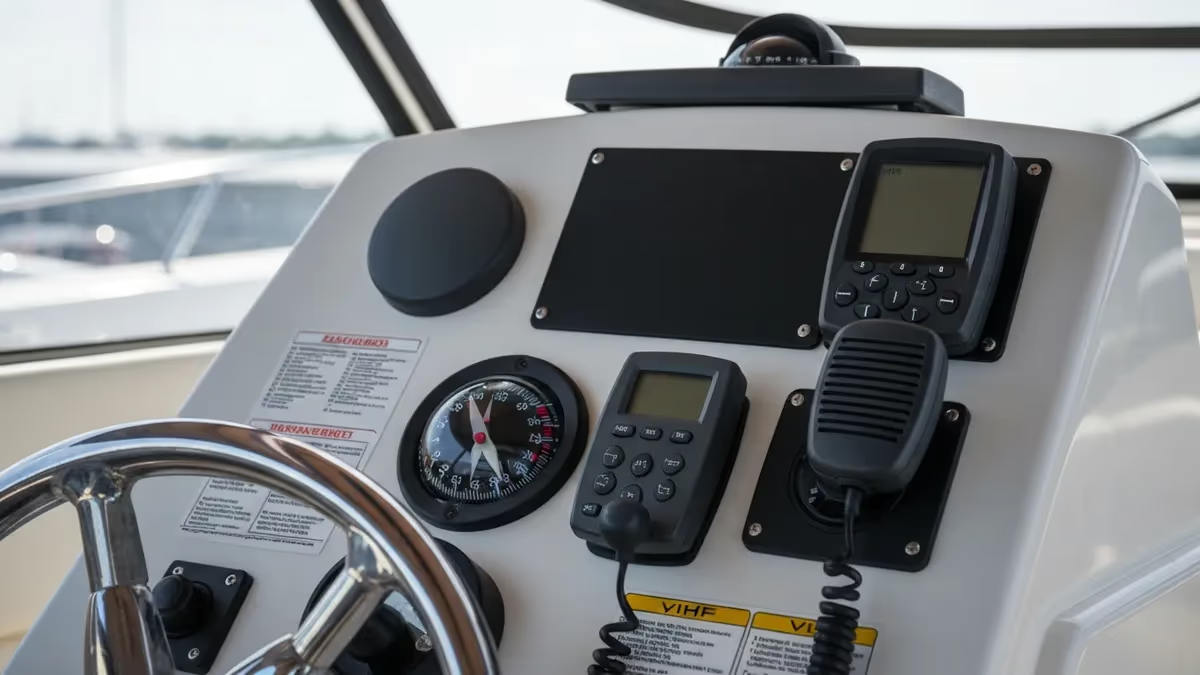
If you are searching for information about a wisconsin temporary boating license, you are joining millions of Americans who take to the water every year and need to understand exactly what credentials are required before they cast off. Wisconsin has some of the most boater-friendly waterways in the country — from Lake Winnebago to the Apostle Islands — but operating a motorized vessel without the proper documentation can result in serious fines and legal complications that ruin a perfectly good day on the water.
Many newcomers to boating are surprised to learn that boating license requirements vary dramatically from state to state. Residents of Wisconsin who want to operate a boat on waters that span multiple states, or visitors from places like Florida, California, or Alabama, need to be aware of how reciprocity agreements work. For example, if you already hold a tennessee boating license, Wisconsin may recognize that credential under specific conditions, but you should always verify current reciprocity rules before assuming your out-of-state card is valid.
Wisconsin law requires anyone born on or after January 1, 1989, to complete a boating safety course and carry proof of certification when operating a motorized watercraft. This is not a temporary license in the traditional sense — it is a permanent boating safety certificate issued upon successful course completion. However, Wisconsin also offers a temporary 90-day certificate that allows you to operate legally while you wait for your permanent card to arrive in the mail, which is a crucial lifeline for boaters who need to get on the water quickly.
Understanding the difference between a temporary certificate and a permanent boating safety card is essential for every Wisconsin boater. The temporary certificate is issued immediately upon completing an approved safety course, either in-person or online, and it serves as your legal proof of certification for up to 90 days. During this period you are treated identically to someone holding a permanent card — the same privileges apply, and you face the same legal obligations to follow all Wisconsin waterway rules.
The question of whether you need a license to operate a boat at all is one that confuses many recreational boaters, especially those from states with less stringent regulations. In Wisconsin, the answer depends primarily on your birth year and the type of vessel you are operating. Motorized boats, jet skis, and personal watercraft all require the operator to hold a valid safety certification if they were born after the cutoff date. Sailboats and non-motorized vessels like canoes and kayaks are generally exempt from this requirement.
Visitors from major boating states such as Florida, California, Alabama, Texas, and New York often ask whether their existing credentials satisfy Wisconsin requirements. The good news is that Wisconsin recognizes boating safety certificates issued by any state that meets National Association of State Boating Law Administrators (NASBLA) approval standards, which covers the vast majority of states. This means your florida boating license certificate, your california boating license card, or your new york state boating license should be accepted on Wisconsin waters as long as it was issued by an approved provider.
This comprehensive guide will walk you through everything you need to know about Wisconsin's boating certification system, including how to obtain your temporary certificate, what the approved courses cover, how much the process costs, and what you need to carry on board every time you head out on the water. Whether you are a Wisconsin resident starting fresh or an out-of-state visitor wanting to confirm your credentials are valid, this article has the answers you need before you fire up the engine.
Wisconsin Boating License by the Numbers
How to Get Your Wisconsin Boating Safety Certificate
Choose an Approved Course Format
Complete All Course Modules
Pass the Final Safety Exam
Receive Your Temporary Certificate
Wait for Your Permanent Card
Understanding exactly who needs a Wisconsin boating safety certificate — and who is legally exempt — is one of the most frequently misunderstood aspects of state waterway law. The core rule is straightforward: anyone born on or after January 1, 1989, who operates a motorized watercraft on Wisconsin waters must carry proof of completing an approved boating safety course. This applies whether you own the boat or are simply borrowing it from a friend or renting it from a marina.
Age plays a particularly important role in Wisconsin boating law, and the rules differ depending on the operator's specific age range. Children under 10 years old may not operate any motorized watercraft in Wisconsin, period. Operators aged 10 through 15 may run a motorized boat with a valid safety certificate, but only when a parent, guardian, or adult supervisor aged 21 or older is physically present on board. This is not simply a recommendation — it is a legal requirement enforced by Wisconsin DNR conservation wardens.
Young operators between the ages of 12 and 15 face slightly different rules for personal watercraft like jet skis. They may legally operate a PWC only if they hold a valid safety certificate AND have a supervising adult aged 21 or older on board. Once a young boater turns 16, the supervisory requirement is lifted, provided they hold a valid certificate. This tiered system is designed to reduce accidents among the youngest and least experienced waterway users, who statistically account for a disproportionate share of boating incidents.
If you were born before January 1, 1989, Wisconsin law does not require you to hold a boating safety certificate. However, this exemption does not mean older boaters have no obligations. All operators, regardless of age or certification status, must follow Wisconsin waterway rules including speed limits, no-wake zones, and equipment requirements. Many older boaters choose to complete a safety course voluntarily, both to refresh their knowledge and to take advantage of insurance discounts that many providers offer to certified boaters.
Non-residents visiting Wisconsin on vacations or seasonal stays frequently ask whether they need to worry about certification. If you are visiting from another state and already hold a boating safety certificate from your home state — whether that is a florida boating license certificate, a california boating license card, an alabama boating license, or a texas boating license — Wisconsin will generally recognize your credential as long as it was issued by a NASBLA-approved program. To verify whether your specific credential qualifies, you can check directly with the Wisconsin DNR before your visit to avoid any surprises on the water.
Many people also wonder about the distinction between needing a boating license versus simply needing registration for their vessel. These are two entirely separate requirements. Boat registration in Wisconsin is a vessel-specific requirement that applies to motorized boats used on state waters, while the boating safety certificate is an operator-specific credential tied to the individual driver.
You can legally own a registered boat but still be required to pass a safety course before you are permitted to operate it yourself. If you are unsure about whether you do you have to have license to drive a boat in your specific situation, consulting the Wisconsin DNR website will give you the most current and authoritative answer.
Renters and charter guests also sometimes assume that booking a guided excursion or renting a pontoon from a licensed outfitter exempts them from personal certification requirements. This assumption can lead to legal trouble. While some commercial operators provide a licensed captain who handles all navigation, self-guided rentals typically require each operator to demonstrate proof of certification. Always ask the rental company for their specific policy and confirm your certification status before taking the helm of any rented vessel in Wisconsin.
Do You Need a License to Operate a Boat? Wisconsin vs. Other States
Wisconsin requires anyone born on or after January 1, 1989, to complete a NASBLA-approved boating safety course before legally operating a motorized watercraft. The state issues a temporary 90-day certificate immediately upon course completion, followed by a permanent card within 4–8 weeks. Operators must carry their certificate on board at all times when running a motorized vessel, and conservation wardens conduct routine on-water checks throughout the boating season from May through September.
Wisconsin's approach is stricter than some neighboring states but comparable to national trends. The 1989 birth-year cutoff means the pool of operators who must certify is growing larger every year as younger generations enter the boating population. The state does not currently require license renewal — once earned, a Wisconsin boating safety certificate is valid for life. However, operators who received certificates through programs that have since lost NASBLA approval may need to re-certify, which is worth checking if your certificate is more than 20 years old.
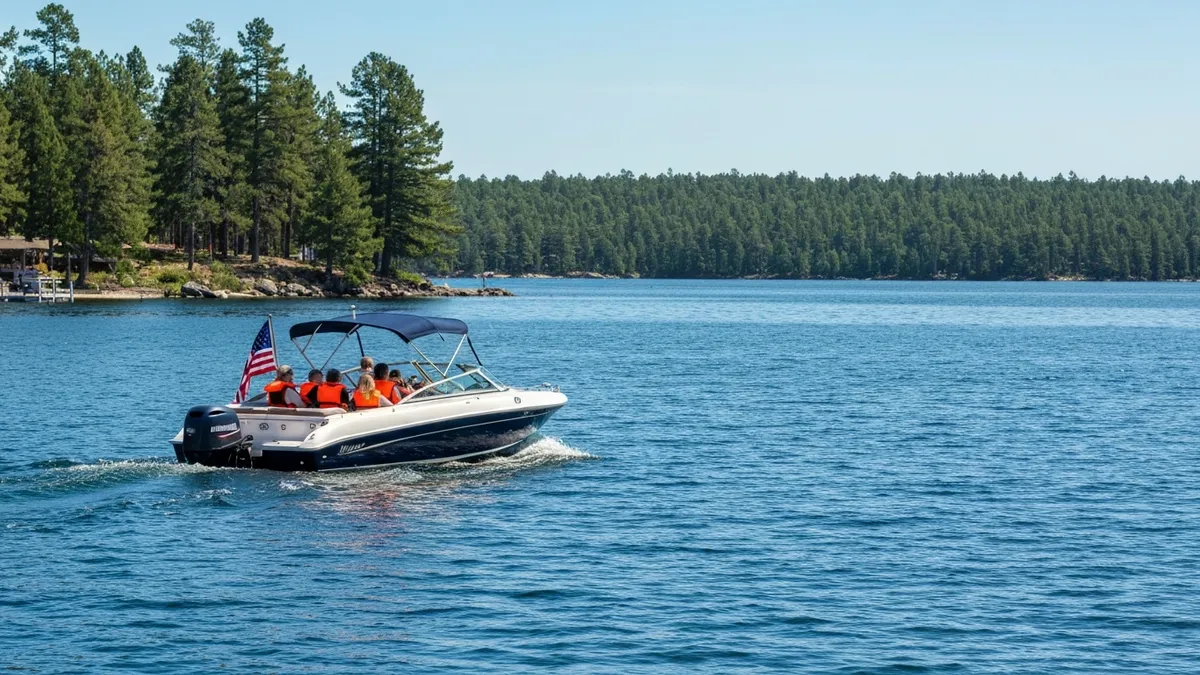
Online vs. In-Person Wisconsin Boating Safety Course
- +Complete the course on your own schedule, day or night, with no travel required
- +Online courses often cost $30–$50, significantly less than many in-person options
- +Pause and resume at any time, making it easy to fit studying around work and family
- +Receive your temporary certificate immediately after passing the online final exam
- +Review difficult sections as many times as needed before attempting the final test
- +Access the course from any device including smartphones, tablets, and laptops
- −No live instructor to answer questions or clarify confusing regulations in real time
- −Requires self-discipline to stay focused without a structured classroom environment
- −Some learners retain information better through hands-on demonstrations and group discussion
- −Technical issues with devices or internet connections can disrupt your study session
- −Practical on-water skills are not directly tested in either format, limiting real-world practice
- −Some older boaters find online interfaces less intuitive than printed course materials
Wisconsin Boating Compliance Checklist Before Every Trip
- ✓Carry your original boating safety certificate or temporary certificate on board at all times
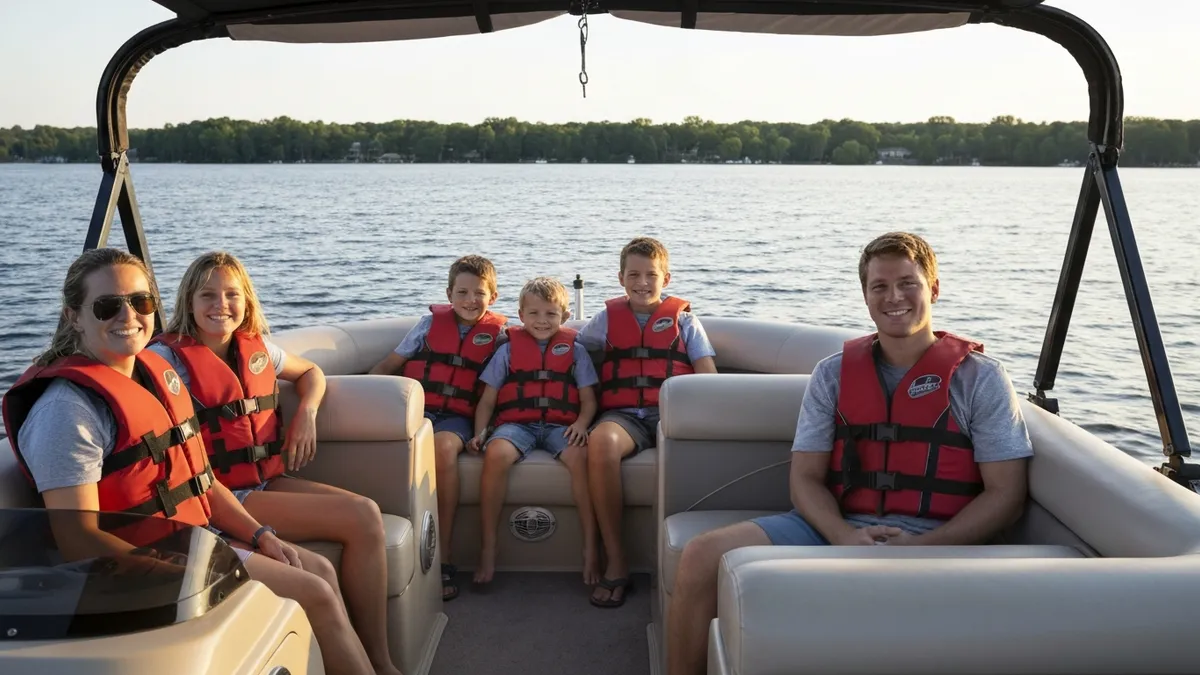
- ✓Ensure every person on board has access to a properly fitted, Coast Guard-approved life jacket
- ✓Verify your boat's registration sticker is current and properly displayed on both sides of the bow
- ✓Confirm your vessel has a working fire extinguisher mounted in an accessible location
- ✓Check that navigation lights are functioning correctly for any trip that may extend past sunset
- ✓Ensure a functioning sound-producing device such as a horn or whistle is on board
- ✓Review any special regulations for the specific lake or river you plan to operate on that day
- ✓Confirm your float plan is filed with a responsible person on shore before departure
- ✓Check weather forecasts and avoid going out if severe storm conditions are predicted
- ✓Inspect fuel levels and verify the bilge blower runs correctly before starting a gasoline engine
Your Temporary Certificate Has Full Legal Standing for 90 Days
Many boaters mistakenly believe the temporary certificate issued after course completion is a lesser document than the permanent card. In Wisconsin, the temporary certificate carries exactly the same legal weight as the permanent card during its 90-day validity period. Print it clearly, keep it dry, and present it confidently if asked by a conservation warden — it is all you need to operate legally while your permanent card is in the mail.
The cost of obtaining your Wisconsin boating safety certificate is one of the most common questions new boaters ask, and the answer varies depending on which course format you choose and which approved provider you use. Online courses from major approved providers typically range from $24.95 to $49.95 for the full course and exam. In-person courses offered through local power squadrons, county parks departments, and community organizations often cost between $35 and $75 per person, though some community-based programs offer reduced fees or even free courses for youth participants.
It is important to understand what is included in the course fee before you enroll. Most reputable providers include the final exam, an unlimited number of retakes if you do not pass on the first attempt, the temporary certificate upon passing, and processing for your permanent card. However, some providers charge additional fees for expedited permanent card processing or for printed study materials. Always read the full fee schedule before entering your payment information to avoid unexpected charges.
Beyond the course itself, Wisconsin boaters should budget for a few additional expenses. If you are registering a new boat, Wisconsin DNR registration fees range from approximately $22 to $38 for a two-year registration depending on the vessel's length. Personal watercraft and motorboats have the same registration requirements. If you are purchasing safety equipment for the first time, factor in the cost of life jackets ($20–$150 depending on type and size), a fire extinguisher ($15–$40), navigation lights ($30–$100 for a complete set), and a throwable flotation device ($15–$25).
Insurance is another cost dimension that many first-time boaters overlook until they have a problem. While Wisconsin does not legally require boat insurance the way most states require auto insurance, it is strongly advisable. Many boat insurance providers offer discounts of 5%–15% to operators who hold a valid boating safety certificate, which means the cost of your course can partially pay for itself through reduced annual premiums. Comprehensive boat insurance for a typical recreational motorboat typically runs $200–$500 per year depending on the vessel's value and usage patterns.
If you plan to operate in multiple states — for example, crossing from Wisconsin into Minnesota on the St. Croix River, or trailering your boat to Florida or Tennessee for a winter trip — your NASBLA-approved Wisconsin certificate will typically be recognized without any additional fees or testing. This is one of the most valuable aspects of the nationally standardized boating safety education system. States that are NASBLA members have agreed to mutual recognition of each other's certificates, eliminating the need for boaters to retake courses when traveling across state lines.
Youth programs represent a special opportunity for families looking to reduce certification costs. The Wisconsin DNR sponsors free or heavily subsidized boating safety courses for young boaters in many counties throughout the state. These courses are often offered through local 4-H chapters, Scout troops, and county conservation organizations during the spring months before the main boating season begins. Enrolling a teenager in one of these programs not only satisfies the legal certification requirement but also instills lifelong water safety habits that reduce accident risk for decades to come.
Finally, do not overlook the cost-saving value of taking a practice exam before your official course final. Free online practice tests available through resources like PracticeTestGeeks.com let you gauge your readiness, identify weak areas, and build confidence before your real exam. Students who use practice tests consistently score higher on their first attempt, which means fewer retakes, less stress, and faster access to your temporary certificate so you can get out on the water without delay.
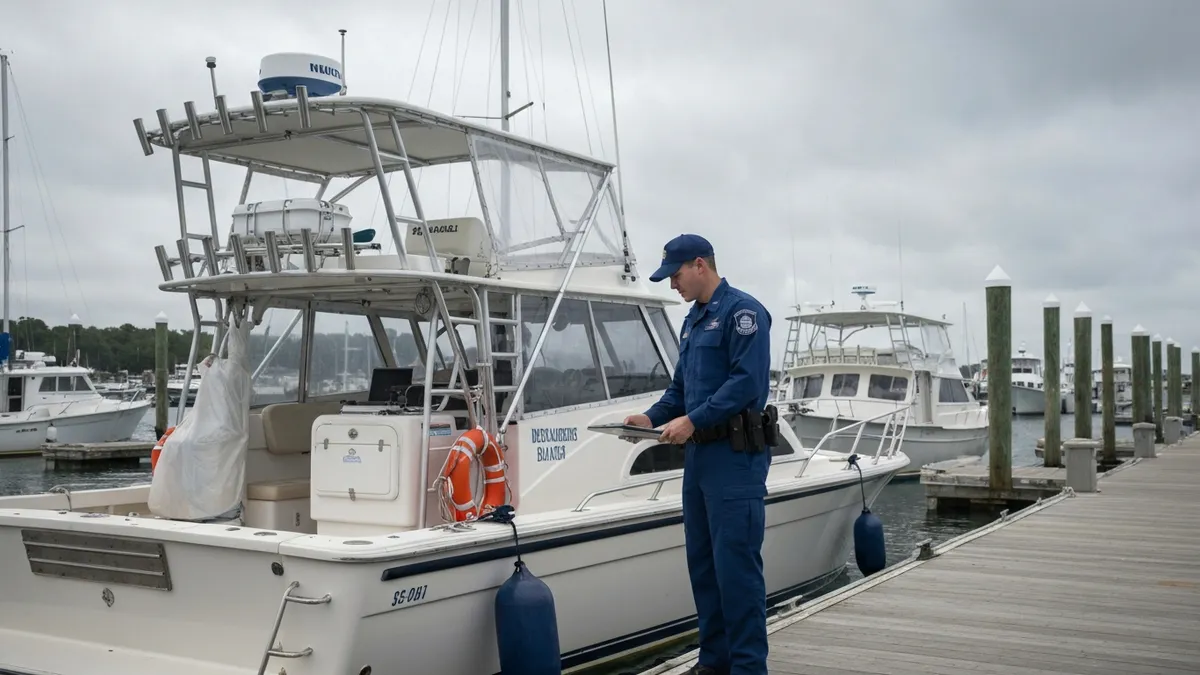
Wisconsin conservation wardens conduct routine on-water stops throughout the boating season and will ask to see your boating safety certificate if you were born after January 1, 1989. Operating without a valid certificate can result in a civil forfeiture fine of $175 or more for a first offense, with higher penalties for repeat violations. Your temporary certificate is accepted during the 90-day window, but it must be physically present on the vessel — verbal claims of certification are not sufficient.
Preparing effectively for your Wisconsin boating safety exam starts with understanding what the test actually covers and how questions are structured. The final exam for most approved courses contains 50 to 60 multiple-choice questions drawn from all course modules. Topics include navigation rules and right-of-way situations, Wisconsin-specific waterway laws, required safety equipment, emergency procedures, the legal consequences of boating while intoxicated, and environmental protection rules for sensitive water bodies. You must score at least 80% — typically 40 to 48 correct answers — to pass.
One of the most effective study strategies is to take multiple practice exams before attempting the real thing. Free practice tests covering the full range of boating safety topics are available online and mirror the format and difficulty level of real state-approved exams. Rotating through several different practice test sets exposes you to a wider variety of question phrasings and scenario types, which is important because exam questions frequently describe real-world situations rather than simply asking you to define terms. Scenario-based questions require you to apply rules, not just memorize them.
Navigation rules — often called the ColRegs or Rules of the Road — are among the most challenging sections for new boaters because they involve understanding right-of-way in various encounter scenarios. Practice identifying the stand-on vessel versus the give-way vessel in head-on, crossing, and overtaking situations. Wisconsin exams routinely include questions about what action a give-way vessel must take, what lights are required at night for different vessel types, and how sound signals are used to communicate in restricted visibility. These are high-stakes scenarios in real boating, so examiners give them significant weight.
Alcohol and drug laws are another heavily tested topic that catches many students off guard. Wisconsin's legal blood alcohol limit for boating is 0.08%, identical to the limit for motor vehicle operation. However, penalties for boating under the influence (BUI) are not lighter than DUI penalties — in many cases they are equally severe, including mandatory fines, possible jail time, and loss of boating privileges. The exam will test your knowledge of these limits, what happens when a law enforcement officer suspects BUI, and how implied consent laws apply on Wisconsin waterways.
Emergency procedures questions require you to know what to do in specific crisis situations: a passenger falls overboard, your engine catches fire, your boat begins to take on water, or another vessel approaches on a collision course in fog. For each scenario, the exam expects you to know the correct sequence of actions in priority order. A useful study approach is to visualize each scenario mentally and walk through the steps as if you were actually on the water. This kind of active recall practice is far more effective than simply re-reading the course materials passively.
Equipment questions on the Wisconsin boating safety exam cover the specific legal requirements for different vessel types and sizes. Know the difference between Type I, II, III, and IV life jackets and when each is appropriate. Understand the fire extinguisher classifications and how many are required on different boat sizes. Know what visual distress signals are required on certain vessels, what a proper anchor setup looks like, and what the law says about carbon monoxide safety on enclosed vessels. These details are tested regularly and a single wrong answer in this category can be the difference between passing and failing.
If you are planning a trip across state lines and want to make sure your Wisconsin certificate is valid at your destination, the process is simple. Most states with NASBLA-approved programs post their reciprocity policies on their official DNR or natural resources department websites. You can also find consolidated state-by-state information through resources like PracticeTestGeeks.com. For example, if you are heading south and need to know about the nys boating license reciprocity status in your destination state, a quick check before departure gives you peace of mind and keeps your trip focused on fun rather than paperwork.
Once you hold your Wisconsin boating safety certificate — whether temporary or permanent — the real work of becoming a confident, safe boater begins on the water. A certificate proves you studied the rules; experience is what makes you truly proficient. New boaters should plan several low-pressure practice sessions on familiar, calm water before venturing onto busier lakes, rivers, or open water where traffic, wakes, and weather create more complex conditions that require quick judgment and practiced responses.
One of the most practical tips for new Wisconsin boaters is to start your first season on smaller, less congested lakes before moving up to high-traffic waterways like Lake Winnebago, Green Bay, or the Wisconsin River corridor. Busy waterways demand rapid situational awareness — you need to track multiple boats, interpret navigation markers, maintain safe speeds, and communicate with other operators, all simultaneously. Building these skills gradually on quieter water significantly reduces the risk of accidents during your first season as a certified boater.
Weather awareness is a skill that textbooks can describe but only experience truly teaches. Wisconsin's weather patterns are notoriously changeable, especially on the Great Lakes margins and on large inland lakes where afternoon thunderstorms can develop quickly and with little warning. Before every outing, check the National Weather Service marine forecast for your specific water body. Learn to read the sky — rapidly darkening clouds, shifting winds, and sudden drops in temperature are all warning signs that it is time to head for shore, even if the morning started with clear blue skies and calm conditions.
Proper loading and weight distribution are practical skills that surprisingly few new boaters prioritize, yet they have a direct impact on vessel stability and handling. Overloading a boat beyond its Coast Guard capacity plate rating dramatically increases the risk of capsizing, especially in wake or chop. Distribute weight evenly from side to side and keep heavy gear low in the boat. Never allow passengers to sit on gunwales or bow rails while the boat is underway. These basic loading habits can be the difference between a safe return to the dock and a capsizing incident.
Docking and launching are the moments when most recreational boating accidents and property damage incidents occur, simply because they require maneuvering in confined spaces near other vessels, docks, and infrastructure. Practice slow-speed boat handling well away from docks before you attempt a busy public launch ramp.
Learn how wind and current affect your vessel at low speeds — most outboard-powered boats are significantly affected by crosswinds when traveling slowly. When using a busy public launch ramp, have your boat fully prepared before pulling into the water so you minimize time at the ramp and keep things moving for other boaters waiting their turn.
Night boating requires special preparation and a heightened level of vigilance compared to daytime operation. Ensure all navigation lights are functioning correctly before departure and understand what the color and position of other vessels' lights tell you about their heading and status. Carry a powerful spotlight or flashlight on board for identifying channel markers and unexpected obstructions. Reduce your speed significantly after dark, as debris, logs, and unlit objects in the water are far more difficult to spot at night, even on familiar lakes you have navigated dozens of times in daylight.
Finally, make a habit of logging your on-water hours and noting any situations that challenged you or required decisions you were uncertain about. Many experienced boaters keep a simple journal of their outings, noting weather conditions, equipment issues, close calls, and lessons learned. This kind of deliberate reflection accelerates skill development far faster than passive experience alone. Pair your on-water practice with continued study — return to practice exam sites periodically to refresh your knowledge of rules and regulations, since laws do change and staying current is both a legal obligation and a safety responsibility for every Wisconsin boater.
Boating License Questions and Answers
Tennessee Boating License 2026 — Requirements, Age & How to Get One
MN Boat License: Who Needs One & How to Get Certified
Do You Need a License to Drive a Boat? State-by-State Guide 2026

How to Get a Boating License in Alabama: Complete 2026 Guide

Boating License Cost: What You'll Pay in Every State (2026 Guide)
About the Author

Master Mariner & Maritime Certification Specialist
Massachusetts Maritime AcademyCaptain David Harrington is a US Coast Guard licensed Master Mariner with a Bachelor of Science in Marine Transportation from Massachusetts Maritime Academy. He has 22 years of deep-sea and coastal navigation experience aboard commercial vessels and specializes in preparing maritime candidates for USCG licensing exams, STCW certification, dynamic positioning (DPO), and officer-of-the-watch qualifications.
Join the Discussion
Connect with other students preparing for this exam. Share tips, ask questions, and get advice from people who have been there.
View discussion (6 replies)