
How to Get a Boating License: Step-by-Step Guide 2026 October
📝 How to get a boating license in 2026 October: confirm your state rule, take a NASBLA-approved course, pass the exam, pay $30-$50, print your card.
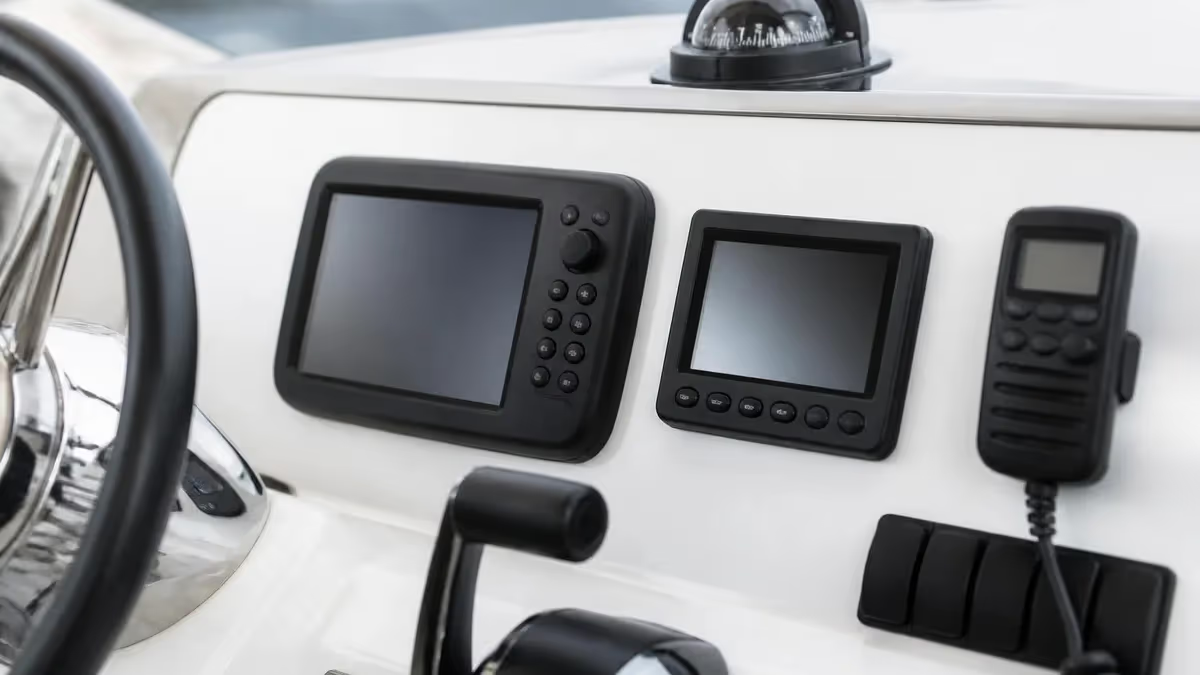
How to Get a Boating License: The 2026 Step-by-Step Guide
If you have ever stood at a boat ramp watching someone launch a 21-foot bowrider and wondered whether you needed paperwork to do the same thing, the short answer is almost always yes. Every U.S. state except a small handful requires some form of boater education before you can legally operate a motorized vessel, and the rule keeps tightening every year as more states phase in mandatory education for older age groups.
This guide walks through exactly how to get a boating license in plain English. We will cover who actually needs one, how the rules differ between Florida, Texas, California, and 47 other states, what a NASBLA-approved course looks like, what the final exam tests, and how much you should expect to pay. Most people finish the entire process in a single afternoon on a laptop.
A quick clarification before we go further. The phrase boating license is technically a misnomer in most states. What you actually receive is a Boater Education Card, sometimes called a Boating Safety Certificate or a Boater ID. It proves you completed an approved safety course.
The card is usually permanent, does not expire, and does not need renewal. Only a small number of states like Vermont and Connecticut treat it more like a renewable license. We use both terms interchangeably below because that is how the search engines and most state agencies phrase it.
The other thing worth knowing up front. A recreational boater card is completely different from a U.S. Coast Guard captain's license. The captain's license, also called a USCG OUPV or six-pack, is for commercial operators who carry paying passengers. It requires documented sea time, a medical exam, drug testing, and a proctored USCG exam. That is a separate process we cover near the end of this guide.
Why all the recent rule changes? Boating fatalities in the U.S. hover around 600 per year, and roughly 75 percent of those deaths involve operators who never took a safety course. State legislatures keep pushing the rule older every year because the data is clear: trained operators have far fewer incidents. Whether you find the rule annoying or not, the course content is genuinely useful, and most graduates say they wish they had taken it years earlier.
One more practical note before we start. The course is not a driving test. There is no on-water component for the recreational card. You will not have to maneuver a boat, dock a vessel, or demonstrate skills in front of an examiner. The entire process happens online or in a classroom seat. Skills come from time on the water, not from the certificate. The card just proves you understand the rules of the road.
How to Get a Boating License in 6 Steps
1. Confirm whether your state requires a card and check the age rule.
2. Pick a NASBLA-approved provider (Boat-ed, BoaterExam.com, BoatUS Foundation, ilearnToBoat).
3. Complete the 3-8 hour online course at your own pace.
4. Pass the final exam (typically 50-100 questions, 80% required).
5. Pay the state fee, usually $30 to $50.
6. Print your temporary certificate and watch for the permanent card by mail in 1-4 weeks.
Boater Card by the Numbers
Key Facts at a Glance
| Item | Value | Details |
|---|---|---|
| Typical Minimum Age | 12-16 | |
| Course Length | 3-8 hours | |
| Typical Cost | $30-$50 | |
| Passing Score | 80% | |
| Exam Questions | 50-100 |
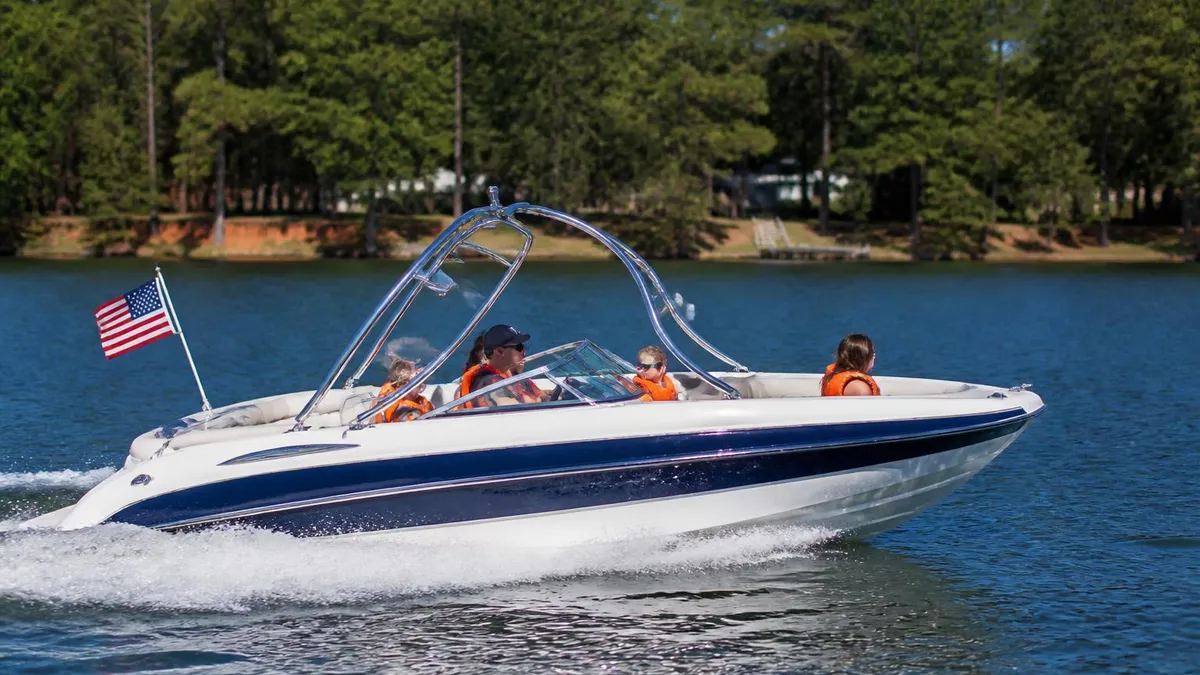
The 6 Steps to Your Boater Education Card
Step 1: Confirm Your State's Rule
Step 2: Choose a NASBLA-Approved Course
Step 3: Complete the Course Online
Step 4: Pass the Final Exam
Step 5: Pay the State Fee
Step 6: Receive Your Card
Who Actually Needs a Boating License?
Here is where it gets confusing. The federal government does not issue recreational boating licenses. Each state writes its own law, and the rules cluster around two variables: the operator's birth year and the boat's horsepower. The trend over the last decade has been to phase in mandatory education for older and older operators every January 1st.
Florida is the clearest example. Anyone born on or after January 1, 1988 must carry a Boating Safety Education ID Card to operate a vessel of 10 horsepower or more. Texas applies the rule to anyone born on or after September 1, 1993 for vessels of 15 horsepower or more, plus all wind-blown sailboats over 14 feet. California is mid-rollout: as of January 2025 every operator regardless of age needs the California Boater Card.
Where the rule almost always applies, no matter what state you are in: personal watercraft. Almost every state requires education to operate a PWC, often with a higher minimum age of 14 or 16. If you rent a boat or jet ski on vacation, expect the rental agent to require a card or to have you complete a short on-site safety briefing accepted under a temporary exemption.
State-by-State Snapshot
Boating laws change every legislative session, so always confirm with the issuing agency before relying on a summary. But to give you the lay of the land, here is how the rules look across the biggest boating states in 2026. Florida boating license rules are some of the most-searched in the country because Florida has the largest registered boat fleet in the U.S.
Florida
Born on or after January 1, 1988, you need the card. Vessels 10 HP and up. Course must be NASBLA-approved. Card is permanent. Renters are not exempt. The state-issued ID card costs $5 and is mailed by the Florida Fish and Wildlife Conservation Commission after you complete the course. Florida residents may complete a temporary certificate at marinas in some cases, but the permanent card is strongly recommended.
Texas
Born on or after September 1, 1993, you need the card. Vessels 15 HP and up, all PWCs, and wind-blown sailboats over 14 feet. Texas Parks and Wildlife accepts NASBLA-approved courses. Minimum age to operate alone is 13 with a card. There is also an in-person classroom version for those who prefer it, taught regularly across the state on weekends.
California
The California Boater Card is being phased in by age group through 2025. As of January 1, 2025, every operator of a motorized vessel regardless of age must carry the card. The card costs $10 and is issued by the California State Parks Division of Boating and Waterways. There is no exemption for visitors who operate a motorized vessel for more than 60 days.
New York
New York completed the rollout of Brianna's Law in 2025. Every operator of a motorized vessel must carry a New York boating safety certificate, regardless of age or boat size. The course is free through several state-approved providers and the certificate is permanent. New York accepts NASBLA-approved cards from other states for visitors.
Illinois, Ohio, Michigan, Wisconsin
The Great Lakes states have similar age-based rules. Illinois requires education for anyone under 18 operating a vessel 10 HP or more. Ohio applies the rule to anyone born after January 1, 1982 for vessels 10 HP or more.
Michigan requires the card for anyone born after June 30, 1996, with a stricter age 12-14 rule. Wisconsin applies it to anyone born on or after January 1, 1989. All four accept NASBLA-approved cards across state lines, which makes the Great Lakes circuit very friendly for visiting boaters.
The Exemption States
A handful of states have minimal or no mandatory education for adult recreational operators. Alaska, Arizona, Idaho, South Dakota, and Wyoming all sit at the lighter end.
Even in these states, you typically still need a card to operate a PWC, to operate as a minor, or to operate certain larger vessels. Always read the current statute. The lack of a card rule does not mean the navigation rules do not apply.
Why Get the Card Even If Not Required
Even if your state does not strictly require it, the Boater Education Card is worth the few hours. Many private boat insurance companies offer a 5-10 percent discount on premiums when the named operator holds a NASBLA-approved card.
Marinas, charter companies, and yacht clubs increasingly ask for proof of education before allowing you to take a boat out solo. If you ever travel to a state with a stricter rule, the card from your home state is your ticket to legal operation under reciprocity.
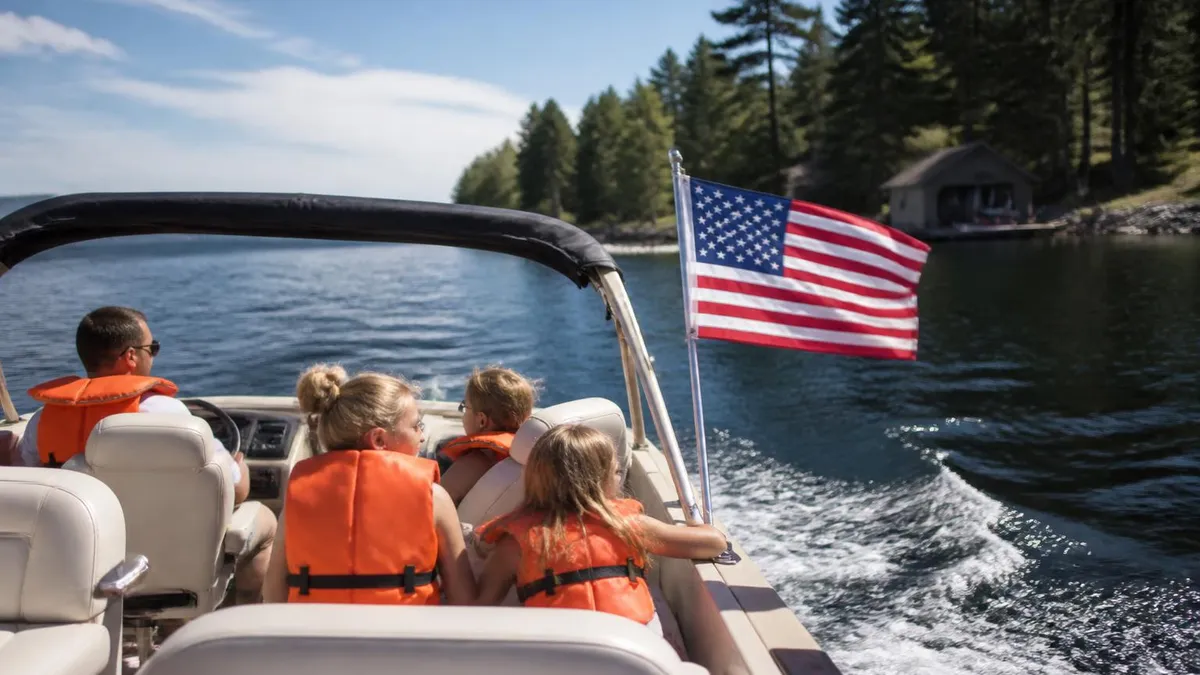
5 Things Every Boater Card Course Covers
- Topics: Buoys, channel markers, port-vs-starboard
- Why it matters: Largest section of the exam
- Format: Diagrams + scenario questions
- Topics: USCG-approved PFDs, fire extinguishers, sound signals
- Why it matters: Most common reason for citations
- Format: Equipment-by-boat-length charts
- Topics: MOB, capsizing, hypothermia, flares, EPIRB
- Why it matters: Tests cold-water survival knowledge
- Format: Video-driven scenario decisions
- Topics: BUI thresholds, BAC limits, stressors on water
- Why it matters: BUI penalties match DUI in most states
- Format: Always 4-6 questions on the final exam
- Topics: Pre-launch checklist, invasive species, no-wake zones
- Why it matters: Practical ramp etiquette saves you fines
- Format: Mixed quiz + drag-and-drop
How the Process Differs
Some states like Florida and Texas tie the requirement to birth year so older operators may be permanently exempt. Other states like California and New York have moved to all-operator rules. A handful of states (Alaska, Arizona, Idaho, South Dakota, Wyoming) still have minimal or no mandatory education for adults, though many of these still require it for PWC operators and minors. Always check the current rule before assuming you are exempt.
Online Course vs In-Person Classroom
- +Online: finish on your schedule in 1-2 evenings
- +Online: cheaper, often $29.95-$39.95 with multi-state seal
- +Online: instant temporary certificate the moment you pass
- +Online: free retakes if you fail the final exam
- +Online: mobile-friendly, pause and resume on any device
- −In-person: limited to scheduled weekends, often seasonal
- −In-person: higher cost ($50-$75) due to instructor fees
- −In-person: travel and full-day commitment required
- −Online: no hands-on demos of flares, PFDs, or fire extinguishers
- −Online: requires self-discipline to actually finish
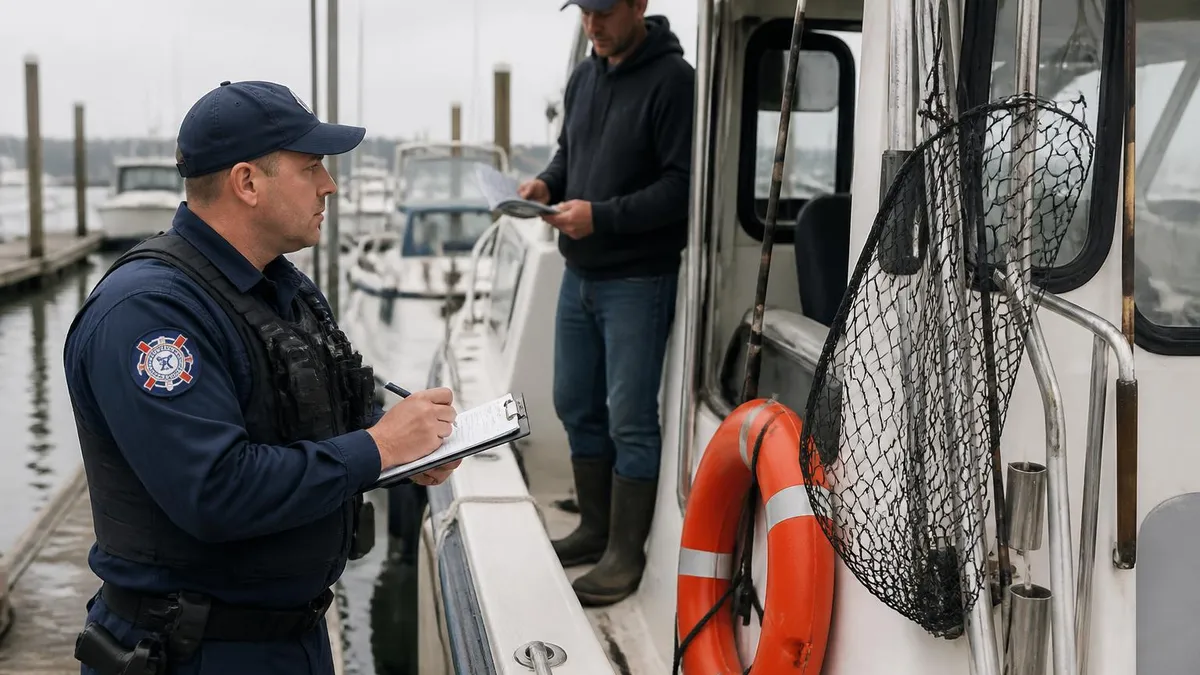
What the Exam Looks Like
The final exam is the only part that makes people nervous, and it should not. Most states use a 50-question multiple-choice test with an 80 percent pass requirement, which means you can miss 10 questions and still pass. The questions are drawn from the course material and most providers reuse questions you have already seen in the chapter quizzes. Many people pass on their first try in under 30 minutes.
Question topics break down roughly like this. Navigation rules and right-of-way make up 25-30 percent. Required safety equipment is around 20 percent. Boating under the influence and homeland security cover 15 percent. Emergencies and first aid take another 15 percent. Trailering and environmental rules account for 10-15 percent. State-specific laws round it out at 10 percent. If you read the chapters and pay attention to the embedded videos, the first-attempt pass rate sits north of 90 percent.
Failed the exam? Do not panic. Almost every NASBLA-approved provider lets you retake the exam unlimited times at no extra charge. Some states require you to wait 24 hours and review missed chapters first, but you do not pay again and you do not redo the entire course. If you want extra preparation, our boating license practice test pdf mirrors the format of the official state exams and includes answer keys with explanations.
Reciprocity: Can You Use a Card from Another State?
Yes, in almost every case. The National Association of State Boating Law Administrators coordinates reciprocity between states. If your course was NASBLA-approved (it should display the seal at the end of the course and on the card), then your card is accepted in every other state that requires education. This is why most online courses bother to maintain NASBLA approval in every state where they sell.
The exceptions are narrow. Some states require their own state-specific card if you become a resident, even if you already hold a NASBLA card from elsewhere. California, for example, requires you to obtain the California Boater Card once you live there for more than 60 days. If you are visiting on vacation, your home-state card is fine. Always check the host state's rule for any residency trigger before relying on reciprocity.
Special Cases: PWC, Sailboats, and Commercial Operators
Personal watercraft operators usually need the same card as boat operators but face stricter minimum age rules. In Florida and Texas you must be at least 14 to operate a PWC. In California it is 16. Some states require a PWC-specific endorsement on top of the regular card. The good news is that almost every course covers PWC operation in a dedicated chapter, so the card you earn is valid for both.
Sailboats are the easy category. Most states only require the card for motor-powered vessels, but check the wording in your state. Texas explicitly covers wind-blown sailboats over 14 feet. New York covers all motorized vessels but exempts manually propelled craft like kayaks, canoes, and small sailboats.
If your goal is to operate commercially, carry paying passengers, or work as a charter captain, you need a U.S. Coast Guard captain's license. The OUPV, often called the six-pack license, requires 360 days of documented sea time, a USCG-issued medical certificate, drug testing, and CPR and First Aid certification.
You also need to pass a proctored exam at a USCG Regional Exam Center. This process takes months and costs $1,000 to $2,000. It is completely separate from the recreational boater card discussed in this guide. For a deep dive into commercial pathways, see our boating certification test career salary guide.
Exam-Day Prep Checklist
- ✓Review the navigation buoys chapter twice (largest exam section)
- ✓Memorize required safety equipment by boat length
- ✓Know the BAC threshold and BUI penalties in your state
- ✓Review hypothermia signs and cold-water survival times
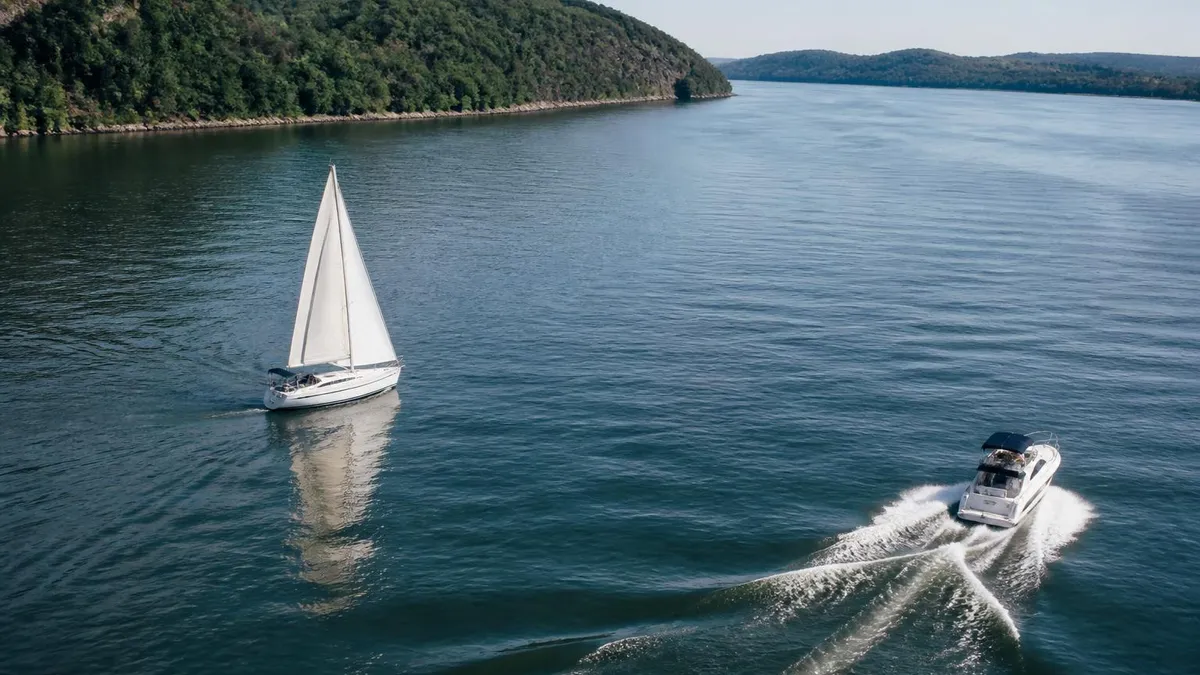
- ✓Practice the right-of-way rules: power gives way to sail, overtaking yields
- ✓Take at least one full-length practice test before the real exam
- ✓Have your photo ID and a credit card ready for fee payment
- ✓Test your computer audio: many courses use video questions
Choosing the Right Provider
The big four NASBLA-approved providers are Boat-ed, BoaterExam.com, BoatUS Foundation, and ilearnToBoat. All four produce cards that are accepted in every state that recognizes NASBLA reciprocity. The choice comes down to price, interface, and which states they support.
Boat-ed has the largest coverage and is the official provider for many state agencies. BoaterExam.com is the most polished user experience and often has the cheapest non-free option. BoatUS Foundation is genuinely free in 35-plus states and identical in legal weight, funded by membership dues. ilearnToBoat uses a gamified format that students under 18 tend to prefer.
For self-discipline, the BoatUS free course wins on price but can feel basic. Boat-ed and BoaterExam.com both invest in production value with original video segments, animated diagrams, and adaptive quizzing. If you study best with engaging media, the $30-$50 paid courses pay for themselves in time saved. For a fuller breakdown of study strategy, see our boating certification test complete study guide.
What Happens After You Get Your Card
Once you have your Boater Education Card, you are good to operate any recreational vessel within the legal limits of your state. Carry the card on the boat at all times. Most state laws require you to produce it on demand to law enforcement, similar to a driver's license. The physical card is the gold standard.
The card never needs renewal in the vast majority of states, which means a one-afternoon investment lasts a lifetime. If you lose the card, request a duplicate from your provider for $5-$15. If you move to a state with stricter requirements like California, you may need to upgrade to that state's own card. The upgrade course is usually quick because you have already learned the material.
Common Mistakes That Slow People Down
Three mistakes show up over and over in user support tickets. First, picking a course that is not NASBLA-approved in your state. Some cheap courses are state-specific and not honored if you cross a state line. Always confirm the NASBLA seal before paying.
Second, skipping the chapter quizzes and going straight to the final exam. The chapter quizzes recycle into the final, so reading without quizzing means you face new material on the exam. Third, forgetting to print or download the temporary certificate after passing. You need it on the boat until the plastic card arrives. Save a PDF copy to your phone and email a backup to yourself.
What You Actually Pay
Sample Boating License Test Practice Questions
Try these questions from our free Boating License Test practice tests. The correct answer and an explanation follow each question.
What causes most boating accidents?
- A. Operator inattention, improper lookout, operator inexperience, excessive speed, and alcohol use
- B. Mechanical failures exclusively
- C. Bad weather conditions only
- D. Wildlife encounters
Answer: A. Operator inattention, improper lookout, operator inexperience, excessive speed, and alcohol use
USCG statistics show the top causes are operator inattention, improper lookout, operator inexperience, excessive speed, and alcohol use — most are preventable human factors, not equipment failures or weather.
A sudden drop in temperature combined with a wind shift while boating most likely means what?
- A. The weather is stabilizing
- B. A cold front or weather change is passing through
- C. You are approaching warmer water
- D. Fog will clear immediately
Answer: B. A cold front or weather change is passing through
A temperature drop with a wind shift often marks the passage of a front and changing conditions.
What must you do if you are involved in a boating accident that results in injury or significant property damage?
- A. Only report to local police
- B. File an accident report with the state boating authority within the required time frame
- C. Call your insurance company only
- D. No reporting is required for recreational boating accidents
Answer: B. File an accident report with the state boating authority within the required time frame
State law requires filing an accident report with the state boating authority when accidents involve death, injury, or property damage exceeding a threshold (typically $2,000).
What does the abbreviation BUI stand for in boating law?
- A. Boating Under Inspection
- B. Boating Under the Influence
- C. Boat Use Infraction
- D. Basic Underway Information
Answer: B. Boating Under the Influence
BUI stands for Boating Under the Influence, the waterway equivalent of DUI for motor vehicles.
Boating Questions and Answers
Related Boating Articles
Boating License: What It Is and How to Get One in Your State
Boater Education Certificate: How to Get Your Boating Safety Card
Florida Boating License: How to Get Your Boating Safety Card
New York Boating Safety Certificate: How to Get Your NY Boating License
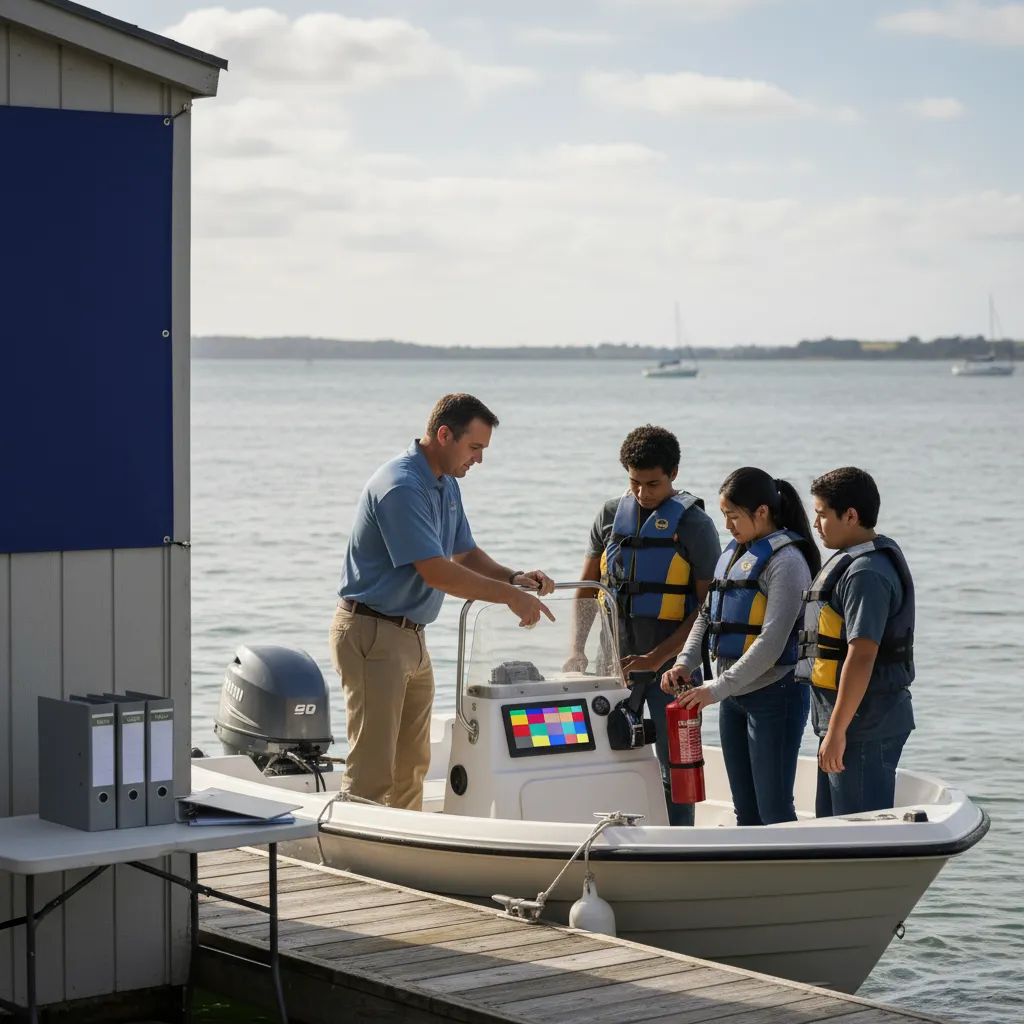
Boating Certification Test: Complete Study Guide 2026
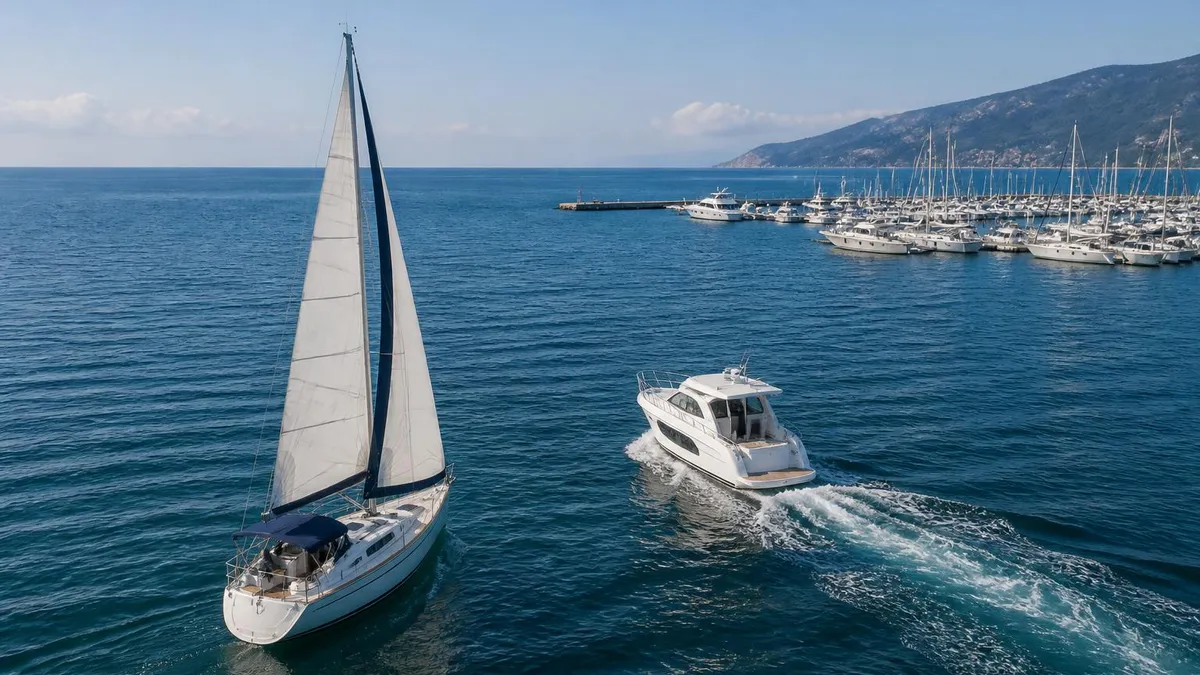
Boating License Practice Test PDF (Free Printable 2026)
About the Author

Master Mariner & Maritime Certification Specialist
Massachusetts Maritime AcademyCaptain David Harrington is a US Coast Guard licensed Master Mariner with a Bachelor of Science in Marine Transportation from Massachusetts Maritime Academy. He has 22 years of deep-sea and coastal navigation experience aboard commercial vessels and specializes in preparing maritime candidates for USCG licensing exams, STCW certification, dynamic positioning (DPO), and officer-of-the-watch qualifications.
Join the Discussion
Connect with other students preparing for this exam. Share tips, ask questions, and get advice from people who have been there.
View discussion (6 replies)