
Boating License Requirements by State: A Legal Matrix 2026 October
State-by-state boating license rules: 💯 who needs a card, age cutoffs, NASBLA courses, rental rules, and grandfather clauses for MN, MI, OK, WI, and more.
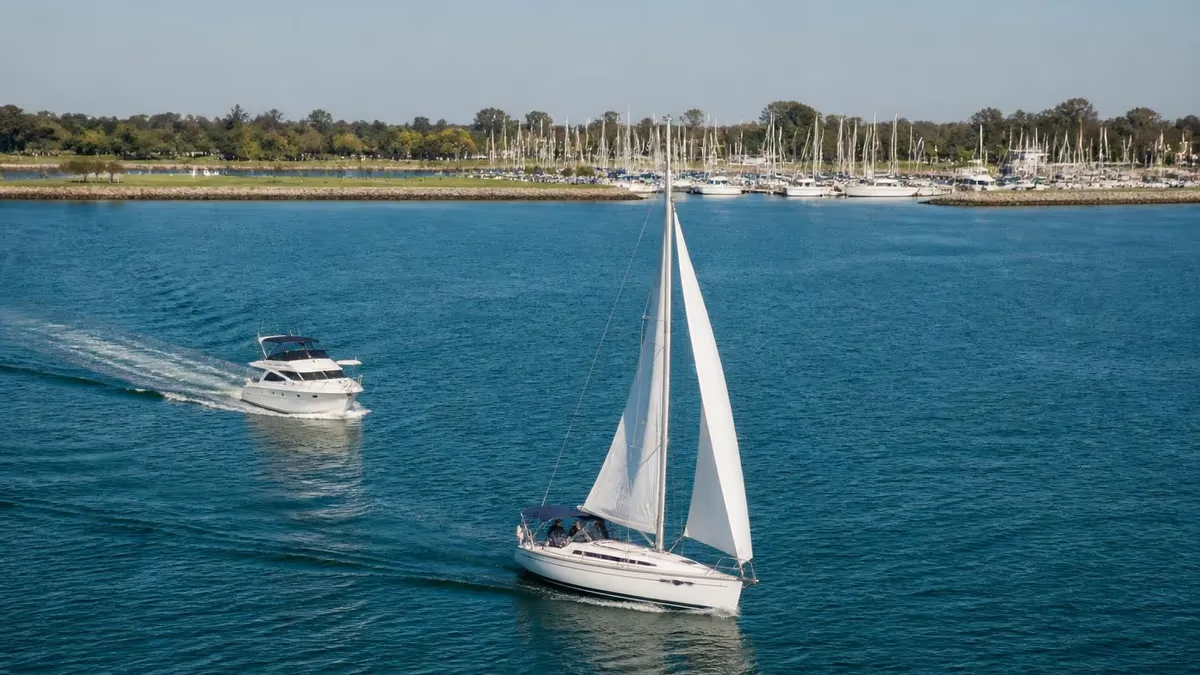
Boating License Rules Are Set State by State, Not Federally
There is no single national boating license in the United States. Every state writes its own rules — and they vary more than most new boaters expect. One lake spans two states? You might need to carry two different cards. Renting a pontoon on vacation? The rental shop's home state law governs you, even if you only step ashore for lunch.
Most states now require some form of boater education — usually a NASBLA-approved course plus a card you carry on the water. A handful require licenses only above a certain horsepower or below a certain age. A small group still has no mandatory education law at all. And several states grandfather older boaters: born before a certain year and you're exempt for life.
This guide is the legal matrix. We pull the requirements apart state by state, spotlight the laws people ask about most (Minnesota, Michigan, Oklahoma, Wisconsin, California, Florida, Texas), and answer the question that brings most readers here: do you actually need a card to be on the water where you live? If you want a broader overview of the certification itself, the general boating license requirements guide covers the "do you need one" question across the board.
Why does it matter? Because a stop on the water in the wrong state can cost you a citation and a ruined afternoon. The U.S. Coast Guard, state wildlife officers, and local marine patrol all enforce these laws, and they don't care that you didn't know the rule in the state you happened to drift into. Knowing the matrix before you launch is how you keep the day on the water — and stay out of court.
One more thing worth saying upfront. The phrase "boating license" is a little misleading. Most states do not call the credential a license — they call it a card, a certificate, or a permit. The card you carry is proof you finished a state-approved safety course. It is permanent in most jurisdictions, transferable across state lines through reciprocity, and remarkably cheap compared to almost any other licensing process. Treat it less like a DMV-style license and more like an open-water passport.
The U.S. Boater Education Landscape at a Glance
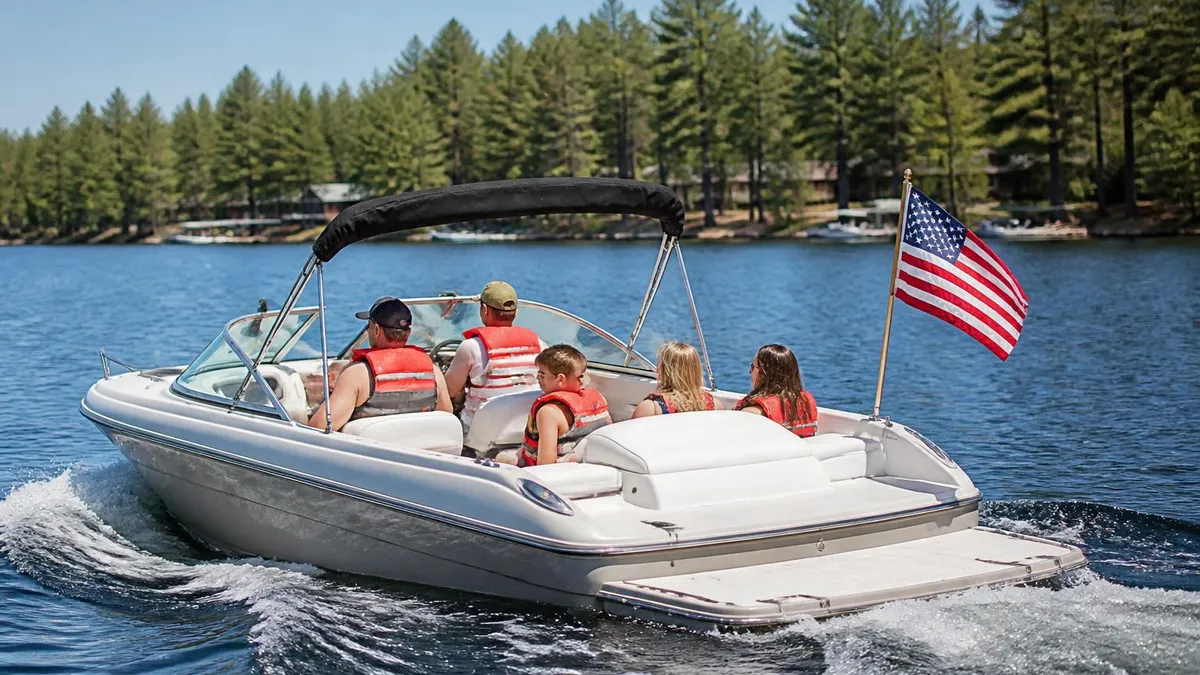
What Triggers a Boating License Requirement?
States lean on three triggers when deciding who needs a card. Knowing which ones apply to you saves a lot of guesswork before you launch.
The first trigger is age. Most states tie the law to a birth year — if you were born after a cutoff like 1988 or 1996, you need a card. Born before? You're often grandfathered in. The second is vessel type and horsepower. Some states only require licensing for motorboats above 10 HP, or for personal watercraft (PWCs) specifically. Paddle a kayak? You're almost always free. The third is where you boat. Coastal-only laws differ from inland ones, and a few states only regulate certain waterways.
The card itself is usually a boater education certificate earned by completing an approved course. It is not a "driver's license for a boat" — there is no road test, no DMV trip, and in most states you can finish the whole thing on your phone in a weekend.
A quick word on PWCs. Personal watercraft — Sea-Doos, WaveRunners, jet skis — get treated more strictly than other boats almost everywhere. A state that exempts adult motorboat operators will still demand a card from PWC riders. Why? Crash statistics. PWCs punch above their weight in injuries per hour on the water, especially among teen riders, and lawmakers have responded by tightening the rules around them faster than anything else in the boating world.
If you were born after the early-to-mid 1980s and operate a motorboat over roughly 10 HP, you almost certainly need a state-issued boater education card. The exact birth-year cutoff and HP threshold depend on your state. Paddlers, anglers on hand-powered craft, and operators born before the cutoff are often exempt. Renters in most states still need a valid card even for a single afternoon on the water.
Three Categories of State Boating Law
Once you compare all fifty states side by side, the laws cluster into three rough groups. This is the lens that makes the matrix make sense.
Group 1 — Universal mandatory education. States like Alabama, Florida, Texas, Pennsylvania, and Virginia require every operator above a certain age and on motorized vessels to carry a card. No grandfather clause, or a very narrow one. These are the strictest jurisdictions, and they enforce on the water. Florida famously runs spot checks and issues citations on the spot.
Group 2 — Age-banded requirement. Most states — including Michigan, Minnesota, California, New York, Wisconsin, and Ohio — set a birth-year cutoff. Born after the date, you need a card. Born before, you can operate freely (though education is always recommended). The cutoffs differ: Michigan uses 1978 for PWCs and a different rule for other boats; Minnesota draws the line at age 12 with conditions through 17.
Group 3 — Minimal or no requirement. A small handful of states — historically including Arizona and Wyoming for certain classes — have light or no mandatory education laws. Even in these states, you typically still need to be a minimum age and follow horsepower-based rules. The trend is clearly toward stricter laws, so "no card needed" can change between seasons.
The Three State Categories Side by Side
Every motorized operator needs a card, regardless of age. Strictest enforcement.
- ▸Examples: Alabama, Florida, Texas, Pennsylvania, Virginia
- ▸No or narrow grandfather clauses
- ▸On-water citations common
- ▸Renters must hold a card to operate
Birth-year cutoff decides who needs the card. The most common model nationwide.
- ▸Examples: Michigan, Minnesota, California, New York, Wisconsin, Ohio
- ▸Cutoffs vary widely (1978–1996 typical range)
- ▸Younger boaters always need the card
- ▸Older boaters often grandfathered for life
Light education laws — often HP-based or only for PWCs. Read the local rules carefully.
- ▸Smaller group of states, shrinking each year
- ▸Age and HP minimums still apply
- ▸Federal navigation rules still apply on all waters
- ▸Coast Guard inspections are still possible
State Spotlights: What You Need to Know in MN, MI, OK, WI, CA, FL, TX
These are the seven states people search for most often. Each has its own quirks — the kind of detail you want before booking a rental or buying your first boat. The tabs below break out the rules in plain English, with the most-cited statute references where they matter.
Read the tab for your home state first, then read the tab for any state where you'll launch this season. Rules change year to year; what was loose in 2018 may be tight in 2026. If you only have time for one tab, pick the strictest state on your route. That's the rule you need to satisfy.
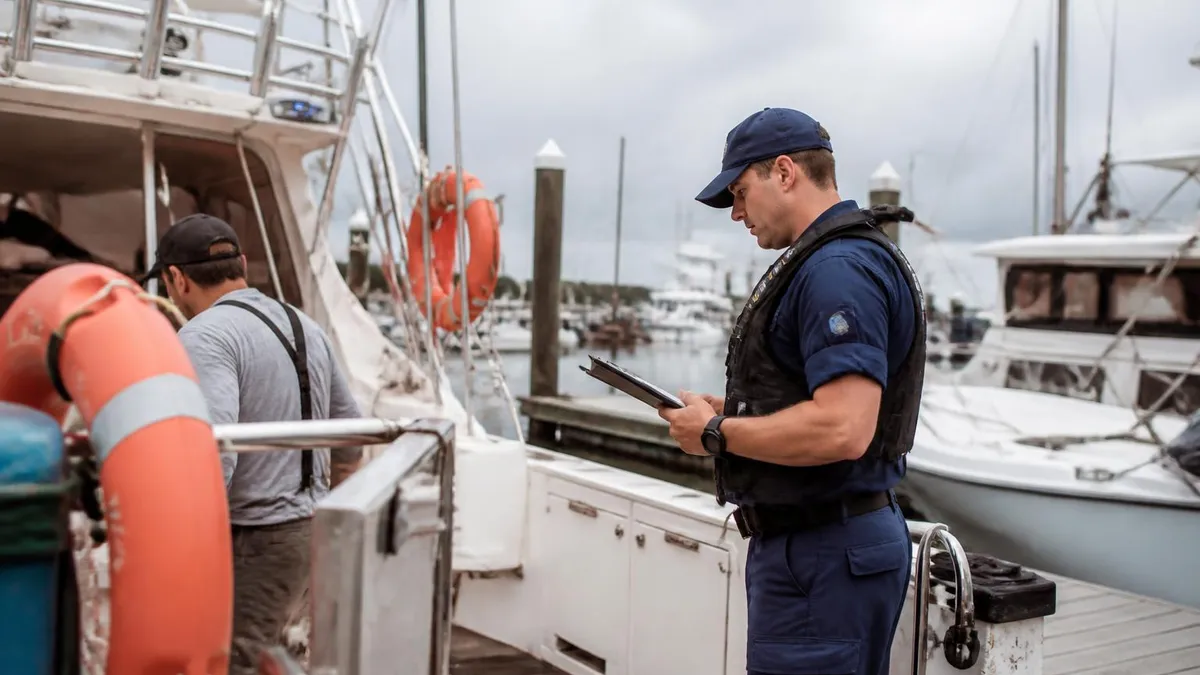
Spotlight: Seven States, Seven Sets of Rules
Minnesota boat license law requires a Watercraft Operator's Permit for anyone aged 12 through 17 who wants to operate a motorboat over 25 HP unsupervised. Kids under 12 can never operate a motorboat over 25 HP, even with a permit. Riders 18 and up don't need a card under current MN boat license requirements — but a PWC operator must be at least 13.
The state runs its program through the DNR. The course is online or in person, and the card itself doesn't expire. Do I need a boating license in MN? If you are between 12 and 17 and want to drive anything bigger than a tiller-steer fishing motor, yes. For a deeper walkthrough, see the dedicated Minnesota boating license page.
Rentals: Do You Need a Boating License to Rent a Boat?
This is the question that catches vacationers off guard. Do I need a boating license to rent a boat? In most states the answer is yes — and the rental shop is the one checking. Rental operators are legally required to verify a valid boater education card from the customer before releasing the vessel, exactly the same as for an owner.
A few states offer a workaround called a temporary boater certificate or "rental safety briefing." Florida is the best-known example: vacationers without a card can take a short verbal briefing from the rental operator, get a temporary sticker, and operate for the duration of that rental. Other states have similar one-time-use options. Can you operate a boat without a license on vacation? In rental states with a temporary path, yes — but only for that boat, with that shop, on that day.
Be careful with reciprocity at rental docks. A few rental operators will accept any NASBLA-approved card from any state. Others will only accept the card from their own state. The dock attendant is the one making the call, and they will almost always default to "show me the card." If you don't carry it, your reservation can be voided on the spot — and the deposit forfeited.
Always ask the rental shop before booking. If their answer is "we'll figure it out at the dock," book elsewhere. A rental operator who skips the check is putting your trip — and their business — at risk.
Lakes that straddle a state border (Lake Tahoe, Lake of the Woods, Lake Mead, Lake Texoma) apply each state's law on its own side of the line. If you launch in Nevada and drift into California waters, California's CA Boater Card rules apply to you — even mid-trip. Carry whichever card is stricter, or both. Reciprocity helps in many states but does not erase the law on the side you happen to be floating on.
What an Approved Boater Education Course Actually Covers
The course content is standardized through NASBLA — the National Association of State Boating Law Administrators. States adopt the NASBLA curriculum so a card earned in Wisconsin is usually honored in Michigan, and a Texas card is accepted in Louisiana. That's why "your boating license" earned in one state often works elsewhere.
Coursework runs three to eight hours depending on the provider and the state. Most boaters finish in a weekend, sometimes a single evening. Topics covered include navigation rules, required safety equipment, weather awareness, environmental responsibility, and what to do in an emergency. The exam is open-book in many providers, and you can usually retake it without paying again.
Driver license for boat? Some readers ask if there's a physical "driver license for a boat" — like a state ID. There isn't. The card you carry is more like a CPR certification than a driver's license: it confirms you finished an education program. There is no road test, no parallel parking, and no DMV line.
Course providers compete on user experience more than content. The NASBLA framework locks the curriculum, so what really differs from one provider to the next is how the material is presented — video versus text-heavy, mobile-friendly versus desktop-only, free upfront versus pay-on-pass. Read a couple of recent reviews before you commit. The cheapest option is not always the fastest, and the fastest is not always the one that actually teaches you to operate a boat safely.
What Every Approved Course Will Cover
- ✓Federal and state navigation rules (right of way, lights, sound signals)
- ✓Required onboard safety equipment by vessel length
- ✓Personal flotation device (PFD) types and proper sizing
- ✓Weather hazards, including how to read the sky and water
- ✓Cold-water immersion, hypothermia, and survival basics
- ✓Emergency response: capsizing, fire, person overboard, grounding
- ✓Trailering, launching, and retrieving your vessel safely
- ✓Boating under the influence (BUI) laws and consequences
- ✓Environmental rules: invasive species, no-wake zones, wildlife
- ✓Vessel registration, hull identification numbers, and titling
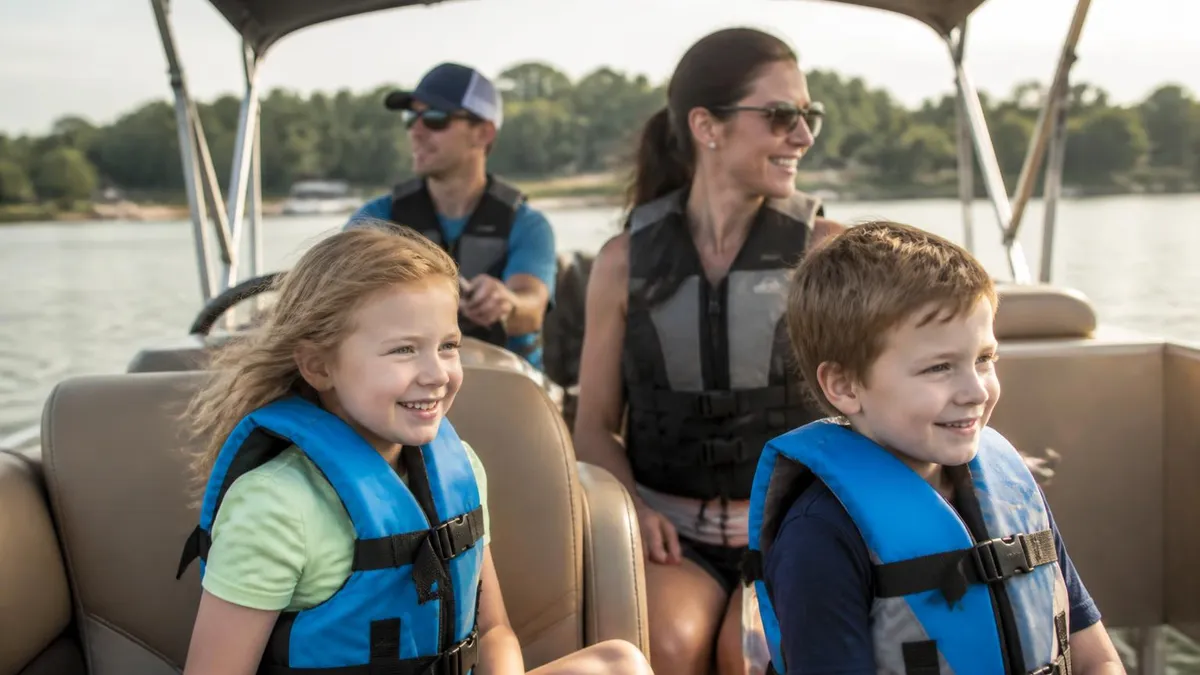
Should You Take the Course Even if You're Exempt?
If you were born before your state's cutoff or you stay in one of the lighter-regulation states, you may legally be off the hook. Many lifelong boaters never take a formal course. But there's a real argument either way, especially as you take younger family members, rent in stricter states, or trailer your boat across state lines.
Insurance is the most underrated reason. Most major marine insurers offer a discount of five to fifteen percent for policyholders who hold a NASBLA-approved card — and the discount usually pays for the course itself in the first year. Some insurers go further: a few will deny claims involving an uncertified operator on covered waters in states that require the card. Read your policy. The line is usually buried but it's worth finding.
Taking the Course Even Without a Legal Requirement
- +Insurance discounts of 5–15% from most major marine insurers
- +Out-of-state recognition lets you boat or rent in any U.S. state
- +Counts toward youth crew leader credentials in some scouting programs
- +Refreshes navigation rules and signaling — most informal boaters miss these
- +Sets a strong example for kids and teens learning to operate
- −Costs $10–$50 plus three to eight hours of your time
- −Some online providers feel dated and slow
- −You may already know the bulk of the material if you grew up boating
- −The card itself adds a card to your wallet and another login to track
- −Renewal is rarely required, but some states are starting to add it
Grandfather Clauses, PWCs, and the Smaller-State Rules
Grandfather clauses are how states let lifelong boaters off the hook. The pattern is simple: pick a birth year, and anyone older is exempt. Pick the wrong year and you might be three months younger than your sibling but legally required to carry a card while they aren't. These clauses rarely apply to PWCs (jet skis) — those almost always require a card regardless of age.
A few smaller states sometimes get missed. Do you need a boat license in Arizona? Arizona historically had no statewide mandatory education law for adults on motorboats, though the state does require children to be supervised. Do you need a boating license in Idaho? Idaho does not require a card for adult operators currently. Do you need a boating license in Maryland? Maryland requires a card for anyone born on or after July 1, 1972 — a much earlier cutoff than most states. Louisiana requires education for anyone born after January 1, 1984.
North Carolina is another one worth knowing. Do you have to have a boating license in NC? Yes, for anyone born on or after January 1, 1988, who operates a motorboat over 10 HP. Tennessee follows a similar model. New Jersey requires a New Jersey Boat Safety Certificate for all powerboat operators regardless of age — one of the strictest rules in the country.
The lesson: do not assume your neighbor's rule applies to you. The cutoff in Maryland is more than a decade older than the cutoff in Florida — same Atlantic coast, very different laws. And the trend keeps moving toward stricter rules, not looser ones. If you boat now and think you are grandfathered for life, you probably are — but new owners coming up behind you almost certainly aren't.
How to Find Your State's Exact Rule in Five Minutes
Every state's boating authority publishes the law on a public webpage. Search your state name plus "boater education requirement" and look for a .gov result. The page will tell you the birth-year cutoff, the HP threshold, the PWC rules, and which courses count. Once you know that, the next step is picking an approved course — and the state's page will list them.
If you operate in more than one state, study the rule in the strictest one. Carry the card from that state and you're covered everywhere reciprocity exists. For the step-by-step on actually earning the card once you've confirmed you need one, the how to get a boating license guide walks the full process. And if you're heading north of the border, New York's rules around the New York boating safety certificate follow a similar age-banded model — useful background if you travel that way.
One last practical tip. Print your card. Most states issue a digital card by default and a printed one on request. Both are valid, but a printed card in a waterproof sleeve survives a wet ride better than your phone. Tape it inside a console or stow it in a dry bag. When an officer asks for proof, you want to hand it over in three seconds, not fumble through a wet phone in the chop.
The short version: the U.S. has no national boater license, but most states have laws — and the laws lean toward stricter every year. If you boat regularly, take the course. If you don't, at least know where your state draws the line so you don't get stopped mid-trip. A few hours of upfront study saves a season of legal headaches and probably teaches you something useful in the bargain.
Boating Questions and Answers
About the Author

Master Mariner & Maritime Certification Specialist
Massachusetts Maritime AcademyCaptain David Harrington is a US Coast Guard licensed Master Mariner with a Bachelor of Science in Marine Transportation from Massachusetts Maritime Academy. He has 22 years of deep-sea and coastal navigation experience aboard commercial vessels and specializes in preparing maritime candidates for USCG licensing exams, STCW certification, dynamic positioning (DPO), and officer-of-the-watch qualifications.
Join the Discussion
Connect with other students preparing for this exam. Share tips, ask questions, and get advice from people who have been there.
View discussion (6 replies)