
Minnesota Boating License 2026 October: Watercraft Operator's Permit Guide
💡 Minnesota boating license guide. Watercraft Operator's Permit rules, ages 12-17, DNR-approved courses, exam tips, fees, and BUI penalties.
Minnesota Boating License 2026: Your Complete Watercraft Operator's Permit Guide
Minnesota does not issue a traditional boating license the way some states do. Instead, the Land of 10,000 Lakes uses a Watercraft Operator's Permit — a one-time, lifetime credential that proves a young operator has passed a state-approved boating safety course. The permit law has been on the books since 1987, and it specifically targets operators between the ages of 12 and 17. Adults are not required to carry the permit, but the Minnesota Department of Natural Resources strongly recommends every operator complete a safety course before heading out on Mille Lacs, Lake Vermilion, or the Boundary Waters.
Here is the short version. If you are 12 or 13, you can operate any motorboat alone only after earning your permit, and an adult over 21 must be aboard. If you are 14 through 17, the permit lets you operate a motorboat of any horsepower without supervision. If you are 18 or older, you are exempt by default. Children under 12 may ride along and even steer, but they cannot legally operate a vessel powered by more than 25 horsepower by themselves regardless of training.
The DNR runs the program out of Saint Paul, and the rules are published at dnr.state.mn.us/safety/boatwater/safe-boater.html. Permits are free when you complete a classroom course taught by a volunteer DNR instructor, or you can pay a small fee to a private vendor and take the entire course online. Either path is recognized for the rest of your life — Minnesota does not require a renewal, and the permit never expires.
If you are visiting from another state, Minnesota honors any NASBLA-approved boater education card, so a Wisconsin, Iowa, or out-of-country certificate works the same as a homegrown permit. Renters are also covered. Most rental shops on Lake Minnetonka, Cass Lake, Leech Lake, and Lake Pepin issue a temporary one-day certificate after a short on-site safety orientation. Want a feel for the kind of questions that show up on the test? Try our boating certification test practice set before you sit the real exam.
Key facts every MN boater should know
- Who needs it: Anyone born after July 1, 1987 — but practically enforced for operators ages 12–17 only.
- Permit life: Valid for life. No renewal, no expiration.
- Cost: Free via DNR classroom course; $24.95–$39.95 online.
- Exam: Typically 50 questions, 75–80% passing score.
- Reciprocity: All NASBLA-approved out-of-state cards accepted.
- Issuing agency: Minnesota DNR Boat & Water Safety section, Saint Paul.
Who Needs the Minnesota Watercraft Operator's Permit?
The law is age-based, and the lines are sharp. Operators 12 through 13 can drive a motorboat of any horsepower, but only if they hold the permit and a person over the age of 21 sits within immediate reach. The supervising adult does not need to hold the permit themselves, although the DNR recommends it. Operators 14 through 17 may pilot the boat alone once the permit is in hand. Anyone 18 and older is exempt by statute.
Younger Riders and Personal Watercraft
Personal watercraft — jet skis, Sea-Doos, WaveRunners — carry an extra layer of rules. No one under 13 may operate a PWC under any circumstance, supervised or not. Operators 13 through 17 must hold the permit and stay within sight of a supervising adult. The DNR fines repeat violations heavily during the busy July 4th weekend, and Hennepin County water patrols write more PWC citations than any other category.
Exemptions Worth Knowing
You do not need the permit if you are operating a boat with less than 25 horsepower and you are at least 12, if you are a licensed instructor running a safety class, or if you are an active-duty military member on leave. Rental customers are also exempt for the day of rental, provided the rental agency completes a basic safety orientation. The exemption does not extend to a second day — long-term renters need the real permit.
How to Get Your Permit: Three Routes
The DNR accepts three paths to the permit. The first is the traditional in-person classroom course, taught by certified volunteer instructors at community education centers, libraries, and Boy Scout halls across the state. The course runs roughly 8 hours over two evenings, costs nothing, and ends with a 50-question proctored exam. Course schedules go live each March on the DNR website, and seats in popular Twin Cities locations fill within days.
The second path is an approved online course. Five providers carry the DNR's stamp, and you can study at your own pace, take quizzes between chapters, and sit the final exam from home. Boat-Ed Minnesota costs $34.95, BoaterExam.com Minnesota runs $39.95, ilearntoboat.com Minnesota offers a $29.95 package, and the BoatUS Foundation runs a fully free online version that meets state standards.
The third path is exam-only — if you already hold an out-of-state course completion that did not result in a NASBLA card, the DNR will let you challenge the exam directly at a regional office. Once you pass any of the three routes, the permit is mailed or downloaded as a PDF the same day. Need a refresher before sitting? Our how to get a boating license walkthrough covers the steps in plain English.
Five Minnesota-Specific Rules Every Operator Must Know
- Rule: Drain all water from livewells, bilges, bait buckets, and motors before leaving a public access
- Fine: $200+ per violation, license revocation for repeats
- When: Every time you leave the water, statewide
- Rule: Slow-no-wake within 200 feet of shore, docks, swimmers, anchored boats, and emergency vessels
- Speed: 5 MPH or less, no visible wake
- Applies: All Minnesota public waters
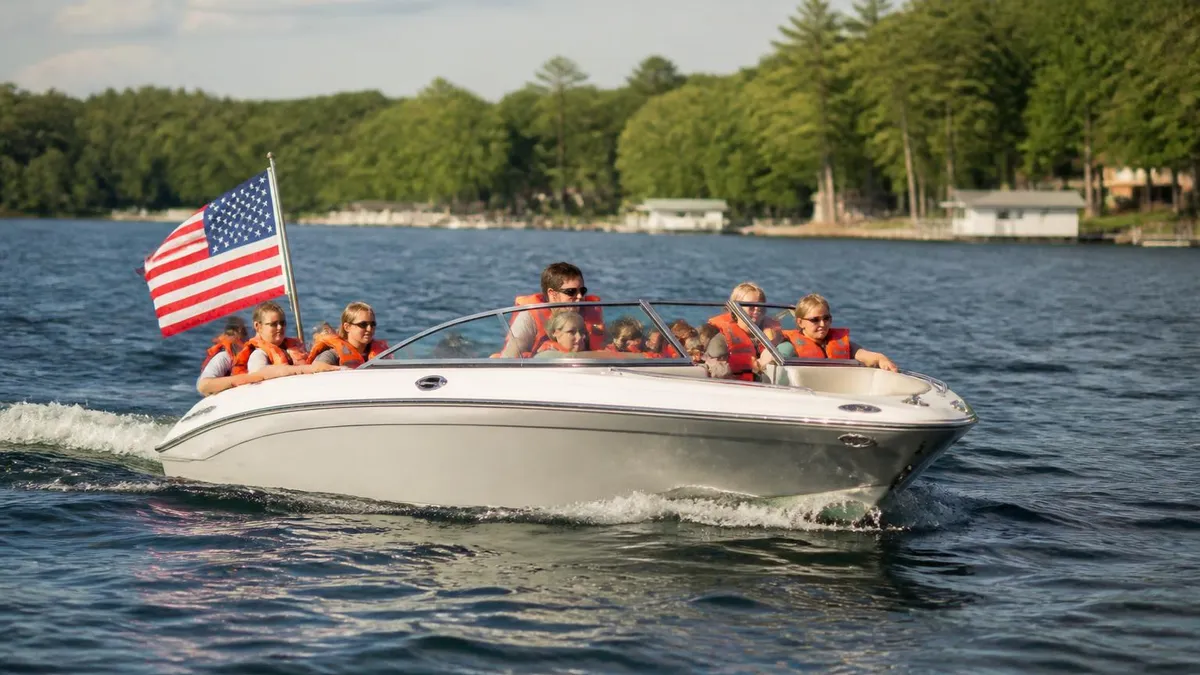
- Under 16 ft: One Type I, II, III, or V wearable PFD per person
- 16 ft and over: One wearable per person PLUS one Type IV throwable
- Children under 10: Must wear PFD while underway in any boat under 26 feet
- License: Shelters must display a license sticker from November 1 through ice-out
- Markers: Orange reflective marker required on each corner of dark shelters at night
- Removal: Must be off the ice by deadline (March 1 south, March 31 north)
- Observer: Required — separate from operator, at least 13 years old
- Hours: Sunrise to one hour before sunset only
- PFD: Type I, II, III, or V PFD on every skier and tuber
What You Actually Study in the Minnesota Course
The course leans hard on Minnesota-specific water. You will memorize the no-wake rule — within 200 feet of shore, docks, swimmers, and anchored boats. You will learn that Lake Minnetonka and Mille Lacs have additional posted wake zones during peak season, and that Lake of the Woods has international border rules because the lake straddles Canada.
Course chapters cover hypothermia and cold-water survival in unusual depth, because Minnesota water sits below 60°F well into June, and falling in without a PFD is the single largest cause of boating fatalities in the state. Other chapters cover navigation rules of the road, required equipment by boat length, alcohol limits (0.08% for adults, 0.04% for anyone under 21), and the aquatic invasive species rules that have made Minnesota famous.
You will learn to drain every livewell, bait bucket, and bilge before leaving a public access, pull all plugs, and remove any visible plant matter from the trailer. The rule is enforced with $200 fines for first offense and license revocation for repeat offenders. Studying for a similar exam in a different state? The florida boating license requirements page covers a related framework worth comparing.
Winter Boating and Ice Fishing Houses
Most states call boating a summer activity. Minnesota does not. Once Mille Lacs and Lake of the Woods freeze, ice fishing houses pop up by the thousand, and the DNR treats them as a separate vehicle class. Houses left on the ice overnight must display a license sticker, carry an orange reflective marker on each corner, and be removed by March 1 in the southern half of the state, March 31 in the north.
The Watercraft Operator's Permit does not specifically cover ice fishing, but the same officers enforce the same alcohol rules. Beer is fine, blood-alcohol above 0.08 is not. House fires from propane heaters cause more winter water-related fatalities in the state than open-water drowning, so carbon-monoxide detectors and a working fire extinguisher are mandatory.
The Permit and Adult Voluntary Enrollment
Why does Minnesota use a permit system instead of a license? The DNR's reasoning is practical. Adults who grew up on the water before 1987 already knew the rules from generations of family boating, and forcing them to take a course felt heavy-handed. Targeting younger operators — the group involved in roughly 70% of preventable accidents — produced bigger safety gains for less administrative cost.
Forty years later, the system has held up. Per-capita boating fatalities in Minnesota are below the national average, and most years see fewer than 15 deaths despite the state having more registered boats than any other except Florida.
A lifetime permit also means once a teenager passes the exam, they never need to think about it again — no DMV-style renewal, no fee creep, and no chance of operating illegally because a card expired in a glove box. The trade-off is that adult boaters who buy a first boat at age 35 may never learn the rules formally, and that gap is why the DNR pushes adult voluntary enrollment.
Minnesota Boating Quick Reference
The Watercraft Operator's Permit is a wallet-sized card or PDF issued by the Minnesota DNR Boat & Water Safety section. It is mailed within 7–10 business days of passing the classroom exam, or downloaded immediately after passing the online final. The card lists the operator's name, date of birth, and a unique 8-digit permit number. Replace a lost permit online at the DNR portal for $5.
Five Steps to Your Minnesota Watercraft Operator's Permit
Step 1: Confirm You Need It
Step 2: Pick a Course
Step 3: Study and Take the Exam
Step 4: Pay Any Fees and Print
Step 5: Carry the Permit Onboard
Course Options and What They Cost
Inside the Minnesota Boating Exam: What to Expect on Test Day
The final exam itself is shorter than people imagine. Most classroom versions run 50 multiple-choice questions, and online finals usually hit 60. The DNR sets the passing bar at 75% for classroom and 80% for most online providers — high enough to mean something, low enough that anyone who actually reads the chapters will clear it on the first try. About 92% of online test-takers pass on the first attempt, and classroom completion rates sit above 96%.
Question topics break down roughly into five buckets. Roughly a quarter of the test covers navigation rules — who has right of way at a crossing, what a red buoy means, how to read day-shapes and lights. Another quarter focuses on Minnesota state law specifically, including the AIS drain rule, the 200-foot no-wake zone, and PFD requirements by boat length. The remaining half splits between safety equipment, emergency procedures, environmental responsibility, and the boating-under-the-influence chapter.
The Trickiest Questions
Test-takers consistently miss the same handful of items. Cold-water immersion timing trips most people up — the 1-10-1 rule (one minute to control breathing, ten minutes of meaningful movement, one hour before unconsciousness) shows up in roughly half of all final exams. Distress signal hierarchy is another favorite. The DNR wants you to know that an orange flag is a day signal only, a flashlight is a night signal only, and aerial flares work for both. Knot questions are rare but do appear — cleat hitch and bowline get the most attention.
Study Strategy That Works
The best way to prepare is to read every chapter once, take every practice quiz the provider offers, then run the timed final exam in a separate browser without notes. If you score below 85% on a practice run, go back to the chapter weakest, re-read the summary boxes, and try again.
Skip the highlighter — Minnesota's content is conceptual rather than memorization-heavy, so understanding why a rule exists matters more than memorizing the number. For an out-of-state comparison that uses the same NASBLA framework, see our california boating license walkthrough, which covers a similar mandatory boater-card program with comparable exam structure and pass thresholds for new operators. The format, scoring rules, and content domains are remarkably similar from state to state, which is why a single solid study session usually transfers well across multiple state exams when families travel or relocate.
Online Course vs Classroom Course: Which Should You Pick?
- +Online courses let you study at your own pace from anywhere
- +Online finals can be retaken immediately if you fail
- +Online permits issue same-day as a downloadable PDF
- +Online providers include unlimited practice quizzes
- +Classroom courses are completely free in Minnesota
- +Classroom instructors are volunteer DNR officers with real on-water experience
- +Classroom format is best for teens who learn better with peers
- −Online courses cost $24.95–$39.95
- −Online learning suits self-motivated students only
- −Classroom seats fill within days each spring
- −Classroom courses take a full weekend or two evenings
- −Classroom locations are limited outside the Twin Cities metro
- −No instructor present to answer questions in real time during online final
Minnesota Boater Day-of Checklist
- ✓Watercraft Operator's Permit (if operator is 12–17)
- ✓Boat registration card (MN-numbered or out-of-state)
- ✓USCG-approved PFD for every person aboard
- ✓Type IV throwable cushion (boats 16 feet and longer)
- ✓B-1 fire extinguisher (inboards or enclosed fuel tanks)
- ✓Working sound-producing device (whistle, horn, or bell)
- ✓Navigation lights tested and operational (any dusk operation)
- ✓Visual distress signals (required on Lake Superior)
- ✓Drained livewells, bilges, bait buckets — AIS compliance
- ✓Plug pulled from drain — required before leaving any public access
- ✓Anchor with at least 100 feet of rope and adequate flukes
- ✓Fully charged phone or marine VHF radio
- ✓Sunscreen, drinking water, and weather radio
Minnesota's Famous Lakes — and the Rules That Apply on Each
Minnesota's nickname is no exaggeration. The state contains 11,842 lakes larger than 10 acres, plus the Mississippi headwaters, the St. Croix, and the Boundary Waters Canoe Area Wilderness. Each major body has its own quirks. Mille Lacs, the second-largest lake in the state, draws walleye anglers from across the Midwest, and its 132,000-acre surface creates wave conditions that can rival a small ocean. The DNR posts wind advisories every summer, and conservation officers patrol the lake constantly during launch weekends.
Lake Vermilion in the Iron Range is famous for its 365 islands and convoluted shoreline. Most accidents there involve operators who get lost after sunset because the islands all look alike. Navigation lights are not optional. Lake Minnetonka, the largest lake in the Twin Cities metro, packs more boats per acre than almost anywhere else in the state. The 200-foot no-wake rule is enforced aggressively, and Hennepin County issues hundreds of citations each Memorial Day weekend.
The Boundary Waters: A Different World
The BWCAW operates under separate federal rules. Motors are forbidden on most lakes, the entry permit system caps daily visitors, and Leave No Trace is enforced by U.S. Forest Service rangers. The Watercraft Operator's Permit still applies to motorized portions, but the area's primary draw is paddle craft. No registration is required for canoes or kayaks under 10 feet, although the AIS drain rule still applies whenever you portage between watersheds.
Lake Superior and the North Shore
Lake Superior is the only Minnesota water body where U.S. Coast Guard rules supplement state law. Visual distress signals are mandatory beyond one mile from shore, marine VHF radios are strongly recommended, and the National Weather Service marine forecast becomes a life-or-death tool. Cold-water survival training is essential — the lake rarely climbs above 50°F even in August. To compare requirements with another large-water state, read the boater education certificate overview, which covers reciprocity rules nationwide.
BUI in Minnesota: Penalties That Get Real Quickly
Boating under the influence is treated almost identically to drunk driving in Minnesota. A first offense at or above 0.08% triggers a $1,000 to $3,000 fine, automatic 90-day suspension of your driver's license, and mandatory chemical-dependency evaluation. A second offense within ten years adds 0 to 90 days of jail, a one-year revocation of the Watercraft Operator's Permit, and possible vehicle forfeiture. The 0.04% limit for operators under 21 means even a single drink can put a teenager over the line.
The implied-consent law applies the same way as on the road. Refusing a breath test triggers automatic permit revocation, and the refusal itself counts as a separate offense. Conservation officers carry portable breathalyzers and use them frequently on Lake Minnetonka, Lake of the Woods, and Mille Lacs. Boating is fun — but treat the breath test the same way you would on a highway. Save the beer for shore.
Minnesota Boating by the Numbers
Key Facts at a Glance
| Item | Value | Details |
|---|---|---|
| Permit age range | 12–17 | |
| Passing exam score | 75–80% | |
| Renewal required | Never |
Sample Boating License Test Practice Questions
Try these questions from our free Boating License Test practice tests. The correct answer and an explanation follow each question.
What is the minimum age to operate a personal watercraft (PWC) alone in most US states?
- A. 12 years old
- B. 14 years old
- C. 16 years old
- D. 18 years old
Answer: C. 16 years old
Most US states require operators of personal watercraft to be at least 16 years of age, though this varies by state.
How does alcohol primarily affect a boat operator's ability to navigate safely?
- A. It improves reaction time
- B. It enhances night vision
- C. It impairs balance, judgment, and coordination
- D. It increases alertness on the water
Answer: C. It impairs balance, judgment, and coordination
Alcohol impairs balance, judgment, and coordination, all of which are critical skills needed to safely operate a vessel.
Many jurisdictions prohibit personal watercraft operation during which hours without special authorization?
- A. Between sunset and sunrise
- B. Between noon and 1 p.m.
- C. Only on weekends
- D. During high tide
Answer: A. Between sunset and sunrise
PWCs are commonly restricted from operating between sunset and sunrise due to visibility hazards.
What is the minimum age most U.S. states require before a person can operate a personal watercraft unsupervised?
- A. 16 years old
- B. 8 years old
- C. 21 years old
- D. 25 years old
Answer: A. 16 years old
Most states set the minimum unsupervised PWC operating age at 16, though it varies by state.
Boating Questions and Answers
Related Boating License Guides
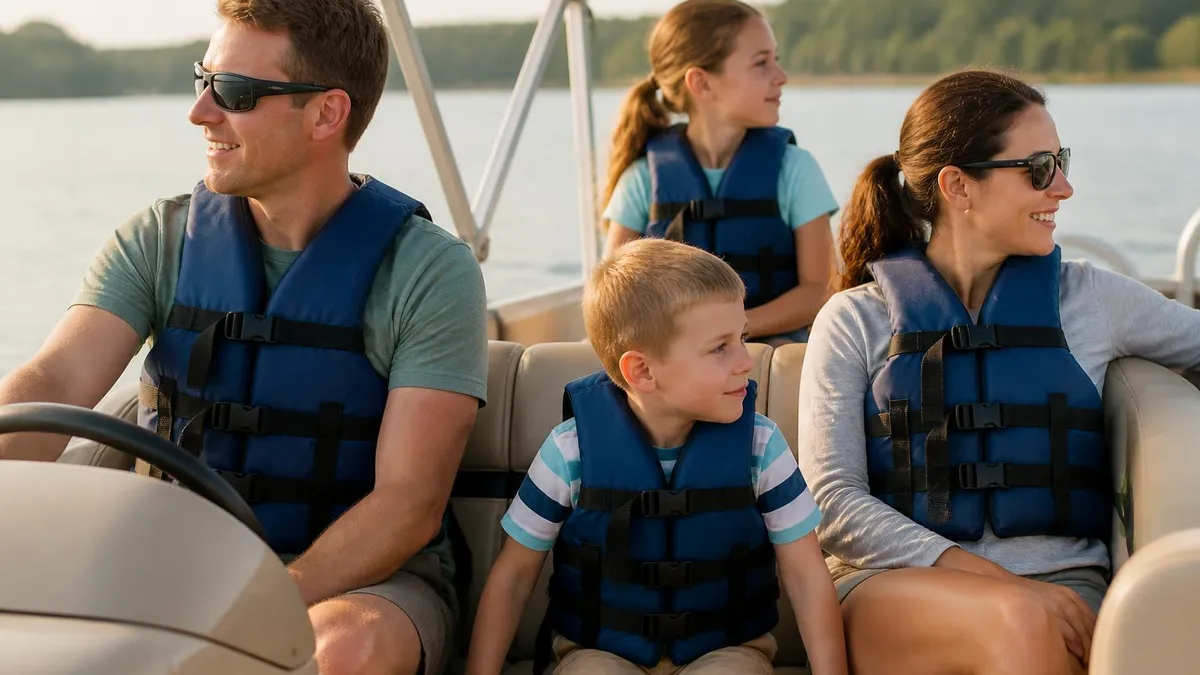
Boating License: What It Is and How to Get One in Your State
How to Get a Boating License: Step-by-Step Guide 2026
California Boating License: 2026 Boater Card Guide & Requirements
Florida Boating License Requirements: How to Get Your FL Boating Safety Card
Boater Education Certificate: How to Get Your Boating Safety Card
Boating License 2026
About the Author

Master Mariner & Maritime Certification Specialist
Massachusetts Maritime AcademyCaptain David Harrington is a US Coast Guard licensed Master Mariner with a Bachelor of Science in Marine Transportation from Massachusetts Maritime Academy. He has 22 years of deep-sea and coastal navigation experience aboard commercial vessels and specializes in preparing maritime candidates for USCG licensing exams, STCW certification, dynamic positioning (DPO), and officer-of-the-watch qualifications.
Join the Discussion
Connect with other students preparing for this exam. Share tips, ask questions, and get advice from people who have been there.
View discussion (6 replies)