
Florida Boating License: How to Get Your Boating Safety Card 2026 October
How to get a Florida boating license: 🧠 who needs the Boating Safety ID Card, NASBLA-approved courses, exam format, cost, exemptions, and reciprocity rules.
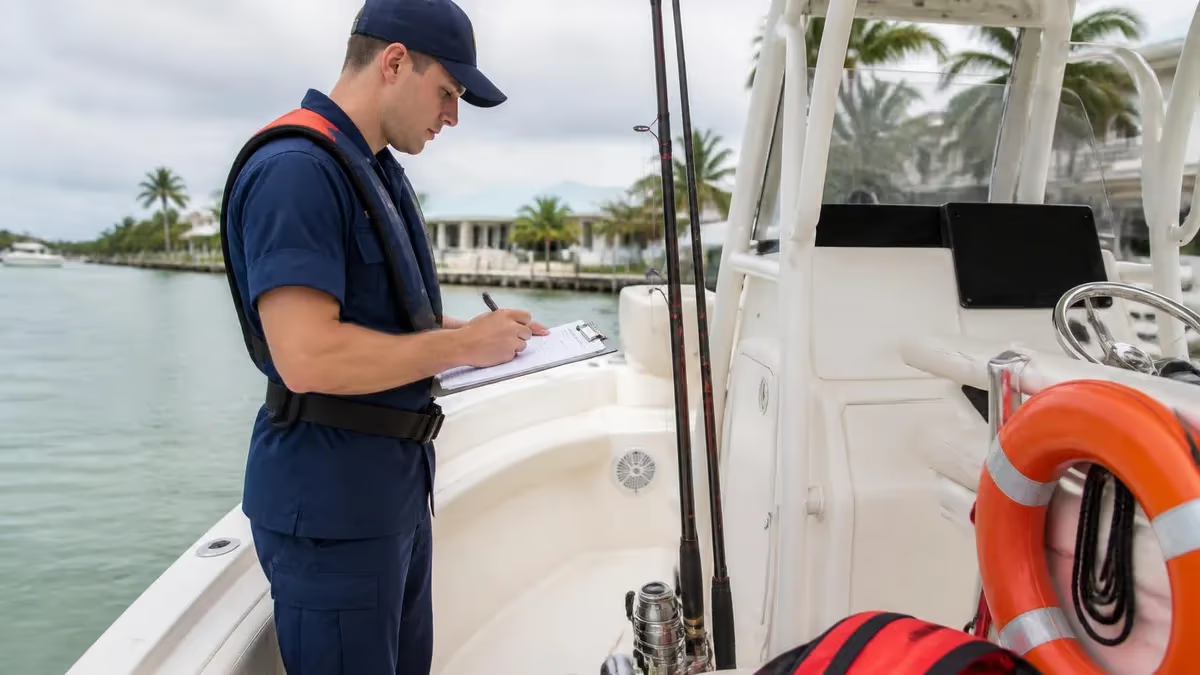
Florida Boating License: The Boating Safety Education ID Card
Florida technically does not issue a 'boating license' the way some states issue driver's licenses. What you actually need is a Boating Safety Education ID Card issued by the Florida Fish and Wildlife Conservation Commission (FWC). The card is required for anyone born on or after January 1, 1988 who operates a vessel powered by 10 horsepower or more in Florida waters. The law that established this is informally known as Kaitlyn's Law, named after Kaitlyn Abbey, a 14-year-old who was killed in a 2010 boating accident.
If you fall under the law, you need to complete a NASBLA-approved (National Association of State Boating Law Administrators) boating safety course, pass the included exam, and receive the FWC-issued ID card before operating a vessel. The good news: the process is straightforward, the course can be done entirely online, and there's a high-quality free option through the BoatUS Foundation. The boating license practice test will give you a feel for the exam content.
Florida has more registered vessels than any other state — over 1 million boats — and the busiest recreational waterway system in the country. The combination of warm year-round weather, extensive coastline, inland rivers, and lake systems creates more on-water hours per capita than anywhere else in the US. That volume of boating activity is why Florida takes operator education seriously and enforces the card requirement consistently.
The card itself is small, credit-card sized, and easy to slip into a wallet or waterproof boat bag. Many boaters laminate it or carry a backup photocopy in case the original gets lost or water-damaged. If your card is destroyed or lost, FWC issues replacements for a small fee — usually around $10. The course completion record is on file with FWC, so you don't need to retake the course just because your physical card was damaged.
Boating accidents in Florida cluster around several recurring causes: operator inexperience, alcohol involvement, excessive speed for conditions, and inattention. The Boating Safety Education ID Card law specifically targets the first cause by ensuring operators have completed structured education before taking the helm. Stricter enforcement of BUI laws, better aids to navigation in heavily-trafficked areas, and visible regulatory markers handle the other risk factors.
If you boat regularly in Florida, the card pays for itself the first time it prevents a citation or insurance complication. Treat the course time as an investment in skill, not just compliance — the safety knowledge genuinely matters once you're on the water.
Bottom Line
You need a Florida Boating Safety Education ID Card if you were born on or after January 1, 1988 AND you operate a boat with 10+ horsepower in Florida waters. The card costs nothing if you take the free BoatUS Foundation course (the most popular option), or $35-50 if you take a paid course like Boat-Ed or ilearntoboat. The card never expires once issued. Course completion plus a passing exam score gets you a temporary certificate immediately, with the permanent FWC-issued card mailed within 4-6 weeks.
Who Needs the Card and Who Doesn't
Florida's boating safety education law applies to anyone born on or after January 1, 1988 who operates a vessel with 10 horsepower or more on Florida waters. The cutoff date means anyone aged 38 or younger in 2026 needs the card. Those born before January 1, 1988 are not required to carry the card, although taking the course is still strongly recommended for safety reasons. The horsepower threshold of 10 HP means smaller boats — kayaks, canoes, jon boats with very small motors, small sailboats without auxiliary power — do not trigger the requirement.
Several exemptions exist beyond the age and horsepower rules. Operators of registered cruise ships do not need the card. Licensed Coast Guard captains (master/mate licensees) are exempt. Non-residents who hold a valid Boating Safety Education ID Card from another state's NASBLA-approved program may use that card while visiting Florida. Active military and law enforcement personnel operating government-owned vessels in official capacity are exempt. The general boating license guide covers exemptions in other states for comparison.
One nuance worth understanding: the law applies to operators, not passengers. If you're riding on a friend's boat without taking the helm, you don't need the card. Passenger requirements (PFD wear for children, alcohol limits) still apply, but the education requirement falls on whoever is actually driving. If you swap operators mid-trip, the new operator must hold the card. This matters for fishing trips or family outings where multiple people take turns at the wheel.
One implication for families: parents often want their teenagers to take the course before they reach operator-eligible age. That's fine — the course has no minimum age requirement. Plenty of 11- and 12-year-olds complete the course in advance of legally operating boats themselves, with the card sitting in their possession until they hit the 14-year-old minimum operator age for 10+ HP vessels.
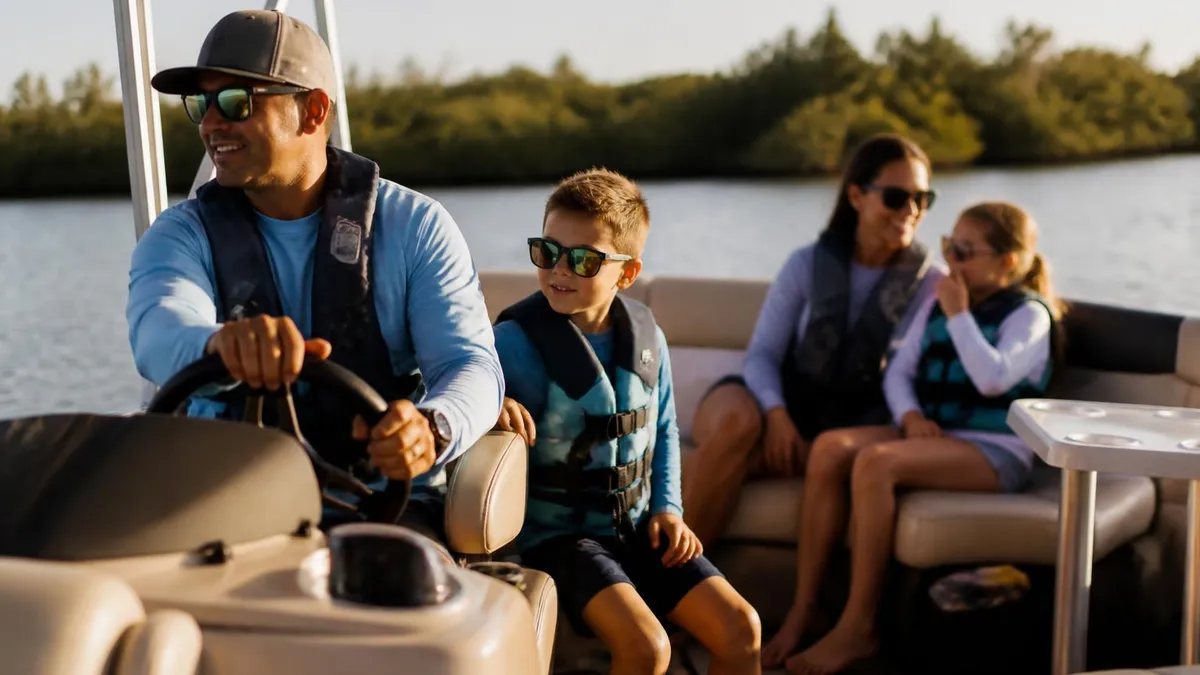
Approved Course Providers in 2026
Most popular option. Free, fully online, well-designed multimedia course. Takes 3-8 hours typical. Includes practice quizzes and a final exam. NASBLA-approved and FWC-accepted. No catch — funded by donations and partnerships.
Industry-leading paid course around $50. Polished animations, detailed coverage, mobile-friendly. State-specific Florida content. Excellent option for visual learners who want a more guided experience.
Around $35-45. Faster-paced than Boat-Ed with more emphasis on getting through the material efficiently. Good option for experienced boaters who need the certification quickly.
Same parent company as Boat-Ed, slightly different branding. Around $40-50. Content is essentially identical.
Traditional classroom format offered locally. Free or low-cost. Excellent if you prefer in-person instruction. Schedules vary by region — check uscgaux.org or usps.org for class listings.
Around $35-50. Clean interface, mobile-optimized, fast completion option. Florida-specific content. Generates the same FWC-recognized completion certificate as other approved providers.
What the Course Covers
NASBLA-approved courses follow a standardized curriculum with Florida-specific additions. Topics include vessel terminology and parts identification, Florida boating laws and regulations, navigation rules (right-of-way, navigation aids, channel markers), required safety equipment by vessel type and size, personal flotation device (PFD) requirements and types, weather and water conditions, emergency procedures (man overboard, fire on board, capsizing, running aground), boating under the influence laws and penalties, and environmental protection rules including manatee zones and seagrass protection.
Florida-specific content matters because the state has unique rules around manatee speed zones, no-wake zones in residential canals, seagrass protection, anchoring restrictions in certain residential areas (updated in 2023 with House Bill 985), and dive flag requirements. These rules don't appear in other states' courses and are tested specifically in the Florida exam. Spend extra time on the Florida-specific sections — they're where most candidates miss exam questions.
For Florida-specific knowledge, the chapters on manatee zones, anchoring laws, dive flag rules, and BUI penalties deserve extra attention. These topics show up disproportionately on the exam because they're what Florida boaters most commonly get wrong in real-world situations. Spend an extra 15-30 minutes reviewing each of these sections after completing the rest of the course.
Course Content Breakdown
State-specific boating regulations: registration requirements, operator age and HP rules, BUI (Boating Under the Influence) limits (0.08% BAC same as DUI), reckless operation penalties, the 2023 anchoring law for residential canals, manatee speed zones, and dive flag requirements (red flag with white diagonal stripe for divers in water). Florida BUI carries the same penalties as DUI — up to a year in jail for a first offense plus license suspension.
Reckless or careless operation is its own offense beyond BUI. Speed for conditions, wake control, and overall vessel handling are all evaluated when accidents occur.
How the Exam Works
The exam is the final component of any NASBLA-approved course. Format varies slightly by provider but typically consists of 75 to 90 multiple-choice questions covering all course content. Passing score is generally 80 percent. Most online providers allow unlimited retakes — if you don't pass first time, you can review the missed material and retake the exam at no additional cost. The questions test recall and application: you'll see scenarios like 'You're approaching another vessel from the starboard side at night — what action do you take?' rather than pure memorization.
Time pressure is minimal. Most online exams are untimed, so you can review the course material as you work through questions. Take your time. After passing, the provider issues a temporary completion certificate (usually emailed as a PDF) that you can carry on the water while waiting for the permanent FWC-issued ID card. Florida law accepts the temporary certificate as valid proof of education during the 4-6 week window before the permanent card arrives.
If you fail the exam, don't panic. Most providers allow unlimited retakes at no additional cost. Review the sections where you missed questions, retake the relevant practice quizzes, then attempt the final exam again. Many candidates pass second-attempt easily after the first attempt revealed their weak content areas. The exam is designed to verify knowledge, not to filter out test-takers.
Many candidates underestimate the navigation rules section. The right-of-way rules and aids-to-navigation content account for a meaningful share of exam questions and are the topics most commonly missed. If your course includes a chapter quiz on navigation, treat it as a diagnostic — score below 80 percent means you should revisit the material before the final.
This trips up many first-time test-takers. The course provider issues your completion certificate, but the actual Florida Boating Safety Education ID Card comes from FWC (Florida Fish and Wildlife Conservation Commission) by mail. Allow 4-6 weeks for the permanent card to arrive. During that window, carry your printed completion certificate from the course provider — it satisfies the legal requirement temporarily. If your card hasn't arrived after 8 weeks, contact FWC at 850-488-5600.
Course Costs Compared
The cheapest legitimate path is the BoatUS Foundation course at zero cost. It's NASBLA-approved, FWC-accepted, and frequently rated as one of the highest-quality boating safety courses available. The course is funded by donations and corporate partnerships, so there's no upsell or hidden fee. Many candidates assume free means lower quality — that's not the case here. The BoatUS course rivals or exceeds the paid alternatives in production value and accuracy.
Paid providers (Boat-Ed, ilearntoboat, BoaterExam, Kalkomey) charge between $35 and $55 for a Florida-specific course. The paid courses offer slightly more polished interfaces, mobile-optimized layouts, and sometimes faster completion paths. The trade-off is real cost for marginally better UX. For most candidates, BoatUS Foundation's free course is the right choice. Spend the saved money on safety equipment instead — a quality emergency kit costs more than the most expensive paid course.
One consideration for paid courses: completion certificates are typically delivered identically across providers. The polished animations and slicker UI don't produce a fancier card — you get the same FWC-issued ID card whether you paid $0 or $55. If you genuinely learn better with high-production-value multimedia, a paid course may be worth it. Otherwise the free option delivers identical legal results.
One trap to avoid: courses that aren't NASBLA-approved sometimes market themselves on social media as Florida boating courses but produce certificates that FWC doesn't recognize. Always verify the course is NASBLA-approved before paying. The BoatUS Foundation, Boat-Ed, ilearntoboat, BoaterExam, USCG Auxiliary, and US Power Squadrons are confirmed approved. If you see a course you don't recognize, search the NASBLA-approved courses list at nasbla.org to confirm.
Steps to Get Your Florida Boating Safety ID Card
- ✓Confirm you actually need the card (born 1/1/1988+ AND operating 10+ HP boat)
- ✓Choose a NASBLA-approved course — BoatUS Foundation (free) recommended
- ✓Register for the course online with name matching your government ID
- ✓Complete all course modules — typically 3-8 hours of content
- ✓Take section practice quizzes — improves final exam performance
- ✓Pass the final exam with 80%+ score (most providers allow retakes)
- ✓Save the temporary completion certificate PDF and print a copy
- ✓Wait 4-6 weeks for the permanent FWC ID card to arrive by mail
- ✓Carry both certificate and ID card on the water (laminate the card)
- ✓Keep the card with you — it's required to be on your person while operating
Boat Registration Is Separate
The Boating Safety Education ID Card covers the operator. The vessel itself must be separately registered with the State of Florida — typically done through your county tax collector's office, the Florida Department of Highway Safety and Motor Vehicles (FLHSMV), or online through GoRenew.com. Florida boat registration is required for any motor-powered vessel used on public waters, regardless of size. Manual-only vessels (canoes, kayaks, paddleboards) do not require registration.
Boat registration costs vary by vessel size — ranging from around $5 per year for the smallest motorized vessels to over $100 per year for large boats. Registration must be renewed annually and decals must be displayed on the bow. Out-of-state boats can operate in Florida waters for up to 90 consecutive days without Florida registration, but must display valid registration from their home state. The boating safety guide covers registration and operator requirements across multiple states.
Registration involves more than just paying a fee. Florida registration includes vessel hull identification verification, proof of ownership (bill of sale or manufacturer's statement of origin), and sometimes a marine survey for older vessels. New owners should budget several hours and a county tax collector visit for first-time registration. After initial registration, annual renewals can usually be done online or by mail.
Reciprocity with Other States
Florida accepts Boating Safety Education ID Cards from other states that have NASBLA-approved programs. If you live in Georgia, Alabama, Texas, or any other state with a NASBLA-approved course completion certificate, you can operate boats in Florida waters as a non-resident using your home-state card. This reciprocity covers vacation boaters, snowbirds, and short-term visitors. Permanent Florida residents who fall under the age cutoff must obtain the Florida-issued card specifically — out-of-state cards do not satisfy the requirement for residents.
This reciprocity works both ways. Your Florida Boating Safety Education ID Card is accepted in most NASBLA-participating states for visiting Florida boaters. Some states have slightly different rules — Vermont, North Dakota, and a few others have specific requirements that may not accept out-of-state cards. Check the destination state's rules before assuming reciprocity if you're planning extended boating trips outside Florida. The NASBLA website maintains a current reciprocity list updated annually.
Reciprocity rules apply to recreational boating only. Commercial operators, charter captains, and certain professional categories must hold federal credentials (USCG licenses) that operate under different rules entirely. If you're thinking about charter fishing or guide work in Florida, the FWC ID Card is just the starting point — you'll need additional USCG credentials and Florida-specific guide licenses.
Snowbirds bringing boats from northern states should verify both registration and operator certification reciprocity upon arrival. Both work in Florida's favor but require valid documentation displayed and carried.
Florida Boating License at a Glance
Key Facts at a Glance
| Item | Value | Details |
|---|---|---|
| BoatUS Foundation free course total cost | $0 | |
| Typical passing score on the final exam | 80% | |
| Time for permanent FWC card to arrive by mail | 4-6 wks |
Florida-Specific Rules to Know
Specific zones in Florida waters require slow speed minimum wake or idle speed only. Speed limits posted on regulatory markers. Violations carry steep fines. Common in west-central Florida coastal areas and the Crystal River region.
Most residential canals are no-wake or idle speed zones. Maximum 5 MPH typical. Penalties include damage liability if your wake causes shoreline or property damage. Look for posted signage at canal entrances.
New restrictions on long-term anchoring in residential canals and certain enclosed bays. Limits anchoring to specific time periods near private docks and seawalls. Affects mostly long-stay live-aboard boaters in residential waterways.
Boats must stay 300 feet away from displayed dive flags (red with white diagonal stripe) in open water, 100 feet in rivers and inlets. Divers must surface within 300 feet of their displayed flag. Strict enforcement around popular dive sites.
Children under 6 must wear a USCG-approved PFD at all times when underway on vessels under 26 feet. Stricter than federal rules. Inflatable PFDs not approved for children under 16.
Penalties for Operating Without the Card
Operating in Florida waters without the required Boating Safety Education ID Card is a civil infraction punishable by fine. Typical first-offense fines run from $50 to $100, scaling up for repeat offenses. The fine is the smaller concern. The larger concern is the impact on insurance claims and civil liability if you're involved in an accident while operating without proper certification. Some boat insurance policies exclude or reduce coverage if the operator wasn't legally certified at the time of an incident.
FWC officers and local marine law enforcement regularly conduct safety stops in Florida waters, especially during high-traffic periods (Memorial Day, July 4, Labor Day). Standard checks include verification of operator certification, registration documentation, required safety equipment, and BUI screening if behavior suggests impairment. Carry the card on your person while operating — having it in your glove box or stored on the boat isn't always sufficient under strict interpretation of the rule.
Beyond the immediate civil fine, operating without certification creates a record that can complicate future interactions with FWC and other agencies. Insurance underwriters increasingly request operator certification status when issuing policies. A documented violation may raise premiums or trigger coverage exclusions on subsequent policies. Treat the card requirement as a baseline operating cost, not as something to test for enforcement.
The safest baseline assumption is to treat carrying the card as mandatory whenever you operate a covered vessel, regardless of perceived enforcement risk. The cost of compliance is trivial; the cost of non-compliance during an incident can be substantial.
Free vs Paid Boating Course
- +Free BoatUS Foundation course is genuinely high quality
- +No catch, no upsell, no hidden fee — funded by donations
- +Identical NASBLA approval and FWC acceptance as paid courses
- +Self-paced, fully online, mobile-friendly
- +Practice quizzes throughout build retention before final exam
- +Save the $35-50 toward actual safety equipment or fuel
- −Paid courses (Boat-Ed) sometimes have slightly slicker animations
- −Free course interface less polished than premium options
- −No live support — questions answered via email or FAQ
- −Mobile experience less optimized than newer paid platforms
- −Some users prefer paid courses for guided pace structure
- −Free course completion sometimes processes slower at end
Sample Boating License Test Practice Questions
Try these questions from our free Boating License Test practice tests. The correct answer and an explanation follow each question.
A special commercial boating license is generally required when an operator carries passengers for what purpose?
- A. For hire or profit
- B. For a family picnic
- C. For personal fishing
- D. For a solo sunset cruise
Answer: A. For hire or profit
Carrying passengers for hire requires a commercial license such as a USCG Merchant Mariner Credential.
You are drifting in a solid outgoing tidal current on your 3.5-meter boat because your motor has failed. Calling the local marine rescue association should be done as follows:
- A. PAN PAN
- B. MOBILE PHONE
- C. MAYDAY
- D. SECURITE
Answer: A. PAN PAN
A 'PAN PAN' call is the international urgency signal used when a vessel is in a serious situation but not facing immediate grave danger that would warrant a 'MAYDAY.' In this scenario, a motor failure and drifting in a strong outgoing current constitute an urgent situation requiring assistance, but not an immediate life-threatening emergency. Therefore, PAN PAN is the appropriate call to alert marine rescue.
What is the most common cause of boating fatalities?
- A. Fire
- B. Drowning from not wearing a life jacket
- C. Carbon monoxide
- D. Propeller strikes
Answer: B. Drowning from not wearing a life jacket
Most boating deaths are drownings, and the majority of victims were not wearing a life jacket.
What pre-departure checks should be performed before every boating trip?
- A. Inspect hull, check fuel and oil levels, test bilge pump, verify safety equipment, check weather, and file a float plan
- B. Only check if the engine starts
- C. No checks are needed for short trips
- D. Only check the weather forecast
Answer: A. Inspect hull, check fuel and oil levels, test bilge pump, verify safety equipment, check weather, and file a float plan
Pre-departure checks include hull inspection, engine and fuel system check, bilge pump test, safety equipment inventory (PFDs, flares, fire extinguisher), navigation light test, weather check, and filing a float plan.
Boating Questions and Answers
About the Author

Master Mariner & Maritime Certification Specialist
Massachusetts Maritime AcademyCaptain David Harrington is a US Coast Guard licensed Master Mariner with a Bachelor of Science in Marine Transportation from Massachusetts Maritime Academy. He has 22 years of deep-sea and coastal navigation experience aboard commercial vessels and specializes in preparing maritime candidates for USCG licensing exams, STCW certification, dynamic positioning (DPO), and officer-of-the-watch qualifications.
Join the Discussion
Connect with other students preparing for this exam. Share tips, ask questions, and get advice from people who have been there.
View discussion (6 replies)