
BLS Test Answers: Complete Study Guide for Basic Life Support Certification
Get BLS test answers, study tips, and practice questions for the AHA Basic Life Support exam. Pass your certification with confidence. 🗨️
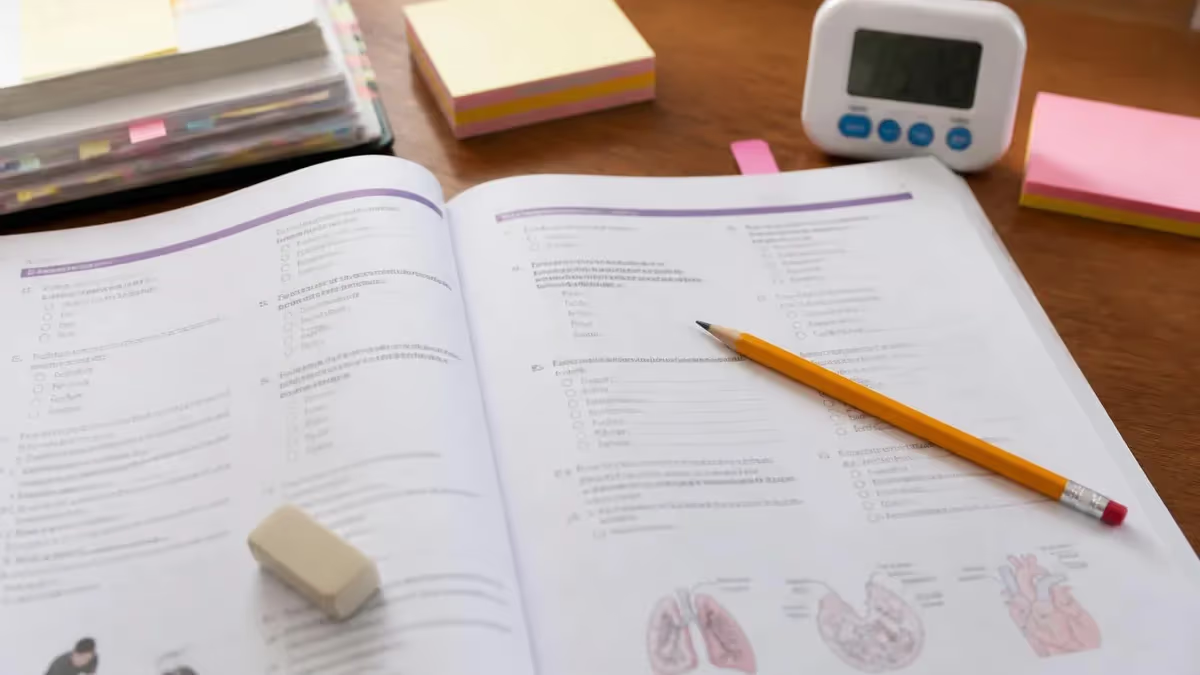
Understanding bls test answers starts with knowing what is a bls certification and why it matters for healthcare professionals across the United States. Basic Life Support certification, issued primarily through the American Heart Association and the American Red Cross, validates that a provider can recognize and respond to life-threatening cardiac and respiratory emergencies. Whether you are a nurse, EMT, medical assistant, or dental hygienist, holding a current BLS card is a non-negotiable employment requirement at most clinical sites, hospitals, and outpatient facilities nationwide.
The BLS written exam tests your knowledge of high-quality CPR technique, automated external defibrillator use, team dynamics, and relief-of-choking procedures. Questions are multiple-choice and cover both adults and pediatric patients. Most candidates who struggle on the written portion do so not because the material is overly complex, but because they have not reviewed the specific AHA guidelines language used in the answer choices. Knowing the exact ratios, depths, and rates the AHA publishes is what separates correct answers from near-miss distractors.
If you have ever searched for bls test answers online, you already know the landscape is crowded with outdated study sheets and paraphrased guidelines. This guide cuts through the noise by presenting material aligned with the most current AHA BLS Provider Manual recommendations, covering the content domains that appear most frequently on the proctored written exam and the HeartCode online assessment.
What does BLS stand for? BLS stands for Basic Life Support, a foundational level of emergency cardiac care that bridges the gap between bystander CPR and advanced cardiac life support. The BLS skill set is intentionally designed to be teachable in a single day, yet rigorous enough that correctly applied compressions and ventilations can double or triple a cardiac arrest victim's chance of survival before advanced care arrives. The distinction between layperson CPR and BLS certification lies in the depth of training, team coordination skills, and provider-level accountability that come with the credential.
Many newcomers ask: is BLS the same as CPR? The short answer is no, though CPR is the central skill within BLS. A full BLS certification course also covers bag-mask ventilation, two-rescuer technique, AED operation, infant CPR, choking relief across all age groups, and scenario-based team dynamics practice. You will not receive a BLS provider card by simply completing a hands-only CPR course, because those abbreviated trainings do not meet the American Heart Association's full BLS Provider curriculum requirements.
The best approach to mastering BLS content is a combination of hands-on skills practice and targeted written-exam preparation. Reading the AHA BLS Provider Manual, practicing with timed quiz questions, and reviewing the specific numbers — 100 to 120 compressions per minute, at least two inches of compression depth for adults, a 30:2 ratio for single rescuer — will prepare you for every scenario the exam can throw at you. This guide walks through all of it, organized by the major content domains you will encounter on exam day.
Before diving into content, it is worth noting that the basic life support for healthcare providers curriculum is updated periodically as new resuscitation research emerges. The guidelines currently in use reflect the 2020 American Heart Association Guidelines for CPR and Emergency Cardiovascular Care. Any study material, including online answer sheets, that references pre-2020 depths or rates may lead you toward wrong answers on a current exam. Always verify the publication date of any resource you use to ensure alignment with the guidelines your testing organization currently follows.
BLS Certification by the Numbers

BLS Exam Format & Structure
| Section | Questions | Time | Weight | Notes |
|---|---|---|---|---|
| High-Quality CPR & AED | 12 | ~12 min | 48% | Rates, depths, ratios, AED steps |
| Airway Management | 5 | ~5 min | 20% | Bag-mask, positioning, ventilation rate |
| Team Dynamics & Special Situations | 5 | ~5 min | 20% | Roles, communication, pregnancy, drowning |
| Pediatric & Infant BLS | 3 | ~5 min | 12% | Age-specific compression depth and rate |
| Total | 25 | ~30 minutes | 100% |
So, what is a BLS certification exactly, and who needs one? A BLS certification is a credentialing document issued after successfully completing a structured course that validates a healthcare provider's ability to perform high-quality cardiopulmonary resuscitation, operate an automated external defibrillator, and deliver rescue breaths using a bag-mask device. It is distinct from standard first aid or layperson CPR training in that it assumes a clinical context — providers are expected to work as part of a resuscitation team, assign roles clearly, and use professional-grade equipment.
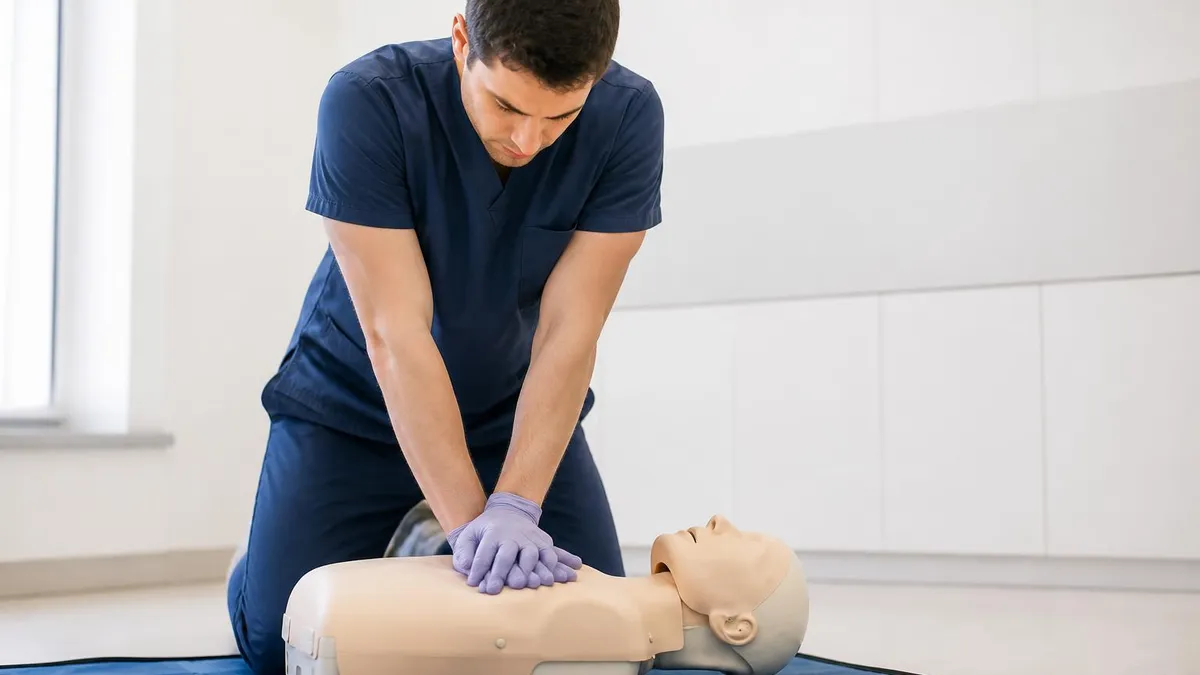
The American Heart Association's Basic Life Support exam is the most widely recognized pathway for obtaining this credential in the United States. The AHA BLS Provider course combines a written knowledge assessment with a hands-on skills evaluation. The written portion contains 25 multiple-choice questions drawn from the BLS Provider Manual, and candidates must answer at least 21 correctly — an 84% threshold — to pass. The skills evaluation requires demonstrating proper compression depth, rate, and recoil on a manikin, in addition to correct AED operation and two-person CPR technique.
The AHA Basic Life Support exam is offered in two primary formats: an instructor-led classroom course and a blended-learning option called HeartCode BLS, which pairs an online cognitive component with a brief hands-on skills session. For the HeartCode version, the written assessment is built into the online module and must be completed before the skills session.
Both formats result in the same two-year BLS provider card accepted at virtually every hospital and clinical employer in the country. Candidates who need to fit training around a clinical schedule often prefer HeartCode because the online portion can be completed at any time of day.
To help learners understand how the exam questions are structured, resources like the basic life support exam a answers 25 questions guide break down the most commonly tested concepts with detailed rationale for each correct answer. Understanding not just the right answer but why it is right — and why the distractors are wrong — is the single most effective preparation strategy.
The AHA deliberately writes distractor options that reflect common misconceptions, such as compressing only 1.5 inches instead of at least 2 inches, or using a compression rate of 80 per minute instead of the required 100 to 120 range.
A critical distinction every candidate should understand is what does BLS stand for versus what does CPR stand for. CPR — cardiopulmonary resuscitation — is a specific emergency procedure involving chest compressions and rescue breaths. BLS — Basic Life Support — is the broader certification framework that encompasses CPR along with AED use, airway management, relief of choking, and multi-rescuer coordination. You can perform CPR without BLS certification, but you cannot hold a BLS provider credential without demonstrating proficiency in CPR as one component of the full skill set.
The course content for basic life support for healthcare providers is deliberately standardized to ensure consistency across training sites. The AHA trains and accredits instructors, publishes training materials under copyright, and audits training centers periodically. This means that whether you take your BLS course at a hospital simulation lab in New York, a community college in Texas, or a private training center in California, the content, the manikin requirements, the written exam format, and the passing standards should be identical. This standardization is precisely why BLS cards are universally accepted across employer types and geographic boundaries.
It is also worth understanding the relationship between BLS and higher-level certifications like ACLS (Advanced Cardiac Life Support) and PALS (Pediatric Advanced Life Support). BLS is a prerequisite for both ACLS and PALS, meaning you must hold a current BLS card before enrolling in either advanced course. Physicians, registered nurses, respiratory therapists, and paramedics are among the providers who typically hold all three credentials simultaneously. Renewing BLS on schedule every two years is therefore essential not just for BLS compliance but for maintaining eligibility to recertify at the advanced level as well.
AHA Basic Life Support Exam vs. American Red Cross Basic Life Support
The American Heart Association BLS Provider course is the most widely recognized Basic Life Support program for healthcare professionals in the United States. It covers high-quality CPR for adults, children, and infants, AED use, relief of choking, and two-rescuer technique. The written exam contains 25 multiple-choice questions with an 84% passing threshold, and the skills session requires demonstrated proficiency on a CPR manikin with real-time feedback device.
AHA BLS cards are valid for two years and are accepted at virtually every hospital, outpatient clinic, and employer that requires BLS certification as a condition of employment or clinical rotation. The HeartCode BLS blended-learning format allows the online cognitive component to be completed on a personal schedule, followed by a brief in-person skills check. Many healthcare employers partner directly with AHA-authorized training centers, making scheduling straightforward for staff during orientation or annual recertification cycles.

BLS Certification: Benefits and Challenges for Healthcare Providers
- +Universally accepted credential at hospitals, clinics, and clinical training programs
- +Builds genuine life-saving skills that apply immediately in any emergency setting
- +Prerequisite for ACLS and PALS, enabling career advancement into critical care roles
- +Course can be completed in a single day, minimizing time away from clinical duties
- +Blended-learning HeartCode format allows flexible self-paced online preparation
- +Employers often cover course fees as part of onboarding or continuing education benefits
- −Card expires every two years, requiring ongoing renewal commitment and scheduling
- −Written exam requires specific memorization of AHA guideline numbers and terminology
- −Skills session requires in-person attendance even in blended-learning formats
- −Some employers specify AHA over Red Cross or vice versa, limiting provider choice
- −Online-only certifications without a skills component are not accepted by most employers
- −Course availability can be limited in rural areas, creating scheduling challenges for some providers
BLS Exam Prep Checklist: 10 Steps Before Test Day
- ✓Review the current AHA BLS Provider Manual, ensuring the edition matches your course date.
- ✓Memorize adult compression rate: 100 to 120 compressions per minute — not slower, not faster.
- ✓Memorize adult compression depth: at least 2 inches, no more than 2.4 inches for adults.
- ✓Know the single-rescuer compression-to-ventilation ratio: 30 compressions to 2 breaths for all ages.
- ✓Memorize the two-rescuer pediatric ratio: 15 compressions to 2 breaths for children and infants.
- ✓Practice AED operation steps: power on, attach pads, analyze rhythm, clear and shock if advised.
- ✓Review infant CPR: two-finger compression technique, depth of 1.5 inches, same 100–120 rate.
- ✓Study the chain of survival steps for both in-hospital and out-of-hospital cardiac arrest scenarios.
- ✓Complete at least two full practice exams under timed conditions before your scheduled test date.
- ✓Practice bag-mask ventilation technique including mask seal, head-tilt chin-lift, and jaw thrust.

The Number the Exam Tests Most: 100–120
The AHA's target compression rate of 100 to 120 compressions per minute appears in multiple BLS written exam questions. Many candidates confuse this with the older guideline of 'at least 100.' The current standard has both a floor (100) and a ceiling (120) — compressions faster than 120 per minute reduce depth and quality. Memorizing the complete range, not just the minimum, is essential for answering rate-related questions correctly on exam day.
The basic life support renewal class is an important topic for anyone whose BLS card is approaching its two-year expiration date. Many providers make the mistake of waiting until the card has already expired before scheduling renewal, which can create a gap in certification status that triggers employment compliance issues.
Most hospitals require active — not lapsed — BLS credentials, and a card that expired even one day before your scheduled renewal class technically leaves you out of compliance during that gap. The safest approach is to schedule your basic life support renewal class four to six weeks before your current card expires.
The AHA offers a dedicated BLS renewal pathway called the BLS Renewal Course, which is shorter than the initial provider course but covers the same key skills. Participants who completed the full BLS Provider course previously can demonstrate retained competency more quickly, making renewal sessions typically 90 minutes to two hours versus the three to four hours of initial certification. The HeartCode BLS blended-learning format is also available for renewal, with the online module covering updated guideline content and the in-person skills session confirming hands-on proficiency.
One common question candidates ask during renewal preparation is whether the written exam for renewal differs from the initial exam. The format is the same — 25 multiple-choice questions, 84% passing threshold — but the specific questions may reflect updated guidelines if the AHA has issued new resuscitation science recommendations since your last certification. This is why reviewing the current edition of the BLS Provider Manual before renewal is as important as reviewing before initial certification. Do not assume that answers you memorized two years ago are still current.
For candidates who completed initial BLS training through the American Red Cross, renewal is available through the Red Cross as well. The red cross basic life support course renewal follows a similar structure: a written knowledge assessment, a skills review, and issuance of a new two-year card upon successful completion. As with the AHA renewal, checking that your employer accepts the issuing organization before enrolling will prevent any post-renewal acceptance issues. Most major healthcare employers accept both AHA and Red Cross BLS credentials interchangeably, but smaller clinical sites or specialty practices occasionally have a stated preference.
One factor that sometimes catches providers off-guard during renewal is the inclusion of new content domains added since their last certification cycle. For example, the 2020 AHA guidelines introduced updates around opioid-associated emergencies, including new guidance on naloxone administration and modified resuscitation priorities for opioid overdose situations. Providers who certified before 2020 may encounter questions on these topics for the first time during renewal. Spending an extra thirty minutes reviewing the updated sections of the BLS Provider Manual will pay dividends in exam confidence.
The financial aspect of BLS renewal is worth planning for as well. AHA-authorized training centers typically charge between $40 and $80 for a renewal session, though employer-sponsored training is available at many healthcare organizations. Independent contractors, travel nurses, and per-diem staff who cannot access employer-subsidized training should budget for renewal costs as a recurring professional expense. Some AHA training centers offer volume discounts for groups, which can be useful for departments coordinating mass renewal sessions before a joint commission survey or contract renewal deadline.
Tracking your own expiration date rather than relying on employer reminders is good professional practice. The AHA does not send renewal reminders to individual providers; it is the provider's responsibility to maintain an active credential.
Adding a recurring calendar reminder six weeks before your expiration date, and keeping a digital copy of your current BLS card in an accessible location, ensures that you never face a last-minute scramble to find an available course. Proactive renewal is also an opportunity to refresh skills that may have grown less sharp during the two years since initial certification, making the exercise professionally valuable beyond mere compliance.
Most hospitals and clinical employers require an active BLS credential — a card that expired yesterday is non-compliant today. Schedule your basic life support renewal class at least four to six weeks before your expiration date to avoid any compliance gap. Some facilities will remove providers from the schedule until a current card is on file, which can mean lost shifts and income while you wait for the next available renewal class.
Passing the BLS written exam on the first attempt comes down to targeted preparation, not simply reading through the provider manual once. The AHA designs the exam to test precise recall of guideline numbers, sequences, and terminology, not general concepts. A candidate who understands the spirit of high-quality CPR but cannot recall whether the correct compression depth is 'at least 2 inches' or 'at least 2.5 inches' will miss that question, and in a 25-question exam, every question carries significant weight toward the 84% passing threshold. Precision matters more here than in most knowledge assessments.
The single most effective preparation strategy beyond reading the manual is working through timed practice questions. Timed practice does two things simultaneously: it reinforces content recall through retrieval practice, which research consistently shows to be more effective than re-reading, and it builds familiarity with the specific phrasing and distractor patterns the AHA uses. Many wrong answers on BLS exams are almost right — they use the correct concept but the wrong specific number, or the right number but the wrong patient age group. Practice questions expose these near-miss traps before exam day rather than during it.
Team dynamics is a content area that many candidates underestimate when preparing for the BLS written exam. The AHA dedicates a meaningful portion of the exam to concepts like closed-loop communication, clear role assignment, and knowing when to take or relinquish the team leader role. Questions in this domain often present a scenario — for example, a resuscitation in progress where a new provider arrives — and ask which communication technique the arriving provider should use. Understanding the specific terminology the AHA uses, such as 'closed-loop communication' and 'constructive intervention,' is necessary for answering these questions correctly.
Special situations are another commonly missed content area, particularly for candidates who focus exclusively on the high-quality CPR domain during preparation. The BLS curriculum covers resuscitation modifications for drowning victims, pregnant patients, patients with implanted devices, and opioid overdose scenarios. Each situation has specific procedural variations — for example, a drowning victim receives ventilations as the first intervention rather than compressions, reversing the standard sequence. Knowing these exception scenarios with the same precision as the standard sequence is essential for full exam coverage.
Infant and pediatric CPR deserves dedicated study time because the parameters differ meaningfully from adult CPR. Infants require two-finger compressions to a depth of approximately 1.5 inches, while children (defined as one year of age to puberty) require one or two hands to a depth of at least 2 inches, the same as adults but with proportionally less force.
The two-rescuer ratio changes to 15:2 for both children and infants, compared to the 30:2 adult ratio. These distinctions appear on virtually every BLS written exam, and conflating adult and pediatric parameters is one of the most common error patterns seen among first-attempt failures.
AED operation questions are generally straightforward because the steps follow a clear universal sequence: power on, attach pads, analyze rhythm, clear bystanders, deliver shock if advised, and immediately resume CPR for two minutes before allowing the AED to re-analyze. Where candidates sometimes err is on questions about specific AED pad placement — for children under eight or under 25 kilograms, pediatric pads or a pediatric dose attenuator should be used when available. If pediatric pads are unavailable, adult pads placed on the anterior and posterior chest walls are acceptable. Knowing this exception prevents missed questions on pediatric AED use.
Finally, managing test anxiety is a practical consideration that candidates often overlook. The BLS written exam is not designed to be a high-stress barrier; the 84% passing threshold is achievable for any prepared candidate, and most authorized training centers allow one free retest attempt within a defined window if initial results fall short.
Approaching the exam with calm confidence, reading each question fully before selecting an answer, and flagging uncertain questions for review before submitting are habits that consistently improve performance. If you have completed a full study cycle covering all content domains and worked through multiple practice exams, you are ready. Trust your preparation.
Practical preparation strategies make a measurable difference in BLS exam outcomes, and the best ones are grounded in how memory and skill retention actually work. Spaced repetition — reviewing material across multiple shorter sessions spread over several days rather than cramming the night before — produces stronger long-term retention of the specific numbers and sequences the exam tests. If you have five days before your BLS exam, twenty to thirty minutes of focused review per day will outperform a single three-hour marathon session the night before, both for written exam performance and for skills retention during the practical evaluation.
Active recall is the most powerful study technique available for BLS preparation. Rather than re-reading the same passages in the BLS Provider Manual, close the manual and attempt to write out — from memory — the compression rate, depth, ratio, and special scenario modifications for each patient category. Then check your answers against the manual. The act of retrieving information, even when you get it wrong, creates stronger memory traces than passive re-reading. Flashcards, whether physical or digital, are an efficient implementation of this approach and are particularly useful for memorizing the numerical parameters that dominate BLS exam questions.
Group study with colleagues who are preparing for the same exam can reinforce both written exam and skills readiness. Practicing two-rescuer CPR with a partner — even informally, without a manikin — ingrains the communication patterns and hand-off sequences the AHA tests in the team dynamics domain. Talking through scenarios aloud, such as walking step-by-step through a witnessed cardiac arrest response from recognition to AED shock delivery, activates the same cognitive pathways that exam questions require, while simultaneously building the muscle memory that the skills evaluation demands.
Time management during the written exam itself is worth brief consideration. With 25 questions and approximately 30 minutes allotted, you have more than a minute per question — ample time to read each stem and all four answer choices carefully without rushing.
Resist the habit of selecting the first answer that seems correct without reading all options, because the AHA frequently places a better answer later in the list. Reading all four choices before selecting ensures you are choosing the most accurate option rather than merely an acceptable one, which matters at the 84% threshold where three missed questions is the difference between passing and failing.
Post-exam, regardless of outcome, is an ideal time to consolidate learning. If you passed, reviewing the questions you were uncertain about reinforces the material for long-term recall, which will serve you well when skills are needed in a real emergency rather than just on a certification exam.
If you did not pass on the first attempt, most AHA training centers provide a brief debrief identifying the content domains where errors occurred, allowing you to target your review precisely before the retest. The retest opportunity exists precisely because the goal of BLS certification is producing competent providers, not creating pass-fail gatekeeping barriers.
Beyond the exam, integrating BLS knowledge into daily clinical practice keeps skills sharp between certification cycles. High-quality CPR is a perishable skill — studies show that compression quality degrades measurably within months without reinforcement. Many units and departments schedule quarterly or biannual manikin practice drills specifically to counteract this skill decay. Participating actively in these drills, rather than treating them as box-checking exercises, is what ensures that when you need to apply BLS in a real cardiac arrest, your response is automatic and accurate rather than hesitant and uncertain.
The investment you make in thorough BLS preparation pays dividends that extend far beyond passing a 25-question exam. Every healthcare provider who enters a clinical environment carries an implicit promise to every patient in that environment: that if a cardiac arrest occurs, this provider will respond effectively. BLS certification is the formal acknowledgment of that readiness. Taking the exam seriously, preparing thoroughly, and maintaining an active credential throughout your career is one of the most tangible ways any healthcare professional can honor that commitment to the patients they serve.
BLS Questions and Answers
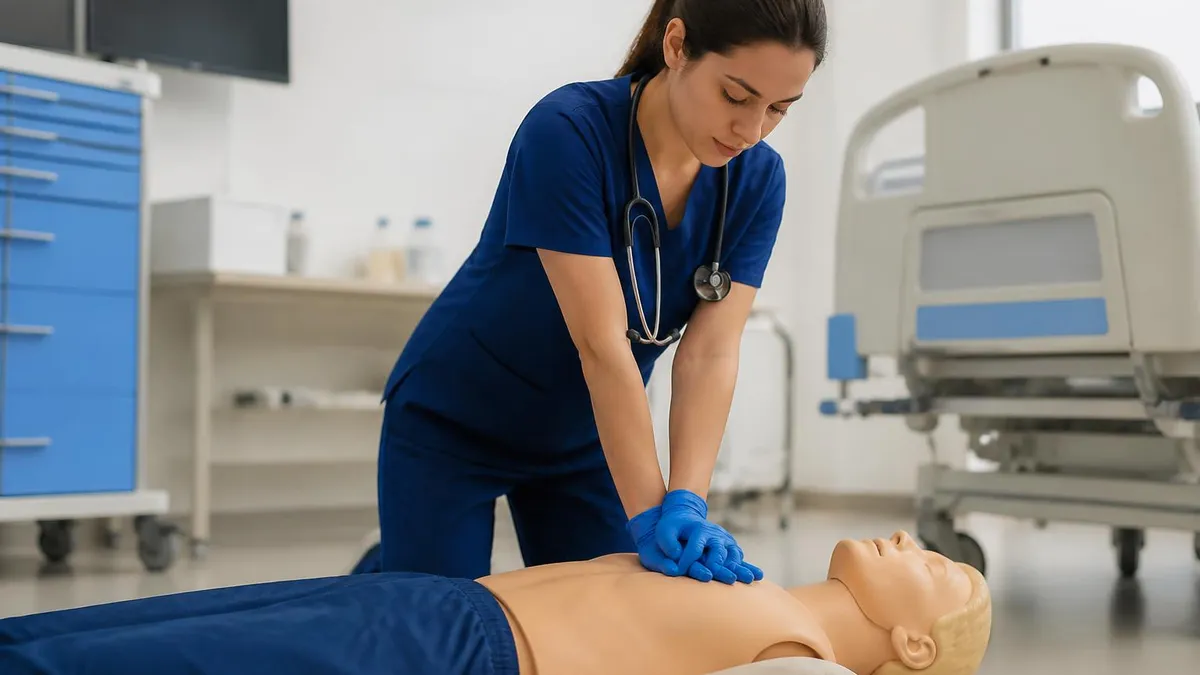
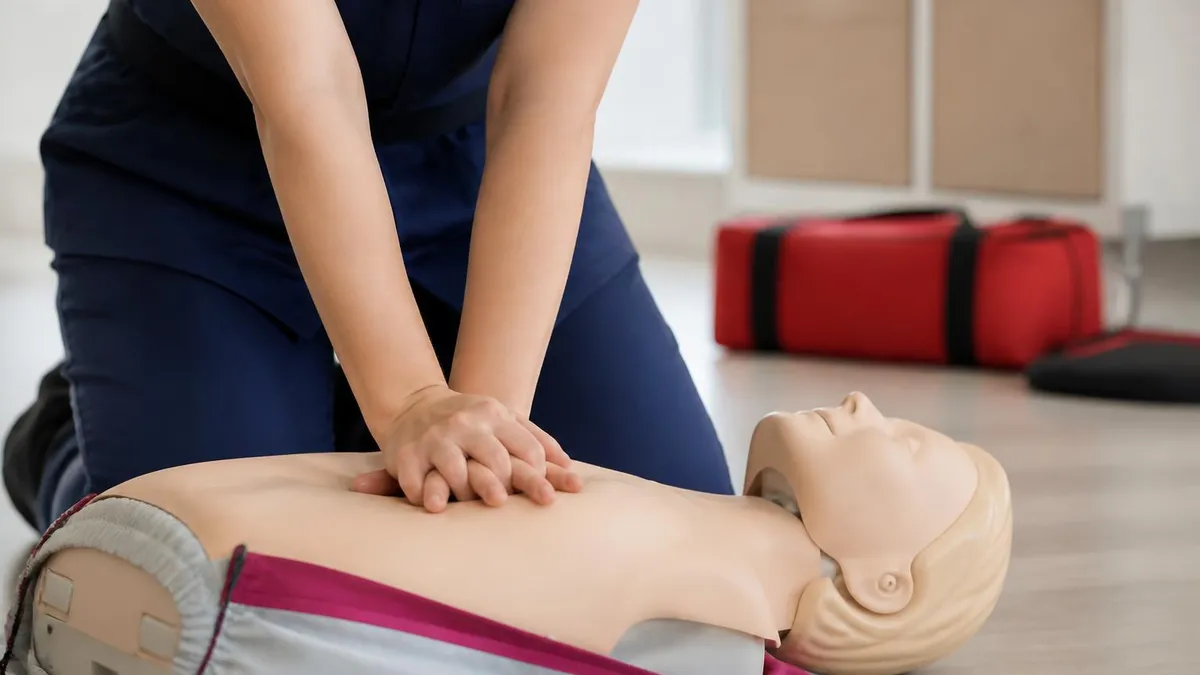
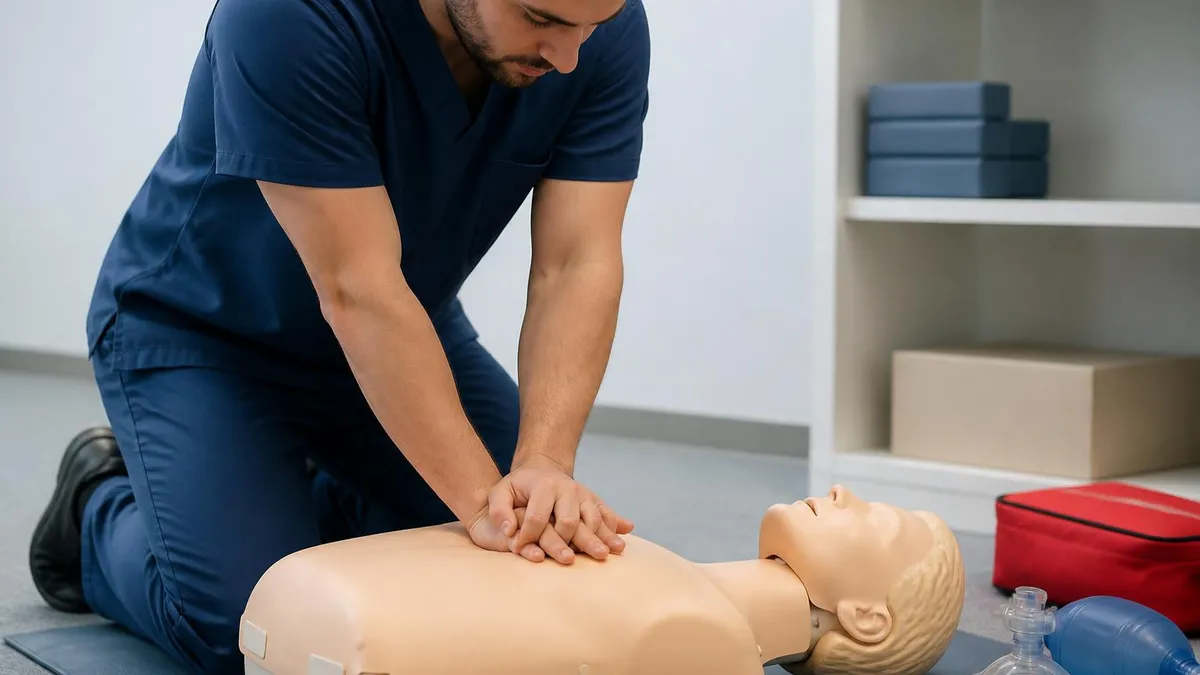
About the Author

Registered Nurse & Healthcare Educator
Johns Hopkins University School of NursingDr. Sarah Mitchell is a board-certified registered nurse with over 15 years of clinical and academic experience. She completed her PhD in Nursing Science at Johns Hopkins University and has taught NCLEX preparation and clinical skills courses for nursing students across the United States. Her research focuses on evidence-based exam preparation strategies for healthcare certification candidates.
Join the Discussion
Connect with other students preparing for this exam. Share tips, ask questions, and get advice from people who have been there.
View discussion (6 replies)