
Bartending Job: Everything You Need to Know to Land, Grow, and Succeed in a Bartending Career
Everything about landing a bartending job in 2026 September — salary, certifications, tips & training. Start your bar career right. 🎯

Landing a bartending job is one of the most exciting career moves you can make in the hospitality industry. Whether you're drawn by the creative energy of crafting cocktails, the social atmosphere behind the bar, or the impressive earning potential that comes from tips and base pay combined, bartending offers a lifestyle and income few other entry-level positions can match. The U.S. Bureau of Labor Statistics estimates over 650,000 bartenders are currently employed across the country, and that number continues to climb as the food and beverage industry expands year after year.
The path to your first bartending job is more structured than most people realize. Gone are the days when you could simply walk into a bar and talk your way onto the schedule. Today, hiring managers at upscale cocktail bars, hotel lounges, and high-volume nightclubs look for candidates with verifiable skills, responsible alcohol service certifications, and a demonstrable knowledge of classic and contemporary drinks. Understanding what employers want before you apply dramatically increases your odds of getting hired and getting those lucrative shifts.
Bartending is a skill-based trade that rewards those who put in the preparation. The most successful bartenders don't just know how to pour a beer — they understand the science of balance in cocktails, the legal responsibilities of serving alcohol, inventory management, cost control, and how to read a room full of customers. These competencies separate weekend hobbyists from true professionals who earn $60,000 or more annually in top markets like New York, Los Angeles, Las Vegas, and Miami.
One of the most common misconceptions about bartending is that experience is the only thing that matters. In reality, certifications have become an increasingly important credential, especially for candidates without years of behind-the-bar time. A responsible beverage service (RBS) certification, TIPS certification, or state-required alcohol server training course signals to employers that you take the role seriously and understand the legal framework that governs alcohol service. In many states, these certifications are legally required before you can serve a single drink.
The financial upside of a bartending career is significant and often underestimated. The national median hourly wage for bartenders hovers around $15–$18 base pay, but tips can easily double or triple that number on a busy Friday or Saturday night. Experienced bartenders at high-end establishments regularly report total compensation exceeding $80,000 annually, with some in premium markets earning over $100,000 when you factor in event bartending, private parties, and catering gigs on top of their regular shifts.
This comprehensive guide covers every dimension of building a successful bartending career — from understanding what employers actually look for to mastering the certifications that open the most profitable doors. You'll learn about the day-to-day realities of the job, how to position yourself competitively in the job market, and how to use practice tests and structured study to pass the certification exams that many states and employers now require. Whether you're just starting out or looking to level up from a local dive bar to a high-end venue, this article gives you the roadmap you need.
By the time you finish reading, you'll have a clear picture of the bartending landscape in 2026 — what skills to develop, which certifications matter most, what to expect from the hiring process, and how to build a long-term career behind the bar that pays well, stays interesting, and grows with you over time. The bar industry rewards people who invest in their craft, and this guide is your starting point for that investment.
Bartending Jobs by the Numbers

How to Land Your First Bartending Job: Step-by-Step Path
Get Your Alcohol Service Certification
Build Foundational Drink Knowledge
Complete a Bartending Course or Training Program
Start as a Barback or Server
Apply Strategically and Nail the Interview
Keep Learning and Building Your Network
Certifications have become the gold standard differentiator in the modern bartending job market. When two candidates apply for the same position and one holds a current responsible beverage service certification while the other doesn't, employers will nearly always favor the certified applicant — even if the uncertified candidate has slightly more experience. This is partly practical (many states impose fines on establishments that employ uncertified servers) and partly a signal of professional seriousness that resonates with managers who are responsible for their venue's liquor license.
The most widely recognized alcohol server certifications in the United States include TIPS (Training for Intervention ProcedureS), ServSafe Alcohol, TAM (Techniques of Alcohol Management), and state-specific programs like California's RBS certification or Texas's TABC certification. Each program covers similar core content: identifying signs of intoxication, understanding the physiological effects of alcohol, recognizing fake IDs, refusing service safely, and understanding the legal liability that falls on servers and establishments. Most programs can be completed in a single day, and many are fully online.
Beyond basic alcohol server training, serious bartending professionals often pursue specialized certifications that expand their earning potential and open doors to premium venues. The Wine & Spirit Education Trust (WSET) offers a respected global certification pathway that ranges from Level 1 (basic awareness) to Level 4 (Diploma, equivalent to a master's level understanding of wine and spirits). Many high-end hotel bars and upscale cocktail lounges actively seek bartenders with WSET Level 2 or 3 credentials because it signals the depth of product knowledge their clientele expects.
For those passionate about craft beer, the Cicerone Certification Program is the beer world's equivalent of a sommelier credential. Becoming a Certified Beer Server or advancing to Certified Cicerone demonstrates mastery of beer styles, serving temperatures, glassware, pairing, and draft system maintenance. Craft beer bars, brewpubs, and gastropubs often list Cicerone certification as a preferred or even required qualification for head bartender and bar manager roles, making it a smart investment for anyone targeting that segment of the market.
Bar inventory and cost control knowledge is another area where certification-backed competency pays dividends in the job market. Employers — especially at higher-volume establishments — need bartenders who understand pour costs, variance tracking, waste reduction, and stock management. The ability to accurately count inventory, identify discrepancies, and contribute to reducing shrinkage directly impacts a bar's profitability. Bartenders who demonstrate this financial literacy during the interview process stand out sharply from candidates who only know how to make drinks.
Liquor law and regulation is yet another area where certified knowledge matters both professionally and legally. Every bartender needs to understand their state's specific rules around hours of sale, age verification requirements, liability under dram shop laws, and the consequences of over-service. State alcohol control boards can impose fines, license suspensions, or permanent revocations on establishments whose employees violate these regulations — which means employers desperately want to hire bartenders who already understand the legal landscape and won't create liability exposure.
Practice tests are one of the most effective tools for preparing to pass certification exams on the first attempt. Reviewing realistic exam questions covering bar law, cost control, and responsible service helps you identify knowledge gaps before the real test, builds test-taking confidence, and reinforces the terminology that certification exams consistently test. Spending even two to three hours with practice questions can meaningfully improve your score and reduce the anxiety of sitting for a proctored certification exam for the first time.
Bartending Job Specializations: Which Path Is Right for You?
Craft cocktail bars and upscale lounges represent the prestige tier of bartending employment, offering higher base wages, better tips from affluent clientele, and the creative freedom to develop original cocktail recipes. These venues typically serve fewer customers per shift but expect a much deeper level of product knowledge — house-made syrups, rare spirits, classic techniques like fat-washing and clarification, and theatrical presentation are all standard expectations at top-tier cocktail bars in major cities.
Breaking into this segment usually requires a combination of formal training, a strong portfolio of drink knowledge, and connections within the craft cocktail community. Many successful high-end bartenders spent years working their way up from casual dining or sports bar environments before making the jump. Competitions like the Diageo World Class or Bacardí Legacy are excellent visibility platforms for ambitious bartenders trying to establish themselves in the premium cocktail space — placing in regional rounds can open doors to coveted positions very quickly.

Bartending Career: Pros and Cons to Consider
- +High earning potential through tips — top bartenders earn $80,000–$100,000+ annually
- +Flexible scheduling including nights, weekends, and part-time options
- +Immediate cash income from tips at the end of every shift
- +Creative outlet through cocktail development and recipe innovation
- +Strong social environment with opportunity to build lasting customer relationships
- +Multiple career advancement pathways including bar manager, beverage director, and consultant roles
- −Late night and weekend shifts that conflict with traditional social schedules
- −Physical demands including prolonged standing, heavy lifting, and fast-paced movement
- −Variable income that fluctuates with seasons, weather, and local events
- −Exposure to intoxicated or difficult customers requiring de-escalation skills
- −Legal liability exposure under dram shop laws if alcohol is over-served
- −Competitive job market in desirable markets where top venues have long wait lists
Pros and Cons at a Glance
| Pros | Cons |
|---|---|
| Flexible scheduling including nights, weekends, and part-time options | Late night and weekend shifts that conflict with traditional social schedules |
| Immediate cash income from tips at the end of every shift | Physical demands including prolonged standing, heavy lifting, and fast-paced movement |
| Creative outlet through cocktail development and recipe innovation | Variable income that fluctuates with seasons, weather, and local events |
| Strong social environment with opportunity to build lasting customer relationships | Exposure to intoxicated or difficult customers requiring de-escalation skills |
| Multiple career advancement pathways including bar manager, beverage director, and consultant roles | Legal liability exposure under dram shop laws if alcohol is over-served |
Bartending Job Readiness Checklist: Are You Ready to Apply?
- ✓Complete a state-approved alcohol server training certification (TIPS, ServSafe, TAM, or state-specific program).
- ✓Memorize the recipes and glassware for at least 30 classic cocktails by heart.
- ✓Practice free-pour technique until you can pour a consistent 1.5 oz shot without measuring.
- ✓Study your target state's liquor laws including legal service hours and dram shop liability rules.
- ✓Understand basic bar math including calculating pour cost percentage and pricing a drink properly.
- ✓Build a résumé that highlights customer service experience, certifications, and any bar-adjacent roles.
- ✓Prepare two or three specific stories for common bartending interview questions about difficult customers.
- ✓Research the venue where you're applying — know their cocktail menu, their vibe, and their clientele.
- ✓Complete at least one practice inventory count and reconciliation exercise before applying to management-track roles.
- ✓Take bartending practice tests covering bar law and cost control to identify and fill knowledge gaps before certification exams.
The 'Audition Shift' Is Your Real Interview
Most serious bartending employers will offer — or require — a working audition shift before making a hiring decision. Treat this exactly like your most important professional performance: arrive early, dress appropriately, move with purpose behind the bar, ask smart questions, and demonstrate the kind of hustle and situational awareness that signals you'll thrive during a busy Friday night rush. Your audition shift earns or loses you the job far more than any résumé bullet point ever will.
Understanding the full earnings picture of a bartending job requires looking beyond the posted hourly wage. Base pay for bartenders varies widely by market, establishment type, and experience level, typically ranging from $10 to $20 per hour.
But tips — which in the United States are legally reported as taxable income and average 15–25% of a customer's total bill — are where the real money lives. At a mid-volume bar where a bartender serves 80 customers per night at an average tab of $30, even a conservative 18% tip rate generates $432 in gratuity for a single shift. That's before base pay.
Geographic location is perhaps the single most powerful factor influencing bartending earnings. Bartenders working in Las Vegas, New York City, Miami Beach, and San Francisco consistently report the highest total compensation, with many experienced professionals in these markets earning $75,000–$120,000 annually when you combine base wages, tips, and additional income from private events and catering. By contrast, bartenders in smaller Midwestern or Southern markets may earn $35,000–$50,000 total — still competitive compensation for many communities, but a significant difference when planning career moves.
The type of establishment you work at influences your income ceiling almost as much as your location. Fine dining restaurants and upscale hotel bars generate higher check averages and attract clientele who tip at higher percentage rates, but they serve fewer covers per shift. Nightclubs and high-volume bars serve hundreds of customers per shift, with smaller individual tabs but enough volume to generate massive tip pools. Wedding and event bartending sits in a third category — hourly rates of $25–$50 are common, with guaranteed pay regardless of customer tipping behavior making it an attractive supplement to regular employment.
Shift selection is a financial decision that experienced bartenders treat with the same seriousness as portfolio allocation. Friday and Saturday night shifts generate dramatically higher tips than weekday day shifts at almost every venue. Holidays — New Year's Eve, Valentine's Day, St. Patrick's Day, and the Fourth of July — are peak earning events where a single night can generate $500–$1,500 in tips. Experienced bartenders compete fiercely for these shifts, and seniority, manager relationships, and demonstrated performance all factor into who gets access to the highest-earning schedule spots.
Smart bartenders also supplement their primary income through side channels that leverage their bartending skills. Private event bartending — handling cocktail hours, wedding receptions, corporate parties, and birthday celebrations — can generate $300–$800 for a four-to-six hour event. Building a private client list requires networking and marketing effort upfront, but established event bartenders can add $20,000–$40,000 per year on top of their regular bar income with a modest private events calendar. Some bartenders eventually transition into full-time event bartending as their primary income source.
Tax management is a topic that catches many bartenders off guard, especially when they're new to the industry. Tips are taxable income in the United States, and the IRS requires bartenders to report all gratuities received. Establishments are also required to allocate tip income to employees when actual reported tips fall below 8% of gross food and beverage sales. Working with a tax professional who understands the hospitality industry from day one can prevent significant tax surprises at filing time and help identify legitimate business deductions like professional development expenses, certification costs, and required work attire.
Retirement planning is another financial consideration that many young bartenders defer too long. The absence of employer-sponsored 401(k) plans at many bar and restaurant jobs means the responsibility for retirement saving falls entirely on the individual. Opening a Roth IRA and contributing consistently — even $200–$400 per month during high-earning shifts — can compound dramatically over a 25–30 year career. Financial advisors who specialize in tip income earners can help bartenders structure savings plans that account for the variable and cash-heavy nature of hospitality earnings while building meaningful long-term financial security.

In most U.S. states, bartenders and their employers can be held legally liable under dram shop laws if an over-served customer causes harm — including drunk driving accidents and assault. Fines, license suspensions, and civil lawsuits can result. Always complete your state's required alcohol server training before your first shift, understand your establishment's cut-off procedures, and never allow customer pressure to override your professional judgment about when to stop serving.
Advancing beyond your first bartending job requires a deliberate career development strategy. The bartenders who are still grinding the same neighborhood bar at age 40 for the same wages they earned at 25 are almost always the ones who never invested in expanding their skill set, credentials, or professional network. By contrast, those who consistently pursue new knowledge — spirits education, management training, cocktail competition experience — create the conditions for dramatically better opportunities to find them over the course of a career.
Bar management is the most common first step in advancement for ambitious bartenders. A head bartender or bar lead role typically comes with a modest pay increase over line bartending but adds scheduling responsibility, inventory oversight, staff training duties, and the opportunity to develop and cost out new cocktail menus. This experience is precisely what hiring managers for bar manager and beverage director roles look for — demonstrated ability to manage both the product and the people side of a bar operation simultaneously, not just mix drinks well under pressure.
Beverage director and food and beverage director roles represent the upper tier of bar industry advancement and can come with salaries ranging from $65,000 to $150,000 or more at premium hospitality groups.
These positions require deep product knowledge across multiple beverage categories (spirits, wine, beer, non-alcoholic), financial acumen to manage department budgets and beverage costs, leadership ability to hire and develop bar teams, and vendor relationship management skills to negotiate purchasing contracts and secure allocation of rare or allocated products. Pursuing formal wine and spirits education through programs like WSET or the Court of Master Sommeliers is almost universally expected at this level.
Consulting is another lucrative advancement path for experienced bartenders with strong portfolios. Bar consultants help new establishments design their cocktail programs, train opening bar teams, develop signature menus, and set up inventory and cost control systems. Day rates for established bar consultants range from $500 to $2,500 depending on market and reputation, and major projects — like helping open a flagship hotel bar or designing the beverage program for a restaurant group with multiple locations — can generate $15,000–$50,000 in fees. Building the reputation required to command those rates typically takes 8–15 years of progressive bartending experience.
Brand ambassador roles represent a glamorous but competitive career path for bartenders with extensive spirits knowledge and strong public speaking skills. Spirits brands employ brand ambassadors to conduct trade education, host consumer events, manage relationships with key accounts, and represent the brand at festivals and competitions. These roles typically pay $60,000–$90,000 in base salary plus expenses, require significant travel, and are almost exclusively filled by candidates with deep industry networks and a proven track record of influencing beverage purchasing decisions at the trade level.
Teaching and education open yet another pathway for experienced bartenders who enjoy sharing knowledge. Bartending school instructors, hospitality program faculty at community colleges, and private cocktail class facilitators can monetize their expertise in ways that complement or eventually replace traditional bar employment. Online content creation — cocktail YouTube channels, Instagram accounts, TikTok series — has also emerged as a legitimate income stream for charismatic bartenders willing to invest in production quality and consistent publishing schedules, with some creators generating $50,000–$200,000 annually through brand partnerships and platform monetization.
Whatever advancement path you choose, the foundation is always the same: master your craft at the bar, build genuine relationships with colleagues and customers, pursue credentials that validate your expanding knowledge, and show up with the consistency and professionalism that creates a reputation worth hiring. Your bartending job is not just a paycheck — it is the starting point for a career with more upward mobility and creative potential than most outsiders ever imagine when they watch someone pour a drink from across the bar.
Practical preparation is what separates candidates who get hired quickly from those who spend months applying without results. The single most effective thing you can do in the weeks before you start your job search is to get behind a bar — any bar — and practice. Set up a home bar station with a jigger, shaker, strainer, mixing glass, and the bottles you'll actually be using.
Run through classic cocktail recipes until building a Negroni or a Sidecar is as automatic as typing your own name. Speed and muscle memory are only built through repetition, and repetition requires dedicated practice time outside of your regular life.
Researching your target market deeply before you apply is another underrated preparation tactic. Visit the bars you plan to apply to as a customer — ideally more than once. Pay attention to what drinks are selling, how the current bartenders interact with guests, what the pace of service feels like, and what the management style appears to be.
This intelligence shapes how you position yourself in the application and interview process. Showing up to an interview and saying, 'I visited on Thursday and noticed your Old Fashioned was particularly popular — I've been practicing my bourbon spec variations' signals a level of seriousness that generic applicants simply cannot match.
Interview preparation for bartending jobs should include both verbal and physical practice. On the verbal side, prepare concise, specific answers to the most common questions: Why do you want to work here? Describe a time you handled a difficult customer. What would you do if a customer appeared intoxicated but was asking for another drink?
What's your favorite cocktail to make and why? On the physical side, if you know an audition shift is coming, practice your behind-the-bar movement until it feels natural — reaching for tools, building drinks in the correct sequence, maintaining eye contact with imaginary customers while working, and communicating confidently under simulated pressure.
Passing certification exams on the first attempt requires targeted study using resources designed specifically for the test format you'll be taking. General reading about bartending is valuable background knowledge, but it doesn't replicate the multiple-choice question structure, specific terminology, and scenario-based format of certification exams.
Practice tests that mirror the actual exam format help you build familiarity with how questions are phrased, what distractors to watch for, and which topics carry the most weight in the scoring. Spending two to four hours with quality practice questions before sitting for a certification exam is one of the highest-return investments you can make in your bartending preparation.
Time management during certification exams is a skill many candidates overlook until they're sitting in the testing environment with 20 questions left and five minutes on the clock. When practicing with timed exam simulations, deliberately train yourself to move through questions at a consistent pace — roughly 60–90 seconds per question for most standard certification exams.
Flag questions you're uncertain about and return to them after working through the rest of the test. This approach prevents the anxiety spiral that happens when candidates spend too long on hard questions early in the exam and run out of time before reaching questions they would have answered easily.
Building your professional network before you need it is one of the most strategically valuable things a new bartender can do. Join your local chapter of the United States Bartenders' Guild (USBG) if one exists in your area — membership provides access to competitions, education events, industry contacts, and job referrals that are simply not available to bartenders who stay isolated from the professional community.
Follow respected bartenders in your market on social media, attend industry trade shows and spirit brand education events, and introduce yourself to bar managers and beverage directors at establishments you admire. Most bartending jobs are never publicly posted — they're filled through networks and word-of-mouth referrals within the tight-knit hospitality community.
Finally, approach your bartending career as a long game rather than a quick hustle. The bartenders who build the most impressive careers are those who stay curious about their craft, treat every shift as an opportunity to learn something new, take pride in the quality of every drink they make — even on slow Tuesday nights when no one seems to be watching — and invest consistently in the knowledge and relationships that create lasting professional reputations.
The bar industry will reward that commitment with opportunity, income, and a career that stays genuinely interesting for decades. Start your preparation today, and let the journey behind the bar begin.
Bartender Bartender Questions and Answers

Bartender Age Requirements: Complete Certification & Licensing Guide for 2026

Bartending Classes Near Me: How to Find, Compare, and Choose the Right Local Training Program in 2026

How to Become a Bartender by State: Complete Requirements Guide for All 50 States
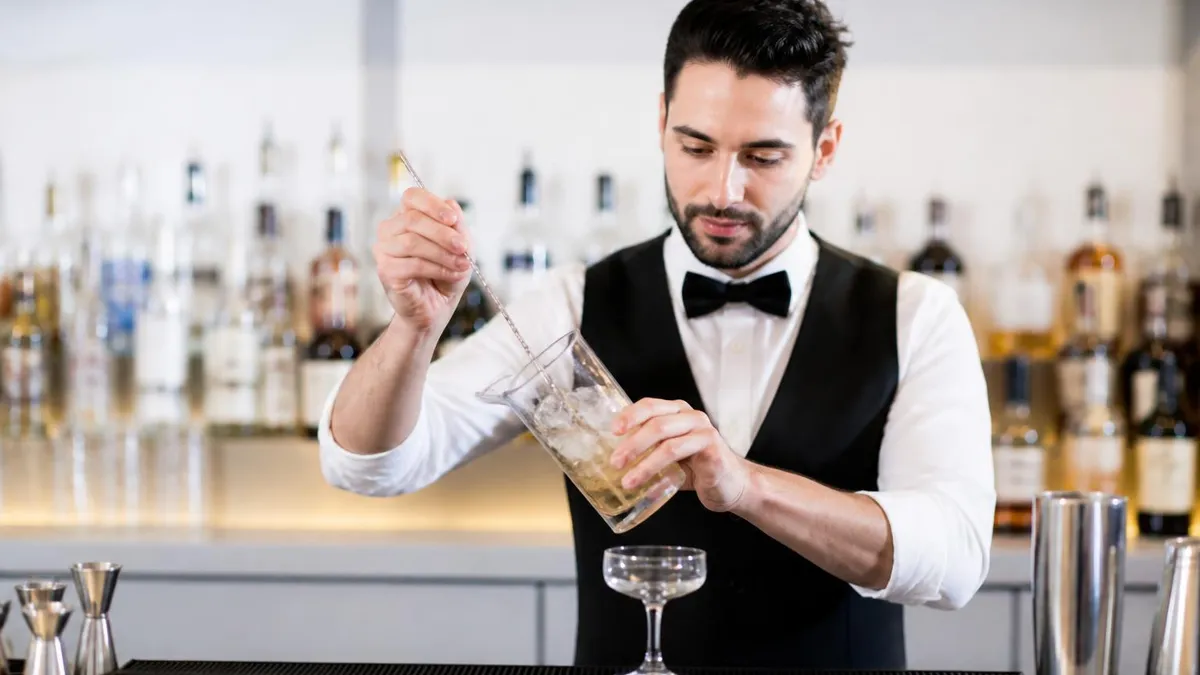
What Does the Term Bruising Mean in Bartending? A Complete Guide to Shaken Cocktail Science

Lady Bartender: A Complete Guide for Women Behind the Bar in 2026
About the Author
Executive Chef & Culinary Arts Certification Educator
Culinary Institute of AmericaChef Marco Bellini is a Certified Executive Chef and graduate of the Culinary Institute of America with over 20 years of professional kitchen experience in Michelin-recognized restaurants. He teaches culinary arts certification, food safety, and hospitality exam preparation, having guided thousands of culinary students through their ServSafe, ProStart, and professional chef certifications.
Join the Discussion
Connect with other students preparing for this exam. Share tips, ask questions, and get advice from people who have been there.
View discussion (7 replies)