
Lady Bartender: A Complete Guide for Women Behind the Bar in 2026 October
Lady bartender guide: how to start, average pay, certifications, safety tips, and proven ways to thrive behind the bar in 2026 October. ✏️
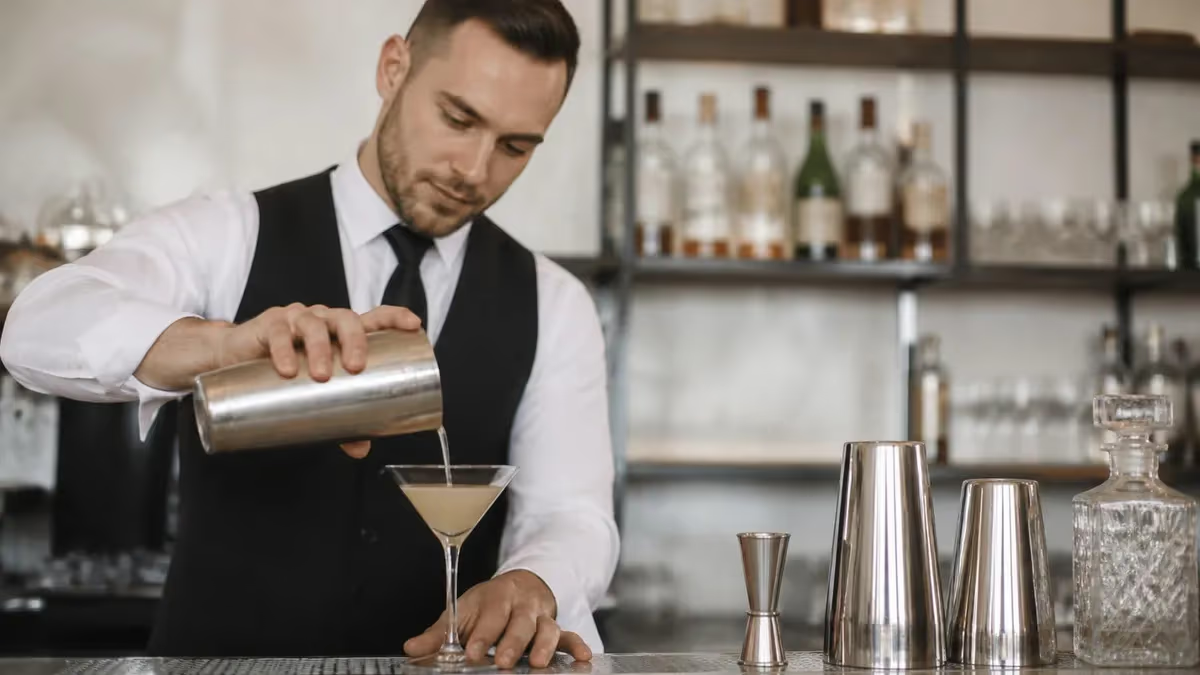
The role of the lady bartender has shifted dramatically over the past two decades, moving from a rare sight in upscale lounges to a dominant presence across craft cocktail bars, nightclubs, hotel lobbies, and neighborhood taverns. Women now make up roughly 56% of bartenders in the United States according to recent labor statistics, and they are increasingly winning national cocktail competitions, running beverage programs, and opening their own bars. This guide breaks down what it actually takes to thrive in this career today.
Whether you are exploring bartending as a side hustle while finishing school, transitioning from serving, or chasing a long-term career as a head bartender or bar manager, the fundamentals matter. You need product knowledge, speed, customer service intuition, and the legal credentials your state requires. You also need to understand the cultural realities of the job, including how to handle late-night crowds, intoxicated patrons, and the occasional uncomfortable interaction with confidence and authority.
This article is written specifically for women who want to enter or grow within the bartending industry. We will cover practical training paths, certification requirements, average earnings, tipping psychology, safety strategies, and the small habits that separate a forgettable bartender from a regular favorite. Every recommendation here is grounded in what hiring managers, beverage directors, and successful bartenders actually look for in 2026.
The bar industry is also one of the few fields where you can genuinely out-earn many salaried office jobs without a four-year degree. A skilled cocktail bartender in a major US metro can clear $80,000 to $120,000 annually once tips are included, and bar managers at busy venues often push past $100,000 in base salary plus bonuses. The path is competitive, but it is wide open for anyone willing to learn the craft, show up consistently, and treat hospitality as a real profession.
We will also address the harder questions head-on, including how to navigate male-dominated kitchens and back-of-house cultures, how to negotiate fair shift assignments, and how to build a reputation that earns you the premium Friday and Saturday night slots. None of this is theoretical. It comes from interviews with female bartenders at Michelin-recognized bars, neighborhood pubs, sports bars, and high-volume nightclubs across the country.
If you want a quick way to test what you already know about bar operations, jurisdiction rules, and responsible service before reading further, try a few free practice questions from our bartender certification library. The questions mirror the kind of material on state-required alcohol-service exams and give you an honest baseline. From there, the rest of this guide will help you build the skills, credentials, and confidence to make bartending a long, lucrative career.
By the end, you should know exactly what credentials your state requires, what to ask in a job interview, how much to expect to earn in your first year, and how to keep yourself safe and respected on every shift. Let's start with the numbers that define the industry today.
Lady Bartenders by the Numbers
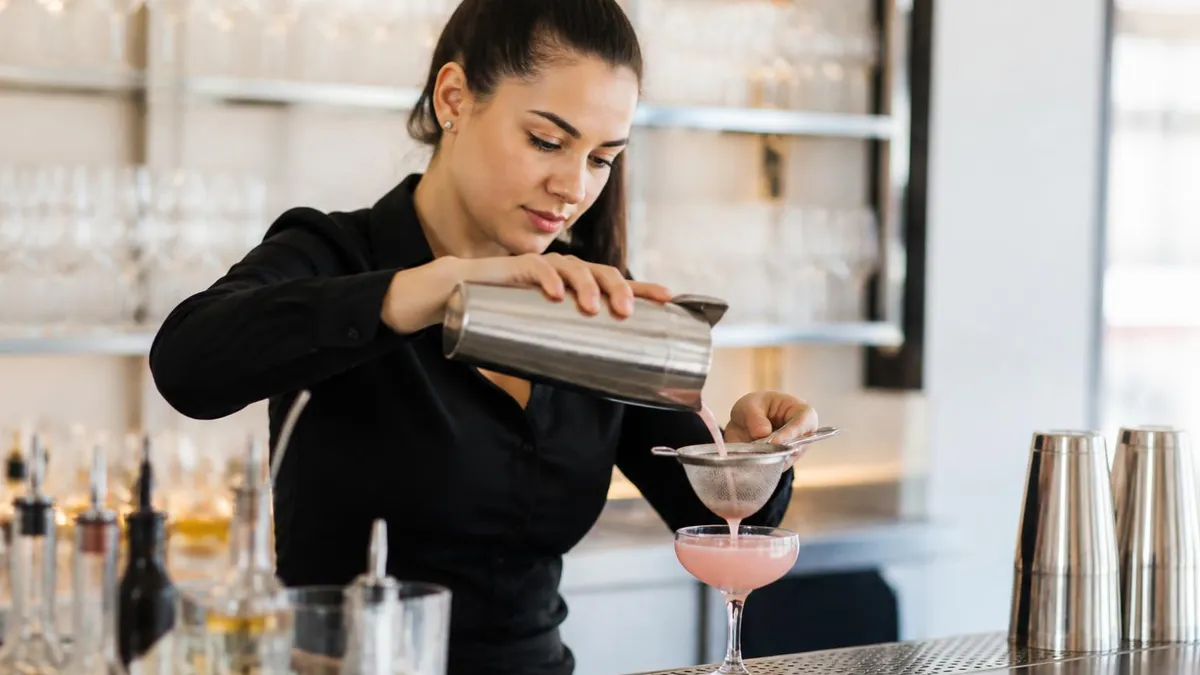
How to Become a Lady Bartender
Most US states require bartenders to be 18 or 21, with the majority setting 21 as the legal minimum for pouring distilled spirits. Confirm your state's rule before applying anywhere.
Programs like TIPS, ServSafe Alcohol, or your state-mandated card teach responsible service, ID checking, and intervention. Most can be completed online in 3-4 hours for $30-$50.
Learn the 50 classic cocktails, master free-pouring counts, understand wine basics, and practice speed exercises. Bartending school can help, but barback work teaches faster.
Almost every successful bartender started by clearing glassware, stocking ice, and watching the rail. Six to twelve months of barback work in a busy venue is the fastest legitimate path.
Target venues that match your energy. A high-volume nightclub demands speed; a craft cocktail bar demands precision. Apply with a resume that names the spirits brands and POS systems you know.
Let's talk about money, because this is where most women undersell themselves when entering the industry. The Bureau of Labor Statistics lists the median bartender wage at around $14.20 per hour before tips, but that number is misleading. In states with a tipped minimum wage, the base pay is intentionally low because tips are expected to push total compensation well past $25 per hour. In strong markets like New York, Los Angeles, Chicago, Miami, Austin, and Denver, experienced lady bartenders routinely report $40 to $65 per hour in total take-home on busy nights.
The variation between venues is enormous. A daytime neighborhood pub might generate $80 to $150 in tips per shift, while a Friday night at a high-volume cocktail bar in a major metro can yield $400 to $700 in cash and credit card tips for a single eight-hour shift. Nightclub bartenders in Las Vegas and Miami sometimes clear $1,000 in a single Saturday during peak season. These are not exaggerated numbers; they are documented in tip-pooling reports and W-2 filings every year.
Tipping psychology favors bartenders who build rapport quickly, remember regulars' drinks, and maintain visible attention even when slammed. Women often have a measurable advantage at building rapport, but only if they balance warmth with professional boundaries. Customers tip best when they feel seen, served quickly, and respected; they tip worst when they feel ignored or when they sense they are being flirted with for tips. The most successful lady bartenders treat hospitality as a craft, not a performance.
If you are evaluating whether a specific venue is worth the commute, ask three questions in your interview. First, what is the average shift sales volume? Second, is tipping pooled, individual, or a hybrid? Third, what is the tip-out percentage to barbacks, servers, and the kitchen? A bar that grosses $8,000 a shift with a 4% tip-out is dramatically more profitable than one grossing $12,000 with a 15% tip-out and three other bartenders on the rail.
Health insurance, paid time off, and retirement contributions are the historical weak spots of bar work. The good news is that more hospitality groups now offer benefits to staff working 25 or more hours per week, including chains like Hillstone, Union Square Hospitality Group, and many hotel bars. If long-term stability matters to you, prioritize venues with formal HR infrastructure even if the tips are slightly lower. The 401(k) match alone can add $3,000 to $6,000 a year to your effective compensation.
Tracking your earnings is non-negotiable. Use a simple spreadsheet or apps like ServerLife to log shifts, sales, tips, and tip-outs. This data protects you at tax time, helps you negotiate better shifts, and gives you proof of income when applying for an apartment or a loan. Many bartenders make the mistake of treating cash tips as off-the-books money; underreporting hurts your future ability to get a bartender for hire contract, qualify for a mortgage, or claim unemployment if your venue closes.
Finally, do not undervalue the side income opportunities that bartending unlocks. Private event work, weddings, brand activations, and corporate parties pay $40 to $100 per hour plus tips, and they often book months in advance. Female bartenders are in particularly high demand for upscale private events, where hosts specifically request balanced staffing. A handful of these gigs per month can match a full week of regular shift income.
Bartender Practice Test Questions
Prepare for the Bartender Certification exam with our free practice test modules. Each quiz covers key topics to help you pass on your first try.
Bartender Certification Bar Inventory and ...
Bartender Exam Questions covering Certification Bar Inventory and Cost Control. Master Bartender Test concepts for certification prep.
Bartender Certification Bar Law and Liquor...
Free Bartender Practice Test featuring Certification Bar Law and Liquor Regulations. Improve your Bartender Exam score with mock test prep.
Bartender Certification Bar Sanitation and...
Bartender Mock Exam on Certification Bar Sanitation and Safety. Bartender Study Guide questions to pass on your first try.
Bartender Certification Bar Setup and Orga...
Bartender Test Prep for Certification Bar Setup and Organization. Practice Bartender Quiz questions and boost your score.
Bartender Certification Bar Tools and Glas...
Bartender Questions and Answers on Certification Bar Tools and Glassware. Free Bartender practice for exam readiness.
Bartender Certification Basic
Bartender Mock Test covering Certification Basic. Online Bartender Test practice with instant feedback.
Bartender Certification Cocktail Recipes a...
Free Bartender Quiz on Certification Cocktail Recipes and Techniques. Bartender Exam prep questions with detailed explanations.
Bartender Certification Customer Service a...
Bartender Practice Questions for Certification Customer Service and Sales. Build confidence for your Bartender certification exam.
Bartender Certification Customer Service S...
Bartender Test Online for Certification Customer Service Skills. Free practice with instant results and feedback.
Bartender Certification Mixology Fundamentals
Bartender Study Material on Certification Mixology Fundamentals. Prepare effectively with real exam-style questions.
Bartender Certification Responsible Alcoho...
Free Bartender Test covering Certification Responsible Alcohol Service. Practice and track your Bartender exam readiness.
Bartender Certification Spirits, Beer, and...
Bartender Exam Questions covering Certification Spirits, Beer, and Wine. Master Bartender Test concepts for certification prep.
Bartender Certification Spirits, Liqueurs,...
Free Bartender Practice Test featuring Certification Spirits, Liqueurs, and Cocktails. Improve your Bartender Exam score with mock test prep.
Bartender Responsible Alcohol Service
Bartender Mock Exam on Responsible Alcohol Service. Bartender Study Guide questions to pass on your first try.
Bartender Spirits, Liqueurs, and Cocktails
Bartender Test Prep for Spirits, Liqueurs, and Cocktails. Practice Bartender Quiz questions and boost your score.
Bartender Bar Sanitation and Safety
Bartender Questions and Answers on Bar Sanitation and Safety. Free Bartender practice for exam readiness.
Bartender Bar Setup and Organization
Bartender Mock Test covering Bar Setup and Organization. Online Bartender Test practice with instant feedback.
Bartender Bar Tools and Glassware
Free Bartender Quiz on Bar Tools and Glassware. Bartender Exam prep questions with detailed explanations.
Bartender Basic
Bartender Practice Questions for Basic. Build confidence for your Bartender certification exam.
Bartender Cocktail Recipes and Techniques
Bartender Test Online for Cocktail Recipes and Techniques. Free practice with instant results and feedback.
Bartender Customer Service and Sales
Bartender Study Material on Customer Service and Sales. Prepare effectively with real exam-style questions.
Bartender Customer Service Skills
Free Bartender Test covering Customer Service Skills. Practice and track your Bartender exam readiness.
Lady Bartender Certifications and Licensing
TIPS (Training for Intervention ProcedureS) is the most widely recognized alcohol-service certification in the United States, accepted by virtually every major hospitality group and required by law in several states. The on-premise course takes about three and a half hours online, costs around $40, and remains valid for three years. The exam tests intervention techniques, intoxication recognition, ID verification, and liability awareness.
Most lady bartenders should default to TIPS unless their state mandates a different program. The certification reduces dwell time during onboarding, protects you personally from liability in many jurisdictions, and signals to employers that you understand responsible service. Renewal is straightforward, and several states actually require TIPS or an equivalent before your first day behind the bar.
Is Bartending a Good Career for Women?
- +High earning potential that often exceeds entry-level salaried jobs once tips are included
- +Flexible scheduling that pairs well with school, parenting, or a second career
- +No college degree required; certification can be earned in under a week
- +Strong tipping advantage for bartenders who build rapport and treat hospitality as craft
- +Clear upward mobility into head bartender, bar manager, and beverage director roles
- +Transferable skills that apply to event planning, brand ambassador work, and ownership
- −Late nights and weekend shifts that strain social and family routines over time
- −Physical demands including standing 8+ hours, heavy lifting, and repetitive shaking
- −Inconsistent income tied to weather, sports schedules, and local economic shifts
- −Exposure to intoxicated patrons and occasional unwanted attention requiring strong boundaries
- −Limited employer-provided benefits at independent venues without HR infrastructure
- −Slow career visibility in male-dominated kitchens until you build a credible reputation
Pros and Cons at a Glance
| Pros | Cons |
|---|---|
| High earning potential that often exceeds entry-level salaried jobs once tips are included | Late nights and weekend shifts that strain social and family routines over time |
| Flexible scheduling that pairs well with school, parenting, or a second career | Inconsistent income tied to weather, sports schedules, and local economic shifts |
| No college degree required; certification can be earned in under a week | Exposure to intoxicated patrons and occasional unwanted attention requiring strong boundaries |
| Strong tipping advantage for bartenders who build rapport and treat hospitality as craft | Limited employer-provided benefits at independent venues without HR infrastructure |
| Clear upward mobility into head bartender, bar manager, and beverage director roles | Slow career visibility in male-dominated kitchens until you build a credible reputation |
Lady Bartender Essential Skills Checklist
- ✓Memorize the 50 most-ordered classic cocktails by spec and garnish
- ✓Free-pour a one-ounce count within plus or minus a tenth of an ounce consistently
- ✓Identify the top 30 spirit brands by bottle silhouette across a dim bar
- ✓Recognize the standard fake ID tells for at least your three neighboring states
- ✓Operate the venue's POS, comp procedures, and tab transfers without supervision
- ✓Maintain a clean, dry bar top during peak rush without slowing service
- ✓Manage a six-deep order queue and call back drinks in the order received
- ✓Read the room and pace pours for guests showing early intoxication signs
- ✓Tip out barbacks, servers, and kitchen accurately at the close of every shift
- ✓Open and close the bar including liquor inventory counts and refrigeration logs
Acknowledge every guest within ten seconds, even if you cannot serve them yet.
A simple nod, a raised finger, or eye contact tells a waiting customer that you see them and they are next. Bartenders who do this consistently report tip averages 20 to 40 percent higher than equally skilled peers who only acknowledge guests when ready to take the order. Guests tip for feeling cared for, not just for getting their drink quickly.
Safety and respect are non-negotiable parts of this job, and they deserve a direct, unvarnished discussion. Every female bartender will eventually encounter an uncomfortable interaction, ranging from a clumsy compliment to outright harassment. How you handle these moments matters not just for your own well-being but for the message it sends to every other staff member and guest watching. A confident, calm de-escalation usually neutralizes the situation faster than an angry confrontation.
Start by knowing your venue's policies cold. Every reputable bar should have a written harassment policy, a code word system for staff to call security or a manager, and a clearly enforced rule that allows any bartender to refuse service without managerial approval. If a venue does not have these basics in place during your interview tour, treat that as a major red flag regardless of the tip averages. You can always find a better bar; you cannot replace your safety.
Practical safety habits make a real difference. Never accept a drink from a guest, never leave your purse or phone in the back hallway, and always have a buddy walk you to your car after a closing shift. Park under a light, share your live location with a trusted person during late shifts, and keep your keys in your hand before you reach the parking lot. None of this is paranoia; it is simply the same situational awareness any experienced bartender practices regardless of gender.
Boundaries with regulars require special attention. A regular who tips well over months can start feeling entitled to personal access, including your phone number, social media, or after-shift company. The cleanest rule is to keep all guest interaction inside the venue and inside your shift. Polite, repeated redirection works better than dramatic refusals: "I appreciate it, but I keep work and personal life separate" is a complete sentence and usually closes the topic without losing the tip relationship.
Pay attention to coworker dynamics too. Kitchens and back-of-house spaces have historically tolerated language and behavior that would never fly in front-of-house. You are not obligated to laugh at jokes that make you uncomfortable, accept unwanted physical contact, or stay silent when a male coworker undermines your authority with a guest. Document incidents in writing, even to yourself, and escalate to management when patterns emerge. Modern hospitality groups respond seriously to documented complaints because the legal exposure has become enormous.
If you need to refuse service to an intoxicated or aggressive guest, do it with confidence and without negotiation. Use the language your certification taught you: "I'm not able to serve you another drink tonight, but I'd be happy to get you water or call you a ride." Repeat the same sentence calmly if challenged. Never argue the merits. Signal a manager or security with your code word the moment the guest escalates, and step physically away from the rail if the situation deteriorates.
Finally, build your professional network early. Other female bartenders, beverage managers, and brand ambassadors are your single best safety resource and career multiplier. Local hospitality groups, women-in-spirits meetups, and professional associations like the United States Bartenders' Guild offer mentorship, advocacy, and quick references when something happens at work. A strong network means you are never the only person who knows what happened on a hard shift.
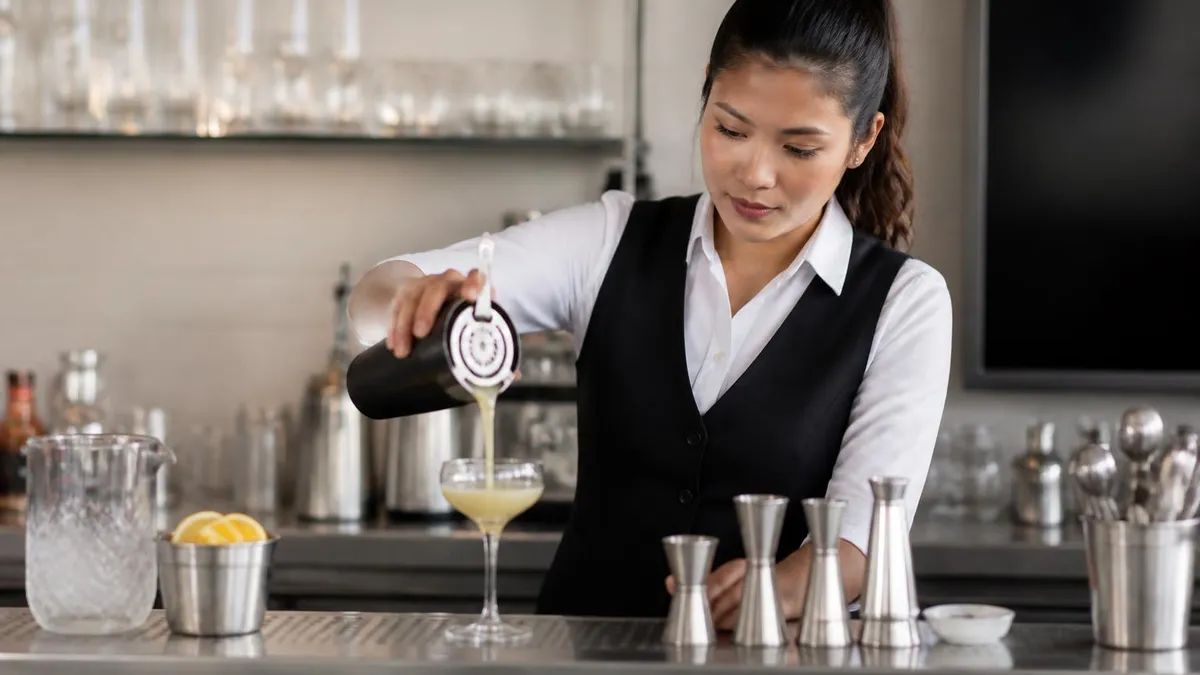
Most US states hold both the bartender and the venue personally liable if an intoxicated guest you served causes injury after leaving. Civil judgments have reached seven figures. Your alcohol-service certification is your primary legal defense, and refusing service to an obviously intoxicated guest is always the right call regardless of pressure from the guest or your manager.
Building a long-term career as a lady bartender requires thinking like a professional from your first shift, not just a paycheck earner. The bartenders who become head bartenders, beverage directors, and bar owners almost always share a small set of habits: they invest in education, they specialize, they document their work, and they treat every shift as an audition for the next opportunity. None of these habits cost money, but they compound dramatically over five to ten years.
Continuing education matters more than people realize. Brand-sponsored seminars from companies like Diageo, Pernod Ricard, Bacardi, and Beam Suntory are usually free, often include lunch, and frequently come with a certification that looks great on a resume. Cicerone certification for beer, WSET for wine, and BarSmarts for spirits are the three most respected credentials in the industry. Stacking these over three years signals that you are a serious professional, and they often unlock $5 to $15 per hour pay bumps in major markets.
Specialization opens premium shifts. A bartender who knows the entire agave category in depth becomes the obvious choice for the new mezcal bar opening across town. A bartender who can talk about Burgundy producers gets first pick at the wine bar's brunch shifts. Specialization is faster than people expect; reading two to three quality books on a single category and visiting five distilleries or wineries within a year is enough to be more knowledgeable than 90 percent of working bartenders.
Documentation is the unsung career builder. Take photos of cocktails you create, keep a written recipe book, save spec sheets from training sessions, and track sales data from any specials you developed. When you interview for a head bartender role two years from now, this documentation is the difference between a generic resume and a portfolio that proves you can run a program. Many beverage directors say they hire based on the portfolio more than the interview itself.
Geographic moves can accelerate your earning curve enormously. A bartender who is excellent in a small Midwestern market often doubles her income within six months of relocating to Las Vegas, Miami, New York, or Los Angeles. Hospitality groups in major markets actively recruit experienced female bartenders, and the network effects in those cities mean every shift you work introduces you to people who can change your career. If relocation is on the table, consider doing it before you have heavy financial or family commitments.
Mentorship works in both directions. Find a bartender or beverage director ten years ahead of you, ask for one coffee, and listen more than you talk. Once you have three or four years of experience, mentor newer female bartenders coming up behind you. The act of teaching forces you to systematize your knowledge, and the relationships you build with people on the way up almost always pay off later when one of them becomes a hiring manager. For more on local hiring dynamics, see our guide to finding a bartender near me.
Finally, plan your exit before you need it. Most bartenders eventually transition into bar management, brand ambassador work, consulting, hospitality education, or ownership. Each of these paths has a different prerequisite set, and the time to start building those prerequisites is the year before you actually want to make the jump. Whether you stay behind the bar for life or use it as a launching pad, treating bartending as a real career rather than a temporary job will multiply every dollar and every relationship you build.
Now let's get tactical with the practical tips that make the biggest difference in your first 90 days behind the bar. Your first three months set the tone for everything that follows, including which shifts you get, how your coworkers treat you, and whether you get fast-tracked toward better venues. Show up 15 minutes before every shift, in clean uniform, with your hair pulled back and your tools ready. This single habit puts you ahead of roughly 70 percent of new hires.
Learn the regulars by name within your first two weeks. Keep a small notebook in your apron pocket, write down faces, names, and standing orders, and review it before each shift. The first time you greet a regular by name and start making their drink without being asked, you have permanently moved from "new bartender" to "our bartender." This is the single fastest way to build a tipping base that supports you through the slow seasons.
Master your venue's three best-selling cocktails to perfection before worrying about the broader menu. If the bar sells 200 margaritas, 150 espresso martinis, and 100 old fashioneds every week, your speed and consistency on those three drinks defines 60 percent of guest experience. Once those are automatic, expand to the next tier. Trying to memorize 80 specs at once is how new bartenders burn out and get pushed back to barback duty.
Manage your physical health like an athlete because the job is genuinely physical. Compression socks prevent varicose veins after years of standing. Non-slip kitchen shoes prevent the chronic knee and lower-back problems that end careers. Stretch your wrists and shoulders before every shift to avoid the repetitive strain injuries that come from shaking tins. Stay hydrated with water during shifts; the bartenders who drink alcohol on shift rarely last more than two years in the industry.
Develop a closing routine you can do on autopilot. The end of a busy shift is when injuries, theft, and mistakes happen most often. A repeatable sequence of breaking down the bar, restocking, counting tills, and tipping out keeps your numbers clean and your manager happy. Bartenders who consistently close clean and on time get the premium weekend shifts; bartenders who leave a mess for the morning team get pushed to Tuesday lunches.
Take your education seriously even when it feels optional. Read one industry book per quarter, follow three serious cocktail accounts on Instagram, and visit a competitor bar at least once a month to taste what other professionals are doing. The bartenders who plateau are almost always the ones who stopped learning after their first certification. The ones who keep climbing treat their craft the way a chef treats food, with constant curiosity and willingness to be a beginner again.
And finally, protect your reputation aggressively. Hospitality is a small world, and the bartender who badmouths a coworker on social media or no-calls a shift will hear about it from every hiring manager in the city within months. Conversely, the bartender who shows up reliably, treats every coworker with respect, and leaves every venue on good terms gets recommended into better and better opportunities for the rest of her career.
Sample Bartender Certification Practice Questions
Try these questions from our free Bartender Certification practice tests. The correct answer and an explanation follow each question.
Which of the following factors does NOT affect how quickly alcohol is absorbed into the bloodstream?
- A. Whether the patron has recently eaten a meal
- B. The carbonation level of the alcoholic beverage
- C. The patron's eye color
- D. The patron's body weight
Answer: C. The patron's eye color
Eye color has no physiological relationship to alcohol absorption. Food, carbonation (carbonated mixers speed absorption), and body weight all influence how quickly alcohol enters the bloodstream and affects a person.
What is 'shrinkage' in bar inventory terms?
- A. Bottles that have been broken
- B. Unaccounted-for loss of product through theft, over-pouring, or spillage
- C. Reduction in alcohol content over time
- D. Price reductions on slow-moving stock
Answer: B. Unaccounted-for loss of product through theft, over-pouring, or spillage
Shrinkage refers to the difference between theoretical and actual inventory, caused by theft, over-pouring, spillage, or unrecorded complimentary drinks.
Which of the following is an effective strategy to slow down a customer's alcohol consumption without refusing service outright?
- A. Offer them a round of shots on the house.
- B. Avoid their section of the bar until they get your attention.
- C. Suggest a food item or offer a glass of water with their next drink.
- D. Make their next drink with double the amount of alcohol to satisfy them.
Answer: C. Suggest a food item or offer a glass of water with their next drink.
A key technique in responsible service is to manage the pace of a guest's drinking. Offering water or suggesting food can slow down alcohol absorption and consumption rate without creating a confrontation. This proactive approach can prevent a patron from reaching the point of intoxication where service must be refused.
A patron argues that they 'feel fine' and demands another drink after you decide to stop serving them. What is the most appropriate response?
- A. Resume service if they can walk in a straight line on request
- B. Offer them a complimentary non-alcoholic beverage and calmly explain that you are no longer able to serve them alcohol
- C. Agree to one final drink as a compromise to avoid a confrontation
- D. Ignore them until they leave on their own
Answer: B. Offer them a complimentary non-alcoholic beverage and calmly explain that you are no longer able to serve them alcohol
Offering a non-alcoholic alternative is a de-escalation technique that shows respect for the patron while maintaining a firm refusal to serve more alcohol. Engaging calmly and offering an alternative reduces conflict without reversing the decision or ignoring the patron entirely.
Bartender Bartender Questions and Answers
Bartender Near Me: How to Find, Vet, and Hire a Local Bartender in 2026
Wisconsin Bartending License: Operator's License Guide 2026
Bartender for Hire: How to Book, Pricing Guide, and What to Expect in 2026
Bartending School: Costs, What You Learn and If It's Worth It
Bartender Age Requirements by State
About the Author

Executive Chef & Culinary Arts Certification Educator
Culinary Institute of AmericaChef Marco Bellini is a Certified Executive Chef and graduate of the Culinary Institute of America with over 20 years of professional kitchen experience in Michelin-recognized restaurants. He teaches culinary arts certification, food safety, and hospitality exam preparation, having guided thousands of culinary students through their ServSafe, ProStart, and professional chef certifications.
Join the Discussion
Connect with other students preparing for this exam. Share tips, ask questions, and get advice from people who have been there.
View discussion (7 replies)