
Official ASVAB Practice Test: Complete Study Guide & Score Strategies for 2026 October
Master the official ASVAB practice test with real score charts, study strategies, and free practice questions. 🏆 Boost your AFQT and land your ideal MOS.
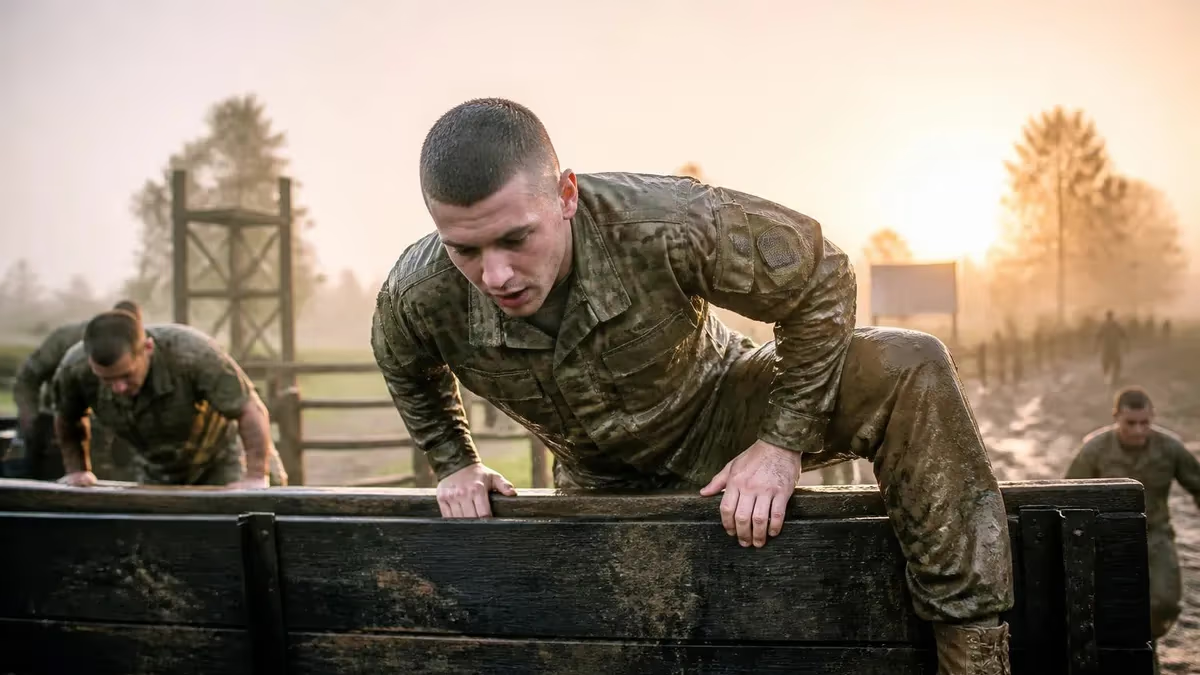
The official ASVAB practice test is the single most important tool you can use to launch a military career in the United States Armed Forces. Standing for Armed Services Vocational Aptitude Battery, the ASVAB is a multi-section standardized exam that evaluates your knowledge across nine subject areas — from arithmetic reasoning and mathematics knowledge to general science and mechanical comprehension. Your composite AFQT score determines whether you qualify to enlist at all, while individual subtest line scores open the door to specific military occupational specialties (MOS), ratings, and career fields that can define your entire service career.
Every branch of the U.S. military — the Army, Navy, Marine Corps, Air Force, Space Force, and Coast Guard — uses the ASVAB as its primary enlistment qualification tool. The minimum AFQT score required varies by branch: the Army currently requires a 31, the Marines a 32, the Navy a 35, the Air Force a 36, and the Coast Guard a 40.
These thresholds might sound easy to clear, but many first-time test-takers are surprised by how comprehensive the exam actually is. An asvab practice test taken under realistic timed conditions is the fastest way to identify exactly which subtests need the most work before test day arrives.
Understanding how asvab scores are calculated is critical to setting a realistic study plan. Your AFQT score is derived from four specific subtests: Arithmetic Reasoning (AR), Mathematics Knowledge (MK), Paragraph Comprehension (PC), and Word Knowledge (WK). These four scores are combined using a formula, then compared against a national reference sample of 18-to-23-year-olds tested in 1997 to produce a percentile score between 1 and 99. A score of 50, for instance, means you outperformed 50 percent of that reference population — not 50 percent of today's test-takers. This distinction matters when setting score targets.
Beyond the AFQT, line scores derived from various subtest combinations unlock specific military jobs. For example, the Army's Skilled Technical (ST) score pulls from General Science, Verbal Expression, Mechanical Comprehension, and Mathematics Knowledge. A high ST score might qualify you for intelligence analyst positions, while a strong Electronics (EL) score can open avenues in signals, communications, or cyber operations.
This layered structure means that even candidates who exceed the minimum AFQT cutoff benefit enormously from maximizing scores across all nine subtests, not just the four AFQT components. The army combat fitness test is one of several additional assessments you may encounter alongside the ASVAB as part of the full enlistment process.
The ASVAB is offered in two primary formats: the CAT-ASVAB (computer-adaptive test) administered at Military Entrance Processing Stations (MEPS), and the paper-and-pencil MET-Site ASVAB given at satellite locations. The CAT-ASVAB adapts question difficulty based on your answers, meaning a correct response earns you a harder follow-up question while an incorrect one routes you to an easier item.
This adaptive format shortens total test time — the CAT-ASVAB takes roughly 1.5 hours compared to the 3-hour paper version — but it also means you cannot skip questions or return to previous answers. Practicing under these constraints during your asvab study guide sessions is essential preparation.
One frequently overlooked aspect of ASVAB preparation is timing. Each subtest carries a strict time limit, and many test-takers lose points not because they lack knowledge but because they run out of time on sections like Arithmetic Reasoning or Mathematics Knowledge.
The paper ASVAB gives you 36 minutes for 30 Arithmetic Reasoning questions, while the CAT-ASVAB allocates 39 minutes for 16 adaptive questions. Developing a pacing strategy — spending no more than 60 to 90 seconds per question and moving on when stuck — is a skill that only deliberate, timed practice can build. Aim to simulate real test conditions during every major study session.
Research consistently shows that candidates who complete at least five full-length official ASVAB practice tests before sitting the real exam score an average of 8 to 12 percentile points higher than those who rely on passive review alone. The reasons are both cognitive and psychological: repeated retrieval practice strengthens memory consolidation, while familiarity with the test format reduces anxiety and eliminates surprises on test day. Whether you are aiming for a 50 to meet a specific MOS requirement or pushing for a 90-plus to earn enlistment bonuses, structured and consistent practice is the path that delivers results.
ASVAB by the Numbers

ASVAB Exam Format & Subtests
| Section | Questions | Time | Weight | Notes |
|---|---|---|---|---|
| General Science (GS) | 25 | 11 min | Line Score | Physical, biological, and earth sciences |
| Arithmetic Reasoning (AR) | 30 | 36 min | AFQT | Word problems requiring math reasoning |
| Word Knowledge (WK) | 35 | 11 min | AFQT | Vocabulary and word meaning |
| Paragraph Comprehension (PC) | 15 | 13 min | AFQT | Reading passages and inference |
| Mathematics Knowledge (MK) | 25 | 24 min | AFQT | Algebra, geometry, number theory |
| Electronics Information (EI) | 20 | 9 min | Line Score | Circuits, current, and electronic systems |
| Mechanical Comprehension (MC) | 25 | 19 min | Line Score | Pulleys, levers, force, and motion |
| Auto & Shop Information (AS) | 25 | 11 min | Line Score | Automotive systems and tools |
| Assembling Objects (AO) | 25 | 15 min | Line Score | Spatial reasoning and object assembly |
| Total | 145 | 3 hours (paper) / ~1.5 hours (CAT) | 100% |
Understanding how asvab scores translate into real opportunities is what separates strategic test-takers from those who simply hope to pass. Your AFQT (Armed Forces Qualification Test) score is expressed as a percentile from 1 to 99 and is calculated exclusively from four subtests: Arithmetic Reasoning, Mathematics Knowledge, Word Knowledge, and Paragraph Comprehension.
The formula used is: AFQT = AR + MK + (2 × VE), where VE (Verbal Expression) equals the sum of WK and PC scores. Because WK is weighted twice in this calculation, improving your vocabulary and reading comprehension has an outsized positive effect on your overall AFQT percentile.
Line scores, by contrast, are branch-specific composite scores that determine your eligibility for individual jobs and career fields. The Army uses ten line scores — including Clerical (CL), Combat (CO), Electronics (EL), Field Artillery (FA), General Maintenance (GM), General Technical (GT), Operators and Food (OF), Skilled Technical (ST), Surveillance and Communications (SC), and Operators and Food (OF). The Navy and Air Force use different composite groupings.
Understanding which line scores your target MOS or rating requires allows you to focus your study energy on the two or three subtests that matter most for your specific career goals, rather than spreading effort uniformly across all nine areas.
Score reporting happens almost immediately on the CAT-ASVAB — you typically receive a printout with your line scores the same day at MEPS. Paper MET-Site scores usually take one to two weeks to process and arrive. Once scored, your results remain valid for two years if you are not currently in the military. After that window, you must retest.
If you want to retest voluntarily to improve your score, you must wait at least one calendar month after your first test, another month after your second, and then six months between any subsequent attempts. This retesting timeline underscores why thorough preparation before your first attempt is so financially and strategically valuable.
One important concept many candidates misunderstand is the difference between standard scores and AFQT percentiles. Each subtest produces a raw score that is converted to a standard score with a mean of 50 and a standard deviation of 10, anchored to the 1997 reference population. These standard scores feed into the line score composites as well as the AFQT formula.
Because the reference population is fixed, today's test-takers are being compared to adults who were 18-to-23 in 1997 — and research suggests today's youth tend to score somewhat higher on academic measures, meaning the practical competition effect may favor modern test-takers slightly. Still, never count on the curve; aim for the highest raw score your preparation allows.
The army fitness test is a separate physical assessment that you will face during the enlistment process, but your ASVAB line scores determine which physical job fields you are even eligible to apply for — making the cognitive test the gateway that must come first. Candidates who do not meet minimum AFQT thresholds are disqualified before any physical evaluation takes place. This sequencing makes the ASVAB arguably the single highest-use preparation you can do during your pre-enlistment period, and it reinforces why dedicated asvab study guide work deserves serious time investment.
Score waiver programs exist for branches when recruiting demand is high. The Army and Marine Corps have historically issued AFQT waivers allowing enlistment with scores as low as 26 (Category IV-A) under special circumstances, but these waivers are not guaranteed and tend to restrict MOS options significantly.
Candidates relying on a waiver typically find themselves assigned to combat arms or support roles with limited technical training opportunities. If broadening your career options — particularly into intelligence, cyber, medicine, or aviation support — is a priority, targeting an AFQT of 65 or above dramatically expands your choices across every branch of service.
Many recruiters informally recommend that candidates aim for an AFQT score of at least 50, which places them in Category II (50–64) and qualifies them for virtually every MOS in the Army and most ratings in the Navy. However, competitive specialties in cybersecurity, linguistics, and nuclear propulsion routinely require scores well above 100 on specific line scores like GT or EL.
Researching the exact score requirements for your top three or four job choices before you begin studying gives your preparation a concrete target to optimize toward, transforming a vague goal of "do well" into a precise numerical benchmark you can track week by week.
ASVAB Study Guide: Strategies by Subject Area
The Arithmetic Reasoning and Mathematics Knowledge subtests together form the mathematical backbone of your AFQT score. AR focuses on multi-step word problems involving percentages, ratios, rates, and basic algebra, while MK tests direct knowledge of algebraic equations, geometric formulas, and number properties. Begin your math preparation by taking a diagnostic practice test asvab to identify which specific problem types — fractions, inequalities, coordinate geometry — cost you the most time or produce the most errors. Then allocate study sessions by weakness, not by topic order.
Effective math preparation for the ASVAB combines conceptual review with high-volume problem practice. Dedicate the first two weeks to reviewing core formulas — area and perimeter of common shapes, percent change formula, distance-rate-time relationships — then shift into timed problem sets during weeks three and four. Aim to solve AR word problems in under 60 seconds each by practicing mental estimation and elimination techniques. For MK, flashcards covering exponent rules, FOIL method, and the Pythagorean theorem are proven study tools that can be reviewed daily in short sessions even without a dedicated study block.
Official ASVAB Practice Test: Benefits and Limitations
- +Accurately replicates the question style and difficulty level of the real exam
- +Helps identify your weakest subtest areas before you sit the official version
- +Builds time-management skills through timed simulation under real conditions
- +Reduces test-day anxiety by making the format feel familiar and predictable
- +Free official versions are available through the ASVAB program and military recruiters
- +Detailed score breakdowns show exactly which question types need more attention
- −Official free materials have a limited question pool that repeats with extended study
- −Paper practice tests cannot fully replicate the adaptive difficulty of the CAT-ASVAB format
- −No official practice test covers all nine subtests in a single unified sitting
- −Score estimates from practice tests can be inflated if conditions are not strictly timed
- −Does not account for test-day stress, noise, or MEPS environment pressure
- −Overreliance on a single source creates blind spots across question types and formats
Pros and Cons at a Glance
| Pros | Cons |
|---|---|
| Accurately replicates the question style and difficulty level of the real exam | Official free materials have a limited question pool that repeats with extended study |
| Helps identify your weakest subtest areas before you sit the official version | Paper practice tests cannot fully replicate the adaptive difficulty of the CAT-ASVAB format |
| Builds time-management skills through timed simulation under real conditions | No official practice test covers all nine subtests in a single unified sitting |
| Reduces test-day anxiety by making the format feel familiar and predictable | Score estimates from practice tests can be inflated if conditions are not strictly timed |
| Free official versions are available through the ASVAB program and military recruiters | Does not account for test-day stress, noise, or MEPS environment pressure |
| Detailed score breakdowns show exactly which question types need more attention | Overreliance on a single source creates blind spots across question types and formats |
ASVAB Prep Checklist: 10 Steps Before Test Day
- ✓Take a full-length diagnostic practice ASVAB under timed conditions to establish your baseline score.
- ✓Review your diagnostic results and rank all nine subtests from weakest to strongest.
- ✓Set a specific target AFQT score and identify the exact line scores required for your top MOS choices.
- ✓Build a six-to-eight-week study schedule allocating more daily time to your two weakest subtests.
- ✓Complete at least five full-length timed practice tests, spacing them across your study period.
- ✓Review every missed question immediately after each practice test to understand the error pattern.
- ✓Use official ASVAB resources — the ASVAB Career Exploration Program and ASVAB for dummies study books — alongside online quizzes.
- ✓Practice vocabulary daily using flashcards covering common WK word roots, prefixes, and suffixes.
- ✓Simulate real test-day conditions on your final two practice sessions: no phone, strict timing, quiet room.
- ✓Get at least eight hours of sleep the two nights before your exam and eat a protein-rich breakfast on test day.
AFQT 50+ Opens the Most Doors
Scoring a 50 or above on the AFQT places you in Category II, qualifying you for nearly every enlisted MOS across all branches. Candidates who score 65 or higher are eligible for enlistment bonuses ranging from $2,000 to $40,000 depending on the branch and MOS. Even a 5-point improvement through structured practice can be the difference between your first-choice career field and an assignment you never wanted.
Military occupational specialties each carry specific ASVAB line score requirements that function as hard cutoffs — not recommendations. If your Electronics (EL) score falls even one point below the threshold for an 09L Interpreter-Translator or 25U Signal Support Systems Specialist position, you are ineligible regardless of your overall AFQT. This reality makes it essential to research your target MOS requirements before you begin studying and to treat those line score targets as non-negotiable benchmarks. The Army alone operates over 150 MOS codes, each tied to a different combination of subtest scores.
High-demand technical specialties routinely set the bar at specific composite numbers. Army Cyber Operations Specialist (17C) requires a Skilled Technical (ST) score of 112. Army Intelligence Analyst (35F) demands a Skilled Technical score of 101. Navy Cryptologic Technician (CTI) — one of the most competitive ratings available — requires an AFQT of 62 alongside specific language aptitude testing. Air Force Cryptologic Language Analyst (1N3X1) requires minimum scores across multiple composites. These numbers are not arbitrary; they predict on-the-job training success and are calibrated against years of performance data from service members in those roles.
For candidates interested in officer candidate programs rather than enlisted paths, the ASVAB is less directly relevant — officer commissioning typically requires SAT/ACT scores and a college degree — but warrant officer and specific direct-accession programs do reference ASVAB GT (General Technical) scores. The GT score is derived from AR and VE, making it essentially another form of the AFQT calculation. A GT score of 110 or higher is commonly cited as a threshold for warrant officer flight school candidacy, and many Army Recruiting Command internal guidelines use GT as a quick proxy for trainability.
Understanding the army pt test requirements alongside your ASVAB score context helps you plan a holistic enlistment timeline. Both the physical and cognitive evaluation must be completed at MEPS before a job offer can be extended, and recruiters typically want to see your ASVAB score before they invest time discussing MOS options in detail. Bringing a strong ASVAB score to your initial recruiter meeting dramatically changes the conversation: instead of discussing what you qualify for, you spend that time discussing which of your qualifying options best fits your long-term career goals.
Civilian employers increasingly recognize the ASVAB as a validated cognitive assessment. The ASVAB Career Exploration Program (CEP) is administered to approximately one million high school juniors and seniors annually, and those scores can be shared with colleges and vocational programs. High scores on the technical subtests — particularly EI, MC, and GS — correlate strongly with success in engineering technology, automotive technology, and electrical trades programs. Even if military service is not your ultimate path, a strong ASVAB score can open doors in apprenticeship programs, federal civil service hiring, and skilled trades careers that value demonstrated technical aptitude.
For candidates who have already taken the ASVAB once and want to improve their score, a targeted retesting strategy produces better results than broad review. Pull your score report and identify the two or three subtests where you lost the most points relative to your potential. If you scored 38 on MK but 52 on AR, your time is better spent on pure mathematics review than on word problem practice.
Conversely, if your VE score dragged down your AFQT, an intensive four-week vocabulary immersion program — reading two news articles daily, studying root words, and completing 30 WK practice questions per day — will yield faster score gains than grinding through subjects where you are already performing near ceiling.
Retesting strategy should also account for which format you will use. If you took the paper MET-Site test initially and can access MEPS for a CAT-ASVAB retest, some candidates find the adaptive format more comfortable once they understand how it works — the absence of time pressure from skipping and returning to questions is eliminated, but the total number of questions is significantly smaller.
The CAT-ASVAB's 16-question adaptive Arithmetic Reasoning section rewards accuracy over speed more explicitly than the 30-question paper format does, meaning a methodical test-taker who gets 14 of 16 correct will often outscore someone who rushes through 26 of 30 paper questions correctly.
You must wait at least one calendar month after your first ASVAB attempt before retesting, and another month after your second attempt. After any third or subsequent test, the waiting period extends to six full months. If you are close to your MOS score requirement after your first test, do not rush back in unprepared — a lower retest score can temporarily reduce your options with some recruiters, and excessive retesting may draw scrutiny during the enlistment process.
The best study resources for the official ASVAB practice test fall into three tiers: official government materials, structured print guides, and digital adaptive platforms. Official materials include the ASVAB Career Exploration Program's online practice tests at official.asvab.com, which provide free access to full-length practice tests scored against the same normative population as the real exam. These are the closest analog to actual test conditions available and should anchor any serious preparation program. Use them for your baseline diagnostic and your final pre-test simulation.
Structured print guides like asvab for dummies provide comprehensive content review organized by subtest, with hundreds of practice questions, subject summaries, and test-taking strategy tips. These books are most useful during the content review phase of your preparation — weeks one through four of a six-to-eight-week program — when you need to rebuild foundational knowledge in subjects like algebra, earth science, or electronics circuits. A single comprehensive prep book combined with three to five full-length digital practice tests covers the vast majority of what most candidates need to prepare effectively.
Digital adaptive platforms provide the closest simulation of the CAT-ASVAB experience available outside of MEPS itself. Platforms like Union Test Prep, March2Success (the Army's free official platform), and Khan Academy (for foundational math and science content) supplement official materials with higher question volumes and detailed explanations. March2Success is particularly valuable because it is maintained by the U.S. Army and aligns directly with the content domains tested on the official exam. The platform offers practice tests in all nine subtest areas with automatic scoring and progress tracking across sessions.
Flashcard systems — both physical and digital through apps like Anki or Quizlet — are especially effective for the vocabulary-intensive WK subtest and for the formula-heavy MK section. A well-structured Anki deck for ASVAB vocabulary can contain 500 to 800 cards covering the most frequently tested roots, prefixes, and synonyms.
Spacing your flashcard reviews using spaced repetition algorithms means you spend the most time on cards you have the most difficulty recalling, which maximizes retention per hour of study. Building and reviewing a 300-card ASVAB vocabulary deck for 20 minutes daily for four weeks can add four to seven points to your WK standard score.
Study groups, whether in-person with fellow recruits or online via Reddit communities like r/ASVAB, provide accountability and crowd-sourced insight into which question types appear most frequently and which study resources members found most effective. These communities are particularly useful for candidates preparing for highly competitive technical ratings where first-hand knowledge of EL or GS question patterns from recent test-takers provides a meaningful edge. However, use community intelligence as a supplement rather than a primary source — individual experience varies significantly based on the adaptive algorithm's question selection on any given test date.
Audio and podcast resources are an underutilized study modality that can extend your effective study time into commutes, workouts, and household tasks. ASVAB-focused YouTube channels publish walkthrough videos of AR and MK problem types that can substitute for a textbook during visual learning sessions.
Listening to science content podcasts or educational radio on topics like human physiology, physics principles, or electronics fundamentals supplements your formal GS and EI study without requiring you to sit at a desk. The cumulative effect of 30 to 45 minutes of audio learning per day over six weeks adds meaningful content exposure that compounds with your structured study sessions.
Regardless of which resources you choose, the single highest-use habit you can develop is reviewing every wrong answer immediately after each practice session. Do not simply note that you missed a question — write out why the correct answer is correct, why your chosen answer was wrong, and what concept or formula you need to review.
This active error analysis, repeated consistently across every practice session, drives the understanding deep enough to survive test-day pressure. Passive re-reading of material you already know is comfortable but produces minimal score improvement compared to the productive struggle of confronting and understanding your specific weaknesses.
Test-day performance on the official ASVAB depends on preparation that begins the night before, not the morning of. The research on cognitive performance is unambiguous: sleep deprivation of even two hours reduces working memory capacity, slows processing speed, and impairs the kind of fluid reasoning that Arithmetic Reasoning and Mechanical Comprehension questions demand.
Aim for a consistent sleep schedule in the week leading up to your test, targeting seven to nine hours per night. Avoid the temptation to cram the night before — any knowledge you would gain in four hours of late-night studying is more than offset by the cognitive cost of fatigue during a three-hour high-stakes test.
Nutrition on test day matters more than most candidates realize. The brain consumes roughly 20 percent of your body's glucose, and cognitive tasks like standardized testing place improved demands on that supply. Eat a balanced breakfast containing protein, complex carbohydrates, and healthy fats approximately 90 minutes before your scheduled test time. Eggs, oatmeal with nuts, or whole grain toast with peanut butter all provide sustained energy without the blood sugar spike-and-crash cycle that accompanies high-sugar breakfasts like pastries or sugary cereal. Bring a water bottle if the testing center permits, since mild dehydration measurably reduces concentration and recall speed.
Managing your time within each subtest requires a clear pacing strategy developed during your practice sessions. The fundamental rule is: never let a single difficult question steal time from five easier ones. On the paper ASVAB, if you encounter a problem you cannot solve within 90 seconds, mark your best guess, circle the question number, and move on.
Return to circled questions only if you finish with time remaining. On the CAT-ASVAB, you cannot go back at all — so your pacing must be even more decisive. Trust the preparation you have done and commit to an answer rather than leaving your fate to blank responses or panic-guessing at the end.
For the Paragraph Comprehension subtest specifically, reading strategy makes an enormous difference. Resist the urge to read the entire passage before looking at the question, which wastes time. Instead, read the question first, then skim the passage for the specific information needed to answer it. For main idea questions, read the first and last sentence of each paragraph — topic sentences and concluding sentences carry the most conceptual weight. For inference questions, look for transition language and qualifying words like "usually," "sometimes," or "primarily" that signal the author's nuanced position rather than an absolute claim.
Process of elimination is your most powerful test-taking tool across every ASVAB subtest. Even when you are uncertain of the correct answer, you can almost always eliminate one or two obviously wrong choices. On a four-option multiple choice question, eliminating two wrong answers raises your probability of guessing correctly from 25 percent to 50 percent — a statistically significant advantage over guessing blind. Train yourself to use elimination systematically during your practice tests so it becomes automatic on test day, especially during the GS and EI subtests where content gaps may leave you working with incomplete knowledge.
Mental state management during the exam itself is a skill that only simulated practice can build. If you find yourself anxious, use controlled breathing: inhale for four seconds, hold for four, exhale for four. This technique activates the parasympathetic nervous system and reduces cortisol within 60 to 90 seconds — fast enough to calm a moment of test-taking panic without losing meaningful time.
Remind yourself that you have prepared thoroughly, that you can skip and return on the paper format, and that the ASVAB is a tool that measures where you are today — not a verdict on your potential. Many service members retested multiple times before finding their ideal score.
Finally, treat the ASVAB as the beginning of your military career research, not the end. After you receive your scores, use them as a lens to explore which military careers align best with your demonstrated strengths. A high GT score combined with a strong EL score might suggest a signals or intelligence career path you had not considered. A strong MC and AS score might indicate genuine aptitude for aviation maintenance or combat engineering roles that carry excellent civilian certification pathways.
The aft score chart published by each branch maps composite scores to specific career fields, and spending time with that chart after your results arrive can open your eyes to opportunities you had not previously considered. Your ASVAB score is not just a pass-or-fail number — it is a roadmap to the military career that fits you best.
Sample ASVAB - Armed Services Vocational Aptitude Battery Practice Questions
Try these questions from our free ASVAB - Armed Services Vocational Aptitude Battery practice tests. The correct answer and an explanation follow each question.
A platoon of 40 soldiers must complete a 10-mile march. If 25% fall out before finishing, how many soldiers complete the march?
- A. 25
- B. 28
- C. 30
- D. 32
Answer: C. 30
25% of 40 = 10 soldiers fall out; 40 − 10 = 30 soldiers finish.
A squad of 8 soldiers must complete 480 sandbags for a fortification. If 3 soldiers have already filled 120 sandbags, how many sandbags does each remaining soldier need to fill to complete the task equally?
- A. 45
- B. 60
- C. 72
- D. 52
Answer: C. 72
Remaining sandbags: 480 - 120 = 360. Remaining soldiers: 8 - 3 = 5. Each remaining soldier fills: 360 ÷ 5 = 72 sandbags.
Of 480 applicants, 5/8 pass the physical test. Of those who pass, 1/3 advance to the next stage. How many applicants advance?
- A. 100
- B. 90
- C. 120
- D. 160
Answer: A. 100
480 × 5/8 = 300 pass the physical; 300 × 1/3 = 100 advance to the next stage.
If one complete revolution of the steering wheel causes the wheels to turn 20 degrees, what is the steering ratio?
- A. 12:1
- B. 15:1
- C. 18:1
- D. 20:1
Answer: C. 18:1
The steering ratio is calculated by dividing the total degrees of steering wheel rotation by the degrees the wheels turn. One complete revolution of the steering wheel is 360 degrees, and the wheels turn 20 degrees, resulting in a ratio of 360/20, which simplifies to 18:1.
Take the full ASVAB - Armed Services Vocational Aptitude Battery practice test
ASVAB Questions and Answers




About the Author
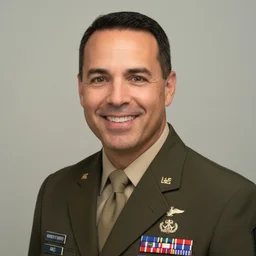
Retired Military Officer & Armed Forces Test Preparation Specialist
United States Army War CollegeColonel Steven Harris (Ret.) served 28 years in the US Army, earning a Master of Arts in Military Science from the Army War College and a Bachelor of Science in Criminal Justice. He has coached thousands of military enlistment and officer candidate program applicants through the ASVAB, AFQT, AFCT, OAR, and officer selection assessment processes across all military branches.
Join the Discussion
Connect with other students preparing for this exam. Share tips, ask questions, and get advice from people who have been there.
View discussion (5 replies)