
ASVAB Career Overview: How Your Scores Open Military Job Doors 2026 September
Pass your air force careers exam on the first attempt. ✏️ Practice questions with detailed answer explanations and instant scoring for the 2026 September exam.

Your ASVAB career overview starts here — with a simple truth most recruiters won't lead with. The score you earn on the ASVAB doesn't just decide whether you can enlist. It determines which jobs you're eligible for across every military branch. Air force careers, army specialties, navy ratings, and marine MOS fields all use your ASVAB composite scores as the gatekeeping filter. Score high in the right subtests, and doors open to technical roles with six-figure civilian equivalents. Score low, and your options shrink fast.
That's why treating the ASVAB as just an entrance exam misses the point entirely. It's a career placement tool. The military uses your subtest performance to match you with occupations where you're most likely to succeed. Electronics, mechanical, general science, arithmetic reasoning — each subtest feeds into composite scores that map directly to specific job families. Your study strategy should target the career fields you actually want, not just a passing AFQT score.
This guide breaks down how ASVAB scores connect to real military careers across all branches. You'll learn which composites matter for which jobs, what minimum scores look like, and how to position yourself for the roles with the best training and post-military value. If you're still building your study plan, explore the asvab career exploration program resources to pair score goals with career targets from day one. Let's get into it.

Understanding the ASVAB career exploration program means knowing how composite scores actually work. The ASVAB has 10 subtests, but your raw scores get combined into composite line scores that differ by branch. The Army uses ST, GT, CL, CO, EL, FA, GM, MM, OF, and SC composites. The Air Force uses Mechanical, Administrative, General, and Electronics composites. Same test, completely different scoring systems — and completely different career qualifications depending on which branch you're targeting.
Air force officer careers require even higher benchmarks. If you're considering the officer route, your ASVAB scores are just the starting point — the AFOQT (Air Force Officer Qualifying Test) adds another layer of assessment. But enlisted air force careers still hinge heavily on your ASVAB composites. A General composite of 72+ opens cybersecurity and intelligence roles. Mechanical composites above 60 qualify you for aircraft maintenance and aerospace propulsion. These aren't just military jobs — they're career foundations with direct civilian crossover.
Before you lock into one branch, compare your composite scores across all five services. Your exact same ASVAB performance might qualify you for a desk job in one branch and a highly technical specialty in another. It's worth doing the math. For a deeper look at how individual subtests contribute to your composites, explore the asvab career exploration breakdown by subtest area and career field.
The list of careers in the army alone runs over 150 Military Occupational Specialties. Infantry and combat arms get the most attention, but they represent a fraction of what's available. Signal corps, military intelligence, medical, engineering, cyber operations, aviation maintenance — the Army offers career paths in almost every professional field imaginable. Your GT (General Technical) score is the composite that matters most for high-demand specialties, requiring a minimum of 110 for many intelligence and technical roles.
ASVAB career exploration across the Navy reveals a similar depth. Navy ratings range from nuclear engineering (requiring some of the highest ASVAB scores in any branch) to hospital corpsman, aviation electronics, and cryptologic technician. The Navy's focus on technical training means many ratings come with extensive schooling — sometimes 12-18 months of specialized instruction before you even reach your first duty station. That training translates directly to valuable civilian certifications and employability.
Marines tend to require lower minimum AFQT scores (32 for enlistment) but real-world competition for desirable and high-demand MOS fields drives practical minimums significantly higher than those official floors. To understand how your specific scores translate across branches, check the detailed breakdown of air force careers and asvab scores with composite requirements listed by career field and branch.
Military Careers by Branch
The Army offers 150+ MOS fields grouped into 17 career management fields. Combat arms (infantry, armor, artillery) require lower ASVAB composites but demand peak physical fitness. Technical branches like Cyber (17C) and Intelligence (35 series) need GT scores of 110+. Marines use a similar structure with fewer total MOS options but equally demanding training pipelines. Marine combat engineers, LAV crewmen, and aviation ordnance technicians are high-demand fields with strong post-service career prospects.
When people ask about air force careers and asvab scores, they're usually wondering about the gap between minimum requirements and competitive scores. Here's the reality. The Air Force lists minimum composite requirements for each AFSC, but meeting the minimum doesn't guarantee you'll get that job. Manning levels, current needs, and your recruiter's available slots all factor in. Aim 10-15 points above the listed minimum for any career field you seriously want.
Best air force careers for post-military earning potential cluster around three areas: cyber, intelligence, and aviation maintenance. Cyber operations specialists (1B4) regularly transition to six-figure civilian cybersecurity roles. Intelligence analysts build skills that defense contractors actively recruit for. Avionics and aircraft maintenance technicians earn FAA certifications during service that transfer directly to civilian aviation jobs. Your ASVAB score is the first filter — but it opens doors to training programs worth tens of thousands of dollars in civilian equivalent education.
The Army follows a similar pattern. High-GT-score career fields like 35F (Intelligence Analyst), 25B (IT Specialist), and 68W (Combat Medic) offer strong training and civilian marketability. Combat medics, for example, can earn EMT-B certification during AIT and paramedic credentials with additional service. Every branch converts ASVAB performance into career placement — your job is to score high enough to choose, rather than accept whatever's available.
Taking an army career quiz or navy career quiz online can give you a general sense of which fields match your interests — but don't confuse interest surveys with actual qualification. The ASVAB is the qualification tool. Interest quizzes point you toward career areas worth targeting, then your ASVAB composites determine whether you actually qualify. Use both together: interest first, then focused ASVAB study to hit the composite scores those career fields require.
Many candidates discover their strongest career matches weren't fields they'd originally considered. Someone who walks into the recruiting office wanting infantry might discover their Electronics composite qualifies them for signals intelligence — a field with far better training, post-military prospects, and quality of life. Stay open to what your scores reveal. The military offers hundreds of career paths, and your ASVAB results might point toward something better than what you'd imagined.
If you're still deciding between branches or career fields, solid asvab career preparation gives you the flexibility to choose rather than settle. Higher scores mean more options. More options mean better leverage when you're sitting across from your recruiter discussing available slots and signing bonuses. That's the real value of strong ASVAB performance — it shifts the negotiating power in your direction.
Military Career Pros and Cons
- +Guaranteed job training worth $50,000-$200,000 in civilian equivalent education
- +Full healthcare, housing allowance, and retirement benefits from day one
- +Security clearances earned in service transfer to high-paying defense sector jobs
- +GI Bill covers 100% of college tuition plus monthly housing stipend after service
- +Leadership and technical skills that consistently outperform civilian-only resumes
- +Signing bonuses up to $50,000 for high-demand technical career fields
- −Limited control over duty station location and deployment schedules
- −Lower starting pay compared to civilian equivalents in tech and engineering
- −Minimum service commitments of 4-6 years with penalties for early separation
- −Physical and mental demands can strain personal relationships and health
- −Bureaucratic promotion systems don't always reward individual performance
- −Some MOS fields have minimal civilian career transferability after separation
Your ASVAB career path doesn't end at enlistment — it evolves throughout your service. Initial MOS assignment is just the starting point. Most branches allow reclassification (changing your job) after your first enlistment period, provided you meet the ASVAB requirements for the new field. Some soldiers retake the ASVAB specifically to qualify for a different MOS. The military career test isn't a one-time event — it's a tool you can revisit strategically throughout your service.
Warrant officer and officer commissioning programs represent another career acceleration path. Army Warrant Officers specialize deeply in technical fields — aviation, cyber, intelligence, maintenance. The selection process weighs your service record and technical expertise, not just test scores. But strong ASVAB performance during enlistment often correlates with the aptitude needed for these advanced programs. Building a strong foundation early pays compound dividends.
Cross-training opportunities exist in every branch. Air Force personnel can retrain into different AFSCs at certain career points. Navy sailors can convert to different ratings. These transitions typically require meeting the ASVAB composite minimums for the target field, plus any additional testing, training prerequisites, or time-in-service requirements. Keep your scores accessible and your records updated — you may need them years after initial enlistment when new career opportunities emerge within the service.
ASVAB Career Selection Checklist
- ✓Take a full-length ASVAB practice test and calculate your composite scores
- ✓Research minimum composite requirements for your top 5 career fields
- ✓Compare qualification requirements across at least 2 military branches
- ✓Verify which career fields currently offer signing bonuses
- ✓Check training pipeline length — some schools last 6-18 months
- ✓Research civilian career equivalents and average post-military salaries
- ✓Ask your recruiter about current manning levels for desired career fields
- ✓Review security clearance requirements (some fields require TS/SCI)
- ✓Confirm physical and medical requirements beyond ASVAB scores
- ✓Get your career field guarantee in writing before signing your contract
Every US armed forces career center has recruiters who specialize in matching candidates to available positions — but remember, recruiters work for the military, not for you. They need to fill open slots, and those slots might not align with your top career choices. Walking into a recruiting office with your ASVAB scores already calculated and your target career fields researched puts you in a stronger position. Knowledge is leverage in military career selection.
The ASVAB career exploration test serves a dual purpose in high school settings. Students take it through the Career Exploration Program (CEP) to discover aptitudes and career interests — military or civilian. These scores can also be used for enlistment qualification if taken within two years. If you scored well on the CEP version in high school, you might already qualify for your target career field without retaking the test at MEPS. Check with your recruiter to verify score validity and composite calculations.
One overlooked strategy: research which career fields are critically understaffed. The military offers accelerated promotion, larger bonuses, and better duty station choices for undermanned specialties. Your ASVAB scores combined with willingness to enter a critical-need field can result in significantly better enlistment terms than chasing the most popular career paths where competition is intense and available slots are scarce.
Army pilot careers represent one of the most competitive paths available through military enlistment. Warrant Officer Flight Training (WOFT) accepts candidates with strong aptitude scores and puts them through one of the most demanding aviation programs in the world. You don't need a college degree for WOFT — it's one of the few pilot pathways that's accessible without a four-year degree. The ASVAB doesn't directly qualify you for flight school, but strong scores demonstrate the cognitive aptitude that selection boards look for.
The army career test — whether you're taking it at MEPS or through your high school's CEP program — measures the same fundamental aptitudes. General Science tests your understanding of physical and biological sciences. Arithmetic Reasoning evaluates math problem-solving. Word Knowledge and Paragraph Comprehension assess verbal skills. These aren't obscure military-specific skills — they're foundational cognitive abilities that predict success in training environments. That's why the military trusts this test to sort hundreds of thousands of recruits into career fields each year.
For aspiring pilots in any branch, supplemental testing beyond the ASVAB is required. The Army uses the SIFT (Selection Instrument for Flight Training). Air Force uses the AFOQT and TBAS. Navy uses the ASTB. Your ASVAB performance won't directly qualify you for flight programs, but the study discipline and cognitive patterns you develop during ASVAB prep transfer directly to these specialized assessments.
Never ship to basic training without a written job guarantee. Your enlistment contract should specify your exact MOS/rating/AFSC, not just a career field or "open" category. If a recruiter says your preferred job isn't available right now, you can choose to wait. DEP (Delayed Entry Program) lets you hold your position while waiting for a specific slot to open — sometimes 3-6 months. Rushing into an unguaranteed contract because you're eager to ship is the most common career selection mistake new recruits make.
Your ASVAB career exploration scores tell a story about your cognitive strengths — but only if you know how to read them. Most candidates fixate on the AFQT score (the overall percentile), but career qualification depends entirely on composite line scores. You could have a 90th percentile AFQT and still not qualify for specific technical fields if your individual subtest performance doesn't produce the right composite combination. Understanding composite formulas for your target branch is essential homework.
The ASVAB career test isn't just for 18-year-olds considering enlistment. Prior-service members retake the ASVAB when re-enlisting or changing career fields. Guard and Reserve members use their scores for MOS qualification within their part-time units. Even some civilian employers in defense and law enforcement look at ASVAB scores as part of their hiring process. The test's utility extends well beyond initial military entry — it's a recognized aptitude assessment with applications across multiple career contexts.
One more thing worth knowing: your ASVAB scores are valid for two years from the test date. If you're not ready to enlist immediately, that gives you a comfortable window to explore options, compare branches, and negotiate the best possible enlistment package. Don't let a recruiter pressure you into rushing decisions. Your valid scores aren't going anywhere fast — use that time wisely to research, visit different recruiting offices, and make an informed choice about your military career trajectory.
ASVAB Practice Test Questions
Prepare for the ASVAB - Armed Services Vocational Aptitude Battery exam with our free practice test modules. Each quiz covers key topics to help you pass on your first try.
ASVAB Arithmetic Reasoning Test
ASVAB Exam Questions covering Arithmetic Reasoning Test. Master ASVAB Test concepts for certification prep.
ASVAB Arithmetic Reasoning Word Problems
Free ASVAB Practice Test featuring Arithmetic Reasoning Word Problems. Improve your ASVAB Exam score with mock test prep.
ASVAB Assembling Objects Test
ASVAB Mock Exam on Assembling Objects Test. ASVAB Study Guide questions to pass on your first try.
ASVAB Automotive Information Test
ASVAB Test Prep for Automotive Information Test. Practice ASVAB Quiz questions and boost your score.
ASVAB Electronics Fundamentals and Circuits
ASVAB Questions and Answers on Electronics Fundamentals and Circuits. Free ASVAB practice for exam readiness.
ASVAB Electronics Practice Test
ASVAB Mock Test covering Electronics Practice Test. Online ASVAB Test practice with instant feedback.
ASVAB Electronics Practice Test 1
Free ASVAB Quiz on Electronics Practice Test 1. ASVAB Exam prep questions with detailed explanations.
ASVAB General Science Biology and Ecology
ASVAB Practice Questions for General Science Biology and Ecology. Build confidence for your ASVAB certification exam.
ASVAB General Science Practice Test
ASVAB Test Online for General Science Practice Test. Free practice with instant results and feedback.
ASVAB General Science Practice Test 1
ASVAB Study Material on General Science Practice Test 1. Prepare effectively with real exam-style questions.
ASVAB Mathematics Knowledge Test
Free ASVAB Test covering Mathematics Knowledge Test. Practice and track your ASVAB exam readiness.
ASVAB Mechanical Comprehension Principles
ASVAB Exam Questions covering Mechanical Comprehension Principles. Master ASVAB Test concepts for certification prep.
ASVAB Mechanical Comprehension Test
Free ASVAB Practice Test featuring Mechanical Comprehension Test. Improve your ASVAB Exam score with mock test prep.
ASVAB Paragraph Comprehension and Inference
ASVAB Mock Exam on Paragraph Comprehension and Inference. ASVAB Study Guide questions to pass on your first try.
ASVAB Paragraph Comprehension Test
ASVAB Test Prep for Paragraph Comprehension Test. Practice ASVAB Quiz questions and boost your score.
Career exploration asvab resources are most valuable when you use them before walking into a recruiting office. The CEP (Career Exploration Program) interest inventory pairs your aptitude scores with career clusters — both military and civilian. Take it seriously. Students who complete the full exploration process enter recruitment conversations with specific career targets rather than vague interest in "joining the military." Specificity gives you power in negotiations and helps you avoid being steered toward whatever open slot needs filling that particular week.
A military career quiz online can supplement your ASVAB preparation by helping you identify which branches and career fields align with your personality and goals. Do you thrive in structured environments or need autonomy? Are you drawn to hands-on technical work or analytical desk roles? Physical demands or intellectual challenges? These preferences matter as much as your test scores because they predict job satisfaction — and satisfaction predicts retention, performance, and career advancement within the military system.
The bottom line on ASVAB and military careers comes down to preparation meeting opportunity. Strong ASVAB scores don't just open doors — they give you the freedom to choose which door to walk through. Every point above the minimum expands your options. Every subtest you improve widens your composite scores across multiple career fields. Invest the study time now, earn the scores that match your ambitions, and enter military service on your terms rather than someone else's staffing needs.
ASVAB Questions and Answers





About the Author
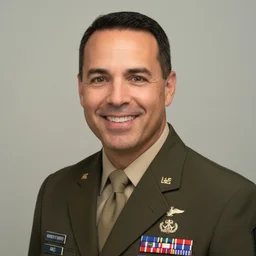
Retired Military Officer & Armed Forces Test Preparation Specialist
United States Army War CollegeColonel Steven Harris (Ret.) served 28 years in the US Army, earning a Master of Arts in Military Science from the Army War College and a Bachelor of Science in Criminal Justice. He has coached thousands of military enlistment and officer candidate program applicants through the ASVAB, AFQT, AFCT, OAR, and officer selection assessment processes across all military branches.
Join the Discussion
Connect with other students preparing for this exam. Share tips, ask questions, and get advice from people who have been there.
View discussion (5 replies)