
Free ASVAB Practice Test: 2026 September Military Exam Study Guide
Pass your Free ASVAB exam on the first attempt. Practice questions with detailed answer explanations, hints, and instant scoring. ✏️

Free ASVAB Practice Test: 2026 Military Exam Study Guide
What the ASVAB Actually Tests
The ASVAB — Armed Services Vocational Aptitude Battery — isn't just one test. It's nine subtests bundled together, each measuring a different skill set. Four of those subtests combine to create your AFQT score, the number that determines whether you can enlist at all. The remaining five determine which jobs — Military Occupational Specialties — you qualify for after you're in.
Here's what most recruits don't realize until it's too late: your AFQT floor and your MOS ceiling are two completely different things. You can clear the enlistment bar but lock yourself out of technical fields like signals intelligence, cryptography, or aviation maintenance by scoring poorly on mechanical and electronics subtests. One test, two separate consequences — and the second one follows you for your entire military career.
The nine subtests are General Science (GS), Arithmetic Reasoning (AR), Word Knowledge (WK), Paragraph Comprehension (PC), Mathematics Knowledge (MK), Electronics Information (EI), Auto and Shop Information (AS), Mechanical Comprehension (MC), and Assembling Objects (AO). On the CAT-ASVAB — the computerized version used at most MEPS stations — AO is scored but not included in most composite calculations. On the paper version used at some Reserve and National Guard sites, the format differs slightly in structure and timing.
Your AFQT score comes from four subtests: AR, MK, WK, and PC. The formula weights Verbal Ability (WK + PC) and Math Ability (AR + MK), then converts them to a percentile against a nationally representative 1997 sample of 18-to-23-year-olds. That percentile is your AFQT. Score a 50, and you performed better than 50% of that reference group. The benchmark doesn't reset annually — every test-taker in every year is measured against the same 1997 cohort, which keeps the scale consistent across different test dates and locations.
Taking a strong ASVAB practice test before your exam date gives you two critical data points: where you stand on AFQT, and which composite areas need the most work. Don't just aim to pass. Aim to open doors — because the difference between a 50 and a 70 AFQT is the difference between taking whatever's available and choosing the career path you actually want.
CAT-ASVAB vs. Paper-and-Pencil: What Actually Changes
Most people take the CAT-ASVAB at a MEPS station — Military Entrance Processing Station — where everything is computerized and adaptive. The test adjusts difficulty based on your answers in real time. Get a question right, the next one gets harder. Miss one, difficulty drops. You end up with fewer total questions than the paper version, but a more precise score because every question is calibrated to your current estimated ability level.
The paper version appears at some National Guard armories, Reserve recruiting offices, and mobile examination sites. It's fixed-difficulty — every test-taker gets the same questions in the same order. You can skip and return within a section, which changes your strategy. On the CAT, skipping isn't allowed. You must answer before moving on — so guessing always beats leaving a blank, especially since there's no penalty for wrong answers on either version.
One practical difference that surprises people: the CAT-ASVAB gives you your unofficial AFQT score the same day, usually within hours of finishing. Paper scores take up to two weeks to process. If you're on a tight enlistment timeline — trying to ship before a fiscal year deadline or before a waiver window closes — same-day feedback matters for planning your next steps with your recruiter.
Scores from both formats are equally valid. A 65 on paper equals a 65 on the CAT — both tests are calibrated to produce equivalent percentile rankings regardless of format or test date. The ASVAB practice test format you use for prep should match what you'll actually take. For CAT prep, prioritize accuracy over speed. The adaptive algorithm front-loads early questions with more scoring weight — an error on question 3 costs more than an error on question 12.
One more detail: because the CAT adapts in real time, two test-takers can receive the same final AFQT score while answering completely different questions at different difficulty levels. That's exactly how it's designed to work. Don't compare your specific questions with anyone else's after the test — your scores are what matter, not which items you saw. The algorithm levels the playing field across all difficulty variants.
How AFQT Score Calculation Actually Works
AFQT isn't a simple raw-score percentage. The calculation involves two intermediate scores. Verbal Expression (VE) = Word Knowledge scaled score + Paragraph Comprehension scaled score. Then the formula is: AFQT raw = 2 × VE + Arithmetic Reasoning + Mathematics Knowledge. That raw value converts to a percentile using the 1997 Profile of American Youth study, which tested 12,000+ Americans aged 18-23 in that baseline year.
Because VE is doubled in the formula, your verbal skills carry more weight than your math skills — specifically 50% of your AFQT comes from reading and vocabulary. That's counterintuitive for people who think of themselves as math-oriented. A student who scores average on AR and MK but dominates WK and PC can outscore a math whiz who struggles with reading comprehension. Not obvious. Highly actionable if you know it before you study.
Practical implication: if your AFQT is borderline, the fastest improvement route is usually Word Knowledge. Vocabulary responds to targeted study faster than arithmetic does — because vocabulary is largely a memorization task, while arithmetic reasoning requires building a conceptual framework. A week of daily vocabulary drilling focused on roots and high-frequency words can move WK scores meaningfully, especially if you haven't been exposed to the synonym and antonym format the test uses. Pair that with a solid ASVAB study guide and your verbal composite can shift noticeably in 7-10 days.
Standard scores for each subtest range from 20 to 80. The AFQT percentile ranges from 1 to 99 — there's no 100, because it's percentile-based. You're always measured against the same 1997 reference group, not against other people testing the same day as you. A 92 AFQT means you scored higher than 92% of that cohort. Strong. The reference group was meant to represent the general US population, not just military applicants — so high-scoring military recruits often cluster in the upper categories.
Worth knowing: the Department of Defense defines five broad AFQT categories — Category I (93-99), Category II (65-92), Category IIIA (50-64), Category IIIB (31-49), and Category IV (10-30). Most military jobs that require intelligence clearances effectively require Category II or I. Your recruiter may use category language rather than raw scores when discussing job eligibility, so knowing what category your target score lands in helps you read that conversation accurately.
MOS and Rate Composite Scores — the Scores That Determine Your Job
Your AFQT gets you in the door. Your line scores determine what you do once you're inside. Every branch uses a different composite scoring system built from different combinations of ASVAB subtests. The Army calls them Line Scores. The Navy and Coast Guard use ASVAB Area Scores. The Air Force uses Mechanical, Administrative, General, and Electronics composites — each calculated from specific subtest combinations. Marines use their own separate set of composites.
The Army's GT (General Technical) composite — derived from VE and AR — is the most versatile line score in the system. A GT of 110 or higher unlocks most officer programs, airborne options, and the majority of 11, 13, 18, 25, and 35-series MOSs. Rangers, Special Forces candidates, and Ranger School hopefuls are often told informally that GT matters as much as physical performance in initial screening conversations. Not officially documented that way. But consistently applied.
Electronics fields require the EL composite in the Army, built from GS, AR, MK, and EI. Navy IT rates — Information Systems Technician, Cryptologic Technician — require strong AR and MK specifically. Air Force cyber and intel jobs need combined Electronics and General composites above the branch thresholds. These aren't soft preferences. They're hard cutoffs. Miss by a single point: ineligible, full stop, no exception without a lengthy waiver process that usually fails.
The strategic point: if you know what MOS or rate you want before you test, you can prioritize subtest prep accordingly. Someone targeting Navy nuclear propulsion needs GS, AR, MK, and EI near the top of the scale. Someone targeting Army infantry (11B) needs a decent GT — mostly verbal and basic math. Blind prep wastes study time. Targeted prep gets you the specific job you want. Check the ASVAB scores required per MOS directly from your branch's official resources — they update periodically based on force needs.
One thing worth flagging: MOS scores can shift by 5-10 points between fiscal years depending on how many people are in that specialty and how many are separating. A composite that cleared the bar last year might not clear it this year — or vice versa. Your recruiter has the current cutoffs. Always verify before banking your study plan on an outdated requirement.

CAT-ASVAB vs. Paper ASVAB: Key Differences
- +Same-day AFQT results at MEPS — no waiting two weeks
- +Fewer questions due to adaptive format, less test fatigue
- +Precise scoring — fewer items needed for a reliable ability estimate
- +Available at most MEPS stations nationwide
- +No option to second-guess — commit and move forward
- −Cannot skip questions or return within a section
- −Early wrong answers hurt more — adaptive algorithm weights early items heavily
- −Less familiar format for test-takers used to paper and pencil
- −Screen fatigue can be a factor during a long MEPS day
- −Paper version allows backtracking within sections — a genuine strategic advantage
ASVAB Practice Test Questions
Prepare for the ASVAB - Armed Services Vocational Aptitude Battery exam with our free practice test modules. Each quiz covers key topics to help you pass on your first try.
ASVAB Arithmetic Reasoning Test
ASVAB Exam Questions covering Arithmetic Reasoning Test. Master ASVAB Test concepts for certification prep.
ASVAB Arithmetic Reasoning Word Problems
Free ASVAB Practice Test featuring Arithmetic Reasoning Word Problems. Improve your ASVAB Exam score with mock test prep.
ASVAB Assembling Objects Test
ASVAB Mock Exam on Assembling Objects Test. ASVAB Study Guide questions to pass on your first try.
ASVAB Automotive Information Test
ASVAB Test Prep for Automotive Information Test. Practice ASVAB Quiz questions and boost your score.
ASVAB Electronics Fundamentals and Circuits
ASVAB Questions and Answers on Electronics Fundamentals and Circuits. Free ASVAB practice for exam readiness.
ASVAB Electronics Practice Test
ASVAB Mock Test covering Electronics Practice Test. Online ASVAB Test practice with instant feedback.
ASVAB Electronics Practice Test 1
Free ASVAB Quiz on Electronics Practice Test 1. ASVAB Exam prep questions with detailed explanations.
ASVAB General Science Biology and Ecology
ASVAB Practice Questions for General Science Biology and Ecology. Build confidence for your ASVAB certification exam.
ASVAB General Science Practice Test
ASVAB Test Online for General Science Practice Test. Free practice with instant results and feedback.
ASVAB General Science Practice Test 1
ASVAB Study Material on General Science Practice Test 1. Prepare effectively with real exam-style questions.
ASVAB Mathematics Knowledge Test
Free ASVAB Test covering Mathematics Knowledge Test. Practice and track your ASVAB exam readiness.
ASVAB Mechanical Comprehension Principles
ASVAB Exam Questions covering Mechanical Comprehension Principles. Master ASVAB Test concepts for certification prep.
ASVAB Mechanical Comprehension Test
Free ASVAB Practice Test featuring Mechanical Comprehension Test. Improve your ASVAB Exam score with mock test prep.
ASVAB Paragraph Comprehension and Inference
ASVAB Mock Exam on Paragraph Comprehension and Inference. ASVAB Study Guide questions to pass on your first try.
ASVAB Paragraph Comprehension Test
ASVAB Test Prep for Paragraph Comprehension Test. Practice ASVAB Quiz questions and boost your score.
Study Strategy: What Actually Works in Six Weeks
Six weeks is enough to meaningfully improve your ASVAB scores — if you're deliberate. The mistake most people make is studying everything equally. That's inefficient. Start with a timed diagnostic practice ASVAB test under realistic conditions to identify your weakest composites, then allocate 60% of your study time to those areas. Give maintenance-mode review to everything else — one timed subtest per week is enough to hold a solid score.
Weeks 1-2: focus on the four AFQT subtests exclusively. AR, MK, WK, PC — these determine whether you qualify. No point studying electronics if you can't clear the AFQT floor first. For Word Knowledge, work with vocabulary flashcards targeting Greek and Latin roots — English has thousands of words built from a few hundred roots, so mastering roots multiplies your guessing accuracy on words you've never seen. For Arithmetic Reasoning, focus on the translation step: converting an English word problem into a mathematical equation. That's the actual skill, not the arithmetic itself.
Weeks 3-4: add your target MOS composite subtests. Going for a technical field? Shift study time to GS, EI, and MC. Work through one timed practice subtest per day and review every missed question — not to memorize the answer, but to understand the underlying concept. Mechanical comprehension is applied physics. If you understand how levers and pulleys work conceptually, you can answer questions you've never seen before. Electronics information follows the same pattern: understand Ohm's law deeply, and circuit questions become variations on one formula.
Weeks 5-6: full-length timed practice tests twice weekly. Build speed by studying under conditions that match the actual test environment — no calculator, timed strictly, no backtracking if you're prepping for the CAT. Review errors immediately after each session. Track your subtest scores week over week — a plateauing score usually means you've exhausted your current material, not that you've hit your ceiling. Switch resources, not just volume.
Sleep and test-day logistics matter more than a final cram session. Your brain consolidates memory during sleep. One extra hour of rest beats one extra hour of review the night before the test. Arrive early, eat a real breakfast, bring documentation your recruiter specified, and don't discuss test content with other examinees before or after — MEPS proctors take test security seriously, and comparison conversations just spike anxiety without providing useful information.
Branch Minimums, Waivers, and What Recruiters Don't Always Volunteer
The published AFQT minimums — Army 31, Navy 35, Air Force 36, Marines 32, Coast Guard 40 — are floors, not the scores you should aim for. In practice, the Air Force regularly enforces a higher effective cutoff during high-demand periods when recruiting targets are already met. The same dynamic plays out across all branches: official minimum and effective minimum are two different numbers depending on the month, the fiscal year, and how close the branch is to its accession goals.
Waivers exist. They're not automatic. The Army can accept Category IVA recruits (AFQT 31-38) in limited numbers — roughly 4% of annual accessions — but waiver approval hinges on recruiting climate, your physical profile, background check results, and which MOS you're targeting. Some high-demand MOSs are available to borderline scorers because the Army needs warm bodies in those roles. Other specialties have hard minimums that waiver authority can't touch. Don't build your enlistment plan around getting a waiver. Build it around qualifying cleanly.
The Coast Guard's 40 minimum is among the firmest in the military, with very limited waiver pathways for AFQT. They're a smaller branch operating a more selective enlistment process — their score requirements for specific rates are also among the highest across all branches. If Coast Guard is your goal, target AFQT 50 or above before you walk into a recruiting office. Walking in at 41 doesn't position you to negotiate into a technical rate.
The leverage point most people miss: a higher score gives you negotiating power at the recruiter's desk. Walk in with a 70 AFQT and strong line scores, and you're choosing from multiple MOS options, potentially qualifying for signing bonuses, and in a position to wait for your preferred career field. Walk in at 35, and you're taking whatever's available and shipping when told. The difference in long-term career trajectory — training quality, advancement pace, assignment locations, re-enlistment options — between those two entry points compounds over years. The study investment returns far more than the hours put in.
One final thing: scores from ASVAB testing done in high school — the Student ASVAB taken at many high schools for career counseling — are valid for enlistment if they're recent enough and meet the branch's standards. Check with your recruiter. If you tested well in high school, you may not need to retest at all, which saves you both time and the risk of scoring lower under test-day pressure.
ASVAB Test Day Checklist
- ✓Valid government-issued photo ID — driver's license, state ID, or passport
- ✓Social Security card or your SSN memorized
- ✓Recruiter contact information and appointment confirmation number
- ✓Comfortable clothing — MEPS visits typically run 6 to 12 hours
- ✓No calculator allowed — scratch paper is provided at the test center
- ✓Arrive at least 15 minutes early — late arrivals are not admitted
- ✓Eat a full breakfast — no food or breaks during test sessions
- ✓No electronics in the testing area — phone must be stored outside
- ✓No late-night cramming the evening before — rest beats review at this stage
- ✓Bring any medical documentation your recruiter specifically requested
ASVAB Questions and Answers


About the Author
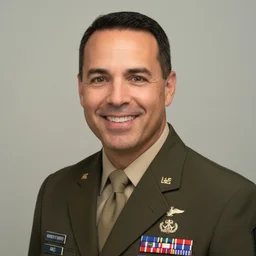
Retired Military Officer & Armed Forces Test Preparation Specialist
United States Army War CollegeColonel Steven Harris (Ret.) served 28 years in the US Army, earning a Master of Arts in Military Science from the Army War College and a Bachelor of Science in Criminal Justice. He has coached thousands of military enlistment and officer candidate program applicants through the ASVAB, AFQT, AFCT, OAR, and officer selection assessment processes across all military branches.
Join the Discussion
Connect with other students preparing for this exam. Share tips, ask questions, and get advice from people who have been there.
View discussion (5 replies)