
ASVAB Practice Test: Free 2026 September Military Exam Prep
Pass the ASVAB exam with confidence. ✅ Practice questions with detailed explanations and instant feedback on every answer.

ASVAB Practice Test: Your Complete 2026 Military Exam Guide
The ASVAB — Armed Services Vocational Aptitude Battery — is the gateway to every U.S. military career. Your scores don't just determine if you can enlist; they dictate which jobs you're eligible for, which branch will recruit you, and how much signing bonus leverage you'll have. Get a high score and you negotiate from strength.
Here's the thing: the ASVAB isn't designed to be tricky. It measures what you actually know across nine subject areas — from arithmetic to auto mechanics. If you know the content, you score well. That's why targeted free ASVAB practice test work is the single most effective prep strategy you can use. Practice reveals gaps; study closes them; retesting confirms the fix.
This guide covers everything — the full subtest breakdown, AFQT score calculation, what scores each branch requires, how MOS and rate selection actually works, and an 8-week study plan. Whether you're prepping for the CAT-ASVAB at MEPS or the paper version at a recruiter's office, you'll find everything you need here. Bookmark it. Come back as you work through each subtest section.
The military tests roughly 500,000 applicants per year. About 30% score below the minimum AFQT for any branch. Don't be in that group. Practice specifically, not generally. Every subtest on this page has a dedicated practice set — use them before test day, not on it.
Start with the practice tests linked throughout this page. Then come back to the strategy sections. That back-and-forth rhythm — practice, review, understand — is how you move your score. Not one marathon study session the week before. Consistent, targeted reps over weeks. Six to eight weeks of this approach reliably moves AFQT scores 10–20 percentile points.
Your recruiter wants you to score well, too. A higher score makes their job easier — it gives them more job slots to offer you, and those slots often come with enlistment bonuses that benefit you directly. This is a collaborative process. Treat the ASVAB as an investment, not a formality.
What Is the ASVAB?
The Armed Services Vocational Aptitude Battery has been the U.S. military's primary entrance and job-placement exam since 1968. It replaced a patchwork of individual branch tests with one standardized battery — and the military has refined it ever since. Today's CAT-ASVAB is psychometrically sophisticated: the difficulty of each question adjusts based on your answer to the last one.
You'll take the ASVAB at a Military Entrance Processing Station (MEPS) or at a Military Entrance Test (MET) site — usually a National Guard armory or recruiter's office. The MEPS version is always the CAT-ASVAB. MET sites administer the paper version. The scores are interchangeable, but the experience differs significantly.
The test serves two distinct purposes. First, it determines basic eligibility through the AFQT score — a composite of four subtests. Second, it generates nine subtest scores that recruiters use to match you to open jobs. A high Mechanical Comprehension score might open up aviation mechanic roles. A strong Electronics score could steer you toward signals intelligence. Your subtest pattern matters as much as your overall AFQT — sometimes more.
The ASVAB is completely free. No application fee, no registration cost. The only investment required is preparation time. That's what ASVAB study guide resources and practice tests deliver — familiarity with question types, timed pacing, and domain-specific review that makes the actual test feel routine rather than surprising.
One thing most candidates overlook: you don't need to score perfectly on every subtest. You need to score well on the ones that feed your target job's composite. A future Cryptologic Linguist doesn't need a high Automotive score. A future Diesel Mechanic doesn't need a high Paragraph Comprehension score. Know your target, then study specifically for it.

The 9 ASVAB Subtests Explained
Each subtest covers a specific cognitive or vocational domain. You don't need to score high on all nine — you need to score high on the ones that align with the jobs you want. That said, the four AFQT subtests (AR, WK, PC, MK) are non-negotiable. You need those to enlist at all.
Arithmetic Reasoning
Arithmetic Reasoning is the most heavily weighted AFQT subtest on the CAT-ASVAB. It covers word problems — not pure computation. You'll calculate distances, rates, percentages, costs, and ratios embedded in everyday scenarios. Strong AR performance is the single best predictor of a high AFQT score. Prioritize it above every other subtest if your time is limited.
Word Knowledge and Paragraph Comprehension
Word Knowledge tests vocabulary — both direct synonym identification and word meaning in sentence context. Paragraph Comprehension tests your ability to extract main ideas, make inferences, and find supporting details in short passages. These two subtests improve quickly: two weeks of targeted vocabulary study and daily reading practice typically lifts scores 5–10 points each.
Mathematics Knowledge
MK is different from AR. It's pure math — no word problems. Algebra equations, geometric formulas, exponent rules, factoring expressions. If your algebra is rusty, this is where practice pays off fastest. The ASVAB mathematics knowledge practice sets on this site target every concept the CAT-ASVAB actually tests — not textbook theory, the actual question types that appear on exam day.
General Science
General Science draws from all four hard sciences — biology, chemistry, physics, and earth science. Broad but shallow. You need working knowledge of cell biology basics, Newton's three laws, the periodic table structure, chemical bonding, and basic weather patterns — not deep expertise in any single area. One focused week of GS review typically lifts scores noticeably.
Electronics Information
EI covers Ohm's law (V = IR), series vs. parallel circuits, capacitance, inductance, and component identification — resistors, capacitors, transistors, diodes. If you've never studied basic electronics, budget at least 5–7 hours here. If you have, this subtest is straightforward.
Automotive and Shop Information
Auto & Shop covers engine systems (ignition, fuel, cooling, exhaust), drivetrain components, tool identification, and basic shop procedures including safety. If you've worked on vehicles or spent time in a shop, this is essentially free points. If not, a targeted 4–6 hour review of engine diagrams and common tool names covers most of the question pool.
Mechanical Comprehension
MC covers levers, pulleys, gears, hydraulics, and fluid pressure. It's physics-based but doesn't require calculus — you need intuitive understanding of how mechanical systems transfer force and motion. Visual practice matters here: looking at diagrams and predicting mechanical outcomes is the core skill being tested.
Assembling Objects
AO is purely spatial. You see shapes or connector diagrams in pieces and select the correctly assembled version from four options. There's no content to study — it's a spatial reasoning skill. Practice improves performance, but the gains are smaller here than in content-heavy subtests. If AO feeds a composite you need, do timed practice sets specifically for it.
Bottom line across all nine subtests: identify which composites your target MOS or rating requires, then drill those specific subtests hardest. The ASVAB rewards specificity. Use the practice tests below — subtest by subtest — and track your time as well as your accuracy. Pacing matters on the CAT-ASVAB, especially for subtests with tight time-per-question limits. Arithmetic Reasoning, for example, allows less than 2.5 minutes per question on the CAT — knowing the content is necessary, but working efficiently is what separates passing from struggling.
CAT-ASVAB vs. Paper ASVAB
The format difference isn't trivial. On the CAT-ASVAB, the computer selects your next question based on whether you got the last one right or wrong. Get an answer right, and the next question is harder. Get it wrong, and the next is easier. Every question counts more. You cannot skip questions or go back to change answers — that's the trade-off.
The paper ASVAB doesn't adapt. You see all questions at fixed difficulty, you can skip and return within each subtest, and the raw score is converted to a scaled score using a different algorithm. Some test-takers find the paper format less stressful for exactly this reason — the inability to revisit answers on the CAT is psychologically challenging if you're prone to second-guessing yourself.
Speed differs significantly. The CAT-ASVAB takes about 1.5 to 2 hours total because adaptive testing is efficient — you don't see questions far outside your ability range. The paper ASVAB runs closer to 3 to 4 hours with administrative time included.
Score-wise, both produce equivalent AFQT and subtest scores through statistical equating. A 72 on the CAT equals a 72 on the paper version. The military designed the scoring to be interchangeable so branch and job eligibility doesn't depend on which format you took.
If you're prepping via practice asvab test resources online, they simulate the content of both formats. Content mastery transfers regardless of delivery method — the knowledge domains are identical. What changes is the test experience, not what you need to know.
One practical note: if you're testing at a MET site and have option for either format, think about your test-taking style. If you're a strong second-guesser who regularly changes answers and benefits from that, paper gives you that option. If you want results the same day and prefer a shorter session, CAT is your format.
ASVAB Practice Test Questions
Prepare for the ASVAB - Armed Services Vocational Aptitude Battery exam with our free practice test modules. Each quiz covers key topics to help you pass on your first try.
ASVAB Arithmetic Reasoning Test
ASVAB Exam Questions covering Arithmetic Reasoning Test. Master ASVAB Test concepts for certification prep.
ASVAB Arithmetic Reasoning Word Problems
Free ASVAB Practice Test featuring Arithmetic Reasoning Word Problems. Improve your ASVAB Exam score with mock test prep.
ASVAB Assembling Objects Test
ASVAB Mock Exam on Assembling Objects Test. ASVAB Study Guide questions to pass on your first try.
ASVAB Automotive Information Test
ASVAB Test Prep for Automotive Information Test. Practice ASVAB Quiz questions and boost your score.
ASVAB Electronics Fundamentals and Circuits
ASVAB Questions and Answers on Electronics Fundamentals and Circuits. Free ASVAB practice for exam readiness.
ASVAB Electronics Practice Test
ASVAB Mock Test covering Electronics Practice Test. Online ASVAB Test practice with instant feedback.
ASVAB Electronics Practice Test 1
Free ASVAB Quiz on Electronics Practice Test 1. ASVAB Exam prep questions with detailed explanations.
ASVAB General Science Biology and Ecology
ASVAB Practice Questions for General Science Biology and Ecology. Build confidence for your ASVAB certification exam.
ASVAB General Science Practice Test
ASVAB Test Online for General Science Practice Test. Free practice with instant results and feedback.
ASVAB General Science Practice Test 1
ASVAB Study Material on General Science Practice Test 1. Prepare effectively with real exam-style questions.
ASVAB Mathematics Knowledge Test
Free ASVAB Test covering Mathematics Knowledge Test. Practice and track your ASVAB exam readiness.
ASVAB Mechanical Comprehension Principles
ASVAB Exam Questions covering Mechanical Comprehension Principles. Master ASVAB Test concepts for certification prep.
ASVAB Mechanical Comprehension Test
Free ASVAB Practice Test featuring Mechanical Comprehension Test. Improve your ASVAB Exam score with mock test prep.
ASVAB Paragraph Comprehension and Inference
ASVAB Mock Exam on Paragraph Comprehension and Inference. ASVAB Study Guide questions to pass on your first try.
ASVAB Paragraph Comprehension Test
ASVAB Test Prep for Paragraph Comprehension Test. Practice ASVAB Quiz questions and boost your score.
Branch Minimum Score Requirements
Each branch sets its own AFQT floor — the lowest percentile score that makes you eligible to enlist. These minimums shift slightly based on recruiting goals, annual quotas, and enlistment bonus availability. The numbers below reflect 2026 standards — verify with your recruiter since waivers exist and minimums sometimes adjust.
The Army has the lowest floor at 31, which is one reason it's the largest branch by volume. The Coast Guard sits highest at 45 — and in practice, recruiters rarely accept anyone under 55 because competition for limited billets is intense. Air Force and Space Force use 36 as the official minimum but routinely see average AFQT scores well above 60 among actual enlistees.
Navy and Marine Corps sit in the middle. Navy's 35 minimum works on paper, but scores below 50 often require waivers for specific job categories. Marines use 32 but many technical MOS series effectively require higher scores through their composite minimums.
What the branch minimums don't show is the job-level composite requirements sitting above them. You might clear the Army's 31 AFQT and enlist — but if your Skilled Technical (ST) composite is below 93, you're ineligible for intelligence, signals, and medical laboratory MOSs. The Army's GT, MM, CL, ST, and EL composites each combine different subtest scores, and each MOS has its own floor within those composites.
That's why checking your target ASVAB scores against MOS composite requirements matters so much. The AFQT minimum is the door. The composite minimums are the room you want to be in once you're through it. Research both carefully before you study — one informs your enlistment eligibility, the other determines your entire career trajectory in uniform. The time you invest now in understanding these score targets pays off every single day you serve.
Branch AFQT Minimums and Key Notes
Minimum AFQT: 31 (waiver possible at 26–30 for high-demand periods)
The Army accepts the broadest range of AFQT scores but has 150+ MOSs each with composite minimums. Army GT score ≥ 110 unlocks most technical and officer-track paths. High-demand MOSs like 35F (Intelligence Analyst) require ST ≥ 101. Enlistment bonuses up to $50,000 for certain MOSs at Cat I–II scores.

MOS and Rate Selection: How Your Scores Shape Your Career
Here's what most candidates don't realize: your ASVAB scores don't just clear a threshold — they're active tools your recruiter uses to slot you into available positions. When you sit down with a recruiter after MEPS, they pull up current job openings filtered by your composite scores. Higher composites mean more options on that list.
Every MOS (Army/Marines), rating (Navy), and AFSC (Air Force) has a composite score minimum. These composites combine specific subtest scores into a single number. The Army's General Technical (GT) composite — derived from AR and VE (Verbal Expression = WK + PC) — is arguably the most important single number for Army enlistees.
GT ≥ 110 is the threshold for officer candidate pathways and many high-paying technical MOSs. If you scored a GT of 108, two additional points on AR or verbal is the difference between an infantry slot and an intelligence analyst billet. Not hypothetical — that's how recruiting actually works.
The Navy's Nuclear Field program has some of the hardest ASVAB composite requirements in any branch: AR+MK+EI+GS ≥ 252 (the NF score). These candidates complete 18 months of intensive nuclear training and receive some of the largest Navy enlistment bonuses available. High GS and EI scores directly unlock this pathway. If you're interested in nuclear propulsion, submarine service, or Navy nuclear power, your GS and EI subtest scores are the ones to maximize.
Air Force job selection uses MAGE composites: Mechanical (M), Administrative (A), General (G), and Electronics (E). Cyber and Space operations AFSCs require G ≥ 64 and E ≥ 70. These are attainable with focused prep — GS, EI, and MK study all contribute to these composites simultaneously.
The practical takeaway: before you take the ASVAB, research the specific jobs you want. Look up their composite minimums — your recruiter has the current list, and GoArmy.com, Navy.com, and the official ASVAB website publish them. Then target your study specifically toward the subtests that feed those composites. Study for the AFQT minimum and you might enlist. Study for the composite minimums of the job you want and you get a choice — and potentially a significant enlistment bonus on top of it.
ASVAB CAT vs. Paper: Which Should You Aim For?
- +CAT-ASVAB gives immediate score results — no waiting weeks
- +CAT is shorter in total time (1.5 hrs vs. 3–4 hrs paper)
- +CAT adaptive testing means fewer easy/irrelevant questions
- +Paper allows skipping and returning within each subtest
- +Paper format is less stressful for answer-changers
- −CAT-ASVAB: zero ability to go back and change answers
- −Paper ASVAB: results take 1–2 weeks by mail
- −CAT requires more focus per question — no second chances
- −Paper version not available at all MEPS locations
- −Both: 30-day wait before first retest, 6 months before third
ASVAB Prep Checklist
- ✓Research composite minimums for your top 3 target MOSs or ratings
- ✓Take a full diagnostic ASVAB practice test before studying
- ✓Identify your 2–3 weakest AFQT subtests (AR, WK, PC, MK)
- ✓Study vocabulary: 20–30 new words daily for 4+ weeks
- ✓Master Arithmetic Reasoning word problem patterns
- ✓Review algebra basics: solving for x, quadratics, inequalities
- ✓Study General Science across all four domains (not just one)
- ✓Complete at least 3 timed practice sets per target subtest
- ✓Take one full timed ASVAB simulation in week 7 or 8
- ✓Bring valid government-issued photo ID to MEPS or MET site
- ✓Get 8 hours of sleep the night before — not optional
ASVAB Questions and Answers

About the Author
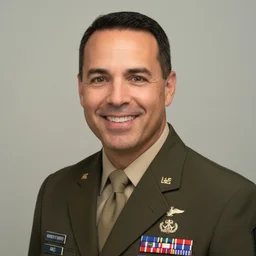
Retired Military Officer & Armed Forces Test Preparation Specialist
United States Army War CollegeColonel Steven Harris (Ret.) served 28 years in the US Army, earning a Master of Arts in Military Science from the Army War College and a Bachelor of Science in Criminal Justice. He has coached thousands of military enlistment and officer candidate program applicants through the ASVAB, AFQT, AFCT, OAR, and officer selection assessment processes across all military branches.
Join the Discussion
Connect with other students preparing for this exam. Share tips, ask questions, and get advice from people who have been there.
View discussion (5 replies)