
ASVAB Scores by Branch: Army, Navy, Air Force & Marines 2026 September
ASVAB scores army navy air force military scores explained — 🔎 minimum AFQT, line scores by branch, ACFT fitness test, and free practice test prep.
If you're researching asvab scores army navy air force military scores to figure out which branch you qualify for, this guide breaks down every minimum, every line score, and every job category by service. Knowing where your AFQT lands tells you whether you can enlist — but knowing your line scores tells you which jobs you can actually hold. A solid asvab practice test routine before MEPS is the difference between scraping by and unlocking the careers you actually want.
Each military branch sets its own AFQT minimum: Army 31, Marines 32, Navy 35, Air Force 36, Space Force 36, and Coast Guard 40 (the highest). That's just the floor. Competitive specialties — special operations, cyber, intelligence, nuclear field, aviation — typically require AFQT scores 50+ alongside specific line score thresholds. Most recruits underestimate how much your asvab score determines your enlistment options on day one of the contract negotiation at MEPS.
This guide also covers the Army Combat Fitness Test (ACFT) — the physical complement to your ASVAB qualification — because Army recruits face both academic and physical screening before training. We'll walk through line scores by service, the ACFT scoring scale, and how to prep for both tests in parallel so you walk into MEPS qualified for the job you want, not just the job that's available.
ASVAB Scores Across Military Branches
The asvab is scored two ways: a percentile-based AFQT (Armed Forces Qualification Test) score and branch-specific line scores. Your AFQT is calculated from four subtests — Arithmetic Reasoning, Mathematics Knowledge, Word Knowledge, and Paragraph Comprehension — and ranges from 1 to 99. An AFQT of 50 means you scored higher than 50% of test-takers from a national reference sample. The asvab test isn't graded against today's recruits — it's normed against a 1997 reference group, which is why scores stay consistent across decades.
Line scores combine ASVAB subtests differently depending on branch and job category. Army uses 10 line scores (CL, CO, EL, FA, GM, GT, MM, OF, SC, ST). Navy uses ratings-specific composites. Air Force uses four aptitude areas (Mechanical, Administrative, General, Electronic). Marines use three composites (GT, EL, MM). Knowing the line score requirements for your target MOS or rating before you take the ASVAB lets you focus your study time on the subtests that actually matter for your career path.
A high AFQT alone doesn't guarantee your dream job. You need both the AFQT minimum AND the right line scores for the specific role. Recruits who only study for AFQT subtests can still miss out on technical jobs that require strong Electronics Information or Mechanical Comprehension scores.
Branch asvab scores requirements reflect each service's competitiveness and mission needs. Army has the lowest AFQT minimum at 31 — making it the most accessible branch numerically — but Special Forces, Rangers, and intelligence MOS slots require 90+ across specific line scores. Navy at 35 emphasizes technical and STEM aptitude, especially for Nuclear Field and aviation ratings. Air Force at 36 puts heavy weight on the Mechanical and Electronic composites for maintenance and avionics jobs. Marines at 32 expects above-minimum scores for any MOS beyond infantry. The asvab test minimums are starting points, not targets.
Beyond ASVAB, the Army Combat Fitness Test (ACFT) is now mandatory for all soldiers — it replaced the old APFT in 2022. Recruits don't take the ACFT before MEPS, but you'll need to pass it during Basic Combat Training. The ACFT includes deadlifts, standing power throws, hand-release push-ups, sprint-drag-carry, plank, and a two-mile run. Starting basic strength training during ASVAB prep gives you a head start on the army combat fitness test you'll face at BCT.
Don't ignore physical prep while studying. The recruits who succeed at MEPS and beyond treat both academic and physical preparation as parallel tracks, not sequential ones.
ASVAB Practice Test Questions
Prepare for the ASVAB - Armed Services Vocational Aptitude Battery exam with our free practice test modules. Each quiz covers key topics to help you pass on your first try.
ASVAB Arithmetic Reasoning Test
ASVAB Exam Questions covering Arithmetic Reasoning Test. Master ASVAB Test concepts for certification prep.
ASVAB Arithmetic Reasoning Word Problems
Free ASVAB Practice Test featuring Arithmetic Reasoning Word Problems. Improve your ASVAB Exam score with mock test prep.
ASVAB Assembling Objects Test
ASVAB Mock Exam on Assembling Objects Test. ASVAB Study Guide questions to pass on your first try.
ASVAB Automotive Information Test
ASVAB Test Prep for Automotive Information Test. Practice ASVAB Quiz questions and boost your score.
ASVAB Electronics Fundamentals and Circuits
ASVAB Questions and Answers on Electronics Fundamentals and Circuits. Free ASVAB practice for exam readiness.
ASVAB Electronics Practice Test
ASVAB Mock Test covering Electronics Practice Test. Online ASVAB Test practice with instant feedback.
ASVAB Electronics Practice Test 1
Free ASVAB Quiz on Electronics Practice Test 1. ASVAB Exam prep questions with detailed explanations.
ASVAB General Science Biology and Ecology
ASVAB Practice Questions for General Science Biology and Ecology. Build confidence for your ASVAB certification exam.
ASVAB General Science Practice Test
ASVAB Test Online for General Science Practice Test. Free practice with instant results and feedback.
ASVAB General Science Practice Test 1
ASVAB Study Material on General Science Practice Test 1. Prepare effectively with real exam-style questions.
ASVAB Mathematics Knowledge Test
Free ASVAB Test covering Mathematics Knowledge Test. Practice and track your ASVAB exam readiness.
ASVAB Mechanical Comprehension Principles
ASVAB Exam Questions covering Mechanical Comprehension Principles. Master ASVAB Test concepts for certification prep.
ASVAB Mechanical Comprehension Test
Free ASVAB Practice Test featuring Mechanical Comprehension Test. Improve your ASVAB Exam score with mock test prep.
ASVAB Paragraph Comprehension and Inference
ASVAB Mock Exam on Paragraph Comprehension and Inference. ASVAB Study Guide questions to pass on your first try.
ASVAB Paragraph Comprehension Test
ASVAB Test Prep for Paragraph Comprehension Test. Practice ASVAB Quiz questions and boost your score.
Line Scores by Service Branch
Army uses 10 line scores: CL (Clerical), CO (Combat), EL (Electronics), FA (Field Artillery), GM (General Maintenance), GT (General Technical), MM (Mechanical Maintenance), OF (Operators and Food), SC (Surveillance and Communications), ST (Skilled Technical). Each MOS has minimum line score requirements — for example, 11B Infantry needs CO 90+, 25B IT Specialist needs ST 95+. Look up your target MOS line score requirements at the Army's MOS handbook before taking the ASVAB.
A focused test asvab practice test routine pays off across every branch. The four AFQT subtests determine eligibility, but technical line scores determine the jobs available to you. A good asvab study guide covers all 10 subtests systematically — not just AFQT components. Skipping Electronics Information or Mechanical Comprehension content leaves you exposed if your target MOS requires those scores. Review the line score requirements for at least three MOS or rating options you'd consider, then study to exceed those thresholds across all relevant subtests.
Practice tests should mirror real exam conditions. Sit for a full session — 2 hours for paper version, 90 minutes for CAT-ASVAB — without breaks, phone interruptions, or lookups. The discomfort of timed practice builds the focus you need on test day. Most recruits who underperform on the real ASVAB never practiced under realistic conditions; they studied content but never simulated the pressure of an actual test session.
Track your weak subtests across multiple practice sessions. Patterns matter more than single scores — if Mechanical Comprehension lags in three consecutive practice tests, that's where to allocate your next two weeks of study time.
Make your study sessions short and frequent. Three 45-minute sessions per day beat one three-hour marathon. Your brain consolidates learning during rest periods, so spaced practice locks in retention better than blocked study time. Build short breaks into every session to keep focus sharp throughout the prep window.
4 Strategies for Higher ASVAB Scores
Don't aim for the bare minimum. Target your branch's floor plus 20 points minimum. Army recruits should aim for AFQT 50+, Navy and Air Force for 55+. The buffer protects you against test-day variance and unlocks more MOS options without forcing a retake.
WK is the highest-yield AFQT subtest to improve quickly. Learn 15-20 vocabulary words daily using context sentences, not isolated definitions. Focus on Latin and Greek roots — they unlock dozens of word meanings at once. WK improvement of 10 points in 4 weeks is realistic with consistent daily flashcard use.
Arithmetic Reasoning and Mathematics Knowledge together drive 50% of your AFQT. Drill 20 math questions per day across word problems, fractions, percentages, algebra, and geometry. Daily reps beat weekend marathons — math fluency requires consistent practice to maintain accuracy under timed pressure.
Take at least three full-length timed practice tests under real exam conditions — no phones, no breaks, no lookups. The discomfort of simulated pressure builds the test-day focus you need. Recruits who only study content but skip realistic simulations consistently underperform their practice question scores.
Books like asvab for dummies work well for recruits who need approachable content reviews — they break down each subtest with examples and practice questions in a friendly format. Pair it with a heavier prep book (Kaplan, Barron's) for additional practice question depth. The Dummies series covers content cleanly; the harder prep books push you with realistic question difficulty.
Use both as complementary tools rather than choosing one or the other. Beyond ASVAB study, recruits heading to Army basic must prepare for the army fitness test — the ACFT now grades you on six events, replacing the legacy APFT push-up, sit-up, and run format.
Your asvab scores directly map to military career options. AFQT 50-65 unlocks most general MOS choices; 65-85 opens technical specialties; 85+ qualifies you for special operations, intelligence, and elite training pipelines. Knowing the score-to-career mapping before MEPS lets you negotiate from a position of strength when your recruiter presents available contract options. Don't sign for the first job offered — push for the MOS your scores actually qualify you for.
Recruiters work toward branch quotas, so they'll sometimes steer you to needed jobs over preferred ones. Knowing your line scores and target MOS requirements lets you push back constructively.
Higher ASVAB Score: Pros and Cons
- +More MOS or rating options across every military branch
- +Eligibility for elite specialties — special forces, nuclear field, intelligence, aviation
- +Stronger position to negotiate signing bonuses and assignment preferences
- +Improved chances of qualifying for officer commissioning programs later
- +Higher line scores unlock technical training schools with civilian career value
- +Better post-service career credentials and security clearance eligibility
- −Higher scores can lead to recruiter pressure for harder, longer training pipelines
- −Technical MOS slots often require longer initial enlistment commitments (6 years)
- −Some elite jobs come with frequent deployments and family separations
- −Specialty training school waitlists can delay your start date by months
- −High-AFQT recruits may be steered into jobs they didn't want for branch quotas
- −Higher scores create more complex contract negotiation — easier to make wrong choice
A consistent practice asvab test habit reveals your weak subtests fast. Take a full diagnostic before opening a single textbook — the score breakdown tells you exactly where to spend your study hours. Don't waste time reviewing material you already know; targeted weakness-focused study delivers faster score gains than generalized review. Most candidates who improve dramatically — 20+ AFQT points across 6 weeks — used diagnostic-driven study from day one.
The army pt test (now the ACFT) requires parallel physical preparation. Six events: deadlift (3 reps max, target 140-340 lb), standing power throw (10-lb medicine ball overhead backward), hand-release push-ups (2 minutes, target 10-60), sprint-drag-carry (250-yard timed, target under 3 minutes), plank (target 1-3 minutes), and 2-mile run (target under 21 minutes). Start training 8-12 weeks before basic to develop both strength and aerobic capacity. Strength training with deadlifts and overhead throws translates directly to ACFT events.
Your physical and academic prep should run on the same calendar. Schedule ASVAB study in the morning when mental focus peaks; do ACFT prep in the evening or before work. Splitting cognitive and physical training across the day prevents burnout in either area.
Negotiate from data, not hope. Bring your line score breakdown to MEPS and reference specific MOS line score requirements as you discuss contract options with your recruiter. Knowing the exact line scores for your top three job choices puts you in the strongest possible position to lock in the assignment you want during contract negotiation.
ASVAB & MEPS Prep Checklist
- ✓Take a diagnostic ASVAB practice test before starting content review
- ✓Identify your branch's AFQT minimum and target 20+ points above it
- ✓Look up line score requirements for at least 3 target MOS or rating options
- ✓Drill Word Knowledge daily using vocabulary flashcards (15-20 new words/day)
- ✓Practice Arithmetic Reasoning and Mathematics Knowledge with timed sets
- ✓Cover Electronics Information and Mechanical Comprehension if targeting technical jobs
- ✓Take 3+ full-length timed practice tests under realistic exam conditions
- ✓Begin ACFT physical training 8-12 weeks before Army basic combat training
- ✓Negotiate your contract MOS at MEPS — don't accept the first job offered
- ✓Bring two forms of ID and arrive 30 minutes early for your MEPS appointment
The asvab score range goes from 1 to 99 (percentile-based AFQT). Scores cluster heavily in the middle: most recruits land between 30 and 60, with fewer recruits at the extreme high or low ends. AFQT below 31 is below floor for any branch; 31-49 qualifies for basic Army or Marines roles; 50-65 opens most general MOS slots; 65-85 unlocks technical and skilled specialties; 85-99 qualifies for elite programs. Knowing where you sit on this distribution clarifies your enlistment options and bonus eligibility.
Use a practice asvab session weekly throughout your prep window to track score progression. Weekly trends matter more than single-test scores — a steady upward trajectory means your study plan is working; flat or declining scores signal you need to change approach. Consistent test asvab practice test drilling at least once weekly is the single highest-leverage prep habit, and it doesn't require additional study materials beyond what you already have.
Use the practice test results to update your study plan in 1-2 week cycles. Drilling without periodic re-assessment leads to plateaus; weekly diagnostics keep your prep responsive to actual progress, not assumed progress.
Set checkpoints for both tracks. Weekly ASVAB practice tests measure cognitive progress; weekly fitness benchmarks measure physical progress. Adjust your study and training intensity based on the data, not on how you feel. Recruits who track both metrics consistently improve faster than those who study and train without measurement.
Quick Reference: Branch AFQT Floors
Army: 31 (lowest minimum). Marines: 32. Navy: 35. Air Force: 36. Space Force: 36. Coast Guard: 40 (highest minimum, smallest force). These are absolute floors — competitive specialties typically demand AFQT 50+ alongside specific line scores. Recruits with high school diplomas face the standard minimums; GED-holders often face higher AFQT requirements (50 for Army, 50 for Navy) and may need to complete additional college credits before enlistment qualifies.
The Army Combat Fitness Test — also called the army aft in some contexts — is now scored 0-600 across six events (100 points per event). Minimum passing score is 360 (60 per event), but combat-arms MOS slots require higher scores. The ACFT replaced the legacy APFT in 2022 and emphasizes functional combat fitness over pure cardiovascular endurance. Strength training, core work, and sprint conditioning all matter — pure running mileage no longer dominates the test.
Air Force recruits don't face the ACFT, but they do take the Air Force Fitness Assessment (push-ups, sit-ups or planks, 1.5-mile run) within their first 6 months at their first duty station. An asvab practice test air force routine prepares you for the academic side; physical prep happens at training. Air Force basic also includes the Confidence Course, which tests obstacle navigation and physical resilience without formal scoring.
Whatever branch you target, treat the ASVAB and physical readiness as inseparable parts of the same enlistment process. Scoring high on one and failing the other still costs you the contract you wanted.
Plan your timeline carefully. Most recruits do best with 6-8 weeks of structured ASVAB prep — long enough to cover all subtests but short enough to maintain study momentum without burnout. Add 8-12 weeks of physical training in parallel for ACFT readiness. Splitting prep across academic mornings and physical evenings keeps both tracks fresh and prevents either area from being neglected.
If you have a GED rather than a high school diploma, most branches require AFQT 50+ for enlistment — well above the standard floors. Army historically requires AFQT 31 for diploma holders but 50 for GED holders. Navy and Air Force often require AFQT 50+ regardless of education status. Some branches require GED holders to complete 15+ college credits before enlistment qualifies. Check your branch's current GED policy before scheduling your ASVAB date.
An asvab test sample online session is the easiest way to gauge your readiness without paying for prep materials. Free practice tests across all 10 subtests are available on official ASVAB sites and reputable prep platforms. Use them for diagnostic purposes early in your prep cycle, then return to them every 1-2 weeks to track progression. The questions on free practice tests don't always match the difficulty of real ASVAB items, but the format and timing match closely enough to build test-taking rhythm.
If you're new to military enlistment, you might wonder what is the asvab test exactly. The Armed Services Vocational Aptitude Battery is a multiple-choice exam developed by the Department of Defense to measure aptitude across 10 subject areas. It's used to determine enlistment eligibility (via AFQT) and job placement (via line scores). The test has been administered in some form since 1968 and is taken by over 1 million recruits annually across all U.S. military branches.
The ASVAB is also offered in high schools through the Career Exploration Program — high school juniors and seniors can take it for free as a career assessment tool, separate from any military enlistment commitment.
If you're asking how many questions are on the asvab, the answer depends on the version. The CAT-ASVAB (computer adaptive) has 145 questions across 10 subtests, completed in roughly 90 minutes. The paper-and-pencil version has 225 questions across 9 subtests (Verbal Expression isn't a separate subtest) and runs about 3 hours. Most MEPS locations administer the CAT version. The CAT is shorter and adapts difficulty based on your responses, so each correct answer carries more weight than on the paper test.
The army fitness test aft — the colloquial shorthand for ACFT — applies to all soldiers, including National Guard and Reserve. Failing the ACFT during basic combat training can delay graduation; failing it as an active-duty soldier triggers a remediation plan with a 90-day window to retake. Civilian recruits training for ACFT before basic give themselves a major advantage — the soldiers who arrive at basic already meeting ACFT standards adjust to the demanding training pace much faster than those still building baseline fitness.
Score high on ASVAB. Train hard for ACFT. Walk into MEPS prepared on both fronts and you'll have the leverage to negotiate the contract you actually want — not the one your recruiter happens to need to fill that month.
Build a clear pre-MEPS routine — sleep early, hydrate, eat a real breakfast, and arrive 30 minutes ahead of your appointment to settle in without rushing the check-in process.
ASVAB Questions and Answers
About the Author
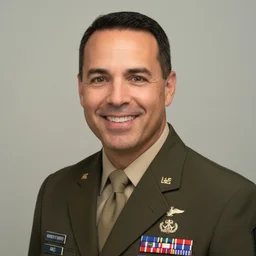
Retired Military Officer & Armed Forces Test Preparation Specialist
United States Army War CollegeColonel Steven Harris (Ret.) served 28 years in the US Army, earning a Master of Arts in Military Science from the Army War College and a Bachelor of Science in Criminal Justice. He has coached thousands of military enlistment and officer candidate program applicants through the ASVAB, AFQT, AFCT, OAR, and officer selection assessment processes across all military branches.
Join the Discussion
Connect with other students preparing for this exam. Share tips, ask questions, and get advice from people who have been there.
View discussion (5 replies)