
ASVAB Practice Tests: Free Questions for Every Subtest 2026 September
💯 Boost your ASVAB exam score with practice questions and detailed answer explanations. Track progress with instant feedback.
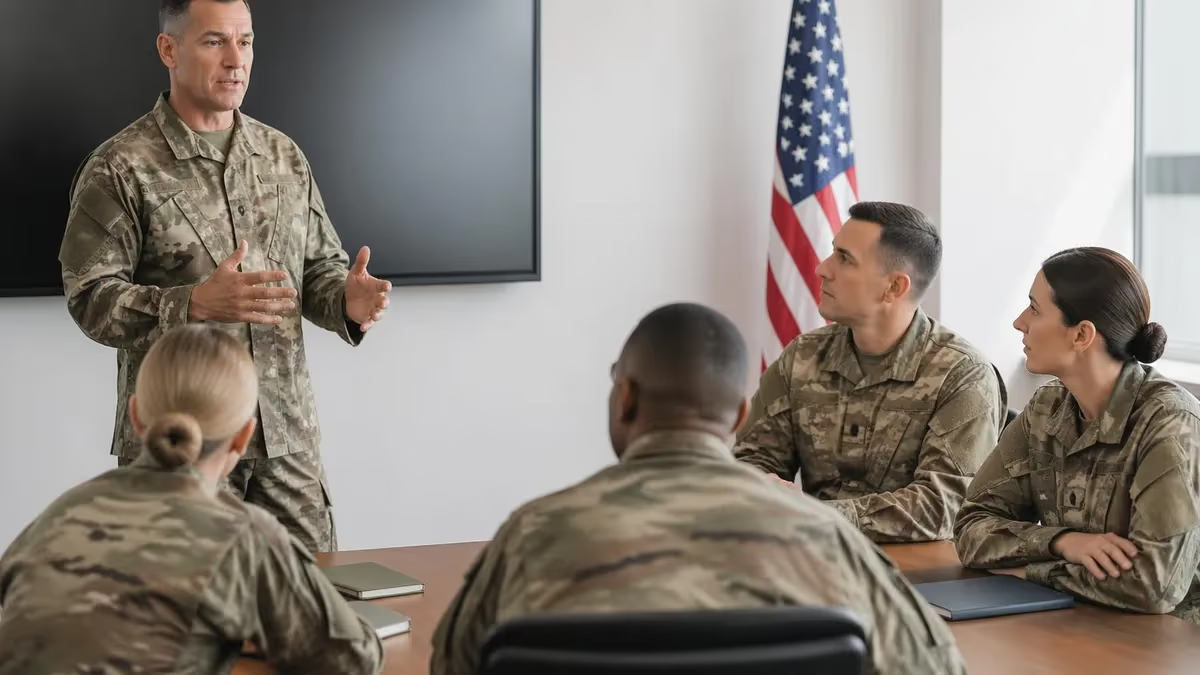
ASVAB practice tests are the single best tool you have for raising your military entrance score. That's not opinion -- it's backed by every recruiter and test prep expert in the field. The Armed Services Vocational Aptitude Battery measures your abilities across ten subtests, from arithmetic reasoning to electronics information. Each subtest feeds into composite scores that determine which military jobs you qualify for. Higher scores mean better options. Period.
Working through asvab practice tests does more than just familiarize you with question formats. It builds the timing discipline you'll need on test day, when 145 minutes feel like 45. You'll identify weak areas early -- maybe paragraph comprehension trips you up, or mechanical comprehension concepts don't click yet. Knowing your gaps before walking into the testing center gives you time to fix them instead of discovering problems when it actually counts.
Whether you want to practice ASVAB tests for the Army, Navy, Air Force, or Marines, the core exam is identical. Branch-specific line scores determine job eligibility, but the test itself doesn't change between branches. That means every practice question you complete applies regardless of which branch you're targeting. This guide walks you through subtest strategies, score breakdowns, study timelines, and free practice materials that actually mirror the real exam -- not watered-down approximations that waste your time and leave you underprepared.

When you practice ASVAB tests, focus on the four subtests that calculate your AFQT score first. Arithmetic Reasoning, Mathematics Knowledge, Word Knowledge, and Paragraph Comprehension -- these four determine whether you qualify for enlistment at all. Everything else affects job placement, but without a passing AFQT, none of that matters. Prioritize accordingly.
Free ASVAB practice tests are everywhere online, but quality varies wildly. Some sites recycle outdated questions that don't reflect current exam content. Others use formats nothing like the actual CAT-ASVAB (Computer Adaptive Test) you'll take at MEPS. The practice materials on this page match real exam difficulty and question structure because they're built from verified ASVAB content standards -- not scraped from random study guides or generated without context.
How much time should you spend preparing? That depends on your baseline. If you're scoring above 60 on practice tests already, two to three weeks of focused review might be enough. Scoring below 40? Plan for six to eight weeks minimum, with daily study sessions of 45 to 60 minutes. Don't cram. The ASVAB tests reasoning ability, not memorization. Your brain needs time to internalize problem-solving patterns, and that doesn't happen overnight no matter how motivated you are.
ASVAB practice tests Air Force recruits take are the same exam everyone else takes -- but Air Force line score requirements tend to be higher than other branches. If you're aiming for technical roles like Cyber Transport Systems or Avionics, you'll need strong General and Electronics composite scores. That means dedicating extra study time to Mathematics Knowledge, Electronics Information, and General Science beyond just the AFQT subtests.
ASVAB math practice tests deserve special attention because math anxiety sinks more scores than any other factor. Arithmetic Reasoning presents word problems -- real-world scenarios involving percentages, ratios, distances, and basic algebra. Mathematics Knowledge tests pure computation: equations, geometry, exponents. Many test-takers struggle not because the math is hard, but because they haven't practiced it since high school. Rust, not inability, is the real enemy. Check out our free ASVAB practice tests to shake off that rust before test day.
The CAT-ASVAB adapts to your performance in real time. Answer correctly, and the next question gets harder. Answer wrong, and it gets easier. This means your early answers carry disproportionate weight. Practice tests help you build confidence on those opening questions -- when pressure is highest and accuracy matters most. Don't rush the first five questions in any subtest. Take your time, verify your answer, and let the algorithm work in your favor rather than against you.
ASVAB Key Concepts
What is the passing score for the ASVAB exam?
Most ASVAB exams require 70-75% to pass. Check the official exam guide for exact requirements.
How long is the ASVAB exam?
The ASVAB exam typically allows 2-3 hours. Time management is critical for success.
How should I prepare for the ASVAB exam?
Start with a diagnostic test, create a 4-8 week study plan, and take at least 3 full practice exams.
What topics does the ASVAB exam cover?
The ASVAB exam covers multiple domains. Review the official content outline for the complete list.
ASVAB Subtests Breakdown
Word Knowledge (WK) tests vocabulary through synonym identification -- 35 questions in 11 minutes. Paragraph Comprehension (PC) gives you short passages and asks about main ideas, inferences, and word meaning in context -- 15 questions in 13 minutes. Together, these subtests heavily influence your AFQT score. Build vocabulary through daily reading (news articles work great) and practice identifying context clues in unfamiliar passages. Speed matters here more than in any other section.
ASVAB practice questions through ASVAB practice tests reveal patterns you'd never notice by just reading a textbook. Arithmetic Reasoning, for instance, recycles certain problem structures constantly. Distance-rate-time problems. Percentage-of-a-total problems. Unit conversion problems. Once you've seen each structure twenty times in practice, you'll recognize them instantly on test day and solve them faster with far fewer mistakes.
AR practice tests specifically target the subtest that trips up the most recruits. Arithmetic Reasoning isn't about advanced math -- it's about translating word problems into simple equations under time pressure. The words are the hard part, not the math. Practice teaches you to strip away the narrative and find the numbers. "A soldier runs 3 miles in 24 minutes" becomes distance divided by time equals rate. That translation skill only develops through repetition.
Track your practice scores over time. If you're not improving after two weeks of consistent study, you're probably practicing wrong -- either rushing through questions without reviewing mistakes, or avoiding your weakest areas because they're frustrating. Review every wrong answer. Understand why you chose the wrong option and why the correct answer works. That analysis takes time, but it's where actual learning happens. Mindless repetition without reflection is just busy work disguised as studying.
Practice ASVAB tests Navy applicants should focus on differ slightly from Army or Air Force prep. Navy ratings (job specialties) use composite scores like AECF, BEE, and HM that weight Electronics Information and General Science more heavily. If you want to work as a Navy Nuclear Electronics Technician, for example, you'll need exceptional scores across AR, MK, EI, GS, and MC. Starting your practice with ASVAB practice tests Air Force and Navy-specific composite requirements helps you allocate study time efficiently.
ASVAB practice tests free resources are widely available, but not all of them simulate real testing conditions. When you practice, set a timer. Close your calculator app. Sit at a desk, not your couch. The MEPS testing environment is sterile and quiet -- nothing like your bedroom with a phone buzzing every three minutes. Simulating test conditions during practice reduces anxiety on the actual day because your brain already knows what focused testing feels like.
One mistake recruits make constantly: they study only what they're already good at. It feels productive because you're getting questions right. But your AFQT score is limited by your weakest contributing subtest, not your strongest. If you're crushing Word Knowledge at 85th percentile but scoring 35th in Mathematics Knowledge, those math sessions you're skipping are costing you more than any vocabulary review could ever gain. Practice where it hurts. That's where your score jumps live.
Pros and Cons of ASVAB Practice Testing
- +Identifies weak subtests before the real exam costs you opportunities
- +Builds timing discipline for the 145-minute testing window
- +Reduces test-day anxiety through format familiarity
- +Improves AFQT scores by 10-20 percentile points on average
- +Reveals question patterns that repeat across test versions
- +Free practice resources eliminate the need for expensive prep courses
- −Low-quality practice tests can teach incorrect problem-solving approaches
- −Over-practicing without review wastes time without improving scores
- −CAT-ASVAB adaptive format is hard to replicate in static practice tests
- −Some recruits develop false confidence from easy practice materials
- −Burnout risk increases when studying more than 90 minutes daily
- −Practice scores don't perfectly predict actual ASVAB performance
ASVAB practice tests online give you flexibility that classroom prep courses can't match. Study at 6 AM before work or at midnight after your shift -- the questions don't care about your schedule. Most online platforms provide instant scoring with explanations for each answer, so you get immediate feedback instead of waiting days for a tutor's review. That feedback loop is what makes self-study actually effective.
ASVAB free practice tests should include timed sections, score breakdowns by subtest, and answer explanations -- not just right/wrong indicators. If a platform only tells you that you got question 14 wrong without explaining why, it's not a learning tool. It's a guessing game. The best practice materials walk you through the solution step by step, showing you the reasoning process so you can apply it to similar questions you haven't seen yet.
Mix your study methods. Don't just take practice test after practice test in a vacuum. Alternate between full-length timed tests (to build endurance) and untimed section drills (to build understanding). Review sessions should be separate from testing sessions -- go back through your missed questions the next day with fresh eyes. Spaced repetition works better than massed practice for retention, and the ASVAB rewards deep understanding over surface-level memorization every single time.
Your ASVAB Study Plan Checklist
- ✓Take a full diagnostic practice test to establish your baseline AFQT score
- ✓Identify your two weakest subtests and prioritize them in daily study sessions
- ✓Study 45-60 minutes daily for 4-8 weeks before your scheduled test date
- ✓Complete at least 3 full-length timed practice tests before test day
- ✓Review every wrong answer with full solution explanations -- don't just note the correct choice
- ✓Practice math problems by hand without a calculator to match test conditions
- ✓Build vocabulary through daily reading and context clue exercises
- ✓Simulate real testing conditions weekly: timed, quiet, no phone, desk only
- ✓Check your target branch's minimum AFQT and line score requirements for desired jobs
- ✓Schedule your ASVAB through your recruiter at least 2 weeks after your final practice test
Practice ASVAB tests free resources work best when you treat them as diagnostic tools, not just score generators. Every practice session should end with a list of topics to review -- not just a number. Scored 72% on Arithmetic Reasoning? Great, but which problem types did you miss? Ratios? Percentages? Word problems with multiple steps? Drill those specific weaknesses until they're strengths, then retest. That targeted approach beats random practice every time.
Practice ASVAB tests Air Force candidates take should emphasize the Mechanical (M), Administrative (A), General (G), and Electronics (E) composite areas. Air Force job qualification hinges on these four composites, each calculated from different subtest combinations. A high AFQT gets you in the door, but your ASVAB math practice tests scores combined with technical subtest performance determine whether you're loading cargo or maintaining fighter jet avionics. The difference matters -- a lot.
Retesting is an option, but it's not ideal. After your first attempt, you must wait 30 days for a retest. After the second attempt, another 30 days. After the third, you're waiting six months. Each retest uses a different form, but difficulty stays equivalent. Your most recent score is the one that counts for enlistment. Don't treat the ASVAB as a trial run -- prepare properly and aim to hit your target score on the first attempt whenever possible.
Free ASVAB practice tests online replicate the CAT-ASVAB format better than printed study guides ever could. The computer-adaptive nature of the real exam means each question's difficulty adjusts based on your previous answer. While no free practice platform perfectly replicates this algorithm, the best ones offer questions at varying difficulty levels and track your performance trends across sessions -- giving you a realistic preview of what MEPS testing actually feels like.
Navy ASVAB practice tests should focus on the subtests feeding into Navy-specific composites. Want to be a Hospital Corpsman? Your General Science and Mathematics Knowledge scores matter most. Interested in nuclear engineering? AR, MK, EI, GS, and MC all contribute. The Navy's rating system is complex, but understanding which composites your target rate requires lets you practice strategically instead of spreading your study time evenly across all ten subtests -- which sounds fair but isn't efficient.
Don't overlook Assembling Objects, the subtest most recruits ignore. It tests spatial reasoning through questions about connecting points and shapes. Navy applicants particularly need this score. The subtest is 15 questions in 15 minutes -- fast-paced and unlike anything else on the ASVAB. Practice is the only way to develop speed here because spatial reasoning questions can't be solved through memorization or formulas. Your brain either sees the pattern quickly or it doesn't, and practice is what builds that visual processing speed.
Most recruits take the CAT-ASVAB (computerized) at MEPS, but some testing locations still offer the paper-and-pencil P&P-ASVAB. The CAT version is adaptive and typically takes less time. The P&P version has fixed questions and longer time limits. Your recruiter will tell you which format your testing site uses. Practice for both formats if you're unsure -- the content is identical, but the pacing strategies differ significantly between computerized and paper testing.
ASVAB for Air Force practice tests should prioritize the General (G) composite, which combines Arithmetic Reasoning, Word Knowledge, and Paragraph Comprehension standard scores. Most Air Force technical AFSCs require a G score of 57 or higher. Cyber, intelligence, and linguist careers push that requirement above 64. The math and verbal subtests you're already studying for AFQT purposes double as G composite preparation -- efficient, if you're aware of it.
Practice ASVAB tests Marines candidates often underestimate the importance of preparation. The Marine Corps has the second-lowest minimum AFQT requirement at 32, which creates a false sense of ease. But competitive MOS assignments -- infantry, intelligence, aviation -- demand line scores well above minimums. A Marine recruit scoring AFQT 32 qualifies for enlistment but faces severely limited job options. Push for 50+ to access the roles worth serving in, and use targeted practice tests to get there systematically.
Study groups help some people enormously and hurt others. If you're disciplined enough to stay focused when others are present, group practice sessions add accountability and different problem-solving perspectives. If you end up socializing more than studying, go solo. The ASVAB is an individual test scored individually. What matters is whether you personally understand the material, not whether your study partner does. Be honest about what actually helps you learn versus what just feels social and comfortable.
ASVAB Practice Test Questions
Prepare for the ASVAB - Armed Services Vocational Aptitude Battery exam with our free practice test modules. Each quiz covers key topics to help you pass on your first try.
ASVAB Arithmetic Reasoning Test
ASVAB Exam Questions covering Arithmetic Reasoning Test. Master ASVAB Test concepts for certification prep.
ASVAB Arithmetic Reasoning Word Problems
Free ASVAB Practice Test featuring Arithmetic Reasoning Word Problems. Improve your ASVAB Exam score with mock test prep.
ASVAB Assembling Objects Test
ASVAB Mock Exam on Assembling Objects Test. ASVAB Study Guide questions to pass on your first try.
ASVAB Automotive Information Test
ASVAB Test Prep for Automotive Information Test. Practice ASVAB Quiz questions and boost your score.
ASVAB Electronics Fundamentals and Circuits
ASVAB Questions and Answers on Electronics Fundamentals and Circuits. Free ASVAB practice for exam readiness.
ASVAB Electronics Practice Test
ASVAB Mock Test covering Electronics Practice Test. Online ASVAB Test practice with instant feedback.
ASVAB Electronics Practice Test 1
Free ASVAB Quiz on Electronics Practice Test 1. ASVAB Exam prep questions with detailed explanations.
ASVAB General Science Biology and Ecology
ASVAB Practice Questions for General Science Biology and Ecology. Build confidence for your ASVAB certification exam.
ASVAB General Science Practice Test
ASVAB Test Online for General Science Practice Test. Free practice with instant results and feedback.
ASVAB General Science Practice Test 1
ASVAB Study Material on General Science Practice Test 1. Prepare effectively with real exam-style questions.
ASVAB Mathematics Knowledge Test
Free ASVAB Test covering Mathematics Knowledge Test. Practice and track your ASVAB exam readiness.
ASVAB Mechanical Comprehension Principles
ASVAB Exam Questions covering Mechanical Comprehension Principles. Master ASVAB Test concepts for certification prep.
ASVAB Mechanical Comprehension Test
Free ASVAB Practice Test featuring Mechanical Comprehension Test. Improve your ASVAB Exam score with mock test prep.
ASVAB Paragraph Comprehension and Inference
ASVAB Mock Exam on Paragraph Comprehension and Inference. ASVAB Study Guide questions to pass on your first try.
ASVAB Paragraph Comprehension Test
ASVAB Test Prep for Paragraph Comprehension Test. Practice ASVAB Quiz questions and boost your score.
Are there practice ASVAB tests that perfectly predict your real score? Not exactly. Practice tests give you a reliable estimate -- usually within 5 to 10 percentile points of your actual performance -- but the CAT-ASVAB's adaptive algorithm introduces variability that static practice can't fully simulate. Think of practice scores as a range, not a precise number. If you're consistently scoring 55-65 on practice tests, expect your real AFQT to land somewhere in that window.
Sites like 4tests ASVAB practice sections offer free, no-registration question banks that work well for quick drills. They're useful for daily warm-ups or reviewing specific subtests during lunch breaks. But they shouldn't replace full-length timed practice sessions that simulate the complete testing experience. Use short-form practice for maintenance and long-form tests for assessment. Both serve different purposes in your preparation, and skipping either one leaves gaps in your readiness.
The final week before your test should be review, not cramming. Go through your practice test results one more time. Revisit the question types you've missed most frequently. Do one last full-length timed test three days before your appointment -- not the night before. Sleep matters more than last-minute studying. Your brain consolidates learning during rest, and showing up to MEPS exhausted from an all-night study session guarantees worse performance than showing up rested with slightly less review. Trust your preparation. You've already put in the work.
ASVAB Questions and Answers

ASVAB Exam Tips: Proven Strategies to Boost Your Score in 2026
ASVAB Career Overview: How Your Scores Open Military Job Doors
ASVAB Subject Knowledge: Word Knowledge & Math Subtests Guide

ASVAB Exam Prep: Your Study Guide for Military Enlistment
ASVAB Study Materials: Best Books, PDFs & Free Resources for 2026
About the Author
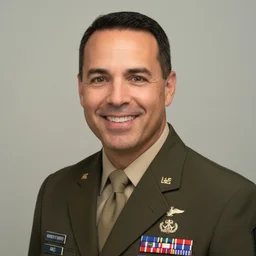
Retired Military Officer & Armed Forces Test Preparation Specialist
United States Army War CollegeColonel Steven Harris (Ret.) served 28 years in the US Army, earning a Master of Arts in Military Science from the Army War College and a Bachelor of Science in Criminal Justice. He has coached thousands of military enlistment and officer candidate program applicants through the ASVAB, AFQT, AFCT, OAR, and officer selection assessment processes across all military branches.
Join the Discussion
Connect with other students preparing for this exam. Share tips, ask questions, and get advice from people who have been there.
View discussion (5 replies)