
ASVAB Score Range 2026 September — AFQT Scores Explained
Free ASVAB Score Range 2026 September practice test with questions and answer explanations. 🧠 Prepare for the 2026 September exam with instant scoring.

How ASVAB Scoring Works
The ASVAB is a multi-section aptitude test administered by the Department of Defense. It includes subtests covering Arithmetic Reasoning (AR), Word Knowledge (WK), Paragraph Comprehension (PC), Mathematics Knowledge (MK), General Science (GS), Electronics Information (EI), Auto and Shop Information (AS), Mechanical Comprehension (MC), Assembling Objects (AO), and Verbal Expression (VE — derived from WK and PC).
Scores are calculated in two main ways:
- AFQT Score: A percentile score from 1 to 99 derived from four subtests — AR, MK, WK, and PC. This is the primary enlistment qualification score. A score of 50 means you performed better than 50% of the reference population.
- Composite Line Scores: Combinations of individual subtest scores used to determine job qualification. These differ by branch and include scores like GT (General Technical), ST (Skilled Technical), EL (Electronics), CL (Clerical), CO (Combat), and others. Line scores are not the same as the AFQT — a high AFQT does not automatically mean high composite scores in every area.
The AFQT score is calculated from the raw score using Item Response Theory (IRT) and then converted to a percentile based on the 1997 Profile of American Youth reference group. This norming group has not been updated since 1997, which means your score reflects how you compare to that historical sample.
What Your AFQT Score Means
Your AFQT percentile score tells recruiters how your academic aptitude compares to the reference population. The military groups AFQT scores into categories:
- Category I (93–99): Exceptional — qualifies for all jobs, may unlock special bonuses.
- Category II (65–92): Above average — qualifies for nearly all MOS/ratings with strong composite scores.
- Category IIIA (50–64): Average — qualifies for most enlistment paths; some advanced technical roles may require higher line scores.
- Category IIIB (31–49): Below average — meets minimum requirements for Army enlistment; access to jobs is more limited.
- Category IV (10–30): Marginal — does not meet standard enlistment requirements for most branches; waiver may be possible in limited circumstances.
- Category V (1–9): Not eligible for military enlistment.
It is important to understand that AFQT percentile does not represent a percentage of correct answers — it is purely a relative comparison score.
Minimum AFQT Scores by Branch
Each branch of the U.S. Armed Forces has its own minimum AFQT requirement for standard enlistment. Some branches may accept waivers for scores slightly below these thresholds during high-recruitment periods, but waivers are not guaranteed:
- U.S. Army: AFQT 31 (with a high school diploma); 50 with a GED
- U.S. Navy: AFQT 35 (high school diploma); 50 with a GED
- U.S. Marine Corps: AFQT 32 (high school diploma); 50 with a GED
- U.S. Air Force / Space Force: AFQT 36 (high school diploma); 65 with a GED — one of the most competitive branches
- U.S. Coast Guard: AFQT 40 (high school diploma); 50 with a GED — the highest standard enlistment minimum
- U.S. Space Force: AFQT 36 — same threshold as Air Force, highly selective for technical roles
Meeting the minimum AFQT score only clears the first hurdle. Your composite line scores must also meet the requirements for the specific job you want. Scoring well above branch minimums significantly expands your available career options.
How Composite Line Scores Determine MOS Eligibility
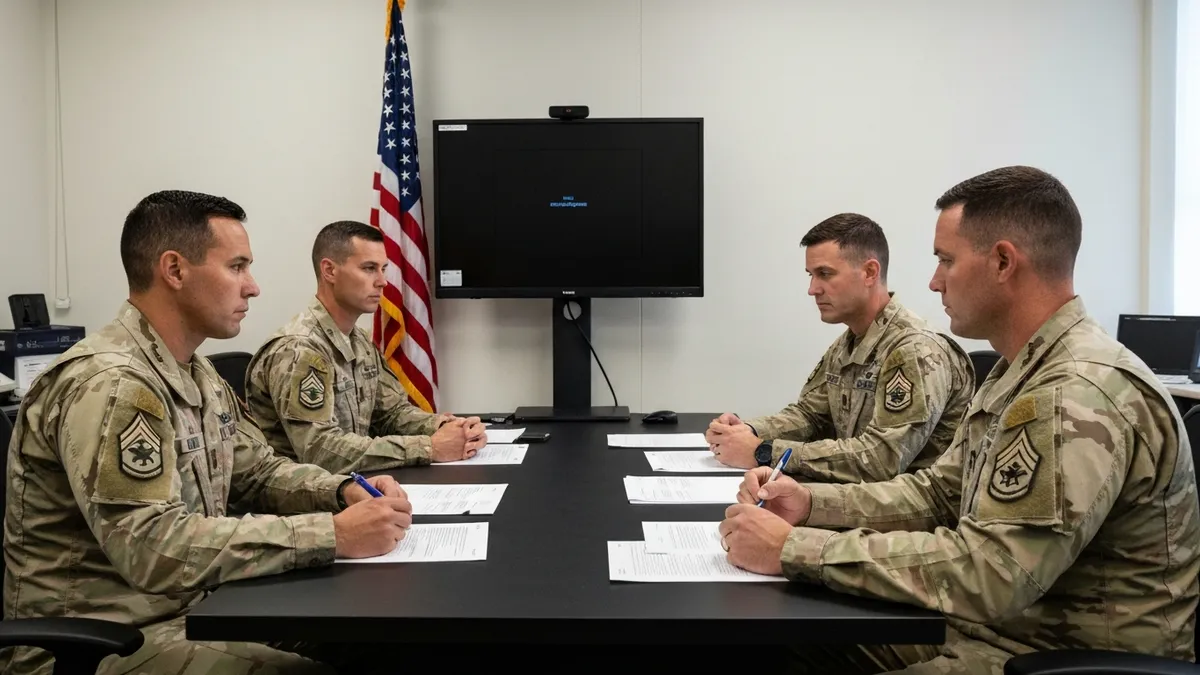
While AFQT gets you in the door, composite line scores determine which jobs you can actually hold. Each MOS (Army), rating (Navy), NEC (Marine Corps), AFSC (Air Force), or rate (Coast Guard) has minimum line score requirements set by that branch. For example, the Army requires a GT score of 110 for many officer candidate programs, while electronics-focused MOS codes may demand an EL score of 93 or higher.
GT Score and Officer Programs: The General Technical (GT) composite — derived from Arithmetic Reasoning and Verbal Expression — is one of the most important line scores for Army soldiers pursuing Officer Candidate School (OCS) or Warrant Officer programs. A GT score of 110 is the common benchmark, though some programs require 115+. The Navy and Marine Corps use similar general aptitude composites for officer screening.
Can You Retake the ASVAB?
Yes. The retake policy is as follows:
- First retake: You must wait at least one calendar month after your initial test.
- Second retake: Must wait one more calendar month after the first retake.
- Subsequent retakes: A mandatory six-month waiting period applies between each additional attempt.
Scores from the most recent valid test are used for enlistment purposes. Recruiters may see previous scores, but the latest sitting counts. There is no cap on total attempts, but the waiting periods slow down the process significantly — preparation before your first test is far more efficient.
ASVAB Prep Strategies That Work
Effective preparation focuses on the four AFQT subtests first: Arithmetic Reasoning, Mathematics Knowledge, Word Knowledge, and Paragraph Comprehension. These four sections determine your enlistment eligibility. Afterward, target the composite areas relevant to your desired MOS.
- Math foundations: Review algebra, percentages, ratios, and word problems. Arithmetic Reasoning is the most heavily weighted AFQT subtest.
- Vocabulary building: Read broadly and study root words, prefixes, and suffixes to strengthen Word Knowledge scores.
- Timed practice: The ASVAB is timed. Practice under real conditions using official ASVAB practice materials or computerized adaptive test simulators.
- Line score targeting: If you have a specific MOS in mind, identify its composite score requirements and study the relevant subtests (e.g., GS and EI for electronics roles).
Confirmation Enlistment Agreement (CEA) and Scores
When you enlist with a specific MOS guaranteed in writing, that agreement is typically tied to your ASVAB scores at the time of enlistment. A Confirmation Enlistment Agreement (CEA) locks in your job prior to shipping to Basic Combat Training. If you retake the ASVAB after signing and score lower on relevant composites, your guaranteed MOS may be at risk — always consult your recruiter before retesting after an enlistment agreement is in place. Conversely, a higher retake score can sometimes open better MOS options before your ship date if the agreement allows renegotiation.
- ✓Confirm your exam appointment and location
- ✓Bring required identification documents
- ✓Arrive 30 minutes early to check in
- ✓Read each question carefully before answering
- ✓Flag difficult questions and return to them later
- ✓Manage your time — don't spend too long on one question
- ✓Review flagged questions before submitting

ASVAB Study Tips
What's the best study strategy for ASVAB?
Focus on weak areas first. Use practice tests to identify gaps, then study those topics intensively.
How far in advance should I start studying?
Most successful candidates begin 4-8 weeks before the exam. Create a structured study schedule.
Should I retake practice tests?
Yes! Take each practice test 2-3 times. Focus on understanding why answers are correct, not memorizing.
What should I do on exam day?
Arrive 30 min early, bring required ID, read questions carefully, flag difficult ones, and review before submitting.
- +Validates your knowledge and skills objectively
- +Increases job market competitiveness
- +Provides structured learning goals
- +Networking opportunities with other certified professionals
- −Study materials can be expensive
- −Exam anxiety can affect performance
- −Requires dedicated preparation time
- −Retake fees apply if you don't pass
ASVAB Score Range Questions and Answers
More Military & Exam Resources
Join the Discussion
Connect with other students preparing for this exam. Share tips, ask questions, and get advice from people who have been there.
View discussion (5 replies)