
Mastering the AFOQT: Complete Guide to Becoming an Air Force Officer
Mastering the AFOQT your complete guide to becoming an Air Force officer — 💯 AFOQT scoring, prep strategies, free practice, and officer qualifying test

This mastering the afoqt your complete guide to becoming an air force officer covers the Armed Services Vocational Aptitude Battery — the standardized test required for enlistment in all branches of the US military (Army, Navy, Air Force, Marines, Coast Guard, Space Force). The asvab study guide approach matters because your ASVAB score directly determines: (1) whether you qualify for enlistment at all, (2) which military jobs (MOS for Army, Rating for Navy, AFSC for Air Force) you qualify for, and (3) how competitive your application is.
The AFQT composite score is the gateway score; subtest scores unlock specific job qualifications.
You'll see exactly how the 10-subtest ASVAB works, why arithmetic reasoning and word knowledge get heavy weight in the AFQT formula, and which subtests open the highest-paying military career fields. Most candidates underestimate the prep time required — a serious 6-12 week study plan typically lifts AFQT scores 10-25 percentile points, which translates to dramatically more career options after enlistment. The investment of 100-200 prep hours typically returns in better Military Occupational Specialty (MOS) options, faster promotions, and higher signing bonuses.
If you're testing this month, the test-day checklist near the bottom covers what to bring and what to expect. If you have several weeks to invest, the structure cards section maps a realistic 6-week study plan. By the end of this guide, you'll know exactly which subtests matter most and how to prepare strategically for them.
ASVAB by the Numbers
Effective asvab study work centers on the 4 AFQT subtests: Word Knowledge (vocabulary), Paragraph Comprehension (reading), Arithmetic Reasoning (math word problems), and Mathematics Knowledge (algebra, geometry, basic algebra II). These four subtests determine your AFQT score — the gateway score used by each service to determine basic enlistment qualification. Master these four, and you'll qualify for at least entry-level military service in most branches.
The how to study for the asvab question has a clear answer: balance content review with practice questions, build pacing discipline through timed practice, and target your weakest subtest specifically. Don't drill subtests you're already strong at — focus prep time on subtests where you're losing points. Vocabulary, math word problems, and basic algebra are the three areas where most candidates have the biggest gap-to-target.
Plan to invest 100-200 hours of structured study across 6-12 weeks. Daily 60-90 minute sessions consistently outperform weekend marathon sessions. The brain consolidates math problem-solving patterns and vocabulary recognition during sleep — daily exposure builds durable skill faster than infrequent long sessions. Calendar your study time as carefully as you would military duty.
One often-overlooked tactic: take your real ASVAB through MEPS during a less-busy testing window if possible. Friday and Monday afternoons are typically the busiest at MEPS, with the most candidates in the testing room and the longest pre-test wait times. Tuesday through Thursday mornings have shorter waits and quieter test environments, which can reduce stress and improve focus during testing. Your recruiter typically has flexibility on test scheduling — request a calmer day if you're nervous about the test environment.
The right how to study for the asvab approach combines several prep tactics. First: take a free practice test to set your baseline AFQT score. Second: identify your 1-2 weakest subtests from the 4 AFQT components. Third: spend 60% of study time on those weak areas. Fourth: take periodic full-length practice tests to track score improvement. Fifth: drill timed practice in the final 2 weeks to build exam-day pacing.
The right asvab study material matters as much as study time. Quality prep books (Kaplan ASVAB Premier, ASVAB for Dummies, Mometrix ASVAB) cost $20-$30 and cover the entire test comprehensively. Free online resources (Khan Academy for math, Quizlet for vocabulary, this site for practice tests) supplement effectively. Free YouTube channels like Mr. ASVAB and ASVAB Boot Camp offer structured video lessons. Investment of $30-$100 in quality materials typically returns 10-25 AFQT points compared to free-only prep.
The asvab study guide pdf downloads circulating online vary in quality. Some are legitimate free chapters from prep publishers; others are pirated or user-generated content of inconsistent quality. Stick with established prep brands and recognized free resources. Studying wrong answers is worse than not studying — verify uncertain content before locking it in.
One often-overlooked tactic: take your real ASVAB through MEPS during a less-busy testing window if possible. Friday and Monday afternoons are typically the busiest at MEPS, with the most candidates in the testing room and the longest pre-test wait times. Tuesday through Thursday mornings have shorter waits and quieter test environments, which can reduce stress and improve focus during testing. Your recruiter typically has flexibility on test scheduling — request a calmer day if you're nervous about the test environment.
ASVAB Practice Test Questions
Prepare for the ASVAB - Armed Services Vocational Aptitude Battery exam with our free practice test modules. Each quiz covers key topics to help you pass on your first try.
ASVAB Arithmetic Reasoning Test
ASVAB Exam Questions covering Arithmetic Reasoning Test. Master ASVAB Test concepts for certification prep.
ASVAB Arithmetic Reasoning Word Problems
Free ASVAB Practice Test featuring Arithmetic Reasoning Word Problems. Improve your ASVAB Exam score with mock test prep.
ASVAB Assembling Objects Test
ASVAB Mock Exam on Assembling Objects Test. ASVAB Study Guide questions to pass on your first try.
ASVAB Automotive Information Test
ASVAB Test Prep for Automotive Information Test. Practice ASVAB Quiz questions and boost your score.
ASVAB Electronics Fundamentals and Circuits
ASVAB Questions and Answers on Electronics Fundamentals and Circuits. Free ASVAB practice for exam readiness.
ASVAB Electronics Practice Test
ASVAB Mock Test covering Electronics Practice Test. Online ASVAB Test practice with instant feedback.
ASVAB Electronics Practice Test 1
Free ASVAB Quiz on Electronics Practice Test 1. ASVAB Exam prep questions with detailed explanations.
ASVAB General Science Biology and Ecology
ASVAB Practice Questions for General Science Biology and Ecology. Build confidence for your ASVAB certification exam.
ASVAB General Science Practice Test
ASVAB Test Online for General Science Practice Test. Free practice with instant results and feedback.
ASVAB General Science Practice Test 1
ASVAB Study Material on General Science Practice Test 1. Prepare effectively with real exam-style questions.
ASVAB Mathematics Knowledge Test
Free ASVAB Test covering Mathematics Knowledge Test. Practice and track your ASVAB exam readiness.
ASVAB Mechanical Comprehension Principles
ASVAB Exam Questions covering Mechanical Comprehension Principles. Master ASVAB Test concepts for certification prep.
ASVAB Mechanical Comprehension Test
Free ASVAB Practice Test featuring Mechanical Comprehension Test. Improve your ASVAB Exam score with mock test prep.
ASVAB Paragraph Comprehension and Inference
ASVAB Mock Exam on Paragraph Comprehension and Inference. ASVAB Study Guide questions to pass on your first try.
ASVAB Paragraph Comprehension Test
ASVAB Test Prep for Paragraph Comprehension Test. Practice ASVAB Quiz questions and boost your score.
ASVAB Subtests Explained
The 4 AFQT subtests determine basic enlistment qualification. Arithmetic Reasoning (math word problems): 15 questions in 38 minutes (CAT-ASVAB). Mathematics Knowledge (algebra, geometry): 16 questions in 18 minutes. Word Knowledge (vocabulary): 16 questions in 8 minutes. Paragraph Comprehension (reading): 11 questions in 22 minutes. Your AFQT percentile is calculated from these 4 subtests' scaled scores using a specific formula. Targets: 31+ (Army), 35+ (Air Force/Coast Guard), 36+ (Marines), 31+ (Navy).
A focused study for asvab approach builds skill across all four AFQT subtests in proportion to your weak areas. Most candidates have one obviously weak subtest — typically Mathematics Knowledge (if you didn't take Algebra II in high school) or Paragraph Comprehension (if reading isn't your strength). Allocate 60% of study time to your weakest subtest, 30% to your second weakest, and 10% maintenance on your strongest two.
The best asvab study guide options for most candidates include Kaplan ASVAB Premier, ASVAB for Dummies, and Mometrix ASVAB. Each offers comprehensive content review, practice tests, and study strategies. Read at least one full prep book cover-to-cover during your prep period. The author's writing style and examples differ across books — many candidates use 2-3 different prep books to get multiple explanations of the same concepts.
Practice timed sections in the final 2 weeks of your prep. The CAT-ASVAB (computer-based) is adaptive — wrong answers lead to easier questions but lower scaled scores. Right answers lead to harder questions but higher scaled scores. The adaptive engine moves quickly; you can't slow it down. Build pacing through timed practice that mirrors the real format and timing.
One often-overlooked tactic: take your real ASVAB through MEPS during a less-busy testing window if possible. Friday and Monday afternoons are typically the busiest at MEPS, with the most candidates in the testing room and the longest pre-test wait times. Tuesday through Thursday mornings have shorter waits and quieter test environments, which can reduce stress and improve focus during testing. Your recruiter typically has flexibility on test scheduling — request a calmer day if you're nervous about the test environment.
6-Week ASVAB Study Plan
Take a full-length ASVAB practice test cold to baseline. Identify weak subtests. Spend weeks 1-2 on Math Knowledge and Arithmetic Reasoning — typically the highest-impact subtests for AFQT improvement. Daily 45-60 min math practice.
Build vocabulary through daily flashcard practice (Anki, Quizlet, free ASVAB-specific decks). Read 1-2 short articles daily and practice main idea/inference questions. Take a second full-length test mid-week to measure progress.
If targeting specific MOS jobs, drill the technical subtests required (Electronics Info for IT jobs, Mechanical Comprehension for maintenance roles, etc.). Take a third full-length practice test at week's end.
Two final practice tests early in the week. Day before exam: 30-minute light review, no new content. Get 8 hours of sleep. On test day, arrive 30 minutes early at the MEPS testing center with your recruiter-provided ID information.
Many candidates ask how to study for asvab efficiently when time is limited. The 80/20 rule applies: 80% of your score improvement comes from 20% of focused effort. That 20% is daily practice questions plus rationale review. Reading prep books cover-to-cover without doing practice questions produces minimal score gain. Doing practice questions without studying explanations produces minimal score gain. The combination is what works.
The asvab study material ecosystem includes paid platforms like study.com asvab — Study.com offers structured ASVAB courses with video lessons, practice tests, and tutor support. Cost runs $30-$70/month. For candidates who learn better with structured video instruction than self-study from books, Study.com and similar platforms (Mometrix Academy, Magoosh ASVAB) deliver meaningful score lift. Cost is significant; the score gains usually justify it.
For free-tier prep, Khan Academy covers all AFQT math content thoroughly. YouTube channels (Mr. ASVAB, ASVAB Boot Camp, Tabletclass Math) offer free video instruction. Free practice questions from this site, Mometrix Test Preparation (limited free questions), and Kaplan (free trial) supplement comprehensively. Smart free-tier candidates can match or beat paid-prep candidates with focused effort.
One often-overlooked tactic: take your real ASVAB through MEPS during a less-busy testing window if possible. Friday and Monday afternoons are typically the busiest at MEPS, with the most candidates in the testing room and the longest pre-test wait times. Tuesday through Thursday mornings have shorter waits and quieter test environments, which can reduce stress and improve focus during testing. Your recruiter typically has flexibility on test scheduling — request a calmer day if you're nervous about the test environment.
ASVAB Career Investment: Pros & Cons
- +Strong AFQT scores unlock dramatically better MOS/Rating/AFSC options
- +Higher scores qualify for signing bonuses ($5,000-$50,000+ in some specialties)
- +Better scores reduce military training time in some specialties
- +ASVAB scores stay with you — they affect promotion eligibility for years
- +Free to take — no application or testing fees from any branch
- +Available year-round at MEPS and Mobile Examination Test (MET) sites nationwide
- −Test is comprehensive and demanding — 10 subtests across multiple cognitive domains
- −CAT-ASVAB is adaptive — early wrong answers can cap your maximum score
- −Math-heavy subtests intimidate candidates who haven't taken algebra in years
- −Vocabulary section requires sustained reading practice — can't be crammed in days
- −Retakes have waiting periods and other restrictions
- −Score validity is 2 years — outdated scores require retesting
The asvab study guides from major publishers (Kaplan, Mometrix, Barron's, Princeton Review, ASVAB for Dummies) each have different strengths. Kaplan is comprehensive and well-organized. Mometrix has the strongest math review section. Barron's includes extensive practice questions. ASVAB for Dummies is the most beginner-friendly. Choose based on your starting level and preferred learning style. Many candidates use 2-3 different books to get multiple explanations of difficult concepts.
The asvab study guide 2026 updates from current-year prep publications reflect minor refreshes — the ASVAB content has been stable for years. Don't worry about edition currency; a 2023 prep book is essentially identical to a 2025 prep book for AFQT content. Save money by buying older editions used on Amazon or eBay. The content is the same; the cover is just different.
For specific subtest practice, this site offers free ASVAB practice tests covering arithmetic reasoning, word problems, assembling objects, electronics, auto/shop information, mechanical comprehension, and general science. Cycle through these subtests weekly during your prep — balanced practice across all 10 subtests prevents the common mistake of over-practicing strengths while ignoring weak areas.
One often-overlooked tactic: take your real ASVAB through MEPS during a less-busy testing window if possible. Friday and Monday afternoons are typically the busiest at MEPS, with the most candidates in the testing room and the longest pre-test wait times. Tuesday through Thursday mornings have shorter waits and quieter test environments, which can reduce stress and improve focus during testing. Your recruiter typically has flexibility on test scheduling — request a calmer day if you're nervous about the test environment.
ASVAB Test-Day Checklist
- ✓Bring valid government-issued photo ID — required at all MEPS and MET test sites
- ✓Arrive 30 minutes early at the testing facility — late arrivals are typically refused
- ✓Wear comfortable clothing — testing sessions run about 3 hours total
- ✓Eat a balanced meal 90 minutes before — protein + complex carbs sustain focus
- ✓Bring layered clothing — testing rooms can run hot or cold
- ✓Don't bring electronic devices, books, or notes — all prohibited in test rooms
- ✓Use the bathroom right before the session starts; breaks are limited and timed
- ✓Read each question carefully — distractors often differ by a single keyword
- ✓Don't dwell on hard questions in CAT-ASVAB — pacing is enforced by the adaptive engine
- ✓Stay calm during hard stretches — the test rebalances and easier questions follow
The free asvab study guide options are abundant. This site offers free ASVAB practice tests across all subtests. Khan Academy covers AFQT math comprehensively. Quizlet has thousands of user-generated ASVAB vocabulary decks. Mometrix Test Preparation offers free YouTube videos. Free is sufficient for most candidates — paid prep adds polish but isn't strictly necessary if you're disciplined with free resources.
The how can i study for the asvab question often comes from candidates feeling overwhelmed. Start simple: take a free practice test to set your baseline, then study 30-45 minutes daily across 4-8 weeks focused on your two weakest subtests. Take a second practice test at week 4 to measure progress. Take a final practice test 48 hours before your real ASVAB to confirm score readiness. Daily consistency matters more than long sporadic sessions.
The asvab study guide pdf downloads from major publishers (free trial PDFs from Kaplan, Mometrix) are good starting points. Don't pay for pirated PDFs of paid books — quality is unreliable and you're missing the publisher's full study system. Buying a $20-$30 prep book provides better ROI than free PDFs from questionable sources.
One often-overlooked tactic: take your real ASVAB through MEPS during a less-busy testing window if possible. Friday and Monday afternoons are typically the busiest at MEPS, with the most candidates in the testing room and the longest pre-test wait times. Tuesday through Thursday mornings have shorter waits and quieter test environments, which can reduce stress and improve focus during testing. Your recruiter typically has flexibility on test scheduling — request a calmer day if you're nervous about the test environment.
Don't Get Stuck on Hard Questions
The CAT-ASVAB is adaptive — wrong answers lead to easier questions, capping your maximum score. But spending 5 minutes on a single hard question is worse than guessing and moving on. Trust your gut on tough items and keep pacing. The algorithm rewards consistent performance over time, not perfection on individual items. Average 60-90 seconds per question across the subtest, and answer every question.
A focused study guide for asvab includes content review, practice questions, and pacing drills. Don't skip any of the three components. Content-only prep produces narrow knowledge without application skill. Practice-only prep produces familiarity without underlying concept mastery. Pacing-only prep produces speed without accuracy. The three components compound when combined.
The 10 asvab subjects (subtests) test diverse cognitive domains: verbal (Word Knowledge, Paragraph Comprehension), quantitative (Arithmetic Reasoning, Mathematics Knowledge), scientific (General Science), spatial (Assembling Objects), and technical (Electronics, Auto, Shop, Mechanical Comprehension). Build skill across all 10 — your AFQT comes from 4, but specialty MOS jobs require strong scores on the other 6 as well.
For candidates targeting specific military jobs, research your target MOS's required composite line scores before testing. Army MOS requirements are published in DA Pamphlet 611-21. Navy ratings are documented in NAVCRUITCOM Instruction 1130.8. Air Force AFSC requirements are in AFI 36-2105. Each branch publishes detailed score requirements — knowing your target MOS's score floor tells you exactly what you need to hit.
The CAT-ASVAB (computer-adaptive) is administered at MEPS — that's the version most enlisting candidates take. The Paper ASVAB is administered at MET (Mobile Examination Test) sites in some rural areas and high schools. The two versions have slightly different question pools and timing. Both produce comparable scaled scores. CAT-ASVAB completes in about 1.5 hours; Paper ASVAB runs about 3 hours. Confirm which version you'll take and prepare accordingly.
The phrase study for the asvab is grammatically slightly different from "study for ASVAB" but means the same thing. Both reflect the universal pattern: structured preparation over weeks of study, combined with practice tests, leads to score improvement. The article "the" doesn't matter for prep success; consistent daily effort does.
For specific asvab study materials, my recommendation order: 1) Free practice tests from this site, 2) Khan Academy AFQT math content, 3) One quality prep book ($20-$30, choose any from Kaplan/Mometrix/Barron's/Princeton Review), 4) Quizlet vocabulary flashcards (free, 1,000+ ASVAB-specific decks), 5) Mock test 1 week before real ASVAB, and 6) Light review only in final 24 hours. This stack produces strong AFQT improvement for under $50 total.
Don't overestimate prep books that promise "800 ASVAB questions" — quantity isn't quality. A book with 200 well-explained questions plus thorough content review beats a book with 800 questions and brief answer keys every time. Look at sample chapters before buying. The explanation quality determines whether you actually learn from your wrong answers.
The phrase studying for asvab (gerund form) describes the ongoing daily prep activity. Successful candidates make studying for ASVAB a regular habit — like physical training in basic. Daily 30-60 minute sessions across 6-8 weeks build durable skill. Sporadic weekend cramming produces minimal score lift. Treat ASVAB prep as a training schedule, not a one-time event.
The phrase studying for the asvab with the article "the" carries the same meaning. The article doesn't change strategy. What matters is consistent daily effort across all 4 AFQT subtests, plus targeted practice on the technical subtests for your specific military career goal. Branch and MOS-specific research happens after you've established your AFQT baseline; first build the foundation.
Final tip: schedule your real ASVAB at MEPS for a morning slot if your recruiter offers timing options. Cognitive function peaks 2-4 hours after waking, and math-heavy subtests especially reward fresh thinking. A 9 AM start gives you peak energy for the demanding math sections; a 1 PM start fights afternoon cognitive drift. Small detail, real edge for a test where every percentile matters for your career options.
ASVAB Questions and Answers
About the Author
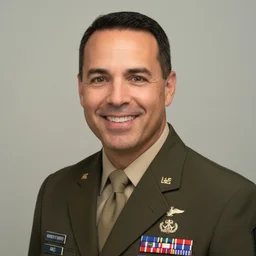
Retired Military Officer & Armed Forces Test Preparation Specialist
United States Army War CollegeColonel Steven Harris (Ret.) served 28 years in the US Army, earning a Master of Arts in Military Science from the Army War College and a Bachelor of Science in Criminal Justice. He has coached thousands of military enlistment and officer candidate program applicants through the ASVAB, AFQT, AFCT, OAR, and officer selection assessment processes across all military branches.
Join the Discussion
Connect with other students preparing for this exam. Share tips, ask questions, and get advice from people who have been there.
View discussion (5 replies)