
ASVAB Arithmetic Reasoning Practice Test: Complete Study Guide for 2026 September
Master the ASVAB Arithmetic Reasoning section with free practice tests, proven strategies, and score guides. 🎯 Boost your ASVAB scores today.

The ASVAB arithmetic reasoning practice test is one of the most important tools you can use to prepare for military enlistment in 2026. Arithmetic Reasoning (AR) is one of the four subtests that make up the Armed Forces Qualification Test (AFQT) score — the score that determines whether you qualify for military service at all. Scoring well on this subtest can open doors to dozens of military occupational specialties, sign-on bonuses, and advanced training programs. If you are serious about enlisting, starting with targeted practice is the smartest first step you can take.
The Arithmetic Reasoning subtest measures your ability to solve real-world word problems using basic math concepts. Unlike the Mathematics Knowledge subtest, which tests abstract algebra and geometry, the AR subtest presents you with practical scenarios: calculating fuel costs, dividing supplies among soldiers, or figuring out how long a march will take at a given pace. These are the kinds of problems you will encounter in day-to-day military life, which is exactly why the ASVAB places so much emphasis on them. Understanding the format before test day gives you a measurable advantage.
Many test-takers underestimate the Arithmetic Reasoning section because the math involved is not particularly advanced — it is mostly sixth- through ninth-grade level material. However, the challenge lies in translating complex word problems under strict time pressure. A question that seems straightforward at home can become confusing when you have roughly 90 seconds per problem and nerves running high. Consistent practice under timed conditions is the single most effective way to close that performance gap and walk into the testing center with real confidence.
Your ASVAB scores determine far more than just your eligibility to enlist. Line scores, which are calculated from various combinations of ASVAB subtests, determine which Military Occupational Specialties (MOS), ratings, or Air Force Specialty Codes (AFSC) you qualify for. A strong AR score boosts your Skilled Technical (ST), General Technical (GT), and Clerical (CL) line scores, all of which gate access to fields like electronics, intelligence, healthcare, and administration. In short, the higher you score on Arithmetic Reasoning, the more career choices you will have available when you sit down with your recruiter.
If you have been looking for a reliable asvab study guide to structure your preparation, you are in exactly the right place. This article walks you through everything you need to know about the Arithmetic Reasoning subtest — from the format and question types to proven study strategies, score breakdowns, and full-length practice sets. We have built this resource to serve everyone from first-time test takers to recruits retaking the exam to improve a borderline score. Wherever you are starting from, a focused practice plan can deliver real score gains within weeks.
Understanding exactly what topics appear on the test is the foundation of efficient studying. The ASVAB AR subtest draws from a consistent pool of math concepts: ratios and proportions, percentages, interest and rate problems, work and distance problems, geometry basics (area, perimeter, volume), and basic probability. Rather than cramming every math topic you can find, smart preparation means drilling these specific categories repeatedly until they feel automatic. The practice tests throughout this guide are organized by difficulty and concept so you can identify your weak spots and direct your study hours where they will matter most.
Finally, it is worth emphasizing that the ASVAB is a standardized test with a predictable structure — and predictable tests reward predictable preparation. Every minute you spend on a quality ASVAB arithmetic reasoning practice test is a minute invested in your military career. The recruits who score highest are almost never the ones with the most natural math talent; they are the ones who practiced consistently, learned the question patterns, and developed efficient problem-solving habits. Let this guide be the starting point for your most productive study sessions yet.
ASVAB Arithmetic Reasoning by the Numbers
Key Facts at a Glance
| Item | Value | Details |
|---|---|---|
| AR Questions (CAT-ASVAB) | 16 | 30 questions on paper version |
| Time Limit (CAT-ASVAB) | 39 min | ~2.4 min per question |
| Minimum AFQT to Enlist | 31+ | Army minimum; Navy requires 35 |
| Grade Level of Math Required | 6–9 | Focus on applied word problems |

ASVAB Arithmetic Reasoning: Exam Format Breakdown
| Section | Questions | Time | Weight | Notes |
|---|---|---|---|---|
| Ratio & Proportion Problems | 3 | ~7 min | 19% | Speed, distance, rate, unit conversion |
| Percentage & Interest Problems | 3 | ~7 min | 19% | Discounts, tax, simple interest |
| Geometry Word Problems | 3 | ~7 min | 19% | Area, perimeter, volume applications |
| Work & Time Problems | 3 | ~7 min | 19% | Combined rates, productivity scenarios |
| Probability & Counting | 2 | ~6 min | 12% | Basic probability, combinations |
| Mixed Applied Problems | 2 | ~5 min | 12% | Multi-step real-world scenarios |
| Total | 16 | 39 minutes (CAT) / 36 minutes (paper) | 100% |
Mastering the specific math topics that appear on the ASVAB Arithmetic Reasoning subtest is far more productive than broad math review. The single most common question category is ratio and proportion problems. These appear in forms like: "If a truck travels 240 miles on 12 gallons of fuel, how far can it travel on 20 gallons?" The key technique is setting up a proportion equation and cross-multiplying. Practice this until you can set up the equation in under 20 seconds, because that is where most test-takers lose time — not in the calculation itself but in organizing the information.
Percentage problems are the second major category and take several forms. You may be asked to find a percentage of a number, find what percentage one number is of another, or work backward from a result to find the original value. For example: "A soldier receives a 15% pay increase and now earns $3,450 per month. What was the original salary?" Here you divide by 1.15, not multiply. Mixing up these operations is the number-one source of wrong answers in this category, so drilling the three percentage formulas until they are automatic is essential preparation.
Distance, rate, and time problems (d = r × t) account for a consistent portion of AR questions. Military scenarios are common here: marching speeds, convoy travel times, aircraft fuel calculations. The trap that catches many test-takers is unit mismatch — for example, a speed given in miles per hour and a time given in minutes.
Always convert to matching units before plugging numbers into the formula. A simple habit of writing out the unit next to each number as you read the problem will prevent the majority of these errors and is worth practicing on every timed drill you do.
Geometry word problems on the AR subtest focus on practical applications rather than abstract proofs. Expect questions involving the area of rectangles and triangles, perimeter of fields or rooms, volume of boxes or tanks, and occasionally surface area. A common scenario: "A storage container is 8 feet long, 6 feet wide, and 4 feet tall.
How many cubic feet of supplies can it hold?" The math is simple multiplication, but the challenge is identifying which formula to use and which measurements to plug in. Reviewing just six formulas — area of rectangle, triangle, circle; volume of rectangular prism and cylinder — covers the vast majority of geometry questions on the test.
Work and time problems are the most algebraically demanding category on the AR subtest. They typically involve two people or machines working together: "Soldier A can load a truck in 3 hours. Soldier B can load the same truck in 5 hours. How long does it take them working together?" The formula is 1/A + 1/B = 1/T, where T is the combined time.
This trips up many test-takers who try to average the two times instead. Spend extra drill time on this problem type because it tends to appear on harder versions of the test and getting it right reliably will lift your score above the competition.
For those who want a structured approach to all of these concepts, army fitness test resources and dedicated ASVAB study platforms are excellent companions to your arithmetic reasoning preparation. Combining topic-specific drills with full-length practice tests is the most efficient path to a score gain because it builds both skill and stamina simultaneously. Many recruits find that after two to three weeks of focused daily practice, their error rate on timed AR sections drops by 30–40%, which can translate to a significant jump in their AFQT percentile.
Finally, do not neglect basic number sense and mental math shortcuts. The ASVAB AR section does not allow a calculator, so fluency with multiplication tables through 12, quick estimation, and fraction-decimal-percentage conversions will save you crucial seconds on every problem. If you can instantly recognize that 37.5% equals 3/8, or that multiplying by 25 is the same as dividing by 4, you will work faster and more accurately under test conditions. Build these reflexes through daily warm-up drills of just five to ten minutes — the compounding effect over several weeks is substantial.
ASVAB Study Guide: Strategies by Score Goal
If your goal is a standard enlistment score in the 50th–64th percentile range, focus your ASVAB practice test sessions on mastering the most common question types: ratios, percentages, and distance-rate-time problems. These three categories alone account for roughly half of all AR questions. Spend four weeks doing 20-question timed drills, reviewing every wrong answer immediately, and tracking which categories you miss most often. Aim for at least 80% accuracy on each category before test day.
For this score range, time management is your biggest leverage point. At this level, most test-takers know the math but run out of time before finishing. Practice skipping questions that will take more than 2.5 minutes and returning to them at the end. Use process-of-elimination on answer choices when you are uncertain — the ASVAB does not penalize wrong answers, so always guess rather than leave a blank. Consistent pacing practice over three to four weeks will add 5–10 percentile points to your AFQT score.

ASVAB CAT vs. Paper-and-Pencil: Which Format Suits You?
- +CAT-ASVAB adapts difficulty to your ability level, potentially rewarding strong early answers with higher-value questions
- +Computer format provides instant results — you know your ASVAB scores before leaving the MEPS station
- +Fewer questions required (16 vs. 30 for AR) means less overall fatigue during the full test battery
- +Modern testing centers offer quieter, individual cubicle environments that reduce distraction
- +CAT format allows you to skip a question and return to it within the section time limit
- +Digital interface is familiar to most test-takers under 30, reducing interface-related anxiety
- −You cannot go back and change an answer once it is confirmed on the CAT-ASVAB — a high-stakes commitment per question
- −Paper format gives you 30 AR questions vs. 16, which some test-takers prefer for more opportunities to demonstrate knowledge
- −CAT adaptive difficulty means a strong start is critical — a bad opening sequence can lock you into easier, lower-scoring questions
- −Computer testing requires scheduling at a MEPS or MET site, which may have limited availability in rural areas
- −Some test-takers find it harder to do scratch work on paper when the question is displayed on a screen rather than printed
- −Retesting rules apply equally to both formats — you must wait 30 days after first attempt and 6 months after second attempt
ASVAB Arithmetic Reasoning Prep Checklist
- ✓Complete at least one full ASVAB arithmetic reasoning practice test under timed conditions each week
- ✓Review every incorrect answer immediately after each practice session and identify the specific error type
- ✓Memorize the six core geometry formulas: area of rectangle, triangle, circle; volume of box and cylinder
- ✓Drill the work-rate formula (1/A + 1/B = 1/T) until you can apply it in under 60 seconds
- ✓Practice converting between fractions, decimals, and percentages without a calculator daily
- ✓Learn to identify and avoid the three most common trap answer types: unit errors, inverse operations, and partial answers
- ✓Build a personal error log that categorizes every missed question by topic and error type
- ✓Practice setting up proportion equations before solving — organization prevents careless errors under time pressure
- ✓Simulate real test conditions at least twice per week: no calculator, no phone, strict timer running
- ✓In the final week before test day, focus exclusively on your two weakest question categories for concentrated improvement

The AR Subtest Directly Impacts Your AFQT Percentile
The Arithmetic Reasoning subtest is one of only four subtests that calculate your AFQT score — the score that determines whether you can enlist at all. A 10-point improvement in your AR raw score can shift your AFQT percentile by 5–8 points, potentially moving you from a disqualifying score to one that qualifies you for enlistment bonuses and competitive job selections. No other single subtest offers this much leverage on your overall military eligibility.
Understanding how ASVAB scores work is just as important as knowing how to prepare. Your AFQT score is a percentile that compares your performance to a nationally representative sample of 18-to-23-year-olds. A score of 65, for example, means you scored higher than 65% of that reference group.
The four subtests that determine your AFQT are Arithmetic Reasoning (AR), Mathematics Knowledge (MK), Word Knowledge (WK), and Paragraph Comprehension (PC). The formula is: AFQT = 2(VE) + AR + MK, where VE is the Verbal Expression score combining WK and PC. This means AR is weighted equally with MK and carries double the weight of either individual verbal subtest.
Beyond the AFQT, each military branch uses composite or line scores — calculated from different combinations of ASVAB subtests — to determine which jobs you qualify for. The Army's General Technical (GT) score, for instance, combines AR and VE and is required to be above 110 for many technical and leadership roles including Officer Candidate School. The Skilled Technical (ST) score, used for medical and intelligence jobs, also includes AR. This means a high AR score is not just good for enlistment eligibility — it is a gateway to the military's most sought-after career fields.
Each military branch sets its own minimum AFQT scores. The Army and Marine Corps both require a minimum of 31, while the Navy requires 35, the Air Force 36, and the Coast Guard 40. However, these minimums are the floor, not the target. In practice, the most desirable jobs in every branch have line score requirements that make a 31 AFQT inadequate.
Army recruits competing for slots in Cyber, Intelligence, or Special Forces support need GT scores of 110 or higher, which requires strong performance across multiple subtests including AR. Knowing these thresholds helps you set a realistic and motivating score goal before you begin studying.
The army combat fitness test and physical readiness requirements run parallel to your ASVAB preparation timeline, and it is worth planning both simultaneously. While your score determines which jobs you can access, physical fitness scores determine whether you ship to basic training on schedule. Many recruits find that building a structured routine covering both areas — mental preparation in the morning, physical training in the afternoon — delivers the best results across both domains. Consistency and schedule matter as much as the content of your preparation.
Retesting policies are also worth understanding before you sit for the first time. You may take the ASVAB a second time 30 days after your first attempt, and a third time 30 days after your second. After that, a six-month waiting period applies before each additional attempt.
If your score increases by 20 or more percentile points between the second and third attempt, the military may require a confirmation test administered under observation. Planning your study timeline with these windows in mind is smart — if you have three months before your desired ship date, starting your ASVAB prep now gives you time for one or two retakes if needed.
Score validity is another practical factor. ASVAB scores are valid for two years from the test date. If you took the ASVAB in high school and earned a solid score, that score may still be valid for enlistment purposes. However, if you want to qualify for a more competitive job — or your score has expired — retaking the exam with a focused preparation plan is the right move. Many recruits who retake after six to eight weeks of structured study improve by 10–15 AFQT percentile points, a meaningful gain that significantly expands their available MOS options.
Finally, be aware that some branches offer a pre-screening tool called the ASVAB Armed Services Vocational Aptitude Battery (PICAT) — a shorter, unproctored version that can be taken online before visiting a recruiter. If you score well enough on the PICAT, you may need only a short verification test at MEPS rather than the full proctored exam. While the PICAT is not universally offered, it represents another option worth discussing with your recruiter, particularly if you want to gauge your readiness before committing to the official test appointment.
You must wait at least 30 days before retaking the ASVAB after your first attempt, and at least 30 days after the second attempt. Starting from the third retest, a six-month waiting period applies between each attempt. A score increase of 20 or more AFQT points between the second and third attempt may trigger a required confirmation test at MEPS. Plan your study timeline accordingly so you do not waste a testing opportunity with insufficient preparation.
Test day preparation is an often-overlooked dimension of ASVAB performance, but it can make a measurable difference in your score. The week before your exam, shift away from learning new material and focus entirely on review and confidence-building. Take one full-length practice AR section on the day before your exam — just enough to stay sharp without draining your mental energy.
Go to bed at a consistent time, eat a solid breakfast on test morning, and arrive at the testing location early enough to settle in without rushing. These logistics sound trivial but account for more score variation than most recruits expect.
During the test itself, approach each word problem with a consistent four-step process: read the entire problem once without solving, identify what the question is actually asking, extract the relevant numbers and relationships, then set up the equation before calculating.
This sequence prevents the most common mistake on the AR subtest — jumping to calculations before fully understanding what is being asked. Test-takers who rush the setup step often arrive at a number that looks plausible but answers a slightly different question than the one posed. The answer choice for that wrong interpretation is almost always present in the options as a deliberate trap.
Scratch work management is critical on the ASVAB. You are provided with scratch paper (or a whiteboard at some centers), and using it consistently is not a sign of weakness — it is a mark of disciplined problem-solving. Write out every proportion, every formula substitution, and every unit conversion as a separate visible step. Test-takers who try to hold intermediate calculations in their head introduce unnecessary error. A small, organized scratch space for each problem also makes it easier to catch and correct mistakes before confirming your answer, which the CAT format requires you to do before moving on.
Time management during the test deserves specific strategy. With 16 questions in 39 minutes on the CAT-ASVAB, you have an average of 2 minutes and 26 seconds per question. In practice, roughly half of all AR questions should take you 90 seconds or less — ratios, straightforward percentages, and simple distance problems.
Saving that time to invest in the harder multi-step problems is the right allocation. A good rule of thumb: if you have been working on a single problem for more than three minutes, mark your best guess and move forward. No single question is worth sacrificing the time needed to answer the remaining ones correctly.
For recruits who have identified asvab for dummies-style visual explanations as their preferred learning format, video walkthroughs of AR problem types are an excellent supplement to written practice tests. Seeing an experienced instructor model the thought process for a word problem — narrating each step aloud — helps many learners internalize the problem-solving sequence faster than reading explanations alone.
The key is not to use video explanations passively; pause the video at each step, attempt the step yourself, then watch the explanation. This active viewing approach builds genuine skill rather than the illusion of understanding that comes from simply watching someone else solve problems.
Anxiety management is also a legitimate part of ASVAB preparation. Test anxiety is real and can suppress performance even in well-prepared candidates.
Two techniques are particularly effective: controlled breathing (inhale for four counts, hold for four, exhale for four) to reduce acute anxiety at the start of the test, and cognitive reframing — replacing the thought "I might fail" with "I have practiced this and I know the material." Building a track record of successful practice test performance over the weeks before your exam is the most powerful anxiety reducer available, because it gives you factual evidence that you are prepared.
In the days immediately before your exam, focus your final review on your personal error log rather than general review materials. The mistakes you have made repeatedly in practice are statistically the mistakes most likely to appear on your actual test. Spending your final study hours reinforcing the exact problem types where you have historically struggled — armed with the correct approach you have now drilled — is the highest-leverage use of your remaining preparation time. Arrive at your ASVAB appointment having practiced smart, not just hard.
Building a realistic study schedule is the structural foundation that separates high scorers from average ones. Most recruits have four to eight weeks between deciding to enlist and their scheduled MEPS date, and that window is more than enough to achieve a meaningful score increase if it is used efficiently. The key is daily consistency over cramming.
A 45-minute study session five days per week for six weeks delivers far better results than a desperate 10-hour marathon the weekend before the exam. Your brain consolidates problem-solving patterns during sleep, which is why spaced practice over time outperforms compressed studying every time.
Week one should focus entirely on diagnostic: take a full-length ASVAB arithmetic reasoning practice test under timed conditions and score it carefully. Categorize every missed question by topic. This diagnostic tells you where to direct your study energy rather than wasting time reviewing concepts you already know. Many recruits discover in week one that they lose nearly all of their points in just two or three question types — typically work-rate problems and multi-step percentage scenarios. Knowing this early lets you build a targeted practice plan for weeks two through five.
Weeks two through five are your skill-building phase. Rotate through your weak categories in a structured way: two sessions on your weakest topic, one session on your second weakest, and one full-length mixed practice test each week. After each practice test, update your error log and adjust next week's focus based on what the data shows. This feedback loop is the engine of improvement. Recruits who track their errors and respond with targeted drilling consistently outperform recruits who simply retake full-length tests without analyzing the results.
Week six is your consolidation phase. At this point, stop trying to learn new material and focus on cementing the gains you have made. Take two full-length practice sessions this week under the strictest possible test conditions. Review your error log and spend focused time on any remaining weak spots. Practice your four-step problem approach until it feels completely automatic. The goal is to enter test day not in learning mode but in performance mode — confident, rested, and ready to execute what you have built over the previous five weeks.
Study partnerships and accountability structures can accelerate this process significantly. Finding a battle buddy or study partner who is also preparing for the ASVAB creates natural accountability — you are less likely to skip a practice session when someone is expecting you to show up. Testing each other on word problems aloud is a particularly effective technique because explaining a solution forces deeper understanding than simply writing it down. Military recruiting offices sometimes offer group study sessions or refer candidates to tutoring resources; it is always worth asking your recruiter what support is available.
Digital practice tools, including mobile apps with ASVAB drill sets, make it easy to fit preparation into scattered time windows — commute time, lunch breaks, waiting rooms. While apps should not replace full-length timed practice sessions, five to ten minutes of flashcard-style percentage or proportion drills each day adds up to significant additional practice volume over a six-week period. The variety of practice formats also helps prevent the mental fatigue that comes from doing the same type of drill repeatedly, keeping your sessions more engaging and productive throughout your prep period.
Ultimately, the ASVAB Arithmetic Reasoning subtest rewards preparation more predictably than almost any other standardized test you will encounter. The question types are well-documented, the math concepts are finite and learnable, and the format is consistent across administrations. Every hour of quality practice you put in moves you measurably closer to the score you need.
The recruits who walk into MEPS with scores in the top half of the distribution are almost universally the ones who treated their ASVAB preparation as a serious, structured project rather than a casual review. That level of commitment is exactly what military service will require of you — and it starts here.
ASVAB Questions and Answers




About the Author
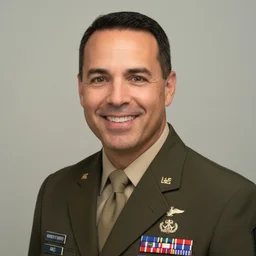
Retired Military Officer & Armed Forces Test Preparation Specialist
United States Army War CollegeColonel Steven Harris (Ret.) served 28 years in the US Army, earning a Master of Arts in Military Science from the Army War College and a Bachelor of Science in Criminal Justice. He has coached thousands of military enlistment and officer candidate program applicants through the ASVAB, AFQT, AFCT, OAR, and officer selection assessment processes across all military branches.
Join the Discussion
Connect with other students preparing for this exam. Share tips, ask questions, and get advice from people who have been there.
View discussion (5 replies)