
Anatomy and Physiology Study Guide: Careers, Duties, and How to Master the Material
An anatomy and physiology study guide covering careers, daily duties, exam prep, and proven study methods to master body systems and pass with confidence. 🟢

An anatomy and physiology study guide is more than a stack of flashcards crammed before an exam — it is the foundation for an entire family of healthcare careers built on understanding how the human body is structured and how it functions. Nurses, radiologic technologists, physical therapist assistants, paramedics, surgical techs, and dozens of allied health professionals all share a single starting point: mastery of body systems. Whether you are a pre-nursing student or a career changer, learning this subject well shapes everything that follows in clinical practice.
The reason this material matters so much is that anatomy and physiology act as the shared language of medicine. When a physician orders a medication or a technologist positions a patient for imaging, every decision traces back to knowing where structures sit and how organs behave under stress. A strong anatomy and physiology study guide helps you connect that vocabulary to real clinical reasoning rather than memorizing isolated facts you will forget within a week of the test.
Careers that depend on this knowledge span an enormous salary and education range. A certified nursing assistant may complete a few weeks of training, while a registered nurse earns a degree, and a physician assistant pursues a master's. Yet all of them sit through the same introductory and advanced A&P courses. That shared requirement is exactly why employers and admissions committees treat your performance in these classes as a reliable signal of clinical aptitude and work ethic.
Daily duties in these roles constantly reinforce what you study. A respiratory therapist applies gas-exchange physiology with every ventilator adjustment. A medical assistant draws blood by knowing venous anatomy. A surgical technologist hands instruments while tracking the layers of tissue a surgeon cuts through. The classroom concepts become muscle memory on the job, which is precisely why instructors push you to understand mechanisms instead of merely recognizing terms on a multiple-choice question.
This guide is organized to serve both goals at once: helping you pass your course or certification exam, and helping you understand the career landscape that knowledge unlocks. We will walk through the body systems you must master, the typical exam format, the daily responsibilities of common roles, salary and outlook data, and a realistic study schedule. Along the way you will find practice questions to test yourself and reinforce retention through active recall.
Think of the pages ahead as a roadmap rather than a textbook. Textbooks supply depth; a study guide supplies structure and priorities. By the end you will know which topics carry the most weight, how professionals actually use this content, and the study techniques that consistently produce higher scores. Used consistently over several weeks, these strategies turn an intimidating subject into a manageable, even enjoyable, climb toward your healthcare goals.
Anatomy and Physiology Study Guide by the Numbers

8-Week Anatomy and Physiology Study Schedule
- ▸Learn directional terms and body planes
- ▸Master levels of organization (cell to organism)
- ▸Review basic chemistry and homeostasis
- ▸Study the four primary tissue types
- ▸Diagram the cell and its organelles
- ▸Outline skin layers and functions
- ▸Name the 206 bones by region
- ▸Classify joints and movements
- ▸Quiz yourself on bone landmarks
- ▸Learn major muscle groups and actions
- ▸Trace the sliding filament mechanism
- ▸Connect origins and insertions
- ▸Map central vs peripheral nervous system
- ▸Study the action potential step by step
- ▸Review eye and ear anatomy
- ▸Trace blood flow through the heart
- ▸Study gas exchange in the alveoli
- ▸Learn blood pressure regulation
- ▸Follow the GI tract organ by organ
- ▸Outline nephron function
- ▸Match hormones to their glands
- ▸Take full-length practice tests
- ▸Review weak areas with active recall
- ▸Build a one-page concept summary
Mastering the eleven major body systems is the backbone of any serious anatomy and physiology study guide, and understanding how they interconnect separates a passing grade from genuine clinical readiness. The skeletal and muscular systems work as a unit, providing the framework and movement that every other system relies on. Learning bones and muscles together — pairing each muscle's origin and insertion with the joints it moves — builds a three-dimensional mental model far more durable than rote lists of isolated names.
The cardiovascular and respiratory systems form the next critical pairing because they jointly manage oxygen delivery and carbon dioxide removal. You should be able to trace a single red blood cell from the right atrium through the pulmonary circuit, back to the left ventricle, and out to the tissues. If you understand the difference between anatomy and physiology here, you will see that the heart's chambers are structure while the pressure gradients driving blood are function — and exams test both.
The nervous system intimidates more students than any other topic, largely because of the action potential. Rather than memorizing voltage numbers in isolation, walk through the sequence as a story: resting membrane potential, threshold, depolarization through sodium influx, repolarization through potassium efflux, and the refractory period. Pairing each phase with the ion channel responsible turns an abstract graph into a logical chain of cause and effect that you can reconstruct under exam pressure.
The endocrine system rewards a table-based approach. Build a grid listing each gland, the hormones it secretes, the target tissue, and the physiological effect. Because hormones often work in feedback loops — insulin and glucagon balancing blood sugar, for example — drawing those loops as simple diagrams cements how the body maintains homeostasis. This same feedback logic reappears across the renal and respiratory systems, so the effort pays compounding dividends throughout the course.
Digestive and urinary systems are best learned as journeys. Follow food from the mouth through the esophagus, stomach, small and large intestines, tracking which enzymes act where and which nutrients are absorbed in each segment. For the urinary system, trace filtrate through the nephron, noting where filtration, reabsorption, and secretion occur. Spatial sequencing like this leverages how human memory naturally encodes routes and locations, making recall faster and more reliable.
The integumentary, lymphatic, and reproductive systems round out the curriculum and often appear underweighted in study time relative to their exam presence. The skin's role in thermoregulation, the lymphatic system's part in immunity, and the reproductive system's hormonal cycles all generate steady streams of test questions. Allocating proportional review time to these so-called minor systems protects your score against the easy points students routinely surrender by focusing exclusively on the heart, brain, and bones.
Anatomy and Physiology Core Concepts and Principles
Anatomy is the study of structure — the physical organization of the body from molecules up to whole organ systems. When you study anatomy you learn what a structure looks like, where it sits relative to other parts, and how it is built layer by layer. This is why anatomical terminology, directional language, and regional naming form the very first chapter of nearly every course.
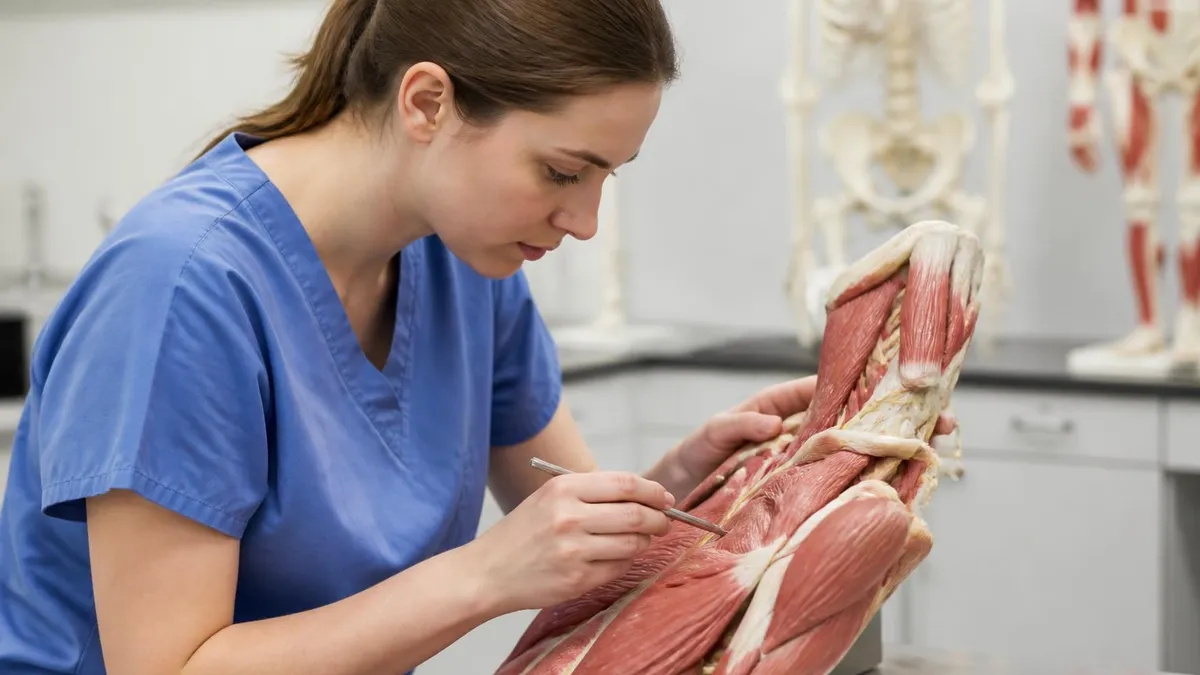
Structural knowledge is intensely visual and spatial, which is why dissection labs, cadaver study, and three-dimensional models remain central to learning. A surgical technologist who knows exactly which tissue layers lie between skin and an organ can anticipate a surgeon's next move. Strong structural foundations also make physiology far easier, because function always follows form in the human body.

Is a Healthcare Career Built on Anatomy and Physiology Right for You?
- +Strong, stable job demand across nearly every region of the country
- +Wide range of entry points from short certificates to advanced degrees
- +Competitive salaries that grow with experience and specialization
- +Meaningful, hands-on work that directly improves patients' lives
- +Knowledge transfers across many roles, easing career changes later
- +Clear advancement ladders from assistant to licensed professional
- −Heavy upfront memorization and conceptual learning required
- −A&P courses are notoriously rigorous and time-consuming
- −Many roles involve shift work, weekends, and physical demands
- −Emotional toll of patient care can lead to burnout
- −Licensing and continuing education requirements never fully end
- −Clinical settings expose workers to illness and high-stress situations
Anatomy and Physiology Assessment and Evaluation Checklist
- ✓Review all anatomical directional terms and body planes until automatic
- ✓Build labeled diagrams for each of the eleven major body systems
- ✓Create a hormone-gland-target table for the endocrine system
- ✓Trace blood flow through the heart and pulmonary circuit from memory
- ✓Walk through the action potential step by step without notes
- ✓Quiz yourself on bone landmarks and muscle origins and insertions
- ✓Practice multi-system integration questions every week
- ✓Take at least two full-length timed practice exams before test day
- ✓Identify and re-study your three weakest systems specifically
- ✓Summarize each chapter on a single page for final review

Active recall beats re-reading every time
Students who quiz themselves and reconstruct diagrams from memory consistently outscore those who simply re-read notes and highlight textbooks. Close the book, draw the system, then check what you missed. This retrieval practice strengthens memory far more than passive review and is the single highest-return study habit in anatomy and physiology.
Salary and job outlook are central questions for anyone using an anatomy and physiology study guide to launch a healthcare career, and the data is encouraging across nearly every role. The U.S. Bureau of Labor Statistics projects healthcare occupations to grow much faster than the average for all jobs through 2032, adding roughly two million positions. This demand is driven by an aging population, expanded access to care, and the steady need to replace workers who retire or change fields, creating durable opportunity nationwide.
Entry-level roles offer fast paths into the field. Certified nursing assistants typically earn in the mid-thirty-thousand range and can complete training in a matter of weeks, while medical assistants average around forty thousand dollars annually. These positions require solid A&P fundamentals but modest formal education, making them popular starting points for students who want clinical experience and income while deciding whether to pursue a more advanced credential later.
Mid-level technical roles reward deeper A&P mastery with stronger pay. Radiologic technologists average roughly sixty-five thousand dollars, respiratory therapists earn in the seventy-thousand range, and physical therapist assistants sit near sixty-three thousand. Each of these careers applies physiology daily — adjusting imaging exposure, managing ventilation, or guiding rehabilitation — so the depth of understanding you build now translates directly into competence, confidence, and earning potential on the job.
Registered nursing remains the cornerstone of the healthcare workforce, with a median salary above eighty thousand dollars and demand projected to keep RNs among the most-hired professionals in the country. Nursing builds on two full semesters of anatomy and physiology, and admissions committees scrutinize A&P grades closely. A strong performance in these courses is one of the clearest signals you can send that you are ready for the rigor of a nursing program.
Advanced practice and specialized roles sit at the top of the earning scale. Physician assistants and nurse practitioners earn well into six figures, while specialized technologists and therapists command premium pay in high-demand regions. These careers require graduate education, yet they still rest on the same foundational anatomy and physiology you study today. The deeper your early mastery, the smoother every subsequent layer of advanced training becomes throughout your professional life.
Geography and setting also shape pay significantly. Hospitals, outpatient centers, and specialty clinics in metropolitan areas frequently pay more than rural facilities, though cost of living varies. Travel positions, night shifts, and high-acuity units often carry differentials that boost income substantially. As you map your career, weigh not just the headline salary but the full picture of demand, advancement potential, and work-life balance that each role realistically offers.
Many nursing and allied health programs require A&P courses completed within the last five to seven years, and they fill competitive seats quickly. Check each program's specific recency and grade requirements early. Retaking an expired or low-grade A&P course can delay your application by an entire admission cycle.
Proven study techniques are what separate students who survive anatomy and physiology from those who truly master it, and the best methods are backed by cognitive science. Active recall — testing yourself rather than re-reading — sits at the top of every evidence-based list. Each time you force your brain to retrieve information without looking, you strengthen the neural pathway to that memory. Practice questions, blank-diagram labeling, and explaining concepts aloud all harness this effect far more powerfully than highlighting.
Spaced repetition is the natural partner to active recall. Instead of cramming a system the night before a quiz, review it at expanding intervals: one day later, three days later, a week later, then two weeks. Digital flashcard tools automate this scheduling, surfacing the cards you struggle with more often. This approach fights the forgetting curve directly and is especially effective for the enormous volume of terminology A&P demands.
Visual and kinesthetic learning strategies suit this subject exceptionally well because so much of it is spatial. Coloring workbooks, model building, and drawing structures by hand force you to engage with location and relationship rather than passively recognizing a picture. A well-used anatomy and physiology coloring workbook turns abstract diagrams into memories your hand and eye encode together, which many students find dramatically improves retention.
Teaching others is one of the most underrated techniques available. Explaining the cardiac cycle to a study partner — or even to an empty room — instantly exposes the gaps in your understanding that silent reading hides. The act of organizing knowledge into a clear explanation forces deeper processing. Study groups that quiz one another and trade mini-lectures consistently outperform students who isolate, provided the group stays focused and disciplined about its time.
Mnemonics and memory devices tame the sheer volume of names. Classic phrases for cranial nerves, carpal bones, and the order of taxonomy survive precisely because they work. Creating your own mnemonics is even more effective, because the act of invention is itself a form of deep processing. Pair these devices with the spatial and recall strategies above rather than relying on them alone, since mnemonics aid memorization but not true comprehension.
Finally, simulate the real exam well before test day. Take full-length, timed practice tests under conditions that mirror the actual assessment — no notes, a quiet room, and a strict clock. This builds stamina, surfaces your weakest systems, and trains the pacing that prevents you from running out of time. Reviewing every missed question afterward, and re-studying the underlying concept, converts each practice exam into a targeted, high-yield learning session.
With your study system in place, the final stretch of preparation is about consolidation and confidence rather than learning new material. In the last week before an exam, resist the urge to start fresh topics. Instead, return to your one-page summaries for each system and quiz yourself on the connections between them. The goal is to convert isolated facts into a fluent, integrated mental map you can navigate quickly under pressure, the way professionals must in real clinical settings.
Prioritize your weakest systems with surgical precision. If the endocrine feedback loops or the nephron's reabsorption steps still feel shaky, devote disproportionate time there rather than re-reviewing comfortable material. Comfortable topics give a false sense of productivity; the points you stand to gain live in your weak spots. A short, honest self-assessment at the start of each session keeps your effort aimed where it actually moves your score.
Manage the logistics that quietly sink prepared students. Confirm your exam time, location, and any required identification or materials a full day ahead. Sleep is not optional — research consistently shows that a rested brain recalls and reasons far better than a sleep-deprived one, and an all-night cram session typically costs more points than it earns. Treat the night before as recovery time, not a final desperate push for coverage.
On exam day, manage your pace deliberately. Skim the whole test first to gauge length and difficulty, answer the questions you know cold, and flag harder items to revisit. This prevents a single tough question from consuming time you need elsewhere. For multi-system integration questions, slow down and identify which systems are involved before reasoning through the cause-and-effect chain that links them to the correct answer.
Use practice tests as your primary diagnostic right up to the end. Each completed practice exam should be mined for patterns: are you missing physiology more than anatomy, or stumbling on one particular system? These patterns reveal exactly where a final hour of study yields the most return. The students who improve most are not those who study longest but those who study most precisely, guided by honest feedback from realistic practice.
Finally, keep the bigger picture in view. The anatomy and physiology you are mastering is not an arbitrary hurdle but the literal foundation of the career you are pursuing. Every diagram you memorize and every mechanism you understand becomes a tool you will reach for when caring for real patients. Approaching the material as the start of your professional expertise — rather than just a test to survive — produces both better scores and a far stronger clinical foundation for the years ahead.
Anatomy Physiology Questions and Answers

Anatomy and Physiology Definitions: The Complete Beginner's Guide to Key Terms and Concepts
Define Anatomy and Physiology: A Complete Guide to Understanding Human Body Structure and Function

Anatomy and Physiology Study Material: Complete Resource Guide

Anatomy and Physiology Coloring Workbook: The Complete Guide to Visual Learning, Active Recall, and Mastering Body Systems

Difference Between Anatomy and Physiology: A Complete Guide to Understanding Structure vs. Function
About the Author

Educational Psychologist & Academic Test Preparation Expert
Columbia University Teachers CollegeDr. Lisa Patel holds a Doctorate in Education from Columbia University Teachers College and has spent 17 years researching standardized test design and academic assessment. She has developed preparation programs for SAT, ACT, GRE, LSAT, UCAT, and numerous professional licensing exams, helping students of all backgrounds achieve their target scores.