
Anatomy and Physiology Definitions: The Complete Beginner's Guide to Key Terms and Concepts
⏳ Master anatomy and physiology definitions with clear explanations of essential terms, body systems, and core concepts every student needs to learn.

Building a strong foundation in anatomy and physiology definitions is the single most important step for any student entering the health sciences, nursing, medicine, or allied health programs. Anatomy refers to the study of the structure of the body and its parts, while physiology examines how those parts function and work together. When you understand these two disciplines as a connected pair, the entire human body begins to make sense as a living, integrated system rather than a confusing list of names.
Many students stumble early not because the material is impossibly hard, but because the vocabulary feels overwhelming. Terms like homeostasis, anatomical position, sagittal plane, and metabolism appear constantly, and without clear definitions they pile up quickly. The goal of this guide is to break down the essential terminology in plain language, give you concrete examples, and connect each definition to something you can actually picture in your mind. Clarity now saves hours of confusion later.
Anatomy is generally divided into gross anatomy, which studies structures visible to the naked eye, and microscopic anatomy, which requires a microscope to view cells and tissues. Physiology branches similarly into areas like cellular physiology, organ physiology, and systemic physiology. These divisions help organize an enormous field into manageable pieces. If you want a deeper foundation, you can define anatomy and physiology in more detail before moving into specialized topics.
One reason these subjects are taught together is that structure determines function. The shape of a red blood cell, for example, directly enables its job of carrying oxygen. The thin walls of the alveoli in the lungs allow rapid gas exchange. Every time you learn a structural term, ask yourself what that structure does. This habit links anatomy and physiology automatically, turning isolated facts into a logical story your brain can store and recall under exam pressure.
Definitions in this field also follow consistent patterns rooted in Latin and Greek. Prefixes, suffixes, and root words repeat across hundreds of terms. Once you learn that "cardio" relates to the heart, "hepato" to the liver, and "-itis" means inflammation, you can decode unfamiliar words without memorizing each one individually. This systematic approach transforms a seemingly endless vocabulary into a predictable language you can read fluently with practice and repetition over a single semester.
This guide walks through the core definitions, the levels of body organization, key directional and regional terms, and the foundational concept of homeostasis. We will also cover the major organ systems, common study strategies, and frequently asked questions. Whether you are preparing for a college course, an entrance exam, or a professional certification, mastering these definitions early will make every chapter that follows dramatically easier to understand and remember.
Anatomy and Physiology by the Numbers

Levels of Body Organization
The simplest level, including atoms and molecules such as water, proteins, and DNA. These chemicals combine to form the building blocks that make every larger structure in the body possible.
Cells are the smallest living units of life. Examples include muscle cells, nerve cells, and blood cells, each specialized to perform specific functions essential to survival and growth.
Groups of similar cells working together form tissues. The four main types are epithelial, connective, muscle, and nervous tissue, each with distinct structures and roles.
Two or more tissue types combine to form an organ such as the heart, stomach, or kidney. Each organ performs specialized tasks for the body's overall operation.
Organs that cooperate form an organ system, and all systems together create the complete living organism functioning as one coordinated, self-regulating biological unit.
To truly understand anatomy and physiology, you must start with the most fundamental definitions and build upward. Anatomy is the science of body structures and the relationships among them, while physiology is the science of body functions and how the parts operate. These twin disciplines are inseparable because no structure exists without a purpose, and no function happens without a physical structure carrying it out. Keeping this relationship in mind makes every later definition easier to absorb.
A cell is defined as the basic structural and functional unit of all living things. Cells contain organelles, which are tiny specialized structures such as the nucleus, mitochondria, and ribosomes. The nucleus stores genetic material, the mitochondria produce energy in the form of ATP, and ribosomes manufacture proteins. Understanding the cell first is essential because tissues, organs, and entire systems all depend on cellular activity to survive, repair themselves, and respond to change.
A tissue is a group of similar cells that perform a common function. The body contains four primary tissue types. Epithelial tissue covers surfaces and lines cavities, connective tissue supports and binds structures together, muscle tissue produces movement, and nervous tissue transmits electrical signals. Memorizing these four categories early gives you a framework for classifying nearly every structure you encounter later in your coursework, from skin and bone to the brain and blood vessels.
Metabolism is another foundational term, defined as the sum of all chemical reactions occurring within the body. It includes catabolism, the breakdown of complex molecules to release energy, and anabolism, the building of complex molecules from simpler ones. These opposing processes run constantly to keep you alive, fuel movement, and maintain body temperature. For a broader overview of how these concepts connect, the human body anatomy and physiology resource provides a helpful integrated perspective.
Anatomical terminology also relies on the concept of the anatomical position, a standardized reference posture. In this position, the body stands upright, faces forward, with arms at the sides and palms turned forward. All directional terms assume this position regardless of how the body is actually lying or moving. Without this universal starting point, descriptions like "above" or "below" would be hopelessly ambiguous, so professionals worldwide rely on it for clear communication.
Finally, the term "system" refers to a group of organs that cooperate to accomplish a shared task. The cardiovascular system, for instance, includes the heart and blood vessels working to circulate blood. Each of the eleven major organ systems has a defined role, and learning these roles helps you organize the entire course. When you can name a system, list its organs, and state its primary function, you have mastered a powerful study shortcut.
These core definitions form the vocabulary backbone of your entire anatomy and physiology journey. Revisit them often, write them in your own words, and test yourself frequently. Each time you encounter a new chapter, you will find these same foundational terms reappearing in more complex contexts, reinforcing their importance and rewarding the effort you invest in learning them thoroughly at the very beginning of your studies.
Anatomy and Physiology Practice Test Questions
Prepare for the Anatomy and Physiology exam with our free practice test modules. Each quiz covers key topics to help you pass on your first try.
Anatomy and Physiology Applied Methods and...
Anatomy and Physiology Exam Questions covering Applied Methods and Techniques. Master Anatomy and Physiology Test concepts for certification prep.
Anatomy and Physiology Assessment and Eval...
Free Anatomy and Physiology Practice Test featuring Assessment and Evaluation. Improve your Anatomy and Physiology Exam score with mock test prep.
Anatomy and Physiology Communication and D...
Anatomy and Physiology Mock Exam on Communication and Documentation. Anatomy and Physiology Study Guide questions to pass on your first try.
Anatomy and Physiology Continuing Educatio...
Anatomy and Physiology Test Prep for Continuing Education Requirements. Practice Anatomy and Physiology Quiz questions and boost your score.
Anatomy and Physiology Core Concepts and P...
Anatomy and Physiology Questions and Answers on Core Concepts and Principles. Free Anatomy and Physiology practice for exam readiness.
Anatomy and Physiology Industry Best Pract...
Anatomy and Physiology Mock Test covering Industry Best Practices. Online Anatomy and Physiology Test practice with instant feedback.
Anatomy and Physiology Musculoskeletal System
Free Anatomy and Physiology Quiz on Musculoskeletal System. Anatomy and Physiology Exam prep questions with detailed explanations.
Anatomy and Physiology Nervous System
Anatomy and Physiology Practice Questions for Nervous System. Build confidence for your Anatomy and Physiology certification exam.
Anatomy and Physiology Professional Standa...
Anatomy and Physiology Test Online for Professional Standards and Ethics. Free practice with instant results and feedback.
Anatomy and Physiology Safety and Compliance
Anatomy and Physiology Study Material on Safety and Compliance. Prepare effectively with real exam-style questions.
Anatomy and Physiology General Concepts
Free Anatomy and Physiology Test covering General Concepts. Practice and track your Anatomy and Physiology exam readiness.
Anatomy and Physiology Integumentary System
Anatomy and Physiology Exam Questions covering Integumentary System. Master Anatomy and Physiology Test concepts for certification prep.
Directional and Regional Terms in Anatomy
Directional terms describe the position of one structure relative to another. Superior means toward the head, while inferior means toward the feet. Anterior refers to the front of the body, and posterior to the back. Medial points toward the body's midline, and lateral points away from it. These paired opposites appear constantly in textbooks and clinical settings.
Additional terms include proximal, meaning closer to the point of attachment, and distal, meaning farther from it. Superficial means near the surface, while deep means farther inside. Mastering these terms early lets you read precise anatomical descriptions without confusion, and they become second nature once you practice applying them to real structures and diagrams during study sessions.

Studying Anatomy and Physiology: Advantages and Challenges
- +Builds a foundation for nursing, medicine, and allied health careers
- +Develops a logical understanding of how the body truly works
- +Improves medical vocabulary that transfers to clinical settings
- +Connects structure and function for deeper, lasting comprehension
- +Prepares students for entrance exams and certification tests
- +Makes everyday health and fitness concepts easier to understand
- −Requires memorizing a large volume of terminology
- −Demands consistent study rather than last-minute cramming
- −Latin and Greek roots can feel intimidating at first
- −Integrating multiple systems together can be conceptually complex
- −Lab work and dissection may be uncomfortable for some students
- −Fast-paced courses can overwhelm unprepared beginners
Pros and Cons at a Glance
| Pros | Cons |
|---|---|
| Builds a foundation for nursing, medicine, and allied health careers | Requires memorizing a large volume of terminology |
| Develops a logical understanding of how the body truly works | Demands consistent study rather than last-minute cramming |
| Improves medical vocabulary that transfers to clinical settings | Latin and Greek roots can feel intimidating at first |
| Connects structure and function for deeper, lasting comprehension | Integrating multiple systems together can be conceptually complex |
| Prepares students for entrance exams and certification tests | Lab work and dissection may be uncomfortable for some students |
| Makes everyday health and fitness concepts easier to understand | Fast-paced courses can overwhelm unprepared beginners |
Essential Anatomy and Physiology Definitions Checklist
- ✓Define anatomy as the study of body structure.
- ✓Define physiology as the study of body function.
- ✓List the six levels of body organization in order.
- ✓Name the four primary tissue types and their roles.
- ✓Describe the anatomical position from memory.
- ✓Explain the difference between catabolism and anabolism.
- ✓Recall all major directional terms and their opposites.
- ✓Identify the three main body planes used in imaging.
- ✓Define homeostasis and give one real example.
- ✓List the eleven major organ systems and one function each.
Structure Always Determines Function
The golden rule of anatomy and physiology is that form follows function. Every time you learn a new structure, immediately ask what it does and why its shape suits that job. This single habit links anatomy and physiology together and turns memorization into genuine understanding you will retain long after the exam.
Homeostasis is arguably the most important concept in all of physiology, defined as the body's ability to maintain a stable internal environment despite external changes. Your body constantly regulates temperature, blood pressure, blood sugar, pH, and fluid balance to keep these variables within narrow, healthy ranges. Without homeostasis, cells could not survive. Nearly every physiological process you study exists, in some way, to support this continuous balancing act that keeps you alive.
Homeostasis works through feedback loops, which are systems that detect change and respond to it. A negative feedback loop reverses a change to restore balance, such as sweating to cool the body when temperature rises. A positive feedback loop amplifies a change until a specific outcome is reached, such as the contractions during childbirth. Understanding these two loop types explains how the body responds to countless internal and external challenges throughout daily life.
The eleven major organ systems each contribute to homeostasis in unique ways. The integumentary system, your skin, protects against pathogens and regulates temperature. The skeletal system provides support, protection, and produces blood cells. The muscular system enables movement and generates heat. The nervous system rapidly coordinates responses, while the endocrine system uses hormones for slower, longer-lasting regulation. Together these systems demonstrate how structure and function intertwine across the entire body.
The cardiovascular system circulates blood carrying oxygen, nutrients, and waste, while the lymphatic system supports immunity and fluid balance. The respiratory system exchanges oxygen and carbon dioxide. The digestive system breaks down food into absorbable nutrients. The urinary system filters blood and removes waste. The reproductive system ensures the continuation of the species. Each system depends on the others, forming an interconnected network rather than isolated parts.
One reason students struggle is failing to see how systems cooperate. Consider exercise: your muscular system contracts, the respiratory system increases breathing, the cardiovascular system pumps faster, the nervous system coordinates the effort, and the integumentary system releases sweat to cool you. This single activity engages five systems simultaneously, all working to maintain homeostasis. Recognizing these connections transforms scattered facts into a coherent, memorable picture of the living body.
If you want to reinforce these definitions with structured study material, the essentials of anatomy and physiology textbook offers organized chapters that build system knowledge progressively. Pairing a quality textbook with active recall and practice questions creates a powerful learning cycle. Read a concept, close the book, explain it aloud, then test yourself. This method consistently outperforms passive rereading and highlighting in long-term retention studies.
As you study each organ system, create a simple summary that lists its main organs, primary function, and contribution to homeostasis. This three-part template keeps your notes consistent and makes review efficient. When exam day arrives, you can mentally walk through all eleven systems using the same structure, ensuring you never blank on a major category. Organized, repeatable study habits are the true secret to mastering this vocabulary-rich subject.
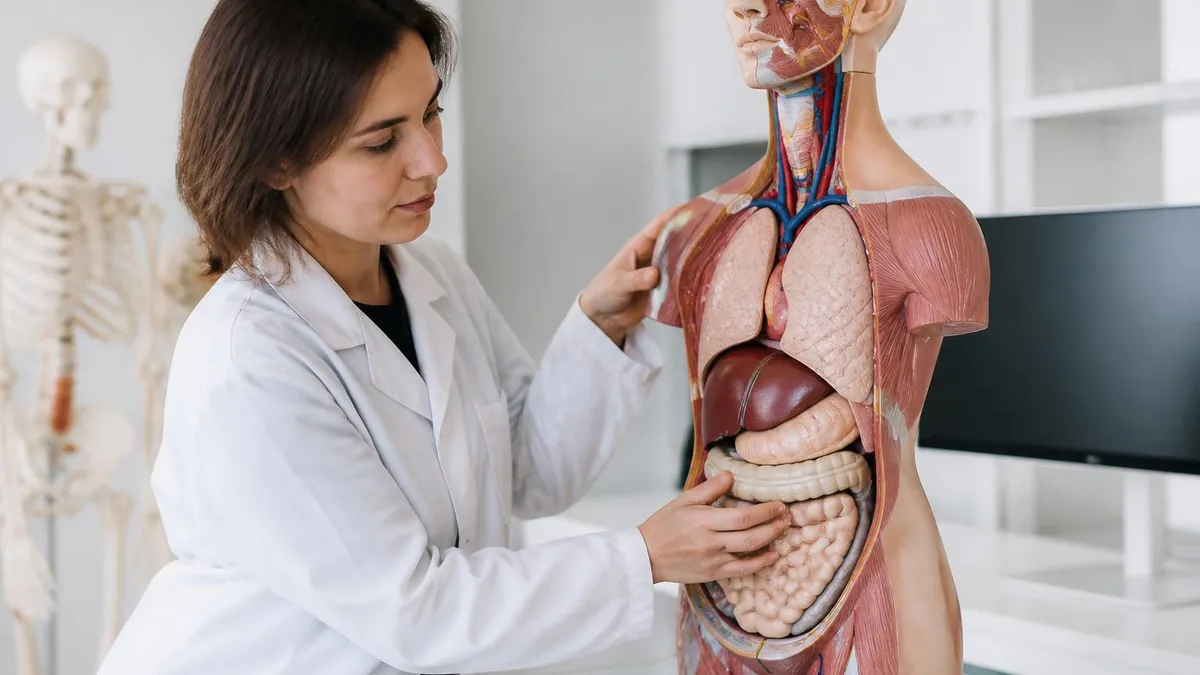
The most common mistake beginners make is memorizing definitions without context. A term learned alone is quickly forgotten, but a term tied to a structure, function, and real example sticks. Always connect new vocabulary to something you can visualize or relate to your own body.
Effective study strategies separate students who thrive in anatomy and physiology from those who feel constantly behind. The first principle is spaced repetition, which means reviewing material at increasing intervals rather than cramming all at once. Studying definitions for thirty minutes daily across two weeks produces far better retention than a single six-hour session the night before an exam. Your brain consolidates information during rest, so consistent short sessions outperform marathon cramming nearly every time.
Active recall is the second essential strategy. Instead of passively rereading notes, force your brain to retrieve information from memory. Cover a definition, try to recite it, then check your accuracy. Flashcards, whether physical or digital, are perfect for this. Apps that schedule reviews automatically combine active recall with spaced repetition, creating an efficient system specifically suited to the heavy vocabulary load of anatomy and physiology coursework and entrance exam preparation.
Learning the word roots is a third powerful technique. Medical terminology is built from predictable Latin and Greek components. The prefix "hyper-" means excessive, "hypo-" means deficient, "-ology" means the study of, and "-emia" relates to blood. Once you internalize a few dozen of these building blocks, you can decode hundreds of unfamiliar terms on sight. This skill pays dividends across every health science course you will ever take.
Drawing and labeling diagrams engages visual and kinesthetic memory. Sketching a cell, a bone, or a body plane forces you to process structure actively rather than glancing at a textbook image. Even rough drawings work, because the act of placing and naming each part strengthens memory. Many top students keep a dedicated sketchbook and redraw key structures repeatedly until they can reproduce them entirely from memory without any reference.
Teaching the material to someone else, sometimes called the Feynman technique, reveals gaps in your understanding instantly. If you cannot explain homeostasis or the levels of organization in simple words, you have not truly learned them yet. Explaining concepts to a study partner, a family member, or even an empty room exposes weak spots so you can target your review precisely where it is needed most before testing.
Practice questions are indispensable for converting knowledge into exam performance. Working through quizzes simulates test conditions, builds recall speed, and familiarizes you with how questions are phrased. For convenient self-testing, downloadable resources like an anatomy and physiology pdf let you review definitions anywhere, even without internet access. Combine reading with frequent quizzing to identify weak areas long before they appear on a graded examination.
Finally, manage your study environment and well-being. Sleep, hydration, and short breaks dramatically affect memory consolidation and focus. Studying in a quiet, organized space with your phone out of reach reduces distractions. Break large topics into smaller daily goals so progress feels achievable rather than overwhelming. Students who treat anatomy and physiology as a steady marathon, not a frantic sprint, consistently earn stronger grades and retain the material far longer.
As you approach exams or coursework checkpoints, practical preparation tips can make a measurable difference in your performance. Begin by creating a master glossary of every definition covered in your syllabus. Organize it by chapter or system, and add a short example to each entry. Reviewing this living document weekly keeps foundational vocabulary fresh and prevents the panic that comes from realizing you forgot early terms once later material builds upon them.
Prioritize the highest-yield concepts first. Homeostasis, the levels of organization, directional terms, and the four tissue types appear on virtually every introductory exam. Master these absolute essentials before diving into less frequently tested details. By securing the foundational definitions early, you guarantee yourself a strong baseline score and free up mental energy to tackle the more nuanced, system-specific material that distinguishes top performers from average ones.
Form or join a study group, but keep it focused and accountable. Quizzing one another, debating tricky distinctions, and explaining concepts aloud reinforces learning through multiple channels. Assign each member a system to teach, then rotate. This division of labor lightens the individual workload while ensuring everyone benefits from clear, peer-delivered explanations. Just avoid groups that drift into socializing, which wastes the limited time you have before assessments.
Use mnemonic devices to lock in lists that resist memorization. Acronyms, rhymes, and vivid mental images make abstract sequences memorable. For example, students often invent phrases to recall the order of body organization levels or the names of cranial nerves. The sillier and more personal the mnemonic, the better it tends to stick. Creating your own is more effective than borrowing one, because the act of invention itself reinforces memory.
Simulate exam conditions before the real thing. Take timed practice tests without notes, then review every missed question carefully to understand why the correct answer is right. This error analysis is where the deepest learning happens. Tracking which categories you miss most often reveals patterns, letting you concentrate your final review hours on genuine weaknesses rather than topics you already command confidently and would simply be comfortable repeating.
On exam day, read each question slowly and watch for qualifier words like "not," "except," "always," and "never," which completely change the meaning. Answer the questions you know first to build confidence and bank easy points, then return to harder items. Manage your time so you never leave answerable questions blank. A calm, systematic approach paired with thorough preparation consistently produces the best outcomes on anatomy and physiology assessments.
Above all, treat anatomy and physiology as a language you are learning to speak fluently rather than a list to memorize once and forget. Fluency comes from daily exposure, repeated practice, and genuine curiosity about how your own body works. Students who stay consistent, connect structure to function, and test themselves relentlessly find that the vocabulary stops feeling foreign and starts feeling like second nature well before final exams arrive.
Sample Anatomy and Physiology Practice Questions
Try these questions from our free Anatomy and Physiology practice tests. The correct answer and an explanation follow each question.
How should core concepts and principles knowledge be maintained and updated?
- A. Initial training provides lifelong competence
- B. Through continuous professional development, current literature review, and professional networking
- C. Knowledge updates are only needed every five years
- D. Learning stops after certification
Answer: B. Through continuous professional development, current literature review, and professional networking
Professional competence requires ongoing development through education, literature review, and engagement with the professional community.
What quality assurance measure supports core concepts and principles?
- A. Quality checks are unnecessary for experienced professionals
- B. Regular self-assessment, peer review, and adherence to established standards
- C. Quality only matters for new practitioners
- D. Annual review is sufficient
Answer: B. Regular self-assessment, peer review, and adherence to established standards
Ongoing quality assurance through self-assessment, peer review, and standards adherence ensures continuous improvement.
How should challenges in core concepts and principles be addressed?
- A. Avoid challenges and stick to familiar tasks
- B. Apply systematic problem-solving, seek expert guidance when needed, and document decisions
- C. Ignore challenges until they resolve themselves
- D. Delegate all challenges to supervisors
Answer: B. Apply systematic problem-solving, seek expert guidance when needed, and document decisions
Systematic problem-solving combined with appropriate consultation and documentation ensures challenges are addressed effectively.
How should professionals apply core concepts and principles in daily practice?
- A. Only when being evaluated
- B. Consistently integrate best practices into every aspect of professional work
- C. Apply principles selectively based on convenience
- D. Follow standards only for complex tasks
Answer: B. Consistently integrate best practices into every aspect of professional work
Consistent application of professional standards ensures quality outcomes and builds professional credibility.
Anatomy Physiology Questions and Answers

Define Anatomy and Physiology: A Complete Guide to Understanding Human Body Structure and Function

Essentials of Anatomy and Physiology 2nd Edition: The Complete Textbook Guide for Students

Human Body Anatomy and Physiology: The Complete Guide to Structure, Function, and Integrated Body Systems
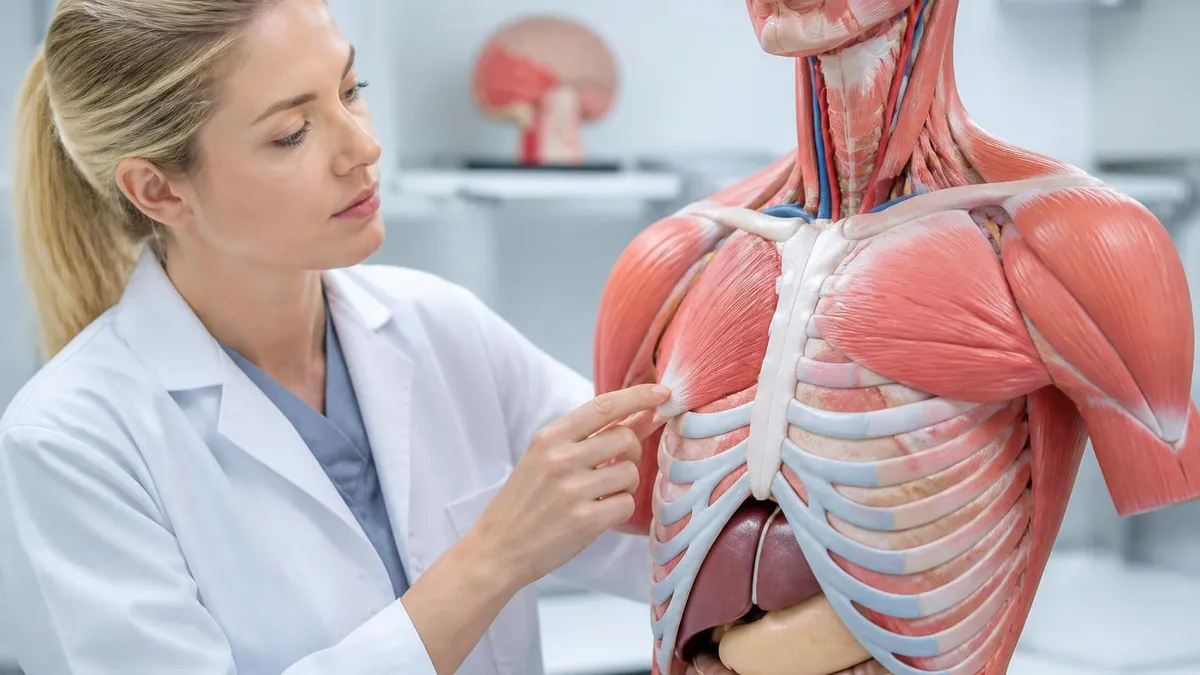
Anatomy and Physiology PDF: Complete Free Download Guide for 2026 Students
Anatomy and Physiology Practice Test
About the Author

Educational Psychologist & Academic Test Preparation Expert
Columbia University Teachers CollegeDr. Lisa Patel holds a Doctorate in Education from Columbia University Teachers College and has spent 17 years researching standardized test design and academic assessment. She has developed preparation programs for SAT, ACT, GRE, LSAT, UCAT, and numerous professional licensing exams, helping students of all backgrounds achieve their target scores.