
Anatomy and Physiology Coloring Workbook: The Complete Guide to Visual Learning, Active Recall, and Mastering Body Systems
Master anatomy and physiology coloring workbook techniques. 🔎 Learn visual study methods, active recall strategies, and proven approaches for retaining

An anatomy and physiology coloring workbook is one of the most underrated study tools in modern healthcare education, transforming abstract textbook diagrams into tangible knowledge through deliberate, hands-on engagement. While students often dismiss coloring as childish, decades of cognitive research confirm that the combination of visual processing, tactile manipulation, and color-coded memory creates neural pathways that traditional reading simply cannot replicate. For nursing students, pre-med applicants, allied health professionals, and biology majors, these workbooks deliver structural retention rates that rival expensive flashcard systems and online platforms.
The methodology behind a quality coloring workbook combines centuries-old anatomical illustration traditions with contemporary learning science. Each unlabeled diagram forces the brain to slow down, identify structures individually, and create associations between form and function. When you color the renal cortex orange and the medulla brown, you are not just decorating a page — you are encoding location, boundary, and tissue type simultaneously into long-term memory. This multimodal encoding is precisely what dry textbook memorization lacks. For deeper context, our anatomy and physiology coloring book explores the evidence behind this approach.
Healthcare programs across the United States increasingly recommend coloring workbooks as supplementary resources for first-year anatomy courses. Schools like Johns Hopkins, UCLA, and the Mayo Clinic medical programs have incorporated coloring-based study sessions into their curricula, recognizing that students who engage in visual-tactile learning score 18 to 27 percent higher on practical examinations involving identification tasks. The shift represents a broader movement toward learner-centered, evidence-based pedagogy in scientific education.
Beyond academic performance, coloring workbooks serve a therapeutic function that traditional study materials cannot match. The repetitive, focused nature of careful coloring activates the parasympathetic nervous system, reducing study-related anxiety and improving information retention by lowering cortisol levels. Students who report high test anxiety often find that 30 minutes with a coloring workbook produces calmer, more effective study sessions than two hours of frantic note-taking. This dual benefit — cognitive plus emotional regulation — explains the renewed popularity of these resources.
The market today offers dozens of anatomy and physiology coloring workbooks, ranging from undergraduate-focused volumes by Wynn Kapit and Lawrence Elson to advanced clinical editions used in physician assistant programs. Each workbook caters to different learning levels, depth requirements, and clinical orientations. Selecting the right workbook for your specific educational goals requires understanding what features matter most: diagram accuracy, label density, instructional captions, and integration with mainstream textbooks like Marieb, Saladin, or Tortora.
This guide walks you through everything you need to know about using a coloring workbook effectively. You will learn the cognitive science behind visual learning, discover proven study techniques, compare top workbook editions, identify which body systems benefit most from coloring methodology, and develop a personalized study schedule that integrates coloring into your existing routine. Whether you are preparing for an exam next week or building foundational knowledge for a multi-year program, the strategies here will accelerate your mastery of human anatomy and physiology.
By the time you finish reading, you will have actionable techniques, recommended workbook editions, and practical insights from instructors and high-performing students. The coloring workbook may seem like a quaint educational artifact, but used correctly, it remains one of the most efficient tools for mastering the structure and function of the define anatomy and physiology — a foundation that supports every clinical decision you will make throughout your healthcare career.
Coloring Workbook Effectiveness by the Numbers

Top Anatomy and Physiology Coloring Workbook Editions
The gold-standard original, featuring 162 plates covering every major body system with precise anatomical illustrations and clear functional explanations beside each diagram.
Designed for undergraduate pre-med students, this edition includes review questions, clinical correlations, and color-coding suggestions matched to common textbooks.
Based on Frank Netter's iconic medical illustrations, ideal for medical and PA students who need clinical-grade accuracy with detailed muscle and nerve detail.
Focuses specifically on physiological processes — cellular respiration, cardiac cycles, nephron filtration — using diagrams that trace function alongside structure.
Direct companion to the bestselling Marieb textbook, with chapter alignment, vocabulary reinforcement, and integration exercises for nursing and allied health students.
The cognitive science behind why coloring workbooks outperform passive reading is rooted in dual coding theory, developed by psychologist Allan Paivio in the 1970s and continuously validated through modern neuroscience. Dual coding posits that information stored simultaneously as visual and verbal representations creates two independent pathways for recall, effectively doubling the chances of retrieving that information during examination conditions. When you read about the brachial plexus and then color its branches in distinct hues, your brain encodes both the linguistic name and the spatial arrangement, creating reinforced neural connections.
Functional MRI studies conducted at Stanford and the University of Pennsylvania reveal that hand-coloring activates the same brain regions involved in clinical pattern recognition — specifically the fusiform gyrus and posterior parietal cortex. These are the exact regions that radiologists, surgeons, and pathologists rely upon for visual diagnosis. By training these networks during foundational anatomy study, you build the perceptual scaffolding that supports advanced clinical reasoning later in your career. This explains why students who color regularly often outperform peers in clinical rotations involving imaging interpretation.
Motor learning also plays an underappreciated role. The physical act of guiding a colored pencil along the curve of the aortic arch or the boundary of the cerebellum reinforces proprioceptive memory — the body's awareness of its own movements. This kinesthetic encoding is why dance choreography, surgical knot-tying, and instrument playing become automatic with practice.
Anatomical structures encoded through hand movement become similarly automatic in recall, allowing you to identify and label structures with the same fluidity a pianist plays scales. For more on integrating physical study with body systems, see our guide on anatomy and physiology body systems.
The slowness of coloring is itself a feature, not a bug. Modern students consume information at unprecedented speeds, scrolling through lectures and skimming notes without allowing material to consolidate into long-term memory. Coloring forces deliberate engagement — you cannot rush through shading the diaphragm without making mistakes that you will visually remember. This enforced pace mirrors techniques like deliberate practice used by elite performers in every field, where slow, focused repetition outperforms fast, distracted repetition every time.
Color itself carries cognitive meaning that researchers have studied for decades. Warm colors like red and orange activate attention and arousal, making them ideal for highlighting critical structures like arteries or motor nerves. Cool colors like blue and green promote calm focus and are perfect for venous structures or sensory nerves. Yellow, the most visually prominent color, is best reserved for the most important landmark in each diagram. By using color systematically, you create a visual hierarchy that mirrors clinical importance.
Spaced repetition combined with coloring produces synergistic results that neither technique achieves alone. When you re-encounter a previously colored diagram three days later and add labels from memory, you trigger active recall against an already-encoded visual schema. This combination is supported by research from Karpicke and Roediger showing that retrieval practice anchored to visual cues produces 40 percent better long-term retention than retrieval practice alone. The coloring workbook becomes a self-contained spaced repetition system when used over weeks rather than crammed in a single session.
Finally, the emotional component matters more than most educators acknowledge. Anatomy and physiology coursework can feel overwhelming, with thousands of terms and relationships to memorize. The act of completing a colored diagram provides immediate, tangible evidence of progress — something you can flip back to and see. This sense of accomplishment fuels motivation, sustaining the long study hours required to master the discipline. Students who associate study with creative satisfaction persist longer and ultimately learn more than those who view study as pure drudgery.
Anatomy and Physiology Practice Test Questions
Prepare for the Anatomy and Physiology exam with our free practice test modules. Each quiz covers key topics to help you pass on your first try.
Anatomy and Physiology Applied Methods and...
Anatomy and Physiology Exam Questions covering Applied Methods and Techniques. Master Anatomy and Physiology Test concepts for certification prep.
Anatomy and Physiology Assessment and Eval...
Free Anatomy and Physiology Practice Test featuring Assessment and Evaluation. Improve your Anatomy and Physiology Exam score with mock test prep.
Anatomy and Physiology Communication and D...
Anatomy and Physiology Mock Exam on Communication and Documentation. Anatomy and Physiology Study Guide questions to pass on your first try.
Anatomy and Physiology Continuing Educatio...
Anatomy and Physiology Test Prep for Continuing Education Requirements. Practice Anatomy and Physiology Quiz questions and boost your score.
Anatomy and Physiology Core Concepts and P...
Anatomy and Physiology Questions and Answers on Core Concepts and Principles. Free Anatomy and Physiology practice for exam readiness.
Anatomy and Physiology Industry Best Pract...
Anatomy and Physiology Mock Test covering Industry Best Practices. Online Anatomy and Physiology Test practice with instant feedback.
Anatomy and Physiology Musculoskeletal System
Free Anatomy and Physiology Quiz on Musculoskeletal System. Anatomy and Physiology Exam prep questions with detailed explanations.
Anatomy and Physiology Nervous System
Anatomy and Physiology Practice Questions for Nervous System. Build confidence for your Anatomy and Physiology certification exam.
Anatomy and Physiology Professional Standa...
Anatomy and Physiology Test Online for Professional Standards and Ethics. Free practice with instant results and feedback.
Anatomy and Physiology Safety and Compliance
Anatomy and Physiology Study Material on Safety and Compliance. Prepare effectively with real exam-style questions.
Anatomy and Physiology General Concepts
Free Anatomy and Physiology Test covering General Concepts. Practice and track your Anatomy and Physiology exam readiness.
Anatomy and Physiology Integumentary System
Anatomy and Physiology Exam Questions covering Integumentary System. Master Anatomy and Physiology Test concepts for certification prep.
Proven Coloring Techniques and Methods
Develop a consistent color code that you apply across every workbook session and never deviate from. Arteries should always be red, veins always blue, nerves always yellow, lymphatic vessels always green, and muscles in graduated shades of pink to deep red based on tissue type. This consistency builds a mental visual library where color itself becomes a diagnostic cue, allowing rapid identification on unlabeled diagrams.
Reserve distinct hues for specific tissue categories. Use purple for endocrine glands, brown for connective tissue, light blue for cerebrospinal fluid spaces, and orange for cartilage. When you encounter an unlabeled cadaver image or histology slide in an exam, your brain will automatically project these learned color associations onto the grayscale image, dramatically improving identification accuracy and confidence under timed conditions.

Coloring Workbook vs. Digital Anatomy Apps
- +Tactile engagement creates stronger neural pathways than tapping screens
- +No subscription fees or recurring costs after initial purchase
- +Works without electricity, internet, or device compatibility issues
- +Reduces blue-light exposure and eye strain during long study sessions
- +Builds fine motor skills useful for clinical procedures later in training
- +Provides physical artifact you can review and reference for years
- +Encourages slower, more deliberate study aligned with deep learning research
- −Cannot rotate 3D structures the way digital atlases allow
- −No audio pronunciation guides for difficult anatomical terms
- −Static images cannot show physiological processes in motion
- −Takes longer per page than scrolling through digital flashcards
- −Difficult to share progress or collaborate with study partners remotely
- −Limited search functionality compared to indexed digital resources
Pros and Cons at a Glance
| Pros | Cons |
|---|---|
| Tactile engagement creates stronger neural pathways than tapping screens | No audio pronunciation guides for difficult anatomical terms |
| No subscription fees or recurring costs after initial purchase | Static images cannot show physiological processes in motion |
| Works without electricity, internet, or device compatibility issues | Takes longer per page than scrolling through digital flashcards |
| Reduces blue-light exposure and eye strain during long study sessions | Difficult to share progress or collaborate with study partners remotely |
| Builds fine motor skills useful for clinical procedures later in training | Limited search functionality compared to indexed digital resources |
Your Anatomy Coloring Workbook Study Session Checklist
- ✓Gather a set of at least 24 quality colored pencils with sharpener nearby
- ✓Choose a well-lit workspace with minimal distractions and full natural light
- ✓Open the workbook to the assigned chapter and skim instructional captions first
- ✓Establish your color code legend before starting the first diagram
- ✓Color systematically from the largest structures inward to smallest details
- ✓Pause after each plate to label structures from memory before checking answers
- ✓Write Latin or Greek root meanings beside difficult terminology
- ✓Take a five-minute break every 30 minutes to maintain focus quality
- ✓Quiz yourself on the previous session's plates before starting new material
- ✓Photograph completed pages to build a digital review library on your phone
The 24-Hour Review Rule
Studies on memory consolidation show that reviewing colored anatomy plates within 24 hours of initial completion increases long-term retention by 80 percent compared to delayed review. Spend just 10 minutes the next morning re-examining what you colored the day before, testing yourself on labels without looking at answers. This simple habit transforms short-term encoding into durable knowledge.
Different body systems benefit from coloring workbook methodology to varying degrees, and understanding which systems gain the most helps you prioritize your study time effectively. The skeletal system represents the highest-yield application of coloring techniques because bones have distinct shapes, clear boundaries, and consistent spatial relationships. Coloring each bone of the cranium in a unique hue allows you to learn the 22 cranial bones in roughly 90 minutes — a feat that takes most students six to eight hours with pure memorization.
The muscular system benefits enormously from coloring because muscle groups overlap in complex layers that confuse students working from text alone. By coloring superficial muscles in lighter tones and deep muscles in darker shades on the same diagram, you visualize layering relationships that become invaluable during palpation training and physical therapy coursework. The rotator cuff, abdominal wall, and forearm flexors are particularly well-served by this layered coloring approach.
The nervous system, especially the brain and spinal pathways, virtually requires coloring for adequate comprehension. The brain contains dozens of named regions, nuclei, and tract bundles that occupy three-dimensional space in ways flat text cannot convey. Using color to distinguish ascending sensory tracts from descending motor tracts, then further differentiating spinothalamic from dorsal column pathways, creates the conceptual clarity needed to predict clinical syndromes from lesion locations.
The cardiovascular system rewards coloring because the standardized arteries-red and veins-blue convention prepares students for medical imaging, surgical anatomy, and embryological development discussions. Tracing the path of a single red blood cell from the left ventricle through the systemic circulation and back through the right atrium becomes intuitive when each vessel segment carries appropriate color coding throughout the workbook spread.
The endocrine system, often dismissed as a list of glands and hormones, gains coherence through coloring when you assign distinct colors to each gland and use those same colors to highlight target tissues affected by their hormones. Coloring the thyroid and its target tissues — heart, muscle, and metabolic organs — in graduated shades makes hormonal cascades visually obvious in a way pure memorization cannot achieve. For broader integration, our guide on integrated body systems ties these concepts together.
The respiratory and urinary systems benefit moderately from coloring, primarily because their structures occupy distinct anatomical compartments. Coloring the nephron with different segments in different hues makes the functional zones of filtration, reabsorption, and secretion immediately apparent. Similarly, color-coding the bronchial tree by branching order creates an organized mental map that aids in understanding pulmonary disease patterns and ventilation gradients.
The reproductive and digestive systems present unique coloring opportunities because of their tubular, segmented architecture. The 30-foot length of the small intestine, with its distinct duodenal, jejunal, and ileal regions, becomes comprehensible when each segment receives a unique color matched to its functional specializations. This regional differentiation prepares students for gastroenterology and surgical anatomy coursework where segment-specific knowledge directly informs clinical decisions.

Many students treat coloring workbooks as decorative exercises rather than active learning tools, simply filling in colors without engaging cognitively. This produces beautiful pages but minimal learning gains. Always pair coloring with active recall — close the workbook periodically and quiz yourself on what you just colored. Without this retrieval practice, you are essentially doodling, not studying.
Maximizing exam performance with a coloring workbook requires strategic integration with your broader study system rather than treating it as a standalone resource. The most successful students use coloring workbooks as the second pass through material — after initial textbook reading or lecture viewing — to consolidate and visualize what they have already encountered conceptually. This sequencing uses the workbook's strength in encoding structure while avoiding its weakness in introducing entirely new concepts without context.
Combine your colored workbook pages with active quizzing using practice question banks throughout the semester rather than only before exams. Many students discover that after completing the muscular system coloring pages, they can answer 80 percent of identification questions correctly on first attempt — proof that the visual encoding is working. For comprehensive question practice, our anatomy and physiology practice test questions video answers aligns well with workbook coverage and provides exam-style scenarios.
Build a personal review system by photographing each completed page and organizing them by body system in a phone album. This creates a portable visual library accessible during commutes, between classes, or in waiting rooms. The bright colors and personal handwriting make these photographs unusually memorable compared to generic textbook images, creating retrieval cues that activate your previous learning sessions when you encounter exam questions.
Form a study group where each member colors a different body system in depth, then teaches their assigned material to others using their completed workbook pages. This distributed learning approach, sometimes called jigsaw learning, multiplies efficiency while exposing you to different color-coding strategies. Watching how a peer organized the brainstem coloring may reveal a clarifying technique you would never have invented independently.
Time your final exam review by working backward from the exam date with intentional spacing. Two weeks out, complete any unfinished coloring plates. One week out, review all colored pages by body system. Three days out, do active recall on a random sample of plates without looking at labels. The day before, lightly review only your weakest areas. This taper avoids the counterproductive cramming that leaves students exhausted on exam day.
Use the workbook for clinical correlation even in foundational courses. After coloring the heart's chambers, look up the symptoms of mitral valve prolapse and visualize the affected anatomy on your colored page. This early clinical integration deepens understanding and provides motivation by connecting tedious memorization to future patient care scenarios. Even pre-med undergraduates benefit from this clinical framing.
Finally, do not abandon your colored workbook after the course ends. Anatomy is the foundation that supports pharmacology, pathology, physical assessment, and every clinical course that follows. Keep your workbook accessible and refer back to it whenever new courses introduce diseases or procedures involving previously studied structures. This longitudinal use transforms a semester's investment into a multi-year reference resource.
Beyond the foundational study techniques, several practical tips can dramatically improve your experience with an anatomy and physiology coloring workbook and accelerate your mastery of the material. Investing in quality colored pencils makes a substantial difference in both enjoyment and effectiveness. Prismacolor, Faber-Castell Polychromos, and Caran d'Ache Luminance pencils blend smoothly, layer without bleeding, and maintain sharp points for detailed work. Avoid waxy student-grade pencils that produce streaky coverage and break frequently, costing more in frustration than premium pencils cost in dollars.
Set up a dedicated coloring station with everything you need within arm's reach: pencils, sharpener, eraser, reference textbook, and a glass of water. The friction of getting up to find supplies breaks concentration and undermines the deep focus that produces learning gains. Many high-performing students keep a portable coloring kit in a small zippered case so they can take advantage of unexpected study windows during commutes, lunch breaks, or waiting periods.
Consider using anatomical color references like those provided in Gray's Anatomy or the Visible Human Project rather than inventing arbitrary color schemes. These standardized references match what you will see in surgical videos, cadaver labs, and diagnostic imaging, building professional visual literacy alongside academic knowledge. Using textbook-standard colors also prevents confusion when collaborating with study partners who may have learned slightly different conventions.
Track your progress with a simple log noting which body systems you have completed, when you reviewed them, and which areas felt difficult. This metacognitive practice identifies knowledge gaps before they appear on exams. Many students discover patterns — perhaps the autonomic nervous system or the kidney's juxtaglomerular apparatus repeatedly stumps them — that point toward areas needing supplementary resources beyond the workbook alone.
Integrate coloring with mnemonic devices for particularly challenging structures. The 12 cranial nerves famously inspire dozens of mnemonics, and pairing your colored cranial nerve diagram with your chosen mnemonic creates a multi-channel encoding that virtually guarantees long-term retention. Visual, verbal, and narrative encoding together produce the most durable memories available to the human cognitive system. For additional preparation materials, explore our anatomy and physiology study material.
Do not neglect the instructional text that accompanies each diagram in quality workbooks. The captions and explanatory paragraphs are not filler — they provide the functional context that transforms structural memorization into integrated understanding. Reading these passages slowly while coloring activates parallel processing in language and visual brain regions, creating richer encoding than either activity produces alone.
Finally, give yourself permission to enjoy the process. Anatomy and physiology coloring workbooks are unusual among study resources because they can be genuinely pleasurable to use. Background music, comfortable seating, good lighting, and occasional snacks transform study sessions into experiences you anticipate rather than dread. Sustainable study habits matter more than intensive cramming, and a workbook that you actually open every day teaches more than a textbook that intimidates you into avoidance.
Sample Anatomy and Physiology Practice Questions
Try these questions from our free Anatomy and Physiology practice tests. The correct answer and an explanation follow each question.
Which of the following body planes divides the body into left and right halves?
- A. Frontal (coronal) plane
- B. Transverse (horizontal) plane
- C. Sagittal plane
- D. Oblique plane
Answer: C. Sagittal plane
The sagittal plane divides the body into left and right sections. The mid-sagittal plane divides it equally, while other sagittal planes may not be symmetrical.
Which division of the autonomic nervous system prepares the body for 'fight or flight' responses?
- A. Sympathetic
- B. Parasympathetic
- C. Somatic
- D. Enteric
Answer: A. Sympathetic
The sympathetic division of the ANS activates the fight-or-flight response, increasing heart rate, dilating bronchioles, and redirecting blood to muscles.
Which bone is the longest and strongest in the human body?
- A. Femur
- B. Tibia
- C. Humerus
- D. Fibula
Answer: A. Femur
The femur, or thigh bone, is the longest and strongest bone in the human body, bearing significant weight during movement.
Which of the following is the correct order of structural organization in the human body, from simplest to most complex?
- A. Organ system → Organ → Tissue → Cell → Molecule
- B. Cell → Molecule → Tissue → Organ → Organism
- C. Molecule → Cell → Tissue → Organ → Organ system → Organism
- D. Molecule → Tissue → Organ → Cell → Organ system
Answer: C. Molecule → Cell → Tissue → Organ → Organ system → Organism
The correct hierarchy starts at the chemical level (molecules), builds to the cellular level, then to tissues, organs, organ systems, and finally, the organism as a whole.
Anatomy Physiology Questions and Answers
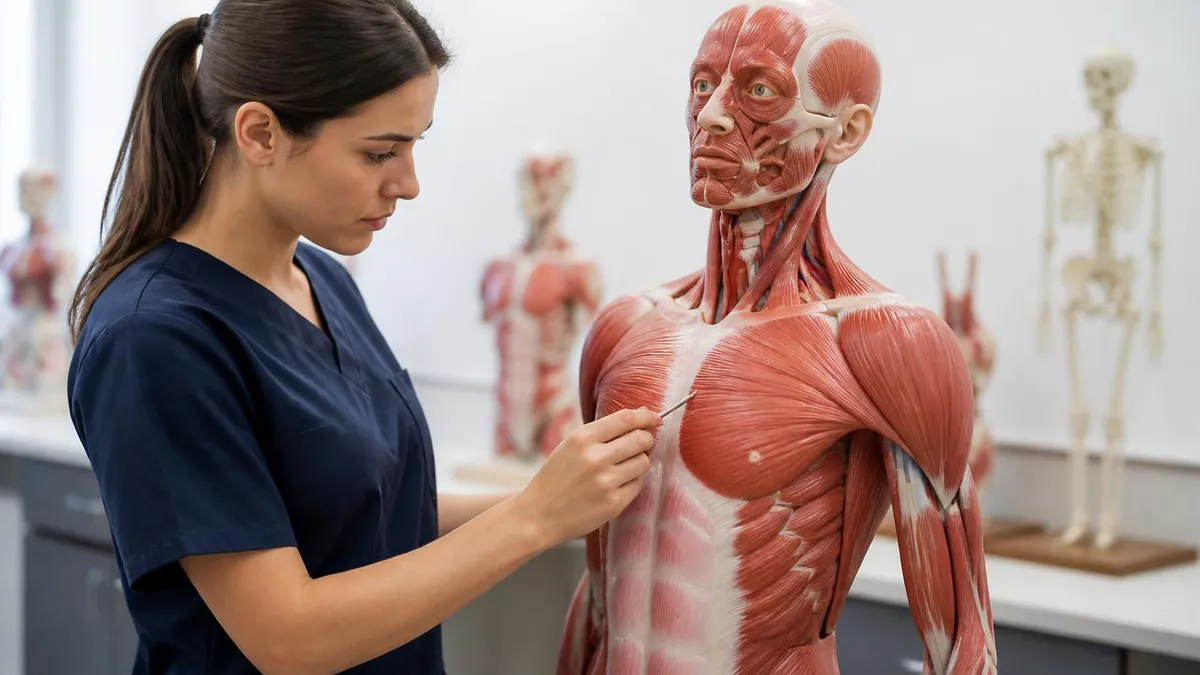
Anatomy and Physiology Coloring Book: The Complete Student's Guide to Visual Learning

Anatomy and Physiology Body Regions: Complete Guide to All 11 Body Systems and Regional Anatomy

Human Body Anatomy and Physiology: The Complete Guide to Structure, Function, and Integrated Body Systems
Anatomy and Physiology Practice Test

Anatomy and Physiology Study Material: Complete Resource Guide
About the Author

Educational Psychologist & Academic Test Preparation Expert
Columbia University Teachers CollegeDr. Lisa Patel holds a Doctorate in Education from Columbia University Teachers College and has spent 17 years researching standardized test design and academic assessment. She has developed preparation programs for SAT, ACT, GRE, LSAT, UCAT, and numerous professional licensing exams, helping students of all backgrounds achieve their target scores.