
Human Anatomy and Physiology Book: The Complete Guide to Choosing, Using, and Mastering the Best Textbooks for 2026
Choosing a human anatomy and physiology book? Compare top textbooks, editions, study features, and reading strategies to master body systems faster in 2026. 📗
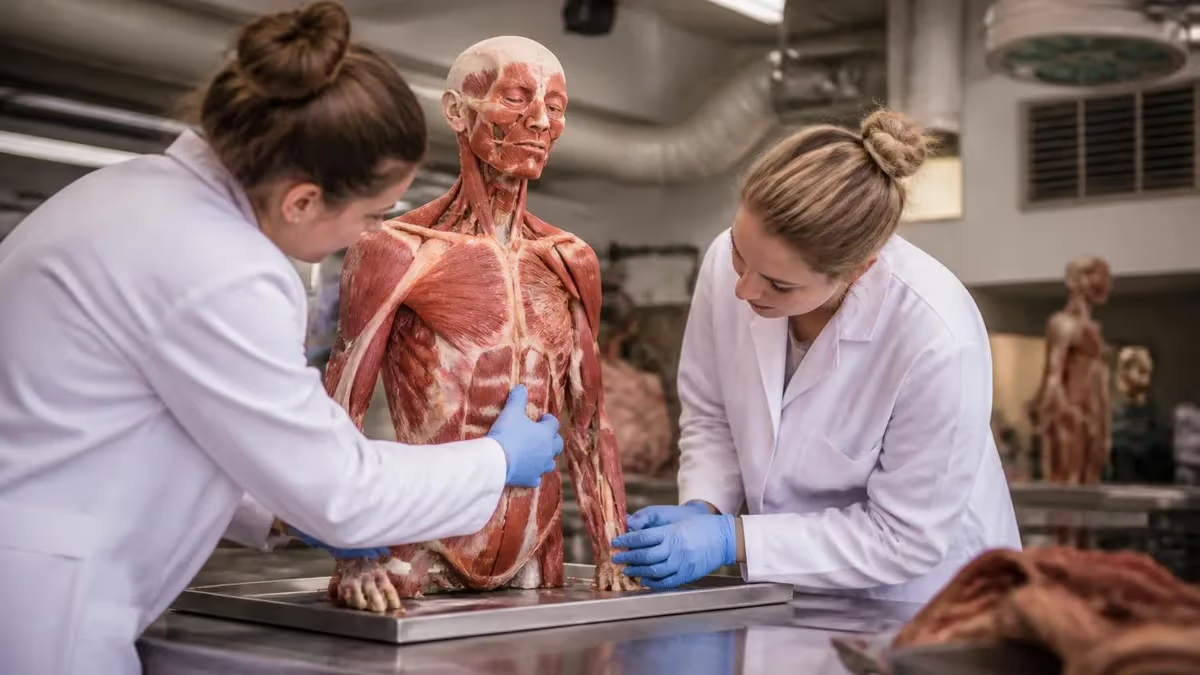
Choosing the right human anatomy and physiology book is one of the most important decisions a nursing, pre-med, allied health, or biology student makes during their first two years of college. The textbook becomes a daily companion across two semesters and a reference during clinical rotations. Because A&P courses are notoriously dense, the book you select shapes how easily you absorb cell biology, the skeletal system, the nervous system, and dozens of interlocking pathways your instructors expect you to recall under pressure. Practice with the free Anatomy and Physiology practice test on PracticeTestGeeks (7 questions with answer explanations).
A great human anatomy and physiology textbook does far more than list facts. It connects structure to function, layers visual diagrams over text, and reinforces concepts with review questions, case studies, and digital companions. Titles such as Marieb and Hoehn, Tortora and Derrickson, Saladin, and OpenStax dominate American classrooms because they balance depth with readability. Each one approaches the same body systems differently, so understanding their strengths helps you match a book to your learning style and your long-term academic and career goals.
Price matters too, and it matters a great deal to most students. Hardcover editions routinely cost between 180 and 320 dollars new, while rental, used, and digital versions trim that figure dramatically. OpenStax even offers a fully peer-reviewed, free option that thousands of community colleges now assign. If you want a portable reference you can study anywhere, a human anatomy and physiology book in digital format lets you search, highlight, and annotate without lugging a four-pound hardcover across campus every single day.
This guide walks through every angle of selecting and using an A&P text. We compare the major publishers, break down editions and ISBNs, explain how to extract maximum value from each chapter, and show how to pair your book with active-recall tools like flashcards, coloring workbooks, and practice tests. Whether you are a first-time freshman or returning to school after years away from the classroom, the right reading strategy can realistically cut your study time in half while raising your exam scores.
We also address the practical realities many students overlook: how often editions change, whether you truly need the newest version, how access codes for online platforms like Mastering A&P or McGraw Hill Connect affect resale value, and what to do when your professor lists a custom campus edition. These logistical details can save you hundreds of dollars and prevent the deep frustration of buying a book that lacks the homework code your course actually requires.
By the end, you will understand not just which human anatomy and physiology book to buy, but how to read it efficiently, when to supplement it, and how to turn its thousand-plus pages into durable, exam-ready knowledge. Anatomy and physiology rewards consistent, structured study far more than last-minute cramming, and the right textbook is the foundation that makes that consistency possible across an entire demanding academic year of healthcare or science coursework.
Think of this article as the conversation you wish an experienced upperclassman had given you before your first day. The choices feel overwhelming at the bookstore, but they become simple once you understand the trade-offs. Spend a little time now matching the book, the format, and the study system to your situation, and you will spend far less time stressed, confused, and overpaying later in the term.
Free Anatomy and Physiology Study Tools
Interactive Anatomy and Physiology resources on PracticeTestGeeks, free to start:
- Anatomy and Physiology Cardiovascular System 1 — 7 questions with answer explanations
- Anatomy and Physiology flashcards — review key terms and concepts card by card
- Anatomy and Physiology study guide — topic-by-topic overview of what the exam covers
- Anatomy and Physiology cheat sheet — one-page printable summary for last-minute review
Human Anatomy and Physiology Books by the Numbers
Top Human Anatomy and Physiology Textbooks Compared
The most widely assigned nursing and allied health text. Known for friendly prose, exceptional figures, and the Mastering A&P platform. Ideal for students who want gradual, narrative explanations and strong clinical applications.
Principles of Anatomy and Physiology balances clinical depth with stunning artwork. Favored in pre-med and rigorous programs that demand more physiological detail and a heavy emphasis on homeostasis.
Anatomy & Physiology: The Unity of Form and Function offers an integrated, story-driven approach. Strong on evolutionary context and the conceptual links between structure and function throughout.
A free, openly licensed, peer-reviewed textbook adopted by hundreds of community colleges. Covers all major systems with solid diagrams and zero cost in PDF or web format for any student.
Anatomy & Physiology: An Integrative Approach uses a unique structure-then-function chapter design. Popular for its clear summaries and well-organized review tables that aid quick exam review.
Choosing the right human anatomy and physiology book starts with one honest question: what kind of learner are you? Marieb and Hoehn reads almost conversationally, building each concept before introducing the next, which suits students who feel intimidated by science. Tortora and Derrickson packs more clinical and physiological depth into every page, rewarding readers who prefer rigor over hand-holding. Saladin sits between them, weaving structure and function into a narrative that helps the material stick through storytelling rather than rote memorization of disconnected facts.
Your course requirements override personal preference, however. Most professors assign a specific edition tied to an online homework platform such as Mastering A&P, McGraw Hill Connect, or WileyPLUS. These platforms grade quizzes automatically and often count toward your final grade, so buying a different book or an older edition without the access code can leave you unable to submit assignments. Always confirm the exact ISBN on your syllabus before purchasing, and check carefully whether the access code is bundled with the book or sold separately.
Budget shapes the decision as much as content does. A brand-new hardcover with an access code can exceed 300 dollars, but smart students mix and match. Renting the physical book while buying a standalone access code, or using free OpenStax alongside a borrowed library copy, can reduce costs to under 60 dollars. If you plan to keep your book as a long-term reference, a hardcover may be worthwhile; if you only need two semesters, digital rental often wins.
Format preference matters more than students expect. Digital editions let you search instantly for terms like baroreceptor or sarcomere, jump between cross-referenced figures, and study on a phone during commutes. Print editions reduce eye strain, support deeper focus, and never depend on battery life or internet access. Many learners use both: a print copy for sustained reading and a human anatomy and physiology book in PDF form for quick lookups and exam-week review on the go between classes.
Consider the supplementary ecosystem each title offers before deciding. Marieb pairs with an enormously popular coloring workbook and laboratory manual. Tortora includes detailed cadaver photographs and a strong set of clinical case studies. OpenStax integrates with free ancillaries built by active instructor communities. The richer the surrounding materials, the more ways you can rehearse the same content, which is exactly what long-term retention of anatomical detail demands across an intensive, cumulative two-semester sequence.
Finally, weigh the reputation among students in your specific program. Nursing cohorts overwhelmingly favor Marieb because its clinical applications mirror real patient-care scenarios. Pre-medical and kinesiology students often prefer Saladin or Tortora for the added physiological mechanism and depth. Ask upperclassmen, browse program forums, and read recent reviews, because the best book for a respiratory therapy student differs meaningfully from the best book for a future physician, physical therapist, or research scientist.
No single textbook is objectively best for everyone, and anyone who claims otherwise is oversimplifying. The right choice aligns your learning style, your course platform requirements, your budget, and your long-term career plans. Spend an hour comparing sample chapters before you commit, because the book you choose will quietly determine how confident and how exhausted you feel during one of the most demanding academic years most healthcare students ever face.
Editions, ISBNs, and Formats Explained
Major A&P textbooks release a new edition roughly every three to four years. Updates often add refreshed artwork, revised clinical correlations, and reorganized digital content, but the core science changes very little between consecutive editions. A skeleton diagram from the eleventh edition teaches the same 206 bones as the twelfth. For that reason, many students save real money by purchasing the previous edition when their professor does not require online platform access for graded work.
The catch is page numbers and figure labels. If your instructor assigns specific pages or homework keyed to the newest edition, an older copy forces constant cross-referencing that wastes valuable time. Weigh the savings against that friction honestly before you buy. When platform homework is not mandatory and lectures drive the course, a one-edition-old textbook can cut your cost by half or more without harming your learning or your final grade at all.
Print vs Digital Human Anatomy and Physiology Books: Which Wins?
- +Instant keyword search across 1,200+ pages of terminology
- +Portable on any phone, tablet, or laptop for study anywhere
- +Usually cheaper than new hardcover bundled editions
- +Easy highlighting and note syncing across multiple devices
- +Built-in links to videos, animations, and self-quizzes
- +No physical weight to carry across campus or to clinicals
- −Screen reading increases eye strain during long sessions
- −Digital rentals expire and have little to no resale value
- −Requires a charged device and sometimes internet access
- −Access codes are single-use and not transferable to others
- −Harder to flip quickly between two distant diagrams
- −Some students retain less from screens than from print
Pros and Cons at a Glance
| Pros | Cons |
|---|---|
| Portable on any phone, tablet, or laptop for study anywhere | Screen reading increases eye strain during long sessions |
| Usually cheaper than new hardcover bundled editions | Digital rentals expire and have little to no resale value |
| Easy highlighting and note syncing across multiple devices | Requires a charged device and sometimes internet access |
| Built-in links to videos, animations, and self-quizzes | Access codes are single-use and not transferable to others |
| No physical weight to carry across campus or to clinicals | Harder to flip quickly between two distant diagrams |
Human Anatomy and Physiology Book Buying Checklist
- ✓Confirm the exact edition and ISBN listed on your course syllabus.
- ✓Check whether an online access code is required for graded homework.
- ✓Decide if you need the code bundled or can buy it separately.
- ✓Compare new, used, rental, and digital prices side by side.
- ✓Verify used copies still include an unused access code if needed.
- ✓Consider the free OpenStax edition if your course allows it.
- ✓Look for a matching lab manual or coloring workbook companion.
- ✓Read sample chapters to test the author's writing style.
- ✓Ask upperclassmen in your program which book they preferred.
- ✓Confirm return and refund policies before the term begins.
Buy the access code separately, rent the book
Publishers sell standalone online access codes that often cost less than a full bundled textbook. Pair a cheap used or rented physical copy with a directly purchased code to satisfy your homework platform while cutting total cost by 40 to 60 percent. Always verify the code edition matches your course before buying.
Owning the best human anatomy and physiology book means little if you read it passively. The students who excel treat each chapter as an active workout rather than a novel. Before reading, they preview the chapter outline, learning objectives, and bolded headings, building a mental map of where the material is heading. This step takes only five minutes but dramatically improves comprehension, because your brain absorbs new facts more readily when it already knows the overall structure of the system being described.
The second technique is interleaving text with figures. Anatomy is fundamentally visual, so every time the prose references a diagram, stop and study that figure until you can describe it without looking. Trace the path of blood through the heart, follow a nerve impulse across a synapse, or label the layers of the epidermis from memory. This deliberate back-and-forth between words and images cements three-dimensional relationships that pure reading can never convey, and it closely mirrors how exam questions actually test your knowledge.
Active recall beats rereading every single time. After finishing a section, close the book and write or recite everything you remember before checking your accuracy. The struggle to retrieve information strengthens memory far more than passively scanning the page a second or third time. Research on spaced repetition consistently shows that students who self-test retain roughly 50 percent more after a week than those who simply review, a gap that compounds powerfully across an entire two-semester course.
Use the chapter review questions as diagnostics, not afterthoughts. Most A&P textbooks end each chapter with multiple-choice, matching, and critical-thinking questions that closely mirror exam formats. Attempt them before lecture rather than only as last-minute review. Questions you miss reveal exactly where your understanding is thin, letting you target your reading and your professor's office hours with surgical precision instead of vaguely rereading everything and hoping the right material happens to stick.
Take full advantage of clinical application boxes. Nearly every modern textbook embeds short case studies that connect physiology to real patient scenarios, such as how a sodium imbalance triggers cardiac arrhythmia or why a torn ACL destabilizes the knee. These vignettes are not filler; they transform abstract pathways into memorable stories and preview the clinical reasoning your future licensing exams and careers will demand. Read them carefully and try to predict the outcome before reading the explanation provided.
Pace yourself with the spacing effect firmly in mind. Reading one chapter in a single marathon session produces weaker memory than spreading the same chapter across three shorter sittings over several days. Schedule brief, frequent encounters with the material, and revisit older chapters periodically even after the class has moved on. The cumulative nature of anatomy means the digestive system you studied in week eight will reappear inside metabolism, endocrine regulation, and well beyond.
Finally, annotate with genuine intention. Highlighting entire paragraphs in yellow feels productive but accomplishes very little. Instead, write margin notes in your own words, draw arrows connecting related structures, and flag concepts you find confusing for follow-up. The act of translating textbook language into your personal phrasing forces real understanding, and your annotated copy becomes a customized study guide far more valuable than any pristine, untouched edition could ever possibly be.
Many A&P courses require a single-use online access code for graded homework. Used and rented books almost always have expired or missing codes. Verify with your syllabus and bookstore whether the code is included before purchasing, or you may end up paying twice for the same materials.
No single textbook, however excellent, should be your only resource. The most successful students surround their core book with complementary tools that attack the same material from different angles. A coloring workbook, for instance, turns passive study into active drawing, forcing your hand and eye to map every bone, muscle, and vessel. Pairing your reading with a structured workbook engages motor memory and visual processing at once, which research shows produces stronger recall than reading alone for spatial content.
Practice testing is the single highest-yield supplement you can add. While your textbook's end-of-chapter questions help, dedicated question banks expose you to far more variety and replicate genuine exam pressure. Working through hundreds of multiple-choice items trains both your knowledge and your test-taking stamina, revealing patterns in how examiners phrase questions about homeostasis, feedback loops, and cellular transport. Treat every missed question as a personalized study assignment rather than a discouragement, and your scores will climb steadily across the term.
Anatomical atlases and 3D apps fill the visualization gap that even the best textbook diagrams leave behind. A flat illustration of the brachial plexus can confuse, but rotating a three-dimensional model reveals how the nerves truly branch in space. Free and low-cost apps now let you peel away layers of muscle, isolate individual structures, and view them from any angle, transforming an abstract page into an interactive learning experience that closely matches how you will encounter the body clinically.
Video lectures and animations clarify dynamic processes that static text struggles to capture. Watching an action potential propagate, a muscle fiber contract, or a nephron filter blood in real time can dissolve confusion that no amount of rereading resolves. Many free educational channels align closely with standard textbook chapters, so you can watch a ten-minute animation immediately before or after reading the corresponding section to reinforce the very same concept through a second sensory channel and lock it in.
Study groups and teaching others convert solitary reading into durable mastery. Explaining the cardiac cycle aloud to a peer exposes the gaps in your own understanding faster than any highlighter ever could. Quiz one another, debate tricky pathways, and divide difficult chapters so each member teaches a portion to the group. The Feynman technique, distilling a complex topic into language simple enough for a beginner, is among the most reliable ways to confirm you have genuinely learned what your human anatomy and physiology book presented.
Flashcards remain a timeless companion to any textbook, particularly for the relentless terminology that A&P demands. Spaced-repetition apps schedule reviews at scientifically optimal intervals, ensuring you encounter difficult terms just before you would forget them. Build cards from your own reading rather than downloading generic decks, because the act of creating each card is itself a powerful learning event that filters and organizes the material in your own mind far better than borrowing someone else's.
The goal of all these supplements is repetition through variety. Encountering the lymphatic system in your textbook, then in a coloring page, then in a practice quiz, then in a study group conversation, embeds it through four distinct neural pathways. Anatomy and physiology is simply too vast to master through any single method, and the students who graduate with the deepest, most durable knowledge are invariably those who built a small, well-chosen ecosystem of tools around one trusted core textbook.
For a fuller set of questions on this topic, see our anatomy and physiology practice test resource.
As your exam approaches, shift from broad reading to targeted, high-efficiency review using your textbook as a precision instrument. Start by revisiting the learning objectives at the front of each chapter and honestly rating your confidence on each one. The objectives you mark as weak become your study priority list. This simple triage prevents the common trap of rereading material you already know well while neglecting the pathways and processes that will actually cost you points on test day.
Build a condensed personal summary from your annotations. By exam week you should not be reading full chapters again; instead, work from the margin notes, diagrams, and flagged concepts you created during your first pass. Compressing a forty-page chapter into a two-page handwritten summary forces you to identify what truly matters and produces a review document you can scan in minutes the night before an exam without drowning in unnecessary detail or wasting precious time.
Prioritize the highest-yield systems based on your syllabus weighting. If the cardiovascular and nervous systems carry the most exam points, allocate study time proportionally rather than spending equal hours on every chapter. Your textbook's table of contents and your professor's lecture emphasis together reveal where the points concentrate. Strategic students align their effort with the grade distribution instead of treating every topic as equally important when it clearly is not in practice.
Simulate exam conditions during your final week. Set a timer, close your book, and complete a full practice test or a large block of chapter questions in one sitting without interruptions. This rehearsal builds the mental endurance that long anatomy exams demand and surfaces any remaining weak areas while you still have time to fix them. Reviewing every missed question against the relevant textbook section turns each error into a final, focused learning opportunity rather than a regret.
Sleep and spacing matter as much as content in the final stretch. Cramming the entire textbook the night before an exam reliably underperforms steady review across the preceding week, because memory consolidation happens during sleep. A well-rested student who studied consistently will outscore an exhausted crammer nearly every time. Protect your sleep, keep review sessions short and frequent, and trust the solid foundation you built reading and annotating throughout the term.
Bring your study full circle by teaching the material one last time. On the day before the exam, explain the trickiest systems aloud to a friend, a family member, or even an empty room. If you can clearly articulate how the kidneys regulate blood pressure or how a reflex arc bypasses the brain, you have genuinely mastered it. Any topic you stumble over signals exactly where to spend your final hour with your textbook before walking confidently into the test.
Above all, trust your preparation and stay calm. A good human anatomy and physiology book, read actively and supplemented wisely across a full term, equips you with knowledge that no last-minute panic can shake. The structured, consistent approach outlined here not only earns better grades but builds the durable foundation your future clinical courses, licensing exams, and patient-care responsibilities will continue to draw upon for many years to come.
Sample Anatomy and Physiology Practice Questions
Try these questions from our free Anatomy and Physiology practice tests. The correct answer and an explanation follow each question.
Which bone is the longest and strongest in the human body?
- A. Femur
- B. Tibia
- C. Humerus
- D. Fibula
Answer: A. Femur
The femur, or thigh bone, is the longest and strongest bone in the human body, bearing significant weight during movement.
Which of the following is the correct order of structural organization in the human body, from simplest to most complex?
- A. Organ system → Organ → Tissue → Cell → Molecule
- B. Cell → Molecule → Tissue → Organ → Organism
- C. Molecule → Cell → Tissue → Organ → Organ system → Organism
- D. Molecule → Tissue → Organ → Cell → Organ system
Answer: C. Molecule → Cell → Tissue → Organ → Organ system → Organism
The correct hierarchy starts at the chemical level (molecules), builds to the cellular level, then to tissues, organs, organ systems, and finally, the organism as a whole.
How many chambers does the human heart have?
- A. Two
- B. Three
- C. Four
- D. Five
Answer: C. Four
The human heart has four chambers: the right atrium, right ventricle, left atrium, and left ventricle.
How many bones are in the adult human skeleton?
- A. 206
- B. 208
- C. 212
- D. 198
Answer: A. 206
The adult human skeleton consists of 206 bones, reduced from about 270 at birth due to fusion.
Anatomy Physiology Questions and Answers
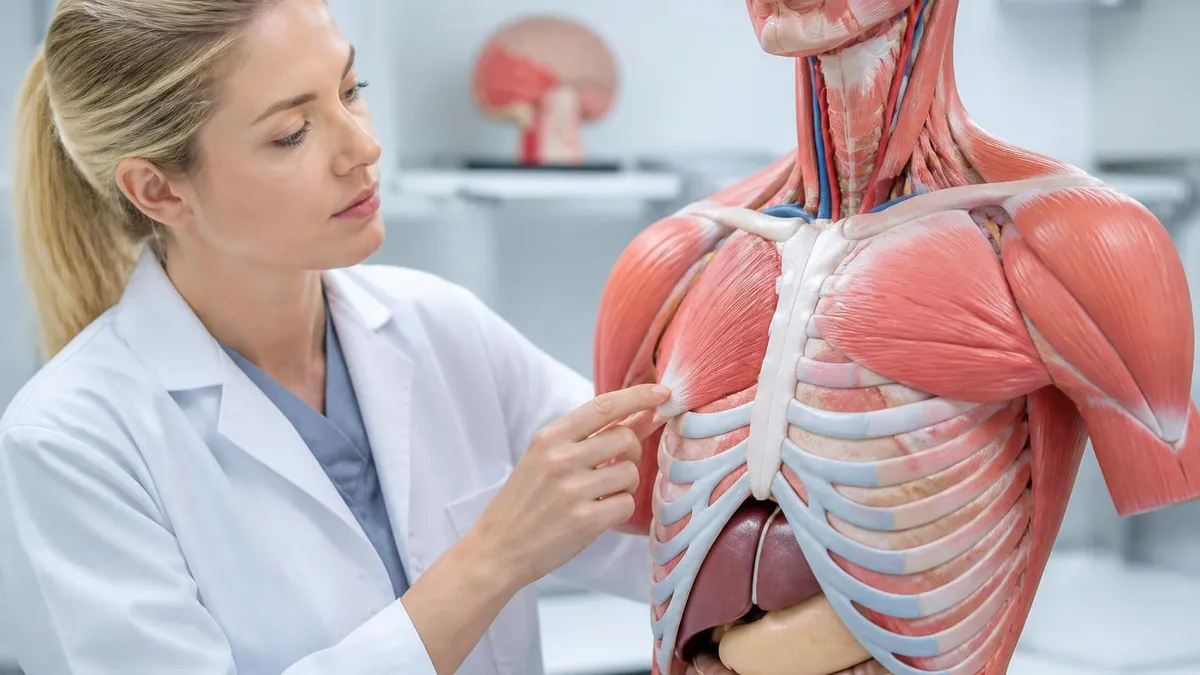
Anatomy and Physiology PDF: Complete Free Download Guide for 2026 Students

Anatomy and Physiology Coloring Workbook: The Complete Guide to Visual Learning, Active Recall, and Mastering Body Systems
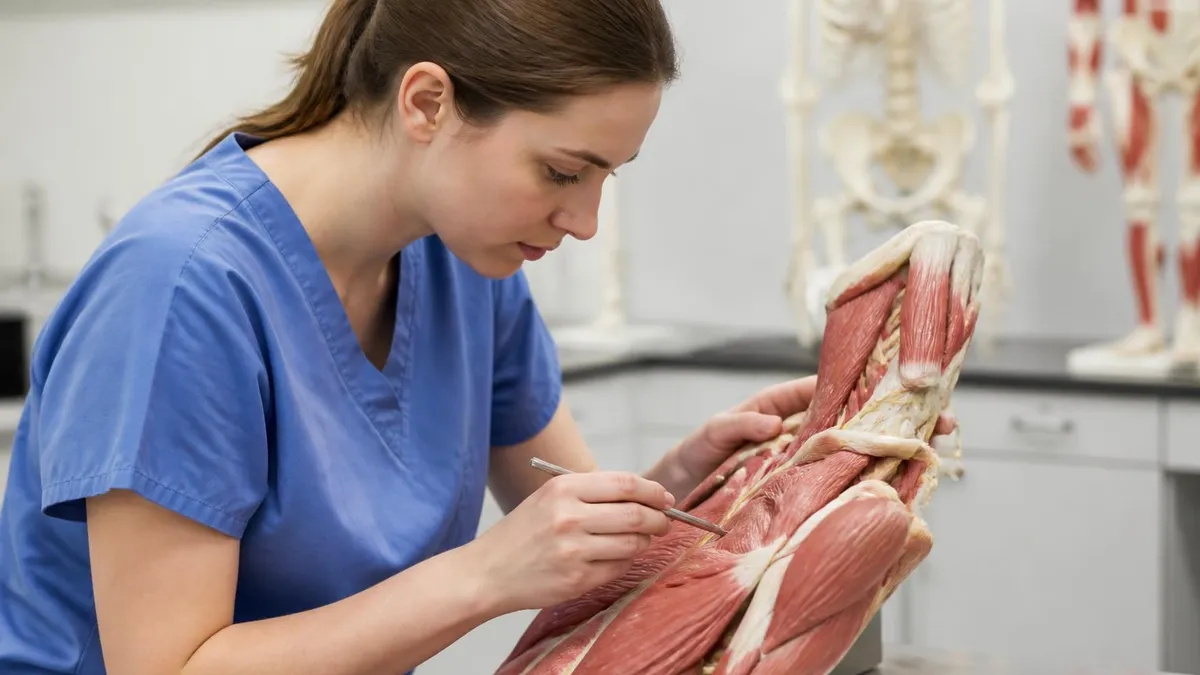
Define Anatomy and Physiology: A Complete Guide to Understanding Human Body Structure and Function

Anatomy and Physiology Study Material: Complete Resource Guide
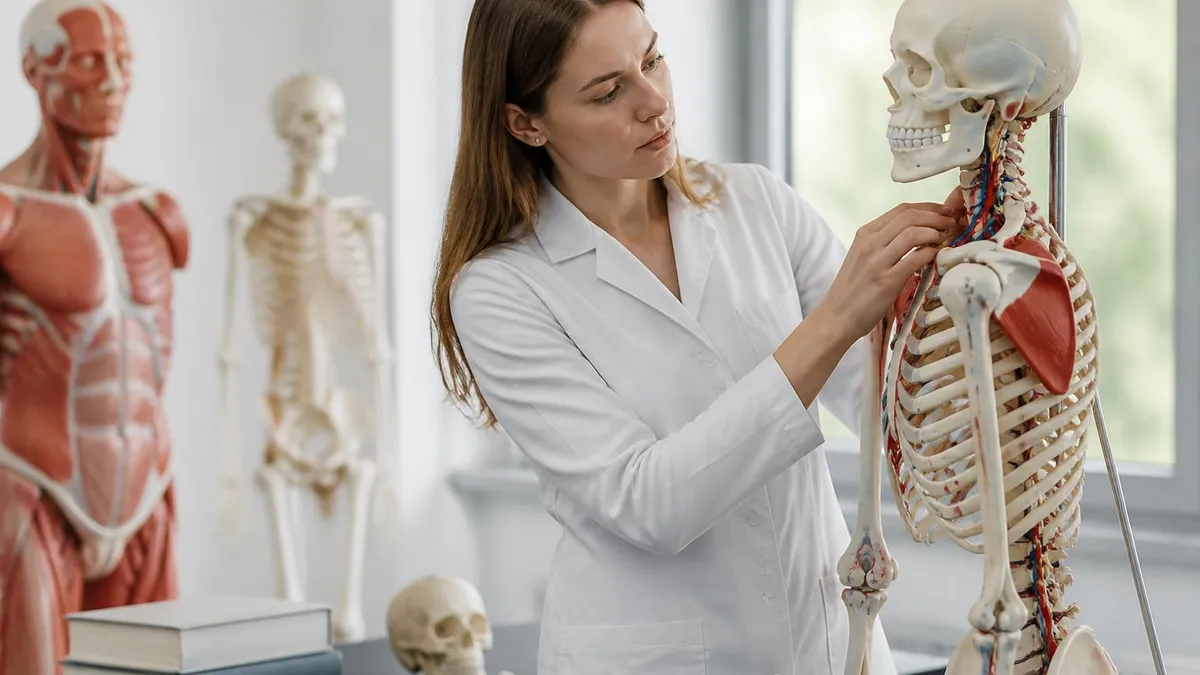
Anatomy and Physiology Courses: Career Paths, Duties, and Certification Options for 2026
How this page was made: written with AI tools and published by Nathan Beja, founder of Practice Test Geeks, who is responsible for its content. We have not yet matched this exam's facts to an official source, so confirm fees, dates and rules with the exam body. Not reviewed by a subject-matter expert. Editorial policy