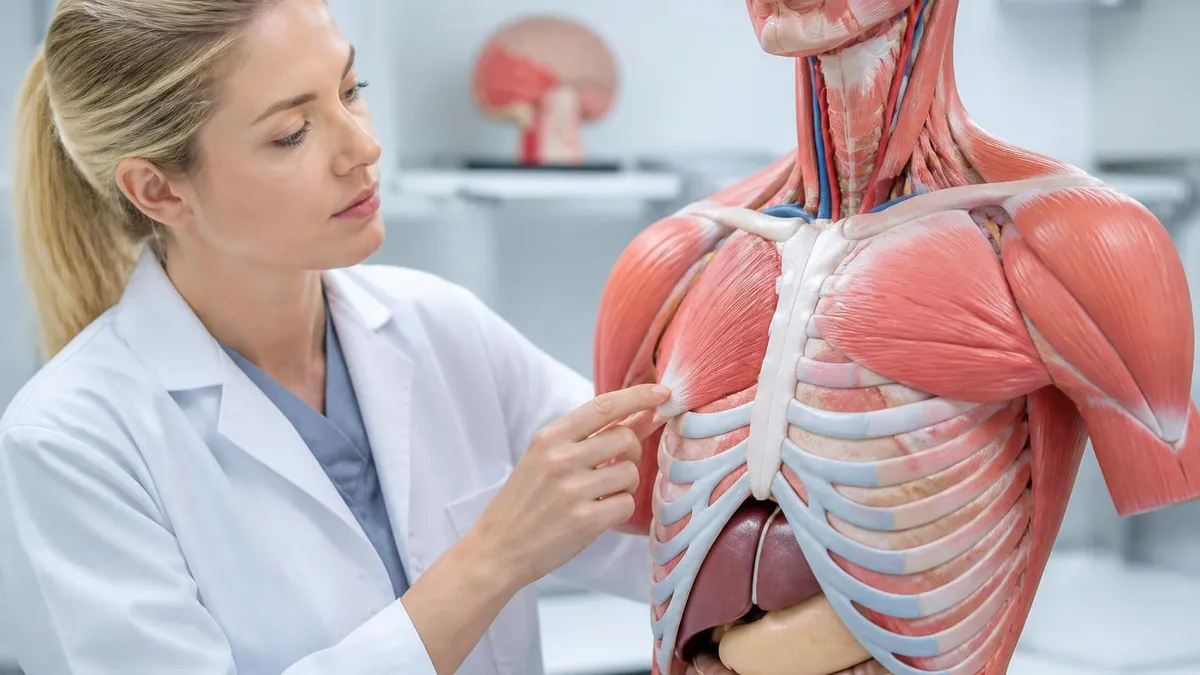
Anatomy and Physiology Practice Test: The Complete Guide to Mastering Exam Questions, Body Systems, and Test-Day Success
Free anatomy and physiology practice test with answers and detailed explanations for every question, instant scoring and hints. ✏️
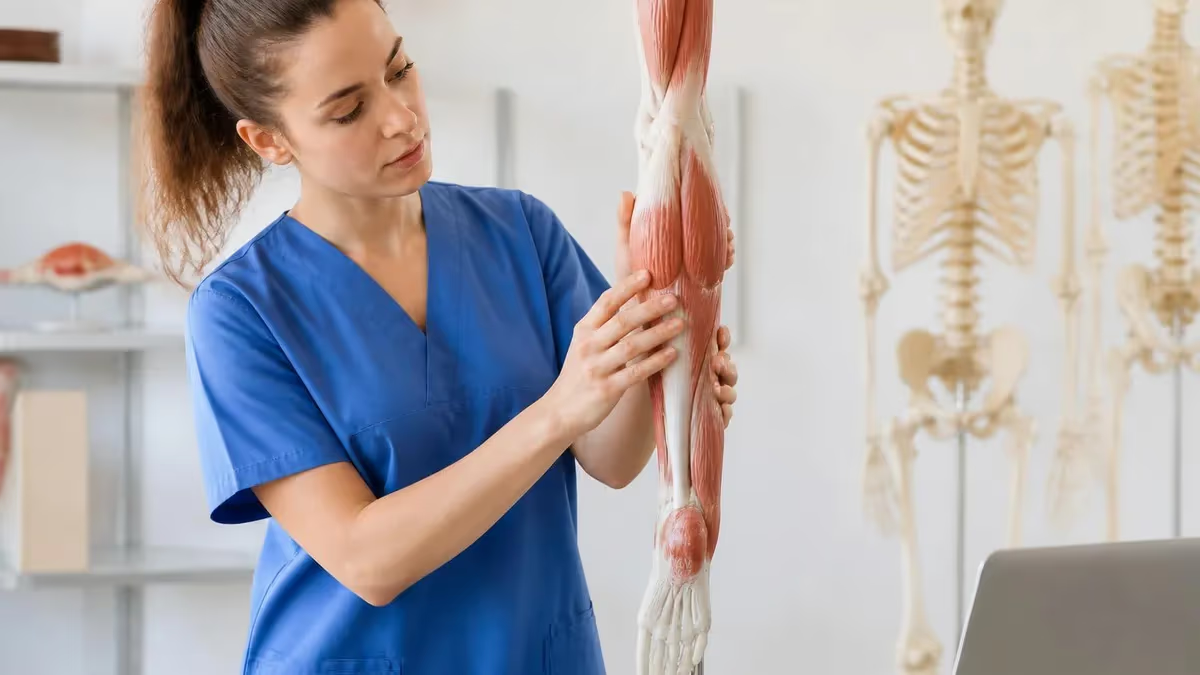
Tackling anatomy and physiology exam questions can feel overwhelming when you are confronted with thousands of muscle names, complex biochemical pathways, and complex organ system interactions that all need to be memorized and understood at a deep functional level. Whether you are a nursing student preparing for the HESI A2, a pre-med candidate gearing up for coursework, or an allied health professional working toward certification, a structured practice test approach transforms raw memorization into durable, exam-ready knowledge that you can recall under pressure when it counts.
If you are searching for a anatomy and physiology practice exam, start with the free questions on this page: every answer comes with an explanation, and the study notes below cover the Anatomy and Physiology exam topics in order.
The most successful test-takers do not just read textbooks or rewatch lectures passively. They use active recall through repeated quizzing, spaced repetition to lock in long-term memory, and full-length simulated exams to build mental stamina. Research consistently demonstrates that students who incorporate at least 200 practice questions per week into their study routine outperform peers by an average of 18 percentage points on standardized anatomy assessments across nursing, kinesiology, and medical assistant programs nationwide.
This comprehensive guide walks you through everything you need to dominate your next anatomy and physiology examination. We cover the major body systems most frequently tested, the question formats you will encounter on real exams, proven study schedules ranging from intensive two-week sprints to relaxed semester-long plans, and the highest-yield topics that consistently appear across NCLEX, HESI, TEAS, MCAT subject sections, and academic course finals at universities and community colleges.
For a broader foundation in body systems before diving into question practice, our Human Body Anatomy and Physiology resource provides the structural and functional overview that supports everything covered here. Pair that conceptual reading with the practice tests we recommend below for maximum retention and recall efficiency during your study sessions and final review periods.
The practice test approach works because anatomy and physiology rewards pattern recognition. When you see the question, "Which cranial nerve innervates the muscles of mastication?" for the fifteenth time, your brain encodes not just the answer (the trigeminal nerve, CN V) but also the conceptual web around it: the three branches, the foramen each passes through, and the clinical relevance of trigeminal neuralgia. That depth only comes from repetition with feedback.
Beyond memorization, modern anatomy exams increasingly test physiological reasoning. You may be asked to predict how a sodium-potassium pump failure affects neuron resting potential, or to identify which hormone cascade triggers when blood glucose drops below 70 mg/dL. These higher-order questions reward students who practiced explaining mechanisms aloud, drew their own pathway diagrams, and worked through case-based scenarios during prep rather than only flashcarding isolated facts.
By the end of this guide, you will know exactly which practice resources to use, how to schedule your review sessions, what to expect on test day, and the specific question patterns that separate students who pass on the first attempt from those who need a retake. Let's begin building your personalized study system designed for measurable, reliable results.
Anatomy and Physiology Practice Test by the Numbers

Typical Anatomy and Physiology Exam Format
| Section | Questions | Time | Weight | Notes |
|---|---|---|---|---|
| Cells, Tissues & Histology | 20 | 20 min | 13% | Foundational microanatomy |
| Musculoskeletal System | 30 | 30 min | 20% | Bones, joints, muscles |
| Cardiovascular & Respiratory | 30 | 30 min | 20% | Heart, vessels, gas exchange |
| Nervous & Endocrine Systems | 30 | 30 min | 20% | CNS, PNS, hormones |
| Digestive, Urinary & Reproductive | 25 | 25 min | 17% | Metabolism and excretion |
| Integumentary & Lymphatic | 15 | 15 min | 10% | Skin and immunity |
| Total | 150 | 2 hours 30 minutes | 100% |
The eleven major body systems covered on any comprehensive anatomy and physiology practice test form an interconnected web rather than isolated topics, and the most challenging exam questions specifically target the boundaries where systems interact. The cardiovascular system, for example, cannot be fully understood without grasping how the renal system regulates blood volume through aldosterone and ADH, how the respiratory system controls blood pH through carbon dioxide exchange, and how the nervous system modulates heart rate through sympathetic and parasympathetic input via the vagus nerve and cardiac plexus.
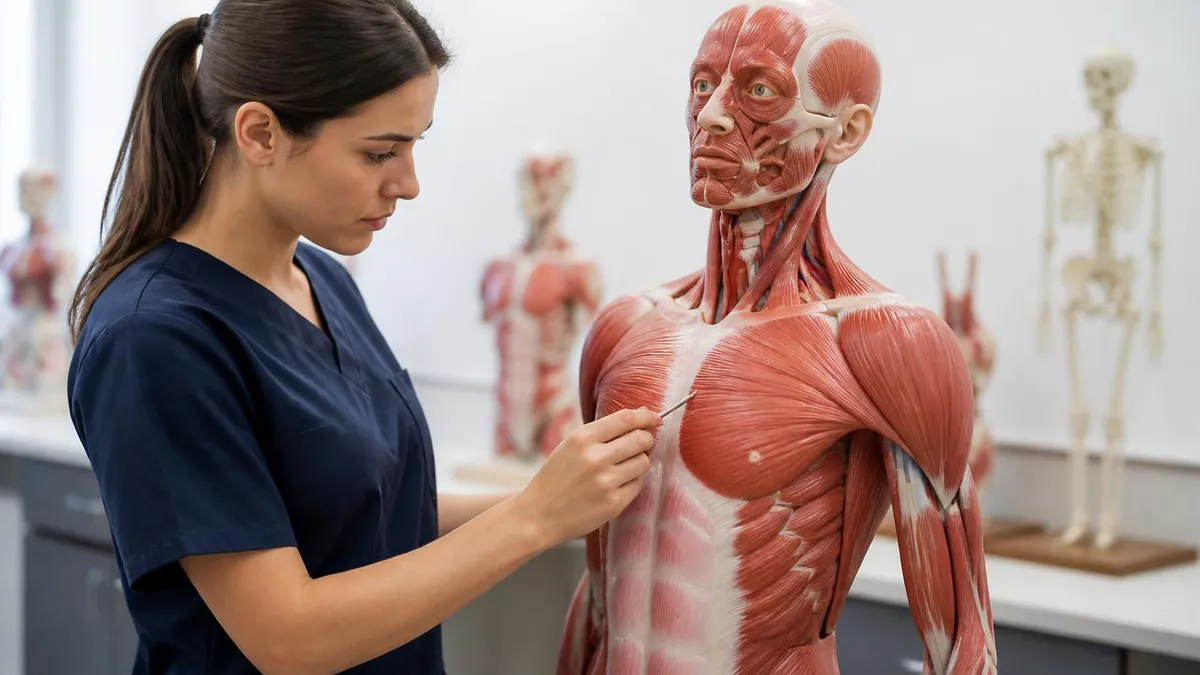
The musculoskeletal system dominates most exams with 20 to 25 percent of total questions, reflecting both its visible complexity and the sheer number of named structures. Expect to identify origin and insertion points for the rotator cuff muscles, distinguish between Type I slow-twitch and Type II fast-twitch fibers, explain the sliding filament theory of muscle contraction at the sarcomere level, and recognize the difference between hyaline, fibrocartilage, and elastic cartilage in joint structures throughout the body.
The nervous system represents the highest conceptual difficulty for most students because it combines anatomical detail with electrochemical physiology and reflex pathway logic. You must master the twelve cranial nerves with their functions and exit foramina, understand resting membrane potential and action potential propagation, distinguish between spatial and temporal summation, and identify the major brain regions including the limbic system, basal ganglia, cerebellum, and brainstem nuclei that control vital autonomic functions.
For students who learn best through visual reinforcement, an Anatomy and Physiology Coloring Book can dramatically accelerate retention of complex three-dimensional relationships like the brachial plexus, the bronchial tree, or the nephron substructures. Pairing color-coded drawings with practice questions creates dual-coding memory that survives stress and time pressure better than text-only study methods used in isolation.
Cardiovascular and respiratory physiology together account for roughly 20 percent of exam questions and test your ability to trace blood flow, calculate cardiac output, interpret simple ECG patterns, and explain oxygen-hemoglobin dissociation curves under shifting pH and temperature conditions. Students often lose points by confusing pulmonary versus systemic circulation pressures, misidentifying heart valve locations during auscultation scenarios, or forgetting that the right ventricle pumps deoxygenated blood to the lungs through the pulmonary trunk.
The digestive, urinary, and reproductive systems collectively contribute about 17 percent of questions and emphasize physiology over pure anatomy. Expect calculations involving glomerular filtration rate, questions on hormonal regulation of the menstrual cycle, and clinical vignettes about acid-base disturbances arising from prolonged vomiting or diabetic ketoacidosis. The integumentary and lymphatic systems round out coverage with 10 percent of questions, focusing on skin layers, accessory structures, lymph node distribution, and the cellular immune response cascades.
The endocrine system threads through every other system because hormones regulate growth, metabolism, reproduction, fluid balance, and stress response. Master the hypothalamic-pituitary axis first, then build outward to thyroid, adrenal, pancreatic, and gonadal hormones, learning each hormone's target tissue, mechanism of action, feedback loop, and clinical disorders associated with hyper- or hyposecretion that frequently appear in case-based test questions.
Anatomy and Physiology Practice Test Questions
Prepare for the Anatomy and Physiology exam with our free practice test modules. Each quiz covers key topics to help you pass on your first try.
Anatomy and Physiology Applied Methods and...
Anatomy and Physiology Exam Questions covering Applied Methods and Techniques. Master Anatomy and Physiology Test concepts for certification prep.
Anatomy and Physiology Assessment and Eval...
Free Anatomy and Physiology Practice Test featuring Assessment and Evaluation. Improve your Anatomy and Physiology Exam score with mock test prep.
Anatomy and Physiology Communication and D...
Anatomy and Physiology Mock Exam on Communication and Documentation. Anatomy and Physiology Study Guide questions to pass on your first try.
Anatomy and Physiology Continuing Educatio...
Anatomy and Physiology Test Prep for Continuing Education Requirements. Practice Anatomy and Physiology Quiz questions and boost your score.
Anatomy and Physiology Core Concepts and P...
Anatomy and Physiology Questions and Answers on Core Concepts and Principles. Free Anatomy and Physiology practice for exam readiness.
Anatomy and Physiology Industry Best Pract...
Anatomy and Physiology Mock Test covering Industry Best Practices. Online Anatomy and Physiology Test practice with instant feedback.
Anatomy and Physiology Musculoskeletal System
Free Anatomy and Physiology Quiz on Musculoskeletal System. Anatomy and Physiology Exam prep questions with detailed explanations.
Anatomy and Physiology Nervous System
Anatomy and Physiology Practice Questions for Nervous System. Build confidence for your Anatomy and Physiology certification exam.
Anatomy and Physiology Professional Standa...
Anatomy and Physiology Test Online for Professional Standards and Ethics. Free practice with instant results and feedback.
Anatomy and Physiology Safety and Compliance
Anatomy and Physiology Study Material on Safety and Compliance. Prepare effectively with real exam-style questions.
Anatomy and Physiology General Concepts
Free Anatomy and Physiology Test covering General Concepts. Practice and track your Anatomy and Physiology exam readiness.
Anatomy and Physiology Integumentary System
Anatomy and Physiology Exam Questions covering Integumentary System. Master Anatomy and Physiology Test concepts for certification prep.
Anatomy and Physiology Exam Questions: Format Types You Will Face
Multiple choice questions dominate roughly 70 percent of standardized anatomy exams, presenting a stem followed by four or five answer options with one correct response. The best test-takers read the entire stem twice, predict the answer before scanning options, and then eliminate clearly wrong choices systematically. Watch carefully for absolute words like "always" and "never" which usually indicate incorrect options, and never-before-seen detailed anatomical names that may be distractors designed to confuse students relying purely on recognition.
Higher-quality multiple choice questions test conceptual understanding rather than rote recall. Expect items like, "A patient presents with weakness in shoulder abduction beyond 15 degrees. Which nerve is most likely damaged?" This requires you to recall that the deltoid handles abduction past initial supraspinatus action and that the axillary nerve innervates the deltoid. Practice these mechanism-based questions repeatedly to build the integrated reasoning patterns that examiners reward with full credit.
Is Self-Study Right for Your Anatomy and Physiology Practice Test Prep?
- +Flexible schedule lets you study around work, family, and other coursework demands
- +Significantly cheaper than tutors, bootcamps, or formal review courses costing thousands
- +Choose resources matched precisely to your learning style and weak areas
- +Repeat difficult topics as many times as needed without group pacing limits
- +Build durable independent study habits valuable throughout your healthcare career
- +Access free practice questions and resources available 24/7 from anywhere with internet
- −Easy to procrastinate without the external accountability of class deadlines
- −No immediate feedback when you misunderstand a difficult mechanism or pathway
- −Risk of focusing too much on comfortable topics while avoiding weak subject areas
- −Limited access to cadaver labs and 3D anatomical models for true spatial learning
- −Cannot ask follow-up questions to clarify confusing concepts in real time
- −Requires strong self-discipline and accurate self-assessment of progress over time
Pre-Exam Checklist for Anatomy and Physiology Practice Test Success
- ✓Complete at least 1,000 practice questions across all 11 body systems before test day
- ✓Take three full-length timed simulated exams in conditions matching the real test
- ✓Review every missed question and write a one-sentence explanation of the correct answer
- ✓Master the twelve cranial nerves with mnemonics for names, functions, and exit foramina
- ✓Memorize normal lab values including blood pH, glucose, electrolytes, and blood gases
- ✓Practice labeling at least five common anatomical diagrams from memory daily
- ✓Sleep at least seven hours nightly for the final week before your scheduled examination
- ✓Prepare all required identification, admission tickets, and approved materials the night before
- ✓Eat a protein-rich breakfast that avoids heavy carbs causing mid-exam energy crashes
- ✓Arrive 30 minutes early to settle nerves, use the restroom, and review notes briefly

Active Recall Outperforms Passive Review by 50 Percent
Research published in cognitive psychology journals consistently shows that students who quiz themselves repeatedly retain 80 percent of material after one week, compared to only 30 percent for students who only reread notes or highlight textbooks. Build your entire anatomy and physiology prep around active practice questions, flashcards, and self-explanation aloud rather than passive review for dramatically better results on test day.
Building a study strategy that actually delivers results requires understanding the difference between studying that feels productive and studying that genuinely encodes long-term memory. Rereading your textbook for the third time feels comfortable and familiar, but cognitive science research demonstrates this is among the least effective methods for retaining anatomical detail. Instead, build your weekly schedule around active recall sessions where you close the book, write down everything you remember about a topic, and then check your answers against authoritative sources to identify gaps.
Spaced repetition transforms short-term cramming into permanent knowledge by using the forgetting curve discovered by Hermann Ebbinghaus in the 1880s. The principle is simple: review material just before you would naturally forget it, and each successful retrieval strengthens the memory trace exponentially. Tools like Anki, Quizlet's spaced mode, and similar applications automate this process by showing you cards at scientifically optimized intervals of 1 day, 3 days, 7 days, 14 days, and 30 days based on how well you recalled each item.
The Feynman technique works particularly well for the conceptual sections of anatomy and physiology where you must explain mechanisms rather than recite names. Pick a topic like the renin-angiotensin-aldosterone system, then explain it aloud as if teaching a curious 12-year-old who knows nothing about biology. When you stumble or use jargon without defining it, you have located a gap in your understanding. Return to your source materials, fill that specific gap, and try teaching again until your explanation flows smoothly without hesitation.
Group study sessions amplify learning when structured correctly, but they waste time when run as social events. The most productive groups use the Pomodoro technique with 25-minute focused work intervals followed by 5-minute breaks, and they rotate teaching roles where each member explains a different topic to the others. Quiz each other on randomly selected questions, debate answers to controversial items, and use a whiteboard to draw pathways like the citric acid cycle or the urinary filtration apparatus collaboratively for maximum group benefit.
Concept mapping provides another powerful tool for integrating the systems you have studied separately into a unified mental model. Take a sheet of paper, write "blood pressure regulation" in the center, and then draw outward connections to the cardiovascular system, the renal system, the endocrine system, and the nervous system. Label each connecting line with the specific mechanism involved, whether that is baroreceptor reflex, aldosterone secretion, ADH release, or sympathetic vasoconstriction through alpha-1 receptors on vascular smooth muscle.
Mnemonics remain invaluable for raw memorization of lists like cranial nerves, carpal bones, and electrolyte movements during action potentials. Classic examples include "Oh, Oh, Oh, To Touch And Feel Very Good Velvet, Such Heaven" for the cranial nerves in order, or "Some Lovers Try Positions That They Cannot Handle" for the eight carpal bones. Create your own mnemonics for personal relevance, because the more emotionally resonant or absurd the mental image, the more durably your brain encodes the underlying information for instant recall later.
Finally, do not neglect physical health during prep. Sleep consolidates memory through hippocampal replay during REM cycles, exercise increases BDNF that promotes neuroplasticity, and adequate hydration prevents the cognitive fog that derails marathon study sessions. Students who study smart for six focused hours daily consistently outperform peers grinding twelve unfocused hours fueled by caffeine and anxiety. Build sustainable rhythms now and you will not only pass this exam but also thrive throughout your healthcare education and career trajectory.
Many students spend 80 percent of their prep on anatomy memorization and only 20 percent on physiology mechanisms, then panic when half the exam asks about hormonal cascades, action potentials, and fluid balance. Balance your study time roughly 50-50 between structure and function. Physiology questions reward conceptual understanding that takes time to develop and cannot be crammed effectively in the final week.
Test-day performance often determines whether months of solid preparation translate into a passing score or a disappointing retake, and the difference comes down to executing a few critical strategies during the exam itself. Begin by scanning the entire test before answering anything, noting question counts per section, identifying the longest passages that will require extra time, and flagging any items you recognize as guaranteed easy wins to bank early. This initial reconnaissance takes only two or three minutes but provides enormous strategic value throughout the remaining exam time.
Time management on anatomy and physiology exams typically means averaging 60 to 90 seconds per multiple choice question, allowing roughly 10 percent of total time for review at the end. If you find yourself stuck on a single question for more than 90 seconds, mark it for review, choose your best guess if there is no penalty for wrong answers, and move forward immediately. Coming back fresh after completing easier questions often unlocks the answer to that difficult item through indirect priming from related questions encountered later.
Reading comprehension matters enormously on case-based questions where patient scenarios contain crucial details buried in long stems. Underline key facts as you read on paper exams, or mentally tag them on computer-based tests. Look for vital signs, laboratory values, age, gender, comorbidities, and timeline indicators that narrow the differential diagnosis dramatically. A 65-year-old male with sudden left-sided weakness and a history of atrial fibrillation suggests ischemic stroke, and that single inference unlocks several follow-up questions about cerebral vascular territory and motor cortex anatomy.
When you genuinely do not know an answer, use elimination strategies systematically rather than guessing randomly. First, remove any obviously wrong options that contradict basic anatomical facts you know with certainty. Second, watch for grammatical clues where the question stem only flows with certain answer choices. Third, prefer answers containing precise anatomical terminology over vague general statements, because exam writers typically construct correct answers with the language of the field rather than colloquial descriptions that feel deliberately oversimplified.
Manage test anxiety through proven cognitive techniques rather than wishful thinking. Box breathing, where you inhale for four counts, hold for four, exhale for four, and hold for four, activates the parasympathetic nervous system and reduces cortisol within 90 seconds. Positive self-talk reframes panic as excitement because both states produce similar physiological arousal, and your interpretation shapes performance. Visualize successful completion of the exam during the days leading up to test day to prime your brain for confident execution under pressure.
For comprehensive support materials covering every body system at deep clinical detail, the Anatomy and Physiology Study Material guide compiles the best textbooks, videos, apps, and practice question banks organized by topic difficulty and exam relevance. Bookmarking this resource gives you a one-stop reference whenever you discover a weak area during practice testing and need targeted remediation materials.
Finally, trust your preparation. Second-guessing answers based on a vague gut feeling typically lowers scores by three to five percentage points because your first instinct usually reflects the pattern recognition built through hundreds of practice questions. Only change an answer when you can articulate a specific reason based on new information or a corrected misunderstanding. Confidence built on real preparation translates directly into accurate selections, even under the stress of a high-stakes anatomy and physiology examination.
The final two weeks before your anatomy and physiology examination should focus on integration, weak-area remediation, and mental preparation rather than introducing new content. This is when full-length practice tests deliver the highest return on time invested, because they reveal not only what you do not know but also how you perform under realistic time pressure, fatigue, and distraction conditions that mirror your actual testing environment. Schedule at least three complete simulated exams during these two weeks, each followed by detailed review of every single question whether you got it right or wrong.
Reviewing correct answers matters as much as reviewing missed questions because you want to confirm you got each item right for the right reasons rather than lucky guesses. For every question, write a one-sentence justification of the correct choice and a one-sentence explanation of why each distractor was wrong. This dual review process catches subtle misconceptions that would otherwise sabotage similar questions on test day, and it builds the deep reasoning patterns that examiners reward with full credit on the most challenging items.
Build a personal error log that tracks every missed question by body system, topic, and error type. Categorize mistakes as content gaps where you did not know the material, reasoning errors where you misapplied known material, careless mistakes from rushing or misreading, or test-taking errors like leaving questions blank or running out of time. The pattern in your error log reveals exactly where to focus your final review sessions, often surprising you with weak spots you did not expect.
The night before the exam, resist the urge to cram new material. Studies show that last-minute cramming damages performance by improving cortisol, disrupting sleep, and crowding out the consolidation processes your brain needs to lock in everything you have already learned. Instead, review your error log briefly, prepare your bag with required materials, set out your clothes, and wind down with a relaxing activity unrelated to anatomy. A nine-hour sleep window does more for your score than any cramming session.
Morning routine on exam day should mirror what you have practiced. Eat a moderate breakfast with protein, complex carbs, and healthy fats roughly 90 minutes before the exam. Avoid excessive caffeine that can spike anxiety, but if coffee is your normal routine, do not skip it because withdrawal headaches destroy concentration. Hydrate adequately but not so much that you need urgent bathroom breaks mid-exam. Arrive at the testing center 30 minutes early to settle into the environment, use the restroom, and review only a brief outline of high-yield facts.
If you need a portable reference for last-minute review on the way to your exam, our Anatomy and Physiology PDF collection provides downloadable resources you can load onto a phone or tablet for review during transit. Choose only summary sheets and high-yield mnemonics for this final review rather than dense textbook chapters that overwhelm working memory at the worst possible time.
After the exam, regardless of how you feel about your performance, take time to rest and decompress before evaluating results. Many students leave anatomy exams convinced they failed only to discover they earned excellent scores, because the high difficulty of practiced material makes the actual exam feel harder than it really was. Celebrate the completion of months of dedicated preparation, and if results show you need a retake, use your error log and this guide's strategies to build an even stronger preparation cycle for round two.
Anatomy and Physiology Quick Review Flashcards
Test your knowledge with these essential anatomy and physiology concepts. Click to reveal answers.
🫀What are the 11 organ systems of the human body?
The 11 major organ systems are integumentary, skeletal, muscular, nervous, endocrine, cardiovascular, lymphatic, respiratory, digestive, urinary, and reproductive. Exams test each system individually and at the boundaries where they interact, such as how the endocrine and urinary systems jointly regulate blood pressure.
START CORE CONCEPTS PRACTICE TEST🧭What is anatomical position and why does it matter?
Anatomical position means standing upright, facing forward, arms at the sides, palms facing forward. Every directional term (superior, inferior, anterior, posterior, medial, lateral, proximal, distal) is defined relative to this reference position, so misreading it is a common source of missed labeling questions.
PRACTICE DIRECTIONAL TERMS📐What are the three anatomical planes of the body?
The three anatomical planes are sagittal (divides body into left and right), frontal or coronal (divides into front and back), and transverse or horizontal (divides into top and bottom). Imaging and dissection questions frequently ask which plane a given cross-section represents.
TRY PLANES & SECTIONS QUIZ⚖️What is homeostasis and how does negative feedback maintain it?
Homeostasis is the body's ability to maintain a stable internal environment despite external changes, typically through negative feedback loops. A receptor detects a change, a control center processes it, and an effector responds to restore the set point, as seen in temperature and blood glucose regulation.
START NERVOUS SYSTEM PRACTICE TEST🔬What are the basic components of a human cell?
The plasma membrane, nucleus, mitochondria, ribosomes, and endoplasmic reticulum are core structures tested repeatedly. The mitochondria produce ATP through cellular respiration, the nucleus houses DNA, and the plasma membrane controls what enters and exits the cell via selective permeability.
PRACTICE CELL STRUCTURE QUESTIONS🧬What are the four basic tissue types?
The four primary tissue types are epithelial (covers surfaces and lines cavities), connective (supports and binds, includes bone and blood), muscle (contracts to produce movement), and nervous (transmits electrical signals). Every organ is built from combinations of these four tissue types.
START MUSCULOSKELETAL PRACTICE TEST🦴What is the difference between the axial and appendicular skeleton?
The axial skeleton (skull, vertebral column, rib cage, sternum) protects central organs and totals 80 bones. The appendicular skeleton (limbs, shoulder girdle, pelvic girdle) totals 126 bones and enables movement. Together they form all 206 bones of the adult skeleton.
PRACTICE SKELETAL SYSTEM QUESTIONS💪What are the major muscle groups tested on anatomy exams?
Muscles are grouped by location and action: the pectorals and deltoids of the upper body, the biceps and triceps of the arm, the abdominals and erector spinae of the core, and the quadriceps, hamstrings, and gastrocnemius of the lower body. Exams often pair a muscle with its primary action, such as the quadriceps extending the knee.
START MAJOR MUSCLE GROUPS QUIZ🫁How does blood flow through the heart and lungs?
Blood flows from the right atrium to the right ventricle, out the pulmonary artery to the lungs for oxygenation, back through the pulmonary veins to the left atrium, into the left ventricle, and out the aorta to the body. Deoxygenated blood is always on the right side, oxygenated blood on the left.
PRACTICE CARDIOVASCULAR QUESTIONS🌬️Where does gas exchange occur in the respiratory system?
Gas exchange happens in the alveoli, tiny air sacs surrounded by capillaries where oxygen diffuses into the blood and carbon dioxide diffuses out, driven by pressure gradients. The respiratory system also works with the cardiovascular system to regulate blood pH by adjusting the rate of carbon dioxide removal.
TRY RESPIRATORY SYSTEM QUIZAnatomy Physiology Questions and Answers
Official Resources
- MedlinePlus Anatomy (U.S. National Library of Medicine, NIH) offers authoritative, plain-language overviews of every body system with links to detailed medical encyclopedia entries.
- OpenStax Anatomy and Physiology 2e is a free, peer-reviewed, open-access college textbook covering the full A&P curriculum in the depth expected by most course exams.
- Elsevier HESI is the official publisher page for the HESI A2 exam, useful for nursing students confirming current exam content and registration details.
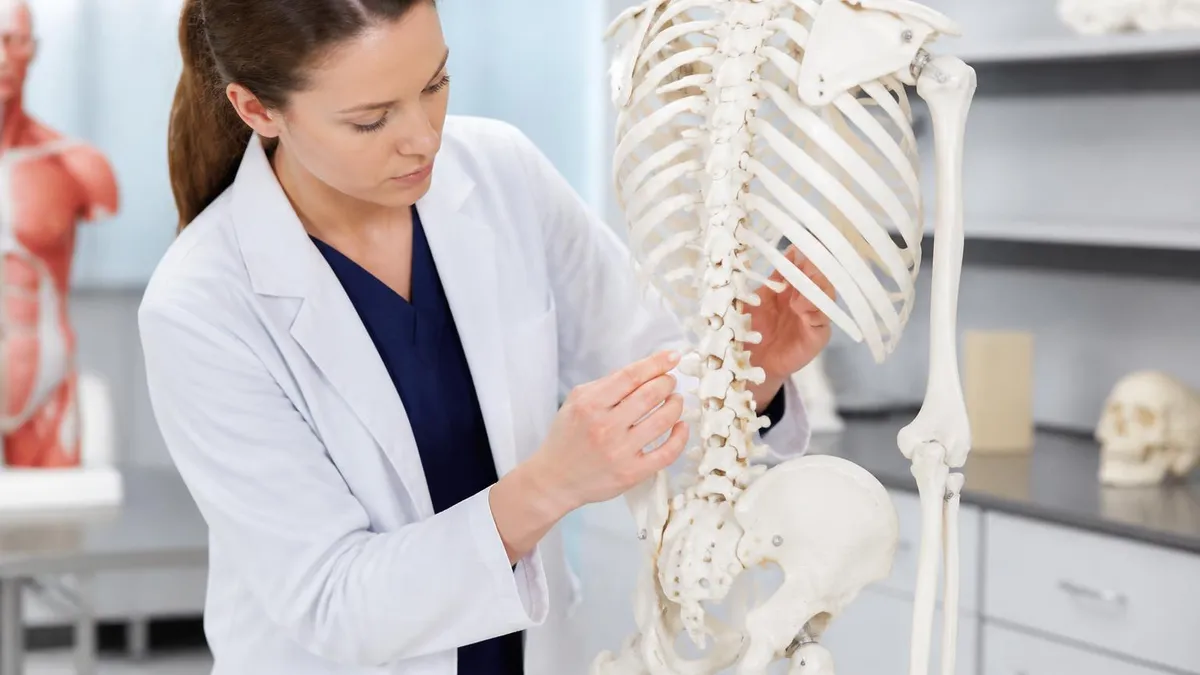
Human Body Anatomy and Physiology: The Complete Guide to Structure, Function, and Integrated Body Systems
Anatomy and Physiology Coloring Book: The Complete Student's Guide to Visual Learning
Anatomy and Physiology Practice Test

Anatomy and Physiology Study Material: Complete Resource Guide