
ACLS BLS Renewal: Complete 2026 Guide to Recertification Requirements, Timelines & Formats
🗨️ Everything you need to know about ACLS BLS renewal: deadlines, online vs in-person options, costs, and how to pass your recertification exam.

Understanding acls bls renewal requirements is essential for every healthcare professional who wants to maintain their certification without a lapse. Whether you are a nurse, physician, paramedic, or respiratory therapist, both ACLS and BLS credentials expire every two years, and failing to renew on time can disrupt your ability to work in clinical settings. The American Heart Association and equivalent certifying bodies have simplified the renewal process considerably in recent years, but there are still critical deadlines, skills requirements, and written exam benchmarks that you must meet to stay compliant. Practice with the free ACLS Advanced Cardiovascular Life Support Practice practice test on PracticeTestGeeks (7 questions with answer explanations).
ACLS, or Advanced Cardiovascular Life Support, covers complex resuscitation scenarios including cardiac arrest management, post-cardiac arrest care, acute coronary syndromes, and stroke recognition. BLS, Basic Life Support, forms the foundation of that skillset — high-quality CPR, AED use, and airway management for adults, children, and infants. When you renew, you are expected to demonstrate proficiency in both the cognitive and psychomotor components of these protocols, meaning you cannot simply sit through a lecture and walk out with a card.
The renewal process differs meaningfully from initial certification. First-time candidates often spend eight to twelve hours in a full provider course, learning algorithms from scratch and building muscle memory through repeated practice. Renewal candidates, by contrast, are expected to arrive with foundational knowledge already intact. Most renewal courses run four to six hours for ACLS and two to three hours for BLS, focusing on updates to guidelines, common skills gaps identified in clinical audits, and hands-on megacode or scenario stations that test real-time decision-making under simulated pressure.
One of the most significant changes in recent years is the widespread acceptance of blended learning and fully online renewal pathways. The AHA's HeartCode platform and numerous accredited third-party providers now allow you to complete the cognitive portion of renewal online at your own pace, then schedule a brief in-person skills check with a certified instructor.
This flexibility has been a major advantage for shift workers, travel nurses, and rural clinicians who previously had to take days off work to find a suitable in-person class. That said, not every employer or state board accepts fully online renewals, so verifying institutional requirements before you enroll is a non-negotiable first step.
Costs for renewal vary widely. AHA-authorized training centers typically charge between $100 and $200 for a BLS renewal and $150 to $300 for ACLS renewal, though prices in urban markets or hospital-affiliated programs can run higher. Online-only blended options often cost less — sometimes under $100 — but you must factor in the skills check fee, which can add another $30 to $75 depending on your location. Some employers cover renewal costs as part of continuing education benefits, so checking your HR policy before paying out of pocket is well worth the two-minute phone call.
Preparation quality directly determines whether you pass on the first attempt. The written exam component for ACLS renewal typically involves 50 questions covering rhythm interpretation, pharmacology, algorithm application, and ethical considerations. Scoring requirements are usually 84 percent or higher. Many candidates underestimate how much the protocols have evolved since their initial certification, especially in areas like post-cardiac arrest care, vasopressor dosing windows, and the refined tachycardia and bradycardia algorithms. Dedicating even four to six hours of focused review using realistic practice questions makes a measurable difference in both confidence and exam performance.
This guide will walk you through everything you need to know about ACLS and BLS renewal in 2026: the exact timelines and eligibility windows, the format differences between online and in-person options, what to expect on the skills stations, how to avoid the most common renewal mistakes, and how to prepare efficiently using free and paid study resources. By the end, you will have a clear, actionable roadmap for keeping your credentials current without unnecessary stress or expense.
Free ACLS Advanced Cardiovascular Life Support Practice Study Tools
Interactive ACLS Advanced Cardiovascular Life Support Practice resources on PracticeTestGeeks, free to start:
- ACLS Advanced Cardiovascular Life Support Practice flashcards — review key terms and concepts card by card
- ACLS Advanced Cardiovascular Life Support Practice study guide — topic-by-topic overview of what the exam covers
- ACLS Advanced Cardiovascular Life Support Practice cheat sheet — one-page printable summary for last-minute review
ACLS & BLS Renewal by the Numbers
- To pass the AHA ACLS Provider Course Exam, students need a score of at least 84%. (American Heart Association)
- The AHA ACLS Provider Course Completion Card is valid for two years. (American Heart Association)
- Providers renewing their AHA ACLS card can take the shorter ACLS Update Course, which runs about 8.25–9.25 hours with video prework or 8.50–9.50 hours without it, breaks included. (American Heart Association)
- The AHA ACLS course is offered as instructor-led classroom training or as HeartCode blended learning, and both lead to the same AHA ACLS course completion card. (American Heart Association)
- Before attending the AHA ACLS Course, every student has to complete the online Precourse Self-Assessment with a score of at least 70%. (American Heart Association)
Facts verified Oct 15, 2026 against American Heart Association. Dates that have passed are removed automatically.
ACLS Exam at a Glance
| Item | Detail | Official source |
|---|---|---|
| Passing score | 84% minimum on the ACLS Provider Course Exam | American Heart Association |
| Validity | Valid for 2 years | American Heart Association |
| Renewal | ACLS Update Course: about 8.25–9.50 hours with breaks | American Heart Association |
| Delivery | Instructor-led classroom, or HeartCode blended learning (online + hands-on skills session) | American Heart Association |
| Eligibility | Score of at least 70% on the mandatory Precourse Self-Assessment, plus proficiency in BLS, ECGs, ACLS pharmacology and bag-mask ventilation | American Heart Association |
Facts verified Oct 15, 2026 against American Heart Association. Dates that have passed are removed automatically.
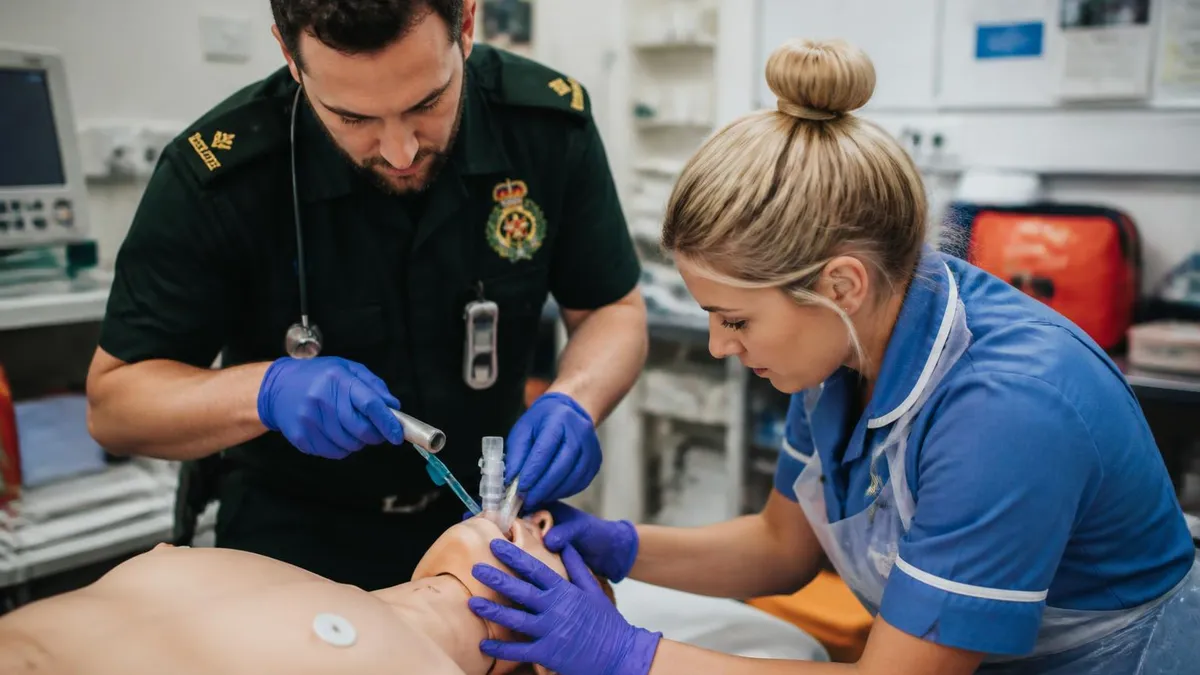
ACLS & BLS Renewal: Step-by-Step Timeline
Check Your Expiration Date (6 Months Out)
Verify Employer & Institutional Requirements
Choose a Renewal Format and Enroll
Complete Cognitive Pre-Study (2–4 Weeks Before)
Attend Renewal Course and Pass Skills Station
Receive and File Your New Certification Card
The shift toward online and blended renewal formats represents one of the most significant changes in emergency medicine education over the past decade. Blended learning — completing the didactic, knowledge-based portion online and then demonstrating hands-on skills in a brief in-person session — is now the dominant delivery model for ACLS renewal among working healthcare professionals. The cognitive module typically takes two to three hours and covers algorithm review, rhythm identification, pharmacology, and case-based scenarios presented through interactive video. You can pause, rewind, and revisit content as many times as you need before taking the module assessment.
The in-person skills check that follows a blended course typically runs 60 to 90 minutes for ACLS and 30 to 45 minutes for BLS. During this session, a certified instructor evaluates your performance on the megacode station for ACLS, where you manage a simulated arrest scenario from initial recognition through post-resuscitation care.
For BLS, the focus is on CPR mechanics: compression depth of at least two inches for adults, rate of 100 to 120 compressions per minute, full chest recoil, minimal interruptions, proper ventilation volume, and correct AED operation. Instructors use real-time feedback manikins and structured evaluation forms to score your performance against current AHA guidelines criteria.
Fully in-person traditional courses remain available and are the preferred format for candidates who learn best through direct instructor interaction and immediate feedback. Traditional renewal classes at AHA-authorized training centers run four to six hours and include both the written exam and all skills stations in a single session.
Smaller class sizes, typically eight to twelve participants, allow instructors to spend meaningful time correcting technique errors and answering protocol questions. If you have been in a non-clinical role for an extended period or feel uncertain about your hands-on skills, the traditional format offers more scaffolding and real-time correction than a blended model.
A third option gaining traction in 2025 and 2026 is the fully virtual renewal, where both the cognitive exam and the skills demonstration are completed remotely. Fully virtual ACLS renewal typically uses a proctored video session in which the candidate demonstrates skills on a home CPR manikin while an instructor observes via webcam. Acceptance of this format is still limited — it is most commonly used in military and rural healthcare settings and by travel nurses enrolled in employer-sponsored programs. Before registering for a fully virtual renewal, confirm explicitly with your credentialing department that this format satisfies your institutional requirement.
One important nuance to understand is the difference between a renewal and a reactivation. If your ACLS or BLS credential has already expired — even by one day — most AHA training centers classify your course as an initial provider course, not a renewal, which means a longer course duration and higher cost.
Some centers offer a grace period of 30 days past expiration, but this is not universal AHA policy and varies by training center. Allowing your credential to lapse by even a few weeks can result in having to sit through an eight-hour initial course and potentially losing the ability to work in a clinical role during the gap period.
Managing both ACLS and BLS renewals simultaneously is worth considering if the two certifications expire within a few months of each other. Many training centers offer bundled ACLS plus BLS renewal days that allow you to complete both credentials in a single half-day session. Bundled courses typically cost 10 to 20 percent less than booking each renewal separately, and consolidating the scheduling reduces the administrative burden of tracking two separate expiration dates. Ask your training center explicitly whether a bundle option is available — it is not always advertised on the registration page.
For candidates renewing ACLS specifically, understanding the written exam content distribution is critical for efficient preparation. Roughly 30 to 35 percent of questions focus on rhythm recognition and ECG interpretation, including the ability to distinguish between shockable and non-shockable arrest rhythms and to identify rhythms requiring rate or rhythm control.
Another 25 to 30 percent covers pharmacology — epinephrine dosing intervals, amiodarone versus lidocaine in refractory VF, adenosine for SVT, atropine for symptomatic bradycardia, and vasopressor timing relative to shock delivery. Algorithm application questions make up the remaining portion, testing your ability to sequence interventions correctly within the arrest, tachycardia, and bradycardia algorithms.
ACLS vs BLS vs PALS: What Gets Renewed and When
ACLS renewal is required every two years for most hospital-based clinicians including RNs in ICU, ED, and step-down units, physicians in acute care settings, advanced practice providers, and paramedics. The renewal course covers updated arrest algorithms, post-cardiac arrest care, acute coronary syndrome pathways, and stroke management. Candidates must score at least 84 percent on the written exam and pass a hands-on megacode station under real-time instructor evaluation before a new two-year card is issued.
Preparation for ACLS renewal should begin at least two to three weeks before the course date. Reviewers who spend time on rhythm identification — particularly differentiating between polymorphic and monomorphic VT, recognizing SVT with aberrant conduction, and identifying degrees of heart block — consistently report higher confidence during the megacode station. The pharmacology component also rewards focused review: knowing when to give amiodarone versus lidocaine, the correct epinephrine interval, and the role of adenosine in stable SVT are high-yield topics that appear repeatedly on renewal exams.
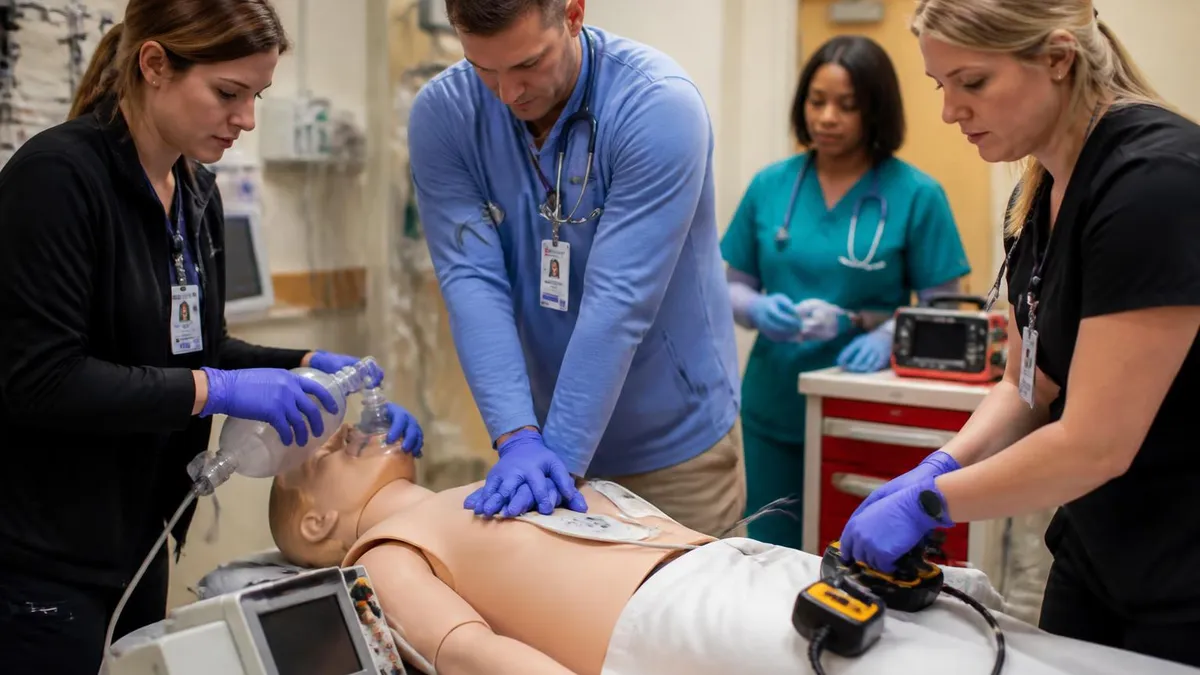
Online vs In-Person ACLS BLS Renewal: Pros and Cons
- +Complete cognitive modules on your own schedule without taking time off work
- +Blended courses often cost 20–30% less than traditional in-person classes
- +Pause and replay video content as many times as needed before taking the exam
- +Skills check sessions typically run 60–90 minutes vs. 4–6 hours for full in-person courses
- +Immediate digital card issuance upon completion — no waiting for mail
- +Widely available nationwide, reducing geographic barriers for rural clinicians
- −Not accepted by all employers or state licensing boards — always verify first
- −Less hands-on practice time may leave gaps in technical CPR mechanics
- −Home or self-arranged skills check manikins vary in quality and feedback accuracy
- −Fully virtual options require a reliable internet connection and a compatible device
- −Less opportunity for instructor feedback on algorithm decision-making during scenarios
- −Some online platforms do not meet AHA standards and may issue non-accepted credentials
ACLS BLS Renewal Preparation Checklist
- ✓Confirm your exact ACLS and BLS expiration dates at least 90 days before they lapse.
- ✓Verify with your employer or credentialing office which certification formats are accepted.
- ✓Select an AHA-authorized training center or accredited online provider for your renewal.
- ✓Complete at least 3 full practice exams covering ECG rhythms and pharmacology before the course.
- ✓Review the 2020 AHA guideline updates, focusing on post-cardiac arrest care and opioid emergencies.
- ✓Memorize the ACLS arrest, tachycardia, and bradycardia algorithm sequences in order.
- ✓Practice compression mechanics on a manikin or pillow at home to rebuild muscle memory.
- ✓Book your renewal course at least 4 weeks in advance to avoid scheduling conflicts.
- ✓Bring your current certification card and a government-issued ID to your renewal session.
- ✓Upload your new digital certification card to your employer's credentialing portal within 24 hours of completion.
Renew Up to 90 Days Early Without Losing Time on Your Next Cycle
The AHA allows you to renew your ACLS or BLS certification up to 90 days before the expiration date, and your new two-year cycle starts from the original expiration date — not from the day you renewed. This means renewing three months early costs you nothing on the back end, but protects you from scheduling conflicts, course cancellations, and the risk of an unplanned lapse in credentials that could temporarily remove you from clinical assignments.
One of the most common reasons candidates struggle during ACLS renewal is underestimating how much the pharmacology section has evolved since their initial certification. The 2020 AHA guidelines introduced or reinforced several important changes that directly affect renewal exam content.
Epinephrine is now recommended as early as possible during non-shockable cardiac arrest, ideally within the first few minutes of resuscitation rather than after multiple cycles without ROSC. This represents a meaningful shift from earlier guidance that was less prescriptive about timing. Candidates who learned ACLS before 2020 may carry outdated mental models about medication sequencing that will cost them points on the written exam.
The amiodarone versus lidocaine debate is another high-yield pharmacology topic for renewal candidates. Current guidelines give both drugs a Class IIb recommendation for shock-refractory ventricular fibrillation and pulseless ventricular tachycardia, with neither definitively preferred over the other.
However, amiodarone remains the more commonly tested and more commonly used drug in clinical practice, and knowing the correct dose — 300 mg IV push for the first dose, 150 mg for the second — is a baseline requirement. Lidocaine dosing — 1 to 1.5 mg/kg IV for the first dose — is tested less frequently but appears on some versions of the renewal exam, particularly in question formats that ask you to distinguish between the two agents.
Post-cardiac arrest care has become a significantly larger portion of ACLS content in the current guideline cycle, reflecting the growing evidence base around targeted temperature management, hemodynamic optimization, and early coronary angiography in STEMI patients who achieve ROSC.
Renewal candidates should be comfortable describing the elements of a post-cardiac arrest bundle: targeted temperature management or controlled normothermia, mean arterial pressure targets, ventilation goals to avoid hyperoxia and hypocapnia, glucose management, seizure prophylaxis and monitoring, and early involvement of cardiology for patients with suspected coronary etiology. These topics appear in case-based renewal exam questions that ask you to sequence the correct post-ROSC interventions.
The tachycardia algorithm is frequently misapplied by renewal candidates who conflate stability criteria. The critical branch point in the algorithm is whether the patient is hemodynamically unstable — not whether the rate is fast or whether the rhythm is regular. Unstable signs include hypotension, altered mental status, signs of shock, ischemic chest pain, and acute heart failure.
If any of these are present and the provider believes the tachycardia is causing the instability, immediate synchronized cardioversion is indicated regardless of the rhythm type. Candidates who default to pharmacologic therapy first in an unstable patient will fail that portion of the megacode evaluation.
The bradycardia algorithm is comparably nuanced. Atropine remains the first-line intervention for symptomatic bradycardia caused by increased vagal tone or AV nodal block at the level of the AV node, but it is ineffective and should not be relied upon in patients with infranodal block (second-degree Type II or third-degree block) or in post-cardiac transplant patients.
In those cases, transcutaneous pacing is the appropriate bridge to definitive management. Renewal candidates should be able to identify which bradycardia presentations are likely to respond to atropine and which are not, as this distinction appears in both the written exam and the skills station scenarios.
Stroke recognition is a smaller but consistently tested component of ACLS renewal. The current guidelines emphasize the role of the healthcare provider in recognizing and rapidly triaging acute stroke within the hospital environment — activating stroke protocols, ensuring rapid CT imaging, and facilitating timely tPA or endovascular therapy for eligible patients.
The BEFAST mnemonic (Balance, Eyes, Face, Arms, Speech, Time) is taught alongside the more familiar FAST approach as a way to capture posterior circulation strokes that the original FAST criteria missed. Renewal exams typically include one to three questions on stroke recognition and the appropriate time-sensitive interventions within the hospital environment.
Understanding high-performance CPR metrics is increasingly important for renewal candidates, especially those working in hospital settings that have adopted resuscitation quality improvement programs. Current AHA standards define high-quality CPR as: compression depth of 2 to 2.4 inches in adults, rate of 100 to 120 per minute, full chest recoil between compressions, pause duration of less than 10 seconds for any intervention, and a chest compression fraction above 80 percent.
Real-time feedback devices and post-event debriefing data have made these metrics increasingly trackable in clinical practice, and renewal courses increasingly use simulation-based data to show candidates exactly where their CPR mechanics need improvement relative to these benchmarks.
If your ACLS or BLS certification has already expired, you cannot renew — you must complete a full initial provider course, which runs 8 to 12 hours and costs significantly more than a renewal. Many hospitals will temporarily remove lapsed clinicians from clinical assignments until credentials are restored. Do not assume a grace period exists; it varies by training center and is not guaranteed by AHA policy. Renew before expiration, ideally 60 to 90 days early.
Employer and state board acceptance of renewal formats is one of the most practically important factors in choosing how and where to renew, and it is the area where candidates most often make costly mistakes. The AHA's HeartCode blended learning platform is the most broadly accepted online renewal pathway among US hospitals, but acceptance is not universal.
Magnet-designated hospitals, Joint Commission-accredited institutions, and facilities with specific ACLS competency standards in their nursing bylaws sometimes require traditional in-person renewal. Before you enroll in any online course, send a one-sentence email to your manager or credentialing coordinator: "Does [course name and format] satisfy our ACLS renewal requirement?" Getting that confirmation in writing takes two minutes and eliminates the risk of completing a course that your institution will not accept.
State boards of nursing and medicine add another layer of complexity. Some states accept any nationally recognized certification for licensing purposes, while others specify that only AHA or American Red Cross certifications qualify.
If you hold an advanced practice license or a paramedic certification with state-level oversight, check your state board's continuing competency requirements explicitly — the language in licensing regulations often distinguishes between "certification" and "training" in ways that affect which renewal formats count toward licensure renewal. This is particularly relevant for nurse practitioners and CRNAs who renew their advanced practice license and their BLS or ACLS credential on separate cycles governed by different regulatory bodies.
Travel nurses face unique renewal challenges because they work across multiple institutional settings with varying credentialing standards. Most travel nursing agencies maintain their own credentialing requirements and will specify exactly which certification formats and issuing bodies they accept. The most common requirement is an AHA BLS card with fewer than two years remaining, issued by an authorized training center.
Some agencies additionally require ACLS certification for ICU, ED, and PACU assignments. If you are transitioning into travel nursing, renewing through an AHA-authorized center — rather than an online-only platform — minimizes the risk of encountering an assignment where your credential is questioned or rejected.
For international healthcare professionals working in the United States, the recognition of non-US certifications varies by employer. The AHA has authorized training centers in dozens of countries, and AHA-issued cards from international centers are generally accepted by US hospitals. Certifications issued by equivalent bodies — the European Resuscitation Council, for example — may or may not be accepted depending on the institutional credentialing policy. Foreign-trained clinicians applying for US positions should obtain an AHA certification through a US-based or AHA-authorized international training center at least 60 days before their start date to avoid credentialing delays during onboarding.
The cost landscape for ACLS and BLS renewal in 2026 reflects the competitive online market, with pricing ranging from under $50 for basic online-only courses to over $300 for in-person hospital training center sessions in high-cost markets. The wide price range can be confusing, and the lowest-cost options are not always the safest choice.
Some budget online providers are not AHA-authorized and issue certificates that look official but are not recognized by most US hospitals. Checking the AHA's online training center locator tool to verify that a provider is officially authorized is a simple step that prevents a potentially expensive mistake. Employers and state boards will ask to see the name of the issuing organization, not just the certificate design.
Group renewal discounts are available through many AHA-authorized training centers for teams of five or more clinicians. Hospital units that coordinate staff renewal dates and book group sessions can often negotiate a 15 to 25 percent reduction in per-person course fees. Some training centers will even come to your facility for on-site renewal days, which eliminates travel time and keeps the team's certification dates synchronized. If you manage a clinical unit or are part of a shared governance committee, coordinating a group renewal day once per year is a meaningful efficiency and cost-saving initiative worth proposing to hospital leadership.
Finally, keeping organized records of your certifications is an often-overlooked aspect of the renewal process that becomes acutely important when you are starting a new position, traveling for an assignment, or renewing a professional license. Maintain digital copies of your current cards in at least two locations — a personal cloud storage folder and your work email drafts or credentialing system. Note the exact expiration date in your phone calendar with a 90-day advance reminder.
Some clinicians maintain a simple certification tracker spreadsheet listing credential name, issuing body, issue date, expiration date, and the URL of the provider portal where the certificate can be re-downloaded. This two-minute organizational habit eliminates the panic of not being able to locate your current card when a new employer's credentialing team requests it on short notice.
If you want the full picture, the acls bls renewal guide walks through it step by step.
For a fuller set of questions on this topic, see our new acls guidelines resource.
For a fuller set of questions on this topic, see our acls practice test resource.
Practical preparation for ACLS and BLS renewal goes beyond reviewing printed algorithms and taking practice exams. The candidates who perform best on renewal day are those who have spent time practicing the physical and cognitive tasks together, simulating the pressure of a real scenario station.
One of the most effective preparation techniques is to walk through the complete arrest algorithm out loud — narrating each intervention, its timing, and its rationale — while physically performing compressions or miming drug administration. This verbalized run-through mimics what you will be asked to do during the megacode station, where clear communication to team members is evaluated alongside clinical decision-making.
Rhythm identification is the cognitive skill that degrades most quickly between renewals for clinicians who do not regularly read ECGs in their day-to-day practice. If you work in a setting where rhythm interpretation is not a daily task — a postpartum unit, an outpatient clinic, or a procedural area — you may find that your recognition speed and accuracy have declined noticeably since your last certification.
The solution is targeted, high-volume practice using realistic rhythm strips in the four to six weeks before your renewal. Free online ECG libraries and paid question banks both provide access to hundreds of strips ranging from straightforward sinus rhythm to subtler patterns like accelerated idioventricular rhythm or junctional escape that can appear on renewal exams.
Pharmacology review rewards flashcard-style repetition more than passive reading. For each cardiac arrest drug, practice recalling the indication, dose, route, and timing from memory — not from a reference card. Epinephrine: 1 mg IV/IO every 3 to 5 minutes throughout the arrest. Amiodarone: 300 mg IV/IO for first dose, 150 mg for second dose in shockable arrest rhythms.
Adenosine: 6 mg rapid IV push for regular narrow-complex SVT, followed by 12 mg if the first dose fails. Atropine: 0.5 mg IV every 3 to 5 minutes up to a maximum of 3 mg for symptomatic bradycardia. Running through these facts in active recall — without looking at notes — builds the retrieval fluency you need when an exam question or megacode scenario puts you under time pressure.
The megacode scenario station is where many renewal candidates feel the most anxiety, and that anxiety is almost always rooted in uncertainty about the sequence of interventions. The key insight that reduces megacode stress is understanding that the evaluator is not looking for perfection — they are looking for correct sequencing and clear communication.
You are expected to identify the arrest rhythm, call for CPR, establish IV or IO access, deliver shocks for shockable rhythms with minimal pre-shock pause, administer medications at the correct times, and direct team members using closed-loop communication. You are not expected to narrate every compression or account for every second of the scenario in real time.
CPR quality mechanics deserve specific attention in the final two weeks before renewal, especially for candidates who have not practiced on a physical manikin recently. Compression depth tends to drift shallow when fatigue sets in, and compression rate tends to accelerate above the 100 to 120 range when providers are nervous. If you have access to a feedback manikin at your workplace or training center, schedule a 20-minute practice session.
If you do not, practicing on a firm surface pillow and counting compressions with a metronome set to 110 beats per minute will help calibrate your rate. Full chest recoil — releasing all pressure between compressions without lifting your hands off the chest — is the most commonly failed skill station criterion and requires conscious attention during practice.
Time management on the written exam matters more than most candidates expect. The 50-question ACLS exam has a time limit of approximately 60 minutes at most testing centers, which means just over one minute per question. Questions that present an ECG strip or a scenario with multiple interventions described take longer to process, and candidates who spend too long on early questions sometimes run short on time at the end.
Practicing under timed conditions — setting a stopwatch and completing 25-question blocks in 30 minutes or fewer — builds the pacing discipline needed to finish the exam comfortably and spend extra time on questions you flagged as uncertain during your first pass.
After your renewal is complete, take five minutes to debrief with your instructor or a colleague about any areas where you hesitated or received corrective feedback. The skills station feedback form that instructors complete during your megacode contains specific, actionable observations about your performance that are far more valuable than a generic "you passed" notification.
Instructors who see hundreds of renewal candidates per year have highly calibrated intuitions about which gaps in technique are likely to cause problems in real clinical events, and their verbal feedback during or immediately after the scenario is the highest-yield learning resource you will encounter in the entire renewal process. Request explicit feedback even if you passed easily — marginal competence now means higher risk in the next two years of clinical practice.
ACLS Questions and Answers
ACLS Training Online: Complete 2026 Guide to Courses, Costs, Certification & Hospital Acceptance
ACLS Heart Rhythms: The Complete Guide to ECG Recognition, Interpretation, and Treatment Protocols

ACLS Tachycardia Algorithm: 2020 AHA Step-by-Step Guide
ACLS Primary Assessment: Complete 2026 Guide to the ABCDE Approach, Algorithm Integration & High-Quality Resuscitation
ACLS Certification Cost: Complete 2026 Price Guide for Initial Courses, Renewals, Online Options & Hidden Fees
How this page was made: written with AI tools and published by Nathan Beja, founder of Practice Test Geeks, who is responsible for its content. Exam facts are checked against the official sources listed below. Not reviewed by a subject-matter expert. Editorial policy
Sources & references
Exam facts on this page (fees, format, dates, passing scores) are checked against these official sources; the date is our last check. Editorial policy
- cpr.heart.org — Test delivery, renewal, eligibility, score validity · verified Oct 2026
- heart.org — Passing score · verified Oct 2026