
ACLS Heart Rhythms: The Complete Guide to ECG Recognition, Interpretation, and Treatment Protocols
Master ACLS heart rhythms with our complete 2026 guide. Learn ECG interpretation, treatment algorithms, and practice with free quizzes. ⏳
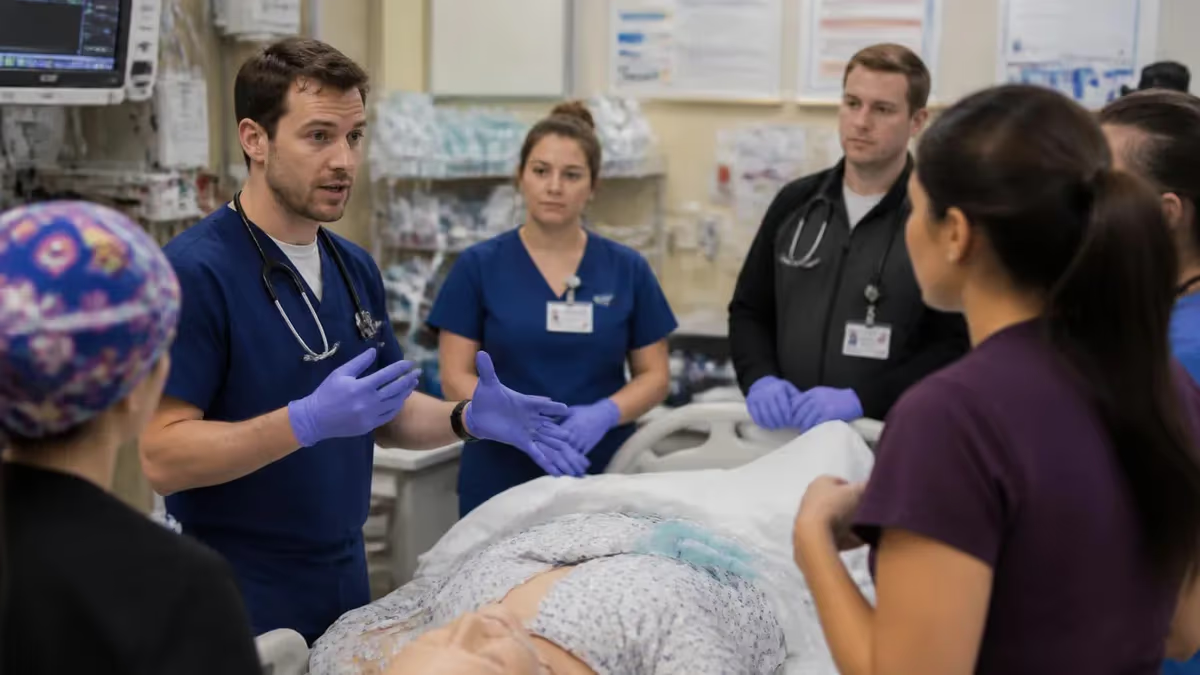
Mastering acls heart rhythms is the single most important clinical skill tested on every ACLS certification and recertification exam. The American Heart Association requires providers to correctly identify and treat life-threatening dysrhythmias within seconds, because in cardiac arrest, every minute without effective intervention reduces survival by roughly 10 percent. Whether you are a nurse, paramedic, respiratory therapist, or physician, your ability to look at an ECG strip and immediately recognize a shockable versus a non-shockable rhythm determines which algorithm you follow — and whether your patient survives. Practice with the free ACLS Advanced Cardiovascular Life Support Practice practice test on PracticeTestGeeks (7 questions with answer explanations).
ECG interpretation in ACLS is not about memorizing abstract waveforms in isolation. It is about understanding the electrical physiology of the heart well enough to predict what each rhythm will do clinically and how the patient's hemodynamic status should guide your treatment decision. Ventricular fibrillation looks completely different from sinus tachycardia on a monitor, but both can present in a coding patient, and confusing the two is fatal. The AHA algorithm-based approach ties rhythm recognition directly to action: identify the rhythm, assess the patient, choose the correct intervention.
The major rhythm categories tested in ACLS include shockable rhythms such as ventricular fibrillation and pulseless ventricular tachycardia, non-shockable arrest rhythms like pulseless electrical activity and asystole, peri-arrest bradycardias including sinus bradycardia and complete heart block, and unstable tachycardias such as wide-complex and narrow-complex tachycardia. Each category has its own treatment pathway, and the ACLS exam will test your ability to move fluently between all of them under simulated time pressure.
One of the most common reasons candidates struggle on the ACLS exam is that they study rhythm strips in isolation without connecting them to the full clinical scenario. You might recognize atrial fibrillation on a 12-lead ECG in a controlled setting, but during a megacode simulation, with CPR in progress, medication orders being called out, and a timer running, the same rhythm can look entirely different. This guide is designed to build your pattern recognition skills systematically so that identification becomes automatic regardless of context or stress level.
This article covers every rhythm family you will encounter in ACLS, explains the physiological mechanism behind each one, describes the clinical signs that accompany each dysrhythmia, and walks through the exact AHA-recommended treatment protocols step by step. You will also find study strategies, ECG interpretation frameworks, common exam traps, and practice resources to help you build real exam confidence. By the end, you will have a structured mental model that makes rhythm recognition faster, more reliable, and directly actionable at the bedside.
Prepare to go deep. ACLS rhythm interpretation is one of those skills where surface-level knowledge is genuinely dangerous. A provider who half-knows the rhythms may hesitate at the wrong moment, shock a rhythm that should not be shocked, or withhold defibrillation from a rhythm that absolutely should be. This guide aims to take you past surface-level to the kind of automatic, confident recognition that the AHA certification process is designed to verify and that real resuscitations demand.
- To pass the AHA ACLS Provider Course Exam, students need a score of at least 84%. (American Heart Association)
- The AHA ACLS Provider Course Completion Card is valid for two years. (American Heart Association)
- Providers renewing their AHA ACLS card can take the shorter ACLS Update Course, which runs about 8.25–9.25 hours with video prework or 8.50–9.50 hours without it, breaks included. (American Heart Association)
- The AHA ACLS course is offered as instructor-led classroom training or as HeartCode blended learning, and both lead to the same AHA ACLS course completion card. (American Heart Association)
- Before attending the AHA ACLS Course, every student has to complete the online Precourse Self-Assessment with a score of at least 70%. (American Heart Association)
Facts verified Oct 15, 2026 against American Heart Association. Dates that have passed are removed automatically.
ACLS Exam at a Glance
| Item | Detail | Official source |
|---|---|---|
| Passing score | 84% minimum on the ACLS Provider Course Exam | American Heart Association |
| Validity | Valid for 2 years | American Heart Association |
| Renewal | ACLS Update Course: about 8.25–9.50 hours with breaks | American Heart Association |
| Delivery | Instructor-led classroom, or HeartCode blended learning (online + hands-on skills session) | American Heart Association |
| Eligibility | Score of at least 70% on the mandatory Precourse Self-Assessment, plus proficiency in BLS, ECGs, ACLS pharmacology and bag-mask ventilation | American Heart Association |
Facts verified Oct 15, 2026 against American Heart Association. Dates that have passed are removed automatically.
Free ACLS Advanced Cardiovascular Life Support Practice Study Tools
Interactive ACLS Advanced Cardiovascular Life Support Practice resources on PracticeTestGeeks, free to start:
- ACLS Advanced Cardiovascular Life Support Practice flashcards — review key terms and concepts card by card
- ACLS Advanced Cardiovascular Life Support Practice study guide — topic-by-topic overview of what the exam covers
- ACLS Advanced Cardiovascular Life Support Practice cheat sheet — one-page printable summary for last-minute review
ACLS Heart Rhythms by the Numbers
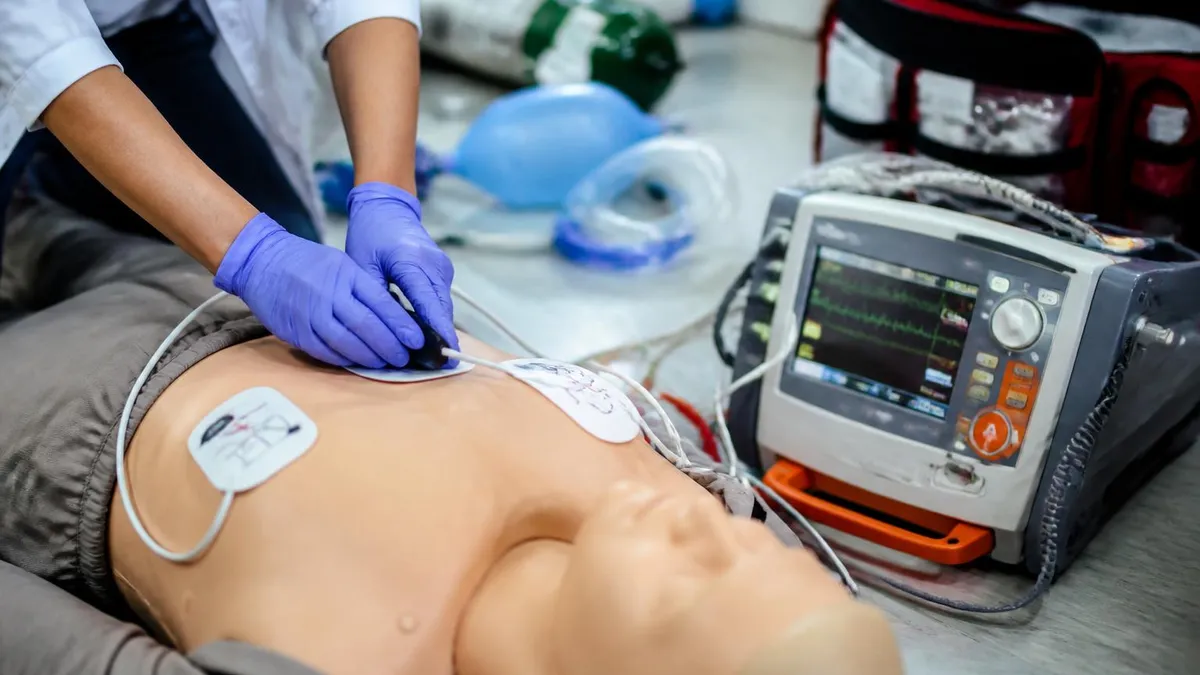
The Six Core ACLS Rhythm Categories
Ventricular fibrillation (VF) and pulseless ventricular tachycardia (pVT) are the two rhythms where immediate defibrillation is the definitive treatment. Both are chaotic, disorganized rhythms that produce no effective cardiac output and require rapid recognition.
Pulseless electrical activity (PEA) and asystole are cardiac arrest rhythms treated with CPR and epinephrine, not defibrillation. PEA shows organized electrical activity without a pulse; asystole shows no electrical activity at all. Reversible causes must be identified.
Heart rates below 60 bpm that cause hemodynamic compromise — including sinus bradycardia, second-degree AV blocks (Mobitz I and II), and complete (third-degree) heart block — require a systematic approach starting with atropine and escalating to pacing.
Tachyarrhythmias above 100 bpm are classified as stable or unstable based on hemodynamic signs. Unstable patients require immediate synchronized cardioversion. Stable patients are further subdivided into narrow-complex and wide-complex pathways for treatment.
Rhythms that frequently precede or follow cardiac arrest — including accelerated idioventricular rhythm, agonal rhythm, and post-ROSC sinus rhythm — require careful monitoring and interpretation in the context of the patient's overall resuscitation status.
Understanding the distinction between shockable and non-shockable arrest rhythms is the foundation of ACLS cardiac rhythm management. When a patient is in cardiac arrest, the first question is not which medication to give — it is whether the rhythm on the monitor will respond to defibrillation.
Ventricular fibrillation is the most common initial arrest rhythm in witnessed cardiac arrest in adults, and it is the rhythm where time to defibrillation most directly determines survival. The AHA's Chain of Survival places early defibrillation as a critical link precisely because unsynchronized electrical shock is the only reliable way to terminate VF and restore an organized rhythm capable of producing cardiac output.
Ventricular fibrillation appears on the ECG as chaotic, irregular, high-frequency waveforms with no identifiable P waves, QRS complexes, or T waves. The amplitude can be coarse (large, irregular peaks) or fine (low-amplitude, nearly flat-appearing waves). Fine VF is particularly dangerous because it can be mistaken for asystole on a poorly calibrated or loosely attached monitor. The clinical rule is: if you see any waveform activity that could be fine VF, defibrillate rather than treat as asystole, because a defibrillation attempt on true asystole causes no harm while withholding it from VF is catastrophic.
Pulseless ventricular tachycardia presents as a wide, regular, monomorphic or polymorphic tachycardia at rates typically between 150 and 250 bpm. Without a palpable pulse, pVT is treated identically to VF: immediate defibrillation at 200 joules biphasic (or the manufacturer's recommended dose), followed by CPR resumption, epinephrine every 3-5 minutes, and amiodarone or lidocaine after the second failed shock. Polymorphic VT, particularly torsades de pointes, warrants magnesium sulfate and correction of the underlying QTc prolongation or electrolyte abnormality that triggered it.
On the non-shockable side, pulseless electrical activity encompasses any organized or semi-organized rhythm — including sinus rhythm, junctional rhythm, and even idioventricular rhythm — that occurs without a detectable pulse. The treatment approach shifts entirely to high-quality CPR, epinephrine every 3-5 minutes, and a systematic search for reversible causes using the Hs and Ts mnemonic: hypovolemia, hypoxia, hydrogen ion (acidosis), hypo/hyperkalemia, hypothermia, tension pneumothorax, tamponade, toxins, thrombosis (pulmonary and coronary). Identifying and correcting a reversible cause is the only pathway to ROSC in PEA.
Asystole — a flat line on the monitor — represents complete absence of electrical activity in the heart. It is confirmed by checking the monitor leads, gain settings, and switching to a second lead to rule out fine VF or a loose lead artifact before committing to the asystole protocol. Like PEA, asystole is treated with CPR and epinephrine. The AHA explicitly does not recommend routine atropine for asystole, a change from older protocols that candidates who trained years ago sometimes fail to update. Asystole carries a very poor prognosis unless a reversible cause can be rapidly identified and treated.
One clinically important concept for ACLS candidates is rhythm conversion monitoring — what happens to the ECG after defibrillation or ROSC. It is common to see a brief period of asystole or a slow, wide idioventricular rhythm immediately after a successful shock.
This post-shock rhythm should be allowed to organize for up to 2 minutes without immediate re-shocking, because the heart's conduction system needs time to reassert normal automaticity. Resuming CPR immediately after a shock and not pausing to analyze the rhythm for the full 2-minute CPR cycle is a key AHA recommendation that prevents premature rhythm checks and interruptions to chest compressions.
The ability to rapidly and accurately classify an arrest rhythm as shockable or non-shockable — and to execute the correct algorithm without hesitation — is the central competency that the ACLS cardiac rhythm portion of the exam tests. Practice with real ECG strips across dozens of examples, including challenging ones with artifact, lead misplacement, and poor baseline, until the classification becomes instantaneous. Your goal is to look at a strip and know within 3 seconds whether you need the defibrillator or the epinephrine syringe.
ECG Interpretation Techniques for ACLS Rhythms
The systematic 5-step ECG interpretation method used in ACLS courses begins with rate assessment (fast, slow, or normal), followed by rhythm regularity (regular, regularly irregular, or irregularly irregular). Step three evaluates P wave morphology — are there P waves, are they uniform, and does each one precede a QRS? Step four measures the PR interval (normal 0.12–0.20 seconds) to assess AV conduction. Step five evaluates QRS duration (normal under 0.12 seconds) and morphology to distinguish supraventricular from ventricular origin.
Applying all five steps consistently prevents the most common ECG errors, such as mistaking a junctional tachycardia for sinus tachycardia or misclassifying a bundle-branch block as ventricular tachycardia. In an ACLS exam scenario, you are not expected to produce a formal 12-lead interpretation — you are expected to classify the rhythm, assess whether the patient is stable or unstable, and select the correct algorithm. The 5-step method gets you there reliably in under 15 seconds with practice.

Algorithm-Based vs. Pattern-Only Rhythm Learning: Which Works Better for ACLS?
- +Algorithm-based learning directly maps rhythm recognition to treatment decisions, mirroring how ACLS scenarios are structured
- +AHA algorithms provide a fail-safe decision tree that prevents treatment errors during high-stress resuscitations
- +Systematic approach builds correct habits for real clinical practice, not just exam scenarios
- +Algorithm mastery transfers to megacode simulations and station-based skills testing on exam day
- +Structured pathways ensure you never skip critical steps like pulse check, stability assessment, or reversible cause search
- +Repeatedly walking through algorithms reinforces rhythm categories by grouping them around their treatment implications
- −Algorithm-only study without pattern recognition practice can lead to slow rhythm identification that breaks down under time pressure
- −Candidates who memorize algorithms without understanding the physiology behind each rhythm struggle with novel or artifact-heavy ECG strips
- −Some algorithm steps (such as adenosine dosing or cardioversion energy selection) are easy to mix up under stress without deep repetition
- −Overconfidence in algorithms can cause providers to skip the initial patient assessment step and jump directly to intervention
- −Algorithm-centric practice often underemphasizes peri-arrest and post-ROSC rhythms, which appear on the written exam
- −Relying solely on algorithm cards without internalizing rhythm criteria leaves candidates vulnerable when the exam presents an atypical strip
Pros and Cons at a Glance
| Pros | Cons |
|---|---|
| Algorithm-based learning directly maps rhythm recognition to treatment decisions, mirroring how ACLS scenarios are structured | Algorithm-only study without pattern recognition practice can lead to slow rhythm identification that breaks down under time pressure |
| AHA algorithms provide a fail-safe decision tree that prevents treatment errors during high-stress resuscitations | Candidates who memorize algorithms without understanding the physiology behind each rhythm struggle with novel or artifact-heavy ECG strips |
| Systematic approach builds correct habits for real clinical practice, not just exam scenarios | Some algorithm steps (such as adenosine dosing or cardioversion energy selection) are easy to mix up under stress without deep repetition |
| Algorithm mastery transfers to megacode simulations and station-based skills testing on exam day | Overconfidence in algorithms can cause providers to skip the initial patient assessment step and jump directly to intervention |
| Structured pathways ensure you never skip critical steps like pulse check, stability assessment, or reversible cause search | Algorithm-centric practice often underemphasizes peri-arrest and post-ROSC rhythms, which appear on the written exam |
| Repeatedly walking through algorithms reinforces rhythm categories by grouping them around their treatment implications | Relying solely on algorithm cards without internalizing rhythm criteria leaves candidates vulnerable when the exam presents an atypical strip |
ACLS Rhythm Recognition Mastery Checklist
- ✓Identify ventricular fibrillation (coarse and fine) on ECG and immediately call for defibrillation at 200J biphasic
- ✓Distinguish pulseless VT (monomorphic and polymorphic) from VF and apply the shockable arrest algorithm correctly
- ✓Recognize PEA by confirming an organized ECG rhythm with no palpable pulse and initiate the Hs and Ts search
- ✓Confirm asystole by checking lead placement and gain settings before committing to the asystole protocol
- ✓Classify bradycardia by degree of AV block (first, Mobitz I, Mobitz II, or complete) and select the correct intervention
- ✓Assess tachycardia stability using the four signs: AMS, chest pain, hypotension, and signs of shock
- ✓Differentiate narrow-complex from wide-complex tachycardia and apply the correct stable or unstable pathway
- ✓Apply the 5-step ECG method (rate, regularity, P waves, PR interval, QRS) in under 15 seconds on any strip
- ✓Identify torsades de pointes by its twisting QRS morphology and know that magnesium sulfate is the first-line treatment
- ✓Recognize post-ROSC rhythms including slow idioventricular escape and allow 2 minutes of CPR before re-analyzing
Stability Assessment Trumps Rhythm Classification
The single most important rule in ACLS tachycardia management is that hemodynamic instability always triggers immediate synchronized cardioversion — before you finish classifying the rhythm. If your patient has an altered mental status, systolic BP below 90 mmHg, acute chest pain, or signs of shock, cardiovert first at 100–200J (synchronized). Attempting to determine whether an unstable tachycardia is SVT, atrial flutter, or VT before cardioverting wastes critical time. The AHA algorithm makes this explicit: unstable = cardiovert immediately, classify later.
The ACLS bradycardia and tachycardia algorithms represent the two major branches of the peri-arrest rhythm management portion of ACLS certification. Unlike the cardiac arrest algorithms — which are relatively linear — the bradycardia and tachycardia pathways require providers to make sequential clinical judgments: Is the rhythm causing symptoms? Are those symptoms due to the rate? Is the patient stable or unstable? Mastering these decision points requires understanding both the ECG characteristics of each rhythm and the hemodynamic principles that determine when intervention is necessary versus when observation is safe.
Symptomatic bradycardia in ACLS is defined as a heart rate typically below 50 bpm that is causing signs and symptoms of poor perfusion: hypotension, altered mental status, diaphoresis, chest pain, or acute pulmonary congestion. The rate itself is not the primary criterion — a heart rate of 55 bpm in a highly conditioned athlete is normal, while a rate of 58 bpm in a patient with severe aortic stenosis may be critically inadequate. The AHA algorithm therefore emphasizes treating symptomatic bradycardia and monitoring asymptomatic bradycardia, regardless of the absolute number on the monitor.
The first-line treatment for symptomatic bradycardia is atropine 1 mg IV, which can be repeated every 3-5 minutes to a maximum of 3 mg. Atropine works by blocking vagal tone at the SA and AV nodes, which is why it is most effective for rhythms with high vagal influence — sinus bradycardia and first- and second-degree AV block (Mobitz I). It is less effective, and potentially dangerous, in patients with complete heart block or Mobitz II, because in those rhythms the block is at or below the His bundle where vagal tone plays no role.
In infranodal blocks, atropine may paradoxically worsen the block by accelerating the atrial rate without improving AV conduction.
When atropine fails or the patient has infranodal block, transcutaneous pacing (TCP) is the next intervention. TCP delivers an electrical impulse through large adhesive pads placed on the chest wall, stimulating ventricular contraction externally. The procedure requires increasing the milliampere output until electrical capture is achieved (visible pacing spikes followed by wide QRS complexes), and then confirming mechanical capture by palpating a pulse. TCP is uncomfortable for conscious patients, so sedation and analgesia should be administered concurrently. Transvenous pacing is the definitive intervention for patients in complete heart block who do not respond to TCP or who require sustained pacing.
On the tachycardia side, the ACLS algorithm begins with the stability assessment before any other analysis. Unstable tachycardia — regardless of QRS width — is treated with immediate synchronized cardioversion. The AHA recommends synchronized cardioversion rather than unsynchronized (defibrillation) because synchronization allows the device to deliver the shock on the R wave of the QRS, avoiding the vulnerable T-wave period that could precipitate VF. The energy settings for synchronized cardioversion depend on the rhythm: regular narrow-complex tachycardias typically convert with 50–100J, irregular narrow-complex tachycardias (atrial fibrillation) require 120–200J biphasic, and wide-complex tachycardias typically require 100–200J.
For stable tachycardias, the narrow-complex pathway prioritizes vagal maneuvers (Valsalva, carotid sinus massage) and then adenosine for regular narrow-complex rhythms, with rate control agents (diltiazem, metoprolol) for irregular narrow-complex tachycardias like atrial fibrillation. Adenosine 6 mg IV rapid push followed by a 20 mL saline flush is the first dose for regular narrow-complex SVT; if unsuccessful, 12 mg can be repeated twice.
Adenosine briefly blocks AV conduction, which either terminates re-entrant SVT or uncovers the underlying atrial rhythm (flutter waves, P wave pattern) to aid diagnosis. It has no effect on VT, which is one reason wide-complex tachycardia of unknown origin should not be treated with adenosine as a first-line agent.
The stable wide-complex tachycardia pathway recognizes that most wide-complex tachycardias in adults are VT until proven otherwise. Amiodarone 150 mg IV over 10 minutes is the first-line agent, with the option to repeat if the rhythm persists, followed by a maintenance infusion of 1 mg/min for 6 hours. Procainamide is an alternative for hemodynamically stable patients without structural heart disease or prolonged QT.
The key teaching point that ACLS candidates must internalize is that giving adenosine or verapamil to a patient in VT can be catastrophic — both agents can cause hemodynamic collapse — which is why rhythm classification must be performed carefully before any pharmacologic intervention in stable wide-complex tachycardia.
Many readers pair this guide with the acls updates to check their readiness before exam day.
Many readers pair this guide with the acls free practice test to check their readiness before exam day.
Administering calcium channel blockers (verapamil, diltiazem) or adenosine to a patient with wide-complex tachycardia of unknown origin can precipitate hemodynamic collapse if the rhythm turns out to be ventricular tachycardia. Both agents lower blood pressure and can worsen the already compromised cardiac output of VT. The AHA explicitly warns against this practice: treat wide-complex tachycardia of unknown origin as VT with amiodarone, and reserve adenosine only for confirmed, regular, narrow-complex SVT in stable patients.
Preparing for the ACLS rhythm recognition exam requires a strategy that goes beyond reading about rhythms and into active, high-repetition practice with real ECG strips under simulated time pressure. Research on skill acquisition in clinical settings consistently shows that passive study — reading, watching videos, highlighting notes — builds declarative knowledge but not the procedural fluency that resuscitation scenarios demand. You need to practice rhythm identification the same way you will perform it on exam day: quickly, from an imperfect image on a screen, with a clinical scenario attached that demands you make a treatment decision within seconds.
The most effective approach to ACLS rhythm study combines three elements: systematic concept building, high-volume strip practice, and algorithm walk-throughs under simulated conditions. Start by building your conceptual framework — understand the SA node, AV node, bundle of His, and Purkinje system well enough to explain why each rhythm looks the way it does. Sinus bradycardia looks the way it does because the SA node is firing slowly; VF looks chaotic because thousands of myocardial cells are depolarizing asynchronously with no coordinated activation front. Physiology-based understanding is far more durable than pure memorization.
After building your conceptual framework, shift to high-volume strip practice. Aim for a minimum of 200 individual rhythm strip identifications before your exam date, distributed across all ACLS rhythm categories. Use varied sources — practice tests, textbook ECG atlases, online simulators — because rhythm strips vary enormously in quality, lead placement, paper speed, and the presence of artifact.
The goal is not to see 200 perfect strips; the goal is to encounter enough variation that no strip on the actual exam surprises you. Many candidates find that the 10th time they see a Wenckebach pattern, something clicks that did not on the first or fifth exposure.
Algorithm walk-throughs under simulated conditions are the third pillar of ACLS rhythm preparation. Take a rhythm strip, identify the rhythm, and then verbalize the complete algorithm from that point to its logical conclusion — including medication names, doses, routes, timing, and the clinical decision points along the way.
This kind of deliberate practice builds the procedural script that you will follow in a megacode without conscious effort. If you practice it at your desk twenty times before the exam, you will execute it in the megacode station automatically even when your adrenaline is elevated and a proctor is watching your every move.
One of the highest-yield study tactics for ACLS rhythm prep is to create a personal cheat sheet that summarizes the treatment decision for each rhythm in a single line. For example: VF/pVT → shock 200J → CPR 2 min → epi → shock → CPR → amiodarone. Symptomatic sinus bradycardia → atropine 1 mg → repeat up to 3 mg → TCP → dopamine/epi infusion → transvenous pacing.
Unstable tachycardia → sync cardioversion → sedate if conscious. Writing these from memory — without looking at your notes — is a powerful self-test that immediately reveals where your knowledge has gaps that need more study time.
Time management during the ACLS written exam is rarely a problem for well-prepared candidates, but rhythm recognition questions do tend to take longer than knowledge-recall questions because you are visually processing an image, identifying features, and then selecting a treatment. Budget approximately 90 seconds per ECG strip question.
If you are spending more than 2 minutes on a single strip, make your best guess and flag the question to return to if time permits. In the megacode, there is no time to deliberate — but in the written exam, strategic time management can protect your score on the knowledge questions that do not require image processing.
Finally, make sure your study plan includes the pharmacology of every ACLS rhythm intervention, because the exam tests drug knowledge as frequently as rhythm recognition. The dose, route, timing, and contraindications for epinephrine, amiodarone, lidocaine, atropine, adenosine, magnesium sulfate, dopamine, and norepinephrine are all tested in direct and scenario-based questions. Rhythm recognition and pharmacology are deeply intertwined in ACLS — knowing that your patient is in torsades de pointes only helps you if you immediately know that the correct treatment is 1-2 g of magnesium sulfate IV over 15 minutes.
Building exam-day confidence in ACLS rhythm interpretation requires understanding not just the textbook appearance of each rhythm but also the common atypical presentations and confounding factors that appear on both written exams and real-world monitors. Artifact is one of the most frequently encountered confounders: patient movement, loose leads, electrical interference, and CPR chest compressions all introduce noise into the ECG signal that can obscure or mimic dysrhythmias.
A 60-cycle alternating current artifact can create the appearance of flutter waves; CPR artifact can completely obscure the underlying rhythm during a chest compression cycle. ACLS providers must develop the habit of pausing compressions briefly — no more than 10 seconds — during the 2-minute rhythm check to get a clean signal for analysis.
Lead placement errors are another common source of ECG confusion in clinical practice and ACLS exam scenarios. Reversal of the right arm and left arm limb leads produces a mirror-image ECG with apparent negative P waves in lead I, which can be mistaken for an ectopic atrial rhythm or even dextrocardia.
Standard ACLS monitoring uses a single lead (typically lead II or a modified chest lead) rather than a full 12-lead, which means some rhythm characteristics are better visualized in one lead than another. If your initial lead view is ambiguous, switching to a different lead can dramatically clarify the rhythm — a principle that ACLS candidates should practice routinely in their strip interpretation sessions.
Post-cardiac arrest care, increasingly emphasized in current AHA guidelines, requires rhythm monitoring to continue long after ROSC is achieved. Patients who achieve ROSC are at high risk for rearrest, and continuous cardiac monitoring in the ICU setting is essential for detecting recurrent VF, VT, or new conduction abnormalities. Targeted temperature management (TTM) protocols, which maintain core body temperature at 32–36°C for 24 hours after cardiac arrest, can alter ECG morphology — bradycardia is expected and physiologically normal during TTM, and providers must not over-treat hypothermia-induced bradycardia with atropine or pacing if the patient is otherwise hemodynamically stable during cooling.
The 12-lead ECG obtained immediately after ROSC is a critical diagnostic tool for identifying ST-elevation myocardial infarction (STEMI) as the precipitating cause of the cardiac arrest. Current AHA and ACC guidelines recommend urgent coronary angiography for post-cardiac arrest patients with STEMI on their post-ROSC 12-lead.
ACLS providers should be familiar with the ECG criteria for STEMI (≥1 mm ST elevation in two contiguous limb leads or ≥2 mm in two contiguous precordial leads, or new left bundle branch block) because identifying STEMI on a 12-lead is a direct, testable skill in advanced ACLS programs and a clinically critical one in any cardiac catheterization-capable facility.
Electrolyte abnormalities produce characteristic ECG changes that ACLS providers must recognize because they cause many of the rhythm disturbances that present as cardiac emergencies. Hyperkalemia produces a progressive sequence of ECG changes: peaked T waves, PR prolongation, widening of the QRS, loss of P waves, a sine-wave pattern, and ultimately VF or asystole.
Hypokalemia causes ST depression, flattening or inversion of T waves, and prominent U waves, and it markedly increases the risk of torsades de pointes, especially in patients on QT-prolonging medications. Hypercalcemia shortens the QT interval; hypocalcemia prolongs it. Recognizing these electrolyte-ECG patterns allows ACLS providers to suspect the underlying cause of a rhythm disturbance and guide treatment toward correction of the precipitant rather than just managing the rhythm in isolation.
Digitalis toxicity produces a characteristic sagging or scooping of the ST segment (the digitalis effect) and can cause virtually any dysrhythmia, but classically produces bradyarrhythmias and increased AV block at toxic levels. Tricyclic antidepressant overdose is recognized by QRS widening and a large terminal R wave in aVR. Beta-blocker overdose causes profound bradycardia and AV block that is resistant to atropine and may require high-dose insulin therapy, calcium, glucagon, or lipid emulsion therapy.
Recognizing toxicologic causes of ACLS rhythms is particularly relevant for emergency medicine and critical care providers, and questions about toxicology-related rhythm changes have appeared on recent ACLS written exams with increasing frequency as opioid and antidepressant overdose cases have become more prevalent.
ACLS Questions and Answers
ACLS Training Online: Complete 2026 Guide to Courses, Costs, Certification & Hospital Acceptance
ACLS Certification Cost: Complete 2026 Price Guide for Initial Courses, Renewals, Online Options & Hidden Fees
HeartCode ACLS Answers: Complete 2026 Guide to Passing the Online Module With Confidence

Do You Need BLS If You Have ACLS? The Complete 2026 Guide to Stacking Life Support Certifications
ACLS Course Near Me: How to Find Local Classes, Costs, Schedules & Fast-Track Options in 2026
How this page was made: written with AI tools and published by Nathan Beja, founder of Practice Test Geeks, who is responsible for its content. Exam facts are checked against the official sources listed below. Not reviewed by a subject-matter expert. Editorial policy
Sources & references
Exam facts on this page (fees, format, dates, passing scores) are checked against these official sources; the date is our last check. Editorial policy
- cpr.heart.org — Test delivery, renewal, eligibility, score validity · verified Oct 2026
- heart.org — Passing score · verified Oct 2026