
HeartCode ACLS Answers: Complete 2026 Guide to Passing the Online Module With Confidence
HeartCode ACLS answers, practice questions, and study strategies for 2026. 🎯 Master the online module with real algorithms, drug doses, and exam tips.
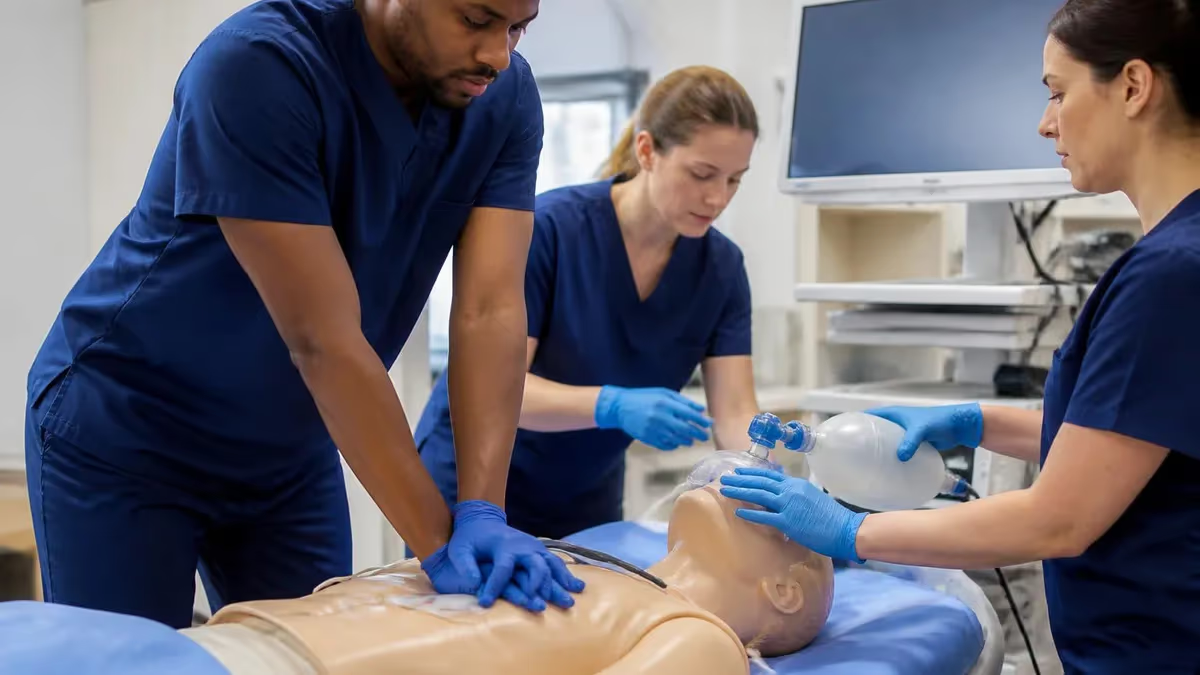
Searching for reliable heartcode acls answers usually means one thing: you are sitting in front of the American Heart Association's online ACLS module, the timer is ticking, and a simulated patient is decompensating in front of you. The HeartCode ACLS platform blends self-directed cognitive learning with adaptive case simulations, and it expects you to recognize rhythms, choose drugs, and direct a team in real time. This guide gives you the answer patterns, algorithms, and reasoning behind each scenario so you can finish strong. Practice with the free ACLS Advanced Cardiovascular Life Support Practice practice test on PracticeTestGeeks (7 questions with answer explanations).
HeartCode ACLS is not a memorization test. The platform randomizes vital signs, rhythms, and patient responses, so the exact heartcode acls answers you saw last year will not be the ones you see today. What stays constant are the underlying algorithms: tachycardia, bradycardia, cardiac arrest, acute coronary syndromes, and suspected stroke. If you internalize the decision trees and the dosing thresholds, you can answer any variation the simulator throws at you without guessing.
This article walks through every case type you will encounter in the HeartCode platform, the most common decision points where learners lose points, and the precise interventions the AHA expects you to perform. We pair the explanations with free practice quizzes that mirror the simulator's question style, so you can rehearse pattern recognition before your skills check. Our ACLS Study Guide: Complete 2026 Certification Prep with Algorithms, Drugs & Practice Tests is the perfect companion for deeper algorithm review.
The HeartCode platform was redesigned around the 2020 AHA guidelines and refreshed in 2025 with updated post-arrest temperature targets and double sequential defibrillation guidance. If you trained before 2023, expect changes in how the platform scores epinephrine timing, advanced airway placement, and the use of point-of-care ultrasound. The simulator also weighs team communication: closed-loop callouts, clear role assignments, and frequent rhythm checks every two minutes are now scored alongside clinical decisions.
Most learners fail their first HeartCode attempt not because they do not know the drugs, but because they misread the rhythm on a noisy monitor or hesitate at the shock-versus-CPR fork. The simulator rewards crisp decisions made within six seconds of a rhythm change. If you wait, the patient's pressure drops, the score deducts points, and you lose the ability to recover the case. Speed comes from repetition, and repetition is what our practice quizzes provide.
Use this page as a working playbook. Start with the algorithms section to refresh your decision trees, drill the practice tests at the end of each section, and finish with the FAQ to clear up the policy questions about retakes, expiration, and skills sessions. By the time you launch your HeartCode account, you should be able to predict every prompt before it appears.
Remember that HeartCode is the cognitive portion only. After you pass the online module and earn the certificate of completion, you still need to attend an in-person or virtual reality skills session with an AHA instructor to receive your full ACLS provider card. Plan both pieces of the puzzle in the same week so the algorithms stay fresh in your hands as well as your head.
Free ACLS Advanced Cardiovascular Life Support Practice Study Tools
Interactive ACLS Advanced Cardiovascular Life Support Practice resources on PracticeTestGeeks, free to start:
- ACLS Airway Management & Ventilation 1 — 7 questions with answer explanations
- ACLS Advanced Cardiovascular Life Support Practice flashcards — review key terms and concepts card by card
- ACLS Advanced Cardiovascular Life Support Practice study guide — topic-by-topic overview of what the exam covers
- ACLS Advanced Cardiovascular Life Support Practice cheat sheet — one-page printable summary for last-minute review
HeartCode ACLS by the Numbers
- To pass the AHA ACLS Provider Course Exam, students need a score of at least 84%. (American Heart Association)
- The AHA ACLS Provider Course Completion Card is valid for two years. (American Heart Association)
- Providers renewing their AHA ACLS card can take the shorter ACLS Update Course, which runs about 8.25–9.25 hours with video prework or 8.50–9.50 hours without it, breaks included. (American Heart Association)
- The AHA ACLS course is offered as instructor-led classroom training or as HeartCode blended learning, and both lead to the same AHA ACLS course completion card. (American Heart Association)
- Before attending the AHA ACLS Course, every student has to complete the online Precourse Self-Assessment with a score of at least 70%. (American Heart Association)
Facts verified Oct 15, 2026 against American Heart Association. Dates that have passed are removed automatically.
ACLS Exam at a Glance
| Item | Detail | Official source |
|---|---|---|
| Passing score | 84% minimum on the ACLS Provider Course Exam | American Heart Association |
| Validity | Valid for 2 years | American Heart Association |
| Renewal | ACLS Update Course: about 8.25–9.50 hours with breaks | American Heart Association |
| Delivery | Instructor-led classroom, or HeartCode blended learning (online + hands-on skills session) | American Heart Association |
| Eligibility | Score of at least 70% on the mandatory Precourse Self-Assessment, plus proficiency in BLS, ECGs, ACLS pharmacology and bag-mask ventilation | American Heart Association |
Facts verified Oct 15, 2026 against American Heart Association. Dates that have passed are removed automatically.
How the HeartCode ACLS Platform Is Structured
An ungraded diagnostic that flags weak areas in rhythm recognition, pharmacology, and practical application. Use the results to focus your study time, but do not skip modules even if your pretest scores look strong.
Interactive lessons covering BLS review, airway management, ACS, stroke, bradycardia, tachycardia, and cardiac arrest. The platform adjusts depth and review questions based on your pretest performance.
Ten patient scenarios where you direct assessment, rhythm interpretation, drug administration, and team communication. Each case is scored on clinical accuracy, sequence, and time-to-intervention.
A 50-question multiple-choice test covering all algorithms and drug doses. You need 84% to pass, and you get unlimited remediated retakes within your subscription window.
After the online portion, attend an in-person or RQI-based hands-on session to demonstrate BLS, airway, defibrillation, and megacode performance. This step finalizes your provider card.
The HeartCode ACLS simulator is built around six core algorithms, and every case you face will route through at least one of them. Knowing which algorithm applies within the first ten seconds of a case is the single biggest predictor of a high score. Start by asking three questions in order: Is the patient in cardiac arrest? Is the patient unstable? What is the underlying rhythm? Those three questions narrow the entire AHA decision tree down to a single page of choices.
The adult cardiac arrest algorithm splits at shockable versus non-shockable rhythms. Ventricular fibrillation and pulseless ventricular tachycardia get immediate defibrillation at the manufacturer's recommended dose, usually 120 to 200 joules biphasic. Pulseless electrical activity and asystole get high-quality CPR, epinephrine 1 mg every three to five minutes, and a hunt for reversible causes through the Hs and Ts.
The HeartCode simulator will explicitly ask you to identify the H or T it is testing, so memorize all ten before your attempt. Cross-reference this material with the official ACLS Guidelines 2026: Complete AHA Update on Algorithms, Drugs, CPR Quality & Post-Arrest Care to stay current.
Bradycardia cases test whether you can distinguish stable from unstable presentations. Atropine 1 mg IV push is the first-line drug for symptomatic bradycardia, and you can repeat it every three to five minutes to a maximum of 3 mg. If atropine fails or is unlikely to work, such as in third-degree heart block with wide complex escape, move directly to transcutaneous pacing or to dopamine and epinephrine infusions. The simulator deducts points if you give a second dose of atropine in Mobitz II or complete heart block instead of pacing.
Tachycardia is the trickiest algorithm because the simulator tests whether you can read narrow versus wide complex and regular versus irregular at glance speed. Stable narrow complex regular tachycardia gets vagal maneuvers, then adenosine 6 mg rapid IV push followed by 12 mg if the first dose fails. Wide complex regular tachycardia, when stable, can get adenosine or antiarrhythmics like amiodarone, procainamide, or sotalol. Anything unstable, with chest pain, hypotension, or altered mental status, gets synchronized cardioversion immediately.
Acute coronary syndromes appear in HeartCode as patients with chest pain and twelve-lead ECG changes. The simulator wants morphine, oxygen if saturation is below 90 percent, nitroglycerin if not contraindicated, and aspirin 162 to 325 mg chewed. Identify ST-elevation MI within ten minutes of arrival and activate the cath lab if PCI is available within ninety minutes, or give fibrinolytics within thirty if it is not. Right-sided MI is a common simulator trap because nitroglycerin can crash blood pressure.
Suspected stroke cases are timed events. The HeartCode platform expects you to complete a NIH Stroke Scale or Cincinnati Prehospital Stroke Scale, obtain a non-contrast head CT within twenty-five minutes of arrival, and rule out hemorrhage before considering alteplase or tenecteplase. The fibrinolytic window is now 4.5 hours from last known well for most patients, with mechanical thrombectomy available up to 24 hours in select large vessel occlusions. Document time of symptom onset on every stroke case.
Finally, post-arrest care has become a heavily weighted module since the 2020 guidelines update. Targeted temperature management between 32 and 36 degrees Celsius for at least 24 hours, careful blood pressure support to keep MAP above 65, and avoidance of both hypoxia and hyperoxia are graded items. The simulator will also prompt for a twelve-lead ECG to assess for STEMI and for early consultation with cardiology if return of spontaneous circulation follows a shockable rhythm.
You can continue preparing with the acls pretest, which includes answer explanations for every question.
You can continue preparing with the acls algorithms pdf, which includes answer explanations for every question.
ACLS Practice Test Questions
Prepare for the ACLS Advanced Cardiovascular Life Support Practice exam with our free practice test modules. Each quiz covers key topics to help you pass on your first try.
ACLS Cardiac Rhythms & ECG Interpretation
ACLS Exam Questions covering ACLS Cardiac Rhythms & ECG Interpretation. Master ACLS Test concepts for certification prep.
ACLS Pharmacology & Medications
Free ACLS Practice Test featuring ACLS Pharmacology & Medications. Improve your ACLS Exam score with mock test prep.
ACLS Best Practices & Methodologies
ACLS Mock Exam on Best Practices & Methodologies. ACLS Study Guide questions to pass on your first try.
ACLS Communication & Stakeholder Relations
ACLS Test Prep for Communication & Stakeholder Relations. Practice ACLS Quiz questions and boost your score.
ACLS Core Concepts & Fundamentals
ACLS Questions and Answers on Core Concepts & Fundamentals. Free ACLS practice for exam readiness.
ACLS Data Analysis & Reporting
ACLS Mock Test covering Data Analysis & Reporting. Online ACLS Test practice with instant feedback.
ACLS Documentation & Record Keeping
Free ACLS Quiz on Documentation & Record Keeping. ACLS Exam prep questions with detailed explanations.
ACLS Industry Regulations & Compliance
ACLS Practice Questions for Industry Regulations & Compliance. Build confidence for your ACLS certification exam.
ACLS Leadership & Team Management
ACLS Test Online for Leadership & Team Management. Free practice with instant results and feedback.
ACLS Professional Standards & Ethics
ACLS Study Material on Professional Standards & Ethics. Prepare effectively with real exam-style questions.
ACLS Quality Assurance & Improvement
Free ACLS Test covering Quality Assurance & Improvement. Practice and track your ACLS exam readiness.
ACLS Risk Management & Assessment
ACLS Exam Questions covering Risk Management & Assessment. Master ACLS Test concepts for certification prep.
Drug Doses and Timing Answers You Must Memorize
Epinephrine 1 mg IV or IO every three to five minutes is the cornerstone of any pulseless arrest. Give it as soon as possible in non-shockable rhythms and after the second shock in shockable rhythms. Amiodarone 300 mg IV push after the third shock, followed by 150 mg if VF or pulseless VT persists, is the first-line antiarrhythmic. Lidocaine 1 to 1.5 mg/kg is the alternative when amiodarone is unavailable.
Calcium chloride, sodium bicarbonate, and magnesium sulfate are situational. Magnesium 1 to 2 grams IV over five minutes is indicated for torsades de pointes, and the HeartCode simulator will test you on this exception. Calcium and bicarbonate are reserved for hyperkalemia, tricyclic overdose, or specific metabolic derangements that the simulator will hint at through history or labs.
HeartCode ACLS vs Traditional Classroom Course
- +Self-paced learning fits irregular clinical schedules
- +Adaptive case simulations build decision-making speed
- +Unlimited remediation on missed cognitive questions
- +Saves a full classroom day for the cognitive portion
- +Immediate feedback after every case decision
- +Reduces total course cost when combined with virtual skills
- +Provides downloadable certificate the moment you pass
- −Still requires in-person or VR skills session
- −Internet outages can interrupt timed scenarios
- −Less peer interaction than classroom learning
- −Hands-on intuition is harder to build via simulator
- −Voice recognition for callouts can misinterpret accents
- −Account access expires after a set window
- −Not all employers accept HeartCode as equivalent to classroom
Pre-Exam Checklist Before You Launch HeartCode
- ✓Memorize epinephrine 1 mg every 3 to 5 minutes for all arrest rhythms
- ✓Know amiodarone 300 mg then 150 mg dosing for refractory VF or pulseless VT
- ✓Recite the H's and T's reversible causes from memory in under 60 seconds
- ✓Differentiate stable from unstable tachycardia by signs and symptoms
- ✓Confirm synchronized cardioversion energy levels for narrow and wide complex
- ✓Practice atropine versus pacing decisions in high-grade AV blocks
- ✓Review post-arrest targeted temperature management between 32 and 36 degrees C
- ✓Verify your computer meets HeartCode browser and audio requirements
- ✓Schedule your skills session within two weeks of cognitive completion
- ✓Have a quiet space and headset ready for the audio-driven simulator
Speed of recognition beats depth of knowledge
The HeartCode simulator gives partial credit for correct interventions delivered late, but full credit only when you recognize the rhythm and act within six seconds. Drill rhythm strips daily until your snap judgments match your considered ones. Reviewers consistently report that learners who fail know the drugs but hesitate on rhythm calls.
Let's walk through the type of case simulations you will face inside HeartCode ACLS and the exact answer patterns that score full credit. The first case typically opens with an unresponsive adult patient and an empty monitor screen. Your job is to call for help, check responsiveness, check breathing and pulse simultaneously for no more than ten seconds, then start CPR and attach the monitor. The simulator scores the order of those actions, so memorize the BLS-into-ACLS handoff cold before you start.
The second simulation usually escalates to a shockable rhythm. When the monitor shows coarse ventricular fibrillation, your callout should be specific: "Charge to 200 joules, clear the patient, shock now." Resume CPR immediately after the shock without checking a pulse for two full minutes. Then assess the rhythm again. If VF persists, deliver a second shock, resume CPR, and give epinephrine 1 mg IV during this cycle. After the third shock, amiodarone 300 mg IV push is the expected answer.
A common bradycardia case features an elderly patient with chest discomfort, blood pressure 78/40, heart rate 38, and a third-degree AV block on the monitor. The HeartCode answer key prioritizes transcutaneous pacing here rather than atropine because the escape rhythm is wide and ventricular. Set the pacer at 60 to 80 beats per minute and adjust milliamperes until you see consistent electrical and mechanical capture. Verify the pulse matches the paced rate before you celebrate.
Tachycardia simulations love to throw a wide complex tachycardia at you in a hemodynamically stable patient. The simulator expects you to confirm the rhythm with a twelve-lead ECG, evaluate signs of instability, and choose between amiodarone, procainamide, or sotalol. Amiodarone 150 mg over 10 minutes is the safest universal answer when you cannot tell ventricular tachycardia from SVT with aberrancy. If the patient becomes unstable mid-case, drop the antiarrhythmic and move straight to synchronized cardioversion at 100 joules.
The ACS case typically opens with an active fifty-five year old male presenting with crushing substernal chest pain radiating to the jaw. Your sequence: obtain a focused history, place the patient on a monitor, get IV access, give aspirin 324 mg chewed, place sublingual nitroglycerin, and order a twelve-lead within ten minutes of arrival. If the ECG shows ST elevation in two contiguous leads, activate the STEMI team. If V4R suggests right ventricular involvement, the simulator deducts heavily for nitroglycerin or morphine.
Stroke cases use timestamps aggressively. The simulator will tell you last known well time, and you must finish a NIHSS, order a head CT, and rule out contraindications within twenty-five minutes of arrival. If the CT is negative for hemorrhage and the patient is within 4.5 hours of onset, alteplase or tenecteplase is the answer. Pay close attention to blood pressure: it must be under 185/110 before fibrinolytics, and you control it with labetalol or nicardipine.
The final and most commonly failed case is the post-arrest scenario. After return of spontaneous circulation, get a twelve-lead, support oxygenation to keep saturation between 92 and 98 percent, maintain MAP above 65 with norepinephrine, start targeted temperature management within four hours, and arrange transfer to a cath lab if STEMI is present. The HeartCode platform will quiz you on subtle details, like avoiding hyperventilation and treating both hypotension and hypertension carefully.
Your HeartCode ACLS subscription typically expires 24 months from purchase, and the cognitive completion certificate is only valid for 60 days before you must complete your skills session. Missing the 60-day window forces a full re-do of the online module. Schedule both pieces in the same month to avoid wasted fees.
Understanding how the platform grades you is just as important as knowing the algorithms. HeartCode ACLS uses a weighted scoring system that combines case simulation performance, cognitive exam results, and time-to-intervention metrics. The cognitive section requires 84 percent or higher, and you receive unlimited remediation attempts within your subscription period. Each missed question links to a targeted review module that you must complete before retesting, which delays your skills session if you wait until the last minute.
Case simulations are graded on three dimensions: clinical accuracy, sequence of actions, and team communication. Clinical accuracy looks at whether you chose the correct intervention. Sequence checks whether you delivered the intervention in the right order — for example, defibrillation before epinephrine in a shockable rhythm. Team communication scores your closed-loop callouts and role assignments. Saying "I am going to give epinephrine 1 milligram IV push" is better than "give epi," and the platform rewards the longer, clearer phrase.
One trap many learners fall into is over-treating. The simulator deducts points for giving drugs that are not indicated, even if they would not harm the patient in real life. Atropine for asystole is the classic example: it is no longer recommended and will cost you points.
Calcium chloride for a normokalemic patient and bicarbonate for a non-acidotic patient are similar traps. When in doubt, stick to the algorithm and skip the bonus drugs unless the case explicitly indicates them. If you want extra reinforcement, the ACLS Drugs: Complete 2026 Guide to Medications, Doses, Indications & Algorithm Use walks through every dose decision.
Another common mistake is failing to verify pulse and rhythm at the two-minute mark during CPR. The HeartCode platform will pause and prompt you to assess the patient, and you must explicitly call for a rhythm check and a pulse check. Skipping this step or letting it default to the next cycle costs you significant points. Practice the two-minute cycle so it becomes muscle memory: compressions, ventilations, rhythm check, pulse check if organized, drug administration, repeat.
Voice recognition can be a frustration point. The platform listens for specific phrases like "shock," "resume CPR," "give epinephrine," and "check pulse." If your microphone is poor or your accent is unusual, the platform may not register your command. Test the audio setup before you start a graded case, speak slowly and clearly, and use a quality headset rather than your laptop's built-in microphone. You can also fall back to clicking the on-screen prompts if voice fails repeatedly.
The pretest results are gold for study planning. If you scored poorly on bradycardia, devote two evenings to drills before launching the cases. If you missed pharmacology questions, build flashcards for every drug dose, route, and indication. Our ACLS Renewal Near Me: Find Local Recertification Classes, Costs & Online Options in 2026 article includes a study calendar that pairs nicely with the HeartCode pretest insights, especially for renewal candidates.
Finally, do not underestimate the value of taking the cognitive exam multiple times. Each version of the test draws from a randomized question bank, and the more attempts you make, the more of that bank you see. After your first attempt, even if you pass, you can usually retake it for additional practice within your subscription. This is one of the best ways to expose yourself to question variations before the real megacode in your skills session.
Your skills session is where everything you learned in HeartCode becomes physical. Bring your printed or digital cognitive completion certificate, a stethoscope, and comfortable clothing that lets you kneel and lean over a manikin for the compression station. Instructors will assess BLS quality, airway management, defibrillation, and a megacode where you lead a simulated resuscitation. The session usually runs three to four hours, and you should arrive ready to perform, not to learn the basics for the first time.
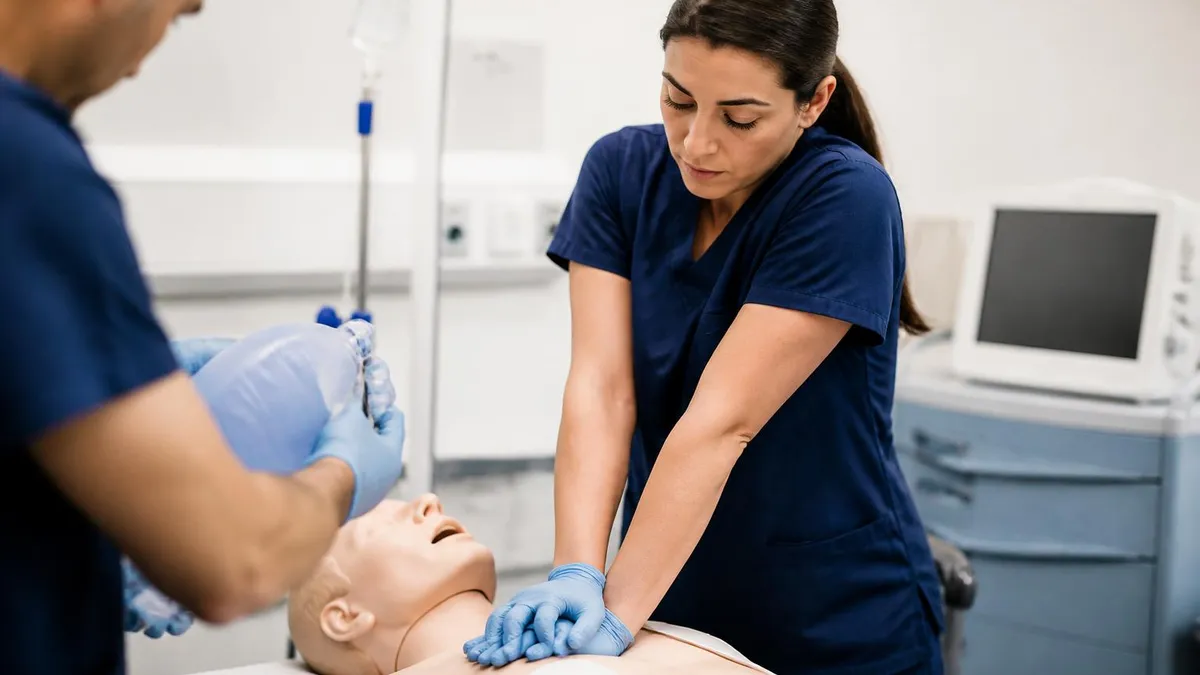
Practice compressions on a hard surface before the skills check. Quality compressions are 2 to 2.4 inches deep, at a rate of 100 to 120 per minute, with full chest recoil between compressions and minimal interruptions. Compression fraction — the percentage of time during a code that compressions are happening — should exceed 80 percent. Instructors use a feedback device that reports real-time depth, rate, and recoil, and you cannot fake these numbers. Build the muscle endurance at home in two-minute sets.
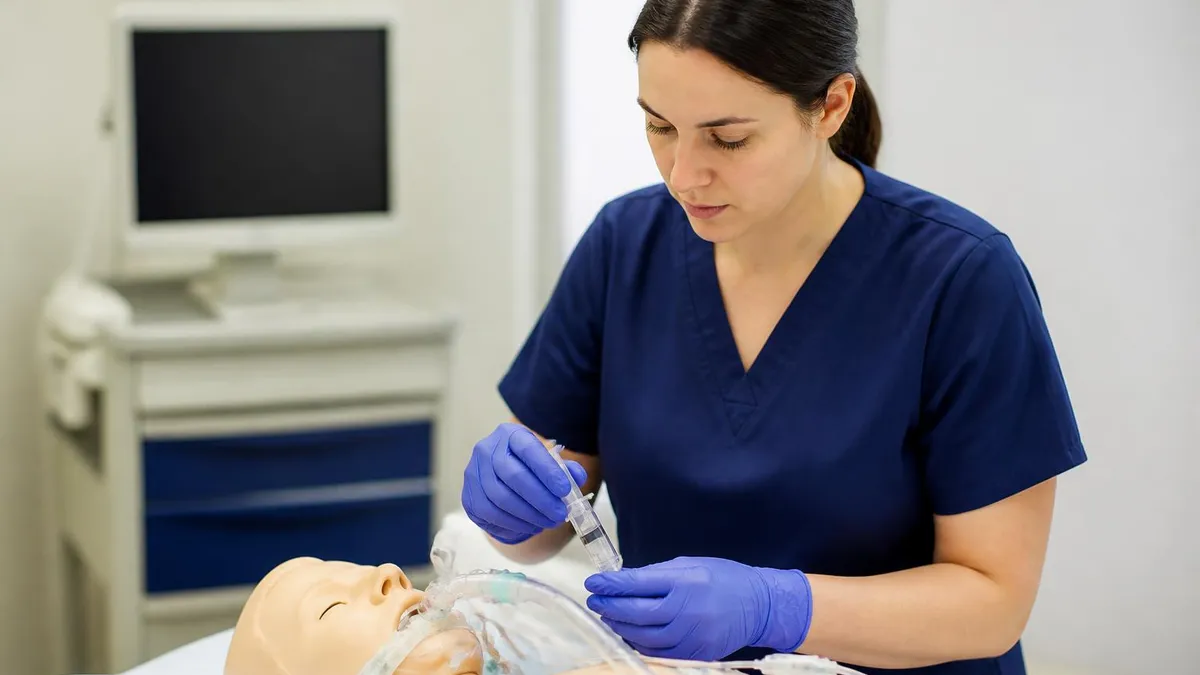
Bag-mask ventilation is the airway skill most learners under-rehearse. Use the E-C clamp technique, deliver one breath every six seconds during ongoing CPR with an advanced airway, and aim for visible chest rise without overinflating. The simulator and instructors will deduct points for hyperventilation, which raises intrathoracic pressure and reduces coronary perfusion. Practice with a partner so you can switch off and rest your hands during prolonged ventilation segments.
The megacode is the final and most heavily weighted skills station. You will be assigned the team leader role and given a case that escalates through multiple rhythms — for example, VF to PEA to ROSC. You direct the team, call out interventions in closed-loop fashion, and reassess every two minutes.
Practice running a megacode out loud at home so the verbal patterns are automatic. Stand and use hand gestures the way you will in the real room. For deeper algorithm prep, our ACLS Certification Cost: Complete 2026 Price Guide for Initial Courses, Renewals, Online Options & Hidden Fees guide also outlines how to budget for retakes if needed.
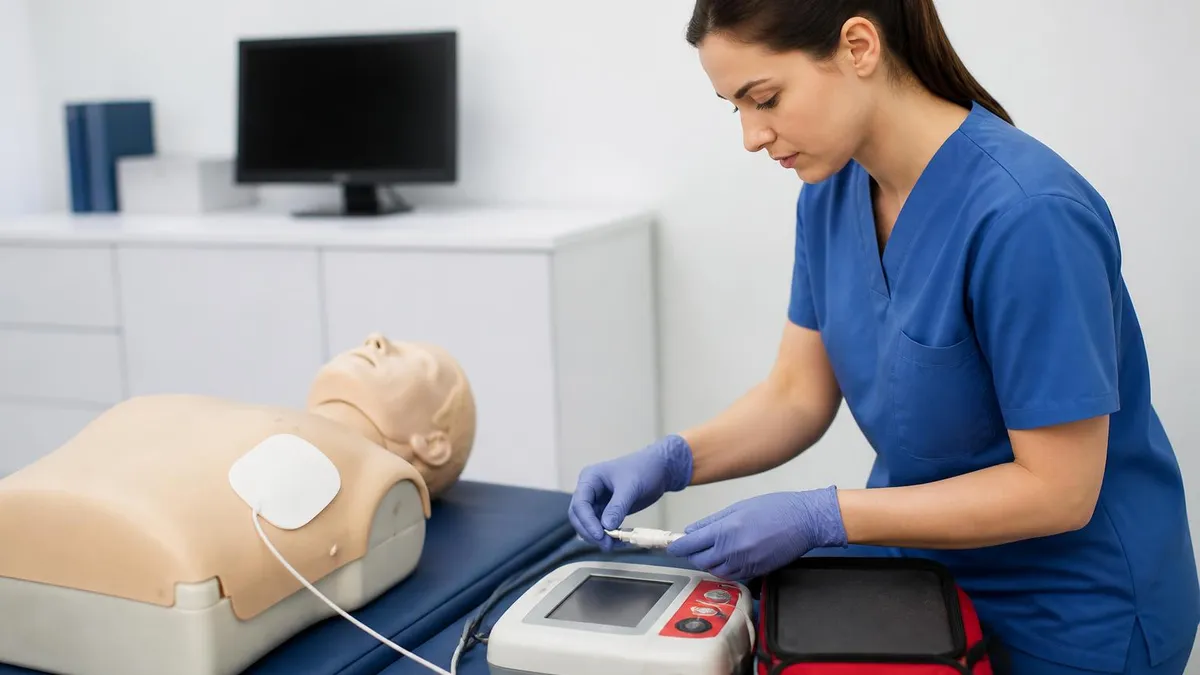
Defibrillation skill stations test whether you can charge, clear, and deliver a shock safely. Verbalize each step: "Charging to 200 joules. I am clear, you are clear, oxygen is clear. Shock delivered." Immediately resume compressions without checking a pulse. Instructors watch for safety lapses, like delivering a shock before everyone is clear or pausing too long to look at the monitor. Drill the choreography until it flows without conscious thought.
If you fail any station, you typically get one retest opportunity on the same day or within a short remediation window. Use that time wisely: ask the instructor exactly what you missed, drill that specific skill for fifteen minutes, then retest. Most retests succeed because the candidate is now focused on the precise deficit. Do not panic if you need a retest; it is a common part of the process and does not appear on your card.
The night before your skills session, review the megacode flow in your head one last time, lay out your materials, and get a full eight hours of sleep. Avoid heavy meals before the session, drink water, and bring a snack for between stations. Most learners who fail report fatigue and stress as the cause rather than knowledge gaps. Treat the session like the high-stakes performance it is, and you will walk out with your two-year provider card in hand.
ACLS Questions and Answers
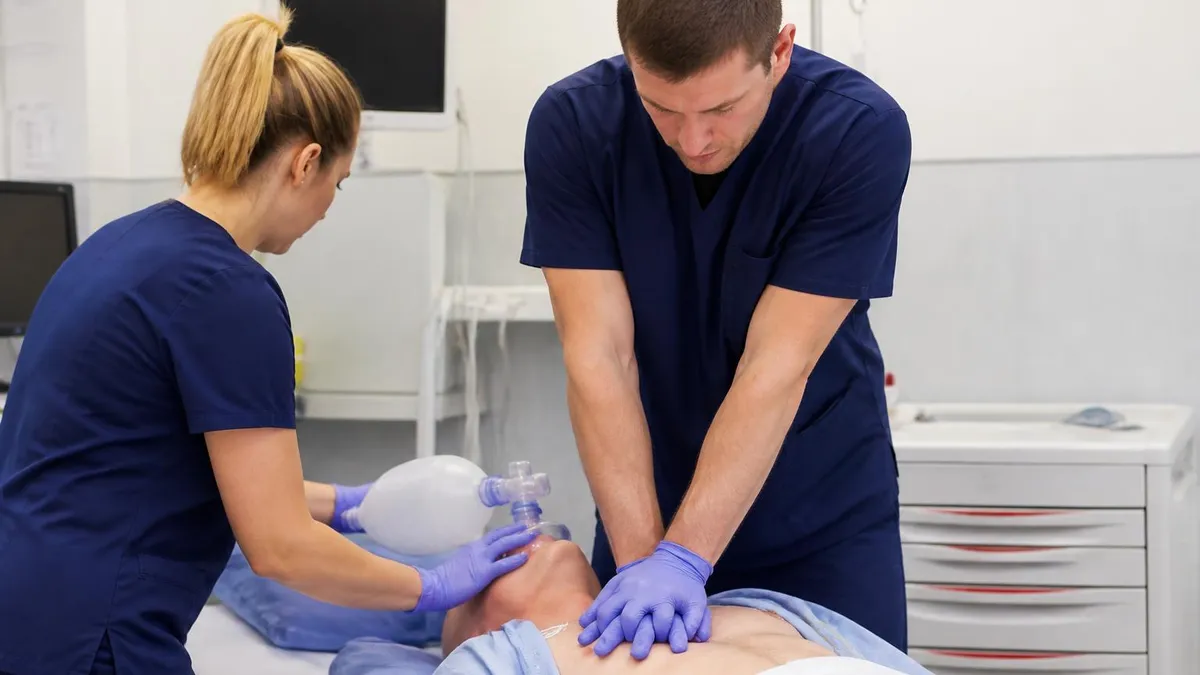
ACLS Study Guide: Complete 2026 Certification Prep with Algorithms, Drugs & Practice Tests

ACLS Guidelines 2026: Complete AHA Update on Algorithms, Drugs, CPR Quality & Post-Arrest Care
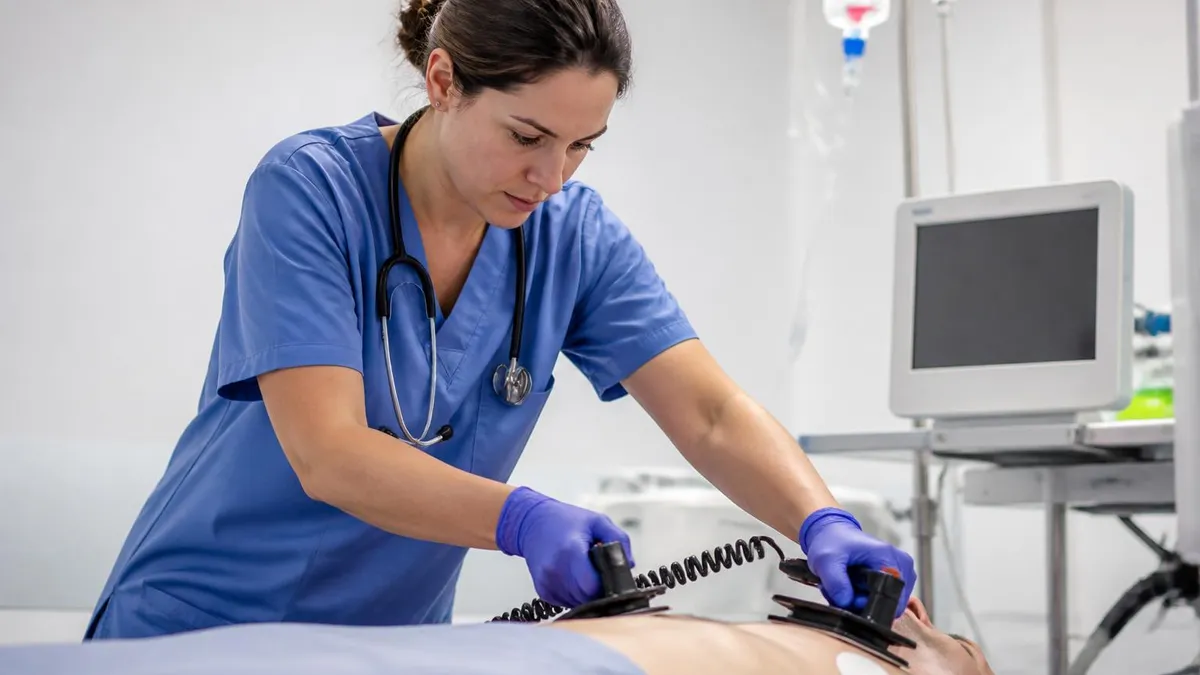
ACLS Drugs: Complete 2026 Guide to Medications, Doses, Indications & Algorithm Use
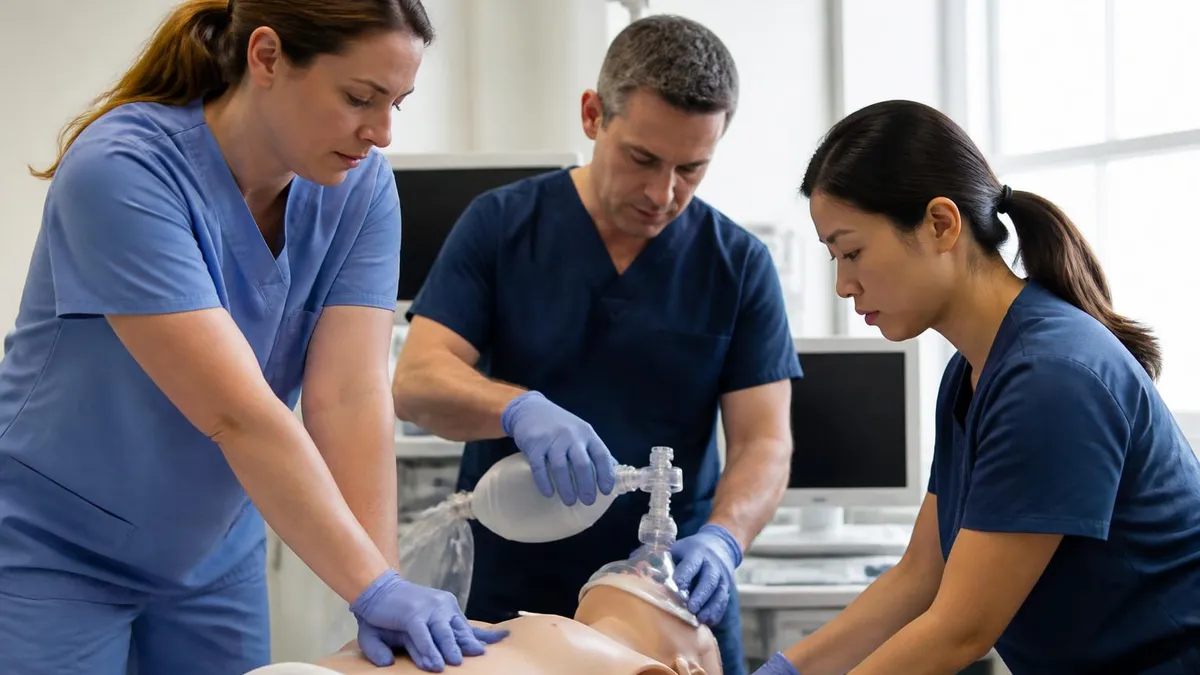
ACLS Renewal Near Me: Find Local Recertification Classes, Costs & Online Options in 2026
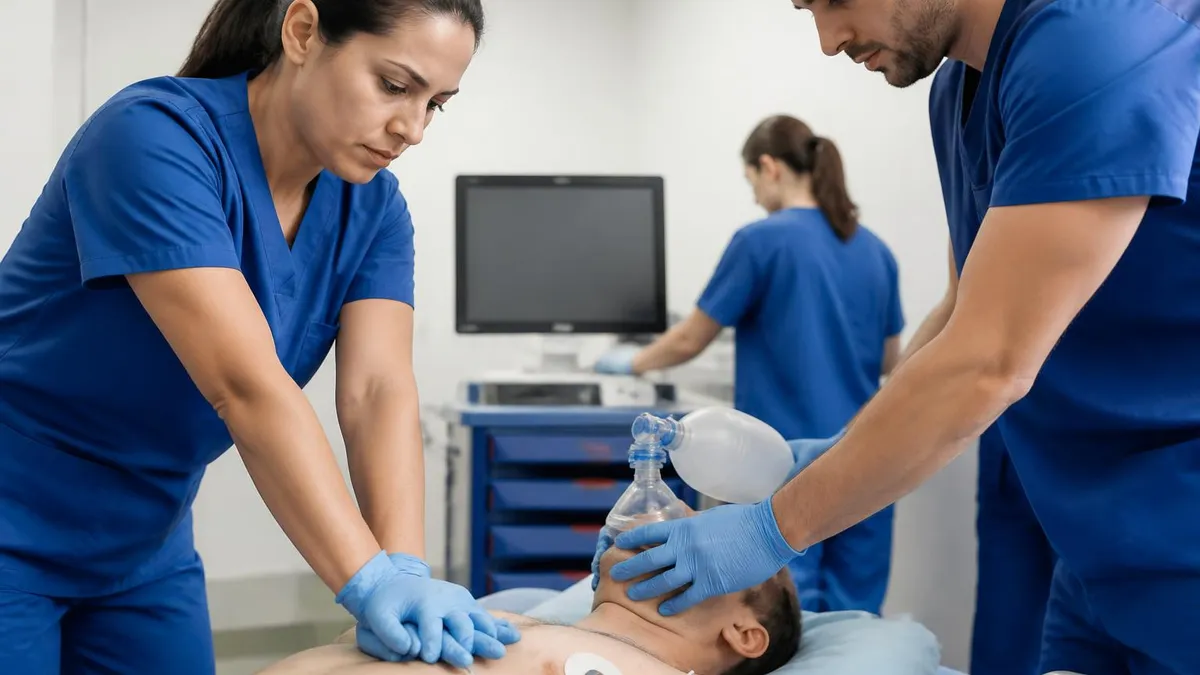
ACLS Certification Cost: Complete 2026 Price Guide for Initial Courses, Renewals, Online Options & Hidden Fees
How this page was made: written with AI tools and published by Nathan Beja, founder of Practice Test Geeks, who is responsible for its content. Exam facts are checked against the official sources listed below. Not reviewed by a subject-matter expert. Editorial policy
Sources & references
Exam facts on this page (fees, format, dates, passing scores) are checked against these official sources; the date is our last check. Editorial policy
- cpr.heart.org — Test delivery, renewal, eligibility, score validity · verified Oct 2026
- heart.org — Passing score · verified Oct 2026