
Do You Need BLS If You Have ACLS? The Complete 2026 October Guide to Stacking Life Support Certifications
🆕 Do you need BLS if you have ACLS? Learn AHA stacking rules, employer policies, prerequisites, and renewal strategy in this 2026 October guide.

Do you need BLS if you have ACLS? It is one of the most common questions among nurses, paramedics, respiratory therapists, and physicians preparing for hospital credentialing in 2026. The short answer is nuanced: the American Heart Association (AHA) does not technically force ACLS-certified providers to maintain a separate BLS card, because BLS skills are embedded inside the ACLS curriculum. However, most hospitals, residency programs, and staffing agencies in the United States still require a current, standalone BLS card alongside ACLS for compliance reasons.
This guide unpacks the actual policies behind that requirement. We will look at what the AHA officially says, how the Joint Commission interprets credentialing rules, why human resources departments stack the two certifications, and the rare scenarios where a single ACLS card is enough. By the end, you will know exactly what to renew, when to renew it, and how to avoid paying for redundant classes that some training centers quietly upsell.
ACLS, or Advanced Cardiovascular Life Support, is built on top of BLS. Every algorithm — from adult cardiac arrest to bradycardia to post-arrest care — assumes the rescuer can already deliver high-quality chest compressions, use an AED, and ventilate a patient. The AHA Provider Manual explicitly states that BLS competency is a prerequisite. If you walk into an ACLS course without passing the entry-level BLS skills check, instructors are expected to pause and remediate before continuing.
Despite that integration, the credentials are issued as two separate eCards with two separate expiration dates. That structural quirk is why the question keeps surfacing. A nurse who renews ACLS in March might assume her BLS is also covered, only to find her hospital onboarding portal blocking shift assignments in November because the BLS card expired. Understanding the difference between curricular coverage and administrative documentation is the heart of this issue.
The financial stakes matter too. Initial BLS courses run $60 to $90, and renewals average $55. ACLS initial courses average $250, and renewals run $180 to $220. Stacking unnecessary courses, retaking expired cards, or buying duplicate classes from sketchy resellers can easily add $300 a year to a clinician's out-of-pocket continuing education budget. Knowing which card you genuinely need saves time and money.
We will also cover state-specific quirks. California, Texas, New York, and Florida each have nursing board or EMS authority rules that subtly differ. Travel nurses moving between states need to know whether their compact license carries the same expectation across all 50 states or whether they need to re-document with each new employer. The goal of this article is to leave no ambiguity behind, so you can credential confidently in any clinical setting.
BLS and ACLS by the Numbers
Key Facts at a Glance
| Item | Value | Details |
|---|---|---|
| Validity Period | 2 yr | Identical for BLS and ACLS |
| BLS Renewal Time | 4–6 hr | Blended online + skills check |
| ACLS Renewal Time | 10–14 hr | Including HeartCode prep |

BLS vs ACLS at a Glance
Basic Life Support covers high-quality CPR, AED operation, choking relief, and team-based resuscitation for adults, children, and infants. It is the foundation every clinical responder must master before advancing.
Advanced Cardiovascular Life Support layers on rhythm recognition, advanced airway management, IV/IO drug administration, defibrillation strategy, and team leadership during cardiac arrest and peri-arrest emergencies in adults.
AHA requires current BLS skills to enter ACLS. The ACLS course does not re-teach BLS in depth — it assumes mastery and tests it briefly during the megacode skills evaluation only.
BLS and ACLS are issued as two separate AHA eCards with independent QR codes and unique expiration dates. Renewing one does not automatically renew the other in any AHA database.
Hospital HR systems treat them as two compliance line items. Most credentialing software (HealthStream, Symplr, MedTrainer) flags missing BLS even when ACLS is current, blocking schedule assignment.
The AHA's official position is that ACLS providers must possess and demonstrate BLS competency, but the organization stops short of issuing a unified card. Page 2 of the 2025 ACLS Provider Manual states that students should bring proof of current BLS to course registration, and instructors are instructed to remediate any candidate who cannot perform a 2-minute high-quality compression cycle with proper depth, rate, and recoil. That language is the source of the eternal confusion.
Why doesn't the AHA simply bundle them? The historical reason traces back to scope-of-practice law. BLS is the universal baseline for laypeople, lifeguards, daycare workers, fitness trainers, and clinicians alike. ACLS is a clinical specialty card limited to licensed providers who can administer medications and interpret ECGs. Bundling would force the AHA to issue ACLS-level credentials to anyone needing CPR documentation, which would dilute the meaning of the advanced card and confuse regulators.
The second reason is renewal cadence and skill decay. Studies published in Resuscitation and the Journal of the American Heart Association consistently show that chest compression skills decay measurably within three to six months without practice. Forcing BLS renewal as its own checkpoint — even when ACLS is current — gives institutions an additional touch point to verify hands-on skills. The two cards together create a layered safety net that single-credential systems do not.
From a curriculum standpoint, ACLS courses spend roughly 30 to 45 minutes on a BLS review during the first morning. That review is not a substitute for a full BLS course. It is a refresher targeted at clinicians who already passed a separate BLS skills test within the last 24 months. Instructors check rate, depth, recoil, hand placement, and ventilation ratio, then move on. If you have never taken BLS, that 45-minute window is not enough to certify you.
This is why the Joint Commission, DNV, and CMS Conditions of Participation all reference BLS as a separately documented competency. Surveyors checking hospital files want to see two PDFs or two eCard screenshots — one BLS, one ACLS — with two distinct expiration dates. Many readers searching for clarity also explore our ACLS study guide to understand how the curriculum is structured around assumed BLS baseline skills.
There is one edge case worth knowing. The AHA Heartsaver program — designed for laypeople — is not the same as BLS Provider. If your job listing says "BLS required," a Heartsaver card will not satisfy it. Similarly, CPR cards from non-AHA providers like the American Red Cross, ASHI, or Health and Safety Institute may or may not be accepted depending on your employer. Always verify the exact certifying body your facility recognizes.
Finally, ACLS does not cover pediatric advanced life support. If you work in a pediatric ER, NICU, or peds ICU, you will likely need PALS as a third credential. Adult ACLS algorithms do not transfer cleanly to pediatric patients because drug doses, joule selection, and reversible cause differentials all change. Stacking BLS, ACLS, and PALS is the standard portfolio for most hospital-based clinicians caring for mixed populations.
ACLS Practice Test Questions
Prepare for the ACLS Advanced Cardiovascular Life Support Practice exam with our free practice test modules. Each quiz covers key topics to help you pass on your first try.
ACLS Cardiac Rhythms & ECG Interpretation
ACLS Exam Questions covering ACLS Cardiac Rhythms & ECG Interpretation. Master ACLS Test concepts for certification prep.
ACLS Pharmacology & Medications
Free ACLS Practice Test featuring ACLS Pharmacology & Medications. Improve your ACLS Exam score with mock test prep.
ACLS Best Practices & Methodologies
ACLS Mock Exam on Best Practices & Methodologies. ACLS Study Guide questions to pass on your first try.
ACLS Communication & Stakeholder Relations
ACLS Test Prep for Communication & Stakeholder Relations. Practice ACLS Quiz questions and boost your score.
ACLS Core Concepts & Fundamentals
ACLS Questions and Answers on Core Concepts & Fundamentals. Free ACLS practice for exam readiness.
ACLS Data Analysis & Reporting
ACLS Mock Test covering Data Analysis & Reporting. Online ACLS Test practice with instant feedback.
ACLS Documentation & Record Keeping
Free ACLS Quiz on Documentation & Record Keeping. ACLS Exam prep questions with detailed explanations.
ACLS Industry Regulations & Compliance
ACLS Practice Questions for Industry Regulations & Compliance. Build confidence for your ACLS certification exam.
ACLS Leadership & Team Management
ACLS Test Online for Leadership & Team Management. Free practice with instant results and feedback.
ACLS Professional Standards & Ethics
ACLS Study Material on Professional Standards & Ethics. Prepare effectively with real exam-style questions.
ACLS Quality Assurance & Improvement
Free ACLS Test covering Quality Assurance & Improvement. Practice and track your ACLS exam readiness.
ACLS Risk Management & Assessment
ACLS Exam Questions covering Risk Management & Assessment. Master ACLS Test concepts for certification prep.
Employer & Hospital Requirements for ACLS BLS Stacking
Acute care hospitals overwhelmingly require both cards. Joint Commission accreditation language refers to BLS and ACLS as distinct competencies, and most credentialing platforms — including HealthStream, Symplr, and MedTrainer — list them as separate compliance fields. A nurse with current ACLS but lapsed BLS will be flagged red in the system and may lose shift eligibility, payroll codes, and floating privileges.
Larger health systems like HCA, Kaiser, Ascension, and the VA enforce stacking even more strictly. They typically require both cards to be from the AHA specifically (not Red Cross). New hires often must produce both physical eCards during onboarding, and renewal reminders are automated 90 days before expiration. Missing the deadline puts the employee on administrative leave.

Pros and Cons of Maintaining Both BLS and ACLS
- +Universal acceptance across virtually all US hospitals and acute care settings
- +Compliance with Joint Commission, DNV, and CMS surveyor documentation expectations
- +Built-in skill reinforcement with two separate hands-on touch points each cycle
- +Eligibility for higher-paying critical care, ICU, ED, and rapid response roles
- +Flexibility to float between units without credentialing barriers or delays
- +Easier transition to PALS, NRP, or other advanced certifications when needed
- +Stronger position when negotiating travel nursing or contract assignments
- −Higher combined renewal cost averaging $235 every two years per clinician
- −Two separate expiration dates to track, increasing chance of one lapsing
- −Additional study time required for two distinct skills checks and exams
- −Some redundancy since ACLS already includes BLS-level CPR competency
- −Travel between AHA training centers can be inconvenient for skills check-offs
- −Potential confusion when employers accept Red Cross BLS but not Red Cross ACLS
- −Risk of paying for duplicate or overlapping coursework if not scheduled strategically
Renewal Checklist for BLS and ACLS in 2026
- ✓Check both eCard expiration dates 90 days before they lapse
- ✓Confirm your employer accepts AHA, ARC, ASHI, or only AHA-issued cards
- ✓Schedule BLS renewal first since it is the prerequisite for ACLS courses
- ✓Complete HeartCode BLS online module and bring printed completion certificate
- ✓Register for an in-person or virtual skills check with an AHA training center
- ✓Review the 2025 AHA guideline updates including drug dosing and CPR feedback devices
- ✓Practice 2-minute high-quality compression cycles before your skills check appointment
- ✓Renew ACLS within 30 days of BLS to align future expiration cycles
- ✓Save both eCards as PDFs and upload to your hospital credentialing portal
- ✓Set calendar reminders 6, 3, and 1 month before next expiration date
Aligning expiration dates saves hours of administrative friction
If you renew BLS and ACLS within the same 30-day window, both cards will expire on the same month two years later. This single scheduling trick eliminates the most common credentialing failure: forgetting that one card expired six months after the other. Most hospital credentialing software sends reminders by individual card, not by clinician, so misaligned dates create twice the administrative noise.
Role-specific stacking rules vary widely, and understanding them helps you avoid paying for credentials you will never use. Bedside RNs in ICU, ED, telemetry, step-down, PACU, cath lab, and interventional radiology nearly always require both BLS and ACLS. Med-surg nurses in some hospitals only need BLS, but rapid response and code team participation requires ACLS. If you float between units, plan for the highest-acuity assignment you might pull.
Physicians and advanced practice providers follow similar but more flexible patterns. Emergency physicians, hospitalists, intensivists, cardiologists, and anesthesiologists universally maintain both. Outpatient family medicine physicians often maintain only BLS unless they take inpatient call or perform procedures. Surgical specialties typically require ACLS for the operating surgeon and BLS for everyone else in the room, though anesthesia provides the primary code response.
Respiratory therapists in acute care need both cards. They participate in code teams as airway managers and often run ventilator emergencies that require ACLS-level decision-making. Home health respiratory therapists may only need BLS. Pharmacists working in clinical or critical care roles increasingly maintain ACLS to participate in code response teams as the dedicated medication coordinator, especially in pharmacy residency programs.
EMS providers stack credentials based on scope. EMT-Basics need BLS only. AEMTs typically need BLS and may pursue ACLS as continuing education. Paramedics universally maintain BLS, ACLS, and PALS, with many adding PHTLS or ITLS for trauma scope. Critical care transport paramedics often add NRP, FP-C, or CCP-C credentials to expand their scope into neonatal and complex transport scenarios.
Travel and contract clinicians face unique pressure. Agencies like Aya Healthcare, Cross Country, and Trusted Health require both AHA cards uploaded before any assignment confirmation. State-to-state variation matters here — California Title 22 has slightly different language than Texas Administrative Code 157, but both still expect documented BLS and ACLS. Many clinicians also reference our ACLS renewal near me resource when looking for compliant local options.
Students and residents enter clinical training with BLS, then add ACLS during their first or second clinical year. Medical school typically requires BLS for orientation. Residency programs add ACLS during intern year, with most programs covering the cost. Nursing students often complete BLS before their first clinical rotation and add ACLS during senior year or immediately after passing NCLEX. Some hospitals will hire new grads conditional on obtaining ACLS within 90 days.
Per diem and PRN clinicians sometimes try to drop one card to save money. This is risky. Most facilities require both for any clinical shift regardless of FTE status. Letting either lapse can disqualify you from being scheduled at all, which defeats the purpose of maintaining per diem status. If you genuinely no longer work in acute care, dropping ACLS is reasonable; dropping BLS is almost never reasonable for any licensed clinician.
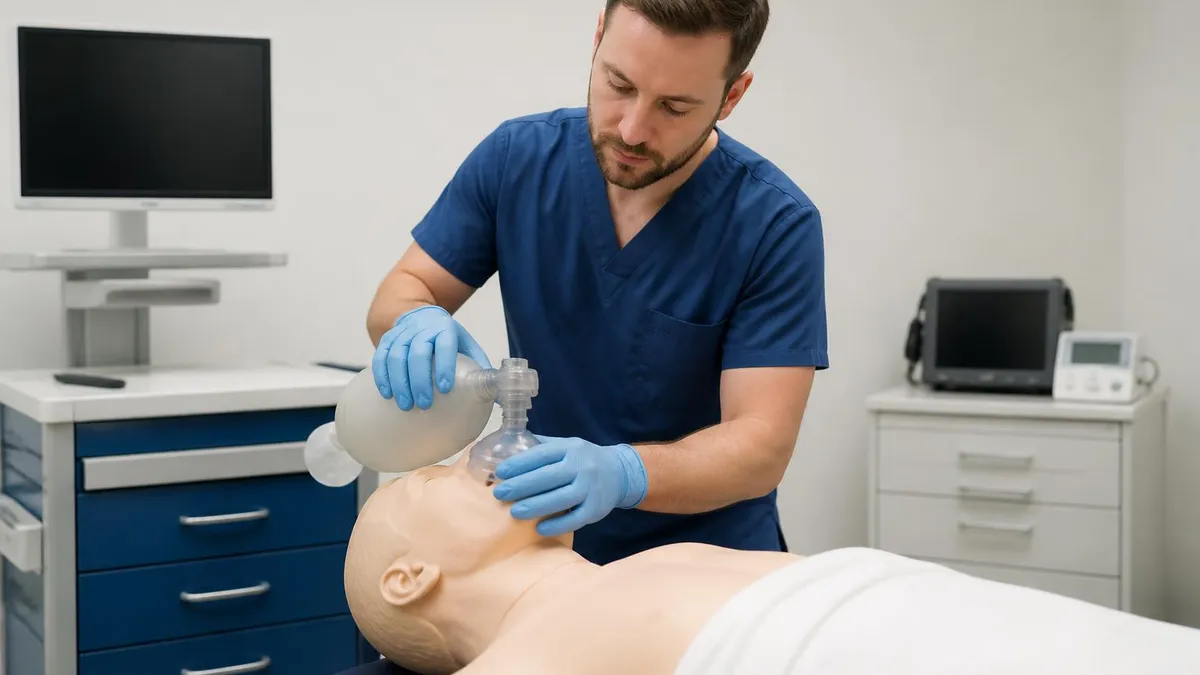
Many clinicians do not realize that AHA training centers can refuse to enroll you in an ACLS renewal course if your BLS has expired. Some centers allow same-day stacking — BLS renewal in the morning, ACLS renewal in the afternoon — but you must schedule both in advance. Walking in expecting to renew only ACLS while BLS is lapsed often results in being turned away after paying course fees.
Cost-saving strategies start with timing. Renewing both cards on the same day at the same training center often unlocks bundled pricing — many centers offer $40 to $80 off when you stack BLS and ACLS renewal in a single visit. Ask about the bundle before booking separate appointments. National providers like ProCPR, ACLS.com, and the AHA's own ITC network all publish bundle pricing on their booking pages, though it is rarely advertised prominently.
Employer reimbursement is another commonly overlooked saving. Most hospitals reimburse 100% of AHA renewal costs for clinical staff, but many require you to submit receipts within 60 to 90 days. Travel nurses often receive a stipend specifically for credentialing maintenance. Check your benefits handbook or HR portal. If reimbursement is offered, paying out of pocket initially and submitting for reimbursement is almost always faster than waiting for employer-scheduled group classes.
Online-blended formats save time, which is often more valuable than dollars. HeartCode BLS and HeartCode ACLS let you complete the cognitive portion online — typically 4 to 8 hours of self-paced video and practice — and then attend a 60 to 90 minute hands-on skills session. This format respects shift schedules and avoids the full-day classroom commitment of traditional renewal courses. Verify that your employer accepts the blended format before enrolling.
Watch for resellers and non-AHA imposters. A simple Google search for ACLS renewal returns dozens of websites offering $50 ACLS cards in one hour. Most of these are not AHA-recognized and will not be accepted by hospitals. Legitimate AHA training centers always issue an official AHA eCard with a verifiable QR code that links back to atlas.heart.org. If the card cannot be verified there, it is not accepted by Joint Commission-surveyed facilities.
Consider becoming an AHA instructor if you renew frequently. Instructor candidates typically pay $300 to $500 upfront for instructor courses, but instructors receive free renewals and may earn $200 to $400 per class teaching others. For nurse educators, ICU charge nurses, and clinical preceptors who already teach informally, the instructor pathway pays for itself in under a year. Many clinicians explore our ACLS certification cost guide before making this decision.
Finally, plan around grace periods. The AHA does not officially recognize a grace period for expired cards — the day after expiration, you are out of compliance. However, most hospitals offer internal 30 to 60 day grace windows during which you cannot work clinically but can still complete renewal without losing your job. Use the grace period only as a safety net, never as a planning tool. Once a card expires by more than 30 days, most centers require a full initial course at significantly higher cost.
One overlooked tactic is bundling family members or coworkers for group rates. Training centers often discount per-person rates for groups of four or more. If your unit has multiple clinicians renewing in the same window, asking the education department to coordinate a group session can save 15 to 25 percent per person and ensure everyone's expiration dates align for future cycles.
Practical preparation tips can transform your renewal experience from stressful to routine. Start by gathering your current eCards 90 days before expiration. Log into atlas.heart.org with your AHA Student ID and download fresh PDF copies of both cards. Hospital credentialing portals occasionally lose uploaded documents, so having clean copies ready prevents last-minute scrambling when HR requests them during onboarding or audit periods.
Refresh your CPR mechanics before the skills check. Even experienced clinicians get flagged for compression rate above 120 or depth less than 2 inches. Practice for 10 minutes with a metronome set to 110 beats per minute and a hand-feedback CPR manikin if you can access one. Most hospital education departments keep manikins available for skills practice. The 2025 AHA guidelines emphasize real-time CPR feedback devices, so familiarity with them helps during megacode scenarios.
Review the high-yield ACLS algorithms in detail. The adult cardiac arrest algorithm, bradycardia algorithm, tachycardia with a pulse algorithm, post-cardiac arrest care, and acute coronary syndrome pathway are tested in nearly every megacode. Spend extra time on the differential diagnosis of pulseless electrical activity — the Hs and Ts — because instructors love to weave reversible causes into scenarios to test critical thinking under pressure.
Drill your medications with timing. Epinephrine 1 mg every 3 to 5 minutes during cardiac arrest. Amiodarone 300 mg first dose, 150 mg second dose for refractory VF/pulseless VT. Atropine 1 mg for symptomatic bradycardia, up to 3 mg total. Adenosine 6 mg first push, 12 mg second push for stable narrow-complex tachycardia. Knowing these cold prevents hesitation during the megacode and improves confidence during the written exam.
Use practice questions strategically. Take a baseline 50-question quiz one week before your course, identify weak categories, and drill those specifically. Spaced repetition over five to seven days outperforms cramming the night before. Most clinicians who fail ACLS the first time underestimated the pharmacology depth or rushed the ECG strip identification portions. Practice both daily in 15-minute blocks rather than long study sessions.
Bring the right equipment to your in-person session. A printed copy of your online completion certificate, your current BLS card, a photo ID, and a stethoscope are standard. Some centers also ask for a pocket-sized algorithm reference, though most provide one at check-in. Arrive 15 minutes early — late arrivals are sometimes turned away because skills checks are scheduled in tight back-to-back blocks.
Finally, treat the megacode as a team exercise even when you are the leader. Use closed-loop communication, assign clear roles, and verbalize your thought process. Instructors are evaluating leadership and communication just as much as algorithm knowledge. The 2025 AHA emphasis on team dynamics means a clinician who knows every drug dose but cannot direct a team will still struggle to pass. Practice talking through scenarios out loud before the test day.
ACLS Questions and Answers

ACLS Study Guide: Complete 2026 Certification Prep with Algorithms, Drugs & Practice Tests

ACLS Guidelines 2026: Complete AHA Update on Algorithms, Drugs, CPR Quality & Post-Arrest Care
ACLS Drugs: Complete 2026 Guide to Medications, Doses, Indications & Algorithm Use

ACLS Renewal Near Me: Find Local Recertification Classes, Costs & Online Options in 2026
ACLS Certification Cost: Complete 2026 Price Guide for Initial Courses, Renewals, Online Options & Hidden Fees
About the Author

Registered Nurse & Healthcare Educator
Johns Hopkins University School of NursingDr. Sarah Mitchell is a board-certified registered nurse with over 15 years of clinical and academic experience. She completed her PhD in Nursing Science at Johns Hopkins University and has taught NCLEX preparation and clinical skills courses for nursing students across the United States. Her research focuses on evidence-based exam preparation strategies for healthcare certification candidates.