
ACLS Course Near Me: How to Find Local Classes, Costs, Schedules & Fast-Track Options in 2026 October
Find an ACLS course near me with our 2026 October guide to local classes, costs, schedules, fast-track options, and what to expect on test day. 📚
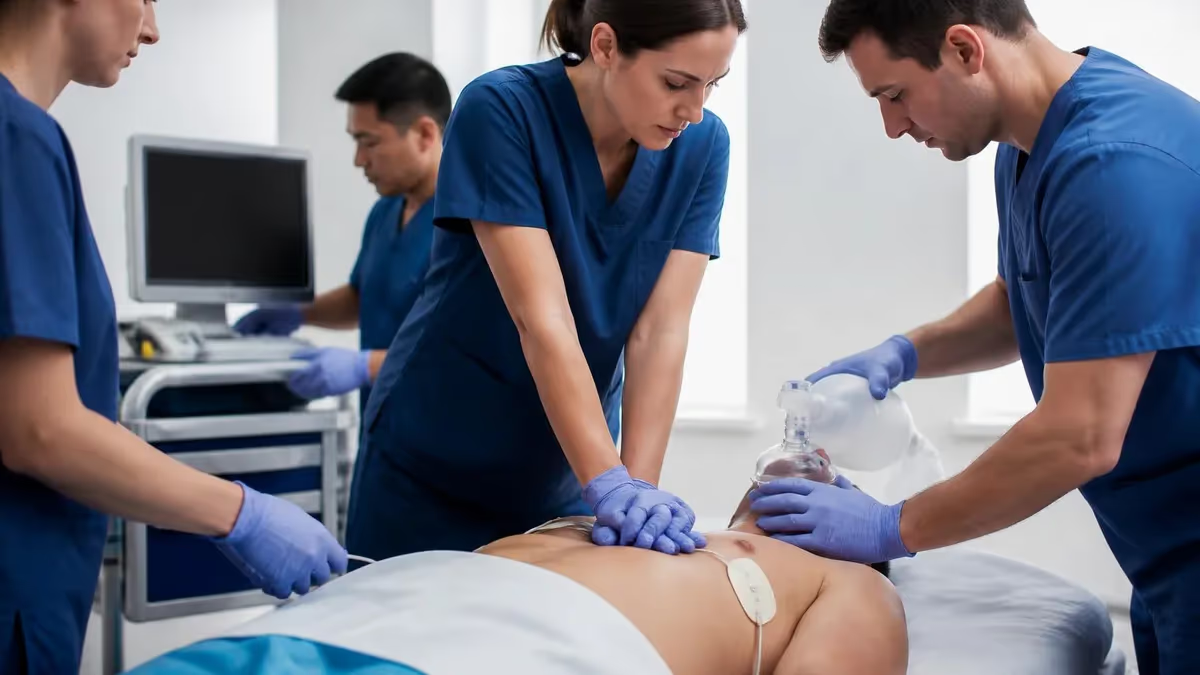
Searching for an ACLS course near me has become one of the most common queries among nurses, paramedics, physicians, respiratory therapists, and pharmacy professionals who must maintain advanced cardiovascular life support certification every two years. Whether you are testing for the first time or renewing before a hospital credentialing deadline, finding a local class that fits your schedule, budget, and learning style is the first step toward walking out with a current American Heart Association provider card in hand. This guide breaks down exactly how to locate, vet, and book the right class in 2026.
Most U.S. metropolitan areas have between 10 and 50 ACLS training sites within a 25-mile radius, ranging from dedicated training centers and community colleges to fire departments, hospitals, and independent instructors who teach out of conference rooms. The challenge is not finding any class — it is finding the right class. Class quality, pass rates, instructor experience, equipment availability, and the difference between an initial and a renewal course can vary dramatically from one site to the next, even within the same city or zip code.
The standard initial ACLS provider course runs roughly 12 to 16 hours over one or two days, while a renewal course can often be completed in 5 to 8 hours. Costs typically range from $175 to $325 depending on your region, the training format, and whether materials are included. Hospital employees frequently receive subsidized or free training through their employer, while traveling clinicians, students, and per diem staff usually pay out of pocket and need to weigh price against scheduling flexibility.
In 2026, learners have three primary delivery models to choose from when looking for an ACLS course near me: traditional in-person classroom courses, blended HeartCode learning that pairs online cognitive work with an in-person skills check, and fully virtual instructor-led courses combined with a local skills test. Each format leads to the same AHA provider card, but each has different time commitments, costs, and learning experiences, which we will compare in detail later in this article.
Beyond logistics, the right course should give you confidence in the megacode station. ACLS is not a memorization test; it is a team-leadership simulation that requires you to integrate ECG interpretation, pharmacology, airway management, and high-quality CPR under timed pressure. Picking a course with experienced instructors and realistic simulation equipment is just as important as picking one that is convenient — and that is what separates a good local class from a great one.
This article walks through how to search for verified AHA training sites, what costs and class lengths to expect in 2026, the pros and cons of each format, how to prepare in the two weeks before class, what to bring on test day, and the most common reasons candidates fail their first attempt. By the end, you will have a clear plan for booking the best local course and showing up ready to pass. Pair this guide with our ACLS Training Near Me article for additional regional cost data.
ACLS Courses by the Numbers in 2026
Key Facts at a Glance
| Item | Value | Details |
|---|---|---|
| Typical Course Cost | $175–$325 | Initial provider course, U.S. average |
| Initial Course Length | 12–16 hrs | One or two-day formats |
| Renewal Course Length | 5–8 hrs | For currently certified providers |
| Certification Validity | 2 years | AHA provider card expiration |
How to Find a Verified ACLS Course Near You
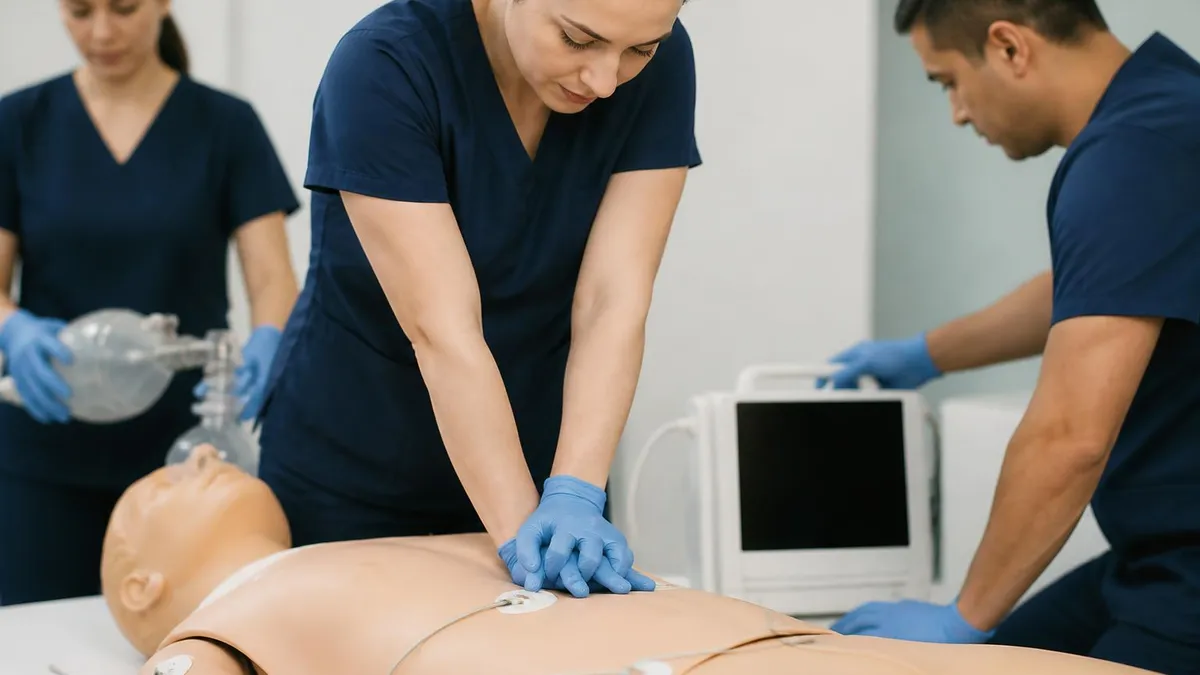
The official American Heart Association Class Connector at atlas.heart.org lets you search by zip code, radius, and course type. Every listed site is an authorized AHA Training Center, ensuring your card will be recognized by hospitals.
Most large hospitals run in-house ACLS courses for staff and often allow community clinicians to enroll on a space-available basis. Contact the education or simulation center directly for monthly schedules and discounted rates.
Local community colleges, paramedic programs, and fire academies frequently host weekend ACLS classes that are open to the public. These tend to be highly structured, instructor-rich, and competitively priced compared to private training centers.
Independent CPR and ACLS training companies offer the most schedule flexibility, including evening, weekend, and same-week classes. Verify the company is an AHA-aligned training site before booking to ensure card validity.
Many health systems negotiate group ACLS contracts and host quarterly on-site courses. Ask your manager, clinical educator, or staff development office whether your facility schedules ACLS rotations you can join at no cost.
Once you have shortlisted two or three local ACLS courses, the next step is comparing what you actually get for the price. In 2026, the typical out-of-pocket cost for an initial ACLS provider course in the United States ranges from $175 in low-cost markets like the Midwest and rural South to as much as $325 in coastal metros such as San Francisco, Boston, New York, and Seattle. Renewal courses generally run $25 to $75 less because they are shorter and skip some of the introductory cognitive content. Always confirm whether the price includes the AHA provider manual and eCard fee.
The provider manual is one of the most overlooked line items in the budget. A new printed AHA ACLS provider manual costs around $50, and most training centers expect you to bring your own copy to class. Some training sites bundle a digital version into the registration fee, while others charge separately. If the manual is not included, factor that into your total. Buying a used edition is fine as long as it reflects the current 2025–2030 AHA guidelines, which incorporate the latest CPR quality and post-arrest care recommendations.
Scheduling is the other major decision point. Initial ACLS courses are usually delivered as a single 14- to 16-hour class crammed into one long Saturday, or split across two consecutive days totaling about 12 hours of instruction. Two-day formats are easier on the brain but harder on calendars. Single-day intensives are popular with traveling clinicians and per diem nurses who cannot afford two days off the unit. Compare schedules carefully — driving 45 minutes each way for two days may not be worth the discount.
Fast-track and same-week classes are increasingly common in major cities. If your certification has lapsed and you need a card before your next shift, many private training centers advertise courses three or four times per week and walk-in renewals for currently certified providers. These convenience options typically carry a small premium of $25 to $50, but they can be lifesavers when a credentialing deadline is closing in. Always ask whether the eCard is issued same-day or within 24 to 72 hours.
Group discounts are another way to lower the total cost. Most training centers offer 10 to 25 percent off when four or more colleagues register together. If you work in a small clinic, urgent care, dialysis center, or surgery center where multiple staff members need certification at once, ask your manager to coordinate a group booking. Some training centers will even send an instructor to your facility for an on-site class, which eliminates travel time entirely and lets you train on familiar equipment.
Cancellation and reschedule policies vary widely. Some training sites refund 100 percent up to 48 hours before class, while others keep a non-refundable deposit and only allow one reschedule. Read the fine print before paying. Also confirm the failure policy: many sites offer one free remediation attempt within 30 days, while others charge a full retest fee. Knowing this in advance removes financial pressure and lets you focus on the material instead of the consequences of a bad test day.
Finally, evaluate the instructor-to-student ratio. AHA standards cap megacode practice at six students per instructor, but the best courses keep the ratio closer to three or four to one. Smaller classes mean more reps as team leader, more individualized feedback, and dramatically better odds of passing on the first attempt. For more on selecting accredited classes, see our ACLS renewal near me guide.
ACLS Practice Test Questions
Prepare for the ACLS Advanced Cardiovascular Life Support Practice exam with our free practice test modules. Each quiz covers key topics to help you pass on your first try.
ACLS Cardiac Rhythms & ECG Interpretation
ACLS Exam Questions covering ACLS Cardiac Rhythms & ECG Interpretation. Master ACLS Test concepts for certification prep.
ACLS Pharmacology & Medications
Free ACLS Practice Test featuring ACLS Pharmacology & Medications. Improve your ACLS Exam score with mock test prep.
ACLS Best Practices & Methodologies
ACLS Mock Exam on Best Practices & Methodologies. ACLS Study Guide questions to pass on your first try.
ACLS Communication & Stakeholder Relations
ACLS Test Prep for Communication & Stakeholder Relations. Practice ACLS Quiz questions and boost your score.
ACLS Core Concepts & Fundamentals
ACLS Questions and Answers on Core Concepts & Fundamentals. Free ACLS practice for exam readiness.
ACLS Data Analysis & Reporting
ACLS Mock Test covering Data Analysis & Reporting. Online ACLS Test practice with instant feedback.
ACLS Documentation & Record Keeping
Free ACLS Quiz on Documentation & Record Keeping. ACLS Exam prep questions with detailed explanations.
ACLS Industry Regulations & Compliance
ACLS Practice Questions for Industry Regulations & Compliance. Build confidence for your ACLS certification exam.
ACLS Leadership & Team Management
ACLS Test Online for Leadership & Team Management. Free practice with instant results and feedback.
ACLS Professional Standards & Ethics
ACLS Study Material on Professional Standards & Ethics. Prepare effectively with real exam-style questions.
ACLS Quality Assurance & Improvement
Free ACLS Test covering Quality Assurance & Improvement. Practice and track your ACLS exam readiness.
ACLS Risk Management & Assessment
ACLS Exam Questions covering Risk Management & Assessment. Master ACLS Test concepts for certification prep.
Comparing In-Person, Blended & Virtual ACLS Course Formats
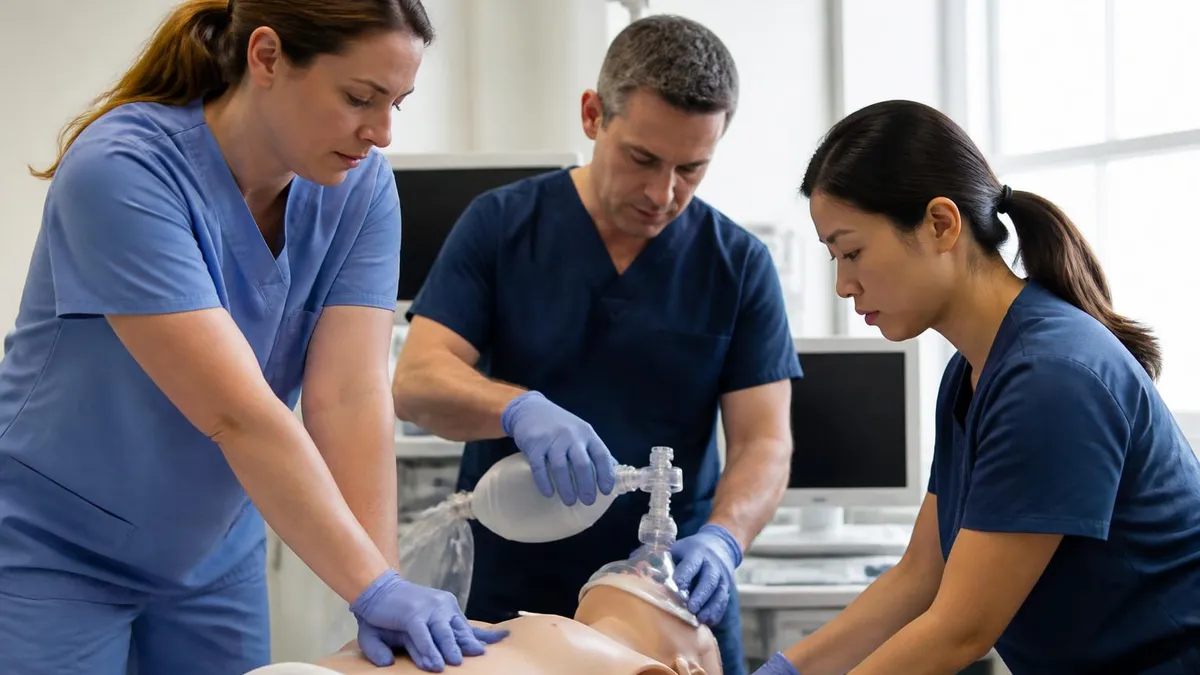
The traditional in-person ACLS course remains the gold standard for first-time candidates. You spend a full day or two days in a classroom with a live instructor, watch DVD-style lecture segments, and rotate through practice stations covering airway management, IV access, rhythm recognition, and megacode simulation. Most centers run classes of 6 to 12 students with one or two instructors and full manikin setups.
The biggest advantage is hands-on time with high-fidelity manikins, defibrillators, and bag-valve masks. You also benefit from real-time feedback during simulated codes, which is invaluable for learning team communication, closed-loop orders, and the choreography of a resuscitation. The trade-off is the time commitment: blocking out 12 to 16 hours of weekend or weekday classroom time can be tough for working professionals with childcare and shift schedules.
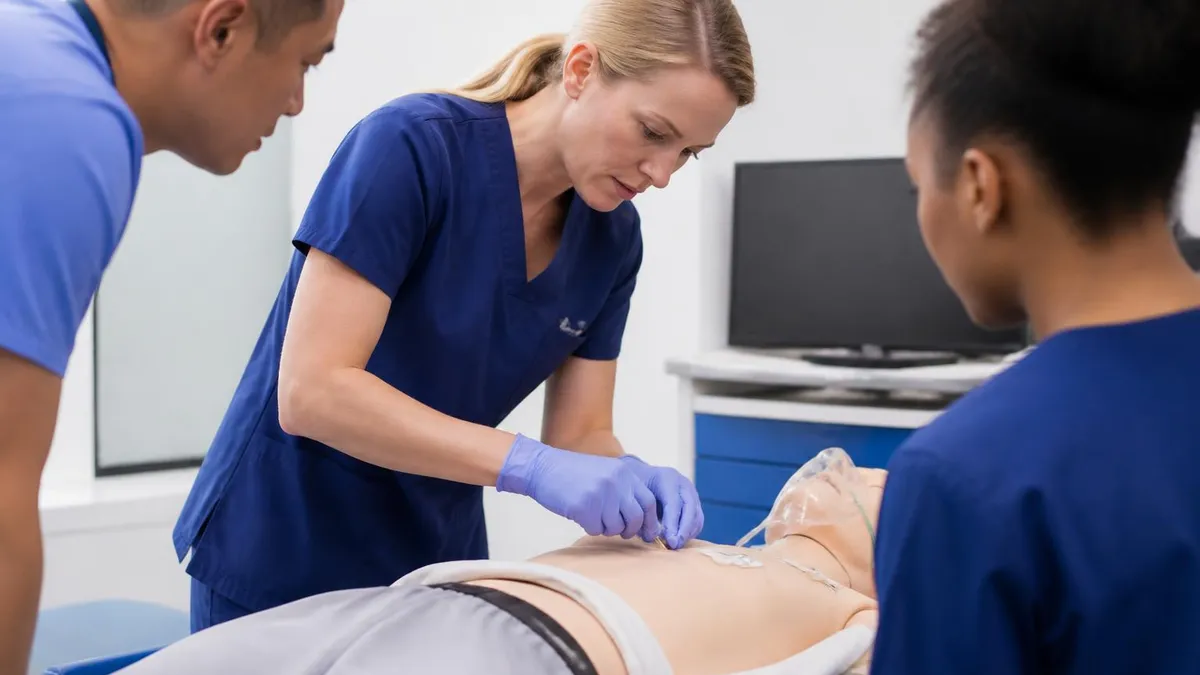
Is Taking a Local ACLS Course Worth It?
- +Hands-on simulation builds true team-leader confidence under pressure
- +Local classes eliminate travel and let you train on equipment similar to your hospital
- +Same-day AHA eCards keep hospital credentialing on schedule
- +Group discounts of 10-25% are available when colleagues enroll together
- +In-person feedback corrects bad CPR habits faster than any online module
- +Networking with local instructors opens doors to instructor courses and per-diem teaching
- +Smaller class sizes near you often produce higher first-time pass rates
- −Initial classes require 12-16 hours of dedicated weekend or weekday time
- −Costs of $175-$325 can be steep for students or unemployed clinicians
- −Class availability is limited in rural areas, sometimes requiring long drives
- −Cancellation and reschedule fees can be steep at private training centers
- −Some sites use outdated equipment that doesn't match modern hospital monitors
- −Quality varies widely between instructors at different local training sites
Pre-Class Preparation Checklist for Your ACLS Course
- ✓Download and read the AHA ACLS provider manual cover to cover at least one week before class
- ✓Memorize the adult cardiac arrest, bradycardia, and tachycardia algorithms with all doses
- ✓Review the 10 core rhythms: NSR, sinus brady/tach, AFib, AFlutter, SVT, VT, VF, asystole, PEA
- ✓Practice rhythm recognition using free online ECG quizzes for at least 30 minutes daily
- ✓Memorize drug doses for epinephrine, amiodarone, lidocaine, adenosine, atropine, and dopamine
- ✓Complete the official AHA pre-course self-assessment with a passing score of 70% or higher
- ✓Watch the AHA pre-course video on high-quality CPR and team dynamics
- ✓Practice 30:2 CPR compressions on a pillow to build muscle memory for compression depth and rate
- ✓Verify your class confirmation email, location, parking, start time, and required materials
- ✓Pack stethoscope, pen, snack, water bottle, and printed manual the night before class
The single best predictor of passing on the first attempt is finishing the pre-course self-assessment
Instructors consistently report that candidates who complete the official AHA pre-course self-assessment with at least 80% pass the megacode on the first try roughly 90% of the time. Candidates who skip it pass on the first try only about 60% of the time. Block out two evenings the week before class — your future self will thank you.
Walking into your local ACLS course prepared dramatically changes the experience. Most in-person classes begin promptly at 7:30 or 8:00 a.m. with sign-in, manual verification, and a short pre-test that does not count toward certification but helps the instructor gauge the room. Arrive 20 minutes early to find parking, settle in, and meet your classmates — your megacode partners are usually drawn from the people sitting near you, so building rapport early pays off later in the day.
The first morning block typically covers high-quality CPR review, BLS skills verification, and an overview of the systematic approach using the BLS, primary, and secondary survey framework. Even seasoned ICU nurses must pass the BLS skills check before moving on, which means perfect compression depth of 2 to 2.4 inches, a rate of 100 to 120 per minute, full chest recoil, and minimal interruptions. Failing this station means no advancement until you remediate, so do not treat it as a warm-up.
Mid-morning shifts into rhythm recognition, with the instructor walking through 10 to 15 ECG strips that you must identify within seconds. The most commonly missed rhythms in class are second-degree AV block type II, slow atrial fibrillation, polymorphic VT, and PEA versus asystole differentiation. Bring colored highlighters to mark P waves, QRS complexes, and intervals as you practice — the visual reinforcement helps even experienced cardiology nurses tighten up speed and accuracy under pressure.
Lunch is short, usually 30 to 45 minutes, and many sites do not have onsite cafeterias. Pack a sandwich and snacks to avoid wasting energy hunting for food. The afternoon is where most learning happens: megacode practice stations rotate small groups through cardiac arrest, bradycardia, tachycardia, acute coronary syndromes, and stroke scenarios. Each student takes a turn as team leader, and instructors stop the scenario whenever a critical action is missed to debrief and reset.
Most candidates feel mentally exhausted by 3:00 p.m., which is exactly when the testing megacode begins. The test is a 10- to 12-minute scenario where you serve as team leader, manage one or two rhythm changes, deliver appropriate shocks and medications, and run a structured post-arrest plan. Instructors look for closed-loop communication, correct algorithm sequence, accurate drug doses, and timely defibrillation — not perfection, but competence and clear leadership.
The written test usually follows the megacode and consists of 50 multiple-choice questions. A passing score is 84%, which means you can miss only 8. Questions focus on algorithm steps, drug doses, rhythm recognition, and post-arrest care. Most candidates complete the test in 30 to 45 minutes. Bring a watch if your phone is restricted, manage your time, and flag uncertain questions to revisit at the end rather than getting stuck on a single item.
Once both stations are passed, your instructor issues a course completion document on the spot, and your official AHA eCard arrives by email within 24 to 72 hours. Print one copy for your records and upload another to your hospital credentialing system the same week. For deeper drill on individual algorithms, our ACLS study guide covers each one in clinical depth.
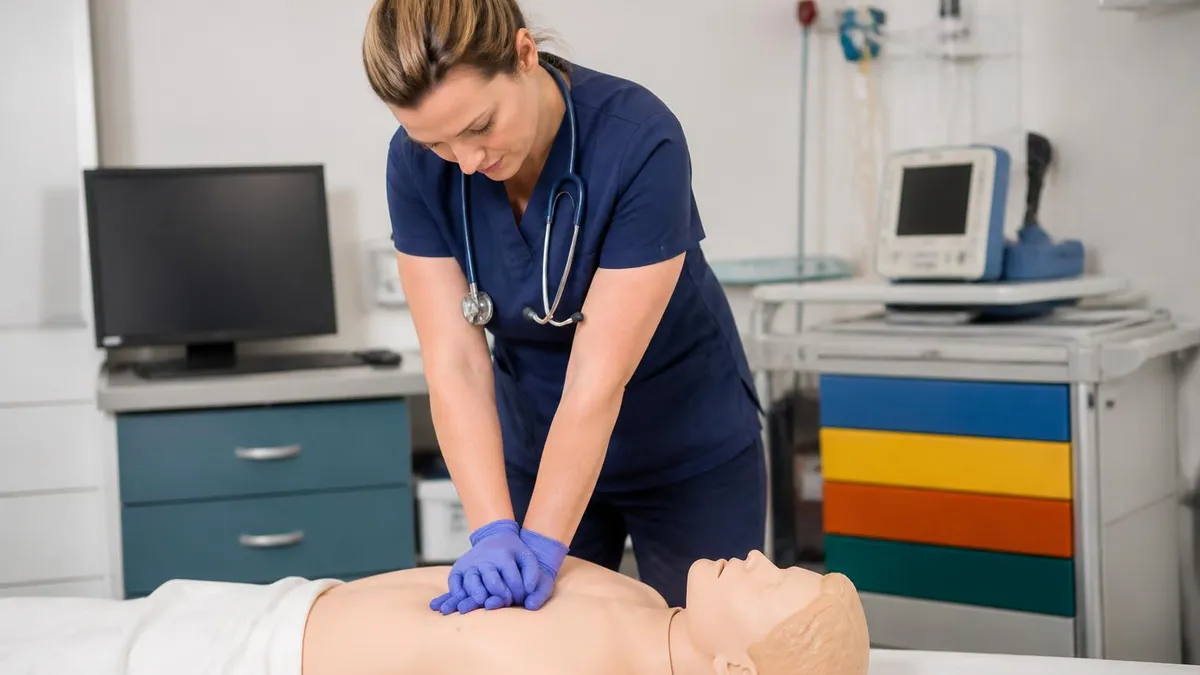
Most hospitals automatically pull clinicians off the schedule the moment their ACLS card expires, even if a renewal class is booked for the following week. Lapsed certifications also require the full initial course rather than the shorter renewal class, costing more time and money. Book your renewal at least 60 days before expiration.
The megacode is where most ACLS course candidates feel the greatest anxiety, but it is also the most learnable part of the entire program. Instructors are not looking for a flawless performance — they are looking for safe, organized leadership that follows the algorithm and communicates clearly. Approach the megacode like a structured conversation: state what you see, what you think, and what you want done next. That single habit will keep you on track through any rhythm change the instructor throws at you.
Start every megacode with the same opening phrase: "My name is ___, I am the team leader. I need a compressor, an airway person, a medication nurse, a recorder, and a defibrillator operator." Assigning roles in the first 10 seconds signals to your instructor that you understand team dynamics, which is one of the scored behaviors. It also slows down the scene, gives you a moment to think, and reduces the chance of panic when a wave-form changes on the monitor.
Always check the patient before reading the rhythm. Pulse, breathing, and responsiveness drive every algorithm decision more than the squiggles on the screen. A patient in apparent VT who has a pulse is treated very differently from one who does not. Verbalize each check out loud — "checking pulse, no pulse, starting compressions" — so the instructor can follow your thought process and award credit for correct decision-making even if your final action needs adjustment.
Memorize the four reversible causes mnemonic — H's and T's — and bring them up early in any cardiac arrest scenario. Hypovolemia, hypoxia, hydrogen ion (acidosis), hypo/hyperkalemia, hypothermia, tension pneumothorax, tamponade, toxins, thrombosis pulmonary, and thrombosis coronary. Asking your team to consider reversible causes during the second cycle of CPR demonstrates the higher-order thinking instructors want to see in a team leader and often unlocks the scenario's correct answer.
Drug doses must be exact. Epinephrine 1 mg IV/IO every 3 to 5 minutes for cardiac arrest. Amiodarone 300 mg first dose, 150 mg second dose, for refractory VF/pVT. Adenosine 6 mg rapid push, then 12 mg if needed, for stable narrow-complex SVT. Atropine 1 mg every 3 to 5 minutes up to 3 mg for symptomatic bradycardia. Practice saying these doses out loud at home until they are automatic; hesitation in the megacode wastes precious algorithm time.
For the written test, focus your final review on the algorithms first, drugs second, rhythms third, and post-arrest care fourth. Approximately 70% of test questions map directly to the cardiac arrest, bradycardia, and tachycardia algorithms or the medications used within them. Knowing the H's and T's, targeted temperature management range of 32 to 36 degrees Celsius, and the role of capnography in CPR quality monitoring will cover most of the remaining questions.
If you do not pass the first time, do not panic. Most training sites allow one free remediation attempt within 30 days, and many candidates pass easily on the second try after a focused review. Ask your instructor exactly which station you failed and what to study before remediation. For full algorithm and drug review, consult our ACLS guidelines reference article.
The two weeks before your local ACLS course are when smart preparation translates into a stress-free test day. Start by setting a realistic study schedule of 60 to 90 minutes per evening, broken into focused 25-minute blocks. Spend the first week on rhythm recognition and the systematic approach, and the second week on drug doses, algorithms, and post-arrest care. Cramming the night before is the single biggest predictor of failure in the megacode, so avoid that trap by spreading your study time evenly across the two-week window.
Use active recall, not passive rereading. Flashcards — physical or digital — work better than highlighting paragraphs in the manual. Make one flashcard for every drug dose, one for every algorithm step, and one for every rhythm. Review them in random order for 10 minutes each morning and evening. Apps like Anki or Quizlet have premium ACLS decks already built, but making your own deck forces you to engage with the material in a way pre-made cards do not.
Watch real-time megacode videos on YouTube to internalize the choreography of a code. Search for "ACLS megacode walkthrough" and watch at least five different scenarios end to end. Pay attention to how the team leader phrases orders, when they check pulses, when they request rhythm checks, and how they keep CPR interruptions under 10 seconds. Watching is not the same as doing, but it builds the mental model you will need during your own simulation.
The night before class, lay out everything you need: provider manual, photo ID, pen, watch (with a second hand for CPR rate counting), water bottle, snacks, comfortable clothing layered for variable room temperatures, and a stethoscope if your site uses high-fidelity manikins. Get to bed by 10 p.m. — fatigue is the enemy of pattern recognition, and you need a clear head for both the megacode and the written test. Resist the urge to do last-minute review past 9 p.m.
On test day, eat a real breakfast. Protein and complex carbs sustain mental energy far longer than sugary cereals or pastries. Caffeine is fine in moderation, but heavy coffee can leave you jittery during fine-motor tasks like drawing up medications. Arrive 20 to 30 minutes early to handle parking, find the classroom, use the restroom, and meet your classmates. First impressions matter — instructors notice who shows up prepared and engaged versus who stumbles in late looking unprepared.
During megacode practice rotations, volunteer to go first as team leader. Going first means you only have to perform once before you have seen what the instructor expects. Watching three other people lead before you get your turn often increases anxiety because you have more time to overthink. Plus, instructors tend to be more forgiving of the first volunteer because they have not yet seen the bar set high by stronger students. This single tactic can make a real difference.
Finally, remember why you are taking this course. Behind every algorithm, drug dose, and rhythm strip is a real person whose life may depend on your ability to lead a resuscitation. That perspective takes the pressure off the test and refocuses your preparation on competence rather than performance. Pass or fail, the skills you build during this course will translate directly into your work — and that is far more important than the card itself. For drug deep dives, see our ACLS drugs guide.
ACLS Questions and Answers
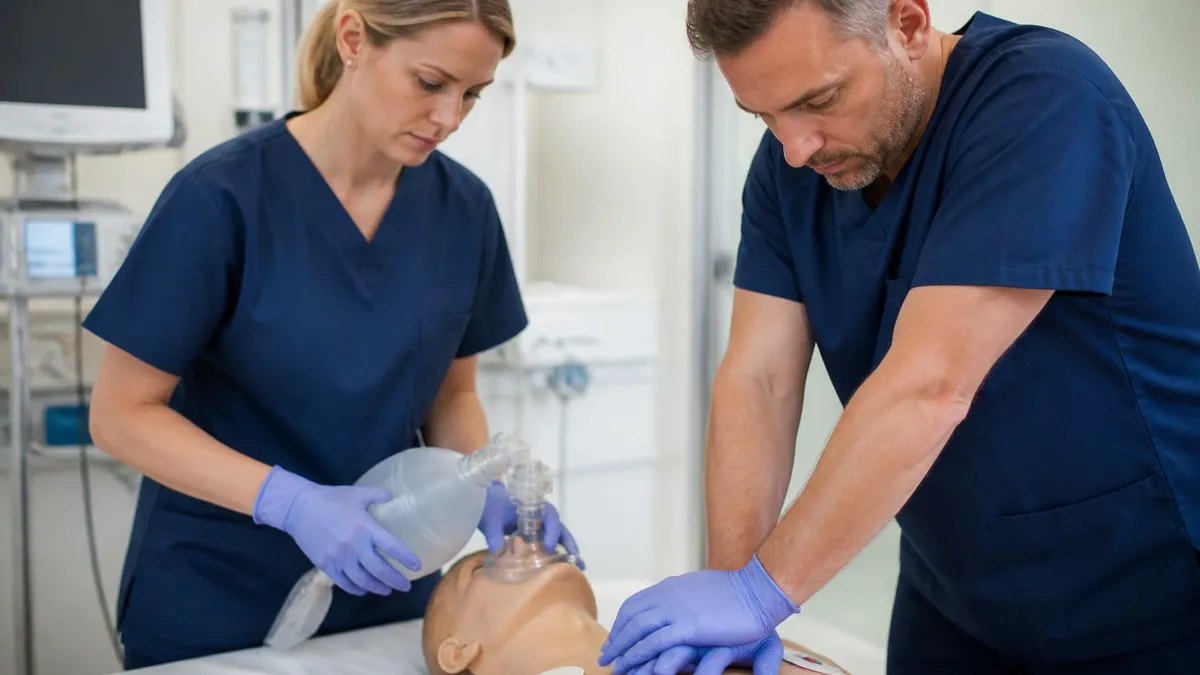
ACLS Training Near Me: How to Find Local Classes, Costs & Fast-Track Options in 2026
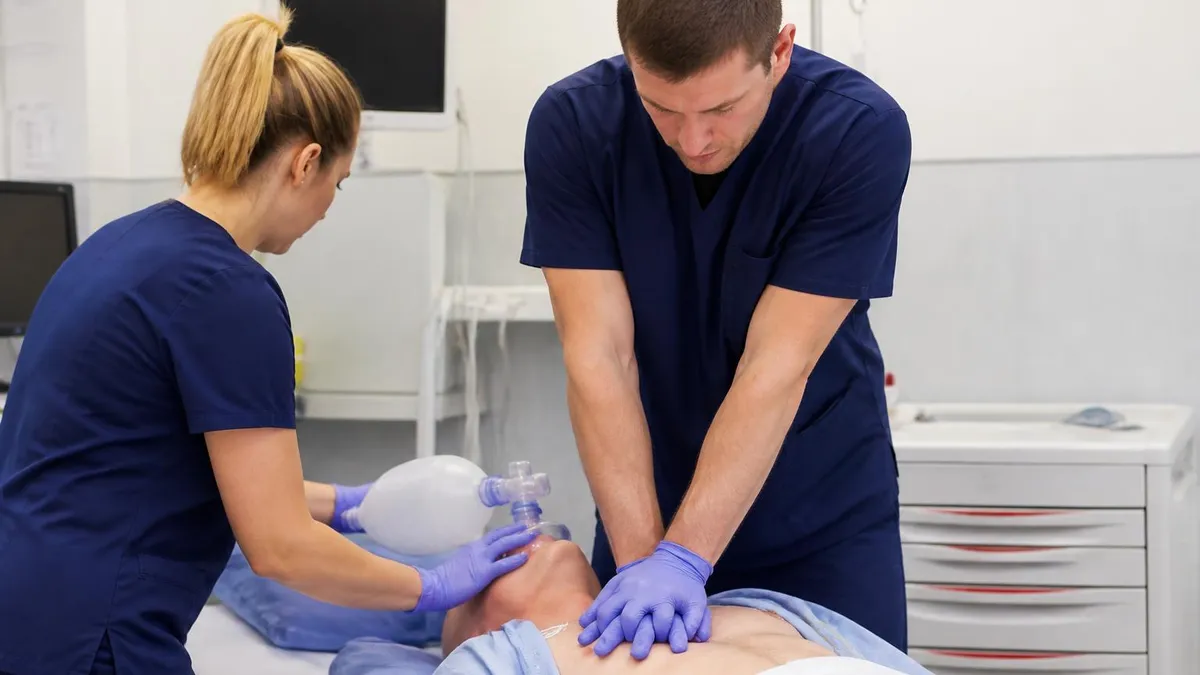
ACLS Study Guide: Complete 2026 Certification Prep with Algorithms, Drugs & Practice Tests
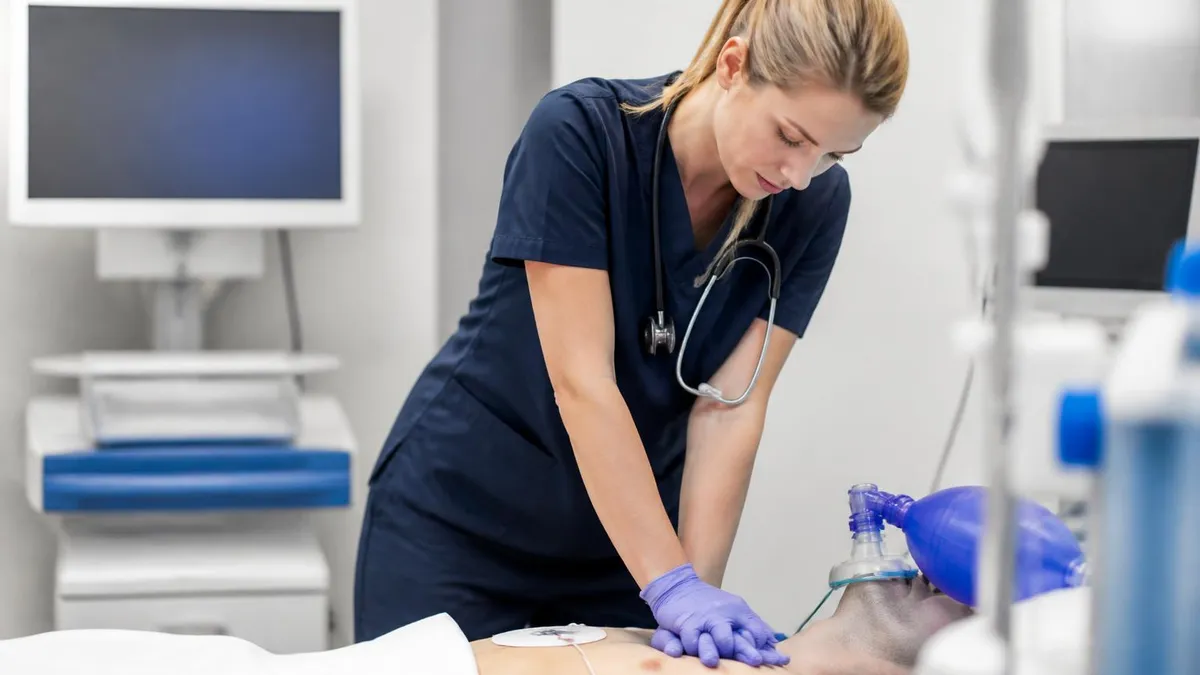
ACLS Guidelines 2026: Complete AHA Update on Algorithms, Drugs, CPR Quality & Post-Arrest Care
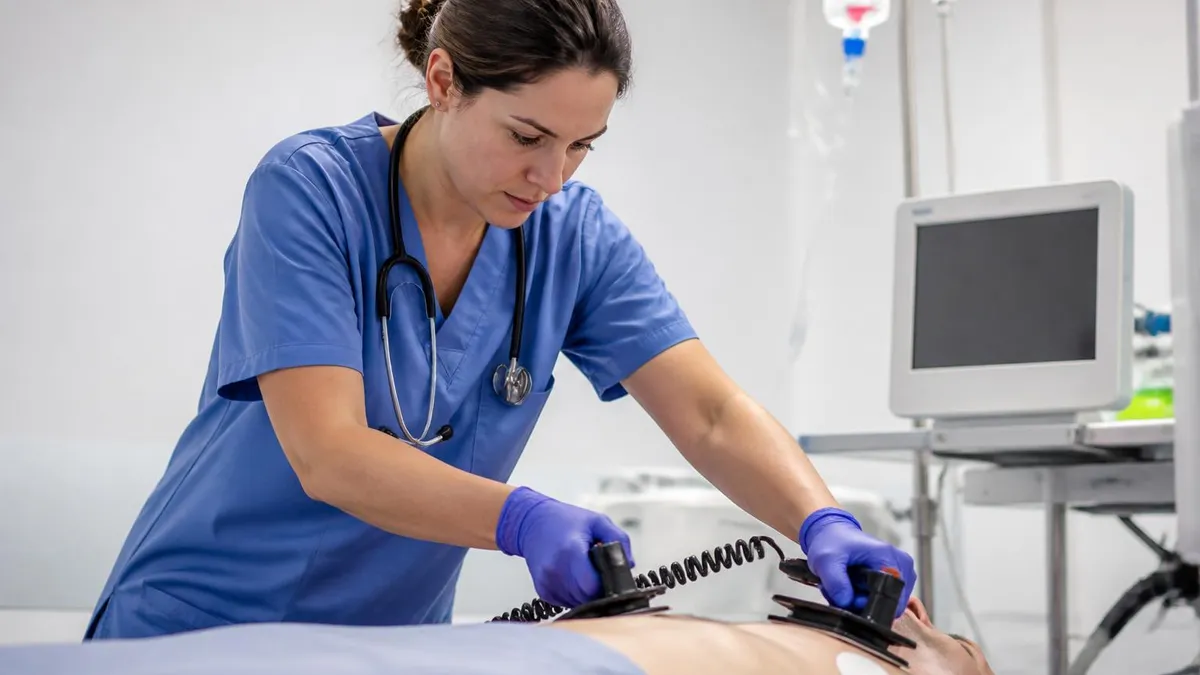
ACLS Drugs: Complete 2026 Guide to Medications, Doses, Indications & Algorithm Use
ACLS Renewal Near Me: Find Local Recertification Classes, Costs & Online Options in 2026
About the Author

Registered Nurse & Healthcare Educator
Johns Hopkins University School of NursingDr. Sarah Mitchell is a board-certified registered nurse with over 15 years of clinical and academic experience. She completed her PhD in Nursing Science at Johns Hopkins University and has taught NCLEX preparation and clinical skills courses for nursing students across the United States. Her research focuses on evidence-based exam preparation strategies for healthcare certification candidates.