

ServSafe Practice Test
Updated October 2026Facts verified Oct 20, 2026 against National Restaurant Association
ServSafe Practice Test — Manager & Food Handler Questions
The ServSafe Manager exam is accredited by the American National Standards Institute (ANSI) and the Conference for Food Protection (CFP). Earning this ServSafe certification certificate validates your knowledge of food safety practices and is required by many health departments for at least one person in charge per shift. Try our ServSafe Food Handler practice test for targeted prep. Practice with the free ServSafe practice test on PracticeTestGeeks (1,350+ questions with answer explanations).
- The ServSafe Food Handler assessment has 40 questions and is not proctored. (National Restaurant Association)
- The ServSafe Manager exam has 90 questions, of which 80 are scored and 10 are unscored pilot questions. (National Restaurant Association)
- The ServSafe Food Handler assessment has no time limit; the page estimates most people finish within 90 minutes. (National Restaurant Association)
- The online-proctored ServSafe Manager exam allows 2 hours. (National Restaurant Association)
- The ServSafe Food Handler assessment requires a score of at least 75%, though some jurisdictions may set a different required score. (National Restaurant Association)
- ServSafe Food Handler allows 3 attempts to pass the assessment, and a new course must be purchased after the third failed attempt. (National Restaurant Association)
- The ServSafe Manager exam may be taken twice within 30 days, requires a 60-day wait after three or more attempts, and allows at most four attempts in 12 months. (National Restaurant Association)
- The ServSafe Food Handler certificate is valid for three years. (National Restaurant Association)
- ServSafe Food Handler can often be taken online without a proctor, though some states require a proctor's presence. (National Restaurant Association)
Facts verified Oct 20, 2026 against National Restaurant Association. Dates that have passed are removed automatically.
ServSafe Exam at a Glance
| Item | Detail | Official source |
|---|---|---|
| Number of questions (Food Handler) | 40 questions | National Restaurant Association |
| Number of questions (Manager exam) | 90 questions (80 scored) | National Restaurant Association |
| Time limit (Food Handler) | No time limit (about 90 minutes on average) | National Restaurant Association |
| Time limit (Manager exam) | 2 hours | National Restaurant Association |
| Passing score (Food Handler) | 75% | National Restaurant Association |
| Retake policy (Food Handler) | 3 attempts | National Restaurant Association |
| Retake policy (Manager exam) | 2 attempts in 30 days; 60-day wait after 3+ attempts; max 4 in 12 months | National Restaurant Association |
| Validity (Food Handler) | 3 years | National Restaurant Association |
| Delivery (Food Handler) | Online, non-proctored (some states require a proctor) | National Restaurant Association |
| Delivery (Manager exam) | Online or classroom, with a physically present proctor for classroom exams | National Restaurant Association |
| Eligibility (Manager exam) | No prerequisite listed; check state and local requirements | National Restaurant Association |
| Registration deadline (Manager exam (online proctor)) | Schedule more than 72 h ahead for no extra fee; $8 for 24–72 h; $12 for under 24 h | National Restaurant Association |
| Testing window (Food Handler) | Start within 12 months; course expires 60 days after start | National Restaurant Association |
Facts verified Oct 20, 2026 against National Restaurant Association. Dates that have passed are removed automatically.
ServSafe Practice Test Questions
Prepare for the ServSafe - ServSafe Food Safety exam with our free practice test modules. Each quiz covers key topics to help you pass on your first try.
ServSafe Allergens Practice Test
ServSafe Exam Questions covering Allergens Practice Test. Master ServSafe Test concepts for certification prep.
ServSafe - Alcohol Test
ServSafe Test Prep for - Alcohol Test. Practice ServSafe Quiz questions and boost your score.
ServSafe Alcohol Test - Primary and Advanc...
ServSafe Questions and Answers on Alcohol Test - Primary and Advanced (2). Free ServSafe practice for exam readiness.
ServSafe - Allergens Test
ServSafe Practice Questions for - Allergens Test. Build confidence for your ServSafe certification exam.
ServSafe Facilities, Cleaning & Sanitizing...
ServSafe Study Material on Facilities, Cleaning & Sanitizing, and Pest Management Test. Prepare effectively with real exam-style questions.
ServSafe HACCP - Hazard Analysis Critical ...
ServSafe Mock Exam on HACCP - Hazard Analysis Critical Control Points. ServSafe Study Guide questions to pass on your first try.
ServSafe Manager Practice Exam
ServSafe Test Prep for Manager Practice Exam. Practice ServSafe Quiz questions and boost your score.
ServSafe Personal Hygiene Test
ServSafe Mock Test covering Personal Hygiene Test. Online ServSafe Test practice with instant feedback.
ServSafe Preparation, Cooking and Serving
ServSafe Exam Questions covering Preparation, Cooking and Serving. Master ServSafe Test concepts for certification prep.
ServSafe Preparation, Cooking and Serving ...
Free ServSafe Practice Test featuring Preparation, Cooking and Serving Test. Improve your ServSafe Exam score with mock test prep.
ServSafe Purchasing, Receiving and Storage...
ServSafe Test Prep for Purchasing, Receiving and Storage Test. Practice ServSafe Quiz questions and boost your score.
ServSafe Purchasing, Receiving and Storage...
ServSafe Questions and Answers on Purchasing, Receiving and Storage Test (2). Free ServSafe practice for exam readiness.
Free ServSafe Study Tools
Interactive ServSafe resources on PracticeTestGeeks, free to start:
- ServSafe - Alcohol Test 1 — 49 questions with instant scoring and answer explanations
- ServSafe flashcards — review key terms and concepts card by card
- ServSafe study guide — topic-by-topic overview of what the exam covers
- ServSafe cheat sheet — one-page printable summary for last-minute review
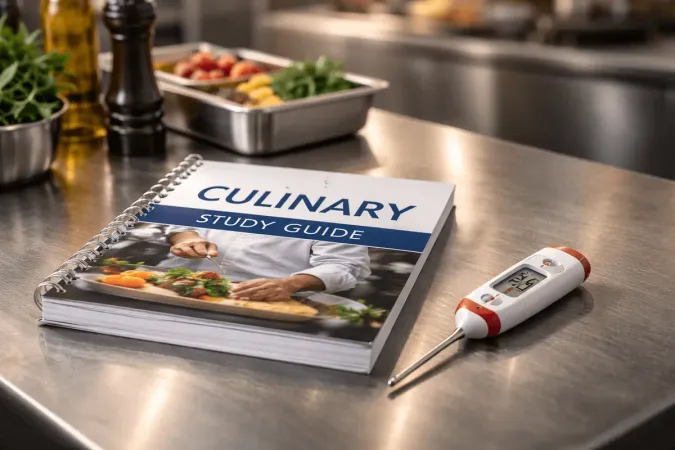
ServSafe Exam Flashcards
Quick review for ServSafe Manager and Food Handler concepts
🌡️What is the Temperature Danger Zone?
The Temperature Danger Zone is between 41°F and 135°F (5°C and 57°C), where bacteria grow most rapidly.
START SERVSAFE PRACTICE TEST🍗Minimum internal temp for poultry?
Poultry must be cooked to a minimum internal temperature of 165°F (74°C) for at least 1 second.
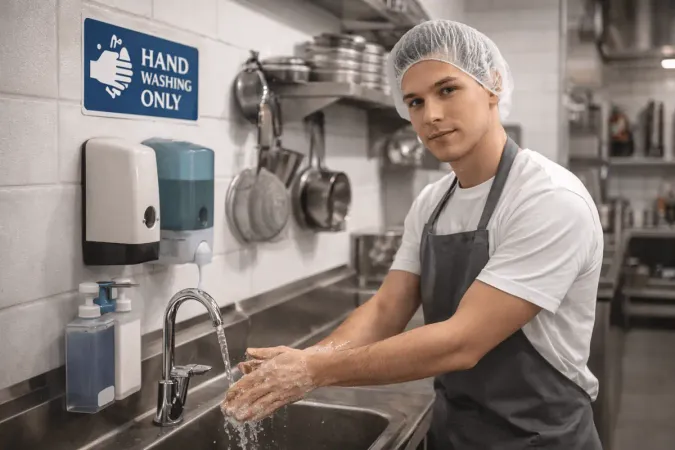
GET SERVSAFE EXAM PREP🧴When must hands be washed?
Wash hands after using the restroom, handling raw meat, touching face/hair, sneezing, eating, or changing tasks.
REVIEW SERVSAFE QUESTIONS🥜What are the Big 8 Allergens?
Milk, eggs, fish, crustacean shellfish, tree nuts, peanuts, wheat, and soybeans (Sesame is now the 9th).
TRY SERVSAFE MOCK EXAM📦What is FIFO?
First-In, First-Out is a method of stock rotation where older items are used before newer ones to prevent spoilage.
ACCESS SERVSAFE STUDY GUIDE🦠Three types of contaminants?
The three types of food hazards are Biological (bacteria, viruses), Chemical (cleaners, sanitizers), and Physical (bones, glass).
PRACTICE SERVSAFE TEST NOWServSafe Exam Study Guide
Our comprehensive ServSafe study guide breaks down the essential knowledge areas for the ServSafe Manager and Food Handler exams. Review these key topics to ensure you're prepared for the ServSafe certification test.
ServSafe Score Calculator
Total Scored Questions
80
56 out of 80 correct
70%
Required to Pass: ~70% (Estimated)
Many employers cover the ServSafe certification cost for their managers and staff. Always check with your employer before purchasing a course or voucher yourself. Try our ServSafe Food Handler practice test for targeted prep.
ServSafe Test Day Checklist
- ✓Valid Photo ID (Driver's License/Passport)
- ✓Exam Voucher / Access Code
- ✓No personal items (phones, bags)
- ✓Arrive 30 minutes early
- ✓Review key temps (165°F, 155°F, 145°F)
- ✓Confirmation email (if applicable)
- ✓#2 Pencils (for paper exams)
- ✓Confidence from practice tests!
Ready to Pass Your ServSafe Exam?
Join thousands of food service professionals who passed on their first try. Our free practice tests are updated for 2026.
ServSafe Renewal Requirements
Manager Validity
5 Years
Food Handler Validity
3 Years
Don't let your servsafe cert expire. Check the expiration date on your certificate and schedule your renewal exam at least 30 days in advance. Review our ServSafe practice test materials to refresh your knowledge before re-testing. Explore our certification guide. Explore our cheat sheet guide. Explore our cost guide. Explore our cross connection guide. Explore our food contamination and pests guide. Explore our food handler guide. Explore our how long does certification last guide. Explore our manager guide. Explore our manager online course guide. Explore our practice test with answers guide. Explore our promo code guide. Explore our sanitation and hygiene guide. Explore our score guide. Explore our spanish guide. Explore our temperature danger zone guide. Explore our what is servsafe guide.
For a fuller set of questions on this topic, see our servsafe practice test 90 questions resource.
- +Validates your knowledge and skills objectively
- +Increases job market competitiveness
- +Provides structured learning goals
- +Networking opportunities with other certified professionals
- −Study materials can be expensive
- −Exam anxiety can affect performance
- −Requires dedicated preparation time
- −Retake fees apply if you don't pass
Pros and Cons at a Glance
| Pros | Cons |
|---|---|
| Validates your knowledge and skills objectively | Study materials can be expensive |
| Increases job market competitiveness | Exam anxiety can affect performance |
| Provides structured learning goals | Requires dedicated preparation time |
| Networking opportunities with other certified professionals | Retake fees apply if you don't pass |
Sample ServSafe Practice Questions
Try these questions from our free ServSafe practice tests. The correct answer and an explanation follow each question.
What practice should be used to prevent seafood toxins from causing a foodborne illness?
- A. Cooking food to correct internal temperatures
- B. Handwashing throughout the day
- C. Microwaving fish to be served raw for 15 seconds
- D. Purchasing food from approved, reputable suppliers
Answer: D. Purchasing food from approved, reputable suppliers
Seafood toxins, like ciguatera or scombrotoxin, are naturally occurring and cannot be destroyed by cooking or freezing. The most effective way to prevent illness from these toxins is to purchase seafood only from approved, reputable suppliers who follow strict safety standards and harvest from safe waters. This ensures the seafood has been handled correctly from its source.
What does the acronym ALERT stand for in the ServSafe food defense framework?
- A. Assess, Limit, Evaluate, Record, Train
- B. Assure, Look, Employees, Reports, Threat
- C. Analyze, Label, Equipment, Regulate, Test
- D. Audit, Locate, Enforce, Report, Track
Answer: B. Assure, Look, Employees, Reports, Threat
ALERT stands for Assure (suppliers are safe), Look (monitor the security of products), Employees (know who is in the facility), Reports (keep records), and Threat (know what to do in an emergency). This framework is designed to protect food from deliberate contamination or tampering.
Which of the following is a primary responsibility of a seller/server under ServSafe Alcohol guidelines?
- A. Maximizing drink sales to increase tips
- B. Checking identification and preventing service to minors
- C. Offering discounts on alcoholic beverages
- D. Allowing customers to bring their own alcohol
Answer: B. Checking identification and preventing service to minors
A primary responsibility of a seller/server is to verify the age of customers and refuse service to anyone who appears to be a minor.
Under the ServSafe Alcohol program, which of the following is considered a 'power hour'?
- A. The hour before closing when alcohol is sold at a discount
- B. A promotion offering unlimited drinks for a set time period
- C. The first hour after a shift change when servers are extra alert
- D. The busiest hour of a shift
Answer: B. A promotion offering unlimited drinks for a set time period
A 'power hour' is an all-you-can-drink promotion that encourages rapid alcohol consumption and is considered a high-risk practice.
Official Resources
- ServSafe (National Restaurant Association) — the official program that administers ServSafe Manager, Food Handler, and Alcohol certification and exams.
- National Restaurant Association — the nonprofit body that owns and oversees the ServSafe food safety training and certification program.
- FDA Food Code — the U.S. Food and Drug Administration model code whose food safety standards ServSafe exam content is based on.
ServSafe Questions and Answers
How this page was made: written with AI tools and published by Nathan Beja, founder of Practice Test Geeks, who is responsible for its content. Exam facts are checked against the official sources listed below. Not reviewed by a subject-matter expert. Editorial policy
Sources & references
Exam facts on this page (fees, format, dates, passing scores) are checked against these official sources; the date is our last check. Editorial policy
- servsafe.com — Exam format, score release, fees, time limit, test delivery, passing score, retake policy · verified Oct 2026