
Phlebotomy Interview Questions: Complete Guide to Landing Your First Phlebotomist Job in 2026 September
📗 Master phlebotomy interview questions with sample answers, behavioral prep, technical skills review, and salary negotiation tips for new phlebotomists.
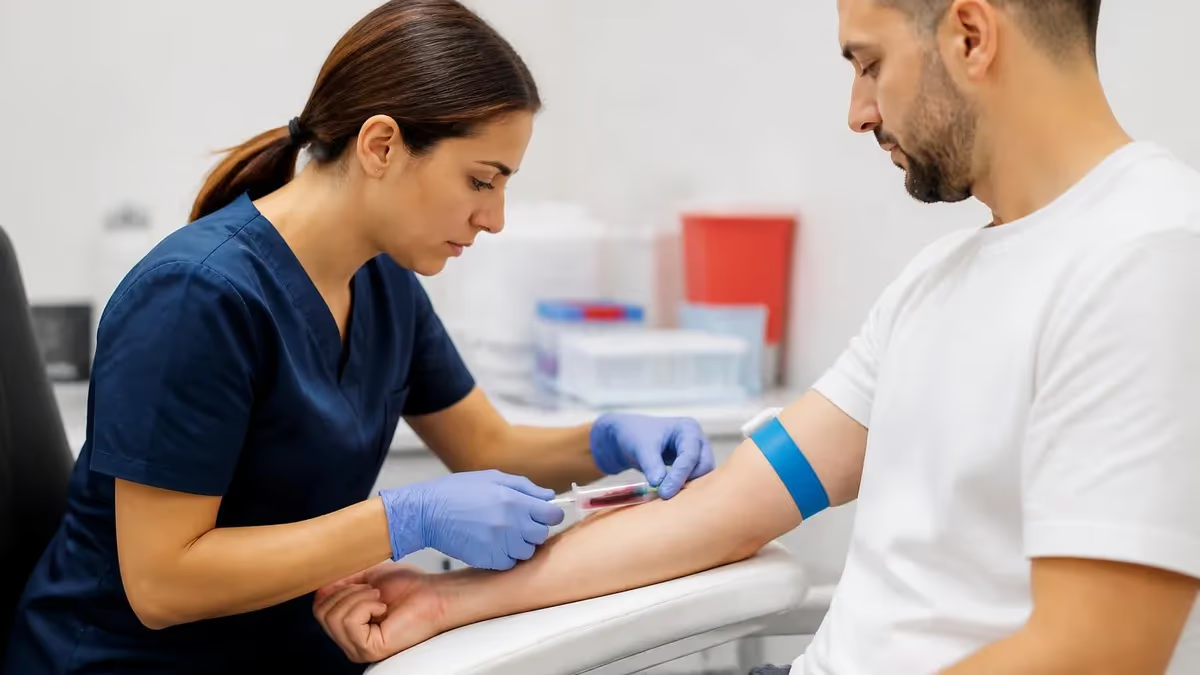
Preparing for phlebotomy interview questions is the single most important step between finishing your training and starting your first paid shift drawing blood. Whether you graduated from phlebotomy classes near me last month or you are transitioning from another healthcare role, hiring managers ask remarkably similar questions across hospitals, outpatient labs, plasma centers, and physician offices. Knowing what they will ask, why they ask it, and how to answer with confidence will dramatically increase your chances of landing the position you want at a competitive starting wage.
The phlebotomy job market in 2026 is unusually friendly to new graduates. The Bureau of Labor Statistics projects 8% growth through 2032, faster than the average for all occupations, and large hospital systems routinely post dozens of openings at any given time. That demand does not mean interviews are easy, however. Lab managers receive plenty of resumes, and they screen aggressively for soft skills, professionalism, and the ability to handle nervous or difficult patients without losing composure.
This guide walks you through the entire interview process from the initial phone screen to the in-person skills check. You will find sample answers to the thirty most common phlebotomy interview questions, scenario-based behavioral prompts, technical knowledge checks on tube colors and order of draw, and salary negotiation language that works for entry-level candidates. We also cover what to wear, what to bring, and how to follow up after the interview ends.
Before you dive in, make sure your foundational knowledge is solid. If you still need to lock down certification, our phlebotomy program near me resource maps out the certification timelines and study plans you should complete before applying. Most employers will not even schedule an interview without a current CPT, PBT, or RPT credential listed on your resume.
Behavioral questions dominate modern phlebotomy interviews. Managers want stories about how you handled a fainting patient, what you did when a coworker drew the wrong tube, and how you stayed calm when a pediatric draw went sideways. Memorizing canned answers will hurt you here. Instead, prepare three or four real experiences from clinicals that you can adapt to whatever question lands. The STAR method, Situation, Task, Action, Result, is your friend.
Technical questions still matter, especially in hospital settings where new hires float across departments. Expect to recite the order of draw from memory, explain why you invert tubes a specific number of times, and identify which additive belongs in each colored tube. A few managers will hand you a butterfly set and ask you to walk through a simulated draw on a mannequin arm. Practice this out loud the night before.
Finally, remember that interviews go both ways. You are evaluating the lab as much as they are evaluating you. Ask about daily draw volume, the ratio of pediatric to adult patients, how the night shift differential works, and whether new phlebotomists rotate through the morning hospital sweep. The answers will tell you whether the job matches the career you actually want.
Phlebotomy Hiring by the Numbers

The Phlebotomy Interview Process: Stage by Stage
Application & Resume Screen
Phone Screen (15-20 min)
In-Person or Video Interview
Skills Demonstration
Background Check & Drug Screen
Onboarding & Orientation
Behavioral phlebotomy interview questions are designed to predict how you will handle the realities of the job. Managers know that technical skills can be taught in a week, but composure, empathy, and judgment cannot. Expect at least five behavioral prompts in any in-person interview, and prepare specific stories from your clinical rotation or any prior customer-facing job. Generic answers like I am a people person will get you screened out almost immediately.
The most common behavioral question is some version of tell me about a difficult patient you encountered. A strong answer follows the STAR framework. Describe the situation in one sentence, the task you faced in one sentence, the specific actions you took in three to four sentences, and the result in one sentence. End with what you learned or how you would handle it differently. Avoid blaming the patient, the nurse, or your instructor.
Another high-frequency prompt is describe a time you made a mistake at work or in clinicals. Hiring managers actually want to hear about a real error, because it shows self-awareness. Talk about a mislabeled tube you caught before it left the room, a missed vein on a first attempt, or a documentation error you reported up the chain. Emphasize the corrective action and the system you put in place to prevent recurrence.
Questions about teamwork show up in nearly every interview. Phlebotomists work shoulder to shoulder with nurses, lab techs, couriers, and unit clerks all day long. Be ready with a story about coordinating with a nurse to time a draw around medication administration, or covering a coworker's draws when they were pulled to a stat call. Managers want to know you communicate proactively and do not create friction with other departments.
Expect direct questions about handling needlestick injuries, exposure incidents, and personal protective equipment. The right answer combines OSHA bloodborne pathogen protocol with personal accountability. State that you would wash the site with soap and water for one to two minutes, report to your supervisor immediately, complete an incident report, and follow employee health protocols including source patient testing and post-exposure prophylaxis if indicated. Never minimize these incidents.
Some managers will ask about your career goals. The trap is to sound like you are using phlebotomy as a stepping stone you cannot wait to leave. Honest answers like I plan to pursue medical laboratory science within three to five years are fine if you also explain why you value phlebotomy experience in the meantime. Strong patient interaction skills carry forward into nursing, MLT, and PA programs, and managers respect that trajectory. For a deeper look at career paths, review our complete phlebotomy career training overview.
The final behavioral category covers ethics and integrity. Be prepared to answer what you would do if you saw a coworker skip hand hygiene, forge a competency checkoff, or accept a tip from a patient. The expected answer is to address the issue directly with the coworker if appropriate, then escalate to a supervisor if behavior continues. Patient safety always overrides workplace social comfort, and managers want to hear that priority spoken aloud.
Phlebotomy Practice Test Questions
Prepare for the Phlebotomy Test exam with our free practice test modules. Each quiz covers key topics to help you pass on your first try.
Phlebotomy American Medical Certification ...
Phlebotomy Exam Questions covering American Medical Certification Association Phlebotomy. Master Phlebotomy Test concepts for certification prep.
Phlebotomy American Medical Technologists ...
Free Phlebotomy Practice Test featuring American Medical Technologists Phlebotomy. Improve your Phlebotomy Exam score with mock test prep.
Phlebotomy American Society for Clinical P...
Phlebotomy Mock Exam on American Society for Clinical Pathology Phlebotomy. Phlebotomy Study Guide questions to pass on your first try.
Phlebotomy Association of Phlebotomy Techn...
Phlebotomy Test Prep for Association of Phlebotomy Technicians. Practice Phlebotomy Quiz questions and boost your score.
Phlebotomy National Center for Competency ...
Phlebotomy Questions and Answers on National Center for Competency Testing Phlebotomy. Free Phlebotomy practice for exam readiness.
Phlebotomy National Healthcareer Associati...
Phlebotomy Mock Test covering National Healthcareer Association Phlebotomy. Online Phlebotomy Test practice with instant feedback.
Phlebotomy Order of Draw and Additives
Free Phlebotomy Quiz on Order of Draw and Additives. Phlebotomy Exam prep questions with detailed explanations.
Phlebotomy Legal and Ethics
Phlebotomy Practice Questions for Phlebotomy Legal and Ethics. Build confidence for your Phlebotomy certification exam.
Phlebotomy Safety and Infection Control
Phlebotomy Test Online for Safety and Infection Control. Free practice with instant results and feedback.
Phlebotomy Special Collection Procedures
Phlebotomy Study Material on Special Collection Procedures. Prepare effectively with real exam-style questions.
Phlebotomy Specimen Processing and Handling
Free Phlebotomy Test covering Specimen Processing and Handling. Practice and track your Phlebotomy exam readiness.
Phlebotomy Test Arterial Blood Gas Collection
Phlebotomy Exam Questions covering Test Arterial Blood Gas Collection. Master Phlebotomy Test concepts for certification prep.
Phlebotomy Test Capillary and Dermal Puncture
Free Phlebotomy Practice Test featuring Test Capillary and Dermal Puncture. Improve your Phlebotomy Exam score with mock test prep.
Phlebotomy Test Pediatric Blood Collection
Phlebotomy Mock Exam on Test Pediatric Blood Collection. Phlebotomy Study Guide questions to pass on your first try.
Phlebotomy Test Phlebotomy Anatomy and Phy...
Phlebotomy Test Prep for Test Phlebotomy Anatomy and Physiology. Practice Phlebotomy Quiz questions and boost your score.
Phlebotomy Test Phlebotomy Exam Simulation
Phlebotomy Questions and Answers on Test Phlebotomy Exam Simulation. Free Phlebotomy practice for exam readiness.
Phlebotomy Test Phlebotomy Patient Identif...
Phlebotomy Mock Test covering Test Phlebotomy Patient Identification and Communication. Online Phlebotomy Test practice with instant feedback.
Phlebotomy Test Point of Care Testing
Free Phlebotomy Quiz on Test Point of Care Testing. Phlebotomy Exam prep questions with detailed explanations.
Technical Knowledge Categories: What Phlebotomy Training Specialists Test
Expect at least one question on the CLSI order of draw. The standard sequence runs blood cultures first, then light blue citrate tubes, then red or gold serum tubes, then green heparin, then lavender EDTA, and finally gray fluoride oxalate. Memorize this cold, because incorrect order causes additive carryover and falsely altered results that can trigger repeat draws or misdiagnoses.
Managers may ask why the order matters. The right answer references additive carryover between tubes and the risk of EDTA contamination raising potassium values or lowering calcium. They may also ask about tube inversion counts, which range from zero for serum tubes without additive to eight to ten gentle inversions for anticoagulated tubes. Speak about handling tubes gently to avoid hemolysis.

Hospital vs. Outpatient Phlebotomy Jobs: Which Should You Target?
- +Hospital jobs offer the highest exposure to diverse patient populations and difficult draws
- +Hospital benefits packages typically include health insurance, retirement match, and tuition reimbursement
- +Hospital schedules often include shift differentials of 10-20% for evenings, nights, and weekends
- +Outpatient labs and clinics offer predictable Monday-Friday daytime hours with no holidays
- +Outpatient settings have lower acuity patients and fewer emergencies
- +Plasma donation centers pay competitively and offer rapid advancement to lead technician roles
- −Hospital morning sweeps require arriving by 4:00 or 5:00 AM to complete 30-50 draws before lab cutoff
- −Hospitals frequently rotate new hires through pediatrics, oncology, and ICU where draws are more challenging
- −Outpatient labs usually pay $2-4 per hour less than hospital starting wages
- −Outpatient settings limit your exposure to the difficult draws that build long-term skills
- −Plasma centers can feel repetitive after the first year with the same protocol on healthy donors
- −Physician office labs may require you to perform front desk duties, billing, or rooming alongside draws
Pre-Interview Checklist: What to Bring and Prepare
- ✓Print three copies of your resume on plain white paper with no decorative fonts
- ✓Bring your original certification card from NHA, ASCP, AMT, NCCT, or ASPT plus one photocopy
- ✓Carry a notebook and two working pens for taking notes during the interview
- ✓Prepare a list of five to seven thoughtful questions about the role, team, and training
- ✓Memorize the CLSI order of draw and tube inversion counts cold
- ✓Review three behavioral stories using STAR format you can adapt to any prompt
- ✓Wear scrubs in a solid color or business casual attire with closed-toe shoes
- ✓Arrive 15 minutes early after confirming the parking, entrance, and floor in advance
- ✓Silence your phone completely and leave it in your bag or car during the interview
- ✓Send a thank-you email within 24 hours referencing a specific detail from the conversation
The Quiet 30 Seconds That Decide Most Interviews
Lab managers consistently report that their hiring decision crystallizes within the first 30 seconds of meeting a candidate. Your handshake, eye contact, posture, and opening sentence carry disproportionate weight. Practice walking into a room, introducing yourself clearly, and sitting down without fidgeting. The technical answers matter, but the room reads you before you say a word about tube colors.
Scenario-based phlebotomy interview questions go deeper than behavioral prompts. Instead of asking what you have done, they ask what you would do in a specific situation. These questions reveal your judgment, your knowledge of policy, and your ability to think under pressure. Lab supervisors love them because the answers cannot be rehearsed from a YouTube video.
A common scenario is the fainting patient. The interviewer describes a 24-year-old male who turns pale and starts sweating after the first tube fills. The correct response is to immediately discontinue the draw, lower the patient's head between their knees if they are seated or place them flat if you can do so safely, apply a cold compress to the forehead and neck, and call for assistance. Do not leave the patient alone, do not give them water until they are fully alert, and document the incident thoroughly.
Another frequent scenario involves a patient who refuses the draw. The right answer respects patient autonomy. Explain the test, the small risks, and the consequences of not having the lab drawn. If the patient still refuses, document the refusal in the medical record, notify the ordering provider, and never proceed against the patient's wishes. Forcing a draw is battery, even if the order is on the chart. Managers want to hear that legal and ethical line clearly.
Expect scenarios about difficult draws and missed sticks. The two-stick rule is industry standard: if you miss twice, you must hand the patient off to another phlebotomist or a more experienced colleague. Talk about checking both arms before starting, asking the patient where they have had successful draws in the past, using a tourniquet appropriately, and warming the site if veins are uncooperative. Acknowledge that patient comfort outweighs your ego on any individual draw.
Pediatric scenarios test your developmental awareness. A toddler will need a parent or restraint partner, distraction techniques, and ideally a heel stick or capillary draw rather than a full venipuncture. A school-age child can often hold still with an honest explanation, a comfort hold from a parent, and a sticker reward. Adolescents may want privacy from parents and benefit from straightforward, adult-level communication. Mention that you would use the smallest appropriate needle gauge and minimum draw volume.
The wrong tube scenario tests your error response. If you draw the wrong color tube, the right move is to draw again in the correct tube before sending anything to the lab, document the error, and never attempt to pour the sample from one tube to another. Pouring between tubes causes additive contamination and is a major preanalytical error. Mastering the phlebotomy order of draw prevents this scenario from happening in the first place, which is the answer interviewers really want to hear.
Hospital interviewers love confidentiality scenarios. What do you do if you recognize a celebrity, neighbor, or family member on your draw list? The answer is to honor HIPAA by treating them like any other patient, declining to acknowledge their presence to coworkers or anyone outside the care team, and asking your supervisor to reassign you if you cannot maintain objectivity. Never look at their chart out of curiosity. Audit trails catch this and result in immediate termination.

Avoid saying you would draw a second time if a patient refused, that you would pour blood between tubes to save a redraw, or that you would look up a coworker's chart out of concern. Each of these answers signals immediate disqualification. Hiring managers report that one bad scenario answer outweighs ten perfect ones, because lab safety and HIPAA compliance are not negotiable in any healthcare setting.
Salary negotiation feels uncomfortable for new phlebotomists, but the conversation will happen and you should be prepared. The median annual phlebotomy salary in 2024 was $41,810 according to BLS data, with the top 10% earning over $54,000 in metropolitan areas. Hospital settings, night shifts, and lead phlebotomist roles consistently pay more than outpatient clinics or physician offices.
Before any interview, research the local market using Glassdoor, Indeed, and Salary.com filtered to your zip code. Pull the 25th, 50th, and 75th percentile wages for certified phlebotomy technician roles in your metro. Walking into the salary conversation with three data points gives you a defensible negotiating range. Without that homework, you will accept whatever the recruiter offers first, which is almost always at the lower end of the band.
When the recruiter asks for your salary expectation during the phone screen, deflect if possible. Try the line I would like to learn more about the responsibilities and team before discussing compensation, but my research shows the range for this role in our market is X to Y, and I am confident we can find a number that works for both of us. This signals you have done research without committing to a specific number first.
If pushed for a specific number, anchor at the 75th percentile of your research range. Recruiters expect to negotiate down from any opening number, so starting at the top of the band leaves room. Never give a number below the median, because hiring managers will assume that is your true expectation and you will leave money on the table for the entire tenure of the job.
Beyond base wage, negotiate the full compensation package. Hospital benefits often include shift differentials of 10-20%, weekend differentials of 5-10%, tuition reimbursement up to $5,250 per year, retirement match between 3-6%, paid time off accruing at 2-4 weeks annually, and health insurance for the employee at low or no cost. Add up the total value and compare offers on the full number, not just the hourly wage.
Certification stipends are increasingly common. Many hospital systems pay an extra $0.50 to $1.50 per hour for phlebotomists who hold multiple certifications, completed an associate's degree, or speak a second language. Ask explicitly whether these stipends exist and what triggers them. If you are studying for an additional credential, note the timeline and ask whether the rate adjustment happens automatically upon proof of certification. Refresh your knowledge with our order of draw for phlebotomy review before adding new credentials to your resume.
Finally, get the offer in writing before you accept verbally. A formal offer letter should specify the start date, hourly rate, shift, weekly hours, benefits eligibility date, and any sign-on bonus. Verbal offers occasionally change between the phone call and the paper, especially when HR catches a budget issue. Reviewing the written offer for 24-48 hours is normal and professional, not pushy. Most recruiters expect candidates to take at least one night to review.
The final 24 hours before your phlebotomy interview should focus on logistics, mental preparation, and one last review of high-yield content. Confirm the interview time, address, and contact person via email the day before. Map your route with traffic estimates and identify the parking structure or visitor entrance. Hospitals are notoriously confusing buildings, and showing up flustered because you got lost in a parking garage will hurt your composure for the first ten minutes of the conversation.
Lay out your interview clothes the night before. Solid color scrubs in navy, black, or hunter green project competence without distraction. If the employer specifies business casual, choose pressed slacks or a knee-length skirt with a collared shirt or blouse. Avoid strong perfume or cologne, because patient care environments often prohibit them and your interviewer may share that sensitivity. Closed-toe shoes are mandatory, and clean white sneakers are acceptable in most lab settings.
Sleep is more important than last-minute cramming. A tired brain forgets the order of draw faster than one that skipped a study session. Plan to be in bed by 10:00 PM and set two alarms. Eat a moderate breakfast with protein and complex carbohydrates the morning of, and avoid excessive caffeine that can amplify nervousness. Bring a bottle of water but do not drink so much that you need a restroom break mid-interview.
During the interview, mirror the formality of the room. If the hiring manager wears scrubs and uses your first name, match that energy. If they wear a suit and refer to themselves as Doctor or Mister, maintain that register. Lean forward slightly when answering questions, maintain eye contact with all panel members, and pause for two seconds before answering complex questions. The pause makes you sound thoughtful rather than rehearsed.
When the interview turns to your questions, have at least five prepared. Strong questions include what does a typical first 90 days look like for a new phlebotomist on this team, how do you measure success in this role at the six month mark, what is the ratio of inpatient to outpatient draws in your department, how often do new hires rotate through the morning hospital sweep, and what are the most common reasons new phlebotomists leave within the first year. Avoid asking about salary, time off, or schedule flexibility on the first interview unless they bring it up.
End every interview by asking about next steps and timeline. A simple line works well: I am very interested in this role and I would love to know what the next steps look like and when you expect to make a decision. This signals confidence without being aggressive. Take notes on the answer so you know when to follow up. If they say you will hear back in a week and you have not heard in nine days, a polite email checking in is appropriate.
Send a thank-you email within 24 hours, ideally the same day. Reference one specific topic from the conversation, restate your interest, and mention any qualification you forgot to highlight in the moment. Keep the message to four short paragraphs. Recruiters consistently rank prompt, specific thank-you notes as a tiebreaker between equally qualified candidates. Generic templated thank-yous from ChatGPT are easy to spot and frequently work against you, so write the email yourself and reference real details only you and the interviewer discussed.
Phlebotomy Questions and Answers
Phlebotomy Exam 2026: Complete Certification Study Guide & Practice
Phlebotomy: Classes, Certification, Salary & Career Guide
Phlebotomy Certification Exam 2026: Complete Guide to NHA CPT, ASCP PBT, AMT, NCCT & ASPT
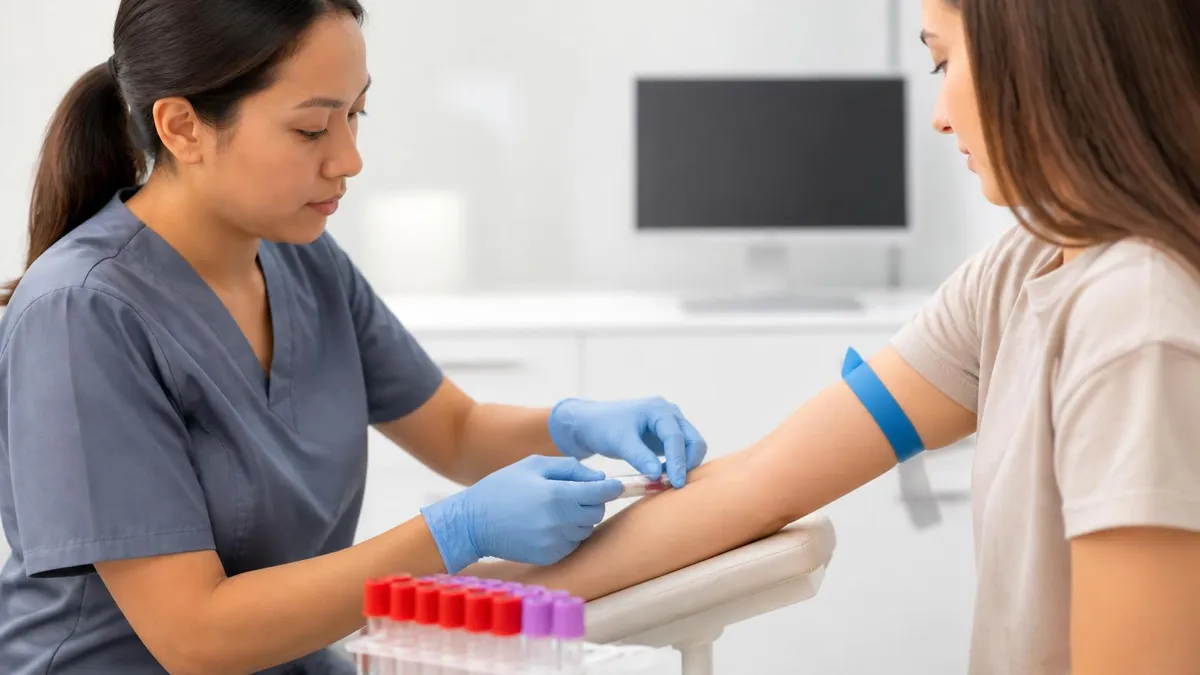
Phlebotomy Test 2026: Complete Practice Exam Prep Guide
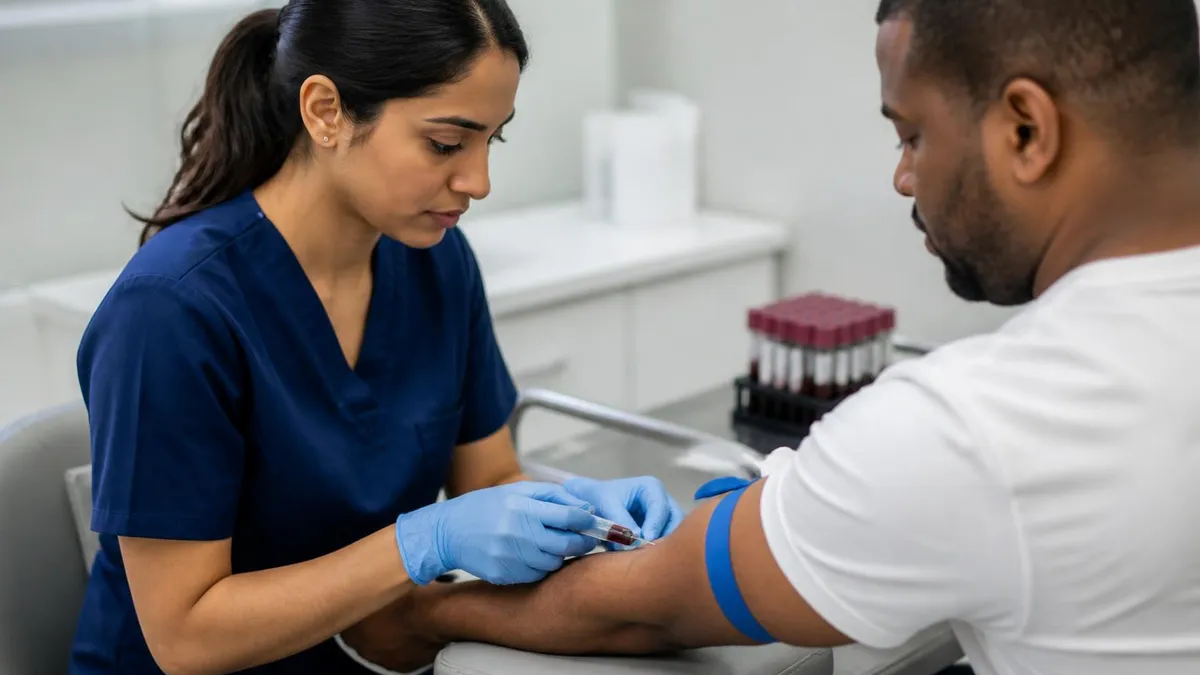
Phlebotomy Tube Colors: Complete Guide to the Order of Draw, Additives & Lab Tests
About the Author

Registered Nurse & Healthcare Educator
Johns Hopkins University School of NursingDr. Sarah Mitchell is a board-certified registered nurse with over 15 years of clinical and academic experience. She completed her PhD in Nursing Science at Johns Hopkins University and has taught NCLEX preparation and clinical skills courses for nursing students across the United States. Her research focuses on evidence-based exam preparation strategies for healthcare certification candidates.