
PCA Training Online: Complete Guide to Personal Care Assistant Courses, Certification, and Career Launch in 2026 October
🗨️ PCA training online in 2026 October: course options, certification steps, costs, state rules, and how to launch your personal care assistant career fast.
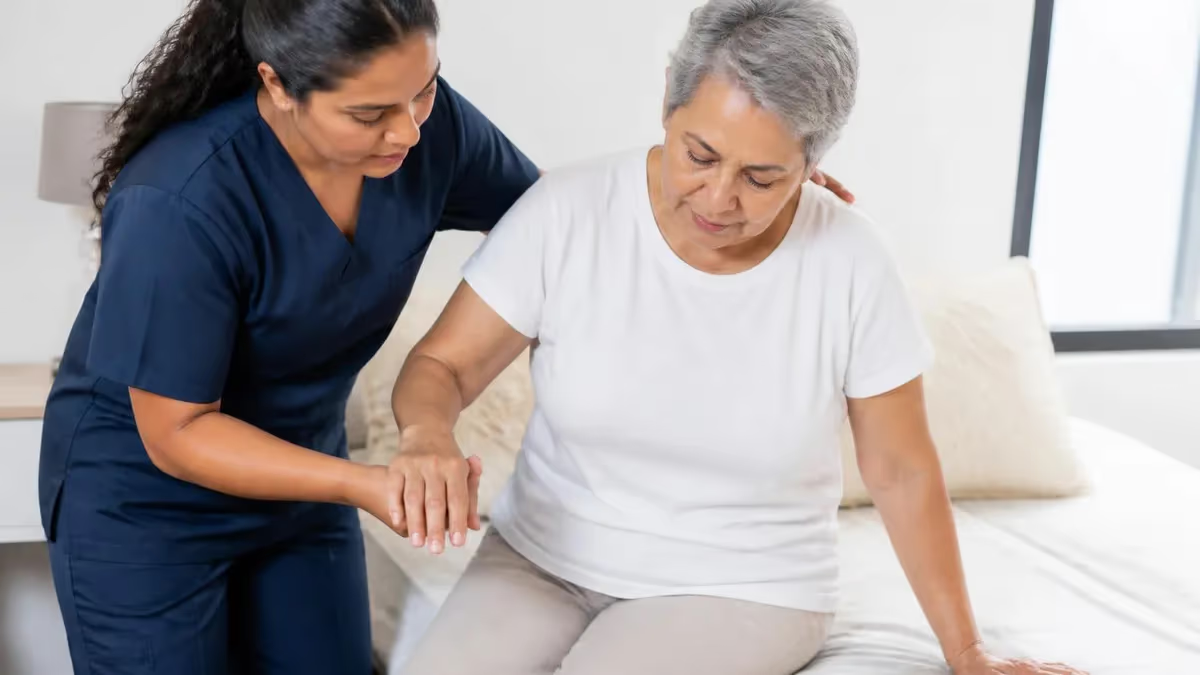
PCA training online has become the fastest growing pathway into healthcare in 2026, giving aspiring personal care assistants the flexibility to study from home while preparing for one of the most in-demand entry-level roles in the country. Whether you are a stay-at-home parent, a college student, a career-changer, or someone re-entering the workforce, online PCA programs let you complete coursework on your own schedule and move into paid clinical practice within weeks rather than months. Understanding what online training actually includes is the first step.
The term PCA stands for Personal Care Assistant, and the role focuses on helping clients with activities of daily living such as bathing, dressing, mobility, meal preparation, and light medical observation. Unlike a CNA or LPN, a PCA typically works under the supervision of a registered nurse or case manager rather than directly inside an acute hospital unit. The pca medical framework that governs the profession varies by state, but the core competencies remain consistent across every accredited program.
Online PCA programs in 2026 are structured around blended learning. You complete didactic instruction, video demonstrations, and interactive quizzes through a learning management system, then attend a short in-person skills lab to demonstrate hands-on competency. Most programs run between 40 and 75 clock hours, depending on state requirements. Many states accept fully self-paced study, while others require a live virtual classroom component with scheduled Zoom sessions led by an RN instructor who can answer questions and verify identity.
The growth of online PCA training mirrors the growth of home-based care itself. The Bureau of Labor Statistics projects 22 percent job growth for personal care aides through 2031, faster than nearly any other occupation. Aging baby boomers, expanded Medicaid waiver programs, and the post-pandemic shift toward aging in place have created persistent shortages. Agencies now actively recruit graduates of reputable online programs and often reimburse tuition once a new hire completes 90 days of employment.
Cost is another reason online training has surged in popularity. Traditional brick-and-mortar PCA classes typically run between $400 and $1,200, while online programs frequently cost $99 to $499 because providers save on facility overhead. Many state Medicaid programs, workforce development boards, and community colleges offer free PCA training online for residents who agree to work for a partner agency for six to twelve months after certification. This pipeline model has opened the profession to thousands who could not previously afford a healthcare credential.
However, not every online PCA program is created equal. Some sites sell unaccredited certificates that no licensed home care agency will recognize. Throughout this guide we will walk you through how to identify legitimate providers, what curriculum to expect, how state rules differ, what the skills check-off looks like, and how to convert your certificate into a paying job within thirty days of completion. By the end you will have a clear roadmap to launch your career.
PCA Training Online by the Numbers

Online PCA Training Pathways in 2026
Fully online or hybrid courses approved by your state department of health. Includes virtual lectures, video skills demos, and an in-person competency evaluation lasting four to eight hours.
Home care agencies offer free online PCA training in exchange for a work commitment of six to twelve months. Tuition, books, and even uniforms are typically covered with a guaranteed job placement.
Local community colleges blend online theory with weekend skills labs. These programs often include CPR certification, transfer credit toward CNA, and financial aid eligibility through Pell grants.
National providers like CareAcademy, ProSolutions, and Red Cross offer self-paced online certificates accepted by private-pay clients and non-Medicaid agencies in most states with flexible deadlines.
Designed for family caregivers who want to be paid through consumer-directed Medicaid programs. Training is free, fully online in most states, and leads to immediate paid employment with a relative.
The curriculum inside a reputable online PCA program covers eight core domains that align with the federal Home Care Aide standards and most state-specific regulations. These domains include role and responsibilities, communication and documentation, infection control, safety and emergency procedures, body mechanics, nutrition and hydration, personal care techniques, and observation and reporting. Each domain combines reading materials, instructional videos, knowledge checks, and a final module exam that you must pass with at least 75 to 80 percent before unlocking the next unit.
Communication and documentation modules teach you how to chart vital signs, write progress notes, recognize HIPAA boundaries, and report changes in client condition to the supervising nurse. You will practice using electronic visit verification systems like Sandata and HHAeXchange, which are now mandatory in every state Medicaid program under the federal 21st Century Cures Act. Many online programs include simulated EVV dashboards so you can clock in, document tasks, and clock out exactly as you will in the field.
Infection control became a dedicated, expanded section after the COVID-19 pandemic. Expect detailed lessons on hand hygiene, donning and doffing personal protective equipment, isolation precautions, and bloodborne pathogen exposure response. Most online programs now include OSHA bloodborne pathogen certification as a built-in module, which is a credential employers expect you to maintain annually. Knowing the what is a pca scope of practice in your state helps you stay legally compliant while delivering safe care.
Personal care technique modules are the most hands-on portion of the curriculum. You will watch demonstration videos showing bed baths, perineal care, denture care, transfers from bed to wheelchair, gait belt usage, range-of-motion exercises, and proper positioning for clients with limited mobility. While you cannot physically practice these on a real person through a screen, top programs require you to record yourself performing each skill on a manikin or family volunteer and upload it for instructor review.
Observation and reporting trains you to recognize subtle changes that may signal a developing problem. You will learn the differences between normal aging changes and warning signs of stroke, urinary tract infection, dehydration, pressure injury, and elder abuse. Case study scenarios walk you through what to document, what to report immediately, and what falls within your scope to handle independently. This judgment skill is what separates competent PCAs from those who simply complete tasks without thinking critically about client wellbeing.
Most online programs also include specialty add-on modules at no extra cost. These cover dementia and Alzheimer care, end-of-life and hospice support, pediatric care for medically complex children, and care for clients with intellectual or developmental disabilities. Completing these specialty modules makes your resume stand out and qualifies you for premium pay assignments, which can add three to five dollars per hour over the base PCA wage in many markets.
Finally, the program closes with a final comprehensive examination of 75 to 100 questions and a recorded or in-person skills demonstration. Passing both unlocks your certificate of completion, which the program submits to your state registry if applicable. Expect total seat time of 40 to 75 hours, spread over four to eight weeks if you study ten hours per week.

PCA Practice Test Questions
Prepare for the PCA - Personal Care Assistant exam with our free practice test modules. Each quiz covers key topics to help you pass on your first try.
PCA Duties and Responsibilities
Free PCA Practice Test featuring Duties and Responsibilities. Improve your PCA Exam score with mock test prep.
PCA Qualifications
PCA Mock Exam on Qualifications. PCA Study Guide questions to pass on your first try.
PCA Working Conditions
PCA Test Prep for Working Conditions. Practice PCA Quiz questions and boost your score.
PCA Assisting with Daily Living Activities
PCA Questions and Answers on Assisting with Daily Living Activities. Free PCA practice for exam readiness.
PCA Basic Nursing Skills
PCA Mock Test covering Basic Nursing Skills. Online PCA Test practice with instant feedback.
PCA Basic Patient Care Skills
Free PCA Quiz on Basic Patient Care Skills. PCA Exam prep questions with detailed explanations.
PCA Communication and Interpersonal Skills
PCA Practice Questions for Communication and Interpersonal Skills. Build confidence for your PCA certification exam.
PCA Ethical and Legal Responsibilities
PCA Test Online for Ethical and Legal Responsibilities. Free practice with instant results and feedback.
PCA Health and Safety Procedures
PCA Study Material on Health and Safety Procedures. Prepare effectively with real exam-style questions.
PCA Health & Safety Protocols
Free PCA Test covering Health & Safety Protocols. Practice and track your PCA exam readiness.
PCA Infection Control
PCA Exam Questions covering Infection Control. Master PCA Test concepts for certification prep.
PCA Mental Health & Emotional Support
Free PCA Practice Test featuring Mental Health & Emotional Support. Improve your PCA Exam score with mock test prep.
PCA Nutrition & Hydration
PCA Mock Exam on Nutrition & Hydration. PCA Study Guide questions to pass on your first try.
PCA Patient Mobility & Transfers
PCA Test Prep for Patient Mobility & Transfers. Practice PCA Quiz questions and boost your score.
PCA Meaning and Certification Rules by State
Roughly fifteen states require PCAs working in Medicaid-funded settings to pass a state-administered competency exam after completing approved training. These states include Massachusetts, New York, Minnesota, Washington, and California. The exam typically consists of a written multiple-choice section of 60 to 100 questions and a hands-on skills evaluation observed by a state-approved evaluator. Your online program must be on the state's approved provider list for your hours to count toward eligibility.
Preparing for state testing while completing online coursework means scheduling your skills evaluation early, as testing centers often book six to eight weeks in advance. Most online providers in these states partner with regional skills labs to simplify the process. Budget an additional $75 to $150 for the official state exam fee and plan to retake the skills portion at no charge if you fail a single competency on the first attempt.
Is Online PCA Training Right for You?
- +Study on your own schedule around work and family obligations without rigid classroom attendance requirements
- +Significantly lower tuition than traditional in-person programs, with many free options through Medicaid and agencies
- +Faster path to paid employment with completion possible in four to eight weeks of part-time study
- +Access to nationally recognized providers regardless of your geographic location or rural address
- +Built-in practice quizzes, video demonstrations, and downloadable study materials you can revisit anytime
- +Many programs include CPR, first aid, and OSHA certifications bundled into the tuition price
- +Direct pipeline to agency employment with tuition reimbursement and signing bonuses common in 2026
- −Requires strong self-discipline and time management without the structure of scheduled classes
- −Limited hands-on practice means the in-person skills lab can feel intimidating for first-time learners
- −Some unaccredited providers sell certificates that no licensed home care agency will accept as valid
- −Technology requirements include reliable internet, webcam, and a quiet space for recorded skills demos
- −State approval is not universal, so a program valid in one state may not transfer if you move
- −Less immediate access to instructor feedback compared to in-person classroom discussions and clarifications
Pros and Cons at a Glance
| Pros | Cons |
|---|---|
| Study on your own schedule around work and family obligations without rigid classroom attendance requirements | Requires strong self-discipline and time management without the structure of scheduled classes |
| Significantly lower tuition than traditional in-person programs, with many free options through Medicaid and agencies | Limited hands-on practice means the in-person skills lab can feel intimidating for first-time learners |
| Faster path to paid employment with completion possible in four to eight weeks of part-time study | Some unaccredited providers sell certificates that no licensed home care agency will accept as valid |
| Access to nationally recognized providers regardless of your geographic location or rural address | Technology requirements include reliable internet, webcam, and a quiet space for recorded skills demos |
| Built-in practice quizzes, video demonstrations, and downloadable study materials you can revisit anytime | State approval is not universal, so a program valid in one state may not transfer if you move |
| Many programs include CPR, first aid, and OSHA certifications bundled into the tuition price | Less immediate access to instructor feedback compared to in-person classroom discussions and clarifications |

Online PCA Program Enrollment Checklist
- ✓Verify the program is approved by your state department of health or human services
- ✓Confirm the provider is listed on at least one local home care agency's accepted-training list
- ✓Check that tuition includes the required skills evaluation, not just online theory hours
- ✓Review the refund policy in case you cannot complete due to schedule changes or job offers
- ✓Ensure CPR and OSHA bloodborne pathogen certifications are bundled or budget separately
- ✓Confirm electronic visit verification system training is included as part of the curriculum
- ✓Test your computer, webcam, microphone, and internet speed before paying tuition
- ✓Schedule your in-person skills lab date as early as possible to avoid four-week wait lists
- ✓Gather identification documents required for background check and state registry enrollment
- ✓Request a tuition reimbursement agreement template from your target employer before enrolling
Use Your State Workforce Development Board
Most students never realize that every state operates a federally funded workforce development board offering free PCA training scholarships through Workforce Innovation and Opportunity Act funds. Visit careeronestop.org, enter your zip code, and ask specifically about WIOA-funded healthcare training. Awards typically cover 100 percent of tuition, books, exam fees, scrubs, and even childcare or transportation stipends while you study.
Career outcomes for online PCA graduates in 2026 are stronger than at any point in the profession's history. The median wage reported by the Bureau of Labor Statistics reached $33,530 in 2024, with top earners crossing $43,000 annually. Hourly rates in metropolitan markets such as Boston, Seattle, Minneapolis, and Washington D.C. routinely range from $19 to $26, while rural areas trend between $14 and $18. Hazard pay, weekend differentials, and overnight shift premiums frequently add another two to five dollars per hour to base rates.
Most online PCA graduates begin work with a home care agency, which handles client matching, scheduling, payroll, taxes, and supervision. Agencies provide built-in liability insurance, workers' compensation coverage, and continuing education access. The tradeoff is that agencies keep roughly 30 to 40 percent of the billable rate as overhead. After one to two years many PCAs transition to private-pay arrangements where they work directly for a family and keep 100 percent of the billable rate, sometimes earning $25 to $35 per hour without any middleman.
Career advancement opportunities expand rapidly from the PCA foundation. The pca church of care community offers natural ladders into Certified Nursing Assistant, Home Health Aide, Medication Aide, and eventually Licensed Practical Nurse or Registered Nurse roles. Many PCAs use their first year of paid experience to fund CNA bridge programs, which typically require only an additional 75 hours of training and earn an immediate two-to-four-dollar-per-hour raise upon completion.
Specialty certifications offer another fast track to higher pay without committing to a full nursing degree. Dementia Care Specialist, End-of-Life Doula, Pediatric Home Care, and Traumatic Brain Injury certifications can be completed online for $150 to $500 each and unlock premium assignments. Agencies actively recruit PCAs with these specialty credentials and frequently pay signing bonuses of $500 to $2,000 to bring them aboard, particularly for night-shift or live-in assignments.
Benefits packages have improved dramatically as agencies compete for talent in a tight labor market. Full-time PCAs working 32 hours or more typically receive health insurance with employer contributions of 50 to 80 percent of premiums, dental and vision coverage, paid time off accruing at one hour per twenty worked, 401(k) retirement plans with company match, and tuition assistance for upward career mobility. Some national agencies including BAYADA, Visiting Angels, and Home Instead also offer paid parental leave and bereavement leave.
Job security for PCAs is exceptional. Unlike retail or hospitality positions vulnerable to automation or economic downturns, personal care cannot be outsourced or replaced by technology. The combination of demographic aging, expanded Medicaid coverage, and consumer preference for home-based services means demand will continue outpacing supply for at least the next two decades. Many PCAs report being able to leave one agency in the morning and start with another the same afternoon, an unusual luxury in today's labor market.
Geographic flexibility is another underrated advantage. Once you hold a PCA certificate, reciprocity agreements or short bridge courses let you work in nearly any state. Military spouses, traveling nurses' partners, and remote workers frequently relocate without losing their credential. Some travel PCA agencies even pay weekly housing stipends and per-diem meal allowances for short-term assignments of four to thirteen weeks in high-demand cities.
Dozens of unaccredited websites sell PCA certificates for $29 to $79 promising instant download and zero skills evaluation. These certificates are worthless. No licensed home care agency, Medicaid program, or state registry will accept training without an in-person or proctored skills demonstration. Always verify your provider on your state department of health website before paying any tuition.
Choosing the right online PCA program comes down to five practical criteria you can verify in fifteen minutes of research. First, confirm state approval by searching your state department of health website for the provider name. Second, request the most recent pass rate for first-time completers, which should be 85 percent or higher at reputable programs. Third, verify the program includes a proctored or in-person skills evaluation rather than a self-attestation form. Fourth, check the agency placement network. Fifth, read independent reviews on Reddit and Trustpilot.
Setting up your home study environment makes a measurable difference in completion rates. Dedicate a quiet corner with a desk, ergonomic chair, and adequate lighting for recorded skills videos. Invest in an external webcam if your laptop camera is grainy, since instructors must clearly see your hand positions during procedures like proper handwashing or transfer techniques. A pair of inexpensive scrubs and a gait belt purchased online for under $30 lets you practice realistically with a family volunteer playing the client role.
Time blocking is the single most powerful study habit for online learners. Most students who fail to complete online PCA programs do so not because the content is difficult but because life gradually crowds out study time. Block two hours each weekday morning or evening on your calendar, treat those blocks as non-negotiable, and aim to finish two modules per week. At that pace you will graduate in five to six weeks. The pca skincare of clinical practice will feel less intimidating when you have built consistent study momentum.
Active learning techniques outperform passive video watching by a significant margin. Take handwritten notes during lectures, even though it feels slower than typing. Pause videos every five minutes to summarize what you just learned in your own words. After completing each module, teach the material to a friend or family member as if you were the instructor. This generation effect strengthens memory pathways and reveals gaps in your understanding before they cost you points on the final exam.
Practice quizzes are the single highest-yield use of your study time. Most online programs include built-in quizzes, but supplement these with free third-party question banks that mirror state exam format. Aim to answer at least 500 practice questions before sitting for any official test. Review every incorrect answer in detail, write a one-sentence explanation of why the correct answer is correct, and re-quiz yourself on missed items 24 hours later to lock in the correction.
Networking during your online program pays dividends after graduation. Join your program's private student forum or Facebook group on day one, introduce yourself, and engage at least twice per week. Many graduates report that their first job offer came through a classmate's referral rather than an online application. Local Facebook groups for PCAs and home care workers in your city are equally valuable for learning which agencies pay best, which clients are difficult, and which supervisors actually support their staff.
Finally, prepare for your skills evaluation like a performance rather than a test. Practice each skill at least five times in front of a mirror or family member before the evaluation date. Verbalize every step out loud, including handwashing, glove changes, privacy curtains, and client communication. Evaluators score not just whether you complete the task but whether you maintain professional demeanor, dignity, and safety throughout. Confidence comes from repetition, and the candidates who pass on the first attempt are simply those who practiced most.
Once you pass your online program and skills evaluation, the next 30 days determine how quickly you convert your certificate into income. Begin applying immediately, ideally to three to five agencies per week. Most home care agencies hire on a rolling basis and conduct interviews within 48 to 72 hours of application. Bring your certificate, government identification, two professional references, proof of negative TB test, and current CPR card to every interview. Agencies that ask you to start same-day are often desperate, so prioritize those willing to schedule a proper orientation.
Negotiate your starting wage rather than accepting the first offer. Most agencies have a posted starting rate but flex two to four dollars per hour upward for candidates with specialty certifications, weekend availability, overnight availability, bilingual skills, or reliable transportation. Frame the conversation around value rather than need. Mention specific certifications you completed, languages you speak, and shifts you can cover, then ask whether the agency offers a starting rate above the base for candidates with your profile.
Your first 90 days on the job determine your long-term reputation in the local PCA community. Show up ten minutes early to every shift, document thoroughly in the electronic visit verification system, communicate proactively with the supervising nurse about any changes in client condition, and never call out without giving at least four hours notice. PCAs who establish a reputation for reliability move quickly to premium assignments, including live-in cases and private-pay clients who tip generously and provide year-end bonuses.
Continuing education is mandatory in most states and beneficial in all of them. Plan to complete eight to twelve hours of continuing education annually to maintain your certificate. Many free online webinars hosted by the Home Care Association of America, AARP, and Alzheimer's Association count toward your hours. Pursuing one new specialty certification every six months keeps your resume growing and signals to agencies that you are serious about long-term advancement in the field.
Tracking your hours and earnings carefully protects you legally and financially. Use a simple spreadsheet or app to log every shift, including start time, end time, mileage, and tasks performed. If you work for multiple agencies or directly for private clients, this documentation supports accurate tax filing and can be critical if you ever face a Medicaid audit, an unemployment claim, or a workers' compensation dispute. Save copies of your weekly schedule, pay stubs, and any client gifts received above twenty-five dollars.
Self-care is non-negotiable in this profession. PCA work is physically demanding, emotionally taxing, and frequently underappreciated. Build sustainable habits from day one. Wear supportive shoes designed for healthcare workers. Practice proper body mechanics on every single transfer rather than only when supervisors are watching. Take your full meal breaks. Process emotionally difficult shifts by talking with peers, journaling, or seeing a therapist. The PCAs who burn out in year one are those who pour everything into clients without preserving any energy for themselves.
Finally, plan your career trajectory deliberately. Set a goal for where you want to be in one year, three years, and five years. Whether that is staying as a senior PCA, bridging to CNA or LPN, opening your own private-pay practice, or moving into care coordination and case management, write the goal down and identify the next single step. Personal care assistance is one of the few professions where you can enter with no prior experience and chart a clear path to a six-figure healthcare career within a decade through deliberate skill stacking.
Sample Personal Care Assistant Practice Questions
Try these questions from our free Personal Care Assistant practice tests. The correct answer and an explanation follow each question.
If a PCA makes a mistake while providing care, what is the correct course of action?
- A. Ignore the mistake and hope it goes unnoticed.
- B. Report the mistake immediately to the supervisor and document it according to protocol.
- C. Blame another team member for the error.
- D. Attempt to fix the mistake without informing anyone.
Answer: B. Report the mistake immediately to the supervisor and document it according to protocol.
If a PCA makes a mistake while providing care, the correct course of action is to report it immediately to the supervisor and document it according to protocol. Prompt reporting ensures patient safety by allowing for immediate assessment and corrective action. It also contributes to a culture of learning and continuous quality improvement within the healthcare system.
A PCA's certification has lapsed because they missed the renewal deadline. What is the most appropriate course of action?
- A. Continue working while waiting for the new certificate to arrive
- B. Stop providing paid care until the certification is reinstated
- C. Ask the client to sign a waiver allowing continued service
- D. Have a coworker cover the visits without notifying the agency
Answer: B. Stop providing paid care until the certification is reinstated
A PCA should not perform paid care duties with a lapsed certification, as doing so may violate state regulations and put clients at risk.
An applicant for a PCA position cannot provide proof of completing an approved training program. What is the most likely outcome?
- A. They will be hired and given 90 days to complete training afterward
- B. They may be ineligible for positions funded by Medicaid or state programs
- C. They will automatically qualify based on work experience alone
- D. They only need a letter from a prior employer
Answer: B. They may be ineligible for positions funded by Medicaid or state programs
Many Medicaid-funded PCA programs require documented completion of an approved training program as a condition of employment.
What type of training is often required for a CPA?
- A. Medical school degree
- B. On-the-job training and a PCA certification program
- C. Legal studies degree
- D. Engineering certification
Answer: B. On-the-job training and a PCA certification program
While a medical degree is not required, PCAs typically undergo specific training to effectively and safely perform their duties. This often involves completing a PCA certification program, which covers essential caregiving skills, safety protocols, and client communication. This formal training is frequently complemented by practical on-the-job training, ensuring they gain both theoretical knowledge and hands-on experience.
PCA Questions and Answers

PCA - Personal Care Assistant: Complete Study Guide 2026
What Does a PCA Do? Complete Guide to Personal Care Assistant Duties and Daily Responsibilities

Do You Have to Be Certified to Be a PCA? Complete 2026 Guide to PCA Certification Requirements by State
PCA Nurse: Complete Guide to the Personal Care Assistant Role in Modern Nursing Teams
Personal Care Assistant Duties: Complete Guide to PCA Daily Responsibilities, Tasks, and Career Expectations in 2026
About the Author

Registered Nurse & Healthcare Educator
Johns Hopkins University School of NursingDr. Sarah Mitchell is a board-certified registered nurse with over 15 years of clinical and academic experience. She completed her PhD in Nursing Science at Johns Hopkins University and has taught NCLEX preparation and clinical skills courses for nursing students across the United States. Her research focuses on evidence-based exam preparation strategies for healthcare certification candidates.