
PFAS OSHA: Complete Worker Safety Guide for Forever Chemicals in the Workplace
Comprehensive guide to PFAS OSHA workplace safety covering exposure limits, PPE requirements, monitoring protocols, and employer obligations for forever... 💡

Per- and polyfluoroalkyl substances, commonly known as PFAS, represent one of the most significant emerging occupational health challenges facing American workers in 2026. Understanding the intersection of PFAS OSHA requirements is essential for employers and safety professionals who must protect workers from exposure to these persistent synthetic chemicals. Often called forever chemicals because they do not break down naturally in the environment or the human body, PFAS compounds have been linked to serious health effects including cancer, thyroid disease, and immune system disruption.
OSHA has not yet established a standalone permissible exposure limit specifically for PFAS compounds, but this does not mean employers have no legal obligations. The General Duty Clause under Section 5(a)(1) of the OSH Act requires employers to provide workplaces free from recognized hazards that cause or are likely to cause death or serious physical harm. Since mounting scientific evidence confirms PFAS health risks, employers who fail to implement protective measures face potential citations and penalties under this broad authority.
Workers encounter PFAS exposure across dozens of industries including chemical manufacturing, firefighting, semiconductor production, textile treatment, food packaging, and waste management facilities. Firefighters face particularly acute risks from aqueous film-forming foam, which contains high concentrations of PFAS compounds and has been used extensively in training exercises and emergency response. Manufacturing workers who produce or apply PFAS-containing coatings, waterproofing agents, and non-stick treatments also face daily inhalation and dermal exposure pathways.
The regulatory landscape surrounding PFAS workplace safety continues evolving rapidly as federal agencies coordinate their responses. The Environmental Protection Agency has established health advisory levels for drinking water, while the Agency for Toxic Substances and Disease Registry has published exposure assessments for communities near contaminated sites. OSHA collaborates with these agencies to develop comprehensive worker protection guidance that accounts for occupational exposure routes distinct from general population environmental exposure.
Employers must understand that PFAS exposure in occupational settings typically occurs at concentrations far exceeding environmental background levels. Workers may inhale PFAS-containing dusts, mists, or vapors during manufacturing processes, absorb compounds through skin contact with treated materials, or ingest contaminated particles through hand-to-mouth transfer in workplaces lacking adequate hygiene facilities. Each exposure route demands specific protective strategies and monitoring approaches.
Current best practices for PFAS worker safety draw upon industrial hygiene principles, toxicological research, and analogous chemical exposure standards. Forward-thinking employers implement comprehensive PFAS safety programs that include exposure assessment, engineering controls, administrative procedures, personal protective equipment, biological monitoring, and medical surveillance. These multi-layered approaches reflect the hierarchy of controls that OSHA endorses for all workplace chemical hazards.
This guide examines every aspect of PFAS occupational safety including current regulatory requirements, practical protective measures, monitoring technologies, worker rights, and emerging standards. Whether you manage a manufacturing facility, supervise firefighting operations, or oversee waste remediation projects, understanding PFAS OSHA obligations protects both your workforce and your organization from the health and legal consequences of inadequate chemical safety programs.
PFAS Workplace Safety by the Numbers
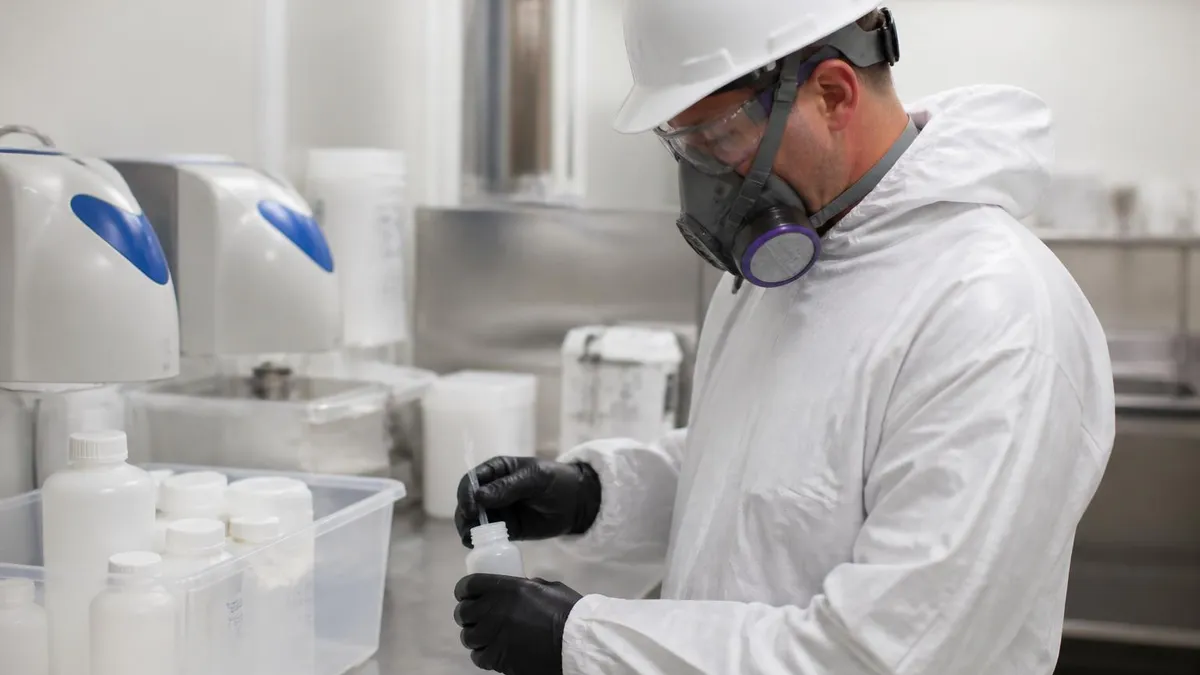
Primary PFAS Workplace Exposure Pathways
Workers breathe PFAS-containing dusts, mists, fumes, and vapors during manufacturing, application, or heating of fluorinated compounds. Thermal decomposition creates particularly hazardous airborne byproducts requiring ventilation controls.
Skin contact with PFAS-containing materials, solutions, and treated surfaces allows chemical absorption through the epidermis. Concentrated industrial formulations penetrate faster than finished consumer products, demanding appropriate barrier protection.
Hand-to-mouth transfer of PFAS particles occurs when workers eat, drink, or smoke in contaminated areas without proper decontamination. Contaminated dust settling on surfaces creates ongoing ingestion risks throughout work shifts.
Most occupational PFAS exposure involves simultaneous inhalation, dermal, and ingestion pathways that create additive or synergistic health effects. Comprehensive protection programs must address all routes simultaneously for effective risk reduction.
Workers carry PFAS contamination home on clothing, skin, hair, and personal items, potentially exposing family members. Workplace shower facilities and laundering programs prevent this downstream contamination pathway.
The legal framework governing PFAS workplace safety operates primarily through OSHA's General Duty Clause because no substance-specific permissible exposure limit currently exists for PFAS compounds. Under Section 5(a)(1), employers must keep workplaces free from recognized hazards likely to cause death or serious harm. As scientific consensus solidifies regarding PFAS toxicity at low concentrations, the recognized hazard threshold becomes increasingly difficult for employers to dispute when workers experience documented exposure.
OSHA compliance officers evaluate PFAS workplace conditions using multiple enforcement tools beyond the General Duty Clause. The Hazard Communication Standard requires employers to maintain safety data sheets for all PFAS-containing products and train workers on chemical hazards. The Respiratory Protection Standard applies when airborne PFAS concentrations warrant respiratory protective equipment. Personal protective equipment standards govern the selection and maintenance of gloves, coveralls, and face protection for PFAS-exposed workers.
Several states have enacted PFAS workplace regulations that exceed federal OSHA requirements, creating a patchwork of compliance obligations for multi-state employers. California, Michigan, Minnesota, and New York have established notification requirements, exposure limits, or reporting obligations specifically addressing PFAS in occupational settings. Employers operating across state lines must identify and comply with the most protective applicable standard for each work location.
The National Institute for Occupational Safety and Health has published recommended exposure limits and health hazard evaluations for specific PFAS compounds including perfluorooctanoic acid and perfluorooctane sulfonate. While NIOSH recommendations do not carry legal enforcement authority like OSHA PELs, they represent authoritative scientific consensus that employers should implement as best practices. Courts have referenced NIOSH guidance when evaluating whether employers met General Duty Clause obligations.
Worker rights under OSHA extend fully to PFAS exposure situations including the right to request workplace inspections, access exposure monitoring records, receive training in understandable language, and report safety concerns without retaliation. Section 11(c) whistleblower protections specifically prohibit employers from disciplining workers who raise PFAS safety concerns or refuse work they reasonably believe presents imminent danger from chemical exposure.
Employer recordkeeping obligations require documenting PFAS exposure incidents, maintaining exposure monitoring results for thirty years under the Access to Employee Exposure and Medical Records standard, and reporting hospitalizations or significant injuries resulting from acute PFAS exposure events. These records serve both regulatory compliance purposes and provide essential data for epidemiological studies tracking long-term health outcomes among PFAS-exposed worker populations.
OSHA's rulemaking process for a potential PFAS-specific standard remains in preliminary stages, with the agency gathering scientific data and stakeholder input. Until a formal standard emerges, the combination of General Duty Clause enforcement, existing chemical safety standards, and state-specific regulations creates the operative legal framework. Employers who wait for a specific PFAS PEL before implementing protections assume significant legal and moral risk given current scientific understanding.
OSHA Practice Test Questions
Prepare for the OSHA - Safety Certificate exam with our free practice test modules. Each quiz covers key topics to help you pass on your first try.
OSHA Basic OSHA Practice
OSHA Exam Questions covering Basic OSHA Practice. Master OSHA Test concepts for certification prep.
OSHA Confined Space Entry
Free OSHA Practice Test featuring Confined Space Entry. Improve your OSHA Exam score with mock test prep.
OSHA Fall Protection
OSHA Mock Exam on Fall Protection. OSHA Study Guide questions to pass on your first try.
OSHA - Safety Certificate Electrical Safet...
Free OSHA Quiz on OSHA - Safety Certificate Electrical Safety Standards Questions and Answers. OSHA Exam prep questions with detailed explanations.
OSHA - Safety Certificate Emergency Action...
OSHA Practice Questions for OSHA - Safety Certificate Emergency Action and Fire Plans Questions and Answers. Build confidence for your OSHA certification exam.
OSHA - Safety Certificate Hazard Communica...
OSHA Test Online for OSHA - Safety Certificate Hazard Communication Standard Questions and Answers. Free practice with instant results and feedback.
OSHA - Safety Certificate Introduction to ...
OSHA Study Material on OSHA - Safety Certificate Introduction to OSHA Questions and Answers. Prepare effectively with real exam-style questions.
OSHA - Safety Certificate Lockout/Tagout P...
Free OSHA Test covering OSHA - Safety Certificate Lockout/Tagout Procedures Questions and Answers. Practice and track your OSHA exam readiness.
OSHA - Safety Certificate Machine Guarding...
OSHA Exam Questions covering OSHA - Safety Certificate Machine Guarding Requirements Questions and Answers. Master OSHA Test concepts for certification prep.
OSHA - Safety Certificate OSHA Recordkeepi...
Free OSHA Practice Test featuring OSHA - Safety Certificate OSHA Recordkeeping and Reporting Questions and Answers. Improve your OSHA Exam score with mock test prep.
OSHA - Safety Certificate Personal Protect...
OSHA Mock Exam on OSHA - Safety Certificate Personal Protective Equipment (PPE) Questions and Answers. OSHA Study Guide questions to pass on your first try.
OSHA - Safety Certificate Walking and Work...
OSHA Test Prep for OSHA - Safety Certificate Walking and Working Surfaces Questions and Answers. Practice OSHA Quiz questions and boost your score.
OSHA - Safety Certificate Electrical Safet...
OSHA Mock Test covering - Safety Certificate Electrical Safety Standards. Online OSHA Test practice with instant feedback.
OSHA - Safety Certificate Emergency Action...
Free OSHA Quiz on - Safety Certificate Emergency Action and Fire Plans. OSHA Exam prep questions with detailed explanations.
OSHA - Safety Certificate Hazard Communica...
OSHA Practice Questions for - Safety Certificate Hazard Communication Standard. Build confidence for your OSHA certification exam.
OSHA - Safety Certificate Introduction to ...
OSHA Test Online for - Safety Certificate Introduction to OSHA. Free practice with instant results and feedback.
OSHA - Safety Certificate Lockout/Tagout P...
OSHA Study Material on - Safety Certificate Lockout/Tagout Procedures. Prepare effectively with real exam-style questions.
OSHA - Safety Certificate Machine Guarding...
Free OSHA Test covering - Safety Certificate Machine Guarding Requirements. Practice and track your OSHA exam readiness.
OSHA - Safety Certificate OSHA Recordkeepi...
OSHA Exam Questions covering - Safety Certificate OSHA Recordkeeping and Reporting. Master OSHA Test concepts for certification prep.
PFAS Protection Strategies by Industry Sector
Chemical manufacturing facilities producing PFAS compounds or applying fluorinated coatings require the most rigorous engineering controls including enclosed process systems, local exhaust ventilation at emission points, and continuous air monitoring with real-time alarm capabilities. Employers must install dedicated ventilation systems that capture PFAS vapors and particulates at their source before they enter the general workspace atmosphere where workers breathe.
Administrative controls in manufacturing settings include strict work rotation schedules limiting individual cumulative exposure, mandatory decontamination procedures between work areas, prohibition of food and beverages in production zones, and comprehensive biological monitoring programs tracking serum PFAS levels quarterly. Workers require training on specific PFAS hazards in their processes, proper PPE donning and doffing sequences, and emergency spill response procedures for concentrated fluorinated chemical releases.

Benefits and Challenges of Implementing PFAS Safety Programs
- +Protects workers from serious long-term health effects including cancer and immune suppression
- +Reduces employer liability under General Duty Clause and state PFAS regulations
- +Positions organization ahead of anticipated federal PFAS workplace standards
- +Improves worker morale and retention through demonstrated health commitment
- +Creates documentation trail proving due diligence if future claims arise
- +Identifies exposure sources enabling process improvements that reduce waste
- −Initial costs for exposure assessment and engineering controls can be substantial
- −Limited PFAS-specific occupational exposure limits create uncertainty in program design
- −Biological monitoring programs require medical provider expertise in PFAS interpretation
- −PPE selection complicated by PFAS breakthrough resistance variations across manufacturers
- −Worker anxiety may increase when previously unrecognized hazards are formally communicated
- −Rapid regulatory changes require frequent program updates and retraining cycles
Pros and Cons at a Glance
| Pros | Cons |
|---|---|
| Protects workers from serious long-term health effects including cancer and immune suppression | Initial costs for exposure assessment and engineering controls can be substantial |
| Reduces employer liability under General Duty Clause and state PFAS regulations | Limited PFAS-specific occupational exposure limits create uncertainty in program design |
| Positions organization ahead of anticipated federal PFAS workplace standards | Biological monitoring programs require medical provider expertise in PFAS interpretation |
| Improves worker morale and retention through demonstrated health commitment | PPE selection complicated by PFAS breakthrough resistance variations across manufacturers |
| Creates documentation trail proving due diligence if future claims arise | Worker anxiety may increase when previously unrecognized hazards are formally communicated |
| Identifies exposure sources enabling process improvements that reduce waste | Rapid regulatory changes require frequent program updates and retraining cycles |
PFAS Workplace Safety Compliance Checklist
- ✓Conduct comprehensive PFAS exposure assessment identifying all products, processes, and pathways in your workplace
- ✓Maintain current safety data sheets for every PFAS-containing chemical and communicate hazards to exposed workers
- ✓Install engineering controls including local exhaust ventilation and enclosed systems at PFAS emission sources
- ✓Establish airborne PFAS monitoring program with sampling during representative work activities and conditions
- ✓Select and provide appropriate PPE including chemical-resistant gloves, coveralls, and respiratory protection
- ✓Implement strict hygiene practices prohibiting eating, drinking, and smoking in PFAS work areas
- ✓Provide decontamination facilities including showers and dedicated work clothing laundering services
- ✓Develop written PFAS safety program documenting hazard assessment, controls, training, and medical surveillance
- ✓Train all potentially exposed workers on PFAS health effects, exposure routes, and protective measures annually
- ✓Establish medical surveillance program including baseline and periodic serum PFAS level testing for exposed workers
PFAS Blood Levels in Exposed Workers
Studies show that workers in PFAS manufacturing facilities have serum PFAS concentrations 100 to 1,000 times higher than the general population. Even workers in downstream industries using PFAS-containing products can have blood levels 10 to 50 times above background. These elevated levels persist for years after exposure ends because PFAS half-lives in human blood range from 3 to 8 years depending on the specific compound.
Exposure monitoring for PFAS in occupational settings requires specialized analytical methods and sampling strategies that account for the unique physical and chemical properties of fluorinated compounds. Air sampling for PFAS typically involves collecting particulates on polytetrafluoroethylene membrane filters while simultaneously capturing gaseous phases on solid sorbent tubes. Laboratories analyze these samples using liquid chromatography-tandem mass spectrometry, which can detect individual PFAS compounds at parts-per-trillion concentrations necessary for meaningful occupational exposure assessment.
Biological monitoring through serum PFAS testing provides the most comprehensive measure of worker exposure because blood levels integrate all exposure routes including inhalation, dermal absorption, and ingestion over time. Employers should establish baseline serum levels before workers begin PFAS-exposed tasks, then conduct periodic monitoring at intervals determined by exposure intensity. Interpreting results requires comparison against population reference ranges and occupational guidance values published by organizations including the German Human Biomonitoring Commission.
Surface wipe sampling helps evaluate housekeeping effectiveness and identify contamination migration pathways within facilities. Standardized wipe methods using methanol-wetted collection media can quantify PFAS surface contamination on work surfaces, equipment, break room tables, and personal items. Results indicating contamination in non-production areas signal inadequate containment controls and potential ingestion exposure pathways that engineering or administrative interventions must address promptly.
Medical surveillance programs for PFAS-exposed workers should include comprehensive health assessments beyond serum level testing. Clinical evaluations encompass thyroid function panels because PFAS compounds disrupt thyroid hormone homeostasis, liver function tests since the liver accumulates high PFAS concentrations, lipid panels reflecting PFAS effects on cholesterol metabolism, and kidney function markers given renal elimination pathways. Physicians experienced in occupational medicine and environmental health should direct these surveillance programs.
Health outcome tracking among PFAS-exposed worker cohorts contributes to understanding dose-response relationships that will eventually inform occupational exposure limits. Employers should maintain longitudinal health records enabling retrospective epidemiological analysis while protecting individual worker privacy. These records also support workers' compensation claims if occupational diseases develop years after exposure, making comprehensive documentation both an ethical obligation and a legal protection for employers and workers alike.
Real-time monitoring technologies are emerging that may eventually enable continuous PFAS exposure assessment during work activities. Portable sensors using immunoassay or electrochemical detection principles show promise for screening-level airborne PFAS measurement, though current instruments lack the sensitivity and specificity required for regulatory compliance monitoring. As these technologies mature, they will enable immediate hazard identification and control verification that batch laboratory analysis cannot provide.
Exposure assessment documentation must satisfy OSHA's Access to Employee Exposure and Medical Records standard requiring thirty-year retention of all monitoring data. Employers should maintain records in accessible electronic formats including sampling dates, locations, activities performed, worker identities, analytical results, and comparisons against applicable exposure guidelines. These records support both regulatory compliance demonstrations and long-term health outcome evaluations essential for this emerging occupational health challenge.

OSHA is actively developing PFAS-specific workplace guidance that could establish binding permissible exposure limits within the next two to three years. Employers who delay implementing comprehensive PFAS safety programs risk facing sudden compliance deadlines, retroactive exposure liability, and worker health consequences that proactive programs would have prevented. Begin exposure assessments and control implementation now to avoid regulatory scrambles.
Implementing an effective PFAS workplace safety program requires systematic planning that addresses organizational structure, resource allocation, technical expertise, and continuous improvement mechanisms. The program should designate a qualified industrial hygienist or safety professional as the PFAS program manager responsible for coordinating exposure assessments, selecting controls, managing monitoring programs, and ensuring regulatory compliance across all affected operations and worker populations within the organization.
Engineering controls represent the most reliable layer of PFAS worker protection because they reduce exposure at the source without depending on individual worker behavior or compliance with procedural requirements. Enclosed process systems prevent PFAS releases into workplace air, local exhaust ventilation captures emissions at generation points before they disperse, and general dilution ventilation provides secondary protection for residual airborne contamination. Each engineering control requires regular maintenance, performance verification, and periodic reassessment as processes or PFAS products change.
Administrative controls supplement engineering measures by limiting worker exposure duration and intensity through organizational procedures and policies. Work rotation schedules distribute cumulative PFAS exposure across larger worker populations rather than concentrating it among a few individuals. Access restrictions prevent unnecessary personnel from entering high-exposure zones. Mandatory decontamination procedures at zone boundaries prevent contamination migration between work areas and break spaces where ingestion exposure could occur.
Personal protective equipment selection for PFAS exposure demands careful evaluation of chemical resistance data because not all materials effectively block fluorinated compound permeation. Nitrile gloves provide adequate protection for incidental contact with dilute PFAS solutions, but concentrated formulations may require laminated multi-layer chemical resistant gloves with documented PFAS breakthrough times exceeding the anticipated contact duration. Respiratory protection ranges from half-face air-purifying respirators for moderate exposures to supplied-air systems for high-concentration environments.
Training programs must convey PFAS-specific information beyond generic chemical safety content that workers may have previously received. Effective PFAS training explains why these chemicals are uniquely hazardous due to their persistence and bioaccumulation, describes specific health effects supported by epidemiological evidence, demonstrates proper PPE use including donning sequences and inspection procedures, and practices emergency response protocols for PFAS spills or releases requiring immediate protective actions.
Program evaluation through regular audits ensures that PFAS safety measures remain effective as workplace conditions evolve over time. Annual program reviews should examine exposure monitoring trends for evidence of control degradation, assess PPE compliance rates through systematic observation, evaluate training effectiveness through knowledge assessments, and update hazard analyses when new PFAS products enter the workplace or processes change in ways affecting exposure potential.
Documentation and communication throughout the PFAS safety program creates transparency that builds worker trust and demonstrates regulatory compliance. Regular exposure monitoring results should be communicated to affected workers within fifteen working days as required by OSHA standards. Program changes should be explained with scientific rationale so workers understand protective measures rather than simply complying with unexplained requirements. This participatory approach improves compliance rates and enables workers to identify exposure situations that formal assessments may have missed.
Practical implementation of PFAS worker protections benefits from lessons learned across organizations that have established mature chemical safety programs for other persistent toxic substances. Employers experienced with lead, asbestos, or beryllium safety programs will recognize familiar program elements including exposure-triggered action levels, medical removal provisions, hygiene facilities, and long-term health surveillance requirements that apply equally well to PFAS workplace management with appropriate compound-specific adaptations.
Prioritizing PFAS safety investments requires risk-based decision making that allocates resources to the highest-exposure worker populations first while systematically expanding protections to lower-exposure groups over time. Initial efforts should focus on workers directly handling concentrated PFAS formulations or performing activities generating significant airborne contamination such as spraying, heating, or machining PFAS-treated materials. Subsequent phases address maintenance workers, supervisors, and adjacent-area personnel with lower but non-negligible exposure.
Vendor and contractor management extends PFAS safety obligations beyond direct employees to encompass all workers within your operational control. When contractors perform PFAS-related work at your facility, multi-employer worksite doctrines require the controlling employer to ensure adequate safety measures regardless of employment relationships. Written safety requirements in contractor specifications, pre-job safety briefings, and periodic compliance verification protect both contractor workers and your organization from liability.
Emergency preparedness for PFAS incidents requires pre-planned response procedures that account for the chemical persistence and environmental mobility of fluorinated compounds. Unlike conventional chemical spills that degrade naturally over time, PFAS releases create long-lasting contamination requiring specialized containment and disposal methods. Emergency plans should specify appropriate absorbent materials, containment strategies preventing storm drain migration, decontamination procedures for affected workers, and reporting requirements under applicable environmental regulations.
Supply chain evaluation offers opportunities to reduce PFAS workplace exposure by identifying and transitioning to fluorine-free alternatives wherever technically feasible. Many applications that historically required PFAS-based products now have effective non-fluorinated substitutes including silicone-based water repellents, hydrocarbon surfactants, and ceramic coatings. Systematic product substitution eliminates exposure sources entirely rather than managing ongoing risks through controls that require perpetual maintenance and worker compliance.
Building organizational culture around PFAS safety requires leadership commitment visible through resource allocation, personal involvement in safety activities, and consistent enforcement of protective measures regardless of production pressures. When managers demonstrate that PFAS safety takes priority over schedule or cost considerations, workers internalize these values and actively participate in exposure prevention rather than viewing safety requirements as obstacles to productivity that should be circumvented when supervision is absent.
Staying current with rapidly evolving PFAS science and regulation demands ongoing professional development and information monitoring by safety program managers. Subscribing to OSHA regulatory updates, participating in industry safety associations, attending occupational health conferences, and maintaining relationships with academic researchers studying PFAS health effects ensures that workplace programs reflect current knowledge and anticipated regulatory directions rather than relying on outdated information that may leave workers inadequately protected.
OSHA Questions and Answers

OSHA Approved Hard Hats: Complete 2026 Guide to ANSI Z89.1 Compliance, Types, and Workplace Requirements

OSHA.gov: Your Complete Guide to the Official OSHA Website

OSHA 510: Course Content, Path to Trainer, and Realistic Path

OSHA Process Safety Management: Complete Guide to PSM Standard 1910.119 for 2026

OSHA Forklift Regulations: Complete 2026 Guide to 29 CFR 1910.178 Compliance, Training, and Workplace Safety Requirements
About the Author

Certified Safety Professional & OSHA Compliance Expert
Indiana University of Pennsylvania Safety SciencesDr. William Foster holds a PhD in Safety Science from Indiana University of Pennsylvania and is a Certified Safety Professional (CSP) and Certified Hazardous Materials Manager. With 20 years of occupational health and safety management experience across construction, manufacturing, and chemical industries, he coaches safety professionals through OSHA certification, CSP, CHST, and safety management licensing programs.
Join the Discussion
Connect with other students preparing for this exam. Share tips, ask questions, and get advice from people who have been there.
View discussion (8 replies)