
OSHA Manganese: Complete Guide to Workplace Exposure Limits, Health Risks, and Compliance
OSHA manganese standards explained: PELs, health risks, engineering controls & compliance steps for US workers. ✅ Full 2026 September guide.
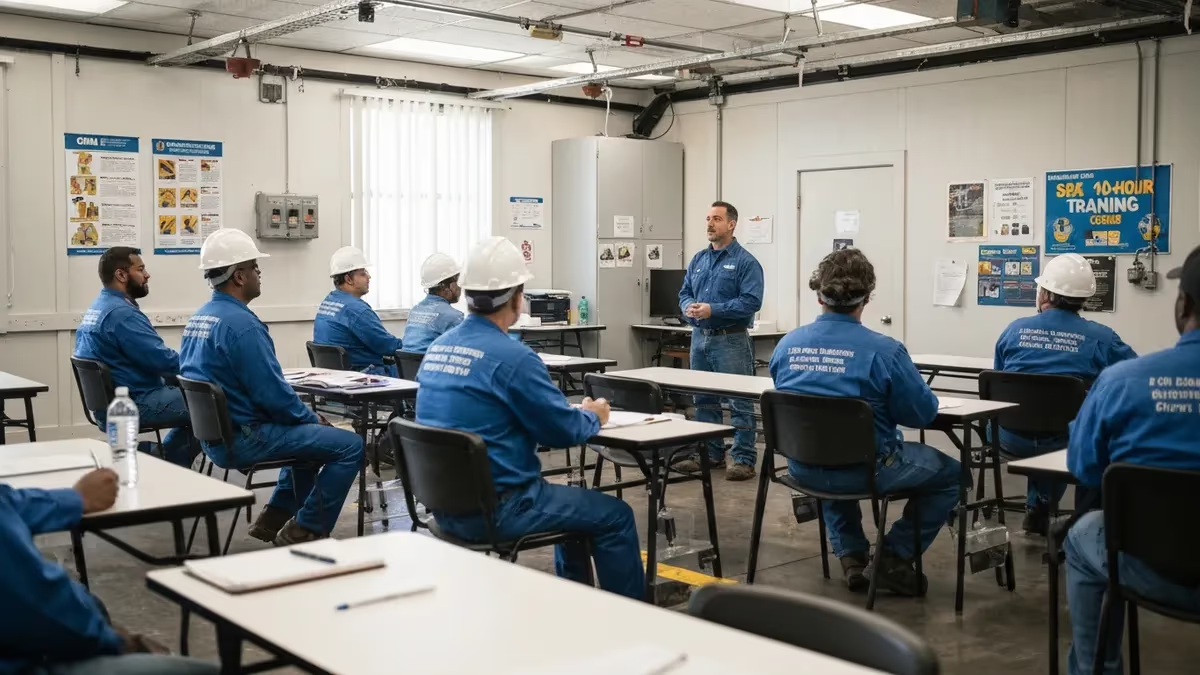
Understanding osha manganese regulations is essential for anyone working in welding, mining, steel production, or any industry where manganese dust or fumes are present. Manganese is a naturally occurring metal used widely in manufacturing, yet prolonged occupational exposure can lead to serious, irreversible neurological damage. OSHA has established permissible exposure limits and a comprehensive framework to protect workers, but many employers and safety professionals still struggle to navigate the full scope of these requirements. This guide breaks down everything you need to know about OSHA manganese standards in 2026.
Manganese (Mn) appears throughout American industry in forms ranging from pure metal dust to manganese fume generated during welding and flame cutting. Steel mills, foundries, battery manufacturing plants, and chemical processing facilities all represent high-risk environments where manganese exposure can exceed safe thresholds. Workers in these settings may inhale manganese particles too small to see, building up dangerous concentrations in the brain and nervous system over months or years of unprotected exposure. OSHA's role is to set legally enforceable limits that keep airborne concentrations below levels known to cause disease.
The primary health concern associated with overexposure to manganese is manganism, a neurological disorder that resembles Parkinson's disease in its later stages. Early symptoms include fatigue, mood changes, and subtle tremors, while advanced cases involve significant motor control problems, rigid limbs, and cognitive decline. Unlike many occupational illnesses that resolve once exposure ends, manganism can be permanent. This makes prevention — rather than treatment — the cornerstone of any effective occupational safety program involving manganese-containing materials.
OSHA's current permissible exposure limit (PEL) for manganese fume is 1 mg/m³ as a ceiling value, while the PEL for manganese dust and compounds is 5 mg/m³ as a ceiling. However, the National Institute for Occupational Safety and Health (NIOSH) recommends a much more protective recommended exposure limit (REL) of 0.2 mg/m³ as a time-weighted average over a 10-hour workday. The American Conference of Governmental Industrial Hygienists (ACGIH) has set an even stricter threshold limit value (TLV) of 0.02 mg/m³ for the respirable fraction of manganese. These differences matter enormously in practice and compliance planning.
Employers covered by OSHA standards must conduct accurate exposure assessments, implement engineering controls where feasible, provide appropriate respiratory protection when controls alone are insufficient, establish medical surveillance programs, and train workers on the hazards of manganese. The hierarchy of controls — elimination, substitution, engineering controls, administrative controls, and personal protective equipment — applies fully to manganese hazards, with engineering solutions like local exhaust ventilation taking priority over relying on respirators alone. Cutting corners on any of these requirements exposes both workers to health risks and employers to significant OSHA citations and penalties.
Many industries are affected by OSHA manganese requirements, including construction trades where welders work with manganese-containing filler metals, shipbuilding yards with confined-space welding operations, and automotive manufacturing lines where manganese-alloyed steel is shaped and joined daily. Even seemingly low-risk tasks like grinding painted surfaces or cutting slag can generate manganese-containing dust at levels that require controls. A thorough job hazard analysis must account for all potential manganese sources in the workplace, not just the most obvious high-heat processes.
This article provides a detailed, practical overview of OSHA manganese standards, helping safety professionals, workers, and employers understand their obligations and implement effective protective measures. Whether you are preparing for an OSHA inspection, building a new industrial hygiene program, or studying for your OSHA certification exam, the information in the following sections will give you a solid foundation in one of workplace safety's most important chemical hazard topics.
OSHA Manganese by the Numbers

Key OSHA Manganese Exposure Limits and Standards
OSHA sets a ceiling PEL of 1 mg/m³ for manganese fume generated during welding, cutting, and brazing. A ceiling limit means concentrations must never exceed this value — not even momentarily — rather than just as an average over a work shift.
For manganese dust and compounds in general industry, the OSHA ceiling PEL is 5 mg/m³. This higher limit reflects differences in particle size and deposition in the respiratory tract, though industrial hygienists often recommend targeting NIOSH's stricter 0.2 mg/m³ REL instead.
NIOSH recommends a much more protective 10-hour TWA of 0.2 mg/m³ for all manganese compounds. This REL is based on more current health data and is considered the practical benchmark for progressive occupational health programs seeking to prevent early neurological effects.
The ACGIH threshold limit value is 0.02 mg/m³ for the respirable fraction of manganese — 50 times more stringent than OSHA's ceiling PEL. Many industrial hygienists and health-conscious employers adopt this value as their internal action level to stay well below any zone of health concern.
Although OSHA has not published a specific manganese standard with defined action levels, general industry hygiene practices recommend initiating air monitoring, medical surveillance, and enhanced controls whenever manganese concentrations approach 50% of any applicable PEL or REL in the workplace air.
The health effects of manganese exposure represent some of the most serious occupational hazards in American industry, and understanding them is critical for both workers and safety managers who oversee high-risk environments. Manganese enters the body primarily through inhalation of airborne particles and fumes, bypassing the liver's first-pass metabolic filtering and gaining direct access to the bloodstream and brain.
Once manganese accumulates in the basal ganglia and other brain regions, it disrupts dopaminergic neurotransmission in ways that produce progressive, often permanent neurological damage. No effective medical treatment exists to reverse manganism once it develops, which is why prevention through rigorous exposure control is the only viable strategy.
Early-stage manganese overexposure typically produces a cluster of psychiatric and behavioral symptoms that can be easily misattributed to stress, depression, or aging. Workers may experience irritability, emotional instability, impulsivity, and fatigue — changes subtle enough that neither the affected worker nor their supervisor recognizes them as occupational illness. This initial phase, sometimes called manganese madness or locura manganica in historical literature, can persist for months before motor symptoms emerge. Recognizing these early warning signs and acting promptly is essential; waiting for obvious tremors means neurological damage has already progressed significantly.
As manganese exposure continues and brain concentrations rise, workers enter the intermediate phase marked by slowed movement, speech disturbances, and a characteristic walking pattern called cock gait, where affected individuals walk on their toes with arms held behind the back. Fine motor tasks become increasingly difficult, handwriting deteriorates, and facial expression becomes masked and flat. These symptoms overlap substantially with Parkinson's disease, though manganism typically progresses more rapidly and responds poorly to the dopaminergic medications that benefit Parkinson's patients. The distinction matters clinically and medicolegally, as it directly implicates workplace exposure in the neurological decline.
Respiratory effects represent a separate but related category of manganese health impacts. Manganese dust inhalation can cause a condition known as metal fume fever — a flu-like illness with fever, chills, and muscle aches that typically resolves within 24 to 48 hours but recurs with each significant exposure episode. Chronic respiratory manganese exposure has also been linked to increased susceptibility to pneumonia, impaired pulmonary function, and inflammatory lung disease. Workers with pre-existing respiratory conditions face compounded risk, making pre-placement and periodic pulmonary function testing a best practice in high-exposure workplaces.
Reproductive and developmental effects of manganese deserve attention in workplace safety planning. Animal studies and some human epidemiological data suggest that high manganese exposure in men can impair sperm quality and reproductive hormone levels. For women of childbearing age, manganese crosses the placenta and may reach the developing fetal brain, raising concerns about neurodevelopmental outcomes in children of heavily exposed workers. OSHA's general duty clause requires employers to protect all workers from recognized serious hazards, which means reproductive risks must factor into exposure assessments and control strategies even when specific reproductive toxicity standards have not been promulgated.
Skin and eye contact with manganese dust is generally less hazardous than inhalation but still warrants attention in comprehensive safety programs. Manganese compounds can cause skin irritation and dermatitis with prolonged or repeated contact, and eye exposure to manganese dust requires prompt flushing to prevent mechanical irritation. These routes of exposure are secondary compared to inhalation but become relevant during maintenance tasks, material handling, or cleanup operations where splash and contact risks are elevated. Safety data sheets for manganese-containing materials will specify the complete hazard profile and first aid measures for all potential exposure routes.
From a regulatory enforcement perspective, OSHA investigates manganese-related health claims under multiple regulatory frameworks. Welding operations are subject to 29 CFR 1910.252 for general industry and 29 CFR 1926.353 for construction, both of which include provisions for ventilation and fume control. The general industry air contaminants standard at 29 CFR 1910.1000 establishes the PELs discussed above. When OSHA compliance officers conduct inspections at facilities with manganese hazards, they evaluate air monitoring records, respiratory protection programs, hazard communication compliance, and medical surveillance documentation — deficiencies in any area can result in citations ranging from other-than-serious to willful, with penalties scaled accordingly.
Controlling Manganese Exposure: Engineering, Administrative, and PPE Approaches
Engineering controls are the most effective and OSHA-preferred method for reducing manganese exposure in the workplace. Local exhaust ventilation (LEV) systems installed at the point of fume generation — such as welding gun-mounted fume extractors or downdraft welding tables — can capture manganese fume before it enters the worker's breathing zone. General dilution ventilation supplements LEV but is never a substitute, as it merely dilutes rather than removes contaminants. Proper LEV design requires positioning capture hoods within 12 inches of the fume source and maintaining adequate face velocities, typically 100 feet per minute or more at the hood opening.
Additional engineering solutions include process substitution (replacing high-manganese welding consumables with lower-manganese alternatives where technical specifications permit), enclosure of grinding and cutting operations, and wet methods for dust suppression in mining and material handling. Automated or semi-automated welding systems can remove workers from the immediate fume generation zone entirely. Employers should document all engineering control measures implemented, their maintenance schedules, and the air monitoring results that confirm their effectiveness — this documentation is critical evidence of good faith compliance during an OSHA inspection.
Strict Manganese Controls: Benefits vs. Challenges for Employers
- +Prevents irreversible neurological damage and long-term disability in workers
- +Reduces OSHA citation risk and associated financial penalties up to $156,259 per willful violation
- +Lowers workers' compensation costs and lost-time injury rates over the long term
- +Builds workforce morale and retention by demonstrating genuine commitment to worker health
- +Establishes documented due diligence that can mitigate liability in personal injury litigation
- +Modern LEV and fume extraction technology has become more affordable and easier to retrofit into existing operations
- −Upfront capital costs for local exhaust ventilation systems can reach $50,000 or more per workstation in complex facilities
- −Ongoing maintenance of engineering controls requires dedicated technician time and parts budget
- −Air monitoring, industrial hygiene consulting, and medical surveillance add recurring program costs
- −Respiratory protection programs require administrative infrastructure including fit testing records and medical evaluations
- −Worker resistance to wearing respiratory protection in hot, physically demanding environments is a persistent compliance challenge
- −OSHA's manganese PELs are widely considered outdated and may be tightened in future rulemaking, requiring future capital investment to comply with stricter limits
Pros and Cons at a Glance
| Pros | Cons |
|---|---|
| Prevents irreversible neurological damage and long-term disability in workers | Ongoing maintenance of engineering controls requires dedicated technician time and parts budget |
| Lowers workers' compensation costs and lost-time injury rates over the long term | Air monitoring, industrial hygiene consulting, and medical surveillance add recurring program costs |
| Builds workforce morale and retention by demonstrating genuine commitment to worker health | Respiratory protection programs require administrative infrastructure including fit testing records and medical evaluations |
| Establishes documented due diligence that can mitigate liability in personal injury litigation | Worker resistance to wearing respiratory protection in hot, physically demanding environments is a persistent compliance challenge |
| Modern LEV and fume extraction technology has become more affordable and easier to retrofit into existing operations | OSHA's manganese PELs are widely considered outdated and may be tightened in future rulemaking, requiring future capital investment to comply with stricter limits |
OSHA Manganese Compliance Checklist for Employers
- ✓Conduct a comprehensive job hazard analysis identifying all manganese-containing materials and processes in your facility.
- ✓Perform baseline air monitoring for manganese in all work areas where exposure is reasonably anticipated.
- ✓Compare monitoring results against OSHA PELs, NIOSH REL (0.2 mg/m³), and ACGIH TLV (0.02 mg/m³ respirable).
- ✓Install local exhaust ventilation at all fixed welding, cutting, and grinding stations that generate manganese fume or dust.
- ✓Evaluate and document whether engineering controls reduce exposures below the applicable PEL before requiring respirator use.
- ✓Implement a written respiratory protection program per 29 CFR 1910.134 if exposures remain above action levels after controls.
- ✓Provide medical surveillance including neurological evaluations for workers with confirmed exposures above NIOSH REL.
- ✓Train all potentially exposed workers on manganese hazards, health effects, and proper use of controls and PPE before first exposure.
- ✓Maintain safety data sheets for all manganese-containing materials and make them accessible to workers at all times.
- ✓Establish written housekeeping procedures to prevent manganese dust accumulation and resuspension on work surfaces and floors.
OSHA's Manganese PEL Has Not Been Updated Since 1971
OSHA's manganese PELs are based on data from the 1960s and are widely considered inadequate by modern occupational health standards. NIOSH's REL of 0.2 mg/m³ and ACGIH's TLV of 0.02 mg/m³ represent far more current science. Forward-thinking employers should target these stricter benchmarks now to protect workers and avoid regulatory risk if OSHA updates its PELs in future rulemaking.
Medical surveillance is a cornerstone of any comprehensive OSHA manganese compliance program and one of the most important protections an employer can provide to workers at risk of overexposure. Unlike many occupational illness programs where biological monitoring provides a direct measure of internal dose, manganese medical surveillance relies primarily on neurological examination and symptom review, since blood and urine manganese levels do not reliably predict neurological health outcomes.
Employers implementing surveillance programs should engage physicians or occupational health practitioners with specific expertise in neurotoxicology or occupational medicine rather than relying on primary care providers who may be unfamiliar with manganism's subtle early presentation.
A baseline medical evaluation should be completed before a worker begins work in a manganese-exposed position. This baseline assessment documents the worker's pre-existing neurological status and serves as the comparison point for all subsequent periodic evaluations. The baseline examination typically includes a detailed occupational history, symptom questionnaire focused on neurological and psychiatric complaints, neurological examination assessing motor function, coordination, gait, and tremor, and cognitive screening tests sensitive to the kinds of deficits associated with early manganism. Establishing this baseline is essential; without it, physicians cannot determine whether any changes observed at later evaluations represent occupational disease progression or pre-existing conditions.
Periodic surveillance examinations should occur at least annually for workers with confirmed exposures above NIOSH's REL of 0.2 mg/m³, and many occupational health programs conduct surveillance every six months for workers in the highest-exposure categories. Each periodic exam should use standardized, validated assessment tools so that results are directly comparable across time.
The Unified Parkinson's Disease Rating Scale (UPDRS) and similar instruments provide structured, reproducible neurological assessments that can detect subtle changes before they significantly impair work capacity. Any worker showing evidence of neurological change should be promptly removed from further manganese exposure and referred to a neurologist experienced in occupational neurotoxicology.
Biological monitoring, while not a perfect tool for manganese health surveillance, can still provide useful information about exposure trends. Blood manganese reflects recent exposure rather than cumulative body burden, with reference values for non-occupationally exposed adults typically below 15 µg/L. Urine manganese concentrations are highly variable and considered less reliable than blood for exposure assessment.
Some research programs have explored MRI-based brain imaging to detect early manganese accumulation in the basal ganglia, where manganese produces a characteristic T1 signal enhancement — this remains a research tool rather than a routine clinical surveillance method, but it illustrates the seriousness with which occupational health researchers approach the challenge of early detection.
Workers have legally protected rights related to medical surveillance under OSHA's Access to Employee Exposure and Medical Records Standard at 29 CFR 1910.1020. Employers must retain medical surveillance records for at least 30 years after the worker's last date of employment, provide workers with access to their own medical records upon request, and transfer records to the National Institute for Occupational Safety and Health if the employer goes out of business.
These record retention requirements are not optional and carry their own penalty exposure if violated. Workers who believe their medical records are being improperly withheld can file a complaint with OSHA without fear of retaliation under Section 11(c) of the OSH Act.
Return-to-work decisions for workers who develop manganism or show early neurological signs are complex and require individualized assessment by qualified occupational health physicians. In some cases, temporary removal from high-exposure work allows mild symptoms to stabilize. In others, permanent reassignment to roles without manganese exposure is necessary to prevent further neurological deterioration. Employers must never retaliate against workers who are medically restricted from manganese work — doing so violates both OSHA's anti-retaliation provisions and potentially the Americans with Disabilities Act if the worker's condition constitutes a disability. Proactive, worker-centered medical management protects both the employee and the employer's legal standing.
For smaller employers without in-house occupational health resources, state OSHA consultation programs offer free, confidential assistance with establishing medical surveillance requirements and developing written programs. The OSHA On-Site Consultation Program, operated through grants to state agencies, provides employers with expert guidance on identifying hazards and building compliance programs without triggering enforcement consequences. This resource is particularly valuable for small manufacturers, specialty welding shops, and other businesses that face manganese exposure risks but lack the budget or expertise to build comprehensive programs independently.
Once manganism progresses beyond early stages, neurological damage cannot be reversed by removing the worker from exposure or by any currently available medical treatment. Chelation therapy, which removes some metals from the body, has not been shown to reverse established manganism and is not recommended. Employers who delay implementing controls until workers develop symptoms have already failed in their legal and ethical duty of care.
Worker training on manganese hazards is not merely an OSHA checkbox — it is the mechanism through which all other protective measures actually reach the people they are intended to protect. A perfectly designed local exhaust ventilation system delivers no benefit if workers bypass it because they do not understand why it matters.
The best respiratory protection program fails if workers remove their respirators during breaks because no one has explained that manganese does not cause immediate discomfort that would naturally motivate protection. Effective training transforms technical regulatory requirements into genuine protective behavior, and it is worth investing real resources to get it right.
OSHA's Hazard Communication Standard (HazCom, 29 CFR 1910.1200) requires that training cover the physical and health hazards of hazardous chemicals, methods workers can use to detect the presence or release of hazardous chemicals, measures workers can take to protect themselves, and the details of the employer's HazCom program including safety data sheets and labeling.
For manganese specifically, this means training must include the neurological risks, the fact that symptoms may not appear for years after chronic overexposure begins, and the specific controls — including engineering systems, work practices, and PPE — that the employer has put in place. Generic chemical safety training that does not address the specific neurological hazard of manganese is insufficient.
Beyond HazCom requirements, employers operating under the respiratory protection standard must ensure that all users of respirators receive training on the reason the respirator is necessary, why the respirator selected provides adequate protection, the respirator's limitations and capabilities, how to properly inspect, don, doff, and seal-check the respirator, and the medical signs and symptoms that may limit effective respirator use.
This training must be provided before initial use and repeated annually or whenever changes in the workplace or the respirator type make previous training obsolete. Documentation of training completion, including the trainer's identity and the training content covered, must be retained by the employer.
OSHA's 10-hour and 30-hour outreach training programs, while not mandatory for all workers, provide excellent foundational knowledge that complements site-specific manganese training. Workers who complete the OSHA 10 or OSHA 30 program develop a broader understanding of hazard recognition, the hierarchy of controls, workers' rights, and the structure of OSHA enforcement that makes them more effective participants in workplace safety programs.
Safety professionals with OSHA 30 certification are generally better equipped to identify manganese hazards during job hazard analyses and to communicate regulatory requirements credibly to both management and labor. Practicing for these certifications with quality study resources, including online practice tests, significantly improves first-attempt pass rates.
Supervisors play a particularly critical role in manganese hazard prevention and deserve training that goes beyond what is provided to general workers. Supervisors must be able to recognize early symptoms of manganism in their teams, know when to refer workers for medical evaluation, enforce proper use of engineering controls and PPE, and model the safe behaviors they expect from workers under their direction.
Supervisor-specific training on manganese should cover their legal obligations, their authority and responsibility to halt work when unsafe conditions are observed, and the process for documenting and reporting potential exposure incidents. Untrained supervisors are a significant compliance vulnerability in any manganese safety program.
Recordkeeping for OSHA manganese compliance spans multiple regulatory frameworks and must be managed carefully to avoid gaps that could expose employers during inspections or litigation. Air monitoring records must be retained for at least 30 years; the duration matches medical surveillance records under 29 CFR 1910.1020 because exposure records and health outcome data must be linkable over long periods.
Respirator fit test records, written respiratory protection programs, and training completion records each carry their own retention requirements under their respective standards. Many employers centralize these records in their environmental health and safety management systems, creating a single searchable repository that can be produced quickly in response to OSHA records requests or discovery in civil litigation.
The future of OSHA manganese regulation is likely to move toward stricter standards as epidemiological evidence continues to mount showing neurological effects at exposures well below current PELs. Safety professionals who build programs targeting NIOSH or ACGIH benchmarks now are not just being proactive — they are also protecting their employers from the compliance and capital costs of rapid retrofitting when new standards take effect.
Staying engaged with OSHA rulemaking activity through public comment periods, industry association channels, and professional organizations like the American Industrial Hygiene Association ensures that safety managers are prepared well in advance of any regulatory changes affecting manganese-intensive operations.
Practical preparation for OSHA manganese compliance begins with a systematic workplace assessment that goes beyond what most employers initially recognize as manganese sources. Before purchasing air monitoring equipment or contacting an industrial hygiene consultant, compile a complete chemical inventory and review safety data sheets for every material used in your facility.
Manganese appears in many materials where it is not prominently labeled — welding electrodes, flux-cored wire, manganese steel alloys, certain paints and coatings, and chemical reagents all warrant review. The SDS Section 3 (Composition/Information on Ingredients) will disclose manganese content and concentration ranges that help prioritize which processes need the most urgent attention.
When commissioning air monitoring for manganese, work with a Certified Industrial Hygienist (CIH) accredited by the American Board of Industrial Hygiene (ABIH) to ensure that sampling methodology meets OSHA and NIOSH standards. NIOSH Method 7300 (Elements by ICP-OES) and NIOSH Method 7302 are the analytically validated methods for manganese in workplace air, and samples collected by non-credentialed individuals using improvised methods may not hold up under regulatory or legal scrutiny. Full-shift personal breathing zone samples represent the gold standard for compliance assessments because they capture the worker's actual exposure throughout the workday rather than grab samples during specific high-intensity tasks.
Interpreting air monitoring results requires careful attention to the type of limit being compared. OSHA's ceiling PEL means no sample at any time should exceed the limit. NIOSH's TWA REL means the average concentration over a 10-hour shift should not exceed 0.2 mg/m³. ACGIH's TLV for the respirable fraction means only particles small enough to penetrate deeply into the lung — generally less than 10 microns aerodynamic diameter — count against the 0.02 mg/m³ benchmark.
Using size-selective sampling media, specifically respirable dust samplers rather than total dust samplers, is essential for meaningful comparison against the ACGIH TLV and NIOSH's recommended approach to manganese assessment.
Building a culture of manganese safety means moving beyond compliance documentation to genuine worker engagement. Consider establishing a joint labor-management safety committee with specific responsibility for manganese hazard oversight, including review of air monitoring results, investigation of any suspected manganism cases, and evaluation of engineering control performance.
Workers who understand that the company takes manganese seriously — not just as a paper exercise but as a real commitment to their long-term brain health — are more likely to use controls consistently, report early symptoms promptly, and participate constructively in safety programs. This cultural investment pays dividends in both health outcomes and operational efficiency.
Contractors and temporary workers present a special compliance challenge in manganese-intensive industries. Host employers have obligations under OSHA's multi-employer worksite policy to inform contractors of manganese hazards present at the site, to ensure that contractors have appropriate hazard controls and training in place before beginning work, and to coordinate safety programs so that contractor operations do not create manganese exposures for host employer workers or vice versa.
Written contractor safety agreements should address manganese specifically, requiring contractors to provide evidence of air monitoring, medical surveillance, and training programs before mobilizing to manganese-hazardous work areas. Failure to include these provisions has left many host employers jointly liable for contractor worker injuries.
Personal hygiene measures represent the last line of defense against manganese exposure — simple, low-cost behaviors that dramatically reduce the amount of manganese workers inadvertently ingest or carry home. Thorough handwashing before eating, drinking, or using tobacco is essential; research shows that hand-to-mouth contact is a meaningful secondary exposure route in dusty operations. Changing out of work clothing before leaving the facility and showering before going home prevents contaminating personal vehicles and home environments. Providing dedicated changing areas, shower facilities, and separate storage for work and street clothing demonstrates employer commitment and makes these hygiene behaviors practical to implement.
Finally, remember that OSHA compliance is not the ceiling for worker protection — it is the legal minimum floor. The best manganese safety programs target NIOSH and ACGIH benchmarks, invest in continuous improvement of engineering controls, maintain active medical surveillance programs, and treat any evidence of worker health effects as a signal to intensify controls rather than a liability to manage.
Workers who spend decades in manganese-intensive trades deserve employers who approach their neurological health with the same seriousness as they approach production efficiency. Building that commitment into every layer of your safety program is both the ethically right approach and, increasingly, the legally prudent one.
OSHA Questions and Answers

OSHA Approved Safety Glasses: Complete 2026 Guide to ANSI Z87.1 Eye Protection Standards, Selection, and Workplace Compliance

Is OSHA a Government Agency? The Federal Body Behind US Workplace Safety

OSHA 10 Test Answers: Complete Study Guide & Practice Questions for 2026

How Many Modules Are in OSHA 30? Complete Course Structure Breakdown for 2026

OSHA Jobs: Complete Career Guide to Federal, State, and Private Safety Roles
About the Author

Certified Safety Professional & OSHA Compliance Expert
Indiana University of Pennsylvania Safety SciencesDr. William Foster holds a PhD in Safety Science from Indiana University of Pennsylvania and is a Certified Safety Professional (CSP) and Certified Hazardous Materials Manager. With 20 years of occupational health and safety management experience across construction, manufacturing, and chemical industries, he coaches safety professionals through OSHA certification, CSP, CHST, and safety management licensing programs.
Join the Discussion
Connect with other students preparing for this exam. Share tips, ask questions, and get advice from people who have been there.
View discussion (8 replies)