
Is OSHA a Government Agency? The Federal Body Behind US Workplace Safety
Yes, OSHA is a federal agency under the US Department of Labor. ✅ Get HQ, regional offices, osha.gov portal, contact methods, and interpretation letters.

People type the question into Google about a thousand times a month and the answer surprises nobody who has ever filed a complaint or read a citation letterhead. Yes—the Occupational Safety and Health Administration is a federal government agency. It sits inside the United States Department of Labor, runs on taxpayer money appropriated by Congress each fiscal year, and was created on December 29, 1970 when President Richard Nixon signed the Occupational Safety and Health Act. The official seal, the .gov domain, the General Schedule pay scale for inspectors—every piece of it screams “federal agency.”
So why does the question keep coming up? Because OSHA wears more hats than the average government body. It writes regulations, runs inspections, certifies state plans, accredits private testing labs, prosecutes scofflaw employers, publishes interpretation letters that read like court opinions, and trains a small army of authorized outreach instructors. Some of those functions look governmental. Others look almost like a trade association. Add in the fact that 22 states run their own OSHA-approved programs under state law, and the lines blur fast.
This guide cuts through every piece of the agency puzzle. Where OSHA fits in the executive branch. Who runs it day to day. How the budget and headcount stack up. Where to find the offices, the portal, the contact lines. What an interpretation letter is and why employers obsess over them. The Nationally Recognized Testing Laboratory program. The acting administrator question that confused half the safety press in 2021. And exactly which functions stay federal versus which ones get handed to state plans.
OSHA Federal Agency at a Glance
Start with the org chart. The Department of Labor (DOL) is one of 15 cabinet departments inside the federal executive branch—the secretary reports to the President. Inside DOL, the major agencies include the Wage and Hour Division, the Bureau of Labor Statistics, the Mine Safety and Health Administration, and OSHA. Each gets a slice of the DOL budget and its own assistant secretary. So when someone asks what OSHA does, the short version is: it’s the part of the Labor Department that protects workers from occupational hazards on the job.
The full legal name is the Occupational Safety and Health Administration. The acronym OSHA is pronounced “OH-shuh,” not letter-by-letter. The agency’s mission statement, lifted straight from the 1970 OSH Act, is to assure safe and healthful working conditions for working men and women by setting and enforcing standards, and by providing training, outreach, education, and assistance. Translated: write rules, inspect workplaces, fine the bad actors, and teach everybody else how to comply before they end up on the bad-actor list.
Yes, OSHA absolutely sits under the Department of Labor. Some people confuse it with NIOSH (the National Institute for Occupational Safety and Health), which is a research agency under the CDC and the Department of Health and Human Services. NIOSH studies workplace hazards and recommends limits; OSHA writes the enforceable rules. Different department, different mission, different budgets. You’ll see both names on respirator certifications and chemical exposure tables, which adds to the confusion.

OSHA stands for Occupational Safety and Health Administration. It is the federal agency that enforces the 1970 Occupational Safety and Health Act. It is not the same as OSH Act (the underlying law), NIOSH (the research arm at CDC), or the OSHRC (the independent Review Commission that hears citation appeals). When people ask what OSHA stands for, the acronym only tells half the story—the agency name describes the mission as much as it identifies the office.
OSHA’s headquarters lives at 200 Constitution Avenue NW in Washington DC—the Frances Perkins Building, named after the first female cabinet secretary and the architect of the New Deal labor reforms. The main switchboard runs through the DOL phone tree, though most workers and employers never call the HQ. The action happens in the regional offices.
Ten regions cover the country. Region 1 (Boston) handles New England. Region 2 (New York) covers New York, New Jersey, Puerto Rico, and the US Virgin Islands. Region 3 (Philadelphia) runs the mid-Atlantic. Region 4 (Atlanta) sweeps the Southeast. Region 5 (Chicago) gets the upper Midwest. Region 6 (Dallas) covers Texas and the south-central states.
Region 7 (Kansas City) takes the central plains. Region 8 (Denver) runs the Mountain West. Region 9 (San Francisco) handles California and the Pacific. Region 10 (Seattle) finishes the Pacific Northwest including Alaska. Each region splits further into area offices—roughly 90 of them nationwide—where compliance safety and health officers actually start inspections.
The New York regional setup gets asked about constantly because the city has its own layered rules. Federal OSHA covers private-sector workers in New York State; state and city workers fall under PESH, the Public Employee Safety and Health bureau run by the state labor department. The five-borough construction industry also runs through the NYC Department of Buildings Site Safety Training (SST) card system on top of OSHA 10/30 outreach. Three different acronyms, same goal—keep workers from getting hurt.
Where OSHA Fits Inside the Federal Government
OSHA is part of the executive branch of the US government, reporting up through the Secretary of Labor to the President. It is not a legislative body and does not write statutes—only regulations under authority delegated by Congress through the 1970 OSH Act.
OSHA is one of roughly a dozen sub-agencies inside DOL. Sister agencies include the Wage and Hour Division, MSHA (mining), EBSA (employee benefits), and BLS (statistics). All share the Frances Perkins Building HQ but operate independently.
The OSHA administrator carries the title Assistant Secretary of Labor for Occupational Safety and Health. The position requires Senate confirmation. Doug Parker has held it since October 2021; James Frederick served acting in 2021 before Parker.
Each region has a regional administrator overseeing area offices in that geography. Region boundaries follow standard federal regional groupings used by HHS, EPA, and other agencies, so the maps line up across the executive branch.
Headcount and budget tell you how big a government agency really is. OSHA runs lean. The fiscal year 2024 enacted budget came in around $632 million, which sounds substantial until you compare it to the agency’s coverage area: roughly 130 million workers at 8 million worksites. Total federal OSHA staff sits near 2,200 employees, of whom about 750 are compliance safety and health officers—the inspectors. The math works out to one federal inspector for every 175,000 covered workers, which is why state plans, employer self-audits, and whistleblower complaints carry so much weight in finding violations.
State plans add another 1,500 or so inspectors. Twenty-two states (plus Puerto Rico and the Virgin Islands) operate full state plans covering both private and public-sector workers. Six more states (Connecticut, Illinois, Maine, Massachusetts, New Jersey, New York) plus the US Virgin Islands run public-sector-only plans. Each state plan must be at least as effective as federal OSHA and is funded roughly 50/50 by the state and a federal grant. cal osha forklift certification in California is the largest and most well-known, with its own heat illness, wildfire smoke, and workplace violence rules that go beyond federal requirements.
Compare those numbers to other federal regulators and the picture sharpens. The EPA runs about $9 billion and 14,000 employees. The FDA hovers near $6.5 billion and 18,000 staff. OSHA’s entire annual budget covers maybe a week of EPA spending. Per-worker funding works out to roughly $4.85 a year across all 130 million covered employees—less than the price of a coffee.
Critics argue the budget reflects a half-century pattern of bipartisan reluctance to fund worker safety enforcement; supporters point out that voluntary compliance, state-plan partnerships, and the use of a single high-profile citation often achieve more than another 200 inspectors would. Either way, the lean headcount shapes everything about how the agency operates day to day.

Federal OSHA vs State Plans vs Private Sector
Federal OSHA directly covers most private-sector employers and workers in 26 states and territories, plus federal agency workers everywhere. The fed program also handles maritime, longshoring, and federal contracts under Davis-Bacon and Service Contract Act provisions. Inspections, citations, and penalties in these jurisdictions all run through the federal area offices reporting to the relevant regional administrator.
The portal is where modern OSHA interactions happen. The main domain is osha.gov, a .gov address that anyone can trust as authentically federal. Subdomains break out functional areas. The Injury Tracking Application lives at ita.osha.gov and is where employers with 20-plus workers in covered industries upload their Form 300A summary data every March 2. The Outreach Training Program portal handles trainer authorizations and student card verification. The Online Whistleblower Complaint Form sits at whistleblowercomplaint.dol.gov—same parent department, slightly different host. The Establishment Search tool lets anyone pull up the inspection history, citations, and penalty totals for any specific worksite address.
For contact, the agency publishes a single national hotline: 1-800-321-OSHA (1-800-321-6742). Calls route by zip code to the nearest area office for general questions, complaint intake, or fatality reporting. Imminent danger and fatal-injury reports require an immediate phone call—email and the online form are too slow for those. Each area office also publishes its own direct line on the OSHA contact page. The Spanish-language line uses the same 800 number with prompt selection. TTY service runs through 1-877-889-5627.
Always check the domain. Authentic OSHA pages live at osha.gov or a clearly identified subdomain (ita.osha.gov, dms.osha.gov). The osha.gov site uses a .gov top-level domain, restricted to US government entities. Watch out for lookalike sites—osha-training.com, osha.org, and osha10online.net are private trainers, not the agency. Authorized Outreach trainers can teach the OSHA 10/30 curriculum, but they cannot issue regulatory rulings or accept complaints. For anything official, start at the real osha.gov portal.
Interpretation letters are the part of OSHA that most resembles a federal court. When an employer, trade association, or safety professional asks the agency how a specific regulation applies to a specific factual situation, the Directorate of Enforcement Programs or one of the standards directorates writes back a formal letter. These letters get published on the osha.gov website, indexed by standard number, and they carry significant legal weight in enforcement proceedings. Lawyers cite them. Compliance officers reference them during inspections. Some employers spend months drafting an interpretation request because a favorable letter can shape an entire industry’s compliance approach.
Examples make this concrete. A 2019 interpretation letter on fall protection clarified that a personal fall arrest system worn but not connected to an anchor point does not satisfy the standard—you have to actually clip in. A 2022 letter on hazard communication explained how the new GHS Revision 7 alignment affected mixture classifications. Letters cover everything from confined space entry permits to recordkeeping for COVID-19 to whether a particular piece of equipment counts as a portable ladder. There are thousands of them stretching back to the 1970s, all searchable through the standards interpretations database.
Reading them well takes practice. Each letter opens with the inquirer’s question, recites the relevant regulatory text, then walks through the agency’s reasoning before landing on a conclusion. The conclusion may say “yes,” “no,” or “it depends on factors A, B, and C.” That nuanced last category is where the real value lives. A skilled compliance officer or safety consultant can chain together three or four interpretation letters into a complete picture of how OSHA reads a fuzzy osha standards for first aid kits, and the picture is binding on the agency unless overruled by a later letter or court decision.

Contact OSHA: Step-by-Step Guide
- ✓Call 1-800-321-OSHA (1-800-321-6742) for the national hotline—the call routes by zip code to your nearest area office
- ✓For a fatal injury or imminent danger, phone the hotline immediately—do not rely on email or the online form for time-critical reports
- ✓File a non-emergency complaint through the online Worker Complaint Form at osha.gov; expect a phone follow-up within a few business days
- ✓Look up your area office directly on the osha.gov contact page if you need to speak with a specific compliance officer
- ✓Use the establishment search tool to pull inspection history and citation records for any specific worksite address
- ✓Submit Form 300A injury summary data through the Injury Tracking Application at ita.osha.gov each March 2 if you have 20+ workers in a covered industry
- ✓Request an interpretation letter in writing through your area office or directly to the relevant directorate at HQ—include exact citations to the standards in question
- ✓Report a whistleblower retaliation claim through whistleblowercomplaint.dol.gov within the statute’s 30-day window for OSH Act retaliation
The NRTL program is one of the more unusual OSHA functions because it looks almost like an accreditation business. NRTL stands for Nationally Recognized Testing Laboratory. Under 29 CFR 1910.7, OSHA recognizes private labs that have demonstrated the competence to test and certify products that must meet OSHA-required test standards.
The big names everyone has heard of—UL (formerly Underwriters Laboratories), Intertek (ETL), CSA Group, TUV Rheinland, MET Labs—hold NRTL recognition for various scopes. When you see a UL listing mark on an extension cord or a piece of industrial machinery, that listing exists in part because UL is a recognized NRTL for the relevant test standard.
The program does not certify products itself; it certifies the labs that certify products. Roughly 20 NRTLs operate at any given time, with recognition limited to specific test standards and product categories. Renewal happens every five years. Companies that need their equipment OSHA-compliant in the United States routinely send samples to an NRTL for testing, then carry the resulting listing mark forward into their product literature. This federal program quietly underpins billions of dollars of safety-critical equipment commerce.
OSHA as a Federal Agency: Strengths and Gaps
- +Single national standard for most occupational hazards—workers and employers don’t face 50 different rule sets in federal-coverage states
- +Enforcement power backed by federal statute and court-tested citation procedures
- +Free consultation services for small employers through state programs funded by federal grants
- +Public transparency—every citation, penalty, and inspection record is searchable through the establishment search tool
- +Interpretation letters create predictable legal guidance for complex regulatory questions
- +NRTL program quietly underpins product safety certification across the entire economy
- −Inspector-to-worker ratio of about 1 to 175,000 means most worksites never see a federal inspection
- −Penalty caps remain modest by federal standards—maximum serious violation penalty around $16,000 as of 2024
- −Rulemaking moves slowly—some major standards have taken 15 to 20 years from proposal to final publication
- −Whistleblower complaints under non-OSH Act statutes have tight filing windows (30 days for OSH Act, varying for others) that catch many workers off guard
- −State plan variation means a Cal/OSHA-compliant operation may still violate a different state plan’s rules when expanding nationally
- −Federal coverage exempts millions of self-employed and family-farm workers from any direct enforcement
Leadership at the top of OSHA is a political appointment. The Assistant Secretary of Labor for Occupational Safety and Health runs the agency, nominated by the President and confirmed by the Senate. Recent assistant secretaries include David Michaels (Obama administration), Loren Sweatt (Trump administration, acting), and Doug Parker (Biden administration, confirmed October 2021). When the position sits vacant, a career deputy or a political appointee can serve in an acting capacity.
James Frederick served as principal deputy assistant secretary and acting head of OSHA from January 2021 through Doug Parker’s confirmation in October 2021. Frederick came from the United Steelworkers union, where he ran the health and safety department for decades, and his appointment signaled the Biden administration’s priority on labor-aligned safety enforcement. His tenure included the rollout of the COVID-19 healthcare emergency temporary standard and the controversial vaccinate-or-test ETS for large employers. He stepped down from the principal deputy role in 2022 and returned to advisory work.
Below the assistant secretary, OSHA has a deputy assistant secretary, ten regional administrators (one per region), and directorates for standards and guidance, enforcement programs, construction, technical support and emergency management, training and education, and whistleblower protection. OSHA careers as a compliance officer typically start at the GS-9 level and progress through GS-12 or GS-13 for senior inspectors and area directors.
So is OSHA a government agency? Federal, full stop—down to the executive branch, the cabinet department, the budget line, and the General Schedule pay scale. The Senate confirms its leader. Congress appropriates its budget. Federal courts hear appeals of its citations. Inspectors carry federal credentials and can enter most worksites without a warrant under the agency’s administrative search authority. But the federal piece is only part of the picture.
The state plans extend the rulemaking to 22 jurisdictions with their own beefed-up standards. The NRTL program farms out product testing to private labs under federal recognition. Authorized outreach trainers deliver the wallet cards everyone calls “OSHA training.” The interpretation letters function like quasi-judicial rulings. Together, they form a federal safety apparatus that touches every industry in the country.
Workers who want to use the agency’s resources should start with the portal at osha.gov, bookmark the 1-800-321-OSHA hotline, and learn the difference between federal OSHA and their state plan if they live in one of the 22 state-plan states. Employers preparing for an inspection should pull their establishment’s history from the public search tool, review the most recent enforcement memos for their industry, and stay current on interpretation letters that affect their standard.
Both sides benefit when the agency operates transparently—which, for all its bureaucratic quirks, it largely does. Bookmark the news page, follow the regional Twitter feeds, and treat the next inspection as a conversation about hazards rather than a fight about paperwork. That posture, more than any specific certificate or training course, is what the 1970 OSH Act was written to encourage—and what makes federal OSHA more than just another line on the Department of Labor org chart.
OSHA Questions and Answers
About the Author
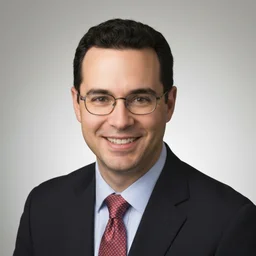
Certified Safety Professional & OSHA Compliance Expert
Indiana University of Pennsylvania Safety SciencesDr. William Foster holds a PhD in Safety Science from Indiana University of Pennsylvania and is a Certified Safety Professional (CSP) and Certified Hazardous Materials Manager. With 20 years of occupational health and safety management experience across construction, manufacturing, and chemical industries, he coaches safety professionals through OSHA certification, CSP, CHST, and safety management licensing programs.
Join the Discussion
Connect with other students preparing for this exam. Share tips, ask questions, and get advice from people who have been there.
View discussion (8 replies)