
OSHA First Aid Kit Requirements: Complete 2026 October Guide to Workplace Compliance
🧠 Learn OSHA first aid kit requirements for all workplaces. Contents, inspection rules, placement standards, and penalties explained for 2026 October compliance.

Understanding OSHA first aid kit requirements is one of the most fundamental compliance obligations for any US employer, regardless of industry size or sector. The Occupational Safety and Health Administration mandates that workplaces maintain adequate first aid supplies when medical treatment facilities are not reasonably accessible, and failing to meet these standards can result in citations, fines, and — more importantly — preventable worker injuries. Whether you manage a small construction site or a large manufacturing plant, having the right supplies in the right locations can mean the difference between a minor incident and a life-threatening emergency.
OSHA's primary regulation governing first aid supplies is found in 29 CFR 1910.151 for general industry and 29 CFR 1926.50 for the construction industry. Both standards require that employers provide first aid kits in sufficient quantities to handle anticipated injuries and that these kits be kept fully stocked and readily accessible at all times. Many employers make the mistake of purchasing a single pre-packaged kit and never replenishing it — a practice that creates both legal liability and genuine safety hazards for workers who rely on those supplies during emergencies.
The American National Standards Institute (ANSI) and the International Safety Equipment Association (ISEA) jointly publish the ANSI/ISEA Z308.1 standard, which OSHA references as a minimum baseline for first aid kit contents. This standard was significantly updated in 2015 and again reviewed for the 2021 edition, establishing two classes of kits — Class A and Class B — that correspond to different risk environments.
Class A kits address the most common workplace injuries, while Class B kits contain a broader range and quantity of supplies suitable for high-risk or remote locations. Knowing which class applies to your worksite is essential for true compliance.
Beyond the contents of the kit itself, OSHA and ANSI set requirements for how first aid kits must be stored, labeled, and maintained. Containers must be portable, durable, and capable of protecting supplies from dust, moisture, and contamination. They must be clearly marked with a white cross on a green background or another universally recognized symbol so that any worker — including those who do not speak English — can locate them quickly in an emergency. Regular inspection schedules must be documented to ensure that expired items are replaced and depleted supplies are restocked promptly.
Many employers also overlook the related requirements around trained first aid personnel. When a first aid kit alone is insufficient — for example, in remote locations where emergency medical services may take more than four minutes to arrive — OSHA requires that at least one employee per shift be trained in first aid and CPR. This training must be provided by a qualified instructor and refreshed at regular intervals. The cost of this training is modest compared to the potential liability of a workplace fatality that could have been prevented with timely intervention.
Industry-specific OSHA standards sometimes impose additional first aid requirements on top of the general industry baseline. Shipyard employment, longshoring, logging operations, and certain chemical-handling industries all have their own tailored first aid provisions that address the unique hazards workers face in those environments. If your workplace falls under one of these specialized industries, you must comply with both the general industry standard and any applicable industry-specific rule, whichever is more protective. Tracking these overlapping requirements is a key skill tested on the osha first aid kit requirements and related OSHA safety certification exams.
This comprehensive guide walks you through every aspect of OSHA's first aid kit requirements — from the specific contents mandated by ANSI/ISEA Z308.1 to inspection protocols, placement rules, number-of-kits calculations, and the penalties employers face for non-compliance. By the end, you will have a clear, actionable roadmap for bringing your workplace into full compliance and keeping it there throughout 2026 and beyond.
OSHA First Aid Compliance by the Numbers

ANSI/ISEA Z308.1 Kit Classes: Which One Does Your Workplace Need?
Designed for workplaces with lower injury risk — offices, retail, light manufacturing. Contains the minimum set of supplies to address common injuries like cuts, burns, and eye irritation. Typically fits in a compact container and is suitable for most low-hazard environments under OSHA 1910.151.
Required for high-risk environments such as construction sites, chemical plants, and remote worksites. Contains a broader range and larger quantity of supplies, including tourniquets, trauma dressings, and burn treatment items. Class B kits are designed to handle more severe or multiple simultaneous injuries.
Fixed-location kits mounted on walls or stored in designated areas. Best for facilities with predictable injury locations, such as production floors or loading docks. Must be clearly marked and accessible without barriers. Typically paired with supplemental portable kits for field workers.
Portable kits that travel with crews to job sites, vehicles, or remote locations. Required when workers are not near a fixed facility. Must be durable enough to withstand transport without compromising the sterility or integrity of enclosed supplies. Common in construction and utility sectors.
Lightweight, soft-sided portable kits suitable for mobile workers with low-to-moderate injury risk. Common in landscaping, delivery, and field service roles. Must meet the same supply requirements as their Type I and II counterparts but offer greater convenience for workers who move frequently.
The 2021 edition of ANSI/ISEA Z308.1 establishes a detailed minimum contents list for both Class A and Class B first aid kits, and understanding exactly what belongs in each is critical for OSHA compliance. Class A kits must contain absorbent compress dressings (at least one, measuring 32 square inches), adhesive bandages in assorted sizes (at least sixteen), adhesive tape (at least 2.5 yards), antiseptic totaling at least ten applications, a breathing barrier for CPR, burn dressing with at least 1 unit, burn treatment with at least six applications, and cold pack with at least one unit.
Class A kits must also include eye coverings with means of attachment (at least one pair), eye wash totaling at least one fluid ounce, first aid instruction booklet, hand sanitizer with at least six applications, medical exam gloves (at least two pairs), roller bandage measuring 4 inches in width (at least one), scissors, sterile pads measuring at least 3 by 3 inches (at least two), and a tourniquet. This list represents the absolute minimum — employers in higher-hazard industries should exceed these quantities based on a workplace hazard assessment and the number of employees on the largest shift.
Class B kits include all Class A items but in greater quantities and with additional items to address severe trauma. For example, Class B kits require at least two absorbent compress dressings rather than one, at least fifty adhesive bandages rather than sixteen, and a minimum of 5 yards of adhesive tape rather than 2.5. The Class B standard also adds triangular bandages (at least two), additional trauma dressings, and a more substantial supply of sterile pads. These enhanced quantities reflect the expectation that Class B environments will see higher injury rates or more severe injuries per incident.
One often-overlooked ANSI/ISEA requirement is the inclusion of a first aid instruction booklet inside every kit. This booklet must cover basic first aid and emergency care procedures and must be legible and intact at all times. During OSHA inspections, compliance officers will check for the booklet's presence and condition — a missing or water-damaged instruction guide can result in a citation even if all other supplies are present. Replacing the booklet during every annual inspection cycle is a simple step that many employers neglect.
Medications such as aspirin, ibuprofen, antacids, and antihistamines are explicitly excluded from OSHA's required first aid kit contents under 29 CFR 1910.151. OSHA considers these to be medical treatment rather than first aid, and dispensing them creates potential liability around employee health conditions, drug interactions, and pharmacy regulations. Some employers include over-the-counter medications in separate dispensers with appropriate labeling and employee consent protocols, but this practice should be reviewed with legal counsel before implementation to avoid unintended compliance issues.
Eyewash solutions deserve special attention because they are governed by both the first aid kit standard and by OSHA's separate eyewash and emergency shower standard (29 CFR 1910.151(c) and ANSI Z358.1). The one-fluid-ounce eyewash included in a Class A first aid kit is intended only for minor, non-chemical eye irritation. Any workplace where employees are exposed to corrosive chemicals must have a plumbed or gravity-fed eyewash station capable of delivering 0.4 gallons per minute for fifteen continuous minutes — a portable kit eyewash cannot substitute for this requirement. Conflating the two standards is a common and costly compliance mistake.
Employers should also document their kit contents selection process as part of their overall hazard communication program. A written first aid needs assessment — identifying the types of injuries most likely to occur based on job tasks, chemicals present, and historical incident data — demonstrates due diligence and can support an employer's defense if a citation is challenged. This assessment should be reviewed whenever new processes, equipment, or chemicals are introduced to the workplace, and it should be kept on file for at least five years alongside inspection logs and training records.
OSHA Practice Test Questions
Prepare for the OSHA - Safety Certificate exam with our free practice test modules. Each quiz covers key topics to help you pass on your first try.
OSHA Basic OSHA Practice
OSHA Exam Questions covering Basic OSHA Practice. Master OSHA Test concepts for certification prep.
OSHA Confined Space Entry
Free OSHA Practice Test featuring Confined Space Entry. Improve your OSHA Exam score with mock test prep.
OSHA Fall Protection
OSHA Mock Exam on Fall Protection. OSHA Study Guide questions to pass on your first try.
OSHA - Safety Certificate Electrical Safet...
Free OSHA Quiz on OSHA - Safety Certificate Electrical Safety Standards Questions and Answers. OSHA Exam prep questions with detailed explanations.
OSHA - Safety Certificate Emergency Action...
OSHA Practice Questions for OSHA - Safety Certificate Emergency Action and Fire Plans Questions and Answers. Build confidence for your OSHA certification exam.
OSHA - Safety Certificate Hazard Communica...
OSHA Test Online for OSHA - Safety Certificate Hazard Communication Standard Questions and Answers. Free practice with instant results and feedback.
OSHA - Safety Certificate Introduction to ...
OSHA Study Material on OSHA - Safety Certificate Introduction to OSHA Questions and Answers. Prepare effectively with real exam-style questions.
OSHA - Safety Certificate Lockout/Tagout P...
Free OSHA Test covering OSHA - Safety Certificate Lockout/Tagout Procedures Questions and Answers. Practice and track your OSHA exam readiness.
OSHA - Safety Certificate Machine Guarding...
OSHA Exam Questions covering OSHA - Safety Certificate Machine Guarding Requirements Questions and Answers. Master OSHA Test concepts for certification prep.
OSHA - Safety Certificate OSHA Recordkeepi...
Free OSHA Practice Test featuring OSHA - Safety Certificate OSHA Recordkeeping and Reporting Questions and Answers. Improve your OSHA Exam score with mock test prep.
OSHA - Safety Certificate Personal Protect...
OSHA Mock Exam on OSHA - Safety Certificate Personal Protective Equipment (PPE) Questions and Answers. OSHA Study Guide questions to pass on your first try.
OSHA - Safety Certificate Walking and Work...
OSHA Test Prep for OSHA - Safety Certificate Walking and Working Surfaces Questions and Answers. Practice OSHA Quiz questions and boost your score.
OSHA - Safety Certificate Electrical Safet...
OSHA Mock Test covering - Safety Certificate Electrical Safety Standards. Online OSHA Test practice with instant feedback.
OSHA - Safety Certificate Emergency Action...
Free OSHA Quiz on - Safety Certificate Emergency Action and Fire Plans. OSHA Exam prep questions with detailed explanations.
OSHA - Safety Certificate Hazard Communica...
OSHA Practice Questions for - Safety Certificate Hazard Communication Standard. Build confidence for your OSHA certification exam.
OSHA - Safety Certificate Introduction to ...
OSHA Test Online for - Safety Certificate Introduction to OSHA. Free practice with instant results and feedback.
OSHA - Safety Certificate Lockout/Tagout P...
OSHA Study Material on - Safety Certificate Lockout/Tagout Procedures. Prepare effectively with real exam-style questions.
OSHA - Safety Certificate Machine Guarding...
Free OSHA Test covering - Safety Certificate Machine Guarding Requirements. Practice and track your OSHA exam readiness.
OSHA - Safety Certificate OSHA Recordkeepi...
OSHA Exam Questions covering - Safety Certificate OSHA Recordkeeping and Reporting. Master OSHA Test concepts for certification prep.
First Aid Kit Placement, Accessibility, and Quantity Rules
OSHA requires that first aid kits be placed in locations that are immediately accessible to all employees, meaning workers must be able to reach a kit without crossing hazardous areas, unlocking secured rooms, or waiting for supervisory approval. The kit should be positioned at or near the primary workstation and clearly marked with signage visible from at least 30 feet. Wall-mounted kits must be installed at a height reachable by all workers, including those with mobility limitations, and must never be blocked by equipment or stored materials.
In multi-floor buildings, OSHA compliance officers generally expect at least one kit per floor, and in large open facilities, kits should be distributed so that no worker needs to travel more than one minute to reach one. For outdoor or mobile worksites, portable kits must accompany each crew whenever they work beyond easy reach of a fixed facility. Construction supervisors are required to ensure that a first aid kit is on every vehicle or piece of major equipment used at a remote site, and that workers know exactly where each kit is stored before work begins each day.

Buying Pre-Packaged Kits vs. Building Custom Kits: Pros and Cons
- +Pre-packaged kits are quick to deploy and eliminate guesswork about required contents
- +ANSI-compliant kits from reputable suppliers come pre-labeled and properly containerized
- +Custom kits allow precise tailoring to site-specific hazards identified in your hazard assessment
- +Bulk purchasing of individual supplies for custom kits often costs less per unit than pre-packaged options
- +Custom kits make it easier to add industry-specific items like antidotes or specialized dressings
- +Pre-packaged kits simplify inspection checklists since contents are standardized and documented by the manufacturer
- −Pre-packaged kits may contain items that exceed your needs while lacking hazard-specific supplies
- −Generic kits are rarely sufficient for high-hazard industries without significant supplementation
- −Custom kits require ongoing management to ensure all items remain in stock and unexpired
- −Building custom kits demands more time, expertise, and documentation during initial setup
- −Pre-packaged kits from discount suppliers may technically meet quantity requirements but use lower-quality supplies
- −Neither approach eliminates the employer's obligation to conduct a formal hazard assessment before selection
Pros and Cons at a Glance
| Pros | Cons |
|---|---|
| Pre-packaged kits are quick to deploy and eliminate guesswork about required contents | Pre-packaged kits may contain items that exceed your needs while lacking hazard-specific supplies |
| ANSI-compliant kits from reputable suppliers come pre-labeled and properly containerized | Generic kits are rarely sufficient for high-hazard industries without significant supplementation |
| Custom kits allow precise tailoring to site-specific hazards identified in your hazard assessment | Custom kits require ongoing management to ensure all items remain in stock and unexpired |
| Bulk purchasing of individual supplies for custom kits often costs less per unit than pre-packaged options | Building custom kits demands more time, expertise, and documentation during initial setup |
| Custom kits make it easier to add industry-specific items like antidotes or specialized dressings | Pre-packaged kits from discount suppliers may technically meet quantity requirements but use lower-quality supplies |
| Pre-packaged kits simplify inspection checklists since contents are standardized and documented by the manufacturer | Neither approach eliminates the employer's obligation to conduct a formal hazard assessment before selection |
First Aid Kit Compliance Inspection Checklist
- ✓Verify that the kit class (A or B) matches the hazard level identified in your written hazard assessment.
- ✓Check that all required ANSI/ISEA Z308.1 items are present and none are missing from the inventory list.
- ✓Inspect expiration dates on all sterile supplies, antiseptics, burn treatments, and cold packs.
- ✓Confirm that the instruction booklet is present, legible, and free of water damage or missing pages.
- ✓Ensure the container closes securely, is free of cracks or corrosion, and protects contents from moisture.
- ✓Check that the kit is mounted or stored in an accessible location unobstructed by equipment or materials.
- ✓Verify that signage identifying the kit location is clearly visible from at least 30 feet away.
- ✓Confirm that at least two pairs of non-latex or latex exam gloves are present and in sealed packaging.
- ✓Check that the tourniquet is present, undamaged, and employees know how to apply it correctly.
- ✓Document the inspection date, inspector name, and any restocking actions taken, then file for five years.
A First Aid Kit Is Only Compliant If It Is Fully Stocked at All Times
OSHA compliance officers do not grade on a curve — a first aid kit that is missing even one required item is considered non-compliant, regardless of how well-stocked it was at the last inspection. Establish a written restocking procedure that triggers immediately after any supplies are used, not just during quarterly reviews. Many employers use a two-kit rotation system: one kit in active use and one fully stocked kit ready to swap in the moment the active kit is opened.
Industry-specific OSHA standards impose additional first aid requirements that go well beyond the general industry baseline, and employers in regulated sectors must understand exactly how these rules interact with 29 CFR 1910.151.
The construction industry standard at 29 CFR 1926.50 requires that first aid kits be inspected before each use, that a person trained in first aid be available on every construction project where no clinic or hospital is reasonably near, and that stretchers and blank blankets also be available at construction sites where a physician's advice cannot be obtained promptly. These requirements reflect the inherently higher injury rates in construction compared to most general industry settings.
The maritime industry operates under 29 CFR 1915 (shipyard employment) and 29 CFR 1918 (longshoring), both of which specify more extensive first aid kit contents than general industry, including items tailored to drowning, crush injuries, and hypothermia risks. Longshoring operations must provide a first aid kit for every 25 workers on any shift, and shipyard operations working in confined spaces must have kits within immediate reach of each confined space entry point. These requirements often surprise maritime employers who have historically relied on general industry kits without auditing their sector-specific obligations.
Agricultural employers covered under OSHA's field sanitation and general duty standards also face unique first aid challenges. Exposure to pesticides, heat illness, and machinery injuries creates a different injury profile than office or light industrial settings, and OSHA expects agricultural employers to stock kits with items appropriate for these hazards — including activated charcoal (where recommended by poison control), extra cold treatment supplies for heat illness management, and eye irrigation equipment for pesticide exposure. The general duty clause (Section 5(a)(1)) gives OSHA broad authority to cite agricultural employers for inadequate first aid provisions even when no specific standard is violated.
Healthcare and laboratory settings present another layer of complexity because first aid kit requirements intersect with bloodborne pathogen standards (29 CFR 1910.1030) and hazardous chemical standards. Healthcare workers providing first aid must use proper personal protective equipment, and kits in clinical areas must include additional PPE such as face shields and fluid-resistant gowns alongside standard supplies. Laboratory kits should be supplemented based on a specific chemical inventory review — a chemistry lab working with hydrofluoric acid, for example, must maintain calcium gluconate gel on-site as part of its emergency response protocol, even though this goes beyond standard ANSI kit requirements.
Electrical utilities and telecommunications workers face arc flash and electrical shock risks that require specialized first aid provisions. OSHA's electrical safety standards and the NFPA 70E standard for electrical safety in the workplace both recommend that employers performing energized electrical work maintain burn kits, eye wash equipment, and CPR-capable first aid personnel at every live-line work location. Employers in this sector should also consider including thermal burn treatment supplies that exceed the ANSI Class B minimum, since arc flash incidents can produce severe burns across large body surface areas that overwhelm a standard kit's burn treatment supply.
Oil and gas extraction operations subject to 29 CFR 1910.119 (Process Safety Management) and related standards face some of the most comprehensive first aid requirements in any industry. PSM-covered facilities are expected to include first aid response in their emergency action plans, ensure that first aid supplies are adequate for the specific chemicals and injury types anticipated at each process unit, and train emergency response teams in advanced first aid and trauma care well beyond basic first aid certification.
OSHA's PSM standard audits are notorious for scrutinizing the integration of first aid provisions into the broader process hazard analysis and emergency response planning documents.
Regardless of industry, multi-employer worksites — such as construction projects where a general contractor oversees multiple subcontractors — require clear contractual agreements about who is responsible for providing and maintaining first aid kits. OSHA's multi-employer citation policy holds both the creating employer (who establishes the hazard) and the controlling employer (the general contractor) responsible for first aid compliance failures. Subcontractors should not assume that the general contractor's kit covers their employees; each employer with workers on site should conduct its own hazard assessment and provide its own compliant kits to avoid shared liability for first aid deficiencies.
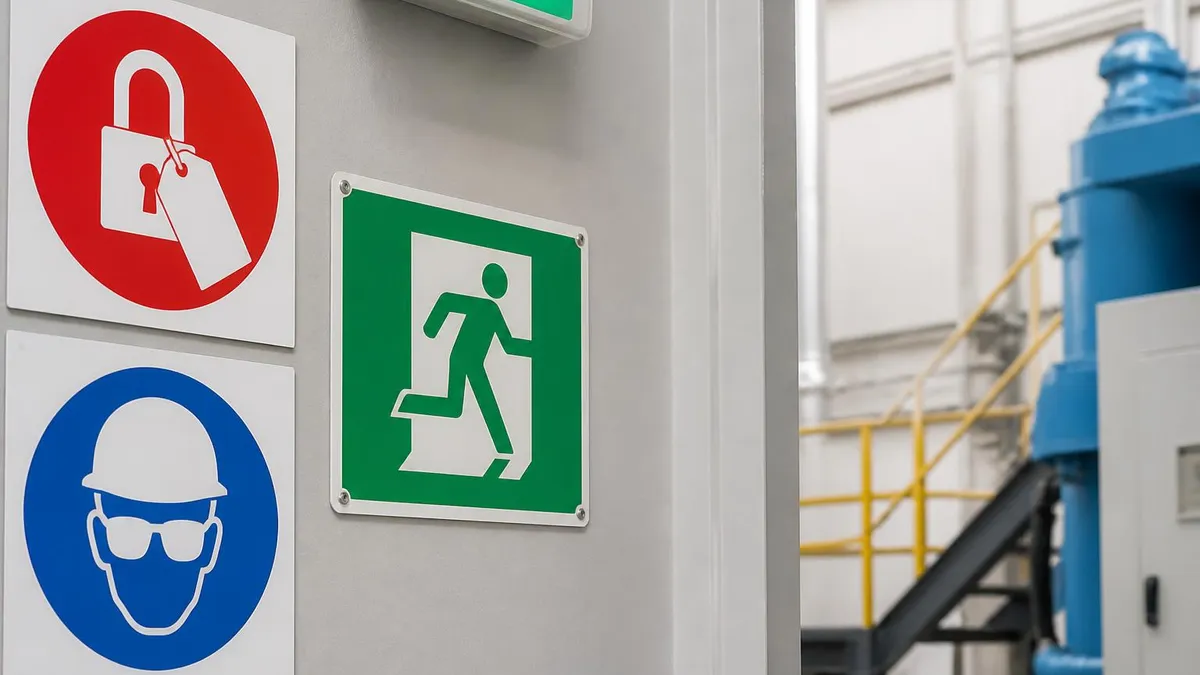
OSHA compliance officers have cited employers who argued that a neighboring tenant's first aid kit or a nearby clinic made their own kit unnecessary. Each employer is independently responsible for providing adequate first aid supplies for their own employees — proximity to another business's resources does not satisfy 29 CFR 1910.151. Always maintain your own compliant kit on your own premises, fully documented and inspected on schedule.
OSHA enforces first aid kit requirements through both programmed inspections (planned visits based on injury rate data and high-hazard industry targeting) and unprogrammed inspections triggered by employee complaints, referrals from other agencies, or follow-up after a reported workplace injury. A compliance officer who finds that a workplace lacks an adequate first aid kit, or that the kit present is missing required items, will typically issue a citation under 29 CFR 1910.151(a) with a classification of Serious, Other-Than-Serious, or — in egregious cases — Willful, depending on what the employer knew and when they knew it.
A Serious violation is issued when OSHA determines that the employer knew or should have known about the hazard and that the hazard could cause death or serious physical harm. For first aid kit violations, this classification is appropriate when the deficiency relates to a known high-hazard task — for example, a construction employer performing demolition work without any first aid kit on site would almost certainly receive a Serious citation.
As of 2026, the maximum penalty for a Serious violation is $16,131 per violation, and OSHA can cite each separate deficiency (missing kit, missing supplies, inadequate labeling) as a separate violation, causing penalties to stack rapidly.
Willful violations — those where the employer intentionally disregarded OSHA requirements or demonstrated plain indifference to employee safety — carry penalties up to $161,323 per violation as of 2026. Employers who have previously been cited for first aid kit deficiencies and fail to abate them face repeat violation penalties equal to ten times the original penalty amount. OSHA's penalty adjustment policy also reduces fines for small businesses with fewer than 25 employees by up to 60%, but this reduction does not eliminate the fundamental compliance obligation or the reputational damage of an OSHA citation appearing in the public inspection database.
Beyond financial penalties, first aid kit non-compliance creates significant civil liability exposure. When a worker is injured and cannot access adequate first aid supplies — particularly if the absence of supplies contributed to the severity of the injury — the employer faces potential workers' compensation claims, personal injury lawsuits, and in extreme cases, OSHA criminal referrals under Section 17(e) of the OSH Act.
Courts have held that OSHA violations create a rebuttable presumption of negligence in tort proceedings, meaning that a documented first aid kit citation can be used against an employer in a worker's personal injury lawsuit even if the citation was paid and abated.
The most cost-effective compliance strategy is proactive prevention rather than reactive remediation. Implementing a monthly first aid kit inspection protocol, assigning a designated safety officer to manage restocking, and training all supervisors on kit location and contents takes only a few hours per month and virtually eliminates the risk of a citation-worthy deficiency.
Employers who integrate first aid kit compliance into their broader safety management system — tying inspections to incident reporting, near-miss tracking, and hazard communication updates — consistently outperform their peers on OSHA's inspection metrics and on overall injury and illness rates as measured by the osha first aid kit requirements benchmarking framework.
State Plan states — the 22 states and two territories that operate their own OSHA-approved safety programs — may have first aid kit requirements that are more stringent than federal OSHA minimums. California's Cal/OSHA, for example, imposes specific first aid kit contents requirements that differ from ANSI/ISEA Z308.1 in some respects, and Washington's WISHA has detailed requirements for specific industries common in that state, including agriculture and forestry. Employers operating in State Plan jurisdictions must always check their state's specific regulations in addition to the federal baseline, and should not assume that federal compliance automatically satisfies state requirements.
Documenting compliance is just as important as achieving it. Maintain a first aid kit inspection log that records the date of each inspection, the name of the person who conducted it, the current inventory status, any expired or missing items found, and the corrective actions taken. Store this log alongside your hazard assessment and employee training records.
During an OSHA inspection, producing a complete and current set of these documents demonstrates a systemic commitment to compliance that compliance officers view favorably — and that can support penalty reductions under OSHA's good-faith credit system, which can reduce final penalties by up to 25%.
Building a truly effective first aid program goes beyond purchasing a compliant kit and filing an inspection log. The most safety-conscious employers approach first aid preparedness as a continuous improvement process, regularly evaluating whether their kits and protocols are keeping pace with changes in their workforce, their operations, and the best available evidence on workplace injury response.
Start by scheduling a formal first aid needs assessment at least annually and whenever a significant change occurs — new equipment, new chemicals, new job tasks, or a meaningful shift in your workforce demographics all warrant a fresh look at whether your current kits are adequate.
Employee training is the complement to physical kit compliance that OSHA most frequently cites employers for overlooking. A fully stocked, perfectly placed first aid kit is of limited value if no one on the shift knows how to use the tourniquet, activate the cold pack, or properly irrigate an eye.
OSHA recommends — and for remote worksites requires — that at least one employee per shift hold a current first aid and CPR certification from an accredited provider such as the American Red Cross, the American Heart Association, or the National Safety Council. Refresher training every two years keeps skills current and ensures that new hires are quickly brought into the program.
Hands-on first aid drills, separate from training certification, are an underutilized tool for improving response effectiveness. Tabletop exercises where workers practice locating the kit, identifying the right supply for a simulated injury, and initiating an emergency call take only 20-30 minutes and dramatically reduce the hesitation and confusion that often delays first aid response in real emergencies. Consider scheduling these drills quarterly, timing them at the start of a shift when all employees are present, and rotating the simulated injury scenarios to cover the most common hazard types at your specific worksite.
Integrating first aid kit management into your incident reporting and root cause analysis process creates a feedback loop that continuously improves your program. Every time a kit is opened and supplies are used, document the injury type, the supplies used, and whether those supplies were adequate for the situation.
If workers frequently use supplies that are not in the standard ANSI minimum list — or if certain items are consistently insufficient in quantity — that data should feed directly back into your hazard assessment and kit composition decisions. This kind of data-driven first aid management is exactly the approach OSHA's Voluntary Protection Program (VPP) sites use to achieve injury rates far below industry averages.
Digital tools now make it easier than ever to manage first aid kit compliance at scale. Several safety management software platforms offer first aid kit inventory modules that allow safety managers to track kit locations, inspection schedules, supply expiration dates, and restocking needs across multiple worksites from a single dashboard. Some platforms integrate with purchase order systems to automate restocking when inventory falls below preset minimums. While these tools are not required by OSHA, they significantly reduce the administrative burden of compliance and produce the kind of clean, auditable documentation that supports favorable outcomes during OSHA inspections.
When your workplace does experience an injury that requires use of the first aid kit, the post-incident review is an opportunity to evaluate both your response and your preparedness. Ask whether supplies were where they were expected to be, whether they were adequate for the injury, whether employees responded quickly and correctly, and whether the injury itself could have been prevented with a different hazard control.
Capturing this information in a written post-incident review, separate from the OSHA 300 log entry, creates institutional knowledge that makes your safety program more effective over time and demonstrates to OSHA the kind of systematic safety management that reduces both inspections and penalties.
Finally, remember that first aid compliance is not a box to check once a year — it is a daily operational responsibility. Every supervisor who starts a shift should visually confirm that the first aid kit is accessible, clearly marked, and undisturbed. Every employee should know where the nearest kit is located and understand the basic steps to follow if they or a coworker is injured.
This culture of daily awareness, combined with rigorous inspection protocols, complete documentation, and properly stocked ANSI-compliant kits, is what separates workplaces that pass OSHA inspections from those that face costly citations and — far more importantly — what separates workplaces where injuries are managed well from those where a preventable emergency becomes a tragedy.
Sample OSHA Safety Certificate Practice Questions
Try these questions from our free OSHA Safety Certificate practice tests. The correct answer and an explanation follow each question.
When consumer products are used in the workplace in the same way as they are by regular household consumers, the HCS does not apply.
- A. TRUE
- B. FALSE
Answer: A. TRUE
The HCS generally does not apply to consumer products when they are used in the workplace in the same manner and frequency as they would be by a typical household consumer. This exemption recognizes that the risks associated with such products are usually well-understood and adequately addressed by existing consumer product labeling. It avoids redundant regulation for common items.
During which dates must the annual summary (Form 300A) be posted in the workplace?
- A. January 1 to March 31
- B. February 1 to April 30
- C. March 1 to May 31
- D. December 1 to January 31
Answer: B. February 1 to April 30
Form 300A must be posted from February 1 through April 30 each year.
What is the main goal of a workplace emergency action plan?
- A. To increase sales
- B. To ensure safe and orderly evacuation during emergencies
- C. To track vacation days
- D. To assign parking spots
Answer: B. To ensure safe and orderly evacuation during emergencies
An emergency action plan guides safe, organized responses like evacuations.
What is the recommended first action when you discover a chemical spill?
- A. Ignore it
- B. Alert others and evacuate or contain per the plan
- C. Taste the chemical
- D. Pour water on everything immediately
Answer: B. Alert others and evacuate or contain per the plan
Alerting others and following the spill response plan protects everyone from exposure.
OSHA Questions and Answers

OSHA TRIR Calculator: Formula, Calculation Steps, and Industry Benchmarks

OSHA Approved Hard Hats: Complete 2026 Guide to ANSI Z89.1 Compliance, Types, and Workplace Requirements

OSHA.gov: Your Complete Guide to the Official OSHA Website

OSHA 510: Course Content, Path to Trainer, and Realistic Path

OSHA Eyewash Requirements: Complete 2026 Guide to Eye Wash Stations, ANSI Z358.1 Compliance, and Workplace Standards
About the Author

Certified Safety Professional & OSHA Compliance Expert
Indiana University of Pennsylvania Safety SciencesDr. William Foster holds a PhD in Safety Science from Indiana University of Pennsylvania and is a Certified Safety Professional (CSP) and Certified Hazardous Materials Manager. With 20 years of occupational health and safety management experience across construction, manufacturing, and chemical industries, he coaches safety professionals through OSHA certification, CSP, CHST, and safety management licensing programs.
Join the Discussion
Connect with other students preparing for this exam. Share tips, ask questions, and get advice from people who have been there.
View discussion (8 replies)