
OSHA Certification: How to Get Certified in 2026 September
💯 Learn how OSHA certification works, which card you need, costs, timelines, and how to pass your safety training exam in 2026 September.

What Is OSHA Certification?
OSHA certification isn't a single credential — it's a family of safety training cards issued under the U.S. Occupational Safety and Health Administration's Outreach Training Program. When someone says they need to get "OSHA certified," they almost always mean one of two courses: the OSHA 10-Hour or the OSHA 30-Hour. Both cards prove you've completed federally recognized safety training, and contractors, project owners, and state agencies routinely require them before you can set foot on a job site.
So why do these cards matter so much? Construction fatalities in the U.S. average around 1,000 per year, and the "Fatal Four" — falls, struck-by, electrocution, and caught-in/between hazards — account for more than half of those deaths. OSHA's training program exists specifically to cut those numbers. When you hold a valid card, employers know you can recognize hazards, understand your rights, and respond correctly if something goes wrong.
It's worth clearing up a common misconception: OSHA itself doesn't issue certifications or licenses. The cards come from OSHA-authorized trainers who complete Outreach Training Program coursework. That distinction matters if you're shopping for courses — only classes delivered by an OSHA Outreach Trainer result in a legitimate Department of Labor wallet card.
OSHA 10 vs. OSHA 30: Which One Do You Need?
The choice between OSHA 10 and OSHA 30 comes down to your role on a job site and what your employer or contract requires.
OSHA 10-Hour targets entry-level workers. You'll spend 10 contact hours covering hazard recognition, personal protective equipment, electrical safety, fall protection, and your rights under the OSH Act. It's the baseline ticket for most hourly construction and general industry jobs. Many states mandate it for all workers on publicly funded projects.
OSHA 30-Hour is built for supervisors, foremen, safety officers, and anyone who directs the work of others. The extra 20 hours go deep — excavation, scaffolding, cranes, health hazards, record-keeping, and managing a safety program. If you're moving into a site supervisor role or bidding on projects that specify it in the contract, you'll want your construction safety card before you start.
There's also a general industry track alongside the construction track. A warehouse manager, for example, would take the General Industry 30-Hour rather than the construction version. The content focuses on lockout/tagout, powered industrial trucks, machine guarding, and related topics instead of scaffolding and trenching.
How Long Does OSHA Certification Take?
The names spell it out: the 10-Hour takes a minimum of 10 hours, and the 30-Hour takes a minimum of 30 hours. OSHA rules cap classroom time at 7.5 hours per day for in-person courses, so the 10-Hour is typically completed in two days and the 30-Hour takes four to five days. Online courses spread the same content across self-paced modules — most people finish the 10-Hour in a week or two when working through it evenings and weekends.
Once you complete the course, your trainer submits your information to OSHA's system. Your wallet card — the physical laminated Department of Labor card — arrives by mail in roughly 2–3 weeks. Until it arrives, your certificate of completion from the trainer is your proof of training.
How Much Does OSHA Certification Cost?
Prices range a lot depending on format and provider, but here are realistic ballpark figures:
OSHA 10-Hour: $25–$80 online; $50–$150 in-person classroom.
OSHA 30-Hour: $100–$200 online; $200–$450 in-person classroom.
Some employers cover the cost — especially for foremen and site supervisors where the 30-Hour is a job requirement. Union apprenticeship programs often include OSHA 10 as part of their standard curriculum. If you're paying out of pocket, the online route is almost always cheaper, though some states and employers specifically require in-person delivery. Double-check before you register.
Can OSHA Certification Expire?
Technically, OSHA wallet cards don't expire — there's no official federal renewal requirement baked into the Outreach Training Program. Your card remains valid indefinitely once issued. However, there are two practical wrinkles:
- Employers and project owners often set their own refresh policies. It's extremely common to see job postings or contract specs that say something like "OSHA 10 within the last 5 years" or "current OSHA 30." Treat those requirements as de facto expiration dates.
- OSHA periodically updates its outreach curriculum. If there have been significant regulatory changes since you trained, a refresher keeps your knowledge current even if your card is still technically valid.
Bottom line: check what your employer or the specific project requires. If they say "current within three years," plan accordingly.
How to Prepare for Your OSHA Training
Most people think OSHA training is just sitting through slides — and some instructors do run it that way. But the best approach is to come in with a working knowledge of the key standards so you can engage with the material rather than just absorb it passively.
Before your course, spend a few hours reviewing the hazard categories that your specific track covers. For construction, that means understanding fall protection systems, scaffold types, trench and excavation requirements, electrical hazard basics, and struck-by prevention. For general industry, focus on lockout/tagout procedures, hazard communication (GHS labels and SDS sheets), fire safety, and walking-working surfaces.
Use your card prep resources to quiz yourself on OSHA standards. Knowing the answers to common exam questions — things like minimum guardrail heights, required distances from energized power lines, and confined space classification criteria — gives you a real edge in the classroom and helps the material stick long after the course ends.
If you want to take it further, look into OSHA's free online resources at osha.gov, including their eTool library. Topics like electrical safety, ergonomics, and scaffolding all have dedicated interactive tools that reinforce training content. You won't need this level of depth just to complete your OSHA 10 or 30, but it's useful background if you're moving into a safety-focused role.
OSHA Certification for Specific Industries
While the construction and general industry tracks cover the widest audience, OSHA training isn't one-size-fits-all. Here's how it breaks down by sector:
Construction: OSHA 10 and 30 Construction are the standard credentials. New York, Nevada, Missouri, Massachusetts, and several other states now legally require OSHA 10 for all construction workers on public jobs. Some cities — New York City being the most notable — require OSHA 30 for supervisors and site safety managers.
Maritime: Shipyards, marine terminals, and longshoring operations have separate OSHA standards (Parts 1915, 1917, and 1918). Outreach training for maritime is less common but does exist through authorized trainers.
Healthcare: There's no formal OSHA Outreach track for healthcare, but bloodborne pathogens training (29 CFR 1910.1030) is mandatory for workers with occupational exposure. Most healthcare employers run this internally.
Agriculture: OSHA covers agricultural employers with 11 or more workers. Training requirements vary by state, and some agricultural training grants help offset costs for smaller operations.
Whatever your industry, the underlying principle is the same: know the hazards specific to your work environment, understand your employer's obligations, and be able to recognize when something isn't safe.
After You're Certified: Keeping Your Knowledge Sharp
Getting your card is step one. Staying sharp is the ongoing work. A few habits that actually make a difference on real job sites:
- Do regular toolbox talks. Even a 10-minute pre-shift discussion of a specific hazard — say, ladder safety before a week of exterior work — reinforces the concepts from your training.
- Walk the site with safety in mind. When you arrive on a new job, spend five minutes identifying the fall hazards, egress routes, and where the first aid kit is. This takes two minutes once it's habit.
- Know your rights. OSHA's whistleblower protection program covers workers who report hazards. You can file a complaint with OSHA — confidentially — if you're asked to work in conditions that put you at serious risk.
If you're preparing for your OSHA exam or want to test your safety knowledge before class, online osha practice quizzes can help you identify weak spots early. Working through questions on topics like hazard communication, PPE selection, and electrical safety gives you a clearer picture of what to focus on before the course starts.
State-Specific OSHA Requirements
Federal OSHA sets the baseline, but 22 states plus Puerto Rico and the U.S. Virgin Islands operate their own OSHA-approved state plans. These state plans must be at least as effective as federal OSHA, and many go further. If you work in California, Michigan, Washington, or another state-plan state, check the state-specific requirements — they can differ meaningfully from the federal program.
California's Cal/OSHA program, for example, has stricter standards on heat illness prevention and wildfire smoke exposure that don't exist in the federal rules. Washington's WISHA program has additional requirements around fall arrest systems in construction. Knowing whether you're working under a state plan — and what's different about it — matters.
For workers who travel between states for project work, the good news is that OSHA 10 and OSHA 30 cards issued by any authorized trainer are recognized nationwide. You don't need to retake the course if you move from a state-plan state to a federal OSHA state or vice versa.
OSHA Certifications Beyond the 10 and 30
Once you have your foundational card, there's a wider world of OSHA-adjacent credentials worth knowing about. These aren't issued through the Outreach Training Program but are recognized across the industry:
OSHA 500 and 502: These are the trainer courses — the credentials you need to become an authorized OSHA Outreach Trainer yourself. OSHA 500 is for construction, OSHA 502 is for general industry. Both require completing the 30-Hour course first and attending a week-long trainer workshop at an OSHA Training Institute Education Center.
Certified Safety Professional (CSP): Issued by the Board of Certified Safety Professionals, the CSP is one of the most respected credentials in workplace safety. It requires a bachelor's degree, professional safety experience, and passing a rigorous exam. Think of it as the next level after OSHA 30 for someone building a career in safety management.
Construction Health and Safety Technician (CHST): Also from BCSP, this credential is specifically for construction safety professionals who don't yet have the experience for a full CSP.
These advanced credentials build on the foundation your OSHA card provides. If you're looking at a long-term career in occupational safety, the OSHA 30 is the starting point, not the destination.
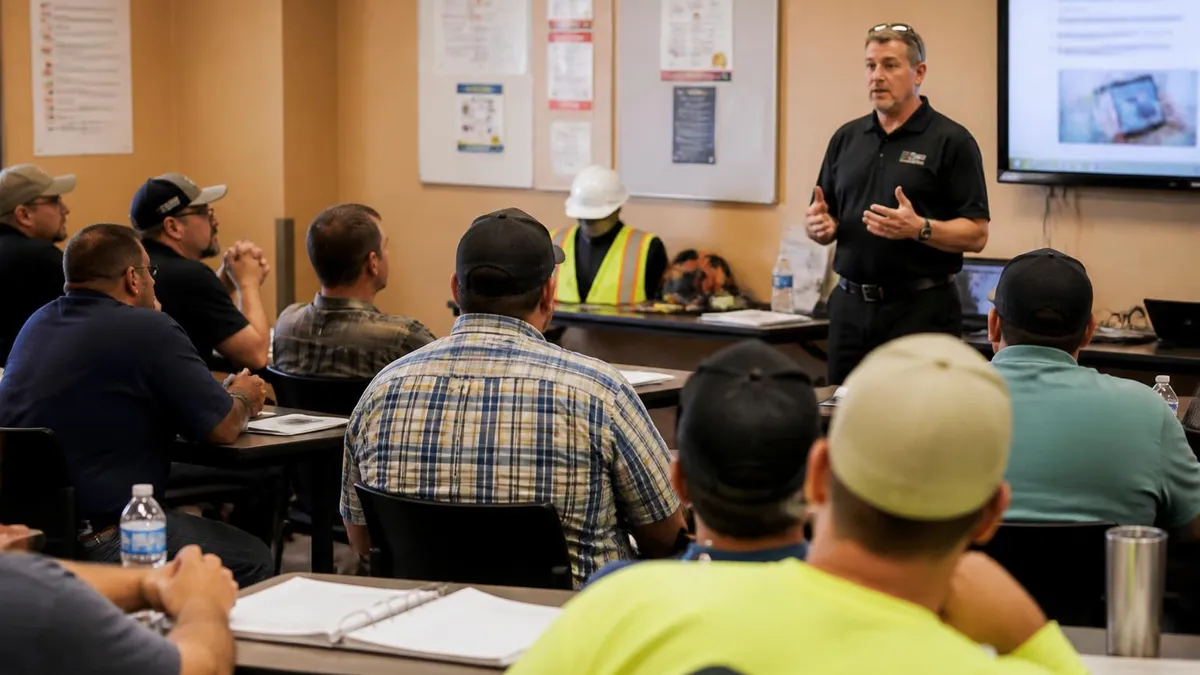
Getting the Most Out of Your OSHA Training
Here's something most people don't realize until they're in the room: OSHA training is only as valuable as the effort you bring to it. Instructors can present the material, but the workers who actually improve their safety behavior are the ones who show up asking questions and connecting the content to real situations they've faced on the job.
Before your course, write down two or three situations where you weren't sure what the safe procedure was — a time you saw an unguarded edge and weren't sure who was responsible for the barrier, or a moment when you noticed a coworker using a ladder in a way that seemed wrong but you didn't say anything. Bring those situations to class and use the training to work out the right answer.
If your employer is paying for certification classes near me ask whether they have a formal safety program and who the designated safety person is on your job sites. Having a name — someone you can actually call when you're not sure what to do — is more valuable than any card in your wallet.
For additional practice before your course, try working through osha 30 certification training questions to get comfortable with how OSHA standards are tested. Even if you're just taking the 10-Hour, familiarity with the material structure will make the classroom time more productive.
Safety training isn't a one-time event. It's a foundation you build on every time you walk onto a new job site, notice a hazard, or speak up when something doesn't look right. Your OSHA card proves you've got the foundation — what you do with it is up to you.
About the Author

Certified Safety Professional & OSHA Compliance Expert
Indiana University of Pennsylvania Safety SciencesDr. William Foster holds a PhD in Safety Science from Indiana University of Pennsylvania and is a Certified Safety Professional (CSP) and Certified Hazardous Materials Manager. With 20 years of occupational health and safety management experience across construction, manufacturing, and chemical industries, he coaches safety professionals through OSHA certification, CSP, CHST, and safety management licensing programs.
Join the Discussion
Connect with other students preparing for this exam. Share tips, ask questions, and get advice from people who have been there.
View discussion (8 replies)