
OSHA Forklift Certification Requirements: The Complete 2026 Guide to Powered Industrial Truck Training and Compliance
🎯 OSHA forklift certification requirements explained: training, evaluation, 3-year renewal, employer duties, costs, and 29 CFR 1910.178 compliance for 2026.

Understanding OSHA forklift certification requirements is one of the most important responsibilities for any warehouse, distribution center, or manufacturing facility that operates powered industrial trucks. Under federal law, employers cannot allow workers to drive forklifts unless they have been trained, evaluated, and certified to operate the specific type of equipment in their actual workplace. These requirements are not optional suggestions; they are legally enforceable rules backed by inspections, citations, and financial penalties that can reach tens of thousands of dollars per violation. Practice with the free OSHA Safety Certificate practice test on PracticeTestGeeks (7 questions with answer explanations).
The governing standard is 29 CFR 1910.178, which OSHA published as a performance-based rule. Rather than dictating a single curriculum, it tells employers what outcomes the training must achieve: operators who understand the truck, the hazards, and the workplace conditions they will face. This flexibility means certification can be delivered by an in-house trainer, a third-party provider, an equipment dealer, or an online platform, as long as the program covers every mandated topic and ends with a hands-on evaluation.
Forklifts rank among the deadliest pieces of equipment in American industry. OSHA estimates that powered industrial trucks contribute to roughly 70 to 85 worker deaths and tens of thousands of serious injuries every year. Tip-overs, struck-by incidents, falling loads, and pedestrian collisions account for the bulk of these tragedies. Proper certification directly attacks these causes by ensuring operators know load limits, travel speeds, blind-spot management, and the physics of a counterbalanced lift truck.
Certification applies to far more than the classic warehouse sit-down forklift. The standard covers seven major classes of powered industrial trucks, including electric motor rider trucks, internal combustion engine trucks, electric pallet jacks, reach trucks, order pickers, and rough-terrain forklifts. An operator certified on one class is not automatically qualified to run another, because each machine handles, balances, and maneuvers differently. Employers must match training to the exact equipment a worker will use.
A persistent myth is that forklift certification is a portable, lifetime credential like a driver's license. It is not. Certification is tied to a specific employer and workplace, and it expires. OSHA requires a formal re-evaluation at least once every three years, and additional refresher training is triggered by accidents, near misses, unsafe operation, or changes in equipment or facility conditions. This guide walks through every requirement, cost, and step so you can build a fully compliant program.
Whether you are an employer designing a training program, a safety manager preparing for an audit, or a worker who wants to understand what a legitimate certification involves, this article breaks down the entire process. We will cover the three-part training structure, who can serve as a qualified trainer, how evaluations work, renewal timelines, recordkeeping rules, common citation pitfalls, and practical tips to keep your operators and your bottom line protected throughout 2026 and beyond.
Free OSHA Safety Certificate Study Tools
Interactive OSHA Safety Certificate resources on PracticeTestGeeks, free to start:
- OSHA Safety Certificate flashcards — review key terms and concepts card by card
- OSHA Safety Certificate study guide — topic-by-topic overview of what the exam covers
- OSHA Safety Certificate cheat sheet — one-page printable summary for last-minute review
Forklift Certification by the Numbers
Core OSHA Forklift Certification Requirements
Classroom-style learning delivered through lectures, video, written materials, or interactive online modules covering truck operation, hazards, and OSHA rules. This is the knowledge foundation every operator must complete first.
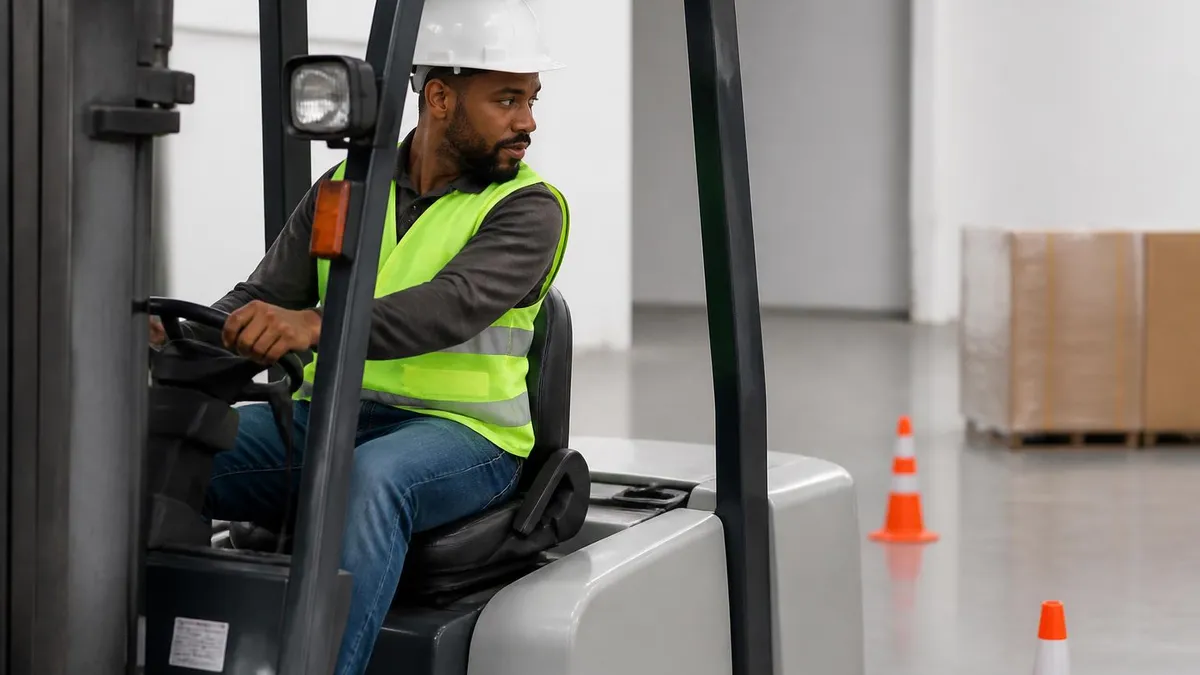
Hands-on demonstrations by the trainer followed by supervised exercises where the trainee actually operates the forklift. Workers learn steering, load handling, and maneuvering in a controlled setting.
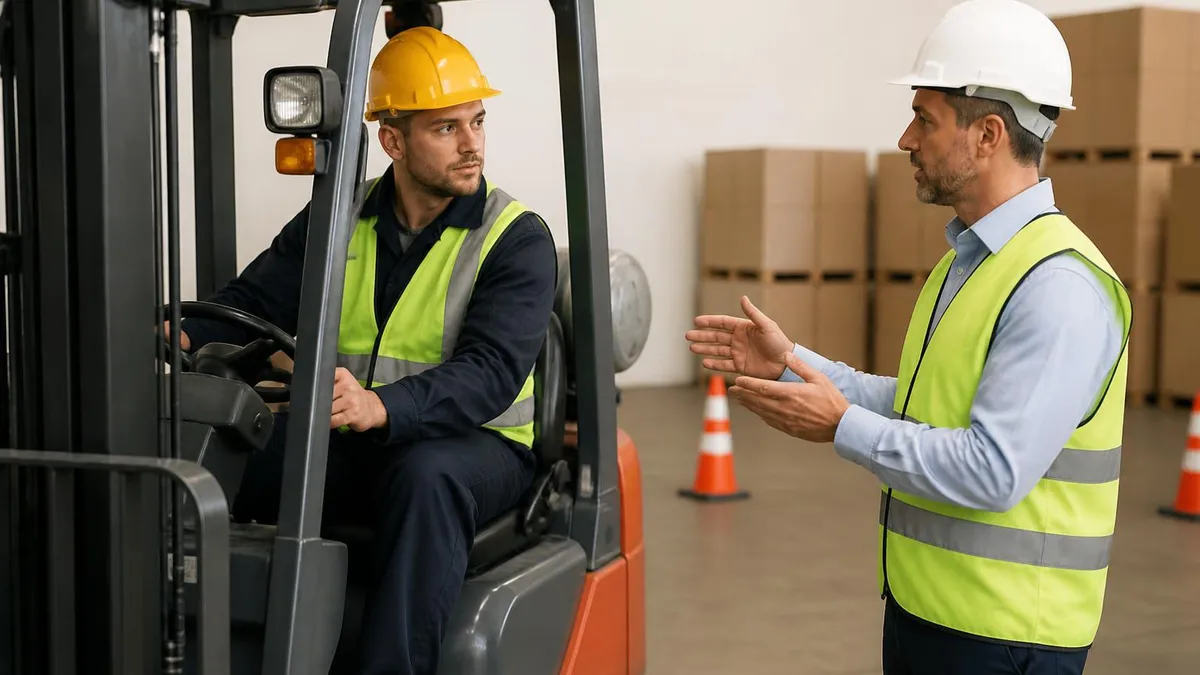
A qualified evaluator observes the operator performing real tasks in the actual facility and confirms competency. This performance check must occur before solo operation is allowed.
Employers must document the operator's name, training date, evaluation date, and the trainer's identity. This record proves compliance during any OSHA inspection or audit.
Every operator must be re-evaluated at least once every three years, with refresher training triggered sooner by accidents, unsafe operation, or new equipment and conditions.
Determining exactly who needs forklift certification is the starting point for any compliant program. OSHA's rule is unambiguous: anyone who operates a powered industrial truck on the job must be trained and certified, regardless of how often they drive or how briefly. There is no exemption for occasional operators, temporary staff, or workers who only move a load "once in a while." If an employee climbs onto the seat and engages the controls, that person must hold a valid certification for that class of equipment.
This requirement covers a surprisingly broad workforce. Warehouse associates, dock workers, manufacturing line staff, construction laborers, retail stockroom employees, recycling center workers, and agricultural crews all fall under the rule when they use lift trucks. Temporary and staffing-agency workers are included too, and OSHA holds both the staffing agency and the host employer jointly responsible for ensuring proper training, a point that catches many companies off guard during inspections.
One critical nuance is the equipment-specific nature of certification. A worker fully certified on a standard counterbalanced sit-down forklift is not legally cleared to operate a narrow-aisle reach truck, an order picker, or a rough-terrain machine. Each class demands separate familiarization because the controls, stability triangle, and operating environment differ dramatically. Employers must map every truck type in their fleet to the operators who use it and confirm matching certification for each combination.
Age is another factor employers cannot ignore. Federal child labor regulations generally prohibit workers under 18 from operating forklifts in non-agricultural workplaces, classifying it as a hazardous occupation. Even where state agricultural exemptions exist, the safest and most defensible policy is to restrict forklift operation to adults who have completed the full certification process. This protects both the young worker and the employer from serious liability.
Supervisors and trainers occupy a special position in this framework. While a manager who never operates a forklift does not personally need an operator certification, anyone who trains or evaluates operators must possess the knowledge, training, and experience to do so competently. Many facilities require their supervisors to maintain current operator certification anyway, since it strengthens their credibility and keeps them ready to demonstrate proper technique on the floor.
Employers should also recognize that certification follows the workplace, not the worker. When an experienced operator changes jobs, the new employer cannot simply accept an old wallet card as proof of competency. The receiving company must verify the prior formal and practical training topics, then conduct its own site-specific evaluation in the new facility. This ensures the operator understands the unique hazards, traffic patterns, and load conditions of their current environment before driving unsupervised.
OSHA Practice Test Questions
Prepare for the OSHA - Safety Certificate exam with our free practice test modules. Each quiz covers key topics to help you pass on your first try.
OSHA Basic OSHA Practice
OSHA Exam Questions covering Basic OSHA Practice. Master OSHA Test concepts for certification prep.
OSHA Confined Space Entry
Free OSHA Practice Test featuring Confined Space Entry. Improve your OSHA Exam score with mock test prep.
OSHA Fall Protection
OSHA Mock Exam on Fall Protection. OSHA Study Guide questions to pass on your first try.
OSHA - Safety Certificate Electrical Safet...
Free OSHA Quiz on OSHA - Safety Certificate Electrical Safety Standards Questions and Answers. OSHA Exam prep questions with detailed explanations.
OSHA - Safety Certificate Emergency Action...
OSHA Practice Questions for OSHA - Safety Certificate Emergency Action and Fire Plans Questions and Answers. Build confidence for your OSHA certification exam.
OSHA - Safety Certificate Hazard Communica...
OSHA Test Online for OSHA - Safety Certificate Hazard Communication Standard Questions and Answers. Free practice with instant results and feedback.
OSHA - Safety Certificate Introduction to ...
OSHA Study Material on OSHA - Safety Certificate Introduction to OSHA Questions and Answers. Prepare effectively with real exam-style questions.
OSHA - Safety Certificate Lockout/Tagout P...
Free OSHA Test covering OSHA - Safety Certificate Lockout/Tagout Procedures Questions and Answers. Practice and track your OSHA exam readiness.
OSHA - Safety Certificate Machine Guarding...
OSHA Exam Questions covering OSHA - Safety Certificate Machine Guarding Requirements Questions and Answers. Master OSHA Test concepts for certification prep.
OSHA - Safety Certificate OSHA Recordkeepi...
Free OSHA Practice Test featuring OSHA - Safety Certificate OSHA Recordkeeping and Reporting Questions and Answers. Improve your OSHA Exam score with mock test prep.
OSHA - Safety Certificate Personal Protect...
OSHA Mock Exam on OSHA - Safety Certificate Personal Protective Equipment (PPE) Questions and Answers. OSHA Study Guide questions to pass on your first try.
OSHA - Safety Certificate Walking and Work...
OSHA Test Prep for OSHA - Safety Certificate Walking and Working Surfaces Questions and Answers. Practice OSHA Quiz questions and boost your score.
OSHA - Safety Certificate Electrical Safet...
OSHA Mock Test covering - Safety Certificate Electrical Safety Standards. Online OSHA Test practice with instant feedback.
OSHA - Safety Certificate Emergency Action...
Free OSHA Quiz on - Safety Certificate Emergency Action and Fire Plans. OSHA Exam prep questions with detailed explanations.
OSHA - Safety Certificate Hazard Communica...
OSHA Practice Questions for - Safety Certificate Hazard Communication Standard. Build confidence for your OSHA certification exam.
OSHA - Safety Certificate Introduction to ...
OSHA Test Online for - Safety Certificate Introduction to OSHA. Free practice with instant results and feedback.
OSHA - Safety Certificate Lockout/Tagout P...
OSHA Study Material on - Safety Certificate Lockout/Tagout Procedures. Prepare effectively with real exam-style questions.
OSHA - Safety Certificate Machine Guarding...
Free OSHA Test covering - Safety Certificate Machine Guarding Requirements. Practice and track your OSHA exam readiness.
OSHA - Safety Certificate OSHA Recordkeepi...
OSHA Exam Questions covering - Safety Certificate OSHA Recordkeeping and Reporting. Master OSHA Test concepts for certification prep.
Inside the Forklift Operator Training Program
The formal instruction phase delivers the foundational knowledge an operator needs before ever touching the controls. OSHA requires coverage of truck-specific topics such as differences between forklifts and automobiles, controls and instrumentation, engine or motor operation, steering and maneuvering, visibility limits, load capacity, and stability principles. This portion can be taught through lectures, written materials, video, or interactive online modules.
Workplace-related topics are equally mandatory. Trainers must address surface conditions, load composition and stacking, pedestrian traffic, narrow aisles, ramps and inclines, restricted visibility areas, hazardous locations, and any unique conditions present in the facility. Completing formal instruction alone does not certify an operator; it is simply the first required layer of a three-part program that must finish with hands-on practice and evaluation.
Online vs. In-Person Forklift Certification: What to Weigh
- +Online formal instruction is flexible and can be completed at the worker's own pace
- +Lower upfront cost for the classroom knowledge portion
- +Consistent curriculum ensures every required topic is covered
- +Immediate digital records and completion certificates simplify documentation
- +Reduces classroom time and scheduling conflicts for busy facilities
- +Easy to deploy across multiple locations with standardized content
- −Online courses alone never satisfy OSHA; hands-on training is still mandatory
- −Practical evaluation must still occur in the actual workplace with real equipment
- −Some low-cost providers misleadingly imply full certification from a video
- −No substitute for a qualified evaluator observing site-specific operation
- −Equipment-specific and workplace-specific topics may be generic online
- −Employers remain fully liable if any required component is skipped
Pros and Cons at a Glance
| Pros | Cons |
|---|---|
| Online formal instruction is flexible and can be completed at the worker's own pace | Online courses alone never satisfy OSHA; hands-on training is still mandatory |
| Lower upfront cost for the classroom knowledge portion | Practical evaluation must still occur in the actual workplace with real equipment |
| Consistent curriculum ensures every required topic is covered | Some low-cost providers misleadingly imply full certification from a video |
| Immediate digital records and completion certificates simplify documentation | No substitute for a qualified evaluator observing site-specific operation |
| Reduces classroom time and scheduling conflicts for busy facilities | Equipment-specific and workplace-specific topics may be generic online |
| Easy to deploy across multiple locations with standardized content | Employers remain fully liable if any required component is skipped |
OSHA Forklift Certification Requirements Checklist
- ✓Confirm the operator will use a specific class of powered industrial truck
- ✓Deliver formal instruction covering all truck and workplace topics
- ✓Provide hands-on practical training with the actual equipment type
- ✓Conduct a workplace evaluation before allowing solo operation
- ✓Verify the trainer has knowledge, training, and experience to teach
- ✓Document operator name, training date, and evaluation date in writing
- ✓Record the identity of the person who performed the evaluation
- ✓Schedule re-evaluation at least once every three years
- ✓Trigger refresher training after any accident, near miss, or unsafe act
- ✓Retrain when the operator is assigned a different truck type or conditions change
There Is No Such Thing as a Universal Forklift License
OSHA does not issue forklift licenses, and no certification transfers automatically between employers. Certification is the employer's documented confirmation that an operator was trained and evaluated for a specific truck and workplace. A new employer must verify prior training and perform its own site-specific evaluation before that worker drives unsupervised on the new floor.
Forklift certification is never permanent, and understanding the renewal and refresher rules is essential to staying compliant year after year. The cornerstone requirement is the three-year evaluation cycle: OSHA mandates that every operator's performance be re-evaluated at least once every three years. This is not a full retraining of every topic in most cases, but a documented observation confirming the operator still performs job tasks safely and competently with the equipment they use.
Beyond the routine three-year cycle, several specific events trigger mandatory refresher training regardless of how recently the operator was certified. If an operator is involved in an accident or a near-miss incident, refresher training and re-evaluation become immediately necessary. The logic is straightforward: an incident reveals a gap in skill, judgment, or awareness that must be corrected before the operator returns to unsupervised duty. Ignoring this trigger is one of the most common compliance failures OSHA cites.
Observed unsafe operation is another powerful trigger. When a supervisor, trainer, or evaluator sees an operator driving too fast, carrying loads improperly, ignoring pedestrians, or failing to use the horn at intersections, the employer must provide refresher training. This proactive requirement means employers cannot simply wait three years; they have an ongoing duty to monitor operators and intervene the moment unsafe behavior appears on the floor.
Changes in equipment or workplace conditions also reset the training obligation. If an operator is assigned a forklift type they have never run before, they need training and evaluation on that new class. Likewise, if the facility introduces new aisle layouts, different load types, new hazardous areas, or modified traffic patterns, operators must be brought up to speed. The training must always reflect the actual conditions the operator faces, not a stale snapshot from years earlier.
Refresher training does not require employers to repeat every element of the original program. OSHA allows them to focus the refresher on the specific topics relevant to the triggering event. For example, an operator who tipped a load while turning may need targeted instruction on stability and speed rather than a full review of engine maintenance. This targeted approach keeps refresher training efficient while still addressing the root cause of the problem.
Recordkeeping ties the entire renewal system together. Each time an operator is evaluated, retrained, or re-certified, the employer should update the written record with the new date and the evaluator's name. Maintaining a simple tracking spreadsheet or digital safety system that flags upcoming three-year deadlines prevents operators from lapsing. During an inspection, the ability to instantly produce current, dated evaluation records is often the difference between a clean audit and a costly citation for inadequate training.

Allowing an operator to drive on an expired evaluation exposes the employer to serious citations and devastating liability if an accident occurs. Track every three-year deadline and re-evaluate before it passes. Refresher training is also legally required immediately after any accident, near miss, or observed unsafe operation, not at the next scheduled cycle.
The financial and legal consequences of ignoring OSHA forklift certification requirements are substantial and growing. For 2026, OSHA's maximum penalty for a serious violation sits at roughly $16,550 per violation, while willful or repeat violations can reach more than $165,000 each. Because inadequate training citations often stack with related violations such as failure to maintain equipment or improper recordkeeping, a single inspection can generate penalties climbing into six figures for a non-compliant facility.
Forklift training and operation rules consistently rank among OSHA's most frequently cited standards. The agency's inspectors specifically look for documented proof of formal instruction, practical training, and workplace evaluation. The single most common violation is the absence of records: an employer may genuinely believe their operators are competent, but without dated written documentation naming the trainer and evaluator, OSHA treats the operators as untrained. The burden of proof rests entirely on the employer.
A second frequent pitfall is generic, off-site training that ignores the actual workplace. Some employers send workers to a one-day course at an unrelated location and assume the wallet card satisfies the standard. It does not. The mandatory workplace evaluation must occur in the employer's own facility, observing the operator handle the real loads, aisles, and conditions of that specific job. Skipping this site-specific step leaves the certification legally incomplete and fully citable.
Equipment mismatches generate citations as well. When an operator certified only on a sit-down counterbalanced truck is found operating a reach truck or order picker, OSHA cites the employer for allowing operation without proper class-specific training. Facilities with mixed fleets must carefully track which operators are certified on which machines and enforce that matrix on the floor, especially during busy seasons when staff are tempted to fill gaps with whoever is available.
Beyond fines, the human and business costs of non-compliance dwarf the penalties. A forklift accident can cause permanent disability or death, trigger workers' compensation claims, spike insurance premiums, halt production, and expose the company to civil lawsuits. Juries and regulators view a documented failure to train as evidence of negligence, which can transform an unfortunate accident into a willful violation with criminal exposure for serious cases. For employers exploring broader compliance education, OSHA outreach programs and resources offer valuable supporting context.
Preventing these outcomes is far cheaper than paying for them. A complete, well-documented certification program typically costs a fraction of a single serious citation, and dramatically less than the lifetime cost of one disabling injury. Employers who treat certification as an ongoing safety investment rather than a paperwork chore see fewer accidents, lower insurance costs, and smoother inspections. The standard is not designed to punish; it is designed to send every operator home safely at the end of every shift.
Putting a compliant forklift certification program into practice starts with building a clear, repeatable process that anyone in your safety department can follow. Begin by inventorying every powered industrial truck in your facility and listing the operators who use each one. This matrix becomes the backbone of your program, showing at a glance which workers need training on which classes and when each operator's three-year evaluation is due. Keep it in a shared system that automatically flags approaching deadlines.
Next, choose a training delivery method that fits your operation while satisfying every requirement. Online formal instruction works well for the classroom knowledge portion and creates instant records, but you must pair it with genuine hands-on practical training and a workplace evaluation conducted by a qualified person. Never rely on a video alone. If you lack an internal trainer with adequate knowledge and experience, a reputable third-party provider or equipment dealer can supplement your program without removing your ultimate responsibility.
When selecting or developing curriculum, verify that it explicitly covers both the truck-specific topics and the workplace-specific topics OSHA lists. Walk your own facility and document the real hazards: ramps, loading docks, narrow aisles, pedestrian crossings, blind corners, and any hazardous material storage. Incorporate these conditions directly into your practical training and evaluation so operators learn to navigate the exact environment they will work in, not a generic course yard with no relevance to their daily tasks.
Treat the evaluation as a meaningful skills check rather than a rubber stamp. Have your qualified evaluator use a written observation form that lists specific behaviors: seatbelt use, pre-shift inspection, horn use at intersections, load tilt, travel speed, and safe parking. Requiring the evaluator to mark each item creates a defensible record and forces a genuine assessment. Operators who fall short should receive targeted coaching and a re-evaluation before they are cleared for independent operation.
Build a culture where refresher triggers are acted on immediately. Train your supervisors to recognize unsafe operation and to report near misses without blame, so corrective training happens fast. Establish a simple rule: any accident, near miss, or observed unsafe act automatically schedules refresher training and re-evaluation. This proactive habit not only keeps you compliant but steadily reduces incidents because skill gaps are closed the moment they surface rather than years later.
Finally, keep your documentation audit-ready at all times. Store each operator's certification record showing name, training dates, evaluation date, evaluator identity, and the specific equipment class. Digitize these records and back them up. When an OSHA inspector arrives, being able to produce complete, current paperwork within minutes demonstrates a serious safety program and often shortens the inspection. Practicing with OSHA knowledge quizzes also helps operators and supervisors retain the safety fundamentals that protect everyone on the floor.
Sample OSHA Safety Certificate Practice Questions
Try these questions from our free OSHA Safety Certificate practice tests. The correct answer and an explanation follow each question.
How long must most OSHA-required training records generally be retained?
- A. No retention required
- B. Only 24 hours
- C. For a defined period as specified by the applicable standard
- D. Forever, without exception
Answer: C. For a defined period as specified by the applicable standard
Retention periods vary but must follow the timeframe set by each applicable OSHA standard.
An inspector arrives unannounced. Can a worker representative accompany the OSHA compliance officer?
- A. No, workers are barred from inspections
- B. Yes, an authorized employee representative may accompany the inspection
- C. Only if management approves in writing
- D. Only after the inspection ends
Answer: B. Yes, an authorized employee representative may accompany the inspection
Workers have the right to have a representative accompany the OSHA compliance officer during an inspection.
How often must fire extinguishers be visually inspected according to OSHA requirements?
- A. Annually
- B. Monthly
- C. Weekly
- D. Every six months
Answer: B. Monthly
OSHA requires that portable fire extinguishers be visually inspected at least monthly to ensure they are accessible and functional.
Which standard governs OSHA's requirements for respiratory protection in general industry?
- A. 29 CFR 1910.120
- B. 29 CFR 1910.134
- C. 29 CFR 1910.146
- D. 29 CFR 1910.147
Answer: B. 29 CFR 1910.134
29 CFR 1910.134 is OSHA's Respiratory Protection standard that establishes minimum requirements for respiratory programs in general industry.
OSHA Questions and Answers

OSHA Lightning Safety: Standards, Rules & Outdoor Worker Protection Guide for 2026

OSHA Approved Hard Hats: Complete 2026 Guide to ANSI Z89.1 Compliance, Types, and Workplace Requirements

OSHA.gov: Your Complete Guide to the Official OSHA Website

OSHA 510: Course Content, Path to Trainer, and Realistic Path

OSHA Process Safety Management: Complete Guide to PSM Standard 1910.119 for 2026
About the Author

Certified Safety Professional & OSHA Compliance Expert
Indiana University of Pennsylvania Safety SciencesDr. William Foster holds a PhD in Safety Science from Indiana University of Pennsylvania and is a Certified Safety Professional (CSP) and Certified Hazardous Materials Manager. With 20 years of occupational health and safety management experience across construction, manufacturing, and chemical industries, he coaches safety professionals through OSHA certification, CSP, CHST, and safety management licensing programs.
Join the Discussion
Connect with other students preparing for this exam. Share tips, ask questions, and get advice from people who have been there.
View discussion (8 replies)