
Ohio MSF Course: Complete Guide to Training, Costs & Written Test Prep
Everything about the Ohio MSF course — msf course cost, written test tips, class schedules & practice tests. Pass first try! 🏆

The Ohio MSF course is the gateway to safe, legal motorcycle riding in the Buckeye State. Offered through the Motorcycle Safety Foundation's Basic RiderCourse, this program combines classroom instruction, written testing, and hands-on riding exercises to give new motorcyclists every skill they need before hitting public roads. Understanding the msf course cost and what the training involves helps you budget properly and walk in on day one fully prepared rather than scrambling at registration.
The Motorcycle Safety Foundation was established in 1973 with a single mission: reduce motorcycle crashes, injuries, and fatalities through standardized rider education. Today, MSF-certified courses are recognized in all 50 states and form the backbone of rider licensing programs across the country. Ohio is no exception — the Ohio Bureau of Motor Vehicles accepts MSF Basic RiderCourse completion as a waiver for the motorcycle skills test at the DMV, saving you both time and stress at the licensing office.
Many first-time riders wonder what exactly happens inside an MSF course. The program is divided into two major phases. The eCourse (online component) covers foundational theory: traffic strategies, risk awareness, protective gear, and the physics of motorcycle operation. Once you pass the online knowledge check, you proceed to the range day, where certified coaches walk you through low-speed maneuvers on a closed range using motorcycles provided by the training site. No prior riding experience is required to enroll.
Ohio hosts dozens of MSF-certified training sites across the state, operated by community colleges, Harley-Davidson dealerships, and independent rider education centers. Sites in Columbus, Cleveland, Cincinnati, Dayton, and Toledo run courses almost every weekend from spring through fall, with some indoor venues offering winter sessions. Enrollment is typically handled online through each site's individual booking portal, and classes fill up fast during peak riding season, so early registration is strongly recommended for spring applicants.
One of the most searched questions among prospective students is how much the MSF course costs in Ohio. Fees vary by provider but typically range from $150 to $350 for the full Basic RiderCourse, which includes motorcycle and helmet rental for the range portion. Some community college programs offer subsidized rates closer to $150, while private providers and dealership-based courses tend to fall in the $250–$350 range. Always confirm what is included in the quoted fee before you pay — some sites charge separately for gear rental.
The written (knowledge) component of the MSF course, often called the MSF written test or the MSF course written test, intimidates many newcomers. In reality, it is a straightforward multiple-choice assessment covering material from the eCourse modules. Students who complete the online pre-study and take at least one MSF practice test beforehand pass with high confidence. The written exam tests your understanding of safe riding strategies, motorcycle controls, hazard identification, and protective equipment standards — all topics covered directly in the course materials you receive upon enrollment.
This guide breaks down everything you need to know about the Ohio MSF course: the curriculum structure, realistic cost expectations, what the written test covers, how to prepare effectively using an MSF practice test, and the steps to convert your completion card into a full Ohio motorcycle endorsement. Whether you are a brand-new rider or someone returning to motorcycling after years away, understanding the full picture before you enroll makes the experience significantly smoother and more rewarding.
Ohio MSF Course by the Numbers

MSF Basic RiderCourse Structure
The digital pre-study module covers motorcycle controls, protective gear, traffic strategies, and fundamental riding concepts. Students complete this at their own pace before the range day. A knowledge check at the end confirms comprehension and must be passed to advance.
On the first range day, coaches conduct a live safety briefing, review course objectives, answer questions, and administer the MSF written test. This segment takes approximately two to three hours and prepares students for hands-on riding exercises.
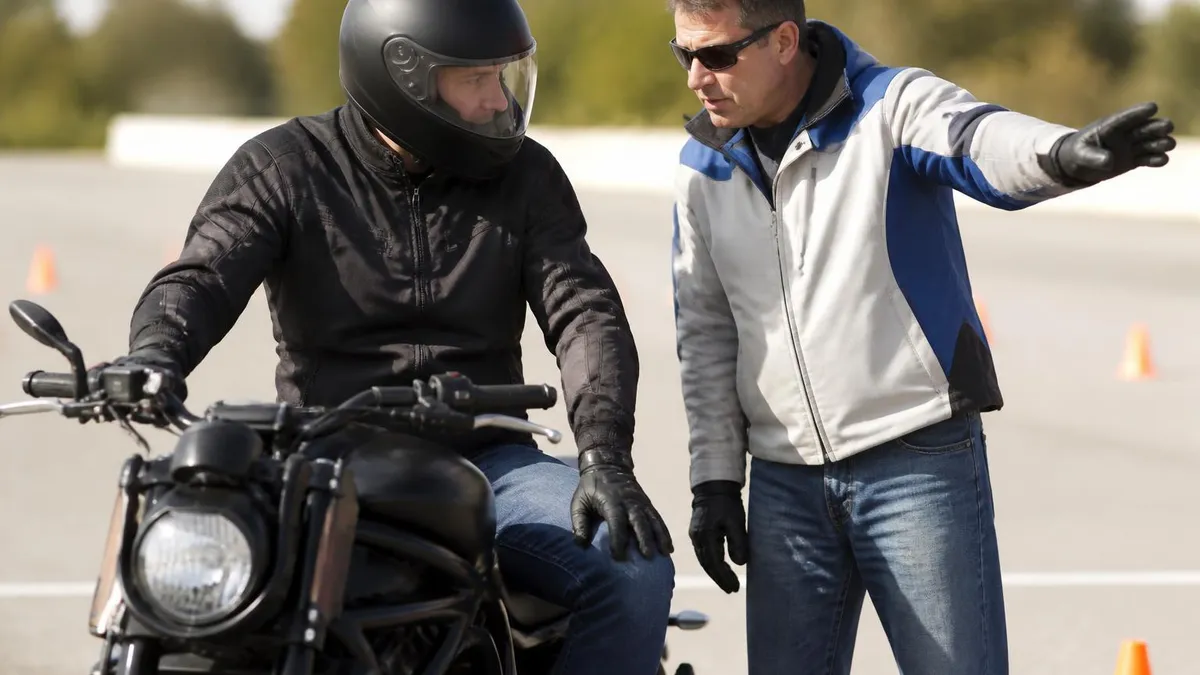
The core of the course: 10+ structured riding exercises on a closed parking-lot range. Students practice starting, stopping, turning, weaving, emergency braking, and cornering at low speeds under direct coach supervision using course-provided motorcycles.
At the end of the range sessions, students complete a scored riding evaluation that includes a quick stop and a cornering exercise. Passing both the written test and the skills evaluation earns you the MSF completion certificate and waives the Ohio DMV skills test.
Understanding the full MSF class cost before you enroll prevents budget surprises and helps you compare providers fairly. In Ohio, Basic RiderCourse fees generally fall into three tiers based on who operates the site. Community college programs — offered through institutions like Columbus State, Cuyahoga Community College, and Sinclair College — typically charge the lowest rates, often between $150 and $200, sometimes including gear rental. These subsidized programs are popular and fill up months in advance, especially for spring and summer sessions.
Mid-range providers, including independent rider education centers and some dealership-sponsored courses, typically charge between $200 and $280. These programs often offer smaller class sizes, more flexible scheduling, and a wider range of dates. The range-day experience at these sites can feel more personalized, with coaches spending more one-on-one time with students who need extra practice before the final skills evaluation. If your schedule is tight, the added scheduling flexibility is often worth the modest price premium.
Premium providers — particularly Harley-Davidson dealership training centers and some private academies — can charge $280 to $350 or more. These courses typically feature newer fleet motorcycles, well-maintained range facilities, and bilingual or specialized instruction options. Some also include complimentary gear loaner packages and post-course mentoring. When comparing the cost of msf course across providers, always confirm whether the quoted price includes motorcycle rental, helmet use, and any required registration fees charged by the site separately.
Beyond the tuition itself, budget for protective gear if you plan to purchase your own rather than renting. Ohio MSF courses require students to wear a DOT-approved helmet, long pants, long sleeves or jacket, gloves, and sturdy over-the-ankle footwear. Renting a helmet and gloves from the course typically adds $15–$30 to your cost. If you plan to ride after completing the course, investing in your own gear before the class — typically $200–$500 for a solid starter kit — is a smart move that pays long-term safety dividends.
Insurance discounts represent one of the most frequently overlooked financial benefits of completing an MSF course. Most major motorcycle insurance carriers — including Progressive, GEICO, Nationwide, and Dairyland — offer premium discounts of 5% to 15% for riders who complete an MSF-certified course. For a typical Ohio motorcycle insurance policy running $400–$800 per year, even a 10% discount can recover your entire course tuition within the first year. Check with your insurer before enrolling to confirm the discount and understand documentation requirements.
Some Ohio employers and organizations also offer tuition reimbursement for motorcycle safety training. Union members, military personnel, first responders, and employees at certain manufacturing and logistics companies should check with their HR departments or union representatives before paying out of pocket. The Ohio State Highway Patrol and some county sheriff offices occasionally offer subsidized MSF courses for their employees and the general public as part of community outreach programs — worth checking your county's official website before booking a commercial course.
Finally, if cost is a significant barrier, consider timing your enrollment strategically. Many Ohio MSF providers offer discounted rates for off-peak sessions in March, October, and November when demand is lower. Some providers also offer group discounts of 10–15% when two or more riders enroll together. Reaching out directly to a provider and asking about available promotions, waitlist spots, or last-minute cancellation openings can occasionally yield meaningful savings on an already reasonably priced course.
MSF Written Test: What to Know & How to Prepare
The MSF written test — formally called the MSF course written test — is a multiple-choice knowledge assessment administered during the classroom portion of your range day. It covers five core areas: motorcycle controls and operation, protective gear requirements, crash avoidance strategies, traffic lane positioning, and environmental hazards. Questions are drawn directly from the eCourse modules you complete online before attending. Most versions of the test contain 50 questions, and you need to score at least 80% — answering 40 or more correctly — to pass.
The test is not designed to trick you. It rewards students who engage honestly with the eCourse material rather than clicking through quickly. Common question types include scenario-based situations ("What should you do when a car pulls out from a side street?"), identification questions about hand signals or control locations, and factual questions about braking distance or stopping techniques. Students who complete the online pre-study thoroughly and review at least one MSF practice test before test day consistently report that the written exam felt straightforward and manageable.

MSF Course: Benefits vs. Drawbacks
- +Waives the Ohio BMV motorcycle skills test — saves time and eliminates DMV range anxiety
- +No prior riding experience required — motorcycles and helmets provided at most sites
- +Recognized in all 50 states — completion card is valid if you move or travel
- +Insurance premium discounts of 5–15% from most major carriers help offset course cost
- +Small class sizes (typically 6–12 students) mean individualized coaching and feedback
- +Builds genuine emergency-response muscle memory — especially braking and swerving skills
- −Course fees of $150–$350 represent a meaningful upfront cost for budget-conscious riders
- −Popular spring and summer sessions fill up weeks or months in advance in major Ohio cities
- −Range day requires a full 8–10 hour commitment — difficult to combine with a work shift
- −Motorcycles provided are small-displacement beginner bikes — not representative of larger cruisers or sport bikes
- −Completion card is valid for approximately 3 years — riders who delay licensing must re-enroll
- −Weather cancellations are common in Ohio spring — reschedule policies vary by provider
Ohio MSF Course Enrollment Checklist
- ✓Locate a certified Ohio MSF provider using the MSF course locator at msf-usa.org and choose a date at least 4–6 weeks out
- ✓Complete online registration and pay the course fee — confirm whether motorcycle and helmet rental are included
- ✓Finish the MSF eCourse online modules before your scheduled range day (allow 3–5 hours)
- ✓Take at least two full MSF practice tests to identify weak spots in your knowledge before test day
- ✓Review Ohio motorcycle-specific laws in ORC Chapter 4511, including helmet requirements and lane rules
- ✓Gather required protective gear: DOT helmet, gloves, long pants, long-sleeved jacket, ankle-covering footwear
- ✓Bring a valid government-issued photo ID and your eCourse completion confirmation to the range day
- ✓Arrive 15 minutes early on course day — late arrivals may be turned away and required to reschedule
- ✓During range exercises, communicate openly with coaches if you need extra practice on any maneuver
- ✓After passing, visit an Ohio BMV office within the card's validity window to add the motorcycle endorsement to your license
MSF Completion Eliminates the Ohio BMV Motorcycle Skills Test
Ohio riders who complete and pass the MSF Basic RiderCourse are automatically exempt from the motorcycle skills test at the BMV. This waiver saves you the scheduling hassle, eliminates nerves about performing in front of a state examiner, and gets you your endorsement faster. It is one of the most practical benefits of completing the course — and one of the strongest reasons Ohio beginners should enroll before attempting the licensing process.
After passing the Ohio MSF course, the next step is converting your completion certificate into an official Ohio motorcycle endorsement. Ohio uses a tiered licensing system: to legally operate a motorcycle on public roads, you must hold either a Motorcycle License (Class M) or an M1 or M2 endorsement added to your existing operator's license.
The MSF course completion card serves as proof that you have met the skills evaluation requirement, meaning your BMV visit only requires a vision check, fee payment, and the written knowledge test — unless you already hold a valid Ohio driver's license with a passing BMV motorcycle knowledge test on record.
The Ohio BMV motorcycle knowledge test is distinct from the MSF written test you took during the course. While both cover similar subject matter, the BMV test draws from the Ohio Motorcycle Operator's Manual rather than MSF curriculum. Most riders who recently passed the MSF written test find the BMV knowledge test equally approachable — the concepts overlap heavily. Studying the Ohio Motorcycle Operator's Manual for one to two hours after completing the MSF course is typically sufficient preparation for the BMV knowledge component.
Ohio charges a modest fee to add a motorcycle endorsement to an existing driver's license. As of 2026, the M endorsement fee is approximately $23.50, though fees can vary slightly depending on your current license expiration date and whether a new license card must be issued. If you are applying for a standalone Class M license rather than an endorsement, additional fees and a longer processing time may apply. Verify current fee schedules on the Ohio BMV website before your appointment since fees are updated periodically.
Ohio also offers a Temporary Instruction Permit Identification Card (TIPIC) for aspiring motorcyclists who want to practice on public roads before taking the MSF course. A TIPIC allows you to ride with certain restrictions: only during daylight hours, no passengers, and no freeway riding. The permit costs approximately $23.50, requires passing the BMV motorcycle knowledge test, and is valid for 12 months. Many Ohio riders use the TIPIC period to build basic comfort before enrolling in the MSF course — though the MSF course provides a far safer and more structured learning environment than solo permit riding.
Once your endorsement is added, you are legally permitted to operate any motorcycle in Ohio, though newer riders are strongly advised to continue developing skills before attempting high-speed highway riding or complex urban environments. The MSF offers an Intermediate RiderCourse (IRC) and an Advanced RiderCourse (ARC) for licensed riders who want to deepen their skills — both are available at many Ohio sites. Some insurance carriers also provide additional premium discounts for completing the advanced courses, extending the financial benefits of MSF training beyond the initial endorsement.
Ohio also recognizes out-of-state MSF completion cards. If you completed an MSF Basic RiderCourse in another state within the card's validity period, Ohio will accept it for the skills-test waiver when you transfer your license. This matters for military personnel, students, and recent Ohio transplants who completed their MSF training before relocating. Bring the original completion card to the BMV — photocopies are generally not accepted, and some sites may require you to request a replacement card from the original course provider if the original is lost.
Riders who already hold a motorcycle license or endorsement from another state and are transferring to Ohio do not need to repeat the MSF course or the skills test. Ohio grants reciprocity for valid out-of-state motorcycle endorsements during the license transfer process. Simply bring your out-of-state license, proof of Ohio residency, and the standard transfer documentation to any full-service BMV location. The transfer process typically takes less than 30 minutes and results in an Ohio license with the M endorsement already included from day one.

Your MSF Basic RiderCourse completion card is typically valid for approximately three years from the date of course completion. If you do not add the Ohio motorcycle endorsement to your license before the card expires, you will need to retake the full course before the BMV will grant the skills-test waiver. Do not let your card expire — schedule your BMV endorsement appointment within a few weeks of receiving your certificate to avoid this risk.
Preparing effectively for the MSF course written test begins well before you arrive on range day. The most important resource in your study toolkit is the MSF eCourse itself. Unlike many online prerequisites that students rush through, the MSF eCourse is genuinely well-designed — it uses interactive scenarios, short video segments, and module-end knowledge checks to reinforce key concepts. Students who treat it like a real learning experience rather than a checkbox consistently outperform those who skim it. Block out a focused three- to four-hour window to complete the eCourse without distractions.
After finishing the eCourse, work through at least one full msf course written test practice resource to assess your retention. Practice tests reveal which topics feel solid and which need another read. Common weak spots for first-time students include: stopping distance calculations at various speeds, the precise sequence of the emergency braking procedure, the correct lane positions for different traffic scenarios, and the distinction between primary and secondary hazards in complex traffic situations. Focusing additional review on these areas pays outsized dividends.
One highly effective study technique is the active recall method: after reading each eCourse section, close the material and write down everything you remember without looking. Then compare your notes to the source. This approach forces your brain to retrieve information rather than simply recognize it — a critical difference when you are sitting in the classroom answering test questions from memory. Students who use active recall consistently score higher than those who use passive re-reading, regardless of total study time.
Visual learners benefit from drawing diagrams of the lane positioning concepts covered in the MSF curriculum. Sketching out a two-lane road and marking the correct rider position for left turns, right turns, intersections, and lane changes helps cement spatial concepts that can be tricky to retain from text alone. Similarly, creating a simple table comparing stopping distances at 20, 30, 40, and 50 mph — data provided in the eCourse — gives you a concrete reference to review the morning of your course day.
Group study with a friend who is also enrolled in the same session can accelerate preparation. Talking through scenarios out loud — "What do you do when a car drifts into your lane?" — forces you to articulate your reasoning, which deepens retention compared to silent reading. It also surfaces disagreements that highlight gaps in understanding. Even a 30-minute conversation with a fellow enrollee two days before the course can identify two or three concepts worth reviewing more carefully before the written test.
On the morning of your course, avoid cramming. Sleep deprivation impairs both test performance and — more critically — your ability to learn and execute riding skills safely on the range. Eat a solid breakfast, arrive at the site early enough to relax, and skim your notes lightly rather than trying to absorb new material. The MSF written test rewards preparation done in the days before, not the hour before. Students who show up rested and calm consistently outperform those who stayed up late reviewing flashcards the night before their course day.
If English is not your first language, note that MSF materials and tests are available in Spanish at many providers. Ohio has a significant Spanish-speaking motorcycle community, and several Columbus, Cleveland, and Cincinnati providers specifically advertise bilingual instruction and Spanish-language written test versions. Contact your chosen provider before enrollment to confirm language availability — this single step can dramatically improve test performance and range-day comprehension for non-native English speakers who are otherwise highly capable riders.
On the riding range, the most common mistake new students make is overthinking. The exercises are designed to build muscle memory through repetition, not to evaluate your pre-existing skills. MSF coaches are trained to work with absolute beginners — many course participants have never sat on a motorcycle before. Walk into the range exercises with a mindset of openness and willingness to follow coach instructions precisely, even when the instructions feel counterintuitive. Trust the process: the curriculum was developed over decades of research into how people learn physical skills most efficiently.
The slow-speed clutch control exercise trips up more students than any other range activity. Managing the friction zone — the point where the clutch begins engaging the engine — is a feel-based skill that takes repetition to internalize. During your first few passes, your instinct may be to release the clutch too quickly, causing a lurch.
Coaches expect this and will guide you through the correction. The key is to focus on a point about 15–20 feet ahead of you rather than looking down at your controls, and to gradually feather the clutch rather than releasing it in one motion. After five to ten repetitions, most students feel a genuine improvement.
The emergency braking exercise — known as the quick stop — is the exercise with the highest failure rate in the skills evaluation. The common error is applying only the front brake or squeezing too timidly out of fear of locking the wheel. Modern motorcycles with properly maintained brakes can stop in remarkably short distances when both brakes are applied firmly and progressively.
Practice the "roll-on, squeeze" mental cue: as you approach the brake zone marker, roll off the throttle smoothly while simultaneously squeezing the front brake lever progressively from light to firm, and press the rear brake pedal simultaneously. Avoid stomping the rear brake, which causes skids.
Cornering in the MSF curriculum is taught using the SLOW-LOOK-PRESS-ROLL sequence. Slow before the turn, Look through the turn at your exit point, Press the handlebar in the direction of the turn (countersteering), and Roll on the throttle smoothly through the apex. Students who attempt to lean by shifting body weight rather than pressing the handlebars often struggle with cornering at first. Countersteering is one of those techniques that feels slightly unnatural until it clicks — typically after the third or fourth repetition during the cornering exercise.
After completing the skills evaluation, coaches provide individual feedback on your performance. Even if you passed comfortably, pay attention to any noted weaknesses. The skills evaluation criteria are intentionally set at a level that prepares you for real-road challenges — so a coach noting that your quick stop was three feet longer than ideal is useful information about where to focus your continued development. Many MSF graduates find that revisiting the msf basic rider course test answers and course materials six months after completing the course reinforces lessons that had faded from memory after real-road riding introduced new habits.
Post-course, your MSF completion certificate arrives either immediately in print form at the range or via email within a few days, depending on the provider. Keep a digital copy in your email and a physical copy in a safe location. You will present this certificate at the Ohio BMV when applying for your motorcycle endorsement. Some Ohio BMV locations are busier than others — scheduling an appointment online rather than walking in can reduce your wait time from hours to minutes, particularly at high-traffic offices in Columbus and Cleveland.
Ultimately, the Ohio MSF course is one of the best investments a new motorcyclist can make — not just for the licensing benefit, but for the genuine riding competence it builds. Statistics consistently show that riders who complete formal training have significantly lower crash rates in their first year of riding compared to those who learn informally or solely through trial and error on public roads. The roughly $200–$300 you spend on the course is trivial compared to the cost of a single emergency room visit or a dropped motorcycle. Enroll early, prepare thoroughly, and arrive ready to learn.
MSF Questions and Answers
MSF Practice Test Video Answers
Motorcycle Safety Foundation Course: Complete 2026 Training Guide

MSF Card & Basic Rider Course: Complete 2026 Guide to Test Prep, Costs & Your Certificate

MSF Course 2026–2026 — Motorcycle Safety Foundation Basic RiderCourse Guide

MSF Course California 2026: Complete Training Guide, Costs & Written Test Prep
About the Author

Business Consultant & Professional Certification Advisor
Wharton School, University of PennsylvaniaKatherine Lee earned her MBA from the Wharton School at the University of Pennsylvania and holds CPA, PHR, and PMP certifications. With a background spanning corporate finance, human resources, and project management, she has coached professionals preparing for CPA, CMA, PHR/SPHR, PMP, and financial services licensing exams.