
MSF Course California 2026 September: Complete Training Guide, Costs & Written Test Prep
📝 Everything about the MSF course in California: cost, written test tips, BRC schedule, and free practice tests to pass your MSF exam first try.

The MSF course California riders need most is the Basic RiderCourse (BRC), a state-approved motorcycle safety training program offered through the California Motorcyclist Safety Program (CMSP). If you are planning to get your M1 or M2 motorcycle license in California, completing this course is one of the most efficient paths available — it waives the DMV riding skills test and gives you hands-on practice before you hit public roads. Understanding the msf course cost and structure upfront helps you budget your time and money wisely.
California is one of the most motorcycle-friendly states in the country, with year-round riding weather and millions of registered motorcyclists on the road. That popularity also means more training sites across the state, from Los Angeles and San Diego to the Bay Area and Sacramento. The CMSP partners with community colleges and private providers to keep prices competitive, and state subsidies help offset the cost for many riders. Whether you are a complete beginner or returning to riding after years off the bike, the BRC is designed to meet you where you are.
The course itself is divided into two major components: a knowledge portion (often completed online or in a classroom) and a range portion where you practice actual riding skills. Together these components prepare you for real-world riding situations, including emergency braking, tight turns, swerving around obstacles, and safe lane positioning. Instructors are MSF-certified and follow a standardized curriculum, so quality is consistent no matter which provider you choose in California.
One of the biggest questions prospective riders have is about the written test — specifically the MSF written test that covers rules, safety principles, and road strategy. Many riders are surprised to find the written portion less intimidating than they expected, especially after reviewing core concepts. Using an MSF practice test beforehand is one of the most reliable ways to identify weak areas and boost confidence before test day arrives.
California's CMSP website lists all certified training providers by ZIP code, making it easy to find a course close to home or work. Most providers offer weekend and weekday options, with the range portion typically held over one full day or two half-days. Class sizes are deliberately kept small — usually eight to twelve students per range — so instructors can give personalized feedback and watch every rider's technique closely throughout the session.
Beyond licensing benefits, the MSF course in California can directly lower your motorcycle insurance premiums. Most major insurers offer a discount of five to fifteen percent for riders who present a valid course completion card. Over the lifetime of your policy, those savings can easily exceed the original course fee, making the training an investment rather than just a regulatory hurdle. Some employers in industries requiring motorcycle operation also mandate or incentivize CMSP completion for workers.
This guide covers every dimension of the California MSF experience: what the course costs, how to prepare for the written and riding evaluations, what to bring on range day, and how to use free practice tools to maximize your chances of passing on the first attempt. Read through each section and then put in deliberate preparation time — riders who study and practice consistently pass at significantly higher rates than those who show up cold.
MSF Course California by the Numbers

MSF Course California: Structure & Schedule Overview
Riders complete a self-paced online module covering traffic laws, risk awareness, and motorcycle controls. Takes roughly three to five hours. Must be finished before attending the in-person range session. A brief knowledge check is included at the end.
Some providers include a short in-person orientation to review course rules, gear requirements, and the day's agenda. This session is typically one to two hours and is conducted the morning of range day or the evening before.
Students practice starting, stopping, turning, and slow-speed maneuvers on a marked range. Instructors demonstrate each exercise before students attempt it. Bikes and helmets are typically provided at no extra charge by most California providers.
Riders progress to higher-speed exercises including quick stops, swerving, and cornering. The MSF skills evaluation takes place at the end of this session. Passing requires executing exercises within defined performance boundaries set by the MSF curriculum.
A short written evaluation tests knowledge of rules and riding strategy. Passing both the written and skills evaluations earns a completion card. Present this card at the California DMV to waive the skills test and receive your motorcycle endorsement.
Understanding the full cost of msf course options in California requires looking beyond the sticker price. The base tuition for a California Motorcyclist Safety Program Basic RiderCourse runs between $279 and $350 at most licensed providers. Community college sites often come in at the lower end of that range, while private providers or those in high-cost urban areas like San Francisco or Santa Monica may charge more. Some providers bundle the bike and helmet rental into the fee, while others list those as add-ons, so always read the registration details carefully before booking.
California's CMSP program has historically offered rebates and subsidized pricing for qualifying riders. Active-duty military, veterans, and low-income applicants have sometimes been eligible for reduced rates through specific funding cycles. These subsidies are not always available year-round, so checking the official CMSP site when you register gives you the most accurate current picture. Booking early also matters — popular weekend sessions near major cities fill up weeks in advance, and last-minute registrations sometimes carry a surcharge.
Beyond tuition, factor in gear costs if you do not already own proper protective equipment. California law and MSF policy both require a DOT-approved helmet, and instructors strongly recommend over-the-ankle boots, long pants, long sleeves, and gloves. If you lack these items, you will need to purchase or borrow them before your range day. Providers typically loan helmets but not other gear, so budget $50–$200 for a basic protective kit if you are starting from scratch.
For riders who already own a motorcycle and prefer to use their own bike on the range, some providers permit this with advance notice and a quick safety inspection. Using a familiar bike can reduce the learning curve on range day since you are not adjusting to an unfamiliar clutch or throttle feel. However, beginner bikes provided by CMSP sites are deliberately light and low-powered, making them ideal for first-time riders who benefit from easy handling during the initial exercises.
The MSF BRC is not the only course option in California. The CMSP also offers the Basic RiderCourse 2 (BRC2) for experienced riders, the Returning Rider BRC for those who have been off the bike for years, and the 3-Wheel Basic RiderCourse for trike and Can-Am operators. Prices for these advanced courses are similar to the BRC, though some are shorter and therefore slightly less expensive. If you already hold an M1 license and just want to sharpen skills, the BRC2 is worth exploring — it also qualifies for insurance discounts at most providers.
Payment policies vary by site. Most providers accept credit cards online at registration, and a few accept cash or checks on-site. Cancellation policies also differ — some offer full refunds if you cancel more than 72 hours in advance, while others only offer credits toward a future session. Always read the cancellation terms before booking, especially if your schedule is subject to last-minute changes. Some workplaces reimburse the course fee as a professional development benefit, so check with your HR department before paying out of pocket.
When comparing total cost across providers, the key variables are tuition, gear requirements, bike rental policy, and cancellation flexibility. A $279 course at a community college site may end up cheaper overall than a $310 course that includes gear loans and a more flexible rescheduling policy — or vice versa depending on your situation. Take thirty minutes to compare three or four nearby providers before committing, and read recent student reviews to gauge instructor quality and site conditions at each location.
MSF Written Test & MSF Course Written Test — What to Expect
The MSF written test used in the California BRC is a short multiple-choice evaluation, typically 20 to 25 questions, administered either on paper or via tablet at the end of the classroom or eCourse phase. Questions cover motorcycle controls, traffic strategy, hazard recognition, lane positioning, and basic laws. Riders must score at least 75 percent to pass, which means answering roughly 18 to 19 questions correctly. Most students who complete the eCourse thoroughly pass on their first attempt.
Unlike the California DMV motorcycle knowledge test, the MSF written test is specific to the BRC curriculum rather than the state vehicle code. This means some questions focus on BRC-taught techniques — such as the Search, Evaluate, Execute (SEE) strategy — rather than legal statutes. Understanding the MSF's own terminology and framework is therefore essential. Reviewing the eCourse summary screens and the MSF Rider's Handbook before test day covers virtually all content that appears on the evaluation.

Is the MSF Course California Worth Taking? Pros and Cons
- +Waives the California DMV riding skills test — no separate scheduling needed
- +Structured range exercises build muscle memory faster than self-teaching
- +Insurance discounts of 5–15% typically offset the course fee within one to two years
- +Certified instructors provide real-time feedback tailored to each rider's weaknesses
- +Bikes, helmets, and fuel are included at most California CMSP provider sites
- +Completion card is valid immediately — visit the DMV the same day if desired
- −Course fee of $279–$350 is a significant upfront cost for budget-conscious riders
- −Popular weekend sessions book out weeks in advance near major California cities
- −Range exercises must be completed outdoors — rain or extreme heat can make the day uncomfortable
- −Riders who already have significant experience may find beginner range exercises too basic
- −Failing the skills evaluation requires rescheduling, adding time and sometimes additional cost
- −The eCourse must be completed before attending the range, adding 3–5 hours of pre-work
MSF Course California: Range Day Preparation Checklist
- ✓Complete the full eCourse module and pass the online knowledge check before arriving on range day.
- ✓Wear over-the-ankle boots with a low heel — sneakers and sandals are not permitted on the range.
- ✓Bring long pants (denim or reinforced textile) and a long-sleeve jacket or riding gear.
- ✓Wear or bring DOT-approved gloves — open-palm or fingerless gloves do not meet MSF requirements.
- ✓Arrive at least 15 minutes early to complete check-in paperwork and sign the liability waiver.
- ✓Bring a valid government-issued photo ID — your name must match the registration record exactly.
- ✓Eat a light meal before arrival; range sessions run 6–8 hours and physical fatigue affects performance.
- ✓Bring water and sunscreen — California range days often take place in direct sun with no shade.
- ✓Inform your instructor of any physical limitations (knee, shoulder, or hand issues) at check-in.
- ✓Review the MSF range exercises diagram the night before so each maneuver feels familiar when demonstrated.
Riders who take at least two full MSF practice tests pass the written evaluation at a rate nearly 20% higher than those who skip test prep entirely.
The MSF written test is straightforward, but unfamiliar terminology like 'SEE strategy,' 'friction zone,' and 'countersteering' trips up riders who only skimmed the eCourse. Spend 30 focused minutes reviewing key terms the night before, then take a timed practice test under realistic conditions to simulate the pressure of the real evaluation.
Building an effective study plan for the msf course written test starts with understanding what the evaluation actually tests. Unlike the California DMV written exam, which leans heavily on traffic law and signage, the MSF BRC written test focuses on riding strategy, motorcycle-specific physics, and the decision-making frameworks taught in the curriculum. This distinction matters because studying California Vehicle Code sections alone will not prepare you for MSF-specific questions about throttle control during a corner or the correct way to scan an intersection before entering.
The best study sequence is to complete the eCourse first, then review the MSF Rider's Handbook (available as a free PDF from the MSF website), and finally test your retention with realistic practice questions. This three-step approach ensures you encounter every concept at least twice — once during learning and once during active recall — which research consistently shows produces stronger long-term retention than passive reading alone. The MSF Rider's Handbook is roughly 100 pages but the sections most relevant to the written test are the first fifty pages covering basic controls, the SEE strategy, and low and high-speed maneuvers.
Flashcards work exceptionally well for MSF terminology because the test frequently uses the exact phrasing from the curriculum. Terms like 'friction zone,' 'countersteering,' 'path of travel,' and 'stopping distance components' have specific definitions in MSF materials that differ subtly from everyday language. Writing these terms and definitions on index cards — physical or digital — and drilling them in short five-minute sessions over two or three days before the test produces rapid vocabulary mastery without requiring marathon study sessions.
Group study with fellow enrollees is underrated as a preparation strategy. Discussing why a particular braking technique is safer than an alternative forces you to articulate your reasoning, which reveals gaps you might not notice when silently reading. If your provider has a student Facebook group or WhatsApp thread, joining before the course often surfaces common questions and instructor tips that give you a head start. Asking someone who recently completed the course at your specific site is also valuable — they can tell you whether the written test at that location tends to emphasize certain topics more than others.
One specific area where many California riders underperform on the MSF test is the section on risk management and alcohol. Questions about how alcohol impairs visual scanning, slows reaction time, and reduces lean angle judgment appear on virtually every version of the test. The MSF curriculum is explicit that even small amounts of alcohol measurably degrade riding performance, and test questions often present a scenario where a rider has had just one drink. Knowing the MSF's clear position — that any alcohol before riding increases risk significantly — will serve you well on these questions.
Timed practice is the single most underused preparation technique for the MSF written test. Most riders study content but never simulate the actual test experience of answering 20 questions in a fixed window. Setting a timer for 20 minutes and working through a full practice set without pausing teaches your brain to retrieve information quickly under mild pressure, which mirrors real test conditions closely. After the timed run, review every question you got wrong or guessed on — those are your specific gaps to close before test day.
The night before your range day, resist the urge to cram for hours. If you have done consistent preparation over the preceding three to five days, a light 30-minute review of your weakest topic areas is all that is needed. Prioritize sleep, hydration, and a good breakfast instead — range day is physically demanding, and arriving mentally sharp matters as much as knowing every answer on the written evaluation. Fatigue is a genuine performance factor in the riding skills evaluation, and instructors note that tired students make more errors in the afternoon exercises.

Your MSF Basic RiderCourse completion card is valid for waiving the California DMV motorcycle skills test, but only if you visit the DMV within 24 months of your course completion date. After that window closes, the waiver is no longer accepted and you will need to schedule and pass the standard DMV skills evaluation to receive your M1 endorsement. If you completed a BRC more than two years ago and never visited the DMV, plan to retake the course rather than bring the old card.
Once you pass both the written and riding evaluations, the next step is converting your success into an official California motorcycle endorsement. Take your MSF completion card — a wallet-sized document issued by the provider at the end of range day — to any California DMV field office. You do not need an appointment for a motorcycle endorsement transaction if you already hold a valid California driver license. Bring the completion card, your existing license, and payment for the endorsement fee (currently $35 for a standard class C to M1 upgrade as of 2026).
If you do not yet have a California driver license at all, the process is slightly longer. You will need to pass the DMV written knowledge test for automobiles (if you do not already have a license), pay the application fee, and complete the vision screening. The MSF completion card still waives the motorcycle-specific riding test, but first-time applicants also need to meet standard licensing requirements. Bring documentation proving California residency (two documents such as a utility bill and bank statement) along with your federal- or state-issued identity document.
For riders under 21, California requires completion of the CMSP BRC as a mandatory step — it is not optional. Teen riders must also hold a California Instruction Permit (CLP) for a minimum of six months before applying for the full M1 endorsement. The MSF completion card replaces the skills test requirement but not the waiting period or the learner permit phase. Instructors at CMSP sites are familiar with these youth-specific rules and can walk you through the sequence if you have questions on range day.
After receiving your M1 endorsement, revisit your insurance policy immediately. Most insurers require you to notify them within 30 days of a license change, and adding motorcycle coverage mid-term is straightforward. When you call or log in to update your policy, ask specifically about the BRC discount — some insurers require you to submit a copy of your completion card to activate the discount, and they will not apply it retroactively if you forget to mention it. Keeping a photo of your completion card in your phone's camera roll ensures you always have proof available.
California law allows M1 endorsement holders to ride any motorcycle, including sport bikes, cruisers, and adventure touring bikes. The M2 sub-classification covers only motorized bicycles and limited-speed motorcycles (mopeds). If you completed the BRC on a small training bike, remember that your actual motorcycle may handle significantly differently — especially if you purchase a mid-size or large displacement bike. Many instructors recommend taking an advanced course like the BRC2 within the first six months of riding your own motorcycle to reinforce the habits learned in the BRC on a more powerful machine.
Reviewing the msf basic rider course test answers before and after the course is a helpful habit even once you have your license. The principles tested — spatial awareness, smooth control inputs, hazard anticipation — are not just test-taking skills. They represent the cognitive foundation of safe riding at any experience level. Riders who internalize these frameworks early develop riding habits that prevent collisions years down the line, while those who treat the written test as a one-time hurdle to clear sometimes revert to instinctive but risky behaviors on the road.
The California CMSP also offers an app and online portal where you can verify your course record, request a replacement completion card, and find refresher training options. If you ever misplace your original card, a certified replacement can be printed from the CMSP system for a small administrative fee. Keep the course completion record on file permanently — it serves as proof of training for insurance purposes, employer records, and any future questions about your licensing history in California.
Maximizing your performance on range day requires mental preparation as much as physical readiness. Many riders arrive at their California CMSP site feeling nervous about stalling the bike, dropping it, or being judged by other students. Instructors are trained to create a low-pressure environment, and stalling or wobbling on the first exercises is completely normal — even expected. What instructors watch for is responsiveness to coaching, not flawless first attempts. Every correction an instructor offers is an opportunity to improve before the final evaluation, not evidence of failure.
The riding skills evaluation at the end of range day uses a point-deduction system rather than a pass-fail-by-scenario format. Students begin with a perfect score and lose points for specific infractions: feet touching down in a slow-speed exercise, stopping outside a marked zone, missing a cone weave gate, or exceeding the time limit on a tight circle.
Knowing the specific exercises and their boundaries before the evaluation day lets you mentally rehearse each one and identify which maneuvers require the most practice during the earlier range sessions. Ask your instructor which exercises carry the highest point penalties so you can prioritize them.
Throttle and clutch coordination is the skill that most differentiates students who earn high scores from those who barely pass. Smooth power delivery — especially through the friction zone during slow-speed maneuvers — prevents the jerky movements that cause foot-downs and off-course deviations.
If the provided training bike has a sensitive clutch, spend the first few exercises simply finding where the friction zone begins and ends on that specific machine before attempting the timed or scored exercises. Every bike is slightly different, and ten minutes of deliberate clutch exploration at the beginning of the session pays dividends for every exercise that follows.
Visual targeting — where you look — is equally critical on the range. The MSF curriculum emphasizes looking through turns and toward your intended exit point rather than staring at nearby obstacles. Riders who look at the cone they are trying to avoid almost always hit it; riders who look past it to their target path steer naturally around it. Practicing visual targeting during the early low-pressure exercises builds the habit before the scored evaluation begins. If you catch yourself looking down at the pavement, consciously redirect your gaze to the horizon or the next marker in the exercise path.
Braking exercises are typically the most straightforward component of the evaluation for most students, but they are also where overconfidence causes problems. The MSF teaches a specific technique: look up and ahead, squeeze both brakes progressively, keep the bike upright during braking, and stop smoothly within the marked zone. Grabbing the front brake abruptly is the most common mistake — it weight-loads the front tire faster than the tire can handle at certain speeds, causing a front-wheel lockup. Practice the squeeze-and-hold motion deliberately during non-scored exercises until it becomes automatic.
Managing nerves during the final evaluation is a skill in itself. Some students perform worse on scored runs than on practice runs simply because evaluation anxiety tightens their grip and rushes their decision-making. Two techniques help: controlled breathing (exhale fully before each exercise begins) and a pre-ride routine (check mirrors, set posture, scan ahead). Following the same ritual before each exercise creates a mental anchor that shifts focus from the evaluation pressure to the task itself. Instructors have seen this approach measurably improve scores for students who struggled with anxiety during practice runs.
After completing the California MSF course, many riders find that the habits taught in the BRC feel counterintuitive at first on public roads — especially looking through corners and using both brakes simultaneously. The reason is that public road conditions are more variable than the controlled range environment, and it takes conscious effort to apply BRC techniques consistently.
Plan to ride in low-traffic areas for your first several solo rides, treating every outing as an extension of your range training. The more consistently you apply BRC principles during your first weeks of riding, the more naturally they will emerge as reflexes when you need them most under pressure.
MSF Questions and Answers

MSF Course 2026–2026 — Motorcycle Safety Foundation Basic RiderCourse Guide
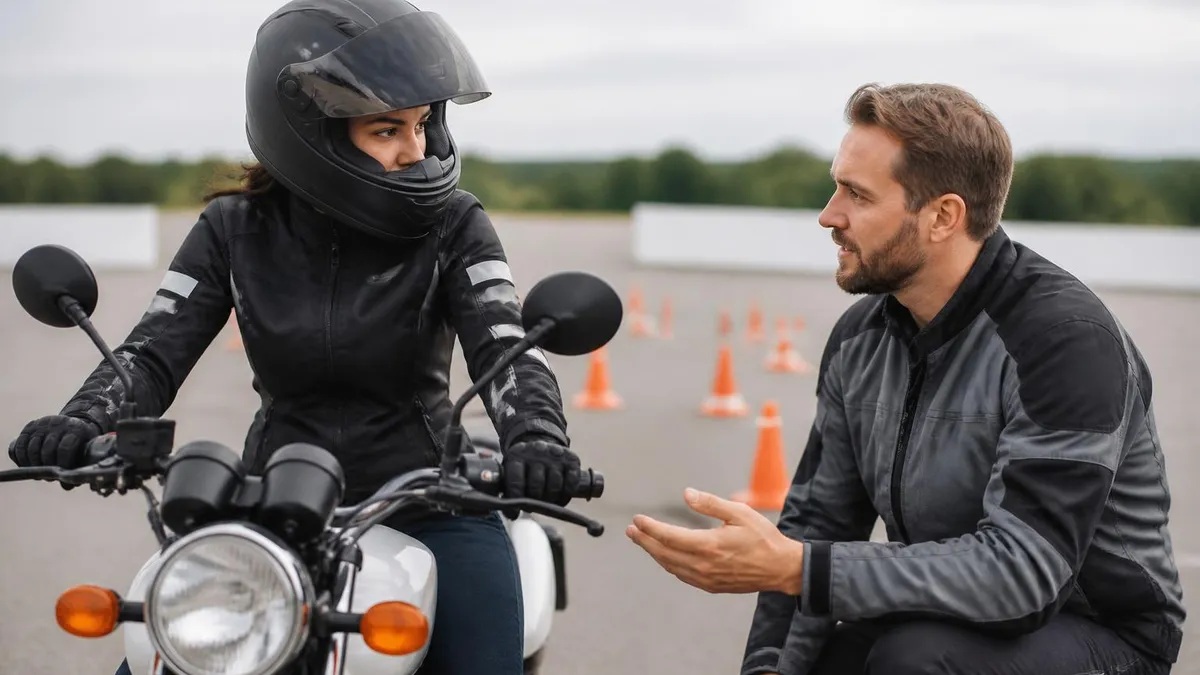
MSF Motorcycle Course: Complete 2026 Training Guide & Test Prep
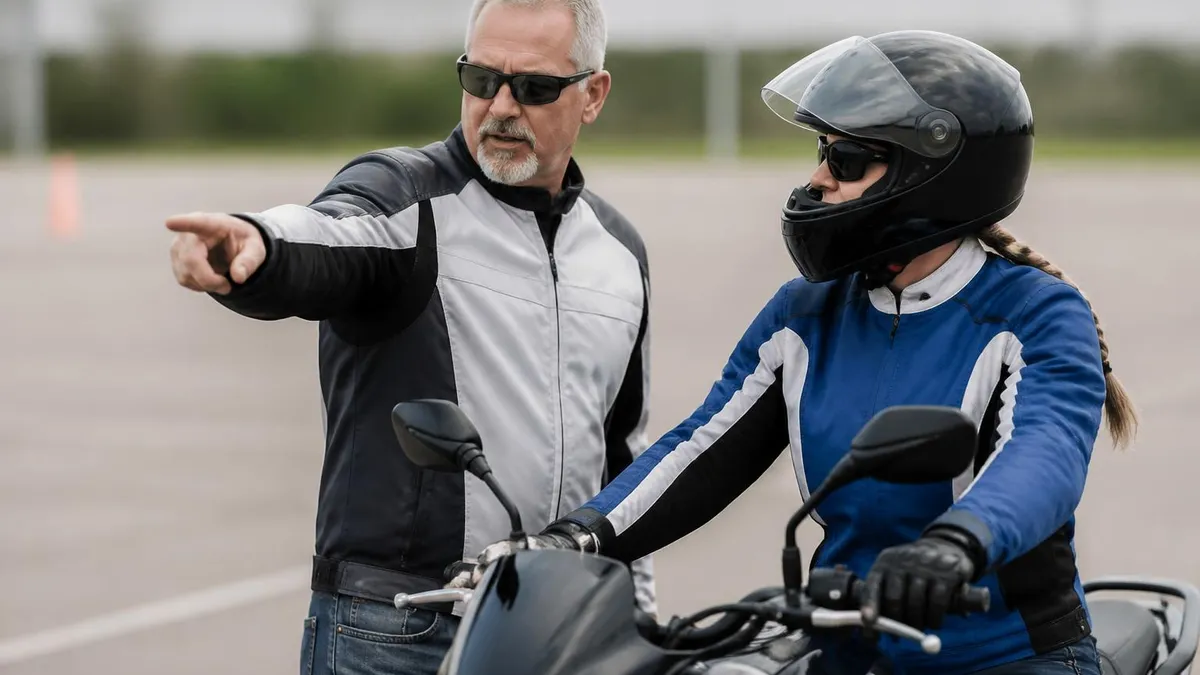
Cheap MSF Course Near Me: 2026 Guide to Affordable Motorcycle Safety Training

MSF Practice Test 2026 — Free Online Questions for the MSF Written Test

MSF Safety Course: Complete 2026 Guide to Training, Testing & Certification
About the Author

Business Consultant & Professional Certification Advisor
Wharton School, University of PennsylvaniaKatherine Lee earned her MBA from the Wharton School at the University of Pennsylvania and holds CPA, PHR, and PMP certifications. With a background spanning corporate finance, human resources, and project management, she has coached professionals preparing for CPA, CMA, PHR/SPHR, PMP, and financial services licensing exams.