
What Is an MSF? Motorcycle Safety Foundation Explained — Course Costs, Written Test & Practice Resources
What is an MSF? Learn course costs ($25–$350), written test format, and how to pass with free MSF practice tests. ✅ Complete 2026 October guide.

The MSF course cost and written test requirements are two of the first things new riders research when they decide to get their motorcycle license — and for good reason. The Motorcycle Safety Foundation, commonly known as the MSF, is a nonprofit organization founded in 1973 that develops the national standard for motorcycle rider education in the United States. Nearly every state relies on MSF-certified curriculum to train new riders, and completing an MSF course often satisfies the riding skills test at the DMV entirely, making it one of the most efficient paths to a motorcycle endorsement.
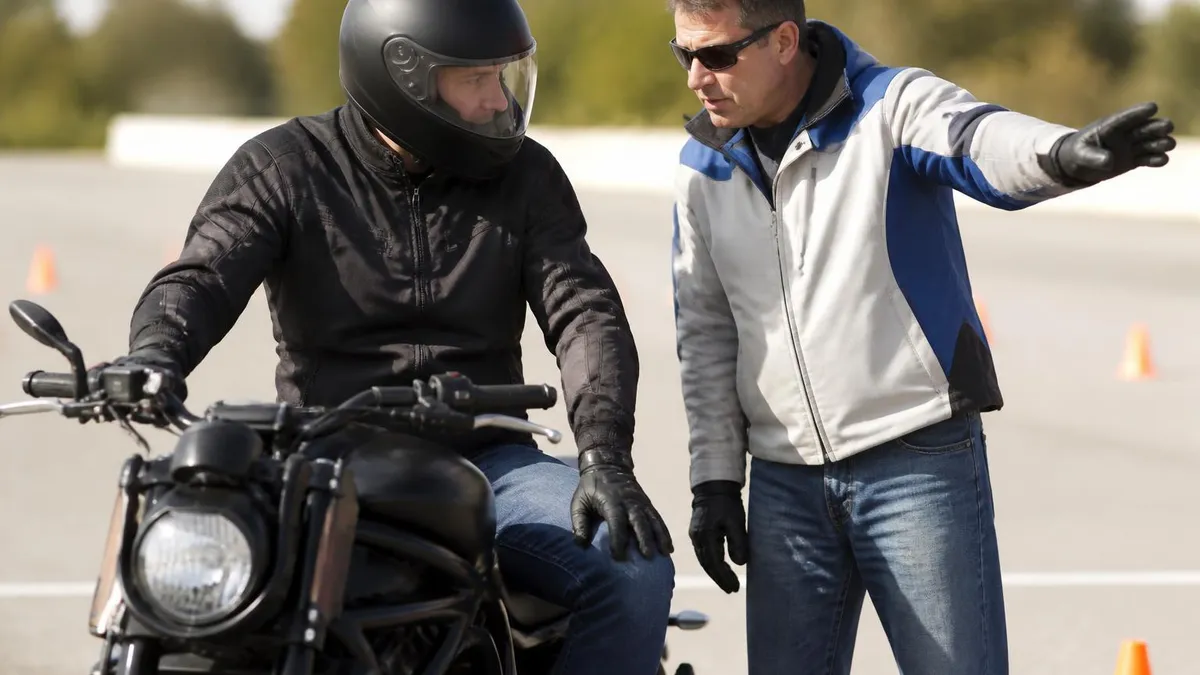
The MSF's flagship offering is the Basic RiderCourse (BRC), a two-day program combining classroom instruction with hands-on riding exercises on a closed range. The course covers essential topics including motorcycle controls, braking technique, low-speed maneuvering, turning, swerving, and hazard awareness. Students who complete the BRC receive an MSF completion card, which most states accept as proof of rider competency. If you want a deeper look at how the foundation structures its programs, resources like what is an msf can walk you through the curriculum in detail.
Understanding what the MSF is matters because motorcycle fatality rates in the United States remain disproportionately high. According to the National Highway Traffic Safety Administration, motorcyclists are roughly 24 times more likely to die in a crash per mile traveled than passenger car occupants. The MSF was created specifically to reduce those numbers through structured, research-backed training that teaches defensive riding habits from day one, not just the mechanical basics of operating a motorcycle.
The organization does not operate training sites directly. Instead, it trains instructors and licenses its curriculum to RiderCoach programs run by community colleges, dealerships, motorcycle clubs, and state agencies. This distributed model means you can find an MSF-affiliated course in nearly every county in the country, with thousands of training sites active across all 50 states and several U.S. territories including Puerto Rico and Guam.
Beyond the Basic RiderCourse, the MSF offers advanced programs for returning riders, including the Advanced RiderCourse (ARC), the SportBike RiderCourse, the Dirt Bike School, and the Scooter School. Each program targets a different experience level or riding style, meaning the MSF serves beginners and seasoned riders alike. The organization also produces free educational content, instructional videos, and the Motorcycle Operator Manual, which forms the basis of the MSF written test in many states.
The MSF written test — sometimes called the MSF knowledge test or the motorcycle permit written exam — draws heavily from the Motorcycle Operator Manual. Questions typically cover traffic laws, protective gear requirements, alcohol and drug impairment rules, lane positioning, and emergency braking procedures. Scores of 80 percent or higher are generally required to pass, and most states allow you to retake the test if you do not pass on the first attempt, though a short waiting period and sometimes an additional fee may apply.
Whether you are a first-time rider looking to earn your license or an experienced motorcyclist wanting to sharpen your skills, the MSF provides the most widely recognized pathway to safe, legal motorcycle operation in the United States. This guide covers everything you need to know: how the organization works, what the course involves, how much it costs, and how to prepare for the MSF written test using free practice resources available online.
MSF by the Numbers

MSF Basic RiderCourse Structure
Most BRC programs now begin with a 3–4 hour online module completed at home before the in-person sessions. This covers motorcycle controls, traffic strategies, and protective gear so range time focuses on riding skills rather than basic theory.
A 4–5 hour in-person or live virtual session where a certified RiderCoach reviews the Motorcycle Operator Manual, discusses crash avoidance strategies, and answers student questions. This session feeds directly into the MSF written test material.
Two half-day sessions on a closed riding range — typically 10–12 hours total. Students practice slow-speed control, quick stops, obstacle avoidance, turning, and weaving drills on motorcycles provided by the training site.
At the end of the range sessions, students complete a brief riding evaluation scored by the RiderCoach. Passing this evaluation, combined with the written knowledge check, earns you the MSF completion card accepted by most state DMVs.
Graduates receive a card valid for one year that waives the DMV riding skills test in most states. Present it at the DMV along with your learner's permit documentation to receive your full motorcycle endorsement or license.
The MSF course cost varies more than most new riders expect. At the low end, some states subsidize Basic RiderCourse enrollment so heavily that tuition drops to $25–$50 per student. California's CMSP program, for example, has historically charged $5–$10 for the range portion because the state allocates dedicated motorcycle safety funding from license fees. At the other extreme, private dealerships in states without subsidy programs charge $250–$350 for the full BRC package including motorcycle rental, helmet loan, and range materials.
The national average cost of an MSF course lands somewhere between $150 and $250 when you factor in both subsidized public programs and unsubsidized private providers. Community colleges tend to be the most affordable option, often pricing the BRC at $100–$175 with access to campus motorcycles included. Dealership-affiliated programs frequently charge more but may offer the added convenience of scheduling on weekends or evenings to accommodate working adults.
It is worth noting that the MSF itself does not set a fixed course price. The organization licenses its curriculum and trains instructors, but individual providers set their own tuition based on local market conditions, subsidy availability, and overhead costs like range maintenance and motorcycle upkeep. This means you should always compare prices from multiple providers in your area before enrolling — two schools in the same city can differ by $100 or more.
Insurance discounts can meaningfully offset MSF class cost. Most major motorcycle insurers — including Geico, Progressive, Nationwide, and State Farm — offer discounts of 5–15% on premiums for riders who complete an MSF-certified course. On a $1,200 annual premium, a 10% discount saves $120 per year, meaning the course pays for itself within one to two policy years. Always ask your insurer about applicable discounts before and after enrollment.
Hidden costs to budget for include transportation to and from the training site, any required protective gear you do not already own, and DMV endorsement fees charged after you pass. Most MSF sites require at minimum a DOT-approved helmet, over-the-ankle boots, long pants, a long-sleeved shirt or jacket, and full-fingered gloves. If you need to purchase all of this gear new, expect to spend an additional $150–$400 depending on quality level and whether you buy online or at a local dealer.
Some states and tribal organizations offer MSF training at no cost to qualifying residents — particularly veterans, active-duty military personnel, and low-income applicants. The MSF's own website maintains a course finder tool that filters programs by zip code and sometimes flags subsidized options. Third-party scholarship programs through organizations like the American Motorcyclist Association (AMA) also exist, though availability is limited and competitive.
When comparing the total cost of MSF class enrollment against the alternative of skipping formal training, the financial case for the course is strong. Beyond insurance savings, riders who complete structured training statistically crash less in their first two years on the road. Avoiding even one minor accident — average repair costs for a dropped motorcycle can run $500–$2,000 — more than covers the price of the course several times over.
MSF Written Test: What to Expect
The MSF written test — also called the MSF knowledge test or motorcycle permit exam — is a multiple-choice assessment typically containing 25 to 50 questions depending on your state. Most states require a score of at least 80 percent to pass, which means you can miss no more than 5 questions on a 25-question exam. The test is administered either on a computer at the DMV or on paper at an MSF course site, and results are usually immediate.
Questions on the MSF course written test pull directly from the Motorcycle Operator Manual published by the MSF in partnership with your state's DMV. Topics include right-of-way rules, lane positioning strategies, stopping distances, alcohol impairment thresholds, helmet and gear requirements, and how to handle common road hazards like gravel, railroad tracks, and wet pavement. Familiarizing yourself with the manual chapter by chapter remains the single most reliable preparation strategy.

MSF Basic RiderCourse: Is It Worth It?
- +Waives the DMV riding skills test in most states, saving time and stress
- +Motorcycles and helmets are typically provided, so no bike is required to enroll
- +Earns insurance discounts of 5–15% from most major motorcycle insurers
- +Structured range exercises build real muscle memory that reading alone cannot provide
- +RiderCoaches give personalized feedback on your specific errors in real time
- +Completion card is valid for one year and widely recognized across state lines
- −MSF course cost can reach $250–$350 at private providers without state subsidies
- −Weekend schedules fill quickly, especially in spring and summer riding season
- −Range sessions require full protective gear you may need to purchase separately
- −Physical demands of the riding exercises can be challenging in extreme heat or cold
- −Course completion does not guarantee an endorsement — DMV paperwork still required
- −Some advanced riders find the Basic RiderCourse content too introductory for their skill level
MSF Written Test Prep Checklist
- ✓Download or pick up a printed copy of your state's Motorcycle Operator Manual from the DMV website.
- ✓Read the MSF Operator Manual cover to cover at least once before attempting any practice questions.
- ✓Take a full-length MSF practice test to establish your baseline score and identify weak topic areas.
- ✓Review every incorrect answer against the relevant Manual passage — understand why, not just what.
- ✓Memorize key legal thresholds: 0.08% BAC limit, stopping distance rules, and helmet laws in your state.
- ✓Study lane positioning strategies for multi-lane roads, curves, and intersections specifically.
- ✓Practice identifying hazard recognition scenarios from the Manual's examples of gravel, wet pavement, and debris.
- ✓Complete at least three full-length practice tests before your scheduled exam date.
- ✓Target a consistent 90% or higher on practice tests before sitting for the real written exam.
- ✓Arrive at the DMV or testing site at least 15 minutes early with your learner's permit and ID in hand.
One in three first-time test-takers fails the motorcycle written exam.
National DMV data suggests that approximately 30–35% of applicants do not pass the motorcycle knowledge test on their first attempt. The primary reason is insufficient study time with the Motorcycle Operator Manual. Riders who spend at least four hours studying the Manual and complete two or more MSF practice tests before their exam date pass at rates exceeding 90%. Don't skip the prep work — the test is straightforward if you've read the material.
Passing the MSF test — whether the written knowledge exam at the DMV or the skills evaluation at the end of a Basic RiderCourse — requires a combination of deliberate study and realistic practice. The written portion is knowledge-based, meaning it rewards riders who have actually read the Motorcycle Operator Manual rather than those who assume their general driving experience will carry them through. The Manual is typically 100–120 pages and takes three to five hours to read thoroughly, which is a modest investment given what is at stake.
One of the most important preparation strategies is understanding the structure of the questions themselves. The MSF written test is not designed to trick you, but it does frequently use negatively worded questions such as "which of the following should you NOT do when braking on a curve?" Misreading these questions is a leading cause of avoidable errors. When practicing, train yourself to read every question twice before selecting an answer, paying specific attention to words like not, never, least, and except.
Spacing your study sessions across multiple days produces better retention than a single marathon cramming session. Cognitive science research on the spacing effect shows that reviewing material in distributed sessions — say, 45 minutes per day over five days — leads to significantly stronger long-term memory than five hours in one sitting. This is especially relevant for the MSF written test because many rules involve specific numbers (stopping distances, BAC thresholds, following distances) that are easy to confuse if crammed under pressure.
The riding skills evaluation component of the BRC follows a structured rubric that RiderCoaches are trained to apply consistently. Points are deducted for actions like putting your foot down during low-speed exercises, leaving the designated lane boundaries during maneuvers, failing to complete a stop within the marked stopping zone, and not performing a head-check before starting. Reviewing the exact evaluation criteria before your range sessions — available through the MSF or your training provider — lets you focus practice on the specific behaviors that are scored.
One underused preparation resource is the MSF's own instructional video library, available on the organization's official YouTube channel and website. These videos demonstrate proper braking technique, turning entry and exit, and swerving exercises in real time, which helps you visualize correct body position and control inputs before you ever sit on a motorcycle. Combining video study with written material review and hands-on practice creates a multi-modal learning approach that consistently outperforms single-format study.
Mental preparation matters as much as technical study. Many students experience heightened anxiety during the range evaluation portion of the BRC, particularly during low-speed exercises like figure-eights in a tight box. The most effective antidote is repetition during practice sessions — ask your RiderCoach for additional slow-speed drills during the open practice time that most BRC formats include. Confidence built through repeated successful repetitions translates directly into performance under the evaluative pressure of scoring exercises.
After passing both the written and skills components, your MSF completion card is issued within days and mailed to your address on file, or sometimes handed out on the final day of the course. Take this card directly to your state DMV along with proof of a motorcycle learner's permit, your standard driver's license, and applicable endorsement fees — typically $5–$30 depending on the state. In most states the endorsement is added to your existing license the same day, and you are legally permitted to ride immediately upon leaving the DMV.

Your MSF Basic RiderCourse completion card is typically valid for only 12 months from the date of issue. If you do not visit the DMV to obtain your motorcycle endorsement before the card expires, you will need to retake the course or pass the DMV riding skills test on your own. Schedule your DMV appointment promptly after course completion to avoid this situation, especially during busy summer months when DMV appointments can book out two to four weeks in advance.
Free MSF practice tests are among the most effective and accessible study tools available to anyone preparing for a motorcycle knowledge exam. Several websites offer question banks modeled on the Motorcycle Operator Manual, and PracticeTestGeeks.com maintains one of the most comprehensive free libraries of MSF-formatted practice questions organized by topic area. These resources allow you to drill specific categories like braking technique or alcohol impairment without having to re-read entire Manual chapters between study sessions.
When selecting a practice test platform, look for resources that explain why each answer is correct or incorrect rather than simply revealing the correct choice. Answer explanations anchored to specific Manual passages reinforce the underlying concept rather than just training you to pattern-match answers. This distinction matters especially for higher-difficulty MSF written test questions that present plausible-sounding wrong answers requiring genuine understanding to reject.
Video-based practice resources complement text-format practice tests well because motorcycle safety is ultimately a physical skill that benefits from visual learning. Resources like what is an msf provide video demonstrations tied to common written test questions, showing exactly what correct technique looks like rather than just describing it in abstract terms. Combining video review with question-based practice creates stronger retention than either method alone.
For riders who want to simulate the real testing environment as closely as possible, timed practice sessions are especially valuable. Set a timer for the allotted exam time — typically 30 to 45 minutes for a 25–50 question motorcycle written test — and complete a full practice exam without pausing or referencing the Manual. This timed pressure reveals not just knowledge gaps but also time management habits, helping you pace yourself effectively on the actual exam day.
Group study can add accountability and expose you to perspectives on questions you might read differently when studying alone. Discussing scenario-based questions with fellow new riders — particularly those that involve judgment calls about safe following distances or hazard avoidance — helps solidify reasoning processes that are harder to develop through solo memorization. Many MSF BRC providers encourage students to connect with each other through class group chats or social media groups that form naturally during enrollment.
Once you pass the written test and earn your motorcycle endorsement, the MSF's role in your riding education does not have to end. The Advanced RiderCourse (ARC) targets riders with at least six months of street experience and focuses on cornering confidence, emergency braking on street surfaces, and crash avoidance at speed. Many states and insurers offer the same discounts for ARC completion as they do for the Basic RiderCourse, providing both a safety benefit and a continued financial incentive to keep developing your skills throughout your riding life.
Taking the MSF approach to ongoing skill development — structured curriculum, coached feedback, deliberate practice of specific techniques — is what separates riders who improve steadily over time from those who simply accumulate years behind the handlebars without actually getting safer. The skills you practice on a closed range in a controlled environment transfer directly to real-world riding decisions, and the Motorcycle Safety Foundation's decades of research-backed curriculum development means every drill and every exam question has a documented reason for being there.
Practical preparation for the MSF course and written test starts well before your first scheduled class day. One of the highest-use things you can do in the weeks leading up to enrollment is observe other motorcyclists in real traffic — not to learn techniques directly, but to begin training your eye to notice lane positioning choices, following distances, and intersection approaches. This passive observation primes your brain to connect the abstract principles in the Motorcycle Operator Manual with recognizable real-world situations, making the material stick faster when you begin formal study.
On the physical preparation side, make sure your riding gear meets MSF site requirements before your first range day. Most providers publish a gear checklist on their enrollment confirmation email: DOT-certified helmet, sturdy over-the-ankle footwear, long pants without loose cuffs, a long-sleeved jacket or shirt, and full-fingered gloves. Showing up without compliant gear can result in being turned away from range sessions without a refund, so double-check requirements specific to your training site rather than relying on general assumptions.
During classroom and eCourse sessions, take notes on anything involving specific numbers — stopping distances measured in feet or bike lengths, legal BAC thresholds, minimum following distances in seconds, and required visibility distances for headlights and signals. These numerical facts appear disproportionately often on the MSF written test because they require memorization rather than inference, making them an easy source of points for prepared test-takers and an easy source of errors for underprepared ones.
On range days, ask questions freely. RiderCoaches are trained educators who expect and welcome questions from students at all experience levels, including those who have never touched a motorcycle. If an exercise feels unclear or a technique is not clicking, flag it immediately rather than waiting to see if it becomes clear through repetition. Coaches can often offer a single cue word or adjustment that unlocks a skill that felt impossible moments before.
After completing the BRC, take a few weeks to ride exclusively in low-risk environments — empty parking lots, quiet residential streets, rural roads with light traffic — before venturing onto busy urban roads or highways. The skills you practiced on the range are real, but translating them to unpredictable real-world conditions takes additional time and repetition. Setting graduated exposure goals for your first 30 days of endorsed riding builds confidence progressively rather than overwhelming your working memory with too many novel inputs at once.
Track your skill development by logging your rides in a simple journal or smartphone app noting distance, conditions, and any situations that felt challenging. Reviewing this log weekly helps you identify patterns — perhaps you consistently feel less confident making left turns, or highway lane changes feel rushed — and gives you specific material to bring back to an MSF Advanced RiderCourse or a private coaching session when you are ready to level up.
The Motorcycle Safety Foundation has been shaping how Americans ride for more than 50 years, and its influence is evident in the dramatic reduction in new-rider fatality rates over that same period. Whether you are studying for the MSF written test tonight or heading to your first range session next weekend, the foundation's curriculum is the most reliable guide available for building the knowledge and skills that keep riders alive. Use the free practice tests, study the Manual thoroughly, and show up to range day ready to learn — the investment is smaller than the alternative.
MSF Questions and Answers
MSF Practice Test Video Answers
Motorcycle Safety Foundation Course: Complete 2026 Training Guide

MSF Card & Basic Rider Course: Complete 2026 Guide to Test Prep, Costs & Your Certificate

Ohio MSF Course: Complete Guide to Training, Costs & Written Test Prep

MSF Course 2026–2026 — Motorcycle Safety Foundation Basic RiderCourse Guide
About the Author

Business Consultant & Professional Certification Advisor
Wharton School, University of PennsylvaniaKatherine Lee earned her MBA from the Wharton School at the University of Pennsylvania and holds CPA, PHR, and PMP certifications. With a background spanning corporate finance, human resources, and project management, she has coached professionals preparing for CPA, CMA, PHR/SPHR, PMP, and financial services licensing exams.