
MSF Motorcycle Safety Foundation Practice Test PDF (Free Printable 2026 October)
Boost your MSF Motorcycle Safety Foundation exam score with practice 💯 questions and detailed answer explanations. Track progress with instant feedback.
MSF Practice Test PDF – Study Offline for Your Motorcycle Safety Knowledge Exam
The Motorcycle Safety Foundation (MSF) is the organization behind rider training programs used in all 50 states. Before you earn your motorcycle license, most states require you to pass an MSF knowledge assessment or a state-administered written test based on MSF curriculum. Downloading a printable MSF practice test PDF lets you study the material anywhere — no internet connection required — so you can reinforce the concepts that matter most before test day.
This free PDF covers all major knowledge domains tested in the MSF Basic RiderCourse (BRC) written exam, including pre-ride inspection, basic motorcycle controls, riding strategies, braking techniques, and hazard awareness. Print it out, quiz yourself, or work through it with a friend to lock in the content before your exam.
Pro Tip: Focus your MSF study time on areas where you score lowest. Most exam questions test application of knowledge, not memorization.
What the MSF Knowledge Test Covers
The MSF Basic RiderCourse written test draws on the Motorcycling Manual and BRC student workbook. Understanding the following topic areas is essential for passing the knowledge exam and becoming a safer rider.
Pre-Ride Inspection: T-CLOCS
T-CLOCS is the MSF framework for pre-ride inspection: Tires and wheels (pressure, tread depth, spoke tension), Controls (levers, cables, throttle snap, foot controls), Lights and electrics (headlight, brake light, turn signals, battery), Oil and fluids (engine oil, coolant, brake fluid, fuel level), Chassis (frame, suspension, chain/belt/shaft), and Stands (side stand, center stand condition and springs). Knowing T-CLOCS and what each category checks is a frequent exam topic.
Basic Controls and Shifting
Questions on throttle operation (smooth roll-on and roll-off), clutch engagement (friction zone), front and rear brake levers, and the standard gear pattern (1-N-2-3-4-5-6) are common. Riders must understand that the front brake provides approximately 70% of stopping power and should be used in combination with the rear brake.
Turning Mechanics
At speeds above about 15 mph, motorcycles turn by countersteering — pressing forward on the handlebar grip on the side you want to turn. At slow speeds, riders use handlebar press combined with body lean and throttle/clutch balance. The exam tests when each technique applies.
Braking: Normal, Progressive, and Emergency
Normal stops use gradual brake application. Progressive braking (squeeze, don't grab) reduces the risk of wheel lockup. Maximum braking (emergency stops) requires applying both brakes simultaneously to the point just before lockup. Knowing the difference between ABS and non-ABS technique is also tested.
The SEE Strategy
MSF's riding strategy is SEE: Search (scan 12–15 seconds ahead and check mirrors every 5–7 seconds), Evaluate (identify hazards and escape routes), Execute (adjust speed, position, or communicate). A 4-second following distance is recommended for motorcycles.
Lane Positioning
The three lane positions (left third, center, right third of the lane) are used strategically. Left position increases visibility and discourages tailgating. Center position is used when stopped in traffic. Right position is used when passing parked cars or preparing to turn right. Riders should avoid riding in another vehicle's blind spot.
Protective Gear (ATGATT)
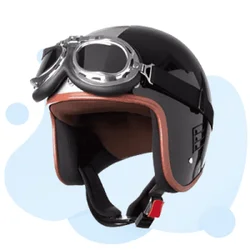
All the Gear All the Time: full-face helmet meeting DOT or Snell standards, abrasion-resistant jacket and pants, gloves, and over-the-ankle boots. The exam tests helmet ratings and why each piece of gear matters for crash protection.
- ✓Memorize the T-CLOCS pre-ride inspection checklist and what each letter stands for
- ✓Understand front vs. rear brake contribution (70/30 split) and progressive braking technique
- ✓Know the standard motorcycle gear pattern: 1 down, neutral, then 2–6 up
- ✓Study countersteering mechanics and when slow-speed turning technique applies instead
- ✓Master the SEE strategy: Search, Evaluate, Execute — and the 4-second following distance rule
- ✓Learn the three lane positions and the correct situation for each (left, center, right third)
- ✓Review high-risk situations: intersections, blind spots, gravel, wet roads, and night riding
- ✓Know DOT vs. Snell helmet certification differences and full protective gear requirements
- ✓Study passenger and cargo guidelines: weight limits, communication signals, seating position
- ✓Practice with timed multiple-choice questions to build test-taking speed and reduce exam anxiety
Free MSF Practice Tests Online
A printable PDF is a great offline study tool, but pairing it with interactive online practice gives you immediate feedback on every answer. Our MSF practice test covers the full range of BRC knowledge test topics — pre-ride inspection, braking, SEE strategy, lane positioning, and hazard awareness — in the same multiple-choice format you will face on the real exam. Take as many timed practice runs as you need until your score consistently hits the passing threshold for your state.